


For centuries, the concept of charisma—derived from the ancient Greek charis, meaning “grace” or “favor freely given”—was codified as a theological phenomenon. In the early Christian tradition, evidenced by the Pauline epistles, charismata referred to spiritual gifts bestowed by the Holy Spirit, marking an individual as divinely touched.1 It was a quality inaccessible to the layperson, a lightning strike of celestial favor that could neither be earned nor learned. Even as the term transitioned into secular sociology through the work of Max Weber in the early 20th century, it retained an aura of the extraordinary. Weber defined charismatic authority as a quality setting an individual “apart from ordinary men,” endowed with “supernatural, superhuman, or at least specifically exceptional powers”.1 This definition, while sociologically robust, effectively disempowered the individual; one was either born a charismatic “great man,” or one was not.
However, the trajectory of modern behavioral science, neuroscience, and social psychology has rigorously dismantled this essentialist view. Contemporary research posits that what we perceive as “charisma” is not a singular, immutable trait, but rather the aggregate result of specific, observable, and—crucially—learnable behaviors. It is an applied science of social signaling. When an individual is described as “magnetic” or “charming,” the observer is actually reacting to a complex symphony of nonverbal cues, vocal tonalities, and conversational patterns that signal high value and safety to the primitive brain.
This report serves as a comprehensive dissection of these behaviors, categorized here as “micro-habits.” These are not sweeping personality overhauls but granular adjustments to daily interaction—the “atomic units” of social influence. By leveraging the principles of neuroplasticity, individuals can consciously encode these habits until they transition from effortful performance to automatic character traits.
🧪 The Duchenne Smile
1. Anatomy Analysis
Experiments by Guillaume Duchenne identified two distinct variants:
Social Smile
Muscle:
Zygomaticus Major Only
Voluntary mouth movement. No eyes.
Duchenne Smile
Muscle:
+ Orbicularis Oculi
Creates “Crow’s Feet”. Involuntary.
2. Neural Processing
The brain detects authenticity in milliseconds.
⚡ Limbic Recognition: Genuine smiles activate the Amygdala. Signals safety & releases dopamine.
🛑 Trust Deficit: Fake smiles (Pan American) fail to trigger resonance.
Paralyzing eye muscles can reduce your ability to feel empathy! (Facial Feedback Hypothesis)
3. Protocol: “Slow-Onset”
The “3-Second Bridge” Technique:
| Feature | Genuine | Fake |
|---|---|---|
| Muscles | Mouth + Eyes | Mouth Only |
| Control | Involuntary (Limbic) | Voluntary (Motor) |
| Signal | Trust / Joy | Politeness |
1. The Anatomy of Authenticity

The human face is capable of over 10,000 distinct expressions, yet the smile remains the most universally recognized signal of affiliation. However, not all smiles are created equal. In the mid-19th century, French neurologist Guillaume Duchenne de Boulogne conducted electrophysiological experiments to map the muscles of facial expression. He distinguished between the “social smile”—a voluntary contraction of the zygomaticus major muscle which pulls the corners of the mouth upward—and the “felt smile,” or Duchenne smile, which reflects genuine enjoyment.
The Duchenne smile is characterized by the simultaneous contraction of the zygomaticus major and the orbicularis oculi. The latter is the sphincter muscle surrounding the eye. When it contracts, it raises the cheek, lowers the brow, and creates distinct crinkling or “crow’s feet” at the outer corners of the eyes. Crucially, the orbicularis oculi is largely involuntary for the majority of the population, governed by the limbic system rather than the motor cortex. It is, therefore, a reliable “honest signal” of emotion that is difficult to counterfeit.
2. The Neuroscience of Trust and Detection

The human brain is remarkably adept at distinguishing Duchenne from non-Duchenne smiles, often processing the distinction within milliseconds.
- Limbic Recognition: A genuine Duchenne smile activates the observer’s amygdala and orbitofrontal cortex—regions associated with emotional processing and reward. It signals safety and triggers a reciprocal release of dopamine and endorphins.
- The Trust Deficit: Conversely, non-Duchenne smiles, often used in deceptive or polite contexts (the “Pan American” smile), fail to trigger this resonance. Studies indicate that individuals who display Duchenne smiles are consistently rated as more trustworthy, authentic, and socially competent than those who do not. In fact, the absence of orbicularis oculi activation is a primary cue used by humans to detect deception.
3. Practical Application: The “Slow-Onset” Technique

To cultivate the habit of Duchenne smiling, one cannot simply “try harder” to squint. Because the muscle is involuntary, the micro-habit requires a psychological trigger to engage the physiological response.
Protocol: The 3-Second Bridge
- The Cue: Eye contact is established with a new acquaintance.
- The Pause: Instead of smiling immediately (which can appear reactive or submissive), the charismatic individual waits for 1-2 seconds.
- The Visualization: During this pause, the individual briefly recalls a “warm anchor”—a memory of a loved one, a pet, or a moment of genuine joy. This thought stimulates the limbic system.
- The Onset: The smile is allowed to spread slowly across the face, engaging the eyes first, then the mouth. This “slow-onset” smile is perceived as personalized and exclusive to the recipient, rather than a generic social reflex.
| Feature | Duchenne Smile (Genuine) | Non-Duchenne Smile (Social/Fake) |
| Anatomical Basis | Zygomaticus major + Orbicularis oculi | Zygomaticus major only |
| Visual Marker | “Crow’s feet,” cheek raise, lowered brow | Mouth corners raise, eyes neutral |
| Neural Pathway | Limbic System (Involuntary/Emotional) | Motor Cortex (Voluntary/Conscious) |
| Social Signal | Safety, Joy, Trustworthiness | Politeness, Deception, Masking |
2. The Eyebrow Flash (The Social Marker)

1. Evolutionary Origins and Cross-Cultural Universality

While the smile is the most obvious signal of warmth, the “eyebrow flash” is perhaps the most primal signal of recognition. This micro-gesture involves a rapid raising and lowering of the eyebrows, lasting approximately one-sixth of a second. It was extensively documented by ethologist Irenäus Eibl-Eibesfeldt, who observed the behavior across diverse cultures, including the Yanomami of the Amazon and the!Kung of the Kalahari, as well as in non-human primates.
The universality of the eyebrow flash suggests it is an evolutionarily hard-wired “social marker.” In the prehistoric environment, approaching another hominid required a mechanism to instantly signal non-aggression from a distance. The flash exposes the eyes fully, signaling, “I see you, and I am open to interaction”.
2. Cultural Nuances and Interpretations

While the signal is biological, its frequency is modulated by culture. In Western cultures, the eyebrow flash is a standard greeting among friends. However, research notes that in Japan, the gesture is often suppressed in adult interactions as it can be perceived as informal or improper. Despite these cultural overlays, the underlying biological impulse remains; suppression is a learned inhibition of a natural reflex.
The eyebrow flash functions as a “distance handshake.” It allows a charismatic individual to acknowledge presence across a crowded room, establishing a connection before proximity allows for verbal greeting. This capability is crucial for “working a room”—the ability to make multiple individuals feel seen simultaneously.
3. The Physiology of Recognition

The flash is distinct from other brow movements, and precision is required to avoid misinterpretation:
- The Flash: Rapid up-down (approx. 0.5s). Signals recognition and welcome.
- The Sustain: Brows held up. Signals surprise, skepticism, or fear.
- The Furrow: Brows pulled down and together. Signals anger, concentration, or confusion.
Scientific analysis of conversation dynamics reveals that brow furrows in listeners often cause speakers to elongate their explanations, interpreting the furrow as a signal of misunderstanding. Conversely, the flash acts as a green light for social engagement.
4. Practical Application: Hacking Familiarity

We naturally flash our eyebrows at people we like and know. The “hack” for charisma involves consciously deploying this signal with strangers. By flashing the eyebrows upon first eye contact, the practitioner sends a subconscious signal of familiarity. The recipient’s brain, detecting a “friend” signal, often reciprocates the flash and the feeling of warmth before conscious processing occurs.
Protocol: The Distance Greeting
- Trigger: Spotting someone you intend to speak to, or simply making eye contact with a stranger in a networking context.
- Action: A ballistic, rapid raising of the eyebrows coincident with eye contact.
- Accompaniment: A slight head toss (upward nod) often accompanies the flash in high-energy contexts, while a warm Duchenne smile anchors it in warmth.
The Pratfall Effect
The Psychology
Myth: Leaders must be perfect.
Fact: Imperfection drives likability. A blunder “humanizes” you and dismantles envy.
The Aronson Experiment
No Mistakes
Standard Likability“Oh my goodness!”
High Likability!Incompetent + Spill = Disaster.
1. The Psychology of Imperfection

A pervasive myth regarding charisma is the necessity of perfection—the idea that the charismatic leader must be infallible, poised, and superior. Psychological research suggests the exact opposite. Imperfection, when contextualized correctly, is a powerful driver of likability. This phenomenon is known as the Pratfall Effect, first identified in 1966 by social psychologist Elliot Aronson.
2. The Aronson Study: A Closer Look

Aronson’s experiment is a cornerstone of social psychology. Participants were asked to listen to a recording of a student auditioning for a quiz bowl team. The student answered 92% of the questions correctly, establishing high competence.
- Condition A: The student simply finished the interview.
- Condition B: The student was heard spilling a cup of coffee, exclaiming, “Oh my goodness, I’ve spilled coffee on my new suit.”
The results were counter-intuitive to the perfectionist model: the student who spilled the coffee was rated as significantly more likable and attractive than the student who performed flawlessly. The blunder served to “humanize” the superior individual, dismantling the barrier of envy or intimidation that perfection often erects.
3. The Competence Prerequisite

The Pratfall Effect comes with a critical caveat: it only functions if competence is already established. In the same study, Aronson tested a “mediocre” student who answered only 30% of the questions correctly. When this student spilled the coffee, their likability scores plummeted.
- The Insight: A blunder by a competent person is charming because it relieves the tension of their superiority. A blunder by an incompetent person is simply further evidence of their incompetence.
4. Modern Implications and Marketing

This effect extends beyond interpersonal dynamics into brand management and marketing. “Flop videos” or “bloopers” posted by influencers often garner higher engagement and trust than polished content, provided the influencer’s skill is not in doubt. In a consumer context, admitting a minor flaw (e.g., “Guinness takes a long time to pour”) can act as a signal of honesty that bolsters claims about quality.
5. Practical Application: Owning the Fumble

The micro-habit here is the suppression of defensiveness. When a charismatic person trips, mispronounces a word, or drops a pen, they do not pretend it didn’t happen, nor do they apologize profusely.
Protocol: The “Oops” Pivot
- Scenario: You trip slightly while walking onto a stage or into a meeting.
- The Anti-Pattern: Ignoring it (creates tension) or getting angry/embarrassed (lowers status).
- The Charisma Habit: Acknowledge the error with humor. “That floor just came out of nowhere,” or “I was so eager to get here I forgot how to walk.”
- The Mechanism: This reaction signals high self-esteem; it shows that the individual’s status is robust enough to withstand a minor physical failure.
4. The “Midas Touch” (Tactile Influence)

1. The Physiology of Touch: C-Tactile Fibers

Touch is perhaps the most primitive and potent channel of human communication. The skin is the largest organ of the body, and specific nerve fibers—C-tactile afferents—are specialized to respond to gentle, slow-moving touch (like a caress or a pat). These fibers project directly to the insular cortex, a brain region involved in emotion and homeostasis, rather than the primary somatosensory cortex which processes “factual” touch data.
Stimulation of these fibers triggers a cascade of neurochemical release, most notably oxytocin. Often called the “bonding hormone,” oxytocin promotes feelings of trust, reduces amygdala activity (fear), and lowers cortisol (stress) levels.
2. The “Midas Touch” Effect

Psychologists have termed the persuasive power of touch the “Midas Touch” effect. Empirical data from field studies illustrates its impact on compliance and generosity:
- The Tipping Studies: Research in restaurant settings found that waitresses who briefly touched customers on the hand or shoulder while returning change received significantly larger tips than those who did not. This effect held true for both male and female customers, debunking the idea that it is solely a sexual signal.
- Compliance & Helping: In library and street-intercept studies, individuals who were lightly touched were more likely to sign petitions, return lost money, and rate the library environment more positively. Even “virtual” touch (haptic feedback) has been shown to elicit similar pro-social responses in digital environments.
3. Cultural and Contextual Nuance

The efficacy of touch is highly context-dependent. The “Midas Touch” relies on the touch being perceived as non-threatening and non-sexual.
- The Safe Zones: Research generally identifies the area between the shoulder and the elbow (the upper arm) and the hand (during handshakes) as “safe zones” for professional or casual social touch.
- The Stranger Effect: While partner touch reduces cortisol, stranger touch can increase it if not contextualized properly. However, a handshake or a brief tap on the arm during a shared laugh is usually processed as a “communal” signal rather than an invasion.
4. Practical Application: The Strategic Tap

The micro-habit involves integrating touch into moments of validation or emphasis.
Protocol: The Emphasis Touch
- Context: You are explaining a point or agreeing with a colleague.
- Action: A momentary (0.5 second) light touch on the forearm or upper arm while saying, “That is exactly the point, John.”
- The Double Handshake: During a greeting, utilizing the left hand to gently cup the recipient’s elbow or right hand can amplify the warmth signal. This “two-handed” shake is a power move often used by politicians to simulate intimacy.
5. Vocal Warmth and Power (The Acoustic Formula)

1. The Physics of Perception: Frequency and Hz

The voice is a musical instrument that broadcasts biological data. Listeners form immediate judgments about personality, dominance, and trustworthiness based on vocal acoustics.
- Fundamental Frequency (F0): This is perceived as pitch. Typical male voices range from 85-180 Hz, while female voices range from 165-255 Hz.
- The Dominance Correlation: Research indicates a strong correlation between lower pitch and perceived leadership capacity. Men and women with lower F0 are rated as more dominant, competent, and physically strong. This is likely an evolutionary vestige associating larger larynx size (and thus body size) with leadership capability.
2. The Soft Sell vs. Hard Sell
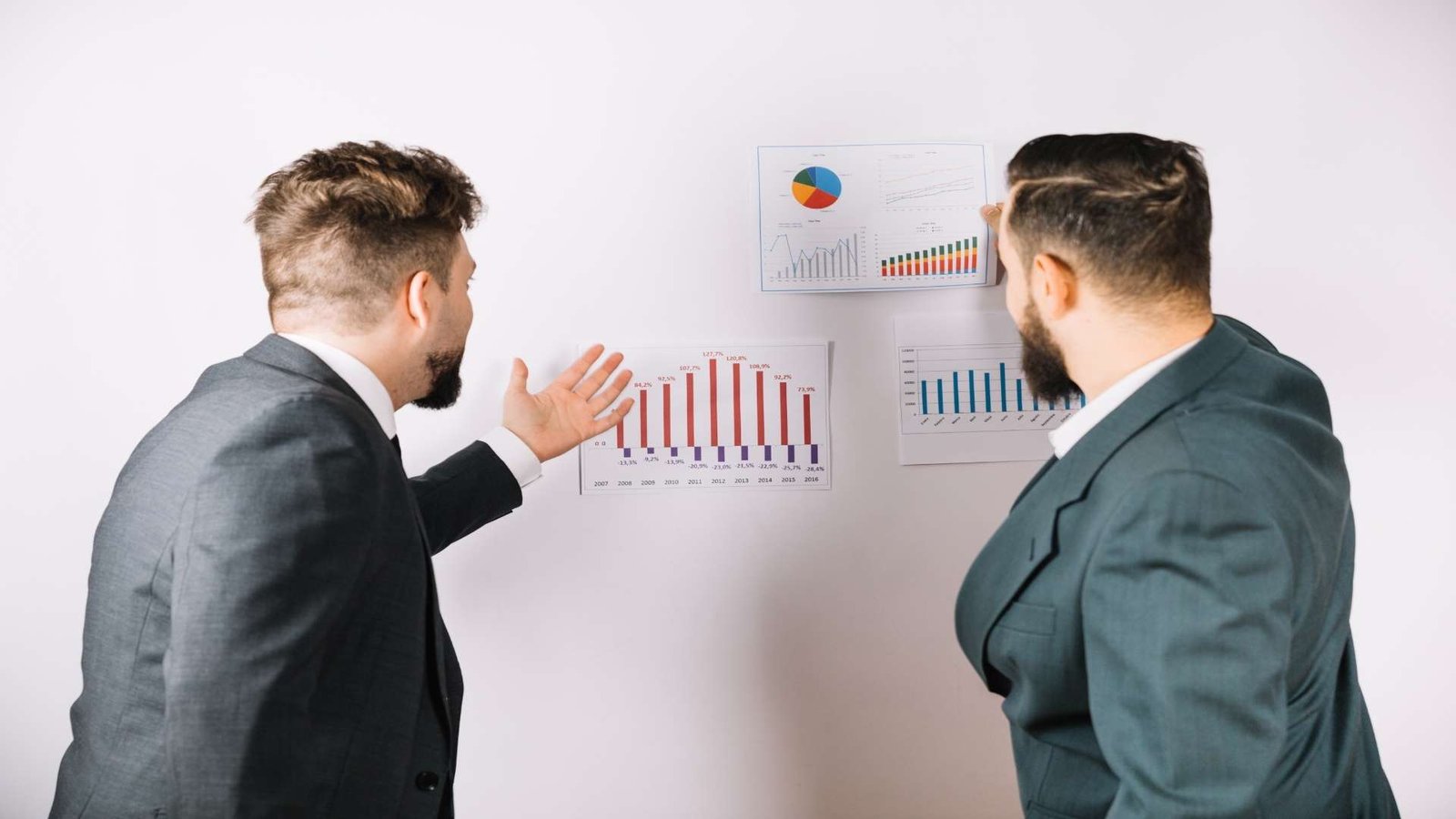
While low pitch signals competence, it is not sufficient for charisma. A monotone low voice signals boredom or coldness. The “Soft Sell” vocal style—characterized by low-to-mid pitch, a slower pace, and a calm, resonant tone—is consistently rated higher in both warmth and competence than the “Hard Sell” style (loud, fast, high urgency). The Soft Sell voice conveys confidence (no need to rush) and empathy (care for the listener).
3. Vocal Warm-Up and Maintenance

Just as athletes warm up muscles, charismatic speakers must warm up the vocal folds to access their optimal resonance. A “cold” voice often sits high in the throat or is prone to “vocal fry” (creaky voice), which can be perceived as hesitant or less competent.
Protocol: The 5-Minute Vocal Routine
To achieve the “chest resonance” associated with power, one must move the vibration from the head/nose down to the chest.
| Exercise | Mechanism | Duration | Purpose |
| Lip Trills | Blowing air through loose lips to create a “brrr” sound (like a motorboat) | 1-2 mins | Relaxes the lips and regulates breath pressure; engages the diaphragm. |
| Straw Phonation | Humming through a small straw | 2 mins | Creates back-pressure that aligns the vocal cords and reduces strain; increases resonance. |
| The “Chest Hum” | Humming a low note while placing a hand on the chest | 1 min | Biofeedback training to feel the vibration in the sternum rather than the nose. |
| The Yawn-Sigh | Yawning deeply then sighing downwards in pitch | 1 min | Lowers the larynx (voice box), creating a deeper, richer chamber for sound. |
4. Intonation Micro-Habit: The Downward Inflection

A critical micro-habit for perceived competence is the “downward inflection.” In many English dialects, speakers have a tendency toward “upspeak” or “high-rising terminal”—ending a statement with a rising pitch as if it were a question. This signals uncertainty and submission.
- The Habit: Consciously visualize a period (.) at the end of sentences rather than a question mark (?). Drop the pitch at the very last syllable. “I am glad to be here (down),” rather than “I am glad to be here? (up)”.
6. The Name-Usage Effect (Identity Validation)

1. The Cocktail Party Effect

The “Cocktail Party Effect” is a psycho-acoustic phenomenon where a person can focus their auditory attention on a single stimulus while filtering out a range of other stimuli. The most potent trigger to break through this filter is one’s own name.
- Cortical Activation: Functional MRI (fMRI) studies reveal that hearing one’s own name triggers a unique pattern of activation in the medial prefrontal cortex (MPFC), the area of the brain associated with self-referential processing and identity. It is a biological alarm bell that screams, “This is relevant to me”.
2. The Psychology of Compliance

Dale Carnegie famously stated, “A person’s name is to that person the sweetest and most important sound in any language.” While often cited as anecdotal wisdom, modern data backs this up.
- The Message Splitting Study: In a series of experiments on compliance, researchers tested the efficacy of using a participant’s name within a request. In a food drive donation request, compliance was 31% in the control group (no name). When the requester used the participant’s name between the justification and the request (e.g., “We are collecting food… Sarah, would you be willing to donate?”), compliance jumped to 79%. The name acts as an attention reset, ensuring the request is processed with full cognitive resources.
3. Alexinomia and Social Anxiety

The fear of using names, or forgetting them, is a recognized social anxiety phenomenon termed Alexinomia (literally “no words for names”). This condition often stems from a fear of intimacy or the fear of getting the name wrong. Charismatic individuals overcome this by viewing the name not as a test of memory, but as a tool of validation.
4. Practical Application: The Rule of Three

To overcome memory lapses and maximize the charisma benefit, the “Rule of Three” should be employed.
Protocol: The Name Loop
- Validation (Start): Use the name immediately upon introduction to encode it. “Nice to meet you, David.”
- Engagement (Middle): Use the name to pivot the conversation or ask a question. “So, David, how does your team handle that?” This pulls the person back if their attention has wandered.
- Farewell (End): “It was great connecting, David.” This cements the interaction.
Warning: Overuse can feel manipulative or sales-y. The sweet spot is natural integration at transition points in the dialogue.
🚀 The Active Pause
Silence is often feared as failure. This leads to “Overlapping” (speaking before the signal is clear).
> SPEAKER B: “Exactly, I know–”
> ERROR: PACKET LOSS. DISRESPECT DETECTED.
Switch from INPUT (Listening) to OUTPUT (Speaking). Don’t crash the CPU.
Pause for 2s. Speaker often resumes orbit, revealing deeper intel.
Rushing = Anxiety.
Silence = Command Authority.
The Routine: Use a physical anchor to survive the void.
Benefit: Oxygenates blood & relaxes vocal cords.
1. The Fear of Silence

In standard conversation, silence is often misinterpreted as a failure—a “pregnant pause” that must be induced or aborted. Consequently, most people listen with the intent to reply, not to understand. This leads to “overlapping,” where the second speaker begins their sentence before the first has fully resolved theirs. This signals impatience and a lack of respect.
2. The Power of the Pause

The “2-Second Rule” (sometimes expanded to the “7-Second Rule” in deep active listening contexts) suggests a deliberate pause after the speaker finishes before the responder begins.
- Cognitive Processing: It takes time for the brain to switch from “input mode” (listening) to “output mode” (speaking). A pause allows for the full digestion of the speaker’s sentiment.
- The Loop Effect: Often, if a listener pauses for 2-3 seconds, the original speaker will resume talking, offering a deeper, more vulnerable, or more clarified thought. This “looping” effect allows the listener to gather more intelligence and build deeper rapport without effort.
- Status Signaling: High-status individuals are comfortable with silence. They do not rush. Rushing to speak signals anxiety and a need for validation; pausing signals confidence and authority.
3. Practical Application: The Breath Anchor

The micro-habit is to use a physical anchor to enforce the pause.
- The Routine: When the other person stops speaking, take a deep breath in through the nose (approx. 1.5 – 2 seconds) before releasing the breath to speak.
- The Benefit: This not only enforces the time delay but also oxygenates the blood and relaxes the vocal cords, ensuring the subsequent response is delivered with the “Soft Sell” resonance discussed in Habit V.
8. Mirroring (Limbic Resonance)

1. Mirror Neurons and Isopraxism

Mirroring, or isopraxism (same behavior), is the subconscious imitation of another person’s gestures, posture, vocal cadence, or vocabulary. This behavior is rooted in the mirror neuron system—a network of neurons in the premotor cortex and inferior parietal cortex that fire both when an individual performs an action and when they observe someone else performing it.
Mirror neurons are the neurological basis of empathy. They allow us to “simulate” the state of another person. When we mirror someone, we are signaling, “I am like you; I understand you.” This state of synchronization is known as Limbic Resonance.
2. The Chameleon Effect

Psychologists refer to the unconscious mimicry of postures and mannerisms as the “Chameleon Effect.” Research confirms that this mimicry acts as a “social glue.”
- The Waitress Study (Again): In a study by van Baaren et al., waitresses who mimicked their customers by repeating their order back verbatim (mirroring vocabulary) received 68% higher tips than those who simply paraphrased or said “okay”.
- Pro-Social Behavior: Individuals who have been mirrored are not only more likely to like the mimicker but are also more likely to engage in pro-social behavior (like helping someone pick up dropped items) immediately afterward. The act of being mirrored induces a general state of benevolence.
3. Practical Application: The Triad of Mirroring
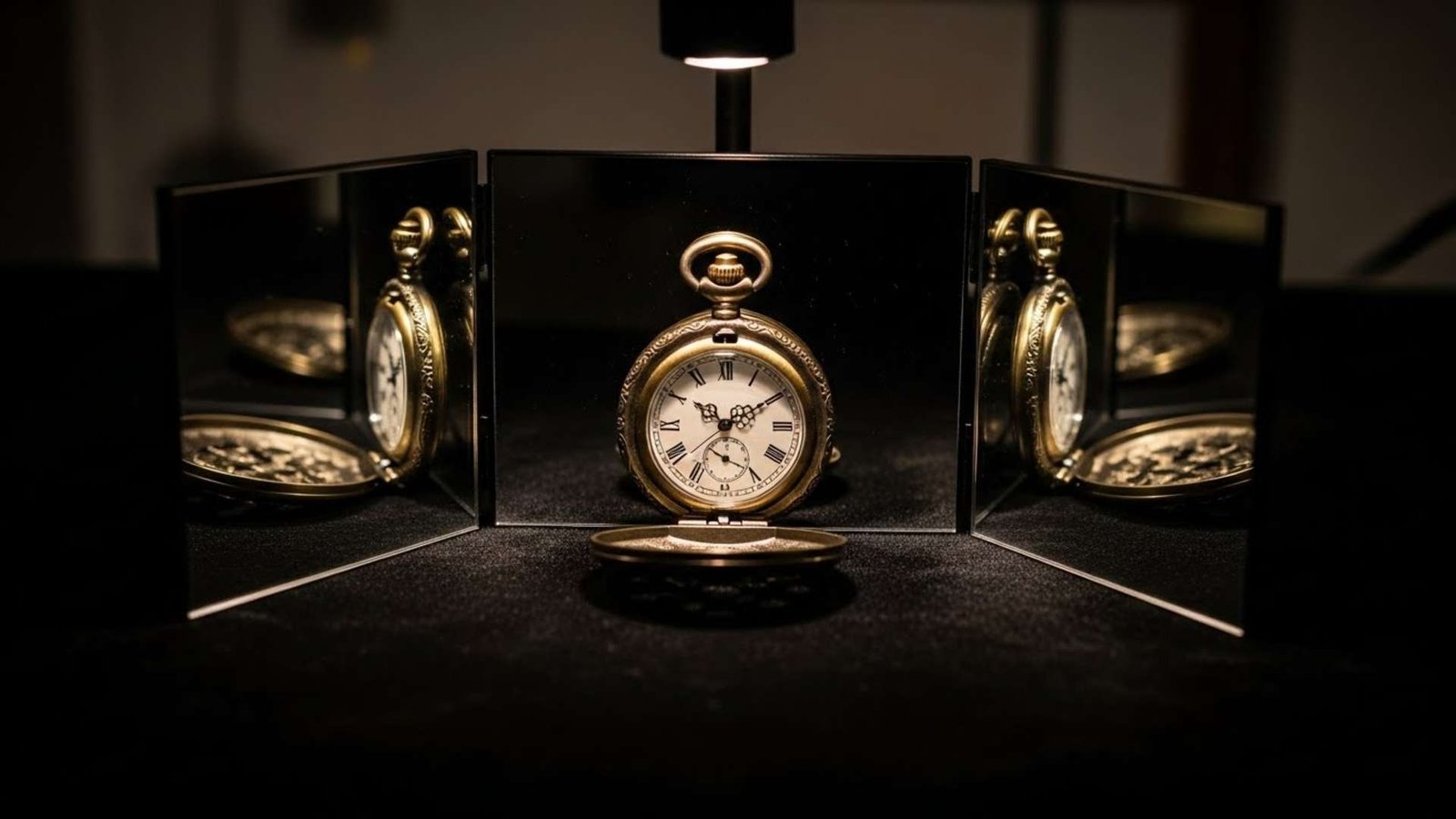
To avoid the “mockingbird” effect (where mimicry seems creepy or offensive), one should focus on three specific channels:
- Posture: If they lean in, wait 10 seconds, then lean in. If they cross their legs, eventually adopt a similar closed posture. This signals you are in the same “energy space”.
- Vocabulary: Listen for specific keywords. If a client says, “I have a concern about the timeline,” do not reply, “I hear your problem.” Reply, “Let’s address that concern.” Using their lexicon validates their reality.
- Tone/Cadence: Match the speed and volume. A high-energy, fast-talking person will perceive a slow, quiet responder as unintelligent or disengaged. A slow, thoughtful speaker will perceive a fast talker as manic or aggressive.
9. Visible Hands (The Trust Indicator)
1. The Evolutionary “Friend or Foe” Signal

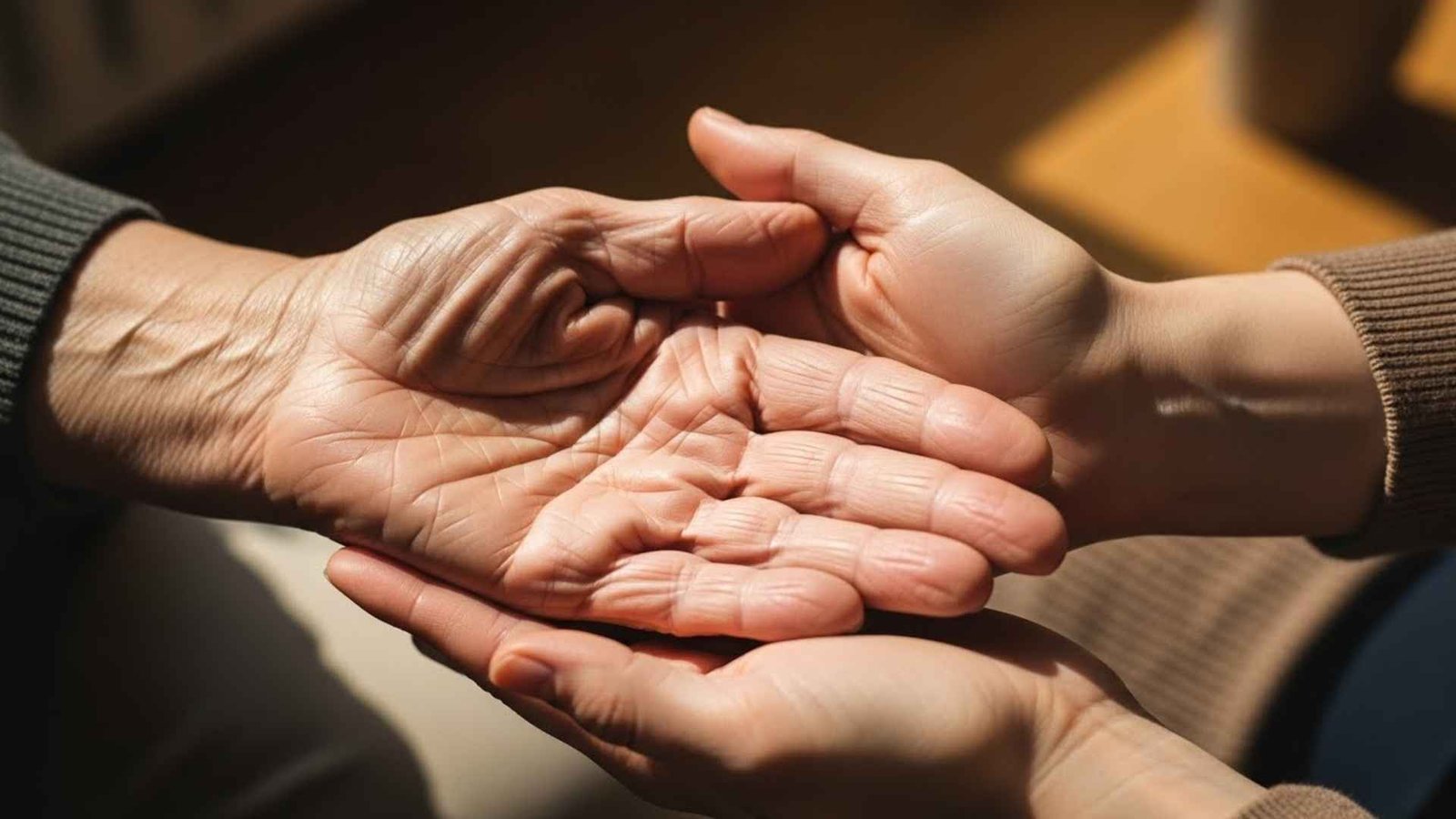
In the evolutionary timeline, the hands were the primary delivery system for lethal force (wielding rocks, spears, or later, weapons). Consequently, the primitive brain is hard-wired to track hands. When hands are concealed (in pockets, under tables, or behind the back), the brain’s safety mechanism remains triggered, resulting in a low-level “danger” alert. Visible hands signal safety: “I have no weapon.”
2. The TED Talk Analysis

The impact of hand gestures on perceived charisma was quantified by Vanessa Van Edwards and her team at the Science of People. They analyzed thousands of hours of TED Talks to identify correlations between nonverbal cues and view counts (popularity).
- The Data: The least popular TED speakers used an average of 272 hand gestures in 18 minutes. The most popular, viral speakers used an average of 465 gestures—nearly double the amount.
- Cognitive Loading: Gestures do more than signal safety; they aid in “cognitive offloading.” By providing a visual track to accompany the audio track, gestures help the listener process complex information more easily. “Jazz hands” are not the goal; purposeful gestures that underline concepts (e.g., holding up three fingers when discussing three points) are the key.
3. Practical Application: The “Above the Fold” Rule

The micro-habit focuses on keeping hands in the “Truth Plane”—the area between the waist and the chest.
- In Meetings: Keep hands on the table, not in the lap.
- Standing: Avoid pockets. If not gesturing, let hands hang loosely by the sides (a vulnerable, high-confidence position) or loosely clasped in front (not crossed).
- The Open Palm: Use gestures that show the open palm (supine). This is a universal signal of supplication and openness. Palm-down (prone) gestures signal dominance and can trigger resistance.
10. The Deep Gaze (Oxytocin Engineering)

1. The Chemistry of Eye Contact

Eye contact is the strongest non-tactile signal of attention. It triggers the release of oxytocin and phenylethylamine (PEA), a stimulant associated with the feeling of falling in love or deep attraction. However, the dosage is critical. Too little signals evasiveness or insecurity; too much signals aggression or “creepiness.”
2. The 50/70 Rule

Social psychologists suggest a specific ratio for optimal rapport: maintain eye contact for approximately 50% of the time while speaking and 70% of the time while listening. This discrepancy exists because looking away while speaking (to access memory or formulate thoughts) is natural, but looking away while listening signals disinterest.
3. Practical Application: “Sticky Eyes” & Eye Color

Two specific micro-techniques can optimize this habit:
- The Eye Color Check: When meeting someone new, dedicate the first 3-5 seconds to identifying the specific shade of their eyes. This forces the exact duration of intense, focused contact required to spark an oxytocin release, without requiring you to “stare” awkwardly.
- Sticky Eyes: This technique involves not breaking eye contact immediately when you finish speaking. Hold the gaze for a fraction of a second after your last word. It signals that you are not just waiting for your turn to speak, but are interested in their reaction.
The “Soft Focus”
To avoid the “predator stare,” engage the Duchenne smile muscles (Habit 1). A slight squint or softening of the eyelids (orbicularis oculi) transforms a stare into a “gaze of regard,” signaling warmth rather than threat.
Need a Little Boost? These Tools Can Help You Practice Charm Habits
If you’re working on the micro-habits of charming people — like improving your presence, voice tone, or grooming — having a few small, practical tools can make it easier to practice and reinforce what you’re learning. Below are five thoughtfully picked items that support connection, confidence, and personal presentation.
Here are some highlights and how they tie into the micro-habits we discussed:
1. The Charisma Myth (book):

This is a classic. Olivia Fox Cabane breaks down charisma into learnable parts — presence, warmth, and power. Perfect for reinforcing micro-habits like the pause, gaze, and mirroring.
2. Voice Training for Public Speaking & Performance:

A step-by-step guide to strengthen your voice, control pitch, and speak with more authority. This supports practicing that two-second pause, modulating your tone, and building vocal presence.
3. Voice & Speaking Skills For Dummies:

A friendly, accessible resource for beginners. It teaches the basics of how your voice works and simple exercises to improve clarity, projection, and expressiveness. Great for day-to-day conversations.
4. Revlon 5‑Piece Men’s Travel Grooming Kit:

This compact grooming kit makes it easy to keep yourself polished — small prep goes a long way in making good first impressions, reinforcing your grooming micro-habit.
5. Voice Modulation Essentials:

A practical book that dives into eye contact, stage presence, and how to use your voice effectively. Ideal if you want to charm an audience, not just individuals.
