

Turning 40 doesn’t magically change your personality—but it absolutely changes the way certain stories land. There’s something about being halfway through life, with real responsibilities, real losses, and real self-awareness, that makes old books take on deeper layers you never noticed before. Suddenly, the pages feel heavier. The ideas feel closer. And the characters who once annoyed you now feel like your peers.
These 14 books don’t just read differently after 40—they reveal themselves. They offer insight into aging, identity, resilience, failure, reinvention, and what it truly means to live a life that’s yours. Whether you’re revisiting them or reading them for the first time, each one offers new clarity at a stage when clarity matters most. Below are the first 5 books. If this style works, I’ll continue with the remaining nine.
1. Atomic Habits — James Clear

If you read Atomic Habits before 40, it probably felt like a productivity guide. After 40, it becomes something deeper — a framework for protecting your limited energy, steering your life with intention, and unlearning the patterns you’ve carried for decades. Clear doesn’t just talk about tiny habits; he exposes how identity shapes behavior, making you rethink every autopilot routine you’ve allowed to stick. What used to read like an efficiency manual now feels like a quiet intervention telling you that your life is shaped less by big decisions and more by the small things you repeat.
And here’s what truly lands at 40: it’s no longer about building habits to “be your best self.” It’s about preserving your sanity, curating your circle, and making room for what sustains you long-term. The book stops being motivational and starts being grounded.
2. The Road Less Traveled — M. Scott Peck
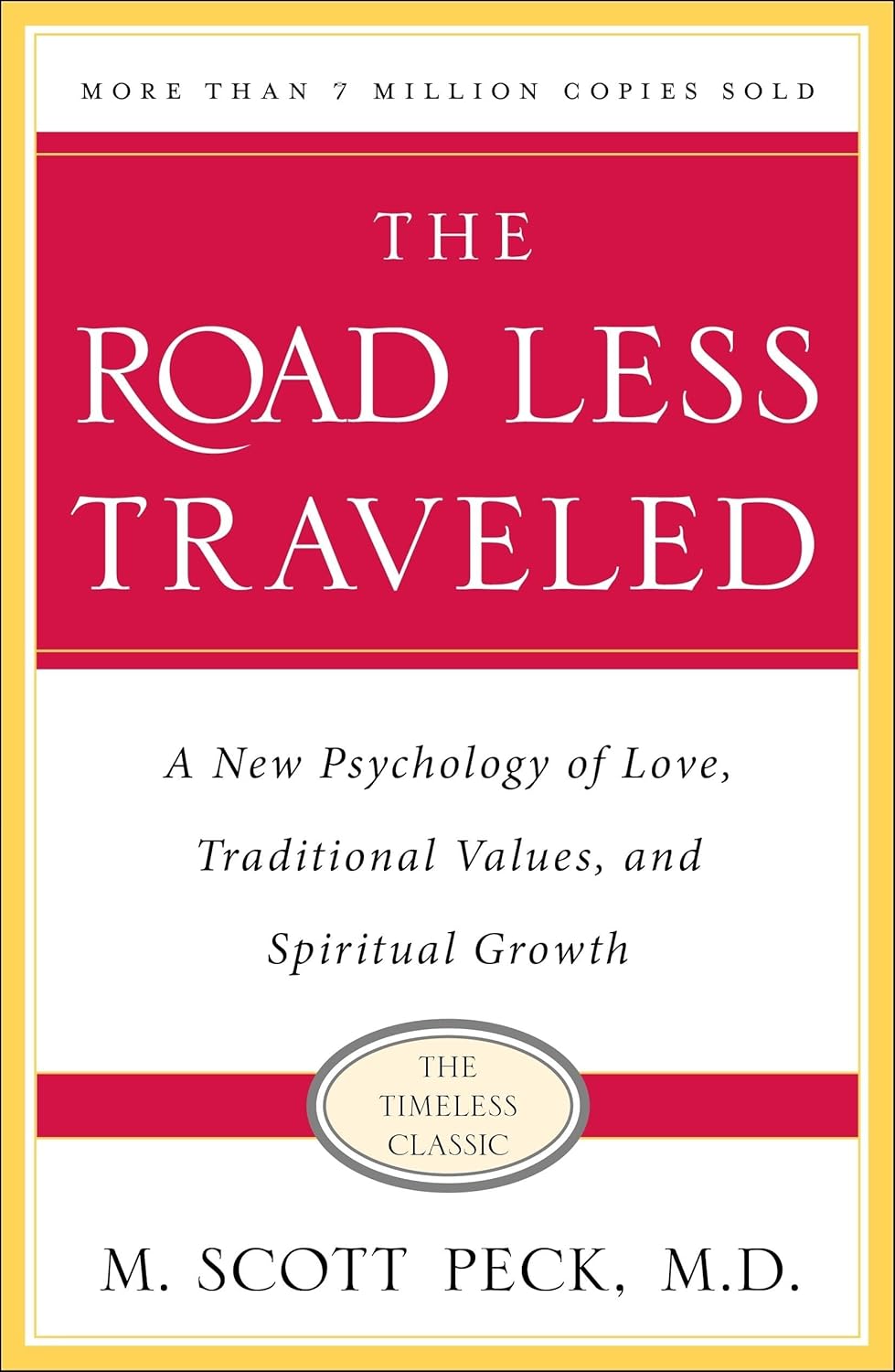
In your 20s or 30s, The Road Less Traveled can come across as philosophical. After 40, Peck’s words feel personal, almost haunting. His opening line — “Life is difficult” — hits differently because, by now, you’ve lived enough to know just how right he was. Peck writes about discipline, responsibility, and emotional maturity in a way that forces you to confront the patterns you inherited, the coping mechanisms you outgrew, and the relationships you’ve either nurtured or neglected.
The second half of the book cuts sharper after 40 because Peck doesn’t sugarcoat human behavior. He calls out self-deception, avoidance, and emotional stagnation with a precision that feels uncomfortably accurate. And suddenly, the book stops being a self-help classic and becomes a mirror you can’t easily look away from.
3. The Prophet — Kahlil Gibran

Read at 25, The Prophet might feel poetic and philosophical. But read after 40, and the simplicity in Gibran’s words reveals a profound maturity. His reflections on love, children, work, pain, giving, and freedom carry a new weight because you now understand the complexity behind simple truths. The passages on love aren’t about romance anymore — they’re about endurance. The sections on work aren’t about career ambition — they’re about meaning. And the chapters on pain? They hit like lived experience rather than abstract concepts.
What changes most after 40 is your relationship with loss, aging, and letting go — and Gibran speaks to all three with tenderness. The book becomes less of a lyrical masterpiece and more of a spiritual companion that grows wiser each time you return to it.
4. When Breath Becomes Air — Paul Kalanithi

This memoir is powerful at any age, but after 40, it’s almost unbearable in its clarity. Kalanithi’s journey — a neurosurgeon confronting his own terminal diagnosis — forces you to face mortality without the buffer of youth. His writing feels sharper, more intimate, and more devastating because, by 40, you’ve likely confronted illness, loss, or life’s fragility up close. The book pushes you to examine what a meaningful life actually looks like, not in theory but in practice.
And strangely, it doesn’t leave you hopeless. If anything, it nudges you toward urgency — toward calling someone back, toward using your time wisely, toward recognizing that purpose is more about alignment than achievement. It’s a book that shifts your priorities whether you want it to or not.
5. Daring Greatly — Brené Brown

Before 40, vulnerability often feels like a buzzword. After 40, it feels like survival. Daring Greatly takes on a different tone because Brown’s research on shame, courage, and emotional exposure suddenly feels relevant to every part of your life — parenting, partnerships, friendships, and even your career. You start noticing the armor you’ve been carrying for decades and how heavy it’s become. The book helps you understand why numbing, perfectionism, and emotional distance come so naturally, and why they’re so exhausting to maintain.
What resonates most after 40 is the idea that vulnerability isn’t weakness — it’s a threshold. A doorway to deeper relationships, healthier boundaries, and a calmer life. Brown’s message shifts from inspirational to deeply practical, especially when you realize how much emotional protection has cost you over the years.
6. The Midnight Library — Matt Haig

When you’re younger, The Midnight Library feels like a creative exploration of regret and alternate lives. But after 40, it reads like a gently delivered punch to the chest. Haig’s premise — stepping into the infinite versions of the life you didn’t live — forces you to confront missed opportunities, closed doors, and the versions of yourself you left behind years ago. The story becomes a tender reminder that the life you’re living right now still matters, even if it doesn’t look anything like the one you once planned. Age gives you enough history to feel every emotional turn with clarity that’s almost startling.
The real shift after 40 is realizing the book isn’t about fantasy or escapism; it’s about acceptance. It reminds you that regret loses its grip the moment you recognize the worth in your current timeline, imperfections and all. The meaning becomes softer, wiser, and strangely comforting.
7. The Body Keeps the Score — Bessel van der Kolk

This book hits entirely differently once you’re old enough to see the long-term patterns in your own reactions, relationships, and emotional habits. At 40+, The Body Keeps the Score feels less like a clinical discussion of trauma and more like a revelation about how life experiences shape everything — from stress responses to emotional triggers. You begin to understand how the past leaves fingerprints on the present, even when you’ve tried to move on. This book helps you uncover the connections between mind, body, and memory with a depth you might have overlooked when you were younger.
The more grounded perspective after 40 makes the book feel hopeful rather than heavy. You realize healing is less about “fixing yourself” and more about reclaiming parts of your life that were quietly put on hold. The message becomes clear: emotional freedom comes from understanding your story, not escaping it.
8. Big Magic — Elizabeth Gilbert

Before the age of 40, Big Magic reads like an inspiring push toward creativity. After 40, it feels like a permission slip to live differently. Gilbert dismantles the myths of talent, fear, and perfectionism with a simplicity that cuts deep when you’ve already spent decades silencing your own creative impulses. Her stories uncover the ways we talk ourselves out of joy, reminding you that creativity isn’t a luxury — it’s fuel. The book lands harder because, by this stage in life, you know how it feels to set dreams aside in favor of responsibility.
And here’s what truly shifts after 40: the fear of embarrassment fades, and the fear of not trying grows louder. Gilbert’s words become a gentle but firm nudge toward pursuing something for yourself — not for validation, not for outcome, but because your inner life deserves space, too.
9. The Subtle Art of Not Giving a F*ck — Mark Manson
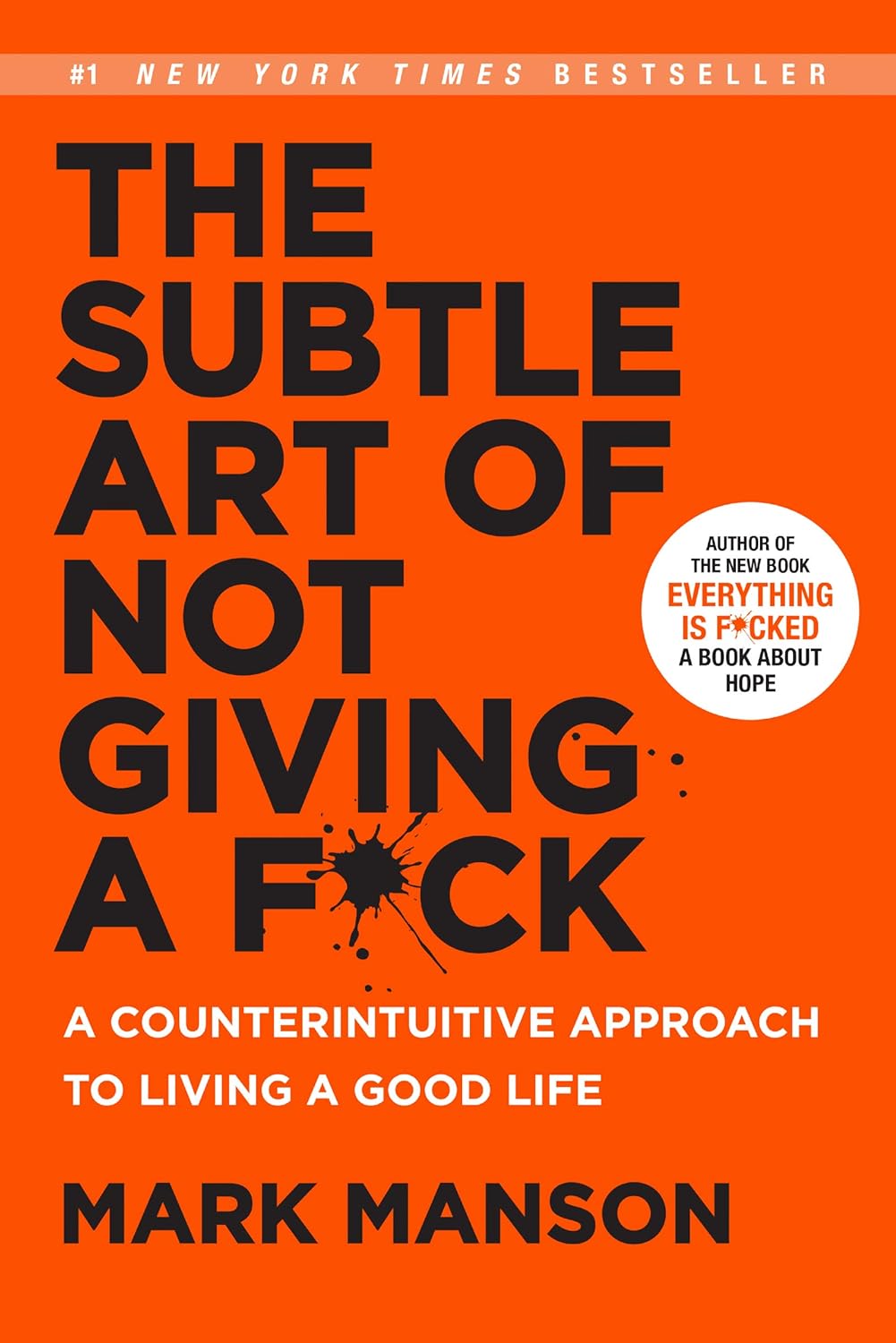
In your 20s, Manson’s writing can feel disruptive, even rebellious. But after 40, it hits with refreshing clarity. The idea that you only have a limited number of “f*cks” to give becomes more than a clever phrase — it becomes a practical strategy for emotional survival. Life has already shown you what chaos looks like, and the book forces you to reassess where your energy goes, what drains you, and what truly matters. Its bluntness exposes how often we’ve wasted our time on things that didn’t deserve us.
With age, the book becomes less about rejecting positivity and more about learning discernment. Manson’s message feels grounded: focus on the values that create peace, and let the rest fall away. The older you get, the more you realize boundaries are not optional; they are sanity.
10. A Man Called Ove — Fredrik Backman

This novel takes on an entirely different emotional tone when you read it after 40. What once felt like a story about a grumpy old man becomes a profound meditation on grief, love, community, aging, and the quiet ways people save each other. At 40+, you’re more attuned to the loneliness hidden beneath competence, the unspoken longing in routine, and the deep tenderness of unexpected connections. Backman manages to blend humor and heartbreak with a precision that feels more real with age.
The book’s second layer — the one that younger readers often miss — is about meaning. It reveals how purpose can slip away slowly, and how it can return in equally small ways. After 40, Ove’s story becomes a reminder that even broken seasons can be rebuilt, often with the help of people you never saw coming.
11. The Wisdom of Sundays — Oprah Winfrey

When you’re younger, Oprah’s conversations with spiritual teachers can feel abstract or overly reflective. After 40, they feel like grounding truths — the kind you only understand once life has knocked you around a little. The Wisdom of Sundays gathers insights from thinkers, psychologists, and spiritual leaders who speak to purpose, healing, connection, and self-expansion. What shifts after 40 is your ability to actually feel the weight of those lessons, because you’ve lived some of them yourself. The book becomes less of a compilation and more of a quiet guide that helps you make sense of the past while preparing for who you want to be next.
The shorter chapters land differently too. They become small doses of clarity — reminders that growth isn’t a single breakthrough, but a lifelong unfolding. You walk away with a sense that wisdom is not something to chase; it’s something you allow.
12. The Tender Bar — J.R. Moehringer

What hits hardest in The Tender Bar after 40 isn’t the coming-of-age story — it’s the subtle ache of longing, mentorship, and belonging. Moehringer recounts his upbringing with humor and heartbreak, but the older you get, the more you notice the deeper layers: the search for role models, the sting of absence, the complex ways we inherit emotional habits. The memoir taps into the truth that family can wound and shape you at the same time, and that our early environments echo far into adulthood. At 40+, those echoes are easier to hear.
The second time around, you also pay attention to how Moehringer writes about self-reinvention. The book becomes less about nostalgia and more about outgrowing the stories you were handed, without losing the parts that made you resilient.
13. The Year of Magical Thinking — Joan Didion

Read in your 20s, Didion’s reflections on sudden loss can feel literary and distant. But after 40, her words are almost unbearably intimate. The Year of Magical Thinking captures the surreal emotional fog that follows profound grief — the disorientation, the denial, the strange rituals of hope. By midlife, most readers have felt loss in some form, which makes the book feel raw in a way that younger readers simply can’t access. Didion’s ability to articulate the unspoken moments of grief gives language to experiences many adults struggle to express.
What changes after 40 is your understanding of time, fragility, and memory. The memoir becomes a companion for anyone who has ever tried to stay strong for others while falling apart inside. It reminds you that grief is not a single season, but a shifting landscape you learn to walk through.
14. Quiet: The Power of Introverts in a World That Can’t Stop Talking — Susan Cain

Before 40, Quiet is often read as a personality book. After 40, it becomes a revelation about boundaries, energy, and self-respect. Cain’s research transforms into validation when you’re old enough to acknowledge how exhausting it is to live according to other people’s expectations. The insights about overstimulation, temperament, and social dynamics feel sharper when you’ve spent decades in workplaces, relationships, or environments where introversion was misunderstood or undervalued. You begin to recognize how your energy deserves better protection than you’ve given it.
The meaning deepens when you realize that introversion isn’t about isolation — it’s about alignment. The book encourages a midlife shift toward environments, routines, and connections that honor your natural wiring. At 40+, you understand the importance of living at your own pace, and Cain gives you the language to finally defend that pace without apology.
