

Some books don’t just inspire you — they rewire your interior life, shift your worldview by a few degrees, and suddenly, nothing looks the same again. Readers often talk about these titles with a strange reverence, as if they’re recalling a personal turning point rather than a reading experience. You close the final chapter and feel a line has been drawn somewhere inside you: before this book and after this book.
Below are the first 5 books from the full list — each one known for disrupting old patterns, forcing emotional clarity, or unlocking something long buried. If you find yourself nodding at any point, that’s usually the sign that the book does what it claims to do.
1. The Untethered Soul — Michael A. Singer

Few books can walk you straight into the mechanics of your inner world the way The Untethered Soul does. Singer breaks down the way thoughts, fears, and emotional triggers form a kind of internal “traffic,” and how most of us spend our lives reacting to it without realizing we can step back and observe instead of absorb. The book’s central question — “Who is the one inside you that notices your thoughts?” — destabilizes people in the best possible way. Readers describe a sense of relief they didn’t know they needed, as if they’d suddenly found the “quiet mode” button in their brain. It’s powerful not because it’s mystical, but because it’s deeply practical: you learn how to interrupt your suffering at its origin.
The second half of the book leans more spiritual, but even skeptics say the core idea of “the watcher” becomes a lifelong tool. You start responding instead of reacting, and that alone creates a clear “before and after.”
2. The Body Keeps the Score — Bessel van der Kolk

Trauma books rarely become household names, but this one didn’t just break into the mainstream — it changed the public conversation about mental health. Van der Kolk, a leading trauma researcher, explains how emotional wounds get stored in the body and resurface as anxiety, chronic pain, rage, emotional numbness, or disconnection. What shakes readers is how methodically he shows that trauma isn’t just psychological — it’s physiological, woven into the nervous system itself. Stories from patients make the theory feel human, and the science makes the hope feel real.
Readers often say they walk away with a sense that their reactions finally make sense. The book doesn’t magically fix anything, but it gives people a map — and sometimes the map is the life-changer.
3. The Mountain Is You — Brianna Wiest
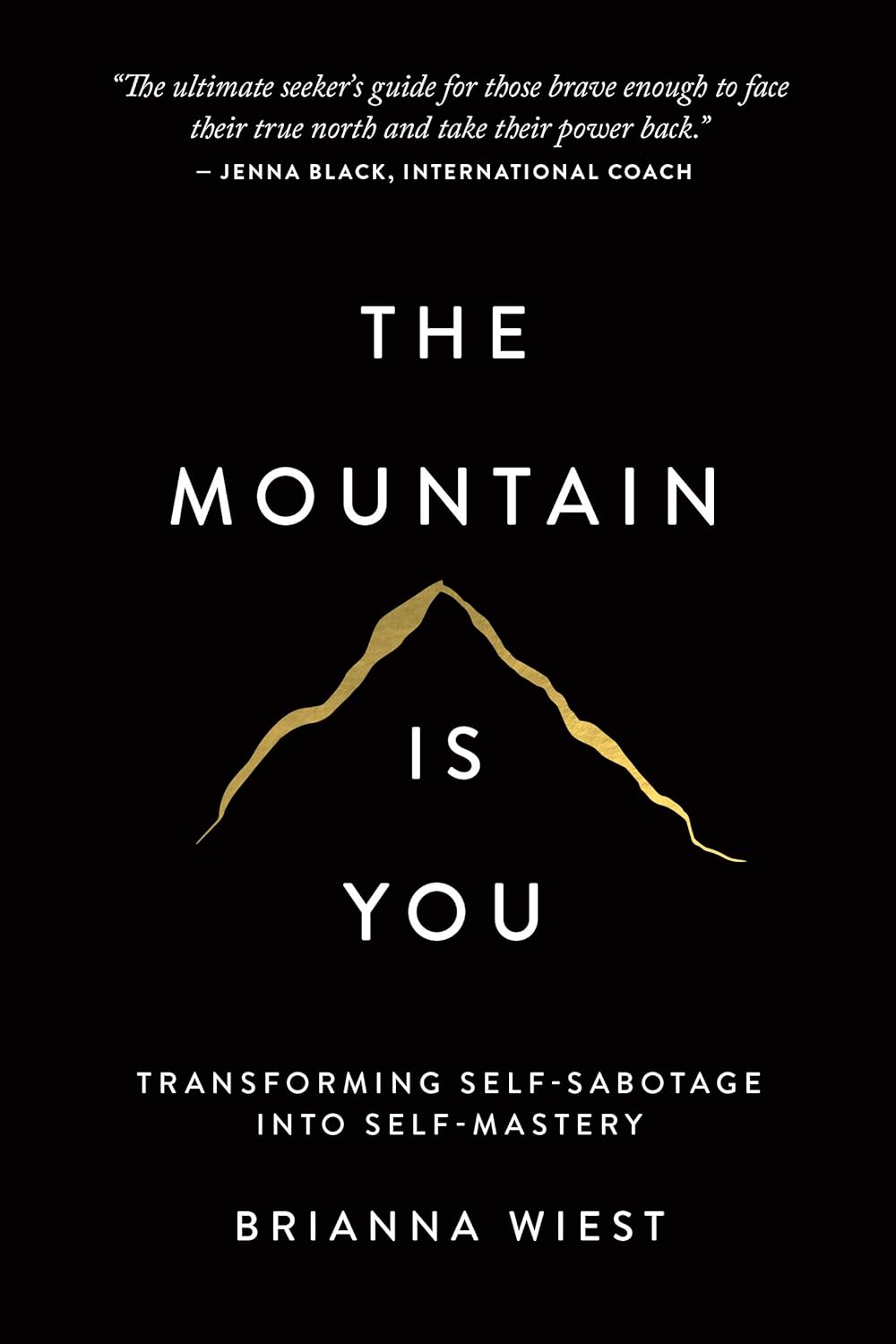
Wiest writes with the kind of clarity that cuts straight through emotional fog. This book focuses on self-sabotage — why you do it, where it comes from, and how it’s often a misguided attempt at self-protection. What hits readers hardest is how she lays bare the subtle behaviors we often don’t recognize as self-sabotage: procrastinating on things we want, downplaying our own abilities, staying in cycles we’ve outgrown, or accepting less than we deserve. Wiest pushes you to confront the uncomfortable truth that your patterns don’t reflect your potential — they reflect your fears. And once you see the pattern clearly, you can’t unsee it.
The tone is compassionate but unflinching. Readers say it feels like a soft confrontation — one that leaves you with language for what you’ve been battling privately for years.
4. The Road Less Traveled — M. Scott Peck
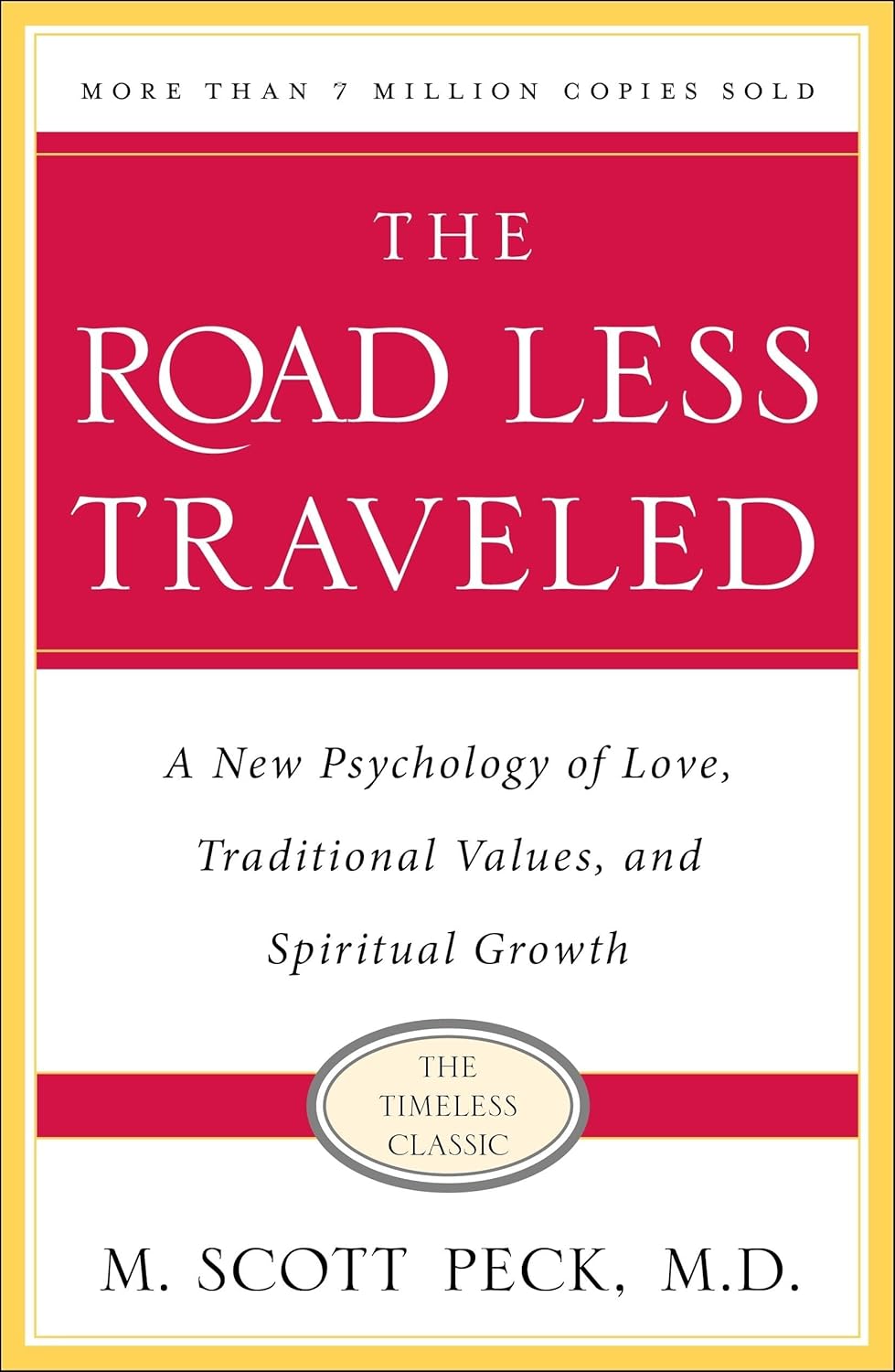
Published in 1978, yet it’s still passed from one generation to the next like a quiet secret. Why? Because Peck opens with a line that punches every reader in the chest: “Life is difficult.” Not in a hopeless way, but in a liberating one — once you stop insisting life should be easy, you can finally grow. The book weaves psychology, spirituality, and plainspoken wisdom into a guide on discipline, responsibility, and the kind of love that requires work, not just feeling. Peck argues that growth is not accidental; it’s intentional, sometimes painful, and always worth it. Readers often say it’s the first time they really examined their emotional life like an adult.
It’s not flashy, but it’s piercing. Many readers describe this book as a slow, steady reorientation — quiet, but irreversible.
5. Awareness — Anthony de Mello

If you want a book that gently dismantles your illusions while making you question everything you thought you knew about happiness, de Mello’s Awareness is that book. It’s a blend of psychology, spirituality, and storytelling, and its impact comes from how disarmingly simple yet spiritually surgical de Mello is. He challenges the belief that happiness comes from external things — jobs, relationships, status — and instead shows how much of our suffering comes from unconscious conditioning. The book doesn’t ask you to strive for a “better” version of yourself; it asks you to wake up to the version already there. For many readers, that shift alone is the “after.”
The short talks that make up the book feel conversational and direct. Many readers describe it as a spiritual slap that somehow feels comforting.
6. The Prophet — Kahlil Gibran

This is one of those rare books that people keep on their nightstand for decades because every reading hits differently. Gibran blends poetry, philosophy, and spiritual insight into reflections on love, marriage, work, freedom, sorrow, and joy. It’s written in short essays, yet each one feels like a distilled truth — the kind you might hear from someone who has lived many lives. What surprises most readers is how the book seems to read them back, highlighting the exact lines they need at each stage of life. The language is lyrical without being complicated, and the insights are simple without being shallow. Many readers describe experiencing a shift in how they understand relationships, loss, and purpose — the kind of shift that creates its own “before and after” moment.
And while it’s short, it lingers. The book becomes something you return to when life gets confusing, because it never tells you what to do — it clarifies what you already know.
7. The War of Art — Steven Pressfield

Pressfield’s book is a punch in the gut for anyone who has ever procrastinated, avoided a dream, or stayed stuck in a cycle of “almost starting.” He introduces the concept of Resistance — the invisible force that rises whenever you attempt anything meaningful. What makes the book powerful isn’t just the idea, but how Pressfield names the very behaviors you think are just “bad habits.” Suddenly, you see that your avoidance, perfectionism, overthinking, and fear of judgment all stem from the same internal enemy. The tone is direct, gritty, and deeply human. Readers often call this book the one that finally made them start — start the business, the novel, the workout routine, the healing process, whatever had been waiting inside them.
It’s a fast read, but not a soft one. Pressfield has a way of holding up a mirror that many readers say they weren’t ready for, but desperately needed.
8. A New Earth — Eckhart Tolle

While The Power of Now is excluded, A New Earth deserves its place because readers often say THIS was the book that shifted them — not the earlier one. This book goes deeper into the ego, the pain-body, and the unconscious emotional triggers that run much of our lives. The tone is more expansive, and Tolle explains how collective suffering is created by individual unconsciousness, making it both philosophical and practical. Readers say it changes everything from how they handle conflict to how they interpret their own emotional reactions. Many describe feeling like their mental fog suddenly cleared, revealing the difference between their true self and the ego-driven identity they’ve been defending for years.
The second half leans into spiritual awakening, but even readers who aren’t spiritual say the psychological insights alone create a permanent shift in how they move through the world.
9. Daring Greatly — Brené Brown

While The Gifts of Imperfection is on the excluded list, Daring Greatly earns its place because it’s the book that shook readers out of hiding and into a new relationship with vulnerability. Brown’s research on shame is groundbreaking, but what stands out is how she explains the way fear of showing up fully quietly shapes relationships, careers, and personal identity. People often say this book helped them understand why they shrink, why they overperform, or why they fear emotional exposure. Brown’s ability to blend data, storytelling, and compassion helps readers feel seen without being judged, and that alone becomes a turning point.
It’s not a self-help pep talk — it’s a manual for courage. A lot of readers say they walked away realizing they had been living with their guard up for too many years.
10. The Wisdom of Insecurity — Alan Watts

Alan Watts has a unique talent for explaining complex spiritual philosophy using clear, human language. This book is a deep dive into why modern people feel anxious, restless, and mentally scattered — even when their lives appear “fine.” Watts argues that much of our suffering comes from the constant attempt to secure the future, control uncertainty, and cling to a stable sense of identity. The book’s power lies in how he dismantles the illusions we build for emotional safety, while offering a more grounded, presence-based view of life. Readers often say the book creates a quiet but profound internal shift, the kind that softens fear and reduces mental chaos.
It’s one of those books where a single paragraph can stop you for days. Many people describe it as the first time their anxiety finally made sense on a deeper level.
11. Women Who Run With the Wolves — Clarissa Pinkola Estés

This book isn’t just read — it’s absorbed. Estés, a Jungian analyst and storyteller, explores the “wild woman archetype” through myths and folklore, connecting them to modern emotional struggles. What readers find transformative is how the book gives language to instincts they’ve ignored their whole lives — the pull toward creativity, ferocity, boundaries, intuition, and self-restoration. Estés shows how cultural expectations have tamed those instincts and how reclaiming them leads to a return to one’s inner strength. Readers often say it’s the first time they recognized their emotional exhaustion not as weakness, but as a sign of disconnection from their authentic self. It’s deeply psychological, deeply poetic, and deeply activating.
Though written with women in mind, many men say it shifted how they view their own emotional suppression and the feminine energy in their lives. It’s a book that doesn’t just change thoughts — it changes self-perception.
12. The Courage to Be Disliked — Ichiro Kishimi & Fumitake Koga

This book disrupts almost every assumption you’ve made about happiness, conflict, and identity. Structured as a conversation between a philosopher and a young man, it presents the principles of Alfred Adler’s psychology in a simple but confronting way. The authors argue that your past does not control your future, that most suffering comes from the desire for approval, and that freedom lies in separating your true tasks from those imposed by others. Readers often say they felt emotionally “punched” by how clearly the book reveals the ways we limit ourselves. It challenges beliefs that feel “normal,” exposing how often we live for validation rather than meaning.
Many say the book created a clean break in their self-understanding — especially the idea that you don’t need to earn worthiness. That insight alone forms its own “after.”
13. Meditations — Marcus Aurelius

Written nearly two thousand years ago by a Roman emperor, this book still lands with a surprising level of relevance and clarity. Meditations is essentially Aurelius’ private journal — his reflections on discipline, humility, ego, suffering, and how to remain steady in a chaotic world. Readers connect with the book because it shows the inner life of someone who had every reason to feel powerful, yet wrote constantly about controlling his reactions, maintaining integrity, and living with purpose. It’s the antidote to modern overwhelm: Aurelius repeatedly reminds us that we can choose our mindset even when we can’t choose our circumstances.
The short entries make it easy to return to again and again. Many readers say it’s the book that finally taught them how to deal with stress, uncertainty, and emotional storms with a calmer, clearer head.
14. The Seven Spiritual Laws of Success — Deepak Chopra

This book is deceptively simple. Chopra distills Eastern philosophy into seven laws — including intention, detachment, giving, and least effort — and explains how they shape a more aligned, meaningful life. What resonates most is how practical and grounded the advice feels once you apply it. Readers often describe a shift in the way they make decisions, letting go of excessive force or mental struggle and learning to work with life instead of against it. The book encourages you to see success not as achievement or status, but as a state of alignment with your purpose and inner truth.
It’s short but rich, and many people re-read it yearly because each pass reveals another layer. Readers often report that their relationship with ambition softens into something more intentional and peaceful.
15. The Art of Happiness — His Holiness the Dalai Lama & Howard C. Cutler

Part conversation, part psychology, part spiritual guide — this book explores what makes life meaningful and emotionally stable, regardless of circumstances. The Dalai Lama explains that happiness is not an emotion but a skill, and the book shows how compassion, awareness, and intentional mental habits reduce suffering. Cutler, a Western psychiatrist, questions, challenges, and grounds the spiritual ideas in research, making the concepts accessible and practical. Readers say the book shifted how they approach conflict, anxiety, and relationships, showing that emotional peace isn’t passive — it’s cultivated.
It’s a gentle book, but a transformative one. Many readers say it helped them understand their mind in a way that made happiness feel possible, not accidental.
