


Let’s be honest for a second. When was the last time you answered the question “How are you?” with “I’m tired,” but what you really meant was something much heavier?
We’re not talking about the kind of tired that a good Saturday morning sleep-in can fix. We’re talking about a bone-deep hollowness. The kind where you feel like a phone that’s been plugged in all night but still only charges to 12%.
If you’re nodding along, you aren’t alone. In 2024, we hit a tipping point. About 82% of desk-based workers now report feeling somewhere between “slightly” and “extremely” burned out. It’s become so prevalent that it’s costing the global economy nearly $9 trillion a year. But forget the economics for a moment—let’s talk about you.
There is a massive difference between being stressed (which is having too much on your plate) and being burned out (which is feeling like the plate doesn’t even matter anymore). Stress is an engine revving in the red—it’s loud, it’s hot, but it’s producing power. Burnout? That’s when the engine seizes. The fuel is gone, the parts have fused, and no amount of pressing the gas pedal is going to make you move.
Here is the deep dive into what is actually happening to your biology, the subtle signs you’re missing, and how to actually fix it (without just hearing “go take a vacation”).
Your Body on Burnout (The Science of “The Broken Thermostat”)

I know, “neurobiology” sounds dry, but stay with me because understanding this changes everything. You aren’t just “weak” or “lazy.” You have a biological injury.
Your body has a stress management system called the HPA Axis (Hypothalamic-Pituitary-Adrenal axis). Think of it like the thermostat in your house. When things get hot (stress), it kicks on the AC (cortisol) to manage the energy and inflammation. Once the threat is gone, the thermostat clicks off, and you cool down.
But in burnout, that thermostat has broken.
Because you’ve been “on” for so long—deadlines, family, news, notifications—the switch is stuck. Your body is flooding you with cortisol when you should be sleeping and withholding energy when you need to be awake. You end up with a “flattened” cortisol curve. This is why you can feel completely exhausted all day but suddenly wide awake at 11:00 PM. It’s not a bad habit; it’s a hormonal misfire.
Neurobiologically, your brain is actually remodeling itself under this pressure:
- The Fear Center (Amygdala) grows: You become hyper-sensitive. A neutral email from your boss suddenly feels like a threat.
- The CEO (Prefrontal Cortex) shrinks: This is the part responsible for focus and decision-making. If you’ve ever stared at a menu unable to pick a sandwich, that’s your PFC tapping out.
8 Subtle Signs You’re Burned Out
We all know the big signs—collapsing on the sofa, snapping at your partner. But burnout is sneaky. It often shows up in ways we dismiss as just “bad personality traits.”
Revenge Bedtime Procrastination
You know the scene. It’s 11:30 PM. Your eyes are burning. You know you need to sleep. But you’re still scrolling TikTok or watching a show you don’t even like.
This is called Revenge Bedtime Procrastination. It’s a rebellion. When your entire day belongs to your boss, your kids, or your chores, the night is the only territory you have left. You are trading sleep for autonomy. It’s a desperate attempt to feel like you still own your life.
2. Anhedonia (The “Graying” of the World)

This is a big one. You used to love cooking, or running, or painting. Now? The thought of doing it feels like climbing Everest. You don’t feel sad, necessarily. You just feel… flat.
This is anhedonia. It’s a dopamine dysfunction. Your brain’s reward system has disconnected the “effort” from the “pleasure.” You stop anticipating joy, so you stop doing the things that bring it. As the psychologist Adam Grant points out, this “emotional deadening” is the opposite of the over-engagement of stress.
3. The “Tired but Wired” Paradox

You spend the whole day fantasizing about your bed. You feel heavy, sluggish, and foggy. But the second your head hits the pillow? Ping. Your eyes snap open. Your brain starts listing everything you forgot to do.
This goes back to that broken HPA axis. Your cortisol is spiking at night when it should be dropping. You aren’t an insomniac; you’re chemically inverted.
4. Emotional Blunting (Compassion Fatigue)

A friend tells you bad news, and you know you should feel empathy, but you just… don’t. You feel like you’re watching the conversation through a pane of glass.
This isn’t you being a bad person. It’s your brain’s safety breaker tripping. When you’re overwhelmed, your system conserves energy by shutting down emotional resonance. In healthcare and helping professions, this is often called compassion fatigue. You literally don’t have the caloric energy to care.
5. Cynicism as a Default Setting

“Why bother? It’s not going to work anyway.” If you find yourself rolling your eyes at new ideas or assuming the worst outcome immediately, that’s not just an attitude problem. Cynicism is a shield. It protects you from investing energy into things that might fail. It’s the second dimension of the classic Maslach Burnout Inventory. You’re protecting your limited resources by disengaging before you even start.
6. Decision Paralysis

You’ve managed complex spreadsheets all day, but you come home and your partner asks, “What do you want for dinner?” and you want to cry.
This is decision fatigue. Your Prefrontal Cortex has a battery life. Burnout drains it faster. Simple choices become physically painful because your brain has no “executive function” fuel left to weigh the options.
Somatic Screams
The Body Says NoVague headaches. Jaw clenching. Stomach issues that doctors can’t quite pin down. Or the classic “Leisure Sickness”—where you finally take a weekend off and immediately get the flu.
Your body keeps the score. When you ignore the mental signs, your body will eventually make you stop. It shifts you into a chronic inflammatory state, suppressing your immune system until you finally pause—and then the floodgates open.
8. Imposter Syndrome & “Reduced Efficacy”

You feel like you’re getting worse at your job. You double-check emails because you don’t trust your brain. You feel like a fraud who is about to be found out.
This creates a vicious cycle. You work longer hours to compensate for your “stupidity,” which makes you more tired, which makes you make more mistakes. It’s the third pillar of burnout: a sense of ineffectiveness.
Part V: Need More Help For Your Recovery? Look Into These
Look, you don’t need to buy your way out of burnout. The best tools—breathing, movement, boundaries—are free. But sometimes, when your nervous system is fried, “willpower” isn’t enough. You might need a physical tool to bridge the gap between knowing you need to relax and actually feeling safe enough to let go. Based on the research and the symptoms we’ve discussed, here are five highly effective tools that can help hack your physiology and speed up recovery.
1. Loop Earplugs (For Sensory Overwhelm):

If you’re dealing with the “Vampire Effect” where every sound makes you rage, these are a lifesaver. Unlike foam plugs that block everything, these just lower the volume. You can still hear your kids or colleagues, but the “edge” is taken off, saving your brain precious processing energy.
2. Manta Sleep Mask (For NSDR & Deep Rest):
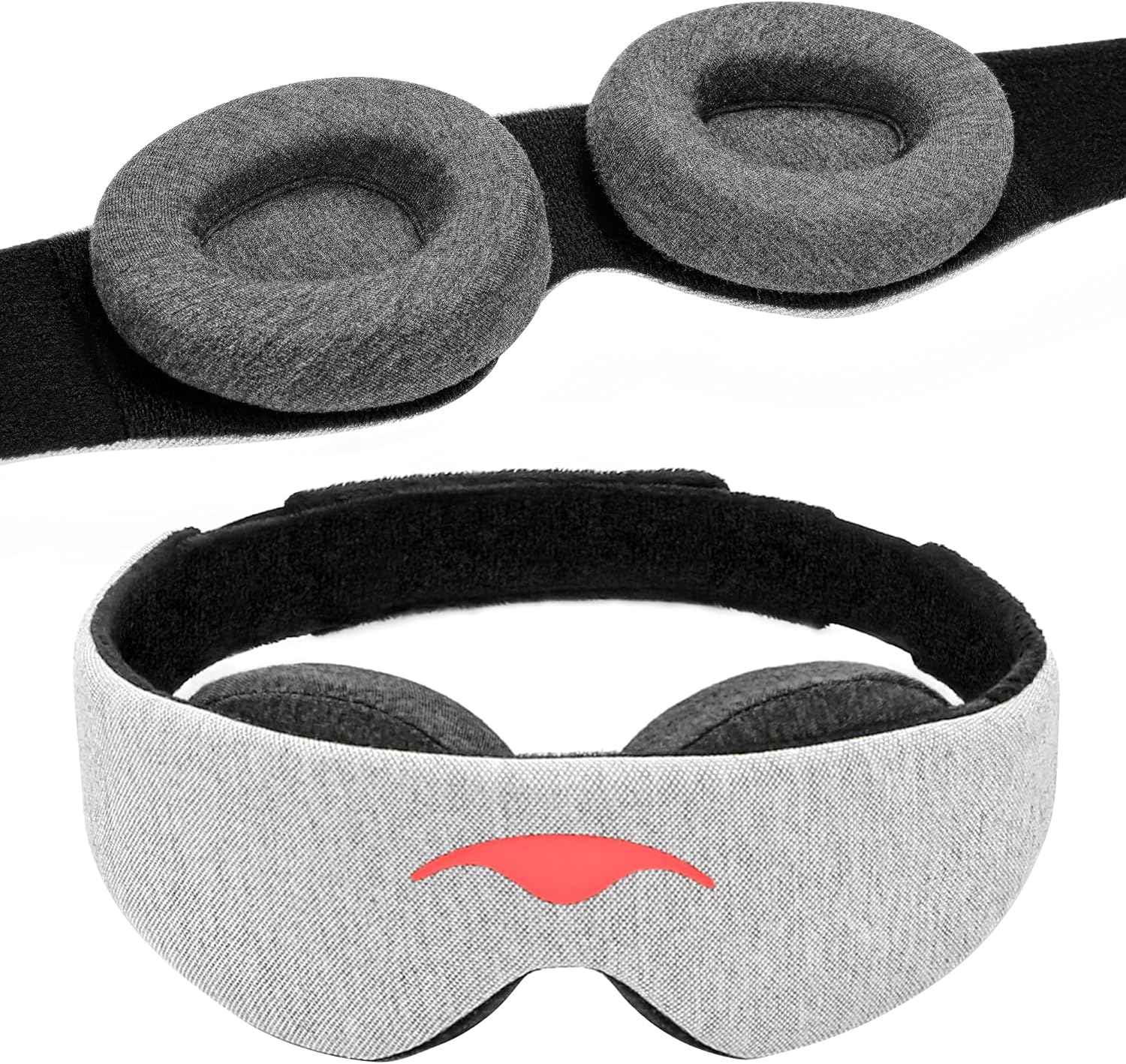
To make NSDR (Non-Sleep Deep Rest) effective, you need total darkness to shut down the visual cortex. The Manta mask is unique because it has deep eye cups—you can open your eyes inside it without your lashes touching anything. It’s like a portable sensory deprivation tank.
3. The Anti-Anxiety Notebook (For Mental Offloading):

When your brain is stuck in a loop of worry (Mental Rest deficit), you need to get it out. This isn’t just a blank journal; it uses Cognitive Behavioral Therapy (CBT) prompts to guide you through reframing stressful thoughts. It’s essentially therapy in your pocket for those 3 AM panic moments.
4. A Weighted Blanket (For Deep Nervous System Safety):

Research suggests that “Deep Pressure Stimulation” lowers cortisol and raises serotonin. A weighted blanket mimics the feeling of a heavy, safe hug. If you feel “tired but wired” at night, the weight provides a physical signal to your autonomic nervous system that it is safe to power down.
5. Acupressure Mat (For Somatic Tension):

Burnout stores tension in your physical tissues (The Body Keeps the Score). An acupressure mat (often called a Shakti mat) looks like a bed of nails, but lying on it for 20 minutes triggers a massive release of endorphins and relaxes the muscles in your back and neck that have been bracing for impact all day.
