

Turning 50 used to feel like crossing an invisible line—one where you braced yourself for slower recall, names slipping away, and that nagging thought that the “mental prime” has passed. But neuroscientists have been quietly proving something far more encouraging: your brain is incredibly trainable, shockingly adaptable, and capable of real improvement well into your 60s, 70s, and beyond. What matters is what you feed it—your habits, your environment, and yes, the books you spend time with.
The right books don’t just teach; they stimulate neuroplasticity, challenge memory pathways, spark new neural connections, and give your brain the cognitive workout it secretly craves. Whether you’re trying to stay mentally nimble for work, keep your creativity alive, or simply stay “you” as the years unfold, these reads are your personal toolkit. Below are the top neuroscientist-approved titles—starting with five of the most powerful.
1. Moonwalking with Einstein — Joshua Foer

Joshua Foer’s deep dive into the world of memory champions is perfect for anyone over 50 who’s suddenly noticing names evaporating mid-sentence. Foer trains with world memory competitors and discovers that memory is not an innate talent but a skill built through deliberate techniques. What makes the book especially powerful for aging brains is its explanation of the “memory palace,” a method proven to strengthen spatial memory, recall speed, and cognitive stamina. Neuroscientists often recommend it because it indirectly improves overall brain performance—not just memory—by teaching you to use more of your attentional and visual-processing systems. It’s entertaining but also surprisingly practical, showing how even an ordinary brain can perform at extraordinary levels with the right training.
The book also helps reduce the quiet anxiety many people feel as forgetfulness becomes more common. Foer’s journey reminds readers that memory decline is not inevitable, and that using your brain intentionally can reverse more than you think.
2. The Brain That Changes Itself — Norman Doidge, M.D.

If there is one book neuroscientists universally recommend for anyone over 50, it’s this one. Doidge compiles astonishing case studies that show how neuroplasticity continues well into late adulthood, debunking the old myth that the brain “hardens” with age. Through stories of stroke survivors, people restoring lost senses, and adults learning new skills after decades of stagnation, the book reinforces a thrilling truth: your brain can adapt, reorganize, and rebuild—if you give it the right challenges. For readers over 50, this is empowering most deeply. It turns curiosity, learning, and small daily habits into tools that literally reshape your mental landscape.
The shorter chapters also make it easier to digest, especially if you want evidence-based guidance rather than theory. Doidge delivers the science in a clear, hopeful, and deeply motivating tone—exactly what most readers need as they navigate cognitive changes.
3. Thinking, Fast and Slow — Daniel Kahneman

Kahneman’s bestselling exploration of how the mind works is as close as you’ll get to a mental “fitness test.” The book identifies the two systems controlling your thinking—your quick, instinctive brain and your slow, analytical one. As we age, the fast system tends to dominate, while the slow system—responsible for complex reasoning—gets less practice. That’s why neuroscientists recommend this book: it forces your analytical circuits to fire, strengthening the very networks that tend to weaken over time. Real-world experiments, puzzles, and fascinating mental traps keep your brain engaged in a way that feels challenging but rewarding.
Even the way the book is structured sharpens your attention and cognitive endurance. Kahneman’s explanations reveal the habits and shortcuts your brain uses without your permission, offering a mental tune-up that leaves you more aware, more precise, and more mentally flexible.
4. Why We Sleep — Matthew Walker, Ph.D.

Cognitive sharpness after 50 isn’t just about learning; it’s also about recovery—and sleep is the foundation. Walker explains how sleep quality affects memory consolidation, emotional balance, and long-term brain health, especially as natural sleep cycles shift with age. The book breaks down what actually happens inside the brain each night: how the hippocampus transfers memories, how REM sleep boosts creativity, and how deep sleep protects against long-term neurological decline. Many neuroscientists call this book a must-read because poor sleep is one of the most overlooked reasons people feel “mentally slower” later in life.
The second half of the book offers realistic changes you can implement immediately—many of which genuinely help restore clarity and sharpness. Walker’s explanations effortlessly connect everyday behavior with tangible brain benefits, making this an essential guide for anyone who wants to stay mentally resilient.
5. The Wisdom Paradox — Elkhonon Goldberg, Ph.D.

Goldberg—a renowned neuroscientist—explores the fascinating idea that aging doesn’t just bring decline; it brings a powerful shift from raw processing speed to deep, pattern-based intelligence. In other words, your brain may get slower, but it gets wiser—and that wisdom can be trained. He explains how the frontal lobes and right hemisphere strengthen with age and how using them intentionally helps sharpen insight, creativity, and emotional judgment. For readers over 50, this book feels like a revelation, turning age into a cognitive advantage rather than a liability.
The examples from his clinical work help readers understand how to use their “wisdom circuits” more actively. By highlighting the difference between mental speed and mental depth, Goldberg offers a refreshing, empowering, and science-backed perspective that helps you appreciate what your brain gains over time.
6. Lifespan: Why We Age—and Why We Don’t Have To — David A. Sinclair, Ph.D.

This isn’t just a book about extending life—it’s about extending brain vitality, which is exactly why so many neuroscientists recommend it to adults over 50. Sinclair, one of the world’s leading aging researchers at Harvard, breaks down how aging works at the cellular level in a surprisingly accessible way. He explains the role of sirtuins, mitochondrial decline, and the “information theory of aging,” all while showing readers how lifestyle choices can slow brain aging. For anyone who wants to stay mentally sharp, this book offers a clear roadmap: nutritional tweaks, daily habits, stress reduction, and specific longevity practices that actually protect cognitive function.
What makes it particularly compelling is how actionable it is. Readers walk away understanding why certain behaviors sabotage memory while others strengthen it. The book’s greatest gift is the sense that brain aging isn’t a passive experience, and that you have more control than you think.
7. A Mind for Numbers — Barbara Oakley, Ph.D.
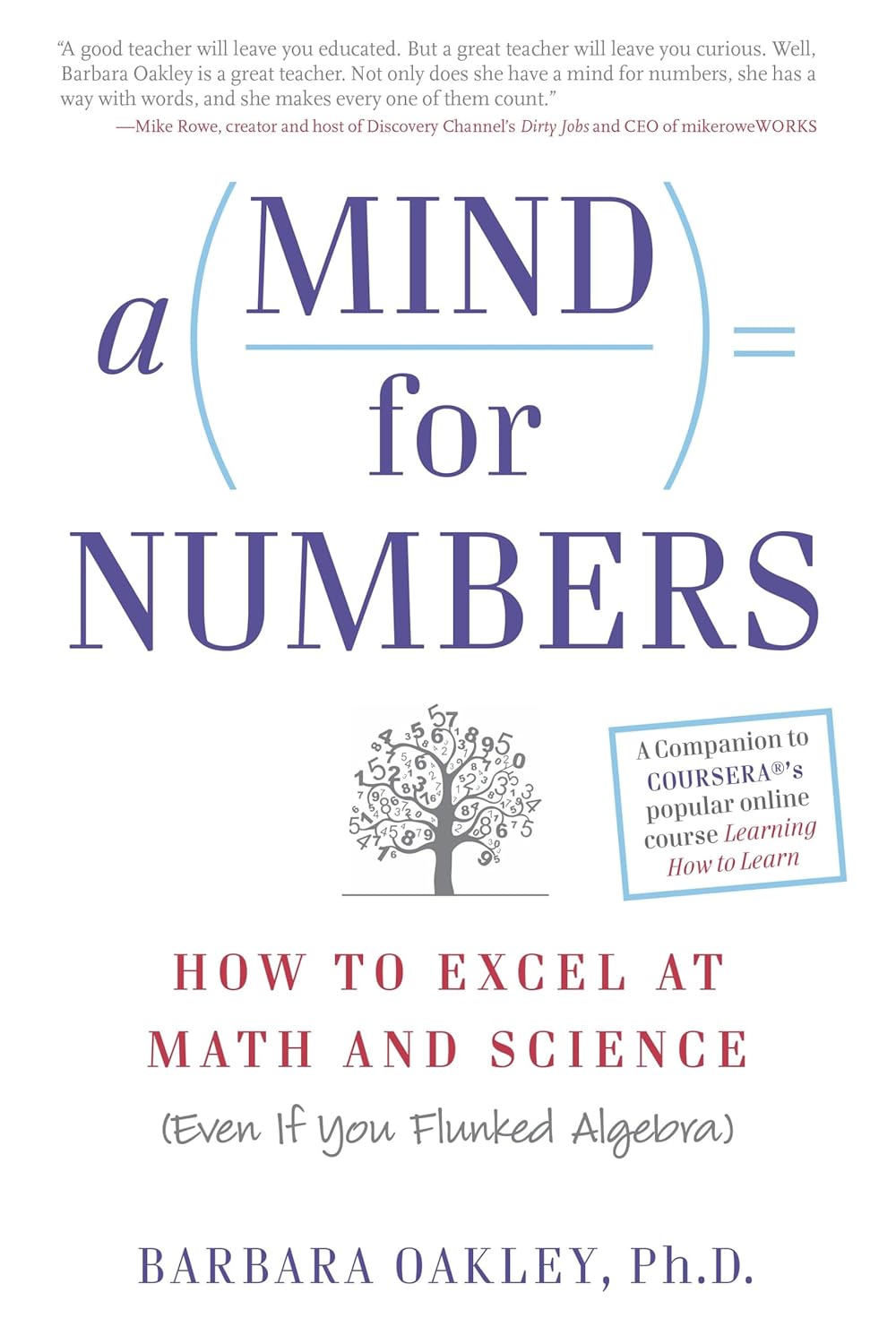
Despite the title, this book isn’t only for people interested in math or science—it’s a guide to learning efficiently at any age. Oakley, a former engineer turned learning expert, explains how the brain switches between “focused” and “diffuse” modes and why mastering this toggle can dramatically improve memory, problem-solving, and creative thinking. For people over 50, this insight is immensely valuable because cognitive stamina and recall naturally shift with age. Oakley shares strategies that strengthen neural circuits responsible for attention, retention, and complex reasoning, making the book especially useful for anyone who wants to stay mentally adaptable.
The book is filled with practical tips based on real neuroscience: breaking tasks into small chunks, using spaced repetition, and countering procrastination. These methods push your brain to stay active, making it a personal workout routine for mental longevity.
8. Keep Sharp: Build a Better Brain at Any Age — Sanjay Gupta, M.D.
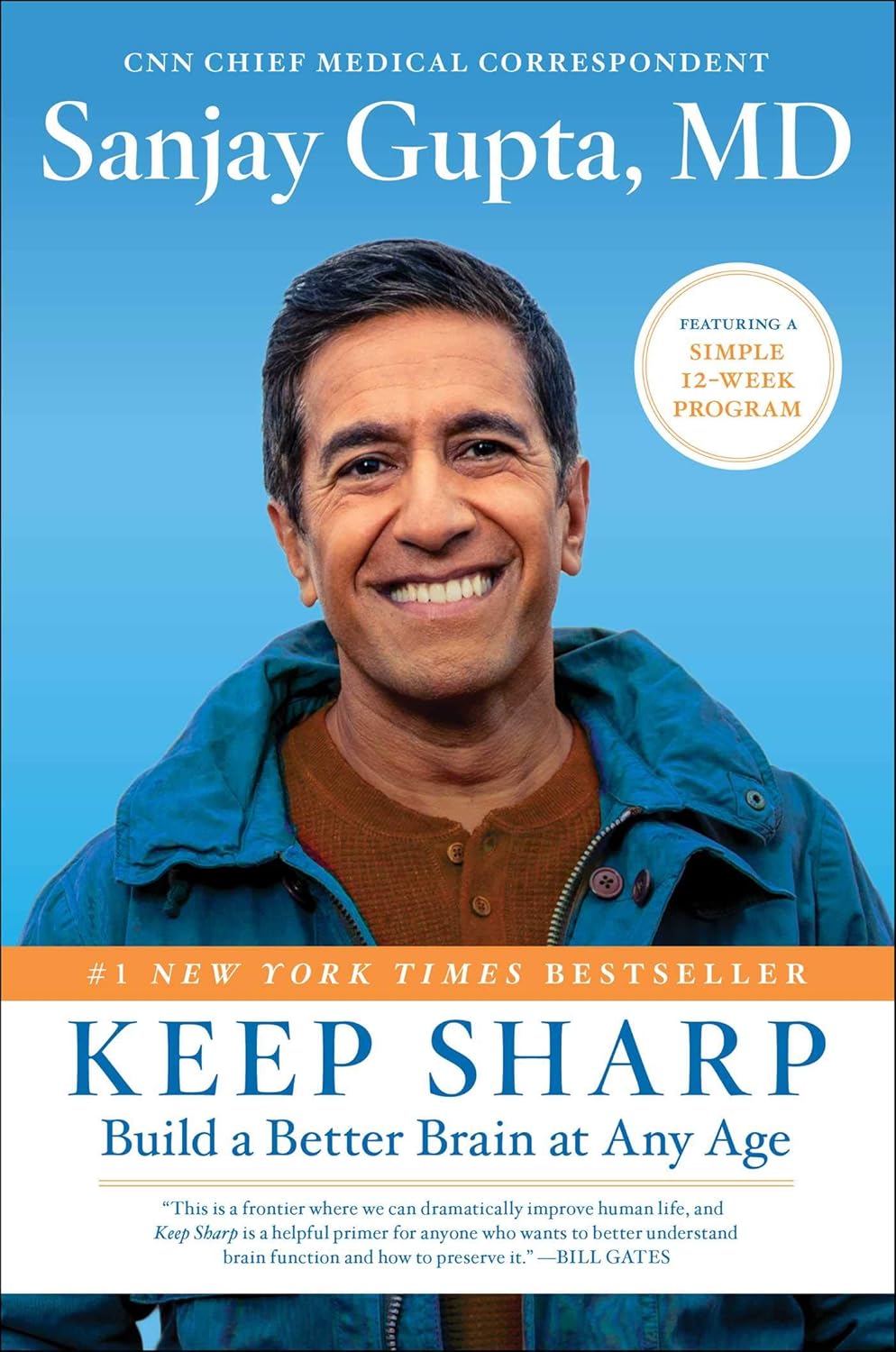
Dr. Sanjay Gupta combines medical expertise with decades of neuroscience reporting to deliver one of the most comprehensive brain-health guides available today. He breaks down what accelerates age-related cognitive decline and, more importantly, what slows it: movement, learning, connection, sleep, and stress management. The book integrates cutting-edge research—everything from inflammation to neurogenesis—into practical advice you can use immediately. It’s especially helpful for readers over 50 because Gupta addresses the specific brain changes that start occurring around this age and how to counter them effectively.
The strength of this book is how actionable and hopeful it feels. Gupta outlines a clear three-part plan for boosting memory, sharpening processing speed, and preserving long-term cognitive resilience. It’s a reassuring reminder that brain health can be built, protected, and restored, no matter your age.
9. The SharpBrains Guide to Brain Fitness — Alvaro Fernandez & Dr. Elkhonon Goldberg

If you want a science-backed overview of how to train your brain the way you train your body, this guide is a goldmine. Fernandez and Goldberg bring together decades of cognitive research and distill it into a practical blueprint for lifelong brain fitness. They explain how different types of mental exercises—problem-solving, working memory tasks, cognitive flexibility challenges—activate different neural systems. For those over 50, this is invaluable because it clarifies which activities genuinely build sharpness and which ones are just pleasant habits with little neurological payoff. The book also debunks common myths, like the idea that crossword puzzles alone keep your brain young.
Its real strength is its measurable, step-by-step approach. The authors help you assess your cognitive strengths, identify areas that need reinforcement, and build a personal plan for mental longevity. Everything is grounded in evidence, and every chapter reinforces the message that your brain can stay strong—if you train it strategically.
