
The “One-Touch” Method and 9 Other Secrets of People Whose Homes Are Always Clean.


You know that feeling when you walk into someone’s house and it just feels… light? The air seems crisper. There are no piles of “doom” on the counter. It feels like they have life figured out in a way you don’t.
For a long time, I thought these people possessed some genetic trait I lacked. Maybe they didn’t need sleep? Maybe they enjoyed scrubbing baseboards?
But here’s the truth I’ve found after digging into the research: People with clean homes aren’t working harder than you. In fact, they’re often working less. They aren’t spending their weekends marathon-cleaning because they’ve mastered the art of micro-habits—tiny, almost invisible adjustments to how they move through a room.
It’s not magic. It’s physics, neurobiology, and a little bit of strategy. And honestly? It’s completely learnable.
Here is a look at the “One-Touch” method and the nine other secrets that build that elusive “always clean” lifestyle, stripped of the judgment and backed by science.
1. The “One-Touch” Rule (The Golden Secret)

If you take only one thing from this entire deep dive, let it be this. The “One-Touch” rule is the operational backbone of every tidy home.
The concept, often credited to productivity experts like Ann Gomez, is deceptively simple: When you pick something up, you don’t put it down until it is at its final destination.
Why We “Churn”
Think about how we usually handle mail. You grab it from the box, walk inside, and toss it on the entryway table. Later, you move it to the kitchen counter to make room for dinner. Then, you shuffle it into a pile when guests come over. By the time you actually open it, you’ve touched that single envelope five times.
That is called “churning.” Every time you touch that item and delay the decision, you are opening a “cognitive loop” in your brain. It drains your mental battery.
The Fix
Adherents of the One-Touch rule stop the cycle. They sort the mail over the recycling bin. Junk goes in the trash immediately; bills go in the “To Pay” folder. Done. Loop closed.
The One-Touch Difference:
| Item | Standard Behavior (The Stress Cycle) | One-Touch Protocol (The Freedom Cycle) |
| Coat | Draped over the back of a chair “for now.” | Hung immediately in the closet upon entry. |
| Laundry | Clean clothes left in the basket to wrinkle. | Folded or hung directly from the dryer. |
| Dishes | Left in the sink to “soak.” | Rinsed and put directly into the dishwasher. |
It sounds rigid, I know. But the mental relief of not seeing “tasks” in every corner of your room is worth the initial effort.
2. The 2-Minute Rule (Killing Procrastination)

We all have that voice in our head that says, “Ugh, I don’t want to do this right now.” That is your brain’s amygdala reacting to a perceived threat (boredom or effort).
The “2-Minute Rule,” made famous by David Allen’s Getting Things Done, is the hack to bypass that response. The rule is: If a task takes less than two minutes, do it the moment you notice it.
Why does this work? Because 120 seconds isn’t threatening.
- Wiping the bathroom sink after brushing your teeth?
- Hanging up the towel?
- Breaking down that Amazon box?
When you delay these tiny tasks, they snowball. A sink with toothpaste splatters is annoying; a sink with week-old hardened toothpaste requires scrubbing, chemicals, and 10 minutes of your Saturday. Do it now, and it’s effortless.
The Closing Shift
Your Gift to Tomorrow
Think of a coffee shop. They don’t leave milk out for the next day. They reset to baseline.
You are the morning crew. Don’t start your day in “Stress Debt.”
Kitchen Zero
Run the dishwasher. Wipe the counters.
Living Room Sweep
Reset pillows, fold blankets, hide the remote.
This is a concept stolen from the hospitality industry, and it’s a game-changer for mental health.
Think about a coffee shop. They don’t just lock the doors at 9 PM and leave the milk out and the grounds on the floor. They do a “closing shift” to reset the store to baseline so the morning crew can start fresh.
You are the morning crew.
If you wake up to a sink full of dishes and a messy living room, you are starting your day in a “stress debt.” You’re already behind.
The Daily Reset Routine
You don’t need to deep clean. Just reset the stage.
- Kitchen Zero: Run the dishwasher. Wipe the counters.
- The Living Room Sweep: Reset the pillows, fold the throw blanket, put the remote back.
It takes 15 minutes, but waking up to a peaceful home changes the trajectory of your entire day.
4. The Science of Stress: Why Clutter Hurts

Let’s pause for a second and talk about why this matters. This isn’t just about aesthetics; it’s about your body chemistry.
There was a fascinating study done (often cited in relation to UCLA researchers Saxbe and Repetti) involving dual-income families. They tracked cortisol levels—the stress hormone—throughout the day.
Here is what they found:
Women who described their homes as “cluttered” or full of “unfinished projects” had flatter diurnal cortisol slopes. Translation: Their stress levels didn’t drop when they came home. Their home was keeping them in a state of chronic, low-level fight-or-flight.
Men, interestingly, were less affected by the visual clutter in this study—likely due to societal conditioning regarding who carries the “mental load” of household management. But for many of us, clutter is literally physically stressful. Clearing it is self-care.
5. Inventory Control: “One-In, One-Out”
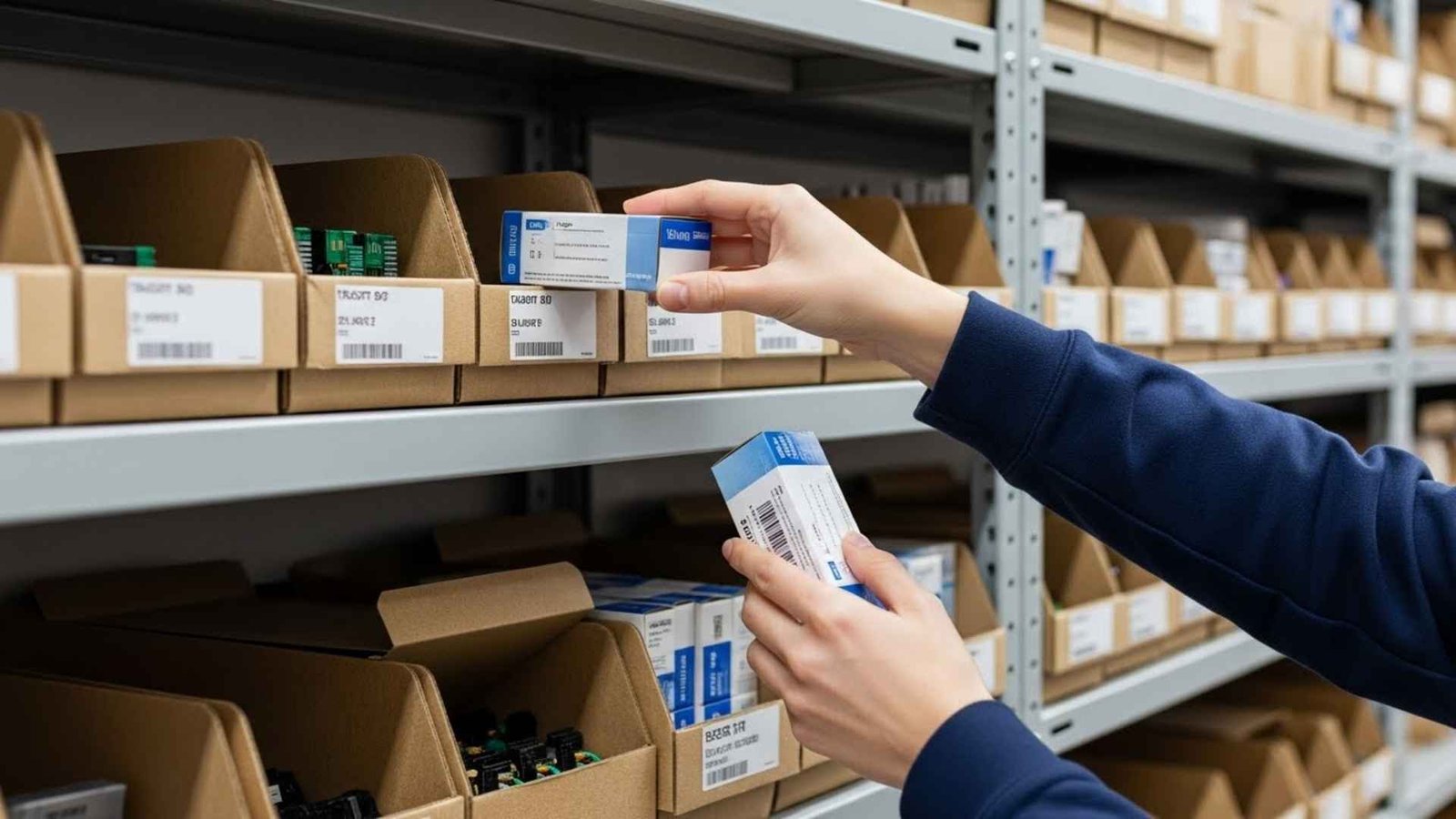
Here is a hard pill to swallow: You cannot organize clutter.
If you have more inventory than you have storage space, no amount of color-coded bins will save you. Tidy homes operate on a strict inventory cap.
The “One-In, One-Out” rule acts as a friction mechanism. If you want to buy a new pair of boots, you have to be willing to part with an old pair to make space. If the new boots aren’t worth the effort of donating the old ones, you don’t buy them.
It forces you to stop and ask: Do I want this object, or do I just want the dopamine hit of buying it?
6. Zone Cleaning (Stop the Marathon)

The “Binge-and-Purge” cleaning cycle—where you trash the house all week and then spend 6 hours cleaning on Saturday—is a recipe for burnout. It teaches your brain that cleaning is a punishment.
Instead, smart cleaners use Zone Cleaning (popularized by methods like FlyLady).
- Week 1: Focus on the Kitchen.
- Week 2: Focus on the Living Room.
- Week 3: Focus on Bathrooms.
During “Kitchen Week,” you might wipe down the cabinet fronts or deep clean the toaster. The rest of the house just gets a quick maintenance wipe. This way, the deep cleaning happens on a rotation, and you get your weekends back.
7. The “No Shoes” Policy (The Biological Secret)

A home can look clean but be biologically filthy. One of the easiest ways to keep a home cleaner (and healthier) is a strict “No Shoes” policy.
The Stats are Gross:
A University of Arizona study found that shoe soles carry high loads of bacteria, including E. coli, along with pesticides and lead dust.
When you wear shoes inside, you are tracking 80% of the outdoor filth right onto your carpets, where it gets trapped and kicked back up into the air you breathe. Take them off at the door. It cuts down on vacuuming and keeps the air safer.
8. “Clean As You Go” (The Culinary Secret)
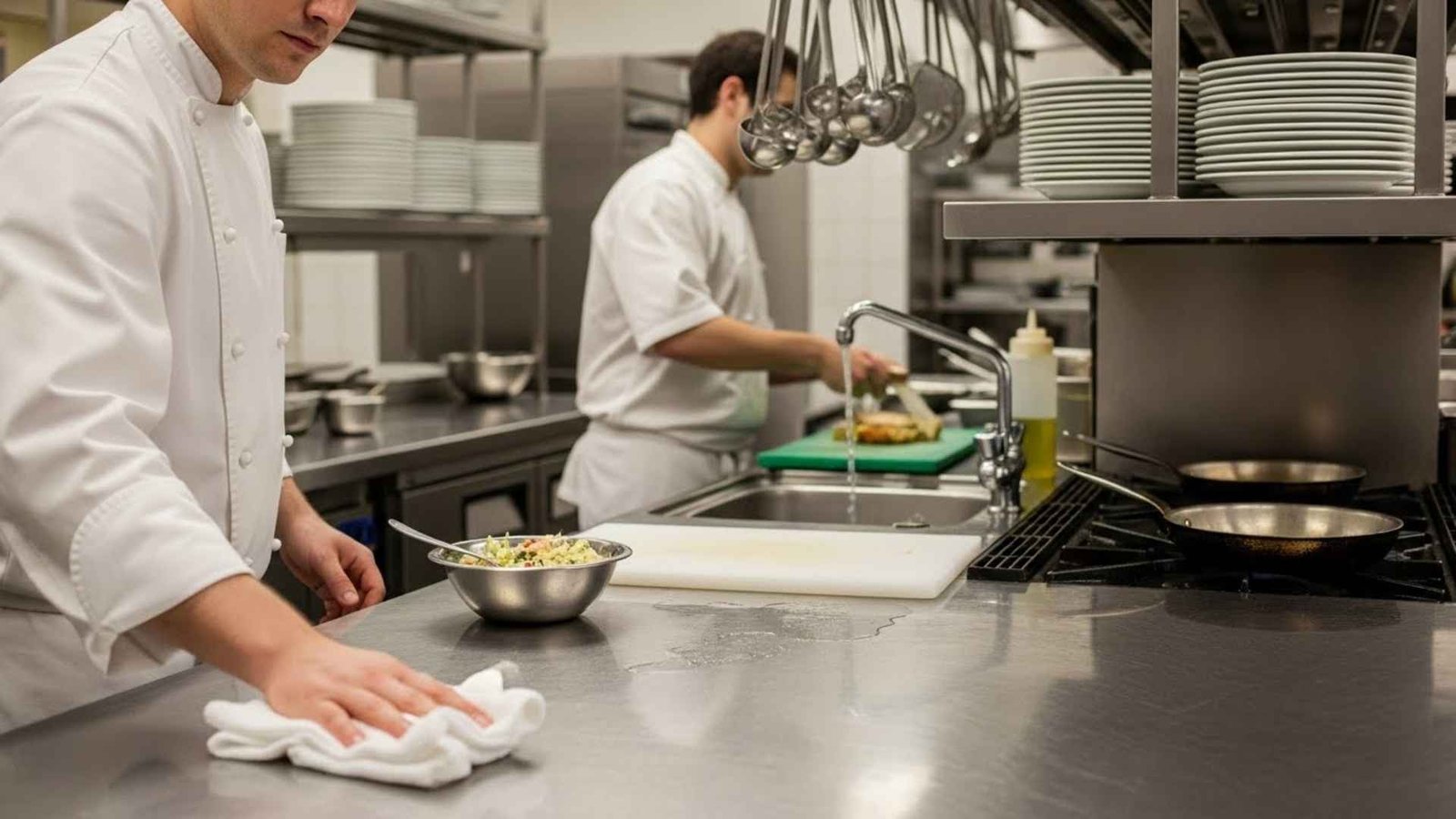
Watch a professional chef. They don’t cook a huge meal and then start cleaning the disaster zone. They practice mise-en-place. They wash the knife immediately after chopping. They wipe the board.
In our homes, we can do the same:
- Cooking? Load the bowls into the dishwasher while the pasta boils.
- Showering? Squeegee the glass before you get out (prevents hard water buildup).
- Brushing teeth? Wipe the faucet handles while you swish.
By merging the cleaning into the activity, you prevent the mess from ever reaching “critical mass.”
☠️ Chemical Safety
RESPECT THE CHEMISTRY! NEVER MIX THESE:
(Note: Ammonia is found in many glass cleaners)
Respect Dwell Time
Don’t just spray & wipe! Most disinfectants need to sit wet for 3 to 10 minutes to actually kill bacteria.
People who are serious about cleaning respect the chemistry. There is a dangerous myth that “more is better.” Mixing cleaners can be lethal.
Please, print this out or memorize it. Never mix these common household items:
| Mixture | The Reaction | The Danger |
| Bleach + Ammonia | Chloramine Gas | Severe respiratory damage. (Note: Ammonia is in many glass cleaners). |
| Bleach + Vinegar | Chlorine Gas | Chemical warfare agent. Causes coughing, burning eyes, lung damage. |
| Hydrogen Peroxide + Vinegar | Peracetic Acid | Corrosive acid that can irritate skin and lungs. |
Also, respect Dwell Time. Most disinfectants need to sit wet on a surface for 3 to 10 minutes to actually kill bacteria. If you spray and wipe immediately, you’re just making the bacteria wet.
10. The Mindset: “Good Enough is Perfect”

Finally, we need to talk about the shame.
Author and therapist KC Davis changed the game with her philosophy on “Struggle Care.” She argues that care tasks are morally neutral.
- Having a clean house does not make you a “good” person.
- Having a messy house does not make you a “bad” person.
When we attach our self-worth to our baseboards, we crumble under the pressure. Perfectionism is the enemy of done.
If you can’t muster the energy to wash, dry, and fold the laundry, just washing it is okay. Living out of a laundry basket of clean clothes is functional. It’s good enough.
Need a Little Help Keeping Your Home in That “One-Touch + 10-Minute Reset” Zone?
If you’re ready to lean into those habits we talked about — like deciding what to do with things when you touch them, giving everything a “home,” and doing little resets — a few smart tools can make a big difference. These aren’t magic wands, but they’re close: simple, low-fuss helpers that let you follow your systems more easily and keep momentum going without feeling like you’re hauling out all your energy.
5 Handy Tools to Support Your Clean-Home Routine
1. Amazon Basics 24-Pocket Over-the-Door Hanging Shoe Organizer

A mesh organizer that hangs over a door and gives you lots of vertical storage — perfect for shoes, but also great for cleaning supplies, hats, or random things that tend to pile up. By creating a dedicated “drop-zone,” you reduce the likelihood of just tossing things on surfaces.
2. EZOWare Collapsible Fabric Storage Bins (Set of 6)

These foldable cloth cubes are brilliantly flexible. Use them in your closet, under a bench, on shelves — whatever “home” you decide for your stuff. Because they fold flat, they’re easy to store when not in use.
3. Goodpick Large Cotton Rope Storage Basket

A soft, woven basket made from cotton rope. It’s ideal for corralling throw blankets, toys, or anything else that doesn’t feel “drawer-worthy” but needs a place. The texture also adds warmth to your space.
4. Moforoco 9-Tier Over-the-Door Pantry Organizer

This is a serious space-saver. With nine fabric baskets, you can store spices, snacks, cleaning spray, or whatever tends to lurk behind pantry doors. By using this, you’re giving many things a real home, which makes one-touch decisions easier.
5. Phomemo Bluetooth Label Maker (Model D30)

A portable label maker you can control from your phone. Label your baskets, bins, or drop zones — so when you decide where things go, it’s not just in your head. Visible labels help reinforce your “place for everything” system, making it easier to put things away quickly.