14 Books That’ll Make You Angry They Weren’t Required Reading (Pure Gold Wasted)


There are books you read because someone in school said you should—and then there are the ones you stumble upon as an adult and wonder, Why did nobody force this brilliance into my hands years ago? This list sits squarely in that second category. These are the books that would’ve saved us from years of confusion, insecurity, bad decisions, and stagnant thinking. They’re the kind of books that hit with the force of life experience, not classroom lectures.
What makes them so powerful isn’t just what they teach, but how they teach it. Each one gives you frameworks, truths, and perspectives that feel almost unfair to discover so late in life—like precious wisdom you should’ve gotten at age 14 but somehow didn’t. Whether you’re trying to level up your thinking, understand people better, or finally break patterns that keep repeating, these books deliver the kind of clarity that rewires entire belief systems.
1. “Mindset: The New Psychology of Success” — Carol S. Dweck

Most people go their entire lives without understanding the difference between a fixed mindset and a growth mindset—yet this single distinction explains why some people thrive under pressure while others crumble. Dweck breaks down how early praise, school systems, and cultural expectations quietly shape the way we think about challenges and ability. The real gem is how she exposes the subtle language and habits that reinforce a self-limiting identity without us even noticing. It’s the kind of insight that makes you stop mid-sentence in your daily life and realize, Oh… I’ve been doing this wrong for years.
The beauty of the book is how it applies to everything: work, relationships, parenting, ambition. Once you’ve read it, you start catching yourself in real time and rewiring how you respond to failure. It’s psychology that instantly translates into practical action.
In a shorter sense, “Mindset” is a book that teaches you to spot the invisible beliefs that hold you back—and replace them with beliefs that set you free. It’s surprisingly simple, but the simplicity is exactly what makes it dangerous to skip.
2. “Thinking, Fast and Slow” — Daniel Kahneman

This is the book that quietly explains almost every questionable decision you’ve ever made. Kahneman introduces the idea of two thinking systems: one fast, emotional, and instinct-driven; the other slow, deliberate, and analytical. What makes the book unforgettable is how he unpacks the cognitive traps we fall into daily—biases, illusions, shortcuts—and shows how our brains often reward speed over accuracy. You start to see how your mind can be both brilliant and unreliable at the same time, and why being aware of that might be the closest thing to superpower-level self-awareness we get in this lifetime.
What stands out is how Kahneman uses real research, not self-help fluff. He gives the kind of evidence that makes your brain whisper, Oh no, this is me, page after page. This is the kind of book that teaches you to pause, question, and think with more strategy.
The short version: it’s a masterclass in not trusting your brain blindly. And once you understand its patterns, your choices get sharper, calmer, and far less reactive.
3. “Essentialism: The Disciplined Pursuit of Less” — Greg McKeown

If your life feels overcrowded—too many commitments, too many obligations, too much noise—this book is a reset button in disguise. McKeown explains why doing more doesn’t lead to more impact, and how saying yes too freely is the fastest path to burnout. What makes the book powerful is its practical philosophy: eliminate everything that isn’t truly essential. That means shifting your days, your priorities, and sometimes your relationships. It’s a mindset shift from “How can I fit more in?” to “What actually deserves space in my life?”
McKeown doesn’t preach minimalism; he teaches clarity. The book gives frameworks for decision-making, energy management, and learning to protect your time with the same seriousness you protect your money. It becomes a lens you apply to your work, creativity, and personal life—one that makes everything feel lighter and more aligned.
In fewer words: “Essentialism” helps you cut the noise, regain control, and build a life filled with intentional choices instead of obligations. It’s productivity without the self-punishment.
4. “The War of Art” — Steven Pressfield

Pressfield doesn’t sugarcoat anything. He comes right out and names the force we all battle: Resistance—the invisible enemy that keeps us from finishing projects, chasing dreams, and stepping into our potential. Whether your struggle is writing, starting a business, pursuing a passion, or even improving your health, Pressfield breaks down why the hardest part is rarely the work—it’s starting the work. It’s staying with the work. It’s believing you’re allowed to do the work. The book feels like a confrontation with every excuse you’ve ever used to delay your best ideas.
The writing is sharp and bold, pushing you toward the uncomfortable truth: discipline is not talent; discipline is a choice. And when you begin to see Resistance as a predictable force rather than a personal flaw, you regain your power. It’s the kind of book you finish and immediately want to reread every year.
Short version: This is the book that gets you unstuck. It slaps the lies we tell ourselves right out of our hands and replaces them with a creative identity built on courage and consistency.
5. “The Courage to Be Disliked” — Ichiro Kishimi & Fumitake Koga

This book flips everything we grew up believing about approval, validation, and self-worth. Based on Alfred Adler’s philosophy, it argues that most of our emotional suffering comes from trying to live according to other people’s expectations. Through a Socratic-style conversation between a philosopher and a frustrated young man, it challenges the idea that your past defines you or that you’re obligated to meet anyone’s standards but your own. What hits hardest is how it reframes interpersonal conflict and shows how freedom begins the moment you stop outsourcing your value.
The conversational format makes the ideas feel surprisingly accessible, even when they’re uncomfortable. You start to see how often you’ve tied your happiness to other people’s reactions without even realizing it.
In short, this book teaches you to set yourself free from the fear of judgment. It hands you a new kind of emotional independence—the kind that lets you choose who you want to be without negotiation.
6. “Range: Why Generalists Triumph in a Specialized World” — David Epstein

“Range” challenges one of the most persistent myths many of us grew up believing—that specializing early is the key to success. Epstein shows how some of the world’s most innovative thinkers, problem solvers, and leaders succeeded not by narrowing their focus, but by exploring broadly. He reveals that generalists often excel in complex, unpredictable environments, where rigid expertise can actually become a weakness. The book combines science, psychology, sports, and business examples to demonstrate that curiosity, cross-training, experimentation, and even detours foster the kind of versatile intelligence that schools rarely teach.
Epstein’s research makes you rethink what “late bloomer,” “well-rounded,” or “jack of all trades” truly means. In a world obsessed with mastery, “Range” argues that connection-making is often more powerful than specialization.
In fewer words, this is the book that shows you it’s not too late to pivot, expand, or explore. And honestly, it makes you angry that we weren’t taught this freedom years earlier.
7. “The Wisdom of Insecurity” — Alan Watts

Alan Watts has a rare gift—he can take big, abstract ideas about life and translate them into words that hit you right in the gut. This book explores why humans struggle so much with uncertainty and why our obsession with control produces more anxiety than relief. Watts argues that life only becomes peaceful when we stop trying to anchor ourselves to the future and instead learn to live fully in the fluidity of the present. It’s philosophical, yes—but written in a way that feels startlingly personal and deeply grounding.
Watts doesn’t tell you to avoid fear; he explains why fear exists and how our resistance to it creates suffering. It’s the kind of book that leaves you quieter afterward—in a good way.
In short, it helps you understand yourself more honestly and teaches you the kind of inner stability that no external achievement can offer.
8. “Antifragile: Things That Gain from Disorder” — Nassim Nicholas Taleb

Taleb doesn’t write gentle books—he writes books that provoke, challenge, and force you to confront the way you interpret reality. “Antifragile” introduces a game-changing concept: some things don’t just survive chaos—they improve because of it. Taleb shows how systems, businesses, and individuals can become stronger not by avoiding stress but by exposing themselves to the right kind of volatility. As he puts it, the opposite of fragile isn’t robust; it’s antifragile—something that thrives when shocked.
It’s a mind-altering framework that reshapes how you think about risk, stress, failure, and randomness. The book is bold, sometimes blunt, but every chapter contains ideas powerful enough to alter how you operate in your day-to-day life.
Put simply, “Antifragile” teaches you to stop fearing uncertainty and start leveraging it. It’s one of those books you wish someone had slipped into your hands when you were 18, because it changes your relationship with adversity forever.
9. “The Mountain Is You” — Brianna Wiest
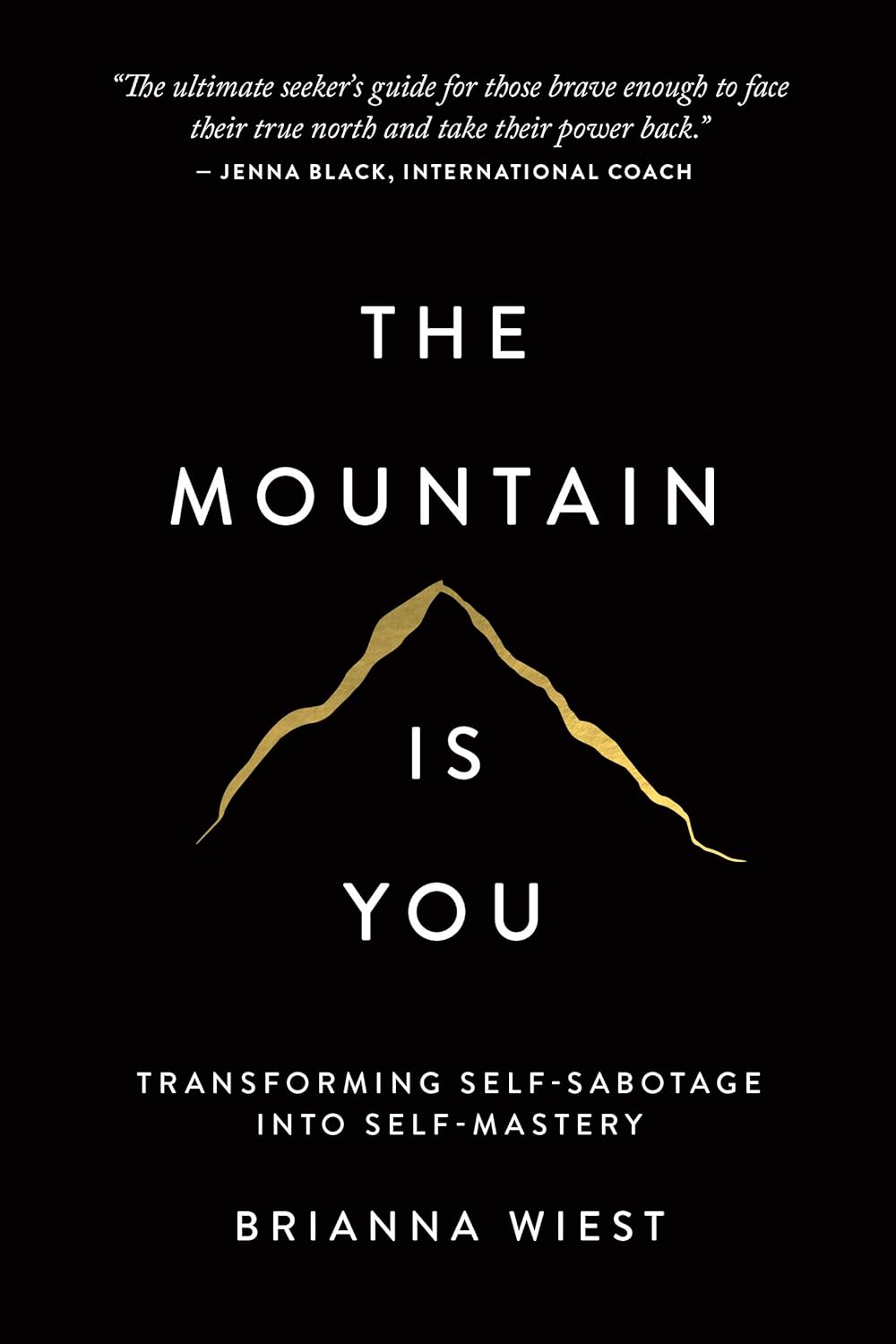
Few books explain self-sabotage as clearly and compassionately as this one. Wiest breaks down why we get stuck in loops, why we sabotage our own progress, and how hidden emotional patterns sabotage our growth even when our intentions are good. She gently exposes how fear, identity, and unprocessed pain build inner barriers, and shows how transformation happens when we finally confront the parts of ourselves we’ve avoided. It’s written in a poetic yet practical way, making the lessons feel personal, direct, and deeply resonant.
What makes it powerful is its clarity—Wiest names things you’ve felt but never fully articulated. Her message is that self-sabotage is often just misguided self-protection, and once you see that, real change becomes possible.
In fewer words: this book teaches you to stop being your own roadblock and start becoming your own ally. It’s equal parts healing and actionable.
10. “The Pleasure Trap” — Douglas J. Lisle & Alan Goldhamer

This is one of those under-the-radar books that should’ve been handed out in health class but never was. Lisle and Goldhamer explain how the modern world hijacks our natural reward systems—food, technology, stimulation—pushing us into cycles of overconsumption and chronic dissatisfaction. The authors show how the brain’s reward mechanisms are easily manipulated, creating invisible traps that make healthy choices feel harder than they should be. What sets this book apart is its blend of psychology, biology, and blunt real-world examples that reveal why willpower alone can’t fix certain patterns.
It’s the wake-up call many people don’t know they need, especially in a world where comfort has quietly become a form of captivity.
Short version: this is the book that helps you understand your cravings, habits, and impulses with brutal clarity. And once you see the traps, escaping them becomes a lot easier.
11. “The Righteous Mind: Why Good People Are Divided by Politics and Religion” — Jonathan Haidt

If you’ve ever wondered why smart, well-intentioned people can see the world in completely opposite ways, this book answers that question with unsettling clarity. Haidt blends psychology, anthropology, and moral philosophy to show that we don’t start with logic—we start with intuition. And those intuitions are shaped by moral foundations we didn’t consciously choose, which means arguments often fail because people aren’t disagreeing on facts—they’re operating from different emotional compasses. What makes this book so powerful is that it doesn’t just explain division; it teaches you to understand perspectives you previously dismissed or misunderstood.
Haidt’s research gently forces you to step outside your own worldview and recognize how culture, upbringing, and survival instincts shape belief systems. It’s challenging, but deeply humanizing.
Short version: this book teaches you how to disagree without dehumanizing—and that alone is reason it should’ve been required reading long ago.
12. “Influence: The Psychology of Persuasion” — Robert Cialdini

Cialdini breaks down the psychological triggers that make us say yes, comply, trust, buy, agree, and follow—often without realizing it. The book explores six major principles of persuasion, from reciprocity and authority to scarcity and social proof. What makes it essential is how it reveals the invisible levers companies, leaders, and everyday people pull to shape our decisions. Once you learn these principles, you start spotting them everywhere—from marketing emails to conversations at work—and you become far harder to manipulate.
The book doesn’t just show how influence works; it shows how easily it can be abused. And it gives readers the awareness needed to protect themselves from subtle persuasion tactics.
In a shorter sense: this is the book that teaches you how to navigate a world full of influence. And once you see the patterns, you can’t unsee them.
13. “Flow: The Psychology of Optimal Experience” — Mihaly Csikszentmihalyi

This book explains why some tasks make hours fly by effortlessly while others feel painfully slow. Csikszentmihalyi’s research reveals that happiness isn’t random—it’s deeply connected to moments of “flow,” when your skills perfectly match the challenge at hand. The book breaks down how to create more of these states in work, relationships, creativity, and everyday life. It’s one of the rare books that shows you how to build a life filled with meaningful engagement, rather than passive consumption or constant distraction.
You walk away realizing that fulfillment isn’t about leisure or escape—it’s about intentional concentration and purposeful challenge.
In short, this book teaches you how to engineer more joy and depth into your days. It’s a manual for turning ordinary moments into peak experiences.
14. “Stumbling on Happiness” — Daniel Gilbert

Gilbert takes one of humanity’s biggest blind spots—our inability to predict what will actually make us happy—and pulls it apart with humor, science, and surprising research. The book shows how our brains misremember the past, misjudge the present, and misforecast the future, leaving us chasing goals that don’t truly satisfy. Gilbert reveals that we’re not bad at choosing happiness—we’re just bad at anticipating it, because our minds fill in gaps with guesses rather than evidence. It’s both humbling and liberating.
The greatest value of this book is that it resets how you think about your future desires. It gently exposes the emotional illusions that trick you into chasing the wrong things.
Short version: this is the book that breaks the cycle of chasing happiness in the wrong places and teaches you how to focus on what actually fulfills you. It’s funny, sharp, and incredibly clarifying.