The Word-Finding Problem: 10 Reasons You’re Losing Vocabulary (And It’s Not Just Aging)


You know the moment. You’re in the middle of a sentence, making a great point, and suddenly— blank .
The word was right there a second ago. You can feel the shape of it. You know it starts with a “P.” You know it means “that red fruit with the seeds,” but your brain just offers you… silence. Or worse, it hands you the wrong word entirely, like “telescope” when you meant “stethoscope.”
The Koreans have a beautiful phrase for this: hyeu kkeute maemdom . It translates to “sparkling at the end of the tongue.”1It sounds poetic, but in the moment, it feels like panic.
If this is happening to you more often lately, you aren’t alone, and—here is the most important thing I will tell you today—you probably aren’t developing early-onset dementia.
We used to think this was just an “old person thing.” We were wrong.
New data from Yale University researchers, analyzing millions of responses between 2013 and 2023, found something startling: self-reported cognitive trouble in young adults aged 18 to 39 has nearly doubled , jumping from 5.1% to 9.7%.
Something has shifted in our environment, our habits, and our biology. We are living through an epidemic of lethologica (the clinical name for that tip-of-the-tongue glitch), and it’s being driven by ten very specific, very fixable factors.
Let’s look under the hood of your brain and figure out which one is stalling your engine.
Before we fix it, we have to understand how it breaks.
I like to think of the word-retrieval system like an old-school library. You (the speaker) are the patron. You walk up to the desk and ask for a specific book (the word). Sitting behind that desk is a Librarian (your brain’s executive function, mostly in the left planet).
When you want to say “Pomegranate,” three things have to happen in a split second:
- The Request: You visualize the red fruit.
- The Card Catalog: The Librarian looks up the “address” for that word. (She finds the card: Noun. Fruit. Starts with P. )
- The Retrieval: The Librarian has to physically walk to the stacks, open the file cabinet, and pull out the sound file: /pomegranate/.
The Tip-of-the-Tongue (TOT) state is when the Librarian finds the card, but the drawer is jammed.
She knows the book is there. She can see it. But she can’t hand it to you. The harder you scream at her (stress), the more flustered she gets, and the tighter the drawer sticks.
The ten reasons below are the things jamming that drawer.
The 10 Reasons (That Aren’t Alzheimer’s)
1. The Cortisol Blockade (It’s Too Noisy in Here)

Stress isn’t just a mood; it’s a chemical blockade. When you’re anxious—about a deadline, a bill, or even just the fact that you can’t find a word—your body dumps cortisol into your system.
Cortisol is great for running away from a tiger. It is terrible for reminding the word for “tiger.”
High levels of cortisol create what neuroscientists call “neural noise.”6Imagine trying to hear a whisper at a heavy metal concert. That’s your Librarian trying to find a word file while cortisol is screaming through your hippocampus.
The Vicious Cycle: You forget a word. You think, “Oh no, I look stupid.” Your stress spikes. Cortisol rises. The drawer jams harder. As William James, the father of psychology, famously said, “The greatest weapon against stress is our ability to choose one thought over another”—but in the heat of the moment, biology often wins.
2. The Sleep-Deprivation Disconnect

We often treat sleep like a luxury, but your brain treats it like the night shift janitorial staff.
During deep sleep, a plumbing system in your brain called the glymphatic system opens up and washes away metabolic trash (like beta-amyloid) that builds up during the day. If you cut sleep short, the janitors don’t finish the job. The library stays messy.
But it goes deeper. Dr. Matthew Walker, a leading sleep expert, explains that sleep is when your brain does “binding.” It takes a piece of information (a name) and staples it to a context (a face). Without REM sleep, those staples fall out. You might recognize the face, but the name file is floating around loosely on the floor.
3. The “Menopause Brain” (It’s Real)

If you are a woman between 40 and 60, I want to confirm something you’ve probably suspected: It’s not in your head. Well, it is, but it’s hormonal, not pathological.
Dr. Lisa Mosconi, a neuroscientist who studies the female brain, calls estrogen the “master regulator” of brain energy. Estrogen pushes glucose (sugar) into your brain cells so they can fire.
During perimenopause, estrogen levels drop. This essentially dims the lights in the library. Your brain literally has less energy to run the retrieval process. Mosconi’s research shows that this dip in glucose metabolism is temporary. The brain eventually adapts, but during the transition, “brain fog” and word-finding pauses are the single most common symptoms.
4. Digital Dementia (The Google Effect)

This one is controversial, but the evidence is mounting. In 2012, neuroscientist Manfred Spitzer coined the term “Digital Dementia.” The theory is simple: Use it or lose it.
In the past, if you couldn’t remember an actor’s name, you sat there and wrestled with it. You forced your Librarian to hunt. That struggles strengthens the neural pathway.
Today? You grab your phone. You Google it.
By offloading the effort to an external device, we are letting our internal retrieval muscles atrophy. We are firing the Librarian because we have a search engine. The result? When you do need to recall something without a phone, the pathway is overgrown with weeds.
5. The Multitasking Myth

Dr. Sandra Bond Chapman from the Center for Brain Health is blunt about this: “The brain is designed to do one thing at a time.”
When you try to multitask—say, typing an email while listening to a podcast—you aren’t actually doing two things at once. You are rapid-switching. Context A. Context B. Context A. Context B.
This transformation burns up glucose rapidly. It fatigues the frontal lobe. When you try to speak, the Librarian is exhausted and confused. She’s holding a file from the email when you’re trying to talk about the podcast.
6. The Missing Fuel (Nutrition & The “Junk” Factor)

Your brain is a hungry organ. It eats 20% of your calories. If you don’t feed it the right fuel, it sputters.
- Vitamin B12: This vitamin builds the insulation (myelin) around your brain cells. Low B12 (common in vegans or people on acid reflux meds) strips the wires. Signals slow down. The word doesn’t arrive in time.
- Iron: Iron carries oxygen. Low iron = low oxygen. Your brain literally suffocates a little bit, leading to “brain fog.”
- The New Culprit (2024 Data): Ultra-Processed Foods (UPFs). A massive study published in Neurology (2024) found that a 10% increase in ultra-processed foods (chips, soda, packaged snacks) correlates with a 16% higher risk of cognitive impairment. These foods are high in inflammation-causing ingredients that essentially “inflame” the library, making it harder to think clearly.
7. The Hydration Shrink (Seriously)

This sounds too simple to be true, but it is. Your brain is 73% water.
Research shows that being just 1% to 2% dehydrated causes cognitive function to drop by 5%. Dehydration causes brain tissue to physically shrink away from the skull. It creates an osmotic imbalance that slows down processing speed.
Next time you can’t find a word, ask yourself: When was the last time I drank a glass of water?
8. The Thyroid Brake

Your thyroid is the thermostat for your entire body. If it runs low (hypothyroidism), everything slows down. Digestion, heart rate, and yes, thought processing.
Patients with low thyroid often describe thinking as “wading through sludge.” The Librarian is moving in slow motion. The word is there, but it takes her ten seconds to bring it to the counter. By then, the conversation has moved on.
9. The Long Shadow of COVID

We cannot ignore the elephant in the room. Since 2020, millions have reported lingering cognitive issues.
Recent 2024 surveys of Long COVID patients indicated that “word-finding difficulty” is the #1 reported cognitive symptom , affecting over 93% of respondents.
The virus appears to cause persistent neuroinflammation or micro-clotting that disrupts the delicate networks required for speech. It’s like static on the radio line.
10. The “Anticholinergic” Burden

Check your medicine cabinet. A surprising number of common drugs that block acetylcholine, the neurotransmitter responsible for learning and memory.
- Allergy meds (like Benadryl/Diphenhydramine)
- Bladder medications (Oxybutynin)
- Some antidepressants (Amitriptyline)
These are called “anticholinergics.” Taking them is like blindfolding the Librarian. Studies suggest that long-term use can mimic dementia symptoms, but—good news—stopping them (under physician supervision) often reverses the effect.
Is it Dementia? (The “Pop-Up” Test)
This is the question keeping you up at night. Is this the beginning of the end?
Here is a simple way to tell the difference between a “Jam” (Benign Anomia) and a “Loss” (Aphasia/Dementia).
| Feature | The “Brain Fog” Pause (Benign) | The Warning Sign (Pathological) |
| The “Pop-Up” | You remember the word 20 minutes later while washing dishes. | The word is gone. It never comes back. |
| The Please | You can describe it: “The thing for listening to hearts.” | You lose the concept . You don’t know what a stethoscope is. |
| The Clue | If I say “Steth…”, you shout “Stethoscope!” | Clues don’t ring a bell. |
| The Feeling | You are frustrated. You know you know it. | You might not notice you forgot it, or you use a completely wrong word (“pass the shoe” instead of “salt”) without realizing. |
The bottom line: If you are aware you are forgetting, that is a good sign. It means your “metacognition” (thinking about thinking) is intact.
The brain is plastic. You can rewire it. You can un-jam the drawer. Here is your recovery plan.
1. Stop Googling. Start “Feature Analysis.”

When a word is stuck, do not reach for your phone. You need to force the Librarian to clear the path. Use a technique speech pathologists call Semantic Feature Analysis (SFA).
Talk around the word aloud:
- Category: “It’s a fruit.”
- Action: “You peel it.”
- Location: “It’s in the fridge.”
- Visual: “It’s orange.”
This lights up the neural neighborhood around the missing word. Usually, the word will pop up (“Orange!”) because you’ve activated the connected wires. Even if it doesn’t, you have exercised the network rather than letting it atrophy.
2. Gamify Your Fluency

You need to lift weights for your vocabulary.
- Scattergories: Forces you to find words by letter and category (Phonemic fluency).
- Taboo: Forces you to describe words without saying them (Semantic flexibility).
- Crosswords: But try to do them without looking up answers immediately.
Use Some Useful Products That Can Help
Look, I’m not saying you need to buy your way out of this problem. Drinking tap water and sleeping more are free. But sometimes, we need a little external structure to make a new habit stick. I’ve dug through the research (and Amazon) to find a few specific tools that align perfectly with the science we just discussed. These aren’t magic pills; they are just really good tools to help you un-jam the drawer.
1. Hydracy Water Bottle with Time Marker:

This isn’t just a bottle; it’s a schedule. It has time markers on the side (8am, 9am, etc.) so you can see exactly if you’re behind. It prevents that “oops, I haven’t drank water all day” moment that leads to brain fog.
2. Manta Sleep Mask:
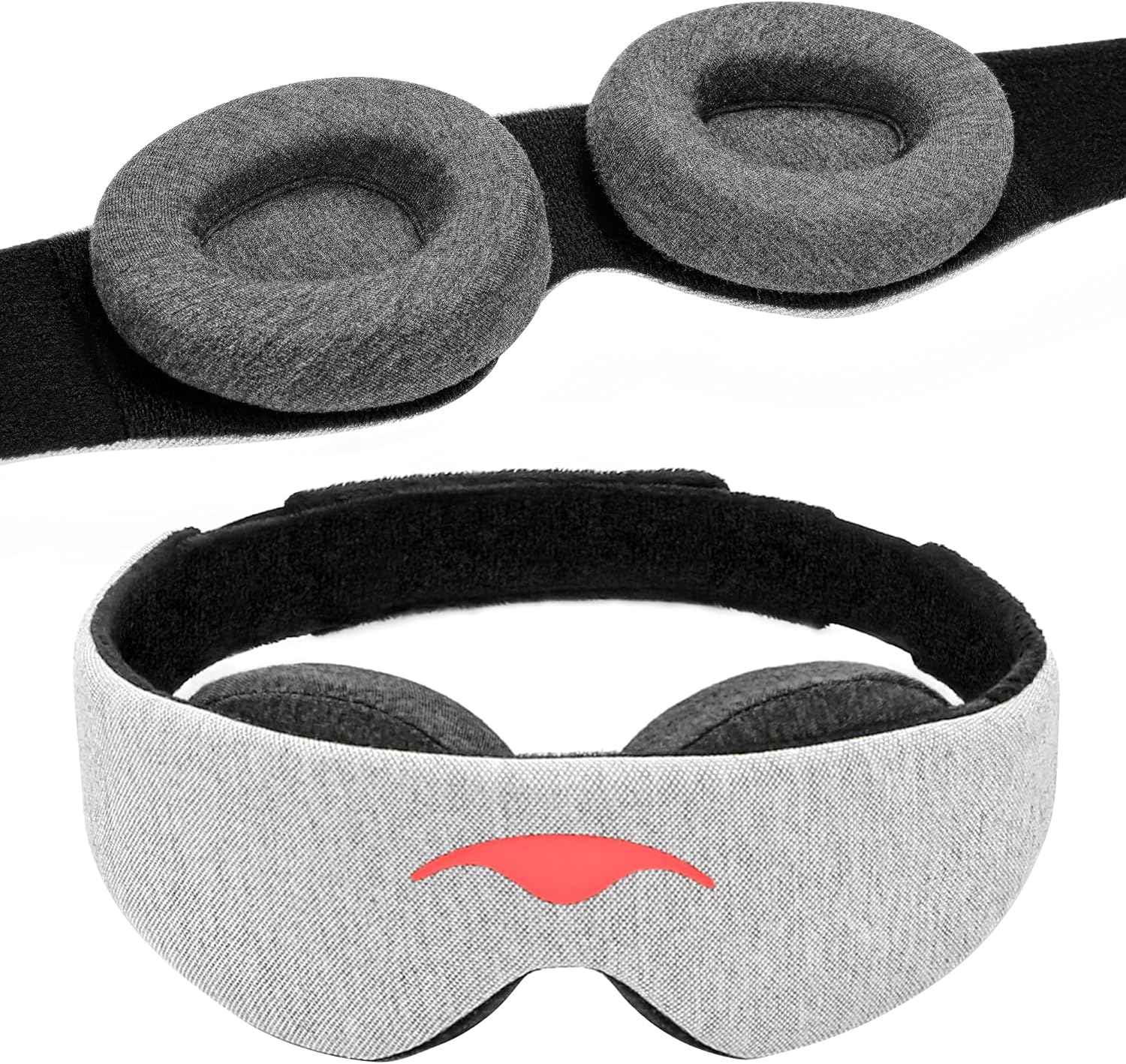
This is widely considered the gold standard because it has “eye cups.” It gives you 100% blackout without pressing against your eyelids, meaning you can open your eyes in pitch blackness. It’s a game-changer for REM sleep.
3. The Menopause Brain by Dr. Lisa Mosconi:

This is the definitive book on the subject. Dr. Mosconi explains exactly what is happening to your neural pathways and provides a science-backed roadmap for nutrition and lifestyle to get your cognitive energy back.
4. Scattergories Board Game:

This is the ultimate “phonemic fluency” workout. You have to think of a “Fruit” that starts with “P” before the timer runs out. It forces the Librarian to run sprints.
5. TableTopics Original:

This is a cube of conversation starter cards. It sounds simple, but it forces you to access deep memories and complex vocabulary to answer questions like “What’s the most courageous thing you’ve ever done?” It exercises the semantic network far better than small talk about the weather.