
Corporate Travel Agent Reveals 6 Expense Report Red Flags That Get You Audited (And How Fortune 500 Execs Avoid Them)


We’ve all been there. It’s 9:00 PM on a Friday. You’re back from a business trip, staring at a crumpled pile of receipts spread across your dining table like bad tarot cards. You’re tired, you just want to be done, and you’re wondering, “Does it really matter if I round that taxi ride from $28.50 to $30? Does anyone actually check this stuff?”
For a long time, the answer was honestly… probably not. The “Honor System” ruled the corporate world. A weary finance manager might spot-check a few big-ticket items, but the small stuff? It slipped through the cracks.
But I’m here to tell you that the world has changed. The Honor System is dead, and it’s been replaced by something far more rigorous: The Algorithmic System.
Today, your expense report isn’t just being read by a human; it’s being scanned by Artificial Intelligence that never sleeps, never blinks, and has zero tolerance for creativity. Platforms like SAP Concur and AppZen now review 100% of transactions in near real-time, cross-referencing your dinner receipt against flight paths, weather reports, and even global currency fluctuations.
I want to walk you through exactly how these systems work—not to scare you, but to arm you. By understanding the “red flags” that trigger an audit, you can stop worrying about compliance and get back to doing your actual job.
Never Sleeps
To understand the risk, you have to understand the shift in perspective. In the old days, auditors used “sampling.” They’d pull maybe 10% of reports, check them, and if they looked okay, they assumed the other 90% were fine too. It was a numbers game, and the odds were in your favor.
That’s over. Modern “Continuous Monitoring” means every single line item is scrutinized. When you snap a photo of a receipt, Optical Character Recognition (OCR) strips out the data—date, time, merchant, tax, tip—and runs it against a massive “truth database.”
If you buy a coffee at 2:00 PM in London, the system checks:
- Policy: Is coffee allowed?
- External Data: Was your flight actually to London?
- Behavior: Do you usually spend $8 on coffee, or is this a weird spike?
It’s not personal; it’s just math. And speaking of math, that brings us to the weirdest, most fascinating way you get caught.
2. The “Round Number” Syndrome (and the Math of Lying)

Here’s a psychological quirk: humans love round numbers. If you lose a receipt for a cab and have to guess the amount, you’ll probably type in $25.00 or $50.00. It feels “clean.”
But in the messy real world of sales tax, surcharges, and odd pricing, exact round numbers almost never happen.
Auditors use something called Benford’s Law to catch this. It’s a mind-bending statistical rule that says in any naturally occurring set of numbers—like expense reports—the first digit is most likely to be 1.
- 1 should appear as the first digit about 30% of the time.
- 9 should appear only 5% of the time.
Think of it like a hat full of raffle tickets. Because numbers grow logarithmically (it takes a lot longer to double your money from 100 to 200 than to go from 10 to 20), there are just naturally more “small” starting digits in the world.
When you invent numbers, you subconsciously spread them out evenly—you pick as many 9s as 1s. To an algorithm, that “unnatural” distribution looks like a neon sign flashing “FRAUD.”
The Takeaway: Never round up. If the Uber was $24.87, put down $24.87. Accuracy is your best shield.
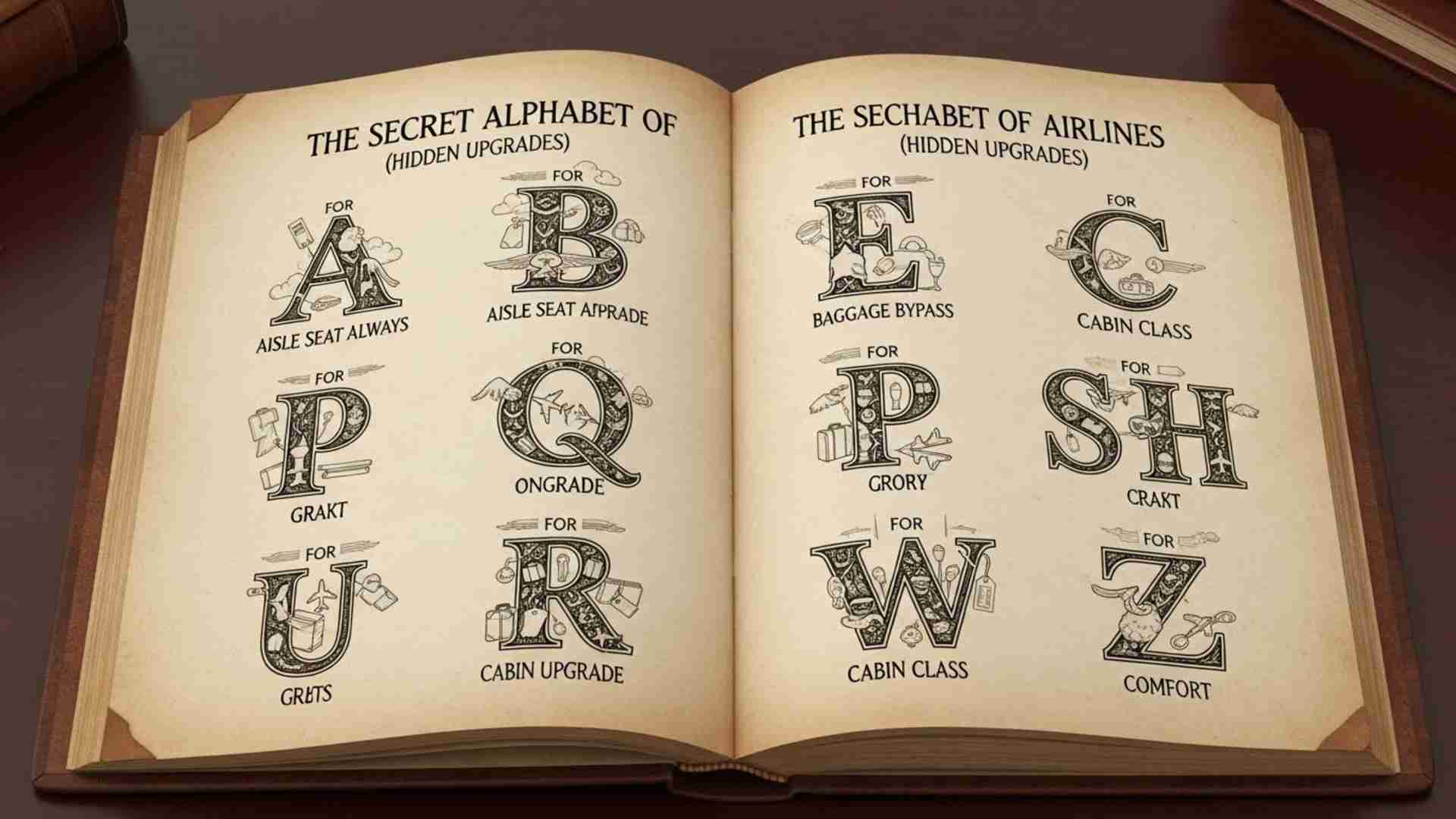
3. The Secret Alphabet of Airlines (Hidden Upgrades)
We all know the temptation. You’re flying 12 hours for a client meeting. You really want Business Class, but policy says Economy. So, you book a flexible Economy ticket (which is expensive), get the receipt, then exchange it for a non-refundable Business Class ticket. Same price, better seat. No harm, no foul, right?
Wrong. The airline receipt has a DNA code called the Fare Basis Code.
It’s a string of letters and numbers, and the first letter tells the auditor everything:
- F, A, P: First Class (Immediate Audit Flag).
- J, C, D, I, Z: Business Class.
- Y, B, H: Economy.
If your receipt shows a “Y” class price but you exchange it, the new receipt might show an “Add-Collect” or “EXCH” code. The algorithm sees you paid $200 extra and the code switched from Y to J. Even if the total cost is within budget, you’ve violated the class of service policy.
The Takeaway: Don’t try to outsmart the booking code. If you need an upgrade for a legitimate reason (like working on the plane), get it pre-approved.
4. The “Double-Dip”

This is often an honest mistake that looks malicious. You pay for a client dinner with your corporate card (which feeds into the system automatically). But you also pocket the paper receipt.
Three weeks later, you’re doing your expenses, you find that receipt in your wallet, and you forget you already paid it. You scan it and submit it as a “Cash/Out-of-Pocket” expense.
Boom. You just asked to be reimbursed twice for the same meal.
Algorithms create a digital fingerprint for every expense based on Date + Amount + Merchant. If they see $45.50 at “Joe’s Pizza” on March 1st from your card feed, and another $45.50 at “Joe’s Pizza” on March 1st from a manual entry, they lock your account.
The Takeaway: If you have a corporate card, use it for everything. It creates a “closed loop” of data that prevents accidental double-dipping.
5. The “Weekend Sandwich” (Bleisure Risks)

“Bleisure”—combining business and leisure—is huge right now. You have a conference in Miami on Friday, so you stay until Sunday to hit the beach.
The trap here is the Friday/Sunday Gap.
If you submit a hotel folio that covers Friday, Saturday, and Sunday, the system will flag the weekend charges. It looks for clues in the line items:
- Did you order room service on Saturday morning?
- Are there “Resort Fees” or “Golf” charges on Sunday?
- Does the receipt say “Guest: 2”? (Nothing says “family vacation” faster than a double-occupancy charge).
The Takeaway: Be clean about the break. Check out of the “business” hotel room on Friday. Check back in (or switch cards) for the “personal” portion. Submit a receipt that only shows the business days.
6. The “Frankenstein” Receipt
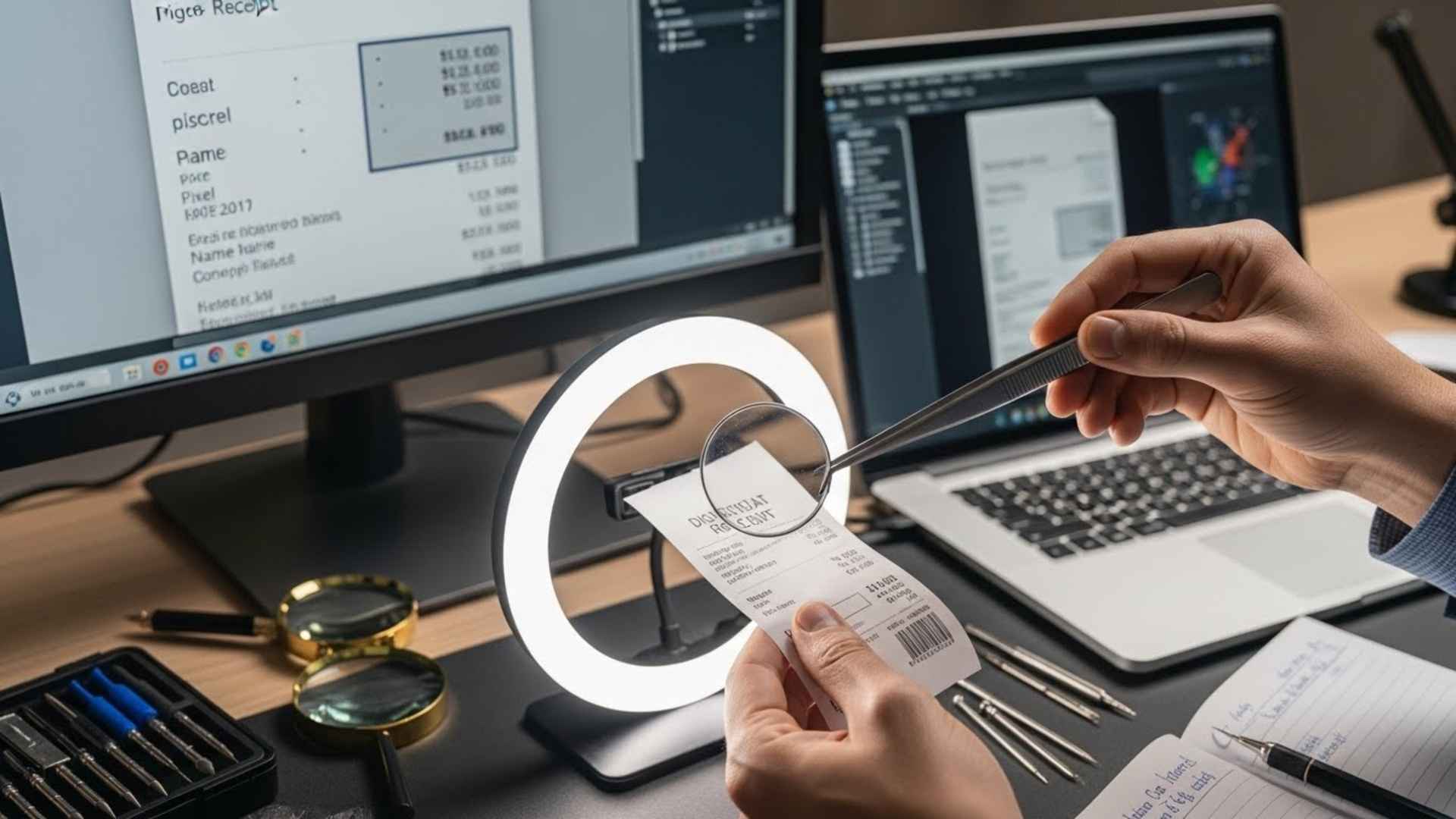
This is where things get forensic. Some people try to alter digital receipts using Photoshop or PDF editors—changing a date to bring an old expense into a new quarter, or cropping out a “Guest” name.
We call these Frankenstein Receipts.
AI tools now analyze the metadata of the file. If you claim a receipt is from a hotel stay in March, but the file’s “Created Date” is April and the software used was “Adobe Photoshop” instead of “Scanner App,” you’re caught.
They even check the math of the line items. If you change the Total Amount but forget to recalculate the tax percentage for that specific city, the math won’t add up, and the system flags it.
The Takeaway: Never alter a document. If you lost a receipt, file a “Lost Receipt Affidavit” instead of trying to recreate one. Honesty is boring, but it keeps you employed.
Audit Avoidance
CONFIDENTIAL: Top Exec Strategies
Pre-Approval Shield
Get a Trip ID first. AI automatically matches spend to approval. “We already talked about this.”
The “Split Folio”
Mixing business & fun? Ask reception for two receipts. Submit the clean one. Simple.
Per Diem Safe Harbor
Take the flat rate ($75/day). No receipt hoarding. Removes “misclassified” risk entirely.
So, how do the top executives—the ones who travel 200 days a year—avoid getting audited? They don’t just “follow the rules”; they use a playbook that makes compliance automatic.
Move #1: The Pre-Approval Shield
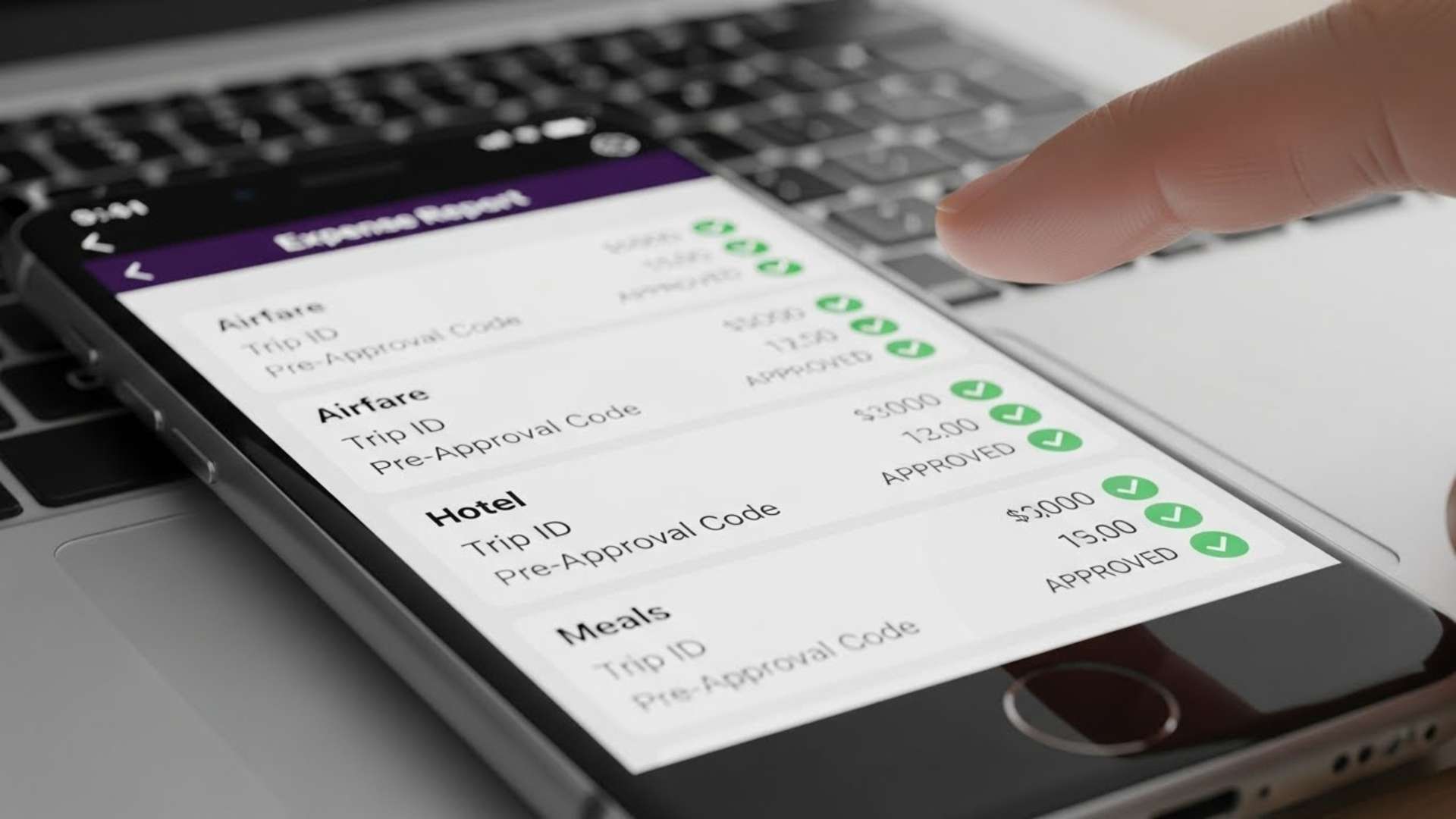
Before booking anything, get a trip ID or pre-approval code. When the AI sees your expense report later, it matches the spend against this approved ID. It effectively says, “We already talked about this, it’s cool.”
Move #2: The “Split Folio”

If you are mixing business with pleasure, walk up to the hotel front desk when you arrive and say: “Can we split this stay? Charge Friday to this corporate card, and Saturday/Sunday to my personal card.” You get two separate receipts. You submit the clean one. Simple.
Move #3: The Per Diem Safe Harbor

Instead of saving receipts for every bagel and water bottle, ask if your company allows Per Diem (a daily flat rate). If you get $75/day for meals, you get $75. You don’t need to prove you ate a sandwich. It removes the risk of “misclassified” expenses entirely.
8. Myths vs. Reality
There’s a lot of bad advice floating around corporate breakrooms. Let’s clear it up.
| What your coworker says | The Forensic Reality |
| “They don’t check anything under $50.” | False. AI checks everything. A string of $49 taxi rides is a classic fraud pattern called “Salami Slicing.” |
| “I can just use my credit card statement.” | False. You need the Itemized Receipt. The statement shows the total; the receipt shows you bought 3 beers and a lobster. |
| “Booking on Expedia is cheaper.” | False. It breaks the data chain. Companies want you booking through their tool (Concur, Navan, etc.) for safety and tracking. |
| “I can treat a ‘friend’ if I call it a client dinner.” | Risky. Systems integrate with your CRM (Salesforce). If “John Doe” isn’t a listed prospect, you’re buying your buddy dinner. |
Use Some Useful Products That Can Save You From Audit Hell
Honestly, half the battle is just staying organized on the road. You don’t want to be that person crumbling receipts into a ball in your pocket or praying your phone doesn’t die before you scan that Uber invoice. I’ve dug through the clutter to find a few lifesavers that make the whole “compliance” game effortless. Check these out:
1. Epson WorkForce ES-60W Wireless Portable Document Scanner

If you hate using your phone camera and dealing with shadows or blurry text, this little guy is a beast. It scans receipts instantly, is totally wireless, and is small enough to fit in a carry-on side pocket.
2. Anker 737 Power Bank (PowerCore 24K)

Nothing triggers a panic attack like 1% battery when you need to pull up a digital receipt or a flight code at the gate. This thing is powerful enough to charge your laptop and your phone fast.
3. Rocketbook Fusion Smart Reusable Notebook

Stop losing sticky notes. This notebook lets you write things down (like mileage logs or quick expense notes), scan them directly to the cloud, and then wipe the page clean to reuse. It’s magic for keeping physical notes organized digitally.
4. BAGSMART Electronic Organizer

Cable spaghetti is the enemy of the organized traveler. Keep your charging cables, dongles, and backup drives in one place so you look like a pro (and don’t lose expensive gear in the hotel room).
5. Zoppen Multi-purpose RFID Blocking Travel Passport Wallet

This helps you separate your “church and state.” Keep your corporate card, boarding passes, and business receipts in one RFID-safe spot, physically separated from your personal wallet to avoid that accidental “double-dip” mistake.