
Medicare Specialist Reveals 8 Foreign Countries Where Your Coverage Is Worthless (And the $12 Solution Most Retirees Don’t Know)


You’ve spent forty years dealing with alarm clocks, rush hour traffic, and endless meetings for this moment. The “Golden Years.” For most of us, that dream isn’t about sitting on the front porch rocking away the afternoon; it’s about movement. It’s that river cruise down the Danube, the ancestral trip to Italy to find your grandmother’s village, or maybe just escaping the winter freeze for a condo in Costa Rica.
But there’s a massive, invisible wall standing between you and that dream, and most retirees don’t see it until they hit it at 600 miles per hour.
We need to have a serious talk about “Healthcare Stranding.”
There is a dangerous assumption that feels safe and warm, like a favorite blanket: “I have Medicare. I’ve paid into the system my whole life. If something happens to me, I’m covered.”
I hate to be the one to tell you this, but the moment your plane leaves U.S. airspace, that blanket is gone.
According to the Centers for Medicare & Medicaid Services (CMS), the hard truth is simple: “Medicare usually doesn’t cover health care while you’re traveling outside the U.S.” It doesn’t matter if you have a heart attack in Paris or break a hip in Cabo. As far as the foreign hospital is concerned, you are uninsured. You are a “self-pay” patient. And in today’s world, that can destroy your retirement savings in a single afternoon.
I’ve spent weeks digging through international hospital protocols, insurance statutes, and horror stories from folks just like you. What I found was startling. We’re going to look at the specific countries where your coverage is worthless, the terrifying “hospital hostage” laws you’ve never heard of, and the surprisingly cheap solution—about $12 a day—that fixes all of it.
Medicare Mirage 🌵
Medicare knows Des Moines, not Sydney. Outside the U.S. & Territories, you are financially on your own.
CRITICAL: Medigap pays for the doctor,
NOT the Flight Home.
To fix the problem, we have to understand it. Medicare was designed in the mid-20th century as a domestic program. It knows how to pay a doctor in Des Moines; it has no idea how to pay a surgeon in Sydney.
The “United States,” according to Medicare, includes the 50 states, D.C., Puerto Rico, Guam, the U.S. Virgin Islands, American Samoa, and the Northern Mariana Islands. That’s it. If you step one foot outside those zones, you are financially on your own.
“But I Have Medigap…” (The $50,000 Lie)
This is where I see people get hurt the most. You might be thinking, “Relax, I have a Medigap Plan F or G. It has a foreign travel rider.”
You’re right, it does. But you need to read the fine print, because it’s not the shield you think it is.
- The 60-Day Clock: Coverage only works for the first 60 days of your trip. If you’re a “snowbird” spending the winter in Mexico, on Day 61, your coverage vanishes.
- The 20% Bill: You still have to pay 20% of the cost after a deductible. On a $100,000 heart attack, you’re writing a check for $20,000 on the spot.
- The Lifetime Cap: This is the killer. Most plans have a $50,000 lifetime limit. That sounds like a lot of money until you realize that a complex ICU stay and medical flight home can hit $200,000 easily. Once you use that $50k, it’s gone forever.
And here is the most important part: Medigap does not pay for the flight home. It pays for the doctor, but not the air ambulance.
The “Dirty Eight”: Where the Risk is Real

Not all countries are created equal when it comes to medical risk. Based on my research, there are eight places—popular spots we all love to visit—that pose a unique financial threat to American seniors. I call them the “Dirty Eight.”
1. Mexico: The “Check or Jail” Economy

Mexico is our favorite neighbor for vacations, but its private healthcare system operates on a “cash-first” basis. In places like Cancun or Puerto Vallarta, private hospitals are businesses first.
Here’s the reality: If you show up with chest pain, they will often demand a credit card or a cash deposit before they admit you. We’re talking $20,000 or $50,000 swipes. They often use a legal document called a “Pagaré”—a promissory note. If you sign it, you are signing away your assets. There are documented cases of tourists being told they will be transferred to a sub-par public hospital if they don’t produce the cash immediately.
2. The Philippines: The “Hospital Hostage” Trap

This sounds like something from a thriller movie, but it is a legal reality. In the Philippines, the practice of “hospital detention” is a massive issue. While there is a law technically prohibiting it, there is a loophole: it doesn’t apply to patients in private rooms. And as an American, you will be in a private room.
If you cannot pay your bill in full, the hospital can legally refuse to discharge you. You are effectively held hostage. Security guards watch the doors, and the meter keeps running, adding daily room charges to a bill you already can’t pay, while your family back home scrambles to wire life savings.
3. Thailand: The “Land of Smiles” (Until You Can’t Pay)

Thailand has world-class medical care—it’s a medical tourism hub for a reason. But for an emergency patient, it’s brutal. A major cardiac procedure can cost $18,000+. If you don’t have insurance that guarantees payment, they may hold your passport. And if you need to be evacuated? A medical flight from Bangkok to the U.S. is one of the most expensive flights in the world, often exceeding $200,000.
4. The Dominican Republic: The Proximity Trap
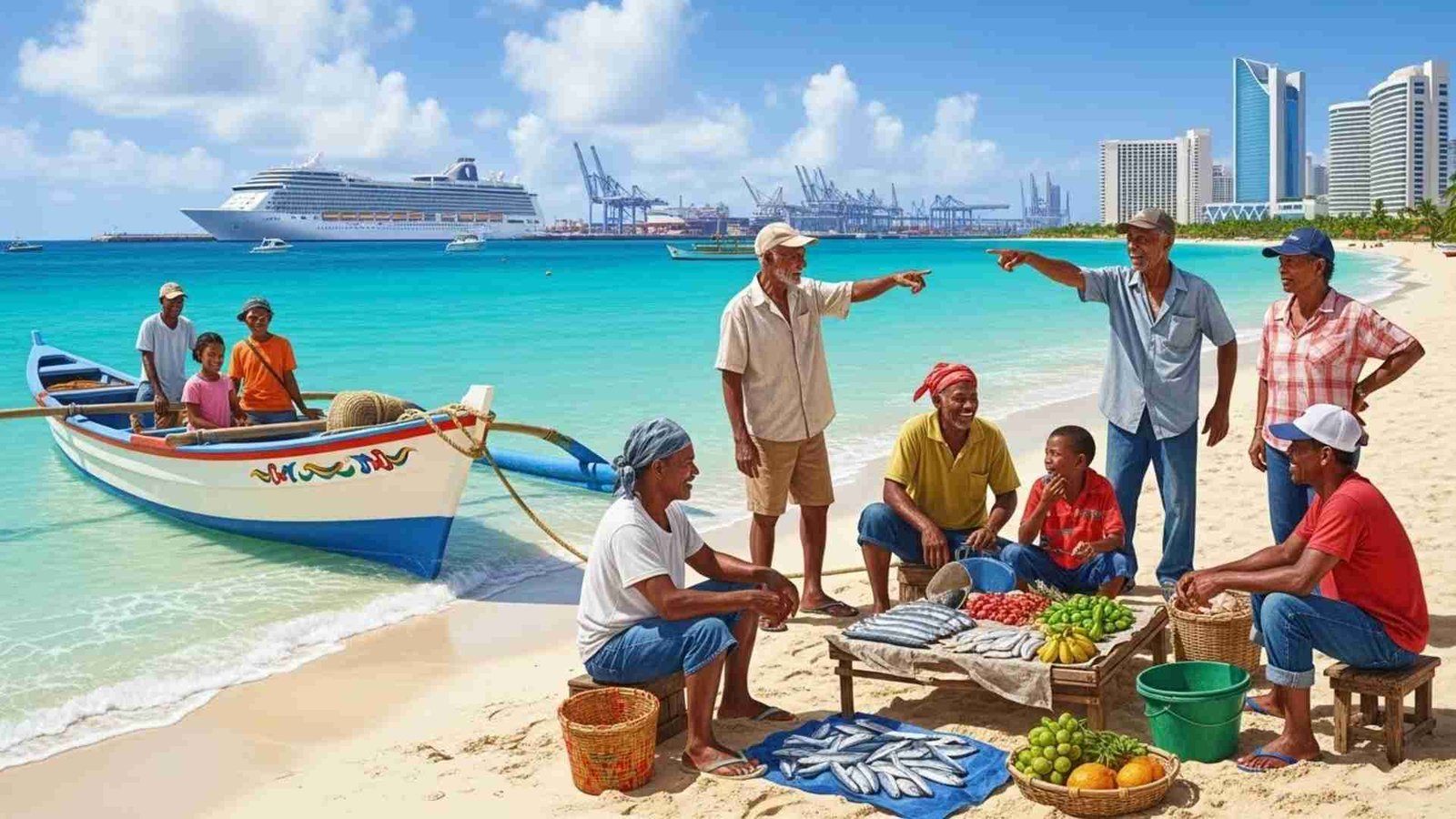
We look at a map and think, “Oh, the DR is just a hop from Miami. I’m safe.” You’re not. Public hospitals often lack basic supplies, forcing you into expensive private clinics. And that “short flight” home in an air ambulance? It still costs $20,000 to $50,000. Medicare pays zero.
5. Japan: The Cash Society

Japan is high-tech, but the payment systems can be old-school. Many hospitals do not accept foreign insurance directly. They expect you to pay the full 100% cost upfront—which can be $70,000 for a stroke—and then fight with your insurance company for reimbursement later. Do you have a $70,000 limit on your credit card? Most of us don’t.
6. France: The “Socialist Healthcare” Myth

“It’s Europe! Healthcare is free!” I hear this all the time. It is free for them. For you, you are a customer. In France non-EU citizens are expected to pay. Private hospitals (where you’ll likely go for English-speaking staff) require upfront payment or a Guarantee of Payment (GOP) from an insurer. If you rely on the public system, you might face long waits and language barriers that can be terrifying during a stroke.
7. Italy: The “Socialist Healthcare” Myth

“It’s Europe! Healthcare is free!” I hear this all the time. It is free for them. For you, you are a customer. In France non-EU citizens are expected to pay. Private hospitals (where you’ll likely go for English-speaking staff) require upfront payment or a Guarantee of Payment (GOP) from an insurer. If you rely on the public system, you might face long waits and language barriers that can be terrifying during a stroke.
8. Costa Rica: The “Pura Vida” Paradox

Costa Rica is a retirement haven, but the public “Caja” system is overloaded. You will want private care at places like CIMA, which requires proof of payment capability immediately.
“I’ll Just Fly Home”: The Physiology Problem

This is the most common objection I hear: “If I get sick, I’ll just book a first-class seat and fly home to my own cardiologist.”
No, you won’t. And here is why.
It’s simple physics. Commercial plane cabins are pressurized to about 6,000–8,000 feet. At that altitude, there is less oxygen in the air. If you’ve just had a heart attack, a stroke, or surgery, that lack of oxygen can kill you. It causes gas trapped in your body to expand (bad news if you just had surgery).
Airlines have the legal right to deny boarding to anyone who looks medically unstable. If you have a dripping IV or can’t sit upright, you aren’t getting on that Delta flight.
That leaves you with one option: The Air Ambulance.
This is a private jet turned into a flying ICU, staffed by nurses and doctors. It is a miracle of modern medicine, but look at the cost.
The Air Ambulance Bill:
- Mexico/Caribbean to U.S.: $20,000 – $30,000
- Europe to U.S.: $65,000 – $80,000
- Asia/Australia to U.S.: $180,000 – $250,000+
Your Medigap plan pays $0 of this. Your platinum credit card usually caps out at $2,500 or $5,000. You are on the hook for the rest.
Okay, enough doom and gloom. The good news is that this is an incredibly easy problem to fix. You just need to buy the right product.
Most people confuse “Trip Cancellation Insurance” (which pays you back if you miss your cruise) with “Travel Medical Insurance” (which saves your life). Trip cancellation is expensive. Medical-only insurance is cheap.
For a healthy 70-year-old, a standalone medical plan from a major carrier like GeoBlue (Voyager Choice) or Allianz (OneTrip Emergency Medical) costs about $10 to $12 a day.
Think about that. For the price of a glass of wine at dinner, you get:
- $500,000+ in Medical Coverage (Primary, so they pay the hospital directly).
- $500,000 for Medical Evacuation (They pay for the jet).
- Pre-Existing Condition Waivers (If you buy it early enough).
The Upgrade: Getting “Home” (Medical Evacuation Membership)

There is one nuanced gap left. Standard insurance will evacuate you to the “Nearest Appropriate Facility.” If you have a stroke in rural Italy, they will fly you to Rome. If the hospital in Rome is “good enough,” you stay there.
But what if you want to come home to your own doctors, your own language, and your family?
That’s where Medical Evacuation Memberships (like Medjet or AirMed) come in. These aren’t insurance; they are memberships. If you are hospitalized more than 150 miles from home, they will fly you to the hospital of your choice, regardless of “medical necessity.” It costs about $275 – $475 a year. If you travel more than once a year, it’s a no-brainer.
Gear That Could Save Your Trip (And Maybe Your Life)
While we are talking about safety, let’s talk about your suitcase. I’ve scoured Amazon for the absolute best travel health gear that I recommend to friends and family. These aren’t just gadgets; they are problem solvers.
Here are 5 essentials you shouldn’t leave the country without:
1. Physix Gear Sport Compression Socks

Deep Vein Thrombosis (blood clots) is a real risk for seniors on long flights. These socks are a game-changer. They aren’t the ugly beige ones your grandma wore; they are durable, comfortable, and keep the circulation moving so you land with ankles that are the same size as when you took off.
2. AUVON Weekly Pill Organizer

Managing meds across time zones is a nightmare. I love this organizer because it’s moisture-proof (critical for humid climates like Mexico or Thailand) and has huge compartments if you take larger supplements. It makes sure you never double-dose or skip a pill.
3. Zacurate Pro Series 500DL Pulse Oximeter

If you have any heart or lung issues, or if you are visiting high-altitude spots like Machu Picchu or Mexico City, this is non-negotiable. It clips on your finger and tells you your oxygen saturation in seconds. It’s the same one many doctors use, and it gives you peace of mind instantly.
4. Road ID Medical Alert Bracelet

If you collapse in a foreign country, you can’t speak for yourself. This bracelet does it for you. You can customize it with your allergies, conditions (like “Diabetes” or “On Blood Thinners”), and emergency contact numbers. It’s simple, stylish, and could save your life in an ER where no one speaks English.
5. Raytix RFID Money Belt

In the “Dirty Eight” countries, you don’t want to flash cash. This belt is thin enough to wear under your shirt, blocking RFID skimmers from stealing your credit card info and keeping your passport and emergency cash physically attached to your body.