
Endocrinologist Reveals 7 ‘Healthy’ Morning Habits That Destroy Your Metabolism After 40 (And the 90-Second Fix)


You know that feeling? You’re doing everything “right.” You’re waking up early, eating the oatmeal, grabbing the coffee, maybe even crushing a spin class before work. But despite the discipline, the scale won’t budge. Or worse, the waistline is actually expanding. You feel tired, foggy, and honestly, a little betrayed by your own body.
If you’re nodding your head, I need you to know something important: You aren’t crazy, and you aren’t lazy.
The rules just changed on you.
Most of us are still operating on the “Metabolism 1.0” manual—the calorie-in-calorie-out model that worked beautifully when we were 25. But research from leading endocrinologists suggests that once we cross the threshold of 40 (and often mid-30s), we enter a completely different physiological game. It’s no longer just about calories; it’s about signaling.
It turns out that seven specific morning habits—ones we’ve been told are “healthy” for decades—might actually be telling your midlife body to store fat and break down muscle.
Let’s dig into why this happens, and more importantly, how to fix it with a protocol that takes less time than brewing your morning coffee.
Before we get to the habits, we have to look under the hood. Why does the body suddenly stop cooperating?
Dr. Roscio Salas-Whalen, a triple board-certified endocrinologist, explains that midlife acts like a “perfect storm” of hormonal shifts. In our 20s, we were swimming in anabolic (building) hormones like testosterone, estrogen, and human growth hormone. These were our metabolic armor. They directed food into muscle and energy, not belly fat.
But after 35, that armor wears thin. We start losing muscle mass—our metabolic engine—at a rate of about 3% to 8% per decade. Simultaneously, our bodies become more sensitive to cortisol (the stress hormone) and insulin.
Here is what that divergence looks like. It’s not a slow slide; it’s a distinct gap that opens up between what our body needs and what we’re giving it.
As you can see above, when our protective hormones drop, cortisol sensitivity shoots up. This means habits that used to be harmless now trigger a “survival mode” response, causing the body to hoard energy in the one place that has the most cortisol receptors: your belly.
So, let’s look at the seven ways we inadvertently trigger this trap every morning.
1. The “Healthy” Breakfast Trap (The Oatmeal Spike)
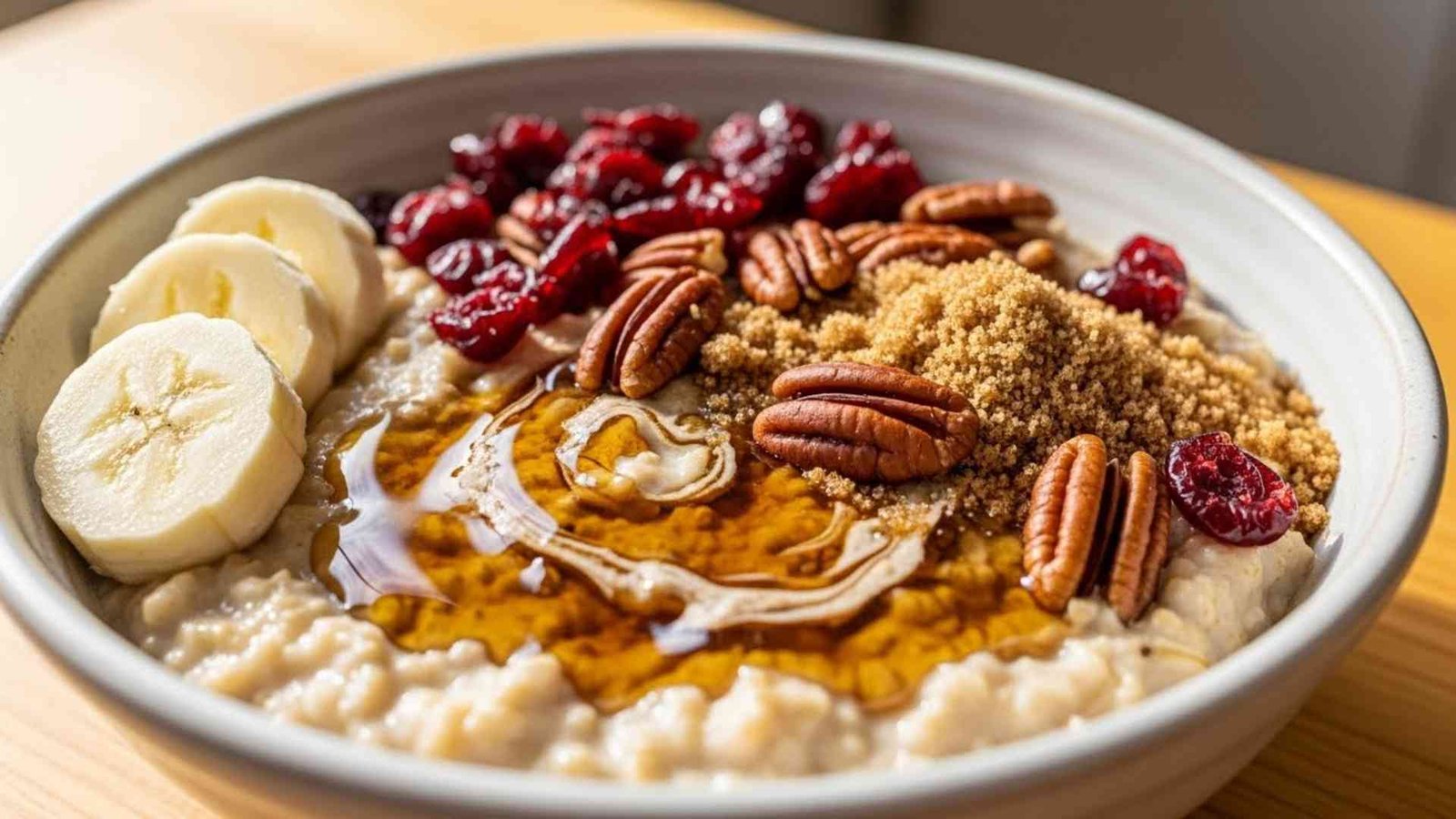
We have to talk about the oatmeal elephant in the room. For years, we’ve been sold the idea that instant oatmeal, granola, or a fruit-heavy acai bowl is the gold standard of a heart-healthy breakfast.
Here’s the problem: To an aging metabolism that is already becoming slightly insulin resistant, a bowl of instant oats looks a lot like a bowl of dessert.
Dr. Alessia Roehnelt, an endocrinologist and metabolism expert, warns that processed (“instant”) oats are predigested. When you eat them, they hit your bloodstream as glucose almost immediately. She notes that the blood sugar spike from instant oatmeal can reach levels between 79 and 83 mg/dL—that is a massive surge, often higher than what you’d get from a candy bar.
Why does this matter? When your blood sugar rockets up, your pancreas floods your system with insulin to bring it down. High insulin is a “storage signal”—it literally blocks your body’s ability to burn fat. Even worse, that massive spike is usually followed by a crash about two hours later. That’s the “hangry” feeling you get at 10:30 AM.
The Fix: You don’t have to ban grains forever, but stop eating “naked carbs.” Dr. Roehnelt suggests swapping water for milk (to add protein) or, better yet, switching to a savory, high-protein breakfast like eggs or Greek yogurt. Protein doesn’t spike insulin the same way; it signals satiety and fuels that precious muscle mass.
2. The “Oat Milk Latte” Mistake

Piggybacking on the oatmeal issue is our beloved oat milk latte. It’s marketed as the healthy, eco-friendly choice. But have you ever wondered why it tastes so sweet without added sugar?
Manufacturers use enzymes to break down the oat starches into simple sugars like maltose to make it creamy. Maltose actually has a higher glycemic index than regular table sugar. Dr. Roehnelt points out that a single oat milk latte can spike blood sugar by 65–75 mg/dL.
If you pair that latte with the oatmeal mentioned above, you are essentially “glycemic stacking.” You are keeping your insulin elevated for 4-5 hours straight. During that window, fat burning is biochemically impossible.
3. Coffee on an Empty Stomach (The Cortisol Double-Whammy)

I know, I know. Don’t touch the coffee, right? But hear me out.
When you wake up, your body is naturally experiencing the “Cortisol Awakening Response” (CAR). Your cortisol levels rise by about 50-75% in the first 30 minutes to help you wake up. This is a good thing—it’s natural energy.
However, caffeine is a potent stimulant. If you pour strong black coffee onto an empty stomach right at the peak of your natural cortisol surge, you create a hyper-adrenergic state. It’s a “double spike.”
This extra shot of stress hormone tells your liver to dump glucose into your bloodstream for “fight or flight” energy, even if you haven’t eaten anything. So, you get the blood sugar rise and the belly fat storage signal, all before you’ve had a bite of food.
The Fix: You don’t have to quit coffee. Just delay it. Wait 90 minutes after waking to let your natural cortisol settle down. Or, at the very least, drink it with food to buffer the response.
4. The “Chronic Cardio” Error
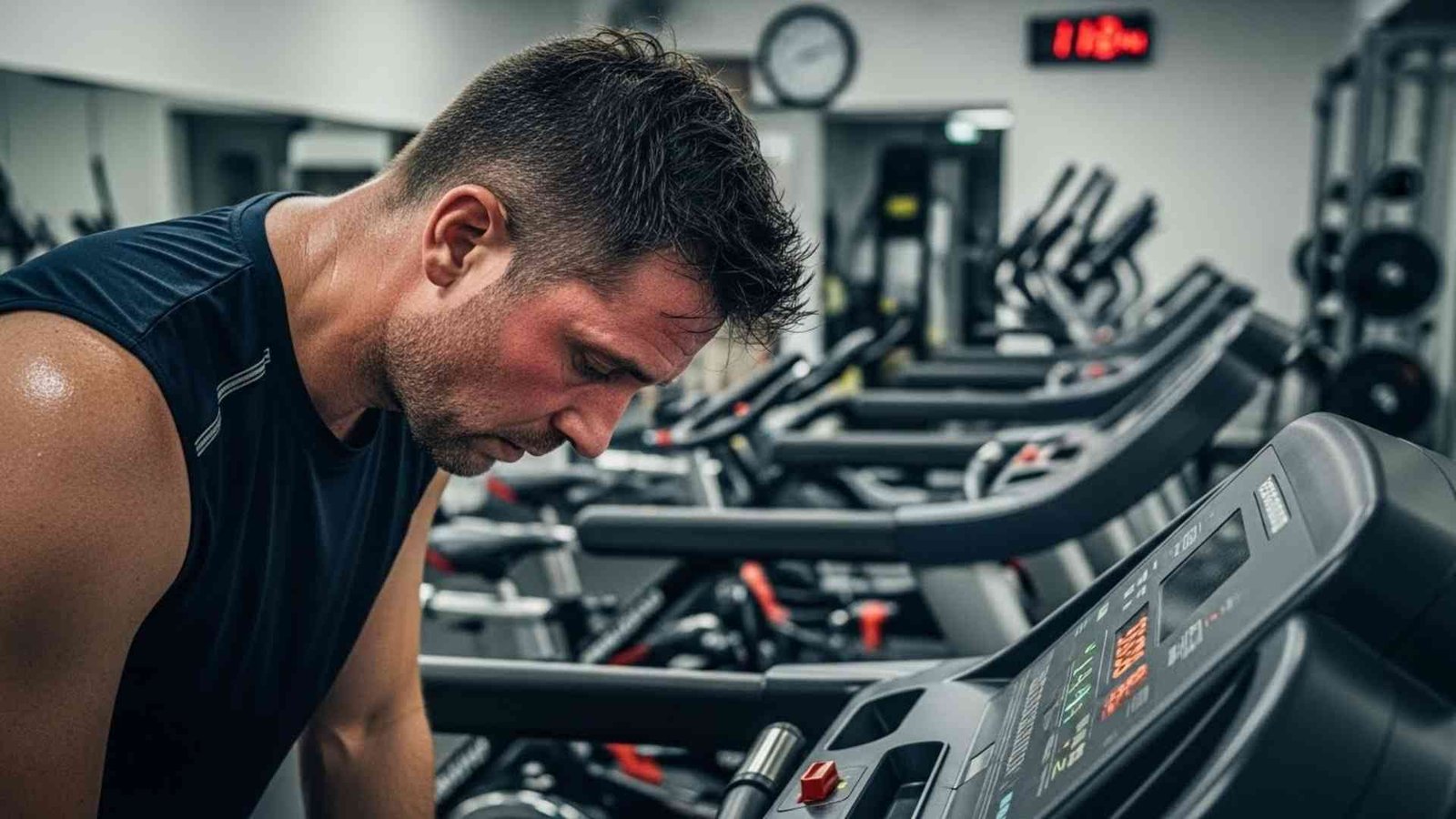
This is arguably the most frustrating one for people who are trying hard to lose weight. We see it all the time: the 45-year-old woman punishing herself with 60 minutes of high-intensity spin class or running every morning on an empty stomach.
Dr. Stacy Sims, an exercise physiologist who specializes in female physiology, calls this a major mistake. She famously says, “Women are not small men.”
In midlife, prolonged, moderate-intensity cardio (often called “gray zone” training) can chronically elevate cortisol. If you are already stressed from work, kids, or aging parents, this workout doesn’t burn fat—it tells your body you are in danger. Your body responds by holding onto fat (for safety) and breaking down muscle tissue (for quick fuel). It’s the “Cortisol Steal,” where your body steals resources from your sex hormones to make more stress hormones.
The Fix: Stop running yourself into the ground. Prioritize heavy strength training or true, short bursts of power (like the 90-second fix we’ll discuss shortly). You need to signal growth (anabolic), not just burn (catabolic).
5. Immediate Screen Exposure (The Dopamine Trap)

80% of us check our phones within 15 minutes of waking up. It feels like a harmless habit, but biologically, it’s a disaster.
Your brain is transitioning from sleep waves to wakefulness. When you immediately blast it with work emails, tragic news headlines, or the comparison trap of social media, you trigger the amygdala—your brain’s threat detection center. This kickstarts the sympathetic nervous system (“fight or flight”) before your feet even hit the floor.
This sets a baseline of anxiety and high cortisol for the entire day. Research links this morning stress spike to poor impulse control later in the evening. Meaning: that doom-scrolling session at 7 AM is one of the reasons you’re craving sugary comfort food at 7 PM.
6. Avoiding Morning Light (The Circadian Mismatch)

We live indoors. We wake up, look at a phone, get in a car, and go to an office. We miss the most critical metabolic signal of the day: the sun.
Our metabolism is regulated by circadian rhythms. The “master clock” in your brain (the SCN) needs bright light (specifically the blue spectrum found in sunlight) to know it’s morning. This light signal suppresses melatonin and boosts serotonin.
Without it, your “metabolic engine” never fully boots up. Studies have shown that people with insufficient morning light exposure tend to have higher BMIs and worse glucose regulation.
The Fix: Get outside for 10 minutes within an hour of waking. No sunglasses. Just let the light hit your eyes. It’s free metabolic therapy.
7. The Cold Water Shock Myth

You’ve probably seen influencers chugging ice-cold water to “shock” their metabolism. While technically your body burns a few calories to warm the water up (about 8 calories, which is negligible), the effect on an aging gut can be counterproductive.
According to integrative health perspectives, dousing a waking digestive system with freezing water can constrict blood vessels and shock the vagus nerve. For midlife digestion, which may already be slowing down (lower stomach acid is common after 40), this can lead to bloating and poor absorption of nutrients.
Warm or room-temperature water is far gentler and supports lymphatic drainage without the thermal stress.
The 90-Second Fix
The Nitric Oxide DumpThe Silent Drop
As we age, our ability to produce Nitric Oxide drops by 50%. Without it, our cells struggle to get nutrients.
The 90-Second Burst
A rapid, anaerobic muscle burst depletes oxygen fast. This crisis forces the body to dump Nitric Oxide to widen vessels.
The “Back Door”
This triggers GLUT4. It opens a “back door” for sugar to enter cells without needing insulin.
Okay, we’ve covered what not to do. But how do we actually turn the ship around?
The answer isn’t a pill or a 2-hour workout. It’s a mechanism called the Nitric Oxide Dump.
Nitric Oxide (NO) is a molecule that widens your blood vessels, allowing oxygen and nutrients to flood your muscles. As we age, our ability to produce it drops by about 50%. But here is the secret weapon: You can force your body to release it.
When you engage your largest muscle groups in a rapid, anaerobic burst, you deplete the oxygen in those muscles in about 90 seconds. This crisis triggers a release of Nitric Oxide to dilate the vessels.
But here is the metabolic magic: This process also activates something called GLUT4.
Normally, you need insulin to “unlock” your cells so they can absorb sugar. But in midlife, those locks get rusty (insulin resistance). GLUT4 is a “back door.” When you do this specific movement, GLUT4 transporters migrate to the surface of the muscle cell and open the door for glucose without needing insulin.
Use Some Useful Products That Can Make The “Switch” Easier
Look, changing your physiology isn’t about buying your way to health, and you certainly don’t need a garage full of equipment to fix your metabolism. That said, there are a few tools that act as “force multipliers”—they bridge the gap between what your body needs and what your modern lifestyle actually allows. If you’re struggling to get outside for morning light because of winter, or you find it impossible to hit that protein goal, these specific items remove the friction. They aren’t magic wands, but they are the practical support system that makes the “90-Second Fix” and the “Adrenal Reset” sustainable rather than just another failed experiment.
Here are the 5 best tools to support your new routine:
1. Verilux HappyLight Luxe (For The Morning Cortisol Anchor)

If you can’t get outside within 30 minutes of waking—maybe it’s dark, raining, or you just have an early shift—this is your insurance policy. The science we discussed regarding the “Cortisol Awakening Response” requires intense lux (brightness) to signal your brain that the day has started. This lamp delivers 10,000 lux (standard indoor bulbs only give you about 500). Sit it next to you while you drink your water or eat your high-protein breakfast for 20 minutes. It helps kill the melatonin production that leaves you groggy and sets you up for better sleep 16 hours later.
2. Vital Proteins Collagen Peptides (For The Protein Threshold & Joints)
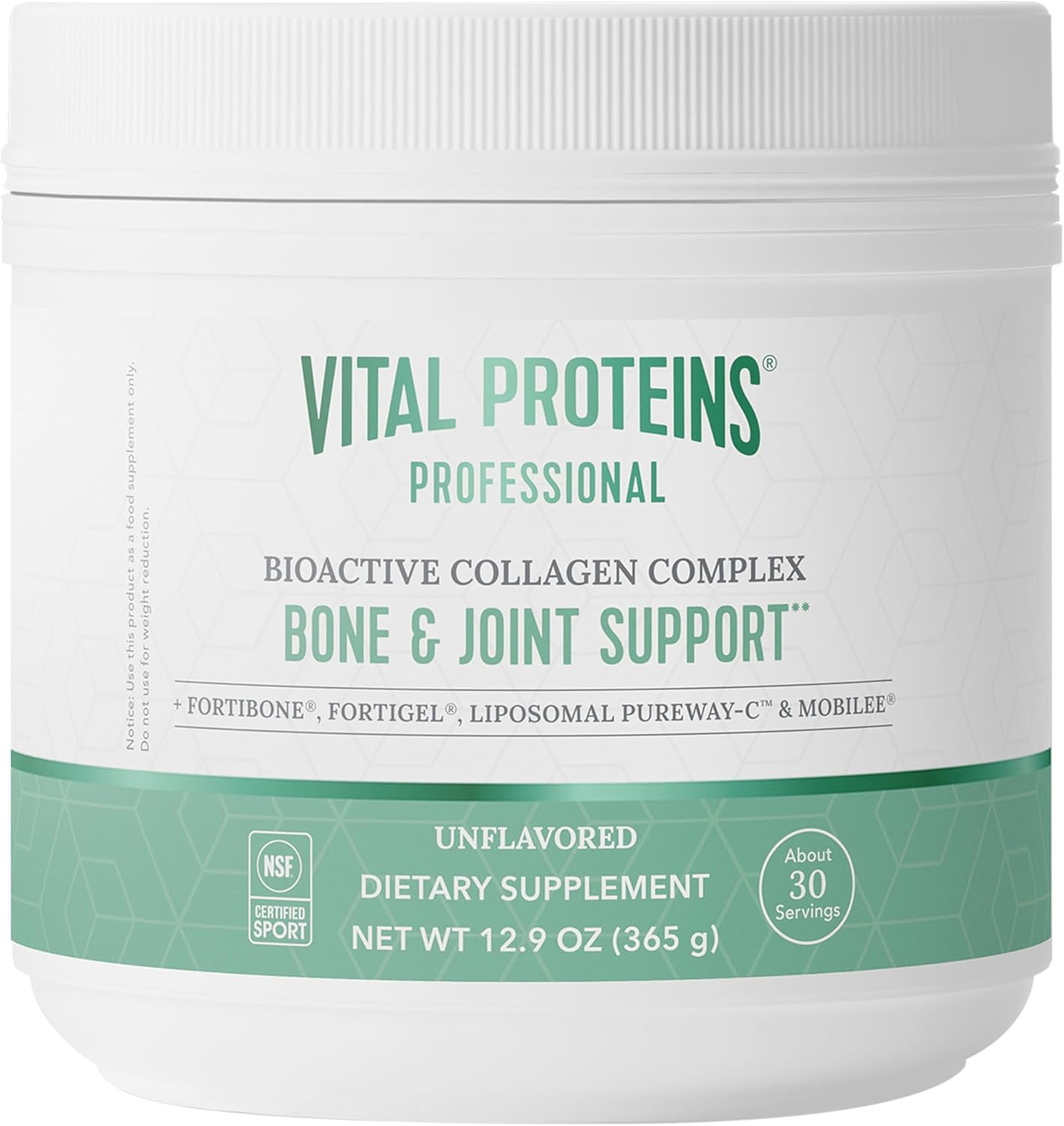
We talked about the “Protein-First” morning. Sometimes, eating 30g of protein immediately is hard, especially if you aren’t used to a savory breakfast. This is the easiest “cheat code.” It dissolves in anything (coffee, tea, water) and is tasteless. While it shouldn’t replace all your dietary protein, it’s packed with the specific amino acids (glycine and proline) that your aging joints and skin are desperate for. It helps protect your knees and lower back so you can actually do those squats in the 90-second fix without pain.
3. Sports Research Organic MCT Oil (For Metabolic Flexibility)

If you are trying to delay breakfast to let your cortisol settle, but your brain feels foggy, this is the bridge. Unlike other fats, MCTs (Medium Chain Triglycerides) bypass your digestion and go straight to the liver to be turned into ketones—instant fuel for your brain that doesn’t spike your insulin. It’s a great tool to help your body “re-learn” how to burn fat for fuel instead of screaming for sugar at 10 AM. Start with a teaspoon, as it’s potent stuff.
4. Whatafit Resistance Bands Set (For The 90-Second Fix)

You don’t need a gym membership to do the Nitric Oxide Dump, but adding resistance makes it infinitely more effective for muscle preservation. This set is perfect because it comes with handles and a door anchor. You can strap it to a doorframe to do the overhead presses or rows right in your bedroom. It eliminates the “I don’t have time to drive to the gym” excuse. The variable resistance is also safer for joints than heavy iron if you’re just getting back into movement.
5. “Next Level” by Dr. Stacy Sims (The Manual)

If you want to understand the “why” even deeper, this book is non-negotiable. Dr. Sims is the researcher who famously shouted, “Women are not small men.” This book is the definitive guide to why training and nutrition advice for 20-year-olds fails women over 40. It covers the specific “lift heavy” and “sprint intervals” protocols that replace the chronic cardio trap. It’s validating, scientific, and incredibly practical.