
Orthopedic Surgeon’s Secret: Stop These 5 Stretches After 45 or Guarantee Hip Replacement by 65


You know the feeling. You wake up, and your hips feel like they’ve been poured full of concrete. Maybe it’s after a long drive, or maybe it’s just Tuesday. Your instinct—and probably every fitness article you’ve ever read—tells you the solution is simple: Stretch it out.
So you go to yoga. You force yourself into a Pigeon pose. You grit your teeth through a deep lunge. You think, “If it hurts, it must be working.”
But here’s the thing that might keep you up at night: What if that “stiffness” isn’t something you need to fix, but a warning light you’re actively trying to smash?
There is a strange phenomenon happening in orthopedic operating rooms right now. The patients getting hip replacements aren’t just the inactive folks who spent decades on the couch. They are the “super-active” middle-agers—the yogis, the marathon runners, the people who religiously stretch every single day. We’re seeing a massive spike in people between 45 and 55 needing total hip replacements because they unknowingly ground their joints into dust in the pursuit of flexibility.
This isn’t about fear-mongering; it’s about biomechanics. There is a tipping point that happens in your hips around age 45. If you ignore it and keep stretching like you’re 25, you might be fast-tracking yourself to the operating table.
🛠️ The “O-Ring” Reality Check
Think your hip is a simple hinge? Think again.
It acts like a high-pressure suction cup. The “Labrum” is the gasket (O-ring) that keeps lubricating fluid pressurized so your bones glide without friction.
Age 20
Fresh Rubber
Pliable & Bouncy
Age 45+
Dried Washer
Stiff & Brittle
Forcing a stiff, aging labrum into extreme poses doesn’t stretch it—it tears it.
Broken Seal = Fluid Leak = Bone on Bone
To understand why your favorite stretches might be betraying you, we have to look at how the hip is actually built. We like to think of it as a simple ball-and-socket joint—like a trailer hitch. Smooth, round, spins forever.
But it’s actually more like a high-pressure suction cup.
The socket of your hip is lined with a piece of specialized rubbery tissue called the labrum. Dr. Michael Carreira, a hip preservation specialist, compares the labrum to the gasket or “O-ring” on a piston. Its job isn’t just to cushion bone; it creates a vacuum seal that keeps the joint fluid pressurized. This fluid is what allows your leg to glide without friction.
Here’s the catch: When you’re 20, that O-ring is like fresh rubber—pliable, stretchy, and tough. You can do the splits, and it bounces right back.
By the time you hit 45, that rubber changes. It loses its moisture. It becomes more like an old, dried-out washer you’d find in the bottom of a toolbox—stiff, brittle, and prone to cracking.
When you force a stiff, aging labrum into extreme positions—like deep yoga poses—it doesn’t stretch. It tears. And once that seal is broken, the suction is gone. The lubricating fluid leaks out, and suddenly you have the ball of your femur grinding directly against the cartilage of the socket. That’s the beginning of the end.
The Bone Spur You Didn’t Know You Had
“But I’ve always been flexible!” you might say. “Why is this a problem now?”
This is where it gets interesting. A huge chunk of the population is walking around with slightly “imperfect” hip bones. This condition is called Femoroacetabular Impingement (FAI).
It basically comes in two flavors:
- Cam Impingement: The ball of your hip isn’t perfectly round; it has a bony bump on it, kind of like a piston that’s slightly oval-shaped.
- Pincer Impingement: Your hip socket is too deep or covers too much of the bone, causing the neck of your leg bone to crash into the rim of the socket.
For years, this might not bother you. But when you start doing aggressive stretches—pulling your knee to your chest or twisting deeply—you are taking that bony bump and driving it into your labrum like a pestle grinding into a mortar.
And before you think, “Well, my hips feel fine, so I don’t have that,” look at the numbers.
That chart is wild, right? Nearly half of all men and a massive chunk of women have this anatomy. You likely have it and don’t know it. The only time it becomes dangerous is when you force your hip into ranges of motion it wasn’t designed for.
The 5 Stretches That Are Secretly Destroying Your Hips
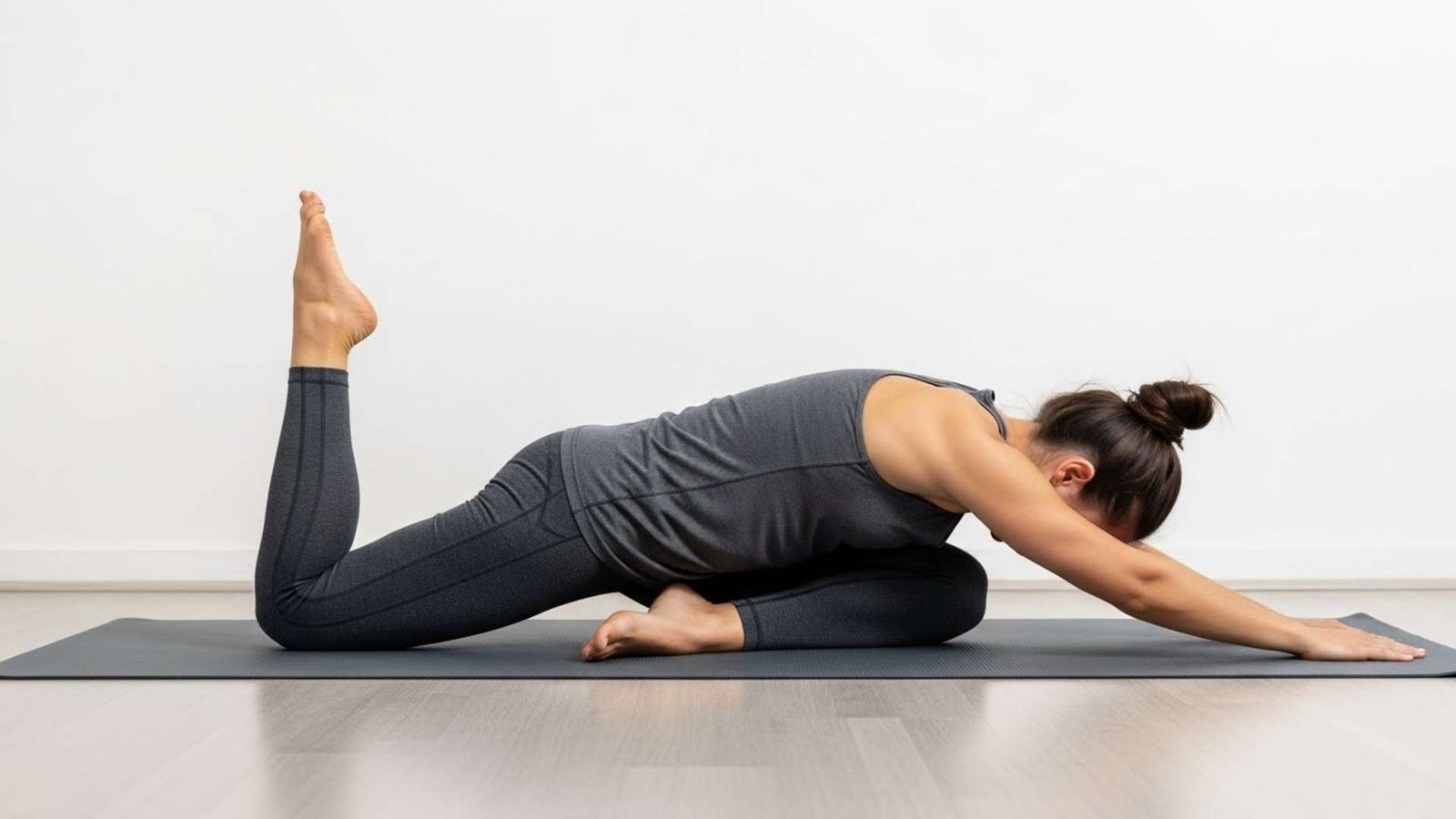
So, what does this mean for your morning routine? It means some of the “classics” need to be retired immediately. If you are over 45, these five movements are high-risk for impingement and labral tears.
1. The Pigeon Pose
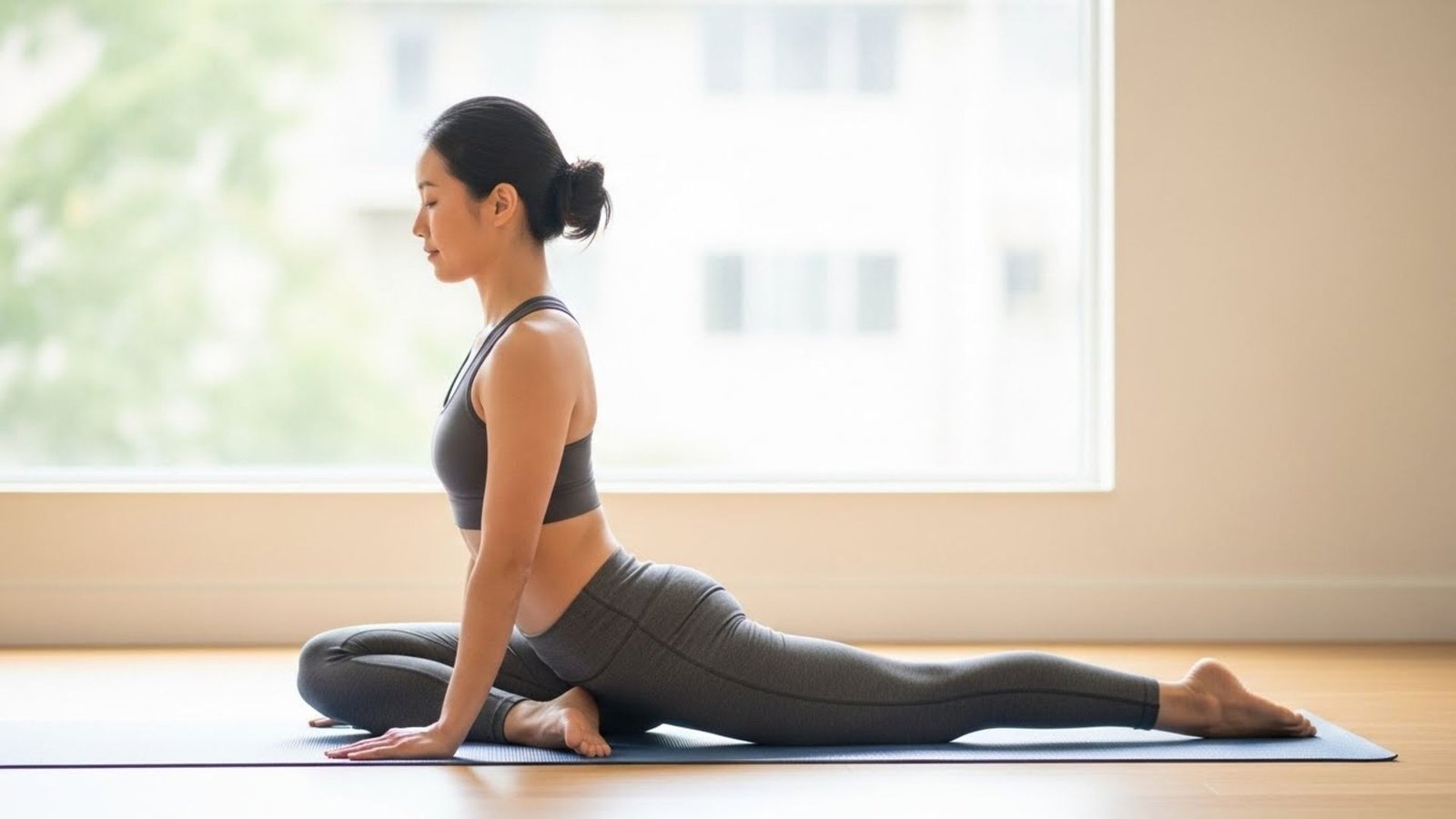
The villain: You see this in every yoga class. One leg forward, bent at an angle, while you lay your body weight over it. Why it hurts you: This pose is a “perfect storm” for the hip joint. It combines deep flexion (bending), rotation, and abduction (moving out). If you have any bony bumps (Cam/Pincer), this position acts like a nutcracker on your labrum. You aren’t stretching the muscle; you are grinding the joint capsule against the bone. Dr. Benjamin Domb, a leading hip surgeon, specifically warns that these extreme ranges are prime aggravators for tears.
2. The Deep “Runner’s” Lunge

The villain: A massive step forward, dropping your hips as low as possible toward the floor. Why it hurts you: This turns your leg bone into a giant lever. As you sink down, gravity pries the head of your femur forward, jamming it against the front of your hip socket. Orthopedic guidelines generally warn against aggressive extension under load. You’re essentially shearing the front of your joint capsule to get a sensation of “release” in the hip flexor.
3. The Hurdler’s Stretch

The villain: Sitting on the floor with one leg straight and the other bent behind you. Why it hurts you: This forces your hip into extreme internal rotation. Biomechanically, this is the most dangerous position for anyone with Cam impingement. You are taking the “bump” on your femur and scrubbing it directly against your cartilage. It’s so effective at causing pain that doctors actually use a version of this movement (the FADIR test) to diagnose joint damage. Why do it for fun?
4. The Sit-and-Reach
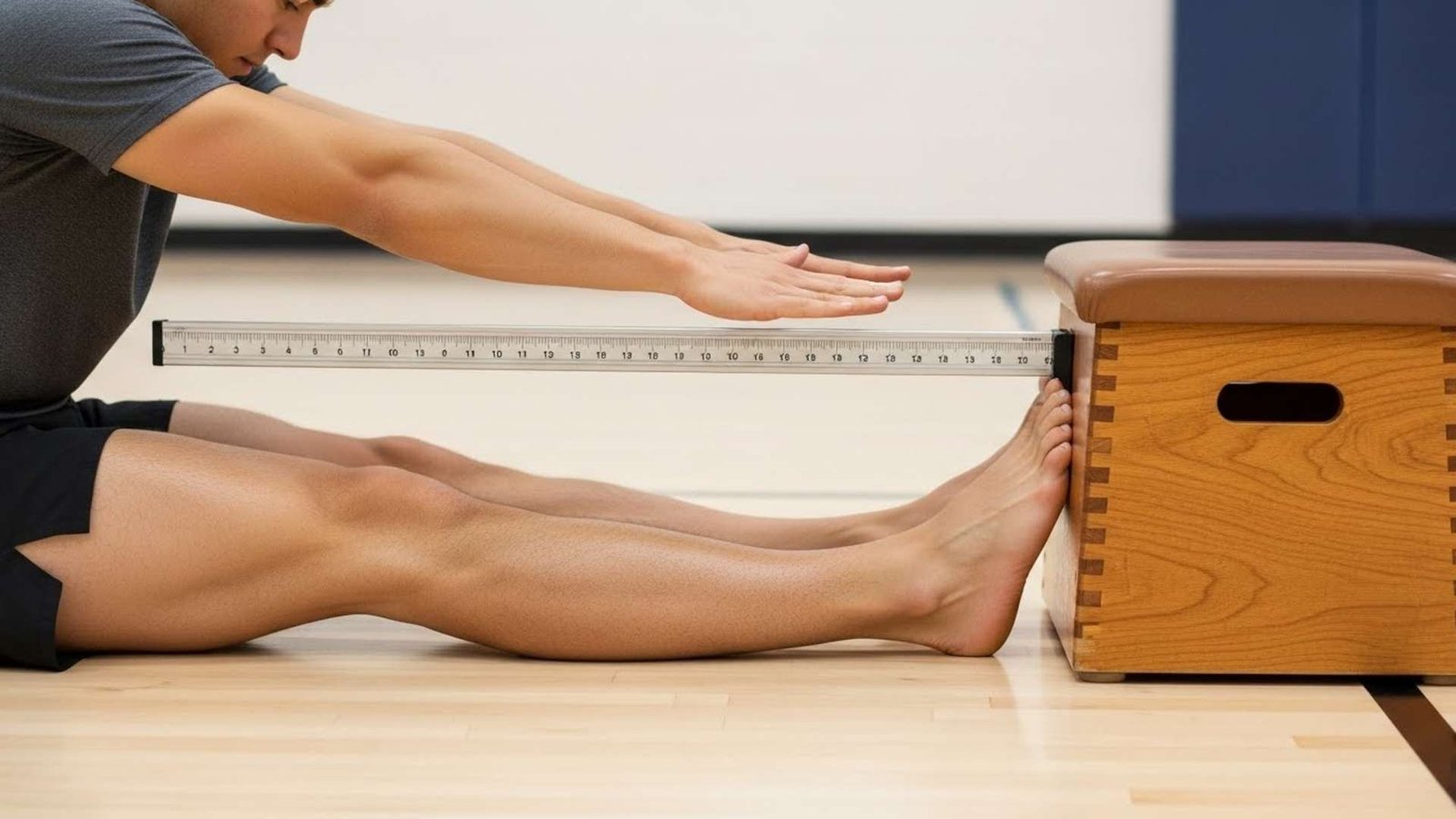
The villain: Legs straight out, reaching for your toes. Why it hurts you: Let’s be honest—most of us over 45 can’t fold completely flat at the hips. So what do we do? We round our lower back. This pressurizes the discs in your spine. But for the hip, this deep compression can cause the neck of the femur to abut against the rim of the socket, especially if you have a deep socket (Pincer morphology).
5. Aggressive “Windshield Wipers”
The villain: Lying on your back and flopping your knees hard from side to side. Why it hurts you: Physical therapists use a “scour test” to check for arthritis—basically grinding the hip around to see if it hurts. Aggressive windshield wipers are just a self-inflicted scour test. The rapid, loaded twisting puts shear force on that brittle labrum we talked about.
The “Tightness” Trap: Why Your Brain is Tricking You

This is the hardest part to accept. You do these stretches because you feel tight.
But Dr. David Middaugh and Dr. Jared, physical therapists who see this every day, argue that what you’re feeling isn’t “short muscles.” It’s a protective spasm.
Think about it: If your hip joint is a little unstable—maybe the ligaments are loose or the labrum is frayed—your brain senses danger. It thinks, “Whoa, this joint is about to slide out of place.” So, it orders your psoas and glute muscles to clamp down tight. It’s creating a biological splint to hold you together.
When you aggressively stretch that “tight” muscle, you are ripping the splint off. Your brain panics, and 20 minutes later, it tightens the muscle up even more than before. It’s a vicious cycle: Pain -> Spasm -> Stretch -> More Instability -> More Pain.
🔄 The Orthopedic Swap
Coach says: Movement is medicine, but the method matters! Stop “hanging” on your joints.
Why: Take gravity out of the equation.
Why: Stretch the psoas, not the capsule.
Why: Build a stable hip cuff.
Okay, deep breath. I’m not saying you should glue yourself to the couch. Movement is medicine—but the dose and the method matter.
You can get all the mobility benefits without the bone-grinding risks by making a few simple swaps. We need to move from “passive stretching” (hanging on your joints) to “active stability.”
Why These Swaps Work
- Reclined Figure-4: By lying on your back, you take gravity out of the equation. You control the pressure. No torque on the spine, no crushing the hip socket.
- Supported Lunge: By tucking your tailbone and squeezing your glute, you stretch the actual muscle (the psoas) instead of prying the joint capsule open.
- Clamshells: Instead of twisting the joint (Windshield Wipers), you strengthen the rotator cuff of the hip. A strong hip is a stable hip, and a stable hip doesn’t need to be chronically tight.
Need More Help? Look Into These Essential Tools
You don’t need a fancy home gym to save your hips, but having a few specific, inexpensive tools can make the “Orthopedic Swap” significantly safer and more effective. These tools aren’t about lifting heavy weights; they are about helping you achieve perfect alignment, supporting your joints so you don’t “hang” on your labrum, and releasing tight tissue without the dangers of aggressive stretching. If you’re serious about preservation, these are the game-changers.
1. OPTP Stretch Out Strap

This is the gold standard for safe hamstring stretching. Unlike a towel, it has multiple loops that allow you to grip the strap without straining your shoulders or rounding your back. It lets you perform the “Supine Hamstring Stretch” with absolute precision, keeping your spine neutral while you isolate the leg.
2. SukhaMat Yoga Knee Pad

If you’ve ever felt a sharp pain in your kneecap during a lunge or “Bird Dog” exercise, this is for you. It’s a high-density cushion that provides 15mm of support. It essentially eliminates knee pain during floor exercises, allowing you to focus on engaging your glutes rather than wincing in discomfort.
3. Fit Simplify Resistance Loop Bands

These are essential for the “Clamshell” and “Glute Bridge” exercises we discussed. They add just enough resistance to wake up your dormant glute muscles (the stabilizers) without overloading the joint. They are durable, don’t roll up easily, and are perfect for activating the muscles that protect your hip socket.
4. Manduka Cork Yoga Block

When you swap the deep lunge for a supported lunge, you might need something to lean on to keep your balance. Cork blocks are superior to foam because they are heavier and sturdier—they won’t wobble when you put your weight on them. They bring the floor up to you, preventing you from collapsing into unsafe ranges of motion.
5. TriggerPoint GRID Foam Roller

Remember the “Tightness Trap”? Sometimes you need to release a muscle (like the TFL or Quads) without stretching it. This foam roller is designed to mimic the hands of a massage therapist. Rolling out your quads can reduce the tension pulling on your hip joint without subjecting the joint capsule to dangerous torque.