
Some books quietly sit on your shelf, and some sweep in like a long-lost friend who suddenly explains your entire life. This list is about the latter—the books readers discovered late, only to realize they’d been walking around with missing puzzle pieces.
These aren’t the “usual suspect” self-help staples you’ve seen on every list; these are the books people genuinely rave about in real conversations, in late-night text messages, and in threads where someone always says, “I wish I had read this 20 years earlier.”
Below are the first 5 books—rich, practical, emotionally honest, and the kind that shift how you see your own story.
1. “Maybe You Should Talk to Someone” — Lori Gottlieb

There’s a reason countless readers said this book made them reevaluate their entire emotional toolkit. Lori Gottlieb pulls back the curtain on what therapy really looks like—not the dramatic TV version, but the raw, funny, frustrating, deeply human process of learning to understand yourself. As both therapist and patient, she lets us experience the internal tug-of-war people rarely admit to: wanting change but also wanting life to stay familiar. Readers often say the book helped them realize how often they’re “the common denominator” in their recurring problems, a realization that’s uncomfortable but also liberating. It’s the kind of book that sneaks up on you and leaves you thinking, “Why didn’t anyone give me this when I was 20?”
The shorter chapters and narrative style make it a very readable, emotional journey. And Gottlieb’s ability to make complex emotional patterns feel surprisingly clear is what keeps people recommending it years later.
2. “The Midnight Library” — Matt Haig

This novel resonated deeply with readers who’ve wrestled with regret, self-doubt, or the feeling that they somehow ended up in the wrong version of their life. It’s not just fiction—it’s a quiet lesson on the danger of idealizing the paths we didn’t choose. Haig’s storytelling makes you feel what so many people never say out loud: that we often blame ourselves for outcomes we couldn’t possibly have predicted. The book struck a nerve because it reminds you that even your “worst” decisions were made with the information and courage you had at the time. And for many readers, that realization alone felt like emotional absolution.
The book is short, but its message lingers. Its impact comes from how it normalizes doubt and gives permission to forgive your former self, something many adults don’t realize they desperately need.
3. “The Body Keeps the Score” — Bessel van der Kolk

This is the book readers often describe as “emotionally heavy, scientifically brilliant, and life-changing in ways I didn’t expect.” It explains trauma—not as a dramatic backstory reserved for “other people,” but as something far more common, stored in the body through stress, childhood patterns, unhealthy relationships, and survival instincts. Van der Kolk’s decades of research help readers understand why some reactions are biological, not moral failures, and why willpower alone isn’t a cure for long-held pain. It also offers hope by showing how the brain can heal through surprising methods like EMDR, yoga, or neurofeedback—things many had never heard of but ended up exploring after the book.
Readers found the book surprisingly empowering because it reframed emotional struggles as treatable, not shameful. And the sections that explain how the mind and body reconnect during healing are often described as “the part that finally made everything click.”
4. “The Art of Thinking Clearly” — Rolf Dobelli

If you’ve ever made a decision that felt right in the moment but baffling in hindsight, this book explains exactly why. Dobelli breaks down dozens of cognitive biases—those sneaky, universal mental shortcuts that shape what we buy, who we trust, and how we justify choices that were never logical to begin with. What readers adore is how the book makes behavioral psychology feel digestible and strangely entertaining, using real-world examples that quietly reveal how predictable human irrationality actually is. Many readers say they finished it feeling both wiser and slightly humbled, in the best way.
Its bite-sized chapters make it the kind of book you keep referring back to. And the fact that it helps you spot thinking traps before they sabotage your decisions is the reason it’s become a perennial favorite among readers who love practical wisdom.
5. “The Mountain Is You” — Brianna Wiest
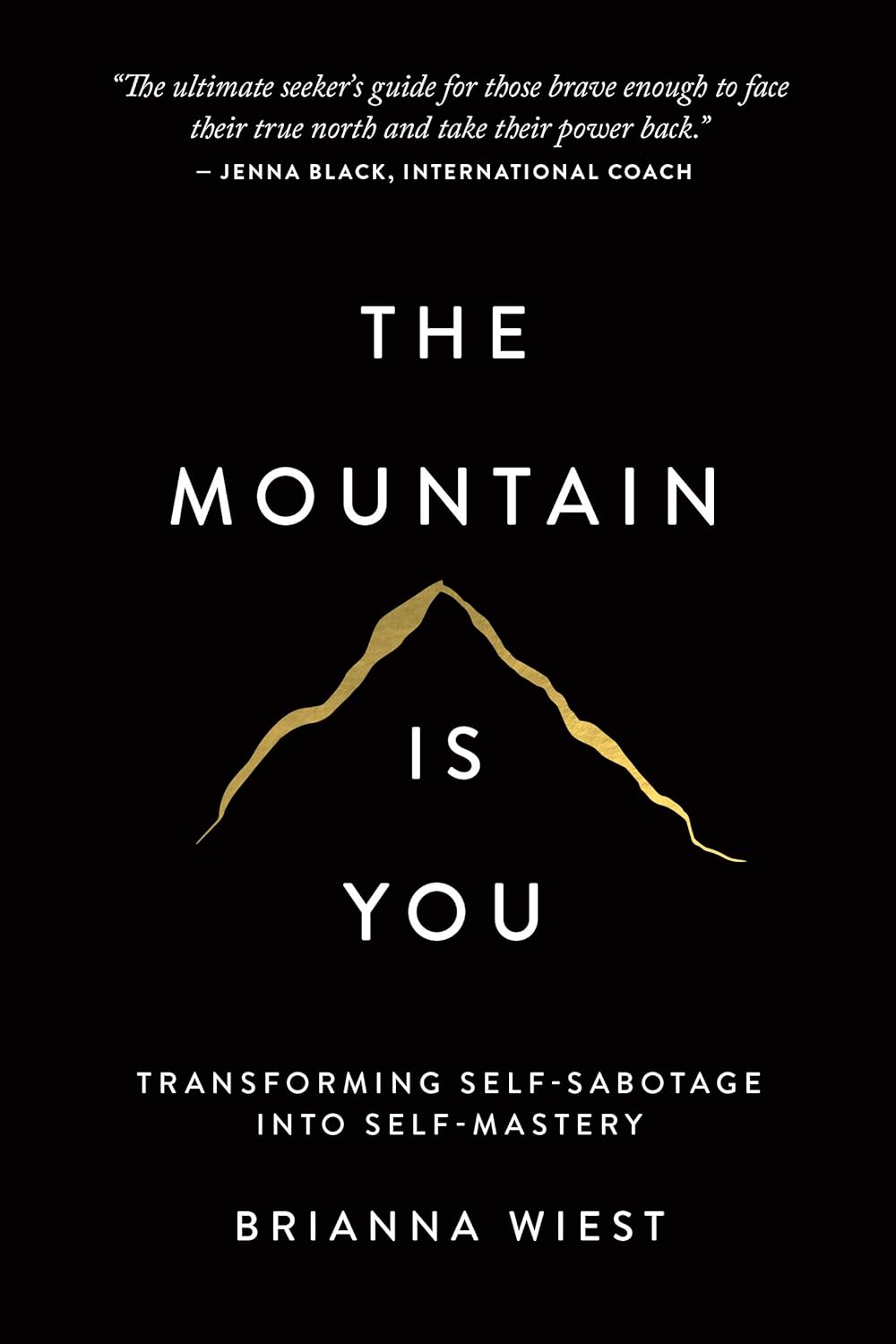
This book caught fire because it speaks directly to anyone who’s tired of getting in their own way—but can’t understand why they do it. Wiest explains self-sabotage not as laziness or lack of discipline, but as a deeply rooted conflict between your conscious goals and your unconscious fears. She writes with a style that feels both comforting and confronting—almost like a friend who tells you the truth while still holding your hand. Readers rave about how the book helps them pinpoint the exact insecurities or patterns that keep showing up in different parts of life, from relationships to career choices.
It’s a short read, but packed with memorable insights. And its biggest strength is how it shows that healing isn’t about becoming a different person—it’s about becoming yourself without the old armor.
6. “The Psychology of Money” — Morgan Housel

This is one of those books people pick up expecting a finance lesson but end up getting a lesson in life. Morgan Housel explains money in a way that makes you realize how much of your financial behavior is driven by habit, personality, fear, and family history—not spreadsheets. Readers love how he exposes the hidden emotional patterns behind saving, spending, risk, and even generosity. Housel’s biggest strength is showing that being good with money has little to do with intelligence and everything to do with behavior, which is why so many successful, “smart” adults still feel lost financially. Many readers walked away saying they finally understood why they kept repeating the same mistakes—and why wealth is less about strategy and more about consistency and calm decision-making.
What makes it a favorite is how practical wisdom is woven into everyday stories, making complicated financial ideas suddenly feel obvious. It becomes a book you wish you had read in your twenties… or at least before your first major financial regret.
7. “A Man Called Ove” — Fredrik Backman

Readers often describe this novel as the book that “unexpectedly rearranged” their understanding of loneliness, grief, and the quiet battles people carry. It’s the story of a man who seems cold, rigid, and impossible to please—until you learn what shaped him. Backman has a gift for showing how small acts of kindness can crack open entire lifetimes of pain, and many readers say the book helped them rethink the people in their own lives who are difficult, guarded, or emotionally distant. It’s a story that starts simple but expands into a powerful reminder that you don’t always know who someone used to be before life wears them down.
The book is heartwarming without being sentimental. It stays with readers because of its gentle reminder that connection often begins where judgment ends, and that one person can change a life without even realizing it.
8. “The Courage to Be Disliked” — Ichiro Kishimi & Fumitake Koga

This book became a phenomenon because it challenges so many assumptions we carry without questioning. Rooted in Adlerian psychology, it explores how self-worth can become tangled in comparison, people-pleasing, and fear of judgment. What shocks many readers is its core argument: freedom often begins the moment you stop trying to earn approval you never needed in the first place. The conversation-style structure makes the ideas easy to digest while still being philosophical enough to shake your worldview a little. Readers frequently say they had to pause after certain sections because it felt like someone had described their entire personality back to them.
The book’s power lies in how it reframes personal responsibility—not as a burden but as liberation. And many readers love how it shows that courage isn’t loud; it’s the quiet decision to build a life based on your own values, even when others don’t applaud it.
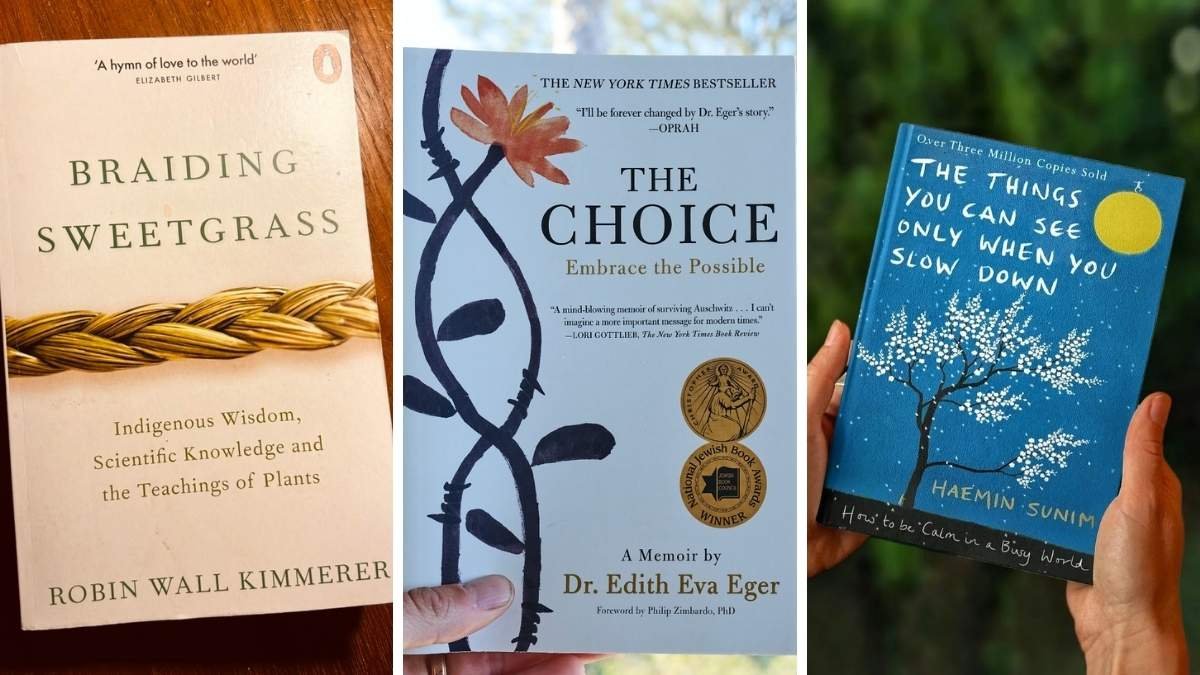
9. “Braiding Sweetgrass” — Robin Wall Kimmerer

This book hits people in a deeply personal way because it blends science, spirituality, culture, and environmental awareness with rare emotional clarity. Kimmerer writes as both a botanist and an Indigenous woman, showing how the natural world isn’t just something we use—it’s something we’re in relationship with. Readers repeatedly say that no book has ever changed how they see ordinary plants, land, or reciprocity quite like this one. It’s thoughtful without being preachy and lyrical without losing its practical grounding. Many readers finish it with a sense of quiet awe and a newfound appreciation for the small, living details they previously overlooked.
The shorter stories and reflective tone make it easy to savor. And what people love most is how it reconnects you with a sense of gratitude and belonging, even if you don’t consider yourself a nature-focused person.
10. “The War of Art” — Steven Pressfield

If you’ve ever wanted to start something meaningful—writing a book, building a business, changing your lifestyle—but kept stopping and starting, this is the book that finally explains why. Pressfield introduces the concept of “Resistance,” a force that shows up as procrastination, doubt, distraction, perfectionism, or impulsive excuses. Readers love how brutally honest and accurate it feels, as if someone finally named the invisible barrier that’s been blocking their progress for years. It’s direct, bold, and strangely comforting because you realize your struggle isn’t personal—it’s universal.
The short, punchy chapters make it easy to reread whenever motivation fades. And the most lasting insight is how discipline becomes easier the moment you recognize Resistance for what it truly is—a sign that you’re trying to grow, not a sign that you’re failing.
11. “The Things You Can See Only When You Slow Down” — Haemin Sunim

Readers love this book because it delivers the kind of clarity you rarely get in the middle of a busy life. Haemin Sunim breaks down anxiety, loneliness, relationships, and self-expectations with beautifully simple insights that feel like they were written specifically for your current season of life. One reason this book made so many people say they wish they had read it earlier is that it emphasizes how most of our emotional chaos isn’t caused by life itself, but by how fast we’re moving through it. Sunim writes with a calm voice that doesn’t lecture, but gently points out the places where you’re being unkind to yourself. It’s a reminder that rest, presence, and small perspective shifts can bring more healing than the dramatic breakthroughs we chase.
The shorter, reflective passages make it a book people return to repeatedly. Many readers highlight how a single sentence can shift your entire mood, making it one of those rare reads that feels like a reset button for the mind.
12. “The Choice” — Dr. Edith Eva Eger

This memoir stunned readers not only because of Edith Eger’s survival story, but because of her profound understanding of what freedom really means. As a Holocaust survivor turned psychologist, she writes with an honesty that cuts straight to the heart, showing how pain can shape a life without defining it forever. What moves readers most is her idea that suffering is universal, but victimhood is optional, and that healing often begins the moment we choose to stop carrying what isn’t ours anymore. Her reflections on forgiveness, trauma, and resilience are grounded, hopeful, and deeply practical—offering not just inspiration but a roadmap for reclaiming emotional agency.
Readers say the book changed them because of how Eger blends courage with compassion, reminding you that transformation doesn’t require perfect circumstances—only willingness. It’s one of those books that finds you at exactly the right time.
