


You know that sinking feeling? The one where you walk into a kitchen and stand there, staring at the refrigerator, realizing you have absolutely no idea why you came in there.
For most of us, that moment triggers a joke. “Must be having a senior moment,” we say with a nervous laugh. But for millions of people over 60, that moment triggers something else entirely: fear. A quiet, gnawing terror that this is it. The beginning of the end. The inevitable slide into “being old.”
But here is what I need you to know, and I want you to really hear this: A lot of what we accept as “normal aging” is actually just biology crying out for maintenance.
There is a massive shift happening in geriatric medicine right now. Doctors like Dr. Louise Aronson, author of Elderhood, are pointing out that our medical system often writes off older adults because they don’t fit standard “product specifications.” We treat the symptom—the confusion, the fall, the fatigue—as a natural conclusion of life, rather than asking why it’s happening.
It turns out, the human body is a lot like a vintage car. Just because it has high mileage doesn’t mean the engine is broken. Sometimes, you’re just running the wrong fuel mix.
We’re going to look at eight specific symptoms that masquerade as “old age” but are often signs of reversible chemical deficiencies. And we’re going to fix them.
⚡ The “Senior Moment”
Forget a name? Lose a word?
Stop! Don’t jump to “Dementia” just yet.
🧠 The Wiring Analogy
Think of your nervous system as electrical wiring.
- Nerves = Copper Wire
- Myelin Sheath = Rubber Coating
- Vitamin B12 = The Insulation Tape
(Hover above: Without B12, the insulation frays and signals get static-y!)
🌫️ Frayed Wire vs. Dementia
It’s not that the memory is gone; it’s just slow to load.
20% of seniors are in the “Grey Zone”—not fully deficient, but definitely fraying.
🍔 Why? It’s the Stomach!
You might eat enough meat, but you can’t absorb it.
As we age, we lose the “acid juice” needed to pull B12 out of food. You can eat steak daily and still starve for B12.
✅ The Fix is Reversible
Good news! If caught early, supplementation acts like fresh insulation tape.
Re-wrap the nerves before they break, and watch the fog lift!
Let’s start with the big one. Memory loss.
When you forget a name or lose a word, it’s easy to spiral into thinking it’s dementia. But before you go there, you need to look at your Vitamin B12 levels.
Think of your nervous system like the electrical wiring in your house. Every nerve is wrapped in a protective coating called the myelin sheath. It acts just like the rubber coating on a copper wire—it keeps the signal moving fast and prevents it from short-circuiting.
Vitamin B12 is the insulation tape. Without it, that sheath starts to fray (a process called demyelination). The signals from your brain don’t get lost; they just get static-y. They arrive slowly or distorted.
The “Frayed Wire” Effect vs. Dementia
This looks different from Alzheimer’s. In Alzheimer’s, you often can’t form new memories. In a B12 deficiency, the memory is there, but you can’t access it fast enough because the wire is frayed. You might feel “brain fog,” slow thinking, or trouble finding words.
The Data is Warning Us: We used to think this was rare. We were wrong. Recent data suggests that while “official” deficiency affects about 3.7% of seniors, a much larger group—up to 20% of those over 60—are in a “grey zone” of insufficiency where symptoms start to creep in.
Why It Happens: It’s usually not because you aren’t eating enough meat. It’s because your stomach has changed. As we age, many of us develop atrophic gastritis—a thinning of the stomach lining. We stop producing the “acid juice” needed to pull B12 out of food. You could eat a steak every night and still be starving for B12.
The Fix: This is the good news. If you catch this early—before the nerve physically dies—it is largely reversible. Supplementation can effectively re-insulate the wires, and the “fog” often lifts.
2. The “I’m Just Slowing Down” Fatigue (Check the Fuel Pump)

“I’m just tired. I’m getting old.”
If I had a nickel for every time a patient said this, I’d be retired on a beach. Fatigue—that heavy, dragging exhaustion where your limbs feel like lead—is not a normal part of aging. It’s a symptom.
Two things often cause this: A broken Fuel Pump (Anemia) or a broken Thermostat (Thyroid).
The Fuel Pump Analogy (Iron)

Imagine your body is an engine. Oxygen is the gasoline. You breathe it in, but you need a fuel pump to get that oxygen from your lungs to your muscles so you can move. Hemoglobin is that fuel pump. And Iron is the metal that builds the pump.
If you are low on iron, you can’t build enough pumps. You can breathe all the air you want, but the fuel never reaches the engine. The result? You sputter. You stall. You get winded walking up a single flight of stairs.
The Thermostat (Thyroid)

Then there’s the Thyroid. This gland in your neck is the body’s thermostat. In older adults, it often gets stuck on “low” (Hypothyroidism).
- Young people: When their thyroid slows, they gain weight and get cold.
- Older people: It’s trickier. You might just get “apathetic.” You stop caring. You sit in the chair longer. It looks exactly like depression, but it’s actually a metabolism problem.
The Takeaway: Don’t accept fatigue. Ask for a Ferritin test (for iron stores) and a TSH test (for the thyroid).
3. The “Shrinking” Muscle (It’s a Brick Supply Issue)

Have you noticed your legs getting thinner? Or that it’s harder to open a jar? We call it Sarcopenia (muscle loss), and it’s the number one reason seniors lose their independence.
But here’s the secret: Muscle loss isn’t just about not exercising. It’s about Anabolic Resistance.
The Brick Wall Analogy

Think of your muscles as a brick wall. Every day, life knocks a few bricks out. You need to replace them.
- The Bricks: Amino acids from protein.
- The Foreman: An amino acid called Leucine.
When you’re 20, the Foreman is wide awake. You eat a little protein, he yells “Build!”, and the wall gets fixed. When you’re 70, the Foreman is hard of hearing. You eat a little protein (like just a piece of toast), and he doesn’t hear you. He stays asleep. The wall doesn’t get fixed.
The Reality Check: Data shows that 1 in 3 adults over 50 don’t eat enough protein to wake up the foreman. To overcome this resistance, you can’t just graze. You need a distinct “dose” of protein—about 25-30 grams in a sitting—to trigger the repair process.
4. The “Grumpy Old Man/Woman” Syndrome (Mood & Methylation)

There is a pernicious myth that older people are just naturally grumpier or sadder. That is unfair, and medically wrong.
Depression in the elderly often looks different. It’s less “weeping sadness” and more “apathy and confusion”—something doctors call Pseudodementia. You look like you have dementia, but you’re actually just deeply, chemically depressed.
The culprits? Vitamin D and B12 (again).
- Vitamin D isn’t just for bones; it activates receptors in your brain that regulate serotonin (the happy hormone). Low D = Low Mood.
- B12 is needed to make dopamine. Without it, your brain chemistry flattens out.
Studies have shown that treating these deficiencies can sometimes resolve the “dementia” symptoms entirely. It’s not a personality change; it’s a chemistry set imbalance.
5. The Sleep Thief (You Need a Brake Pedal)

You hit the pillow, you’re exhausted, but your legs want to run a marathon. Or your brain just won’t turn off.
Insomnia isn’t a requirement of aging. Often, it’s a lack of Magnesium.
The “Brake Pedal” Mechanism

Your nervous system has a gas pedal (Calcium) and a brake pedal (Magnesium). Calcium fires the nerves; Magnesium tells them to chill out. If you are magnesium deficient—and many seniors are, because diuretics for blood pressure flush it out of the body—you have lost your brakes.
Your nerves stay in a state of “low-level buzzing.” This leads to Restless Leg Syndrome and that “wired but tired” feeling.
The Fix: You need magnesium. But be careful—some forms (like Magnesium Oxide) are basically laxatives. You want Magnesium Glycinate for sleep. Or, eat it! But if you have trouble chewing nuts, that can be hard.
6. “Food Just Tastes Blah” (The Signal Booster)

“Why bother cooking? Everything tastes like cardboard.” Loss of appetite is the start of a dangerous downward spiral. If you don’t eat, you lose muscle, you fall, you break a hip.
This loss of taste (or a metallic taste in the mouth) is the classic signature of a Zinc Deficiency.
The Analogy: Zinc is the Signal Booster for your taste buds. Your tongue is the radio antenna, but Zinc is the electricity boosting the signal to the brain. Without it, the broadcast is static. The Catch: Common blood pressure meds (like ACE inhibitors) drain Zinc from your body. You might need to put it back to enjoy dinner again.
7. The “Paper Thin” Skin (You Need Mortar)
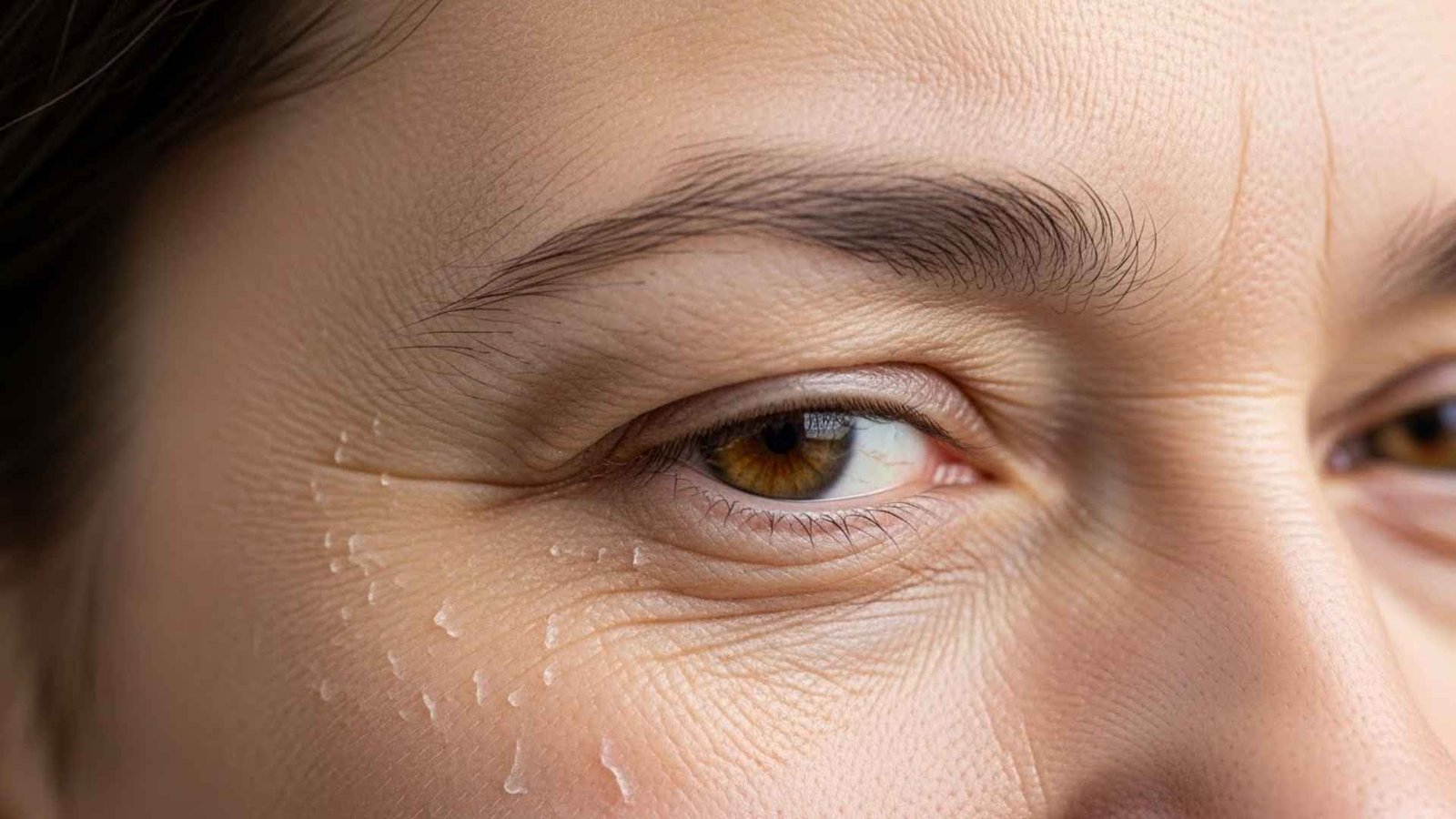
You bump your arm lightly and—boom—giant purple bruise. The skin tears like wet tissue paper. We call it “onion skin,” but really, it’s a Lipid Deficit.
Imagine your skin cells are bricks. To keep the wall strong and waterproof, you need mortar between them. That mortar is made of fatty acids (Omega-3s) and water.
- Dehydration removes the pressure (the wall sags).
- Low Omega-3s means the mortar crumbles.
The result? The wall leaks moisture out and lets irritants in. Increasing Omega-3 intake (fish oil, flax) can actually thicken the barrier again.
🚧 The “I Just Tripped” Fall
Falls are not accidents. They are a failure of your body’s systems.
The Bones & Muscle. You need structure to stay upright.
Proprioception. Knowing exactly where your feet are.
Falls are not accidents. They are usually a failure of your body’s stability systems. To stay upright, you need two things: Strong bones (Concrete) and a sense of where your feet are (GPS).
- Vitamin D reinforces the concrete (bones) AND strengthens the fast-twitch muscle fibers you need to catch yourself when you stumble.
- Vitamin B12 powers the GPS (Proprioception). If your GPS is off, you can’t feel exactly where your foot is on the floor. You step, you miss, you fall.
Need a Head Start? Look Into These
Knowing what you need is half the battle, but finding the right quality can be a headache. I’ve rounded up a few high-quality options that align with the science we just discussed. These are products that prioritize absorption and ease of use—no horse pills or chalky powders here.
1. Vital Proteins Collagen Peptides

This is my go-to for the “Brick Wall” problem. It’s unflavored, dissolves in your morning coffee without a trace, and provides the specific amino acids (like glycine and proline) needed for skin and muscle repair.
2. Thorne Magnesium Bisglycinate

For the “Brake Pedal,” you want the Glycinate form to avoid tummy trouble. Thorne is trusted by practitioners for purity, and this powder mixes easily into water before bed to help calm that racing mind.
3. Nordic Naturals Ultimate Omega

To fix the “leaky mortar” in your skin and brain, you need high-quality fish oil. Nordic Naturals is the gold standard for freshness (no fishy burps!) and high EPA/DHA content to keep your cells plump.
4. Jarrow Formulas Methyl B-12 (5000 mcg)

Since stomach absorption is the bottleneck, this lozenge dissolves in your mouth (sublingual), bypassing your stomach acid entirely to re-insulate those “frayed wires.”
5. Water Bottle with Time Markers

If you struggle with the “fear of water,” this is a game changer. It breaks your hydration down into hourly sips rather than overwhelming gulps, keeping your “hydraulics” pressurized without overloading your bladder.
