


Look, when you tell people you’ve hiked all 63 U.S. National Parks, they usually ask about the logistics. How long did it take? What did you pack? Weren’t you tired?
But the real treasure of a journey that huge isn’t the trail mix recipe or the number of miles you clocked. It’s what happens inside your head when you finally shut down the mental noise of modern life. It’s a psychological expedition, really, and the lessons it gives you are profound—and honestly, nobody talks about them.
This wasn’t just a physical challenge; it was a total neurocognitive recalibration. It’s about figuring out how to survive the daily grind of city life using the hard-won wisdom of the wilderness.
Think about this for a second: 93-year-old Joy Ryan, who grew up having only “wandered” as far as the local fishing hole, went on to visit all 63 parks with her grandson. Before she started, she’d never even seen the ocean or mountains. Her story proves that the biggest barrier isn’t physical fitness or age—it’s the belief that you can actually do something grand. When you see someone completely unlike the typical “adventurer” succeed, it strengthens your own belief in possibility. That’s a core human need: proof that the audacious is attainable.
The nine lessons that follow aren’t about staying hydrated (though, seriously, drink water). They’re the deep, quiet shifts that change how you handle stress, complexity, and fear long after you get home.
1. The Cognitive Hamster Wheel Stops Spinning: Silencing the Inner Critic
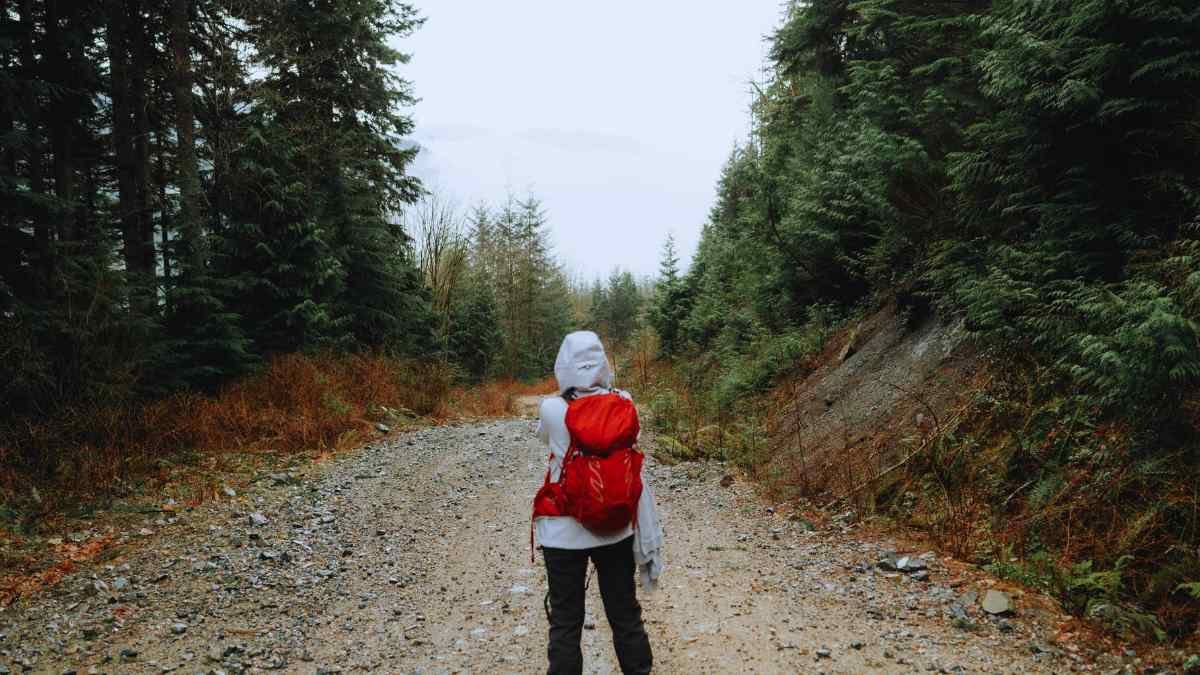
The biggest surprise on the trail? The quiet. Not just the environmental quiet, but the quiet in my head.
We live in a world that thrives on rumination—that endless, repetitive, and often negative self-talk that spirals through your brain. But out in the wilderness, you don’t have time for existential dread. You’re too busy worrying about where your next campsite is, or if that cloud means rain. You are involuntarily anchored to the present.
Here’s what I mean: Scientists at Stanford studied this. They found that when participants walked for 90 minutes in a natural area (compared to an urban setting), they showed a measurable decreased activity in the subgenual prefrontal cortex (sgPFC).
What is the sgPFC? It’s the brain region strongly tied to rumination and depressive thought. Nature literally buffers you against mental illness risk by dialing down your brain’s most anxious tendencies.
The real lesson the parks teach you is consistency, not cure. You don’t need a 90-minute hike every day. Comprehensive research shows that short, frequent nature exposure—even as little as 10 minutes—can yield significant positive effects on mental health. It’s the habit that breaks the wheel.
Here’s how nature re-engineers your mind:
| Brain Marker | Nature Exposure Effect | Associated Psychological Outcome |
| Subgenual Prefrontal Cortex (sgPFC) Activity | Decreased Activity | Reduction in Rumination and Risk of Depression |
| Affective State (Self-Report) | Consistent Improvement (98% of Studies) | Decreased Feelings of Hostility, Anxiety, and Depressive Mood |
| Cortisol/Amylase (Biomarkers) | Significantly Lowered Levels | Reduction in Physical and Psychological Stress |
2. When Life is Just “Eat, Walk, Sleep”: The Power of Radical Simplicity

Think about your average Tuesday: You’re juggling 50 decisions—what to wear, what to eat, which email to prioritize, whether you should call that person back, what traffic app to use. Your brain is running a thousand complex processes at once. This exhausts what psychologists call your directed attention—the mental effort you use to focus intently.
On the trail, life is distilled down to the basics: shelter, water, and moving forward. The world simplifies into one singular task: put one foot in front of the other. It’s a profound relief.
This is the core of Attention Restoration Theory (ART). City life drains your focus; wilderness refills it with soft fascination. It’s the gentle, effortless engagement you get from watching a river flow, seeing the light filter through trees, or just gazing at a vista. That easy engagement replenishes your tired, directed attention system, making you more productive and less stressed when you return.
The lesson? That cognitive exhaustion you feel in the city comes from unnecessary complexity. The hiker maximizes efficiency by minimizing decisions. If you want more clarity, start by asking yourself: “Is this task essential for forward momentum?” It’s a game changer.
3. The Unshakeable Proof of Capability: What Mastery Actually Feels Like

The journey to 63 parks guarantees one thing: you will confront your limits. You will face unexpected snow, terrifying exposure on a ridge, or the aching pain of a multi-day ascent. And when you overcome those high-stakes obstacles, something indelible happens inside you.
This is the power of Mastery Experiences. Psychologist Albert Bandura taught us that self-efficacy—the belief in your ability to succeed—is built most powerfully through direct proof. It’s not about positive self-talk; it’s about a sequence of successful performance outcomes.
Every mile you hike, every logistical hurdle you manage (food, water, shelter), and every time you choose to endure pain, you build undeniable evidence that you are capable. You are giving your brain irrefutable proof of its own competence.
And here’s the unexpected side effect: This self-efficacy acts as a Failure Buffer. Once you have concrete proof of your capacity forged on a mountain, small professional or personal setbacks stop feeling like a fatal flaw. You view them as temporary, external problems, not proof that you lack ability. You know, without a doubt, that you have the resources to cope.
| Source of Self-Efficacy (Bandura’s Model) | The Trail Application | Why It Matters |
| Performance Outcomes (Mastery) | Successfully managing logistics and completing steep elevation gains. | The most influential source; direct proof of capability, builds long-term resilience. |
| Physiological & Emotional States | Learning to stay focused and grateful despite numbing cold or physical exhaustion. | You learn to manage anxiety, transforming perceived distress into readiness. |
| Vicarious Experiences | Witnessing highly dissimilar hikers (like Grandma Joy) successfully complete extreme sections. | Lowers the perceived barrier to entry; tells your brain, “If they can do it, I definitely can.” |
4. The Strategic Pause: Why a “Zero Day” Isn’t Failure
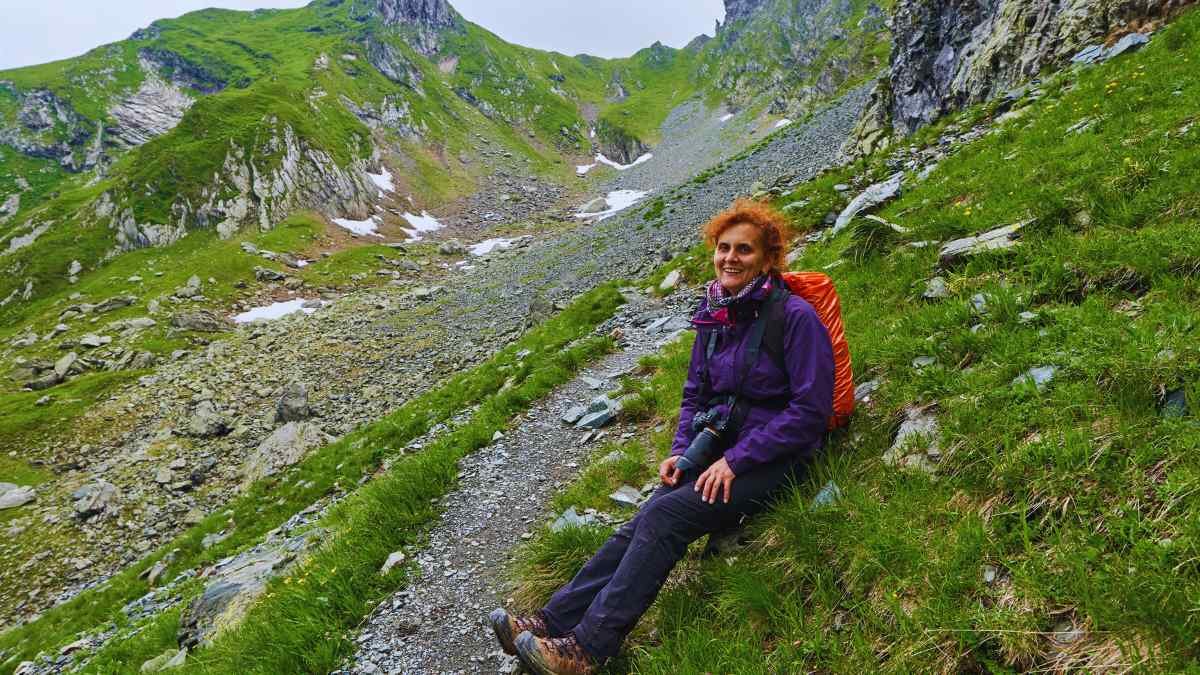
When you’re obsessed with a huge goal, stopping feels like failure. Long-distance hikers are often restless achievers. A full Zero Day (24 hours of complete rest) can feel psychologically destabilizing. It breaks the momentum.
But if you push too far, you risk injury, which means a forced shutdown. So the wisdom of the trail lies in mastering the strategic rest. The motto becomes: “Quit while you’re ahead!”
The solution? The Short Day Sandwich.
Instead of a demoralizing zero day, successful long-term hikers build in a planned rest period surrounded by a short, low-mileage hike (say, 3–7 miles) on each side. You still get the physical recovery, but you satisfy that internal, achievement-driven need for forward momentum. You never feel like you’ve broken the daily habit of the hike.
In your urban life, this means structuring your recovery. Don’t wait until you’re forced to crash. Integrate “low-stakes cognitive tasks” (a 10-minute walk, 5 minutes of focused reading) around a major “resupply” (lunch, a critical meeting). You recharge the mind without breaking the rhythm of the week.
5. The Humbling Perspective: Finding Awe as Resilience Practice

There’s something powerful about standing beneath the Redwood giants or staring into the abyss of the Grand Canyon. You realize you are such a small part of a big, old world.
That realization—that feeling of awe—is more than just a fleeting emotion; it’s a powerful tool for resilience. When you confront forces on a geological or universal scale, your brain naturally reduces the perceived size and importance of your self-focused, transient stressors.
It’s a form of psychological scale recalibration. The deadline that felt like the end of the world suddenly shrinks when contextualized against a canyon that took a million years to form.
This perspective shift promotes robust health outcomes. Awe triggers measurable benefits, including a reduction in stress and inflammation and an increase in activity in the parasympathetic nervous system (the body’s “rest and digest” mode). As environmentalist David Suzuki said, those hours exploring the outdoors make us “more resilient and confident.”
To harness this in the city, practice “micro-awe.” Stop and look up at the complex architecture, or focus on the intricate biology of a single street tree. That daily practice of looking beyond yourself builds emotional reserves.
6. Working With Mother Nature’s Chaos: Dropping the Myth of Control

You can plan every minute of a 63-park journey, but you cannot plan for the sudden hail storm, the blistering wind, or the trail closure. The wilderness is the ultimate environment of unpredictability, and it ruthlessly exposes the myth of control.
You quickly learn that success isn’t defined by fighting the elements; it’s defined by your ability to adapt, prepare, and stay grateful despite the physical discomfort. The struggle is physically and mentally exhausting; acceptance is sustainable.
This learned adaptive mindset is supported by Stress Recovery Theory (SRT). Nature helps you cope with stress because exposure reduces negative mood states and protects you against environmental stressors. In short: you learn that your resources for coping are robust, mitigating the feeling that the demands of a situation exceed your resources—which is the very definition of stress.
Here’s the urban takeaway: When a setback hits (a failed policy, a market crash, traffic chaos), categorize the variables. That’s your “Weather Report” technique. Focus all your energy on the controllable adaptations (extra resources, a new path) and eliminate the energy spent on resisting or complaining about the uncontrollable conditions (the “weather”).
7. The Ultimate Survival Gear: Training Your Analog Intelligence
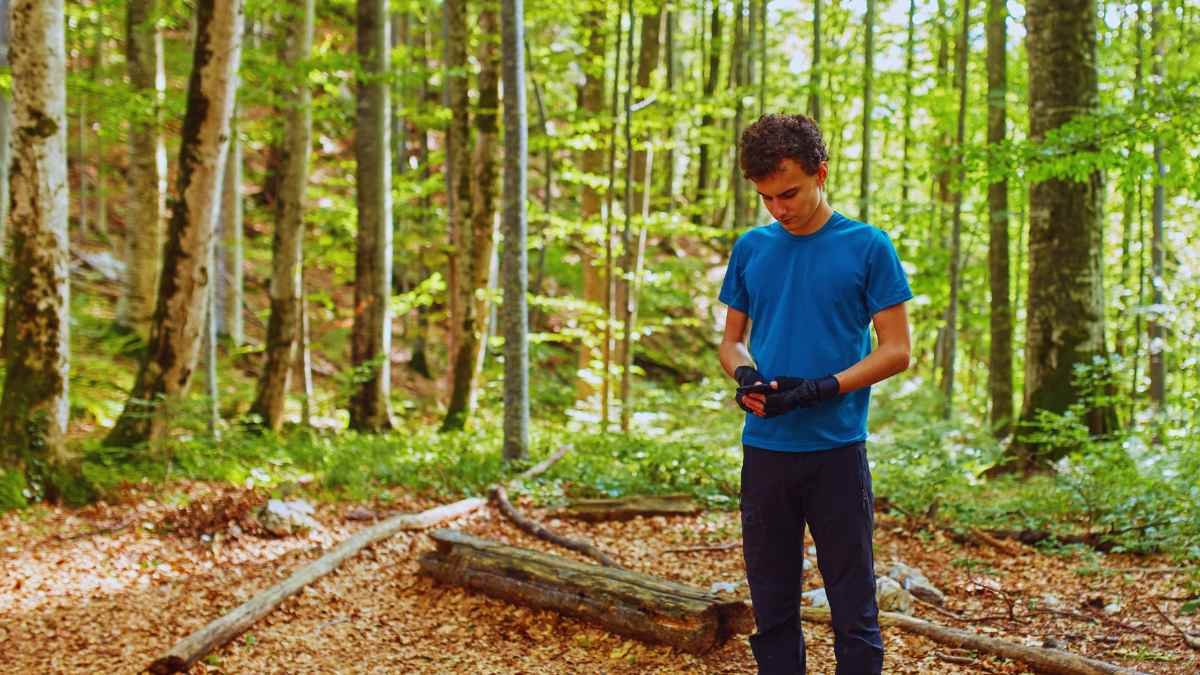
Honest moment: we are profoundly vulnerable when we rely entirely on digital devices. In the deep wilderness, relying solely on GPS is insufficient and dangerous. If the battery dies, if the signal fails, you’re helpless.
Long-duration, remote hiking forces you to master analog intelligence: navigation by map and compass, quick-thinking, and improvisation under pressure. This internal capability is the ultimate, non-degradable piece of gear.
Experts emphasize that the brain’s preparedness—its resilience and capacity for rapid, creative decision-making—is what gets you through a crisis, whether it’s a sudden city evacuation or getting lost in a national park. Excessive dependence on technology compromises that cognitive function.
To build this analog muscle, try Analog Drills in your daily life. Can you navigate a familiar city neighborhood relying only on memory or a printed map? Can you sit patiently in line without immediately resorting to a digital device? Scheduled unplugging isn’t just a trend; it’s a practical strategy to restore cognitive resources and ensure your mind is your most capable tool.
8. Internal Traffic Calming: The Mental Health Benefits of Deliberate Pace

The speed you travel at in the parks is optimized for endurance, not sprinting. This deliberate, sustained pace naturally forces you to “slow down and appreciate the little things,” as one hiker put it. It’s the philosophical echo of Lao Tzu’s observation: “Nature does not hurry, yet everything is accomplished.”
This ethos of deliberate pace has quantifiable benefits, particularly in reducing feelings of hostility and anxiety.
You can think of it like internal traffic calming. In urban planning, cities use narrow lanes and curb extensions to psychologically force drivers to slow down. The wilderness does this naturally: the terrain and the need for resource conservation enforce a pace conducive to observation and cognitive rest.
Rushing creates a constant state of low-level emotional resistance and friction. The sustained, lower operating speed you learn in the parks reduces the need to push and compete against time, thereby decreasing the intensity of chronic stress biomarkers. You find a lower-friction way to exist.
9. Leave No Conflict: The Ethos of Your Social Footprint
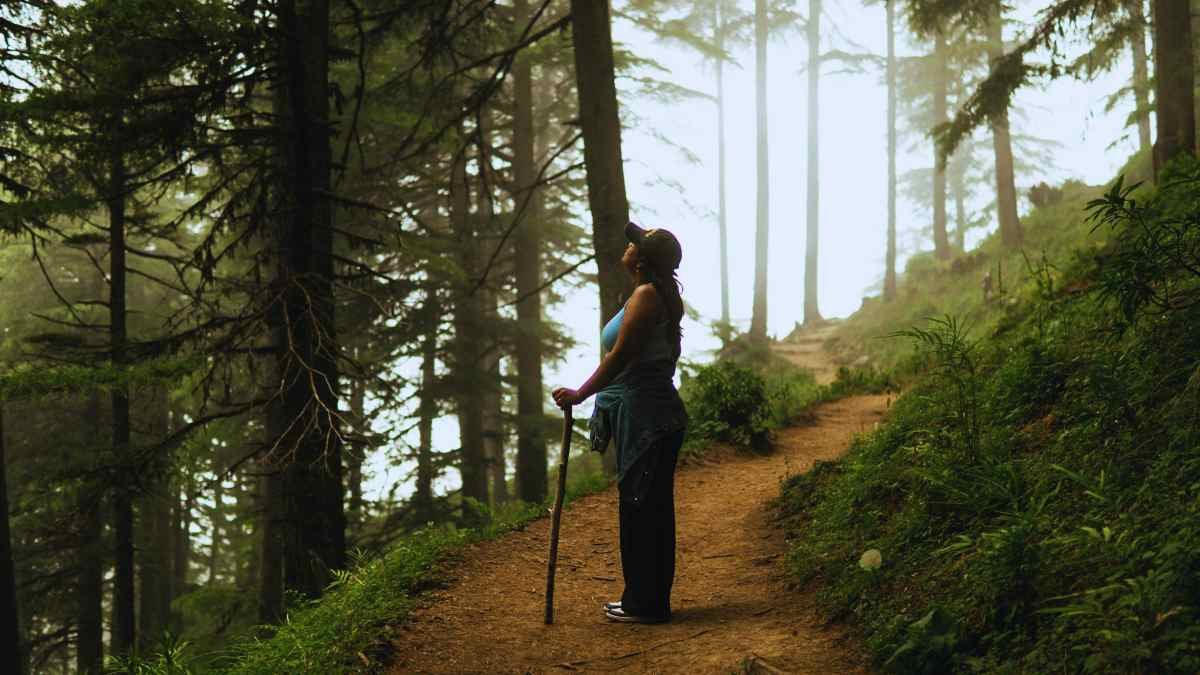
We know the “Leave No Trace” (LNT) principles for the environment: pack it in, pack it out. But the seventh principle, Be Considerate of Other Visitors, is the most powerful life lesson for modern society.
LNT means respecting others’ experience by avoiding loud noises, letting nature’s sounds prevail, and protecting solitude. This shifts the focus from your environmental impact to your social footprint.
In the parks, you learn that maintaining the quality of the shared restorative environment is essential for your own well-being. The National Park Service even recognizes that fostering social health is a key objective. Just as physical trash degrades the wilderness, noise pollution and a lack of consideration degrade the shared mental ecosystem of the city.
Applying this lesson means actively minimizing your “social contamination.” It means consciously limiting loud phone calls on public transit or minimizing digital distractions in a shared work space, actively protecting the solitude and focus of the community around you.
Here is the LNT Social Code, adapted for your daily urban life:
| Wilderness Principle | Core Lesson/Ethos | Urban/Professional Application |
| Dispose of Waste Properly | Handle Your Own Stressors | Take responsibility for personal emotional “waste,” preventing it from spilling into shared spaces. |
| Be Considerate of Other Visitors | Practice Social Quietude | Treat crowded urban spaces (offices, transit) as shared ecosystems by minimizing personal noise and digital distraction. |
| Travel and Camp on Durable Surfaces | Respect Boundaries | Respect designated areas and professional hierarchies; avoid creating new, disruptive social or operational paths. |
The Prescription is Universal: Wilderness is Not a Luxury, It is Medicine
The staggering undertaking of visiting all 63 National Parks provided a real-world laboratory for advanced wellness. The lessons, supported by research, show that immersive nature exposure fundamentally rewires your brain’s response to stress, complexity, and failure. This isn’t woo-woo advice; it’s quantifiable: one large review showed that 98% of nature engagement studies reported consistent improvements in mental health outcomes.
The sustained application of these nine principles—from silencing rumination to building self-efficacy through mastery—results in a total neurological and psychological overhaul.
The truth is, as the philosopher Edward Abbey stated, “Wilderness is not a luxury but necessity of the human spirit.” You don’t need to quit your job and thru-hike tomorrow. The highest form of achievement is translating the immense success of the trail into daily, sustained urban resilience. Start by finding a micro-awe moment, or by implementing a Short Day Sandwich. Your brain will thank you for the reset.
The Gear That Backs Up Your Brain: Tools for Analog Resilience and Ethical Travel
1. The Learner’s Compass

This isn’t about the latest GPS watch; it’s about mastering the single most critical analog skill. Tools like the basic Suunto A-10 or the American-made TruArc 3 are simple, durable, and don’t include complex features. That simplicity is the point—it forces you to learn how to orient a map and calculate a bearing, ensuring your mind, not a lithium battery, is your ultimate piece of survival gear.
2. The Ethical Steward’s Kit

The Leave No Trace (LNT) principle of packing out all human waste is non-negotiable for environmental stewardship. The Cleanwaste Original WAG BAG Kit is the industry standard because it’s the most sanitary and reliable way to handle the unavoidable. Equipped with NASA-developed gelling agent, this system ensures that even when you’re exhausted, you maintain the ethical integrity required to protect our public lands and stop the spread of disease.
3. High-Performance Hiking Socks

Foot failure—a blister, an ache, a cold toe—is one of the fastest ways to drain your mental energy and break your focus on the trail. Investing in high-quality, technical socks, like those made by Darn Tough, is an essential part of your recovery and resilience infrastructure. By guaranteeing physical comfort and durability, you eliminate a major source of physical friction, freeing up your mind to tackle higher-order challenges.
4. The Low-Friction Sketching System

The daily ritual of nature observation is a form of mindful, non-attached rest (Lesson 1). But using expensive art supplies often leads to “analysis paralysis.” The solution is a low-friction sketching system: pairing a simple, sturdy mechanical pencil (so you never need to sharpen) with an affordable, forgiving sketchbook. This setup reduces the pressure to create perfection and encourages consistent, restorative output, reinforcing the habit of quiet, focused observation.
5. The Laws Guide to Nature Drawing and Journaling

Learning to truly see the world requires structure. This renowned guide is essentially the non-digital operating manual for your analog intelligence. It provides the intellectual scaffolding needed to transform abstract appreciation into systematic, disciplined observation and recording. By giving you a repeatable process for field work, it helps overcome the initial inertia of learning and makes the practice of mental restoration sustainable.
