


Okay, let’s just get it out there. That headline is a gut-punch, isn’t it? $30,000. I see you. You’re scrolling through Instagram, and it’s all bison grazing in perfect morning light, historic lodges with colossal stone fireplaces, and smiling families on private, guided tours. It looks incredible. It also looks, and feels, impossibly expensive. Like, “maybe-when-the-kids-are-gone” or “if-I-win-the-lottery” expensive.
But what if I told you that $30,000 trip… is kind of a ripoff?
Not in the “they’re-stealing-your-money” sense. I mean in the “you’re-paying-a-fortune-to-miss-the-point” sense.
I’ve been on both trips. The $30,000 “Premium Comfort” version and the $3,000 “Health Immersion” version. And here’s the secret I learned: the $3,000 trip isn’t the “cheap” alternative. It’s the better one. It’s the one that actually delivers the one thing we’re all so desperate for: a real, measurable change in our physical and mental health.
The $30,000 trip is defined by insulation. You’re insulated from the elements in a historic lodge, insulated from the crowds in a private tour bus, and insulated from the effort by eating at fine-dining restaurants.
The $3,000 trip is defined by immersion. You’re in the elements, sleeping in a tent. You’re in the park at 6 a.m. to beat the crowds, hiking on your own two feet. You’re in it, cooking your own food as the sun goes down.
And here’s the paradox: all the science, from Harvard to the American Psychological Association, shows that the immersion is the very thing that delivers the health benefits. The luxury trip, by systematically removing the immersion, ends up charging you a $27,000 premium to avoid the good stuff.
This isn’t just a travel hack. It’s a health optimization. Let me show you exactly how it works.
So, How Do You Even Spend $30,000? (Anatomy of a “Premium Comfort” Trip)

It’s actually pretty easy if your goal is comfort. That $30,000 budget is built on three main things:
- The $10,000 Lodging Bill: You’re staying inside the park at the most iconic spots. Think the Old Faithful Inn in Yellowstone, where a room with a geyser view can run you $525 to $720 a night. Or the El Tovar Hotel, right on the rim of the Grand Canyon, where a deluxe room can top $622. A two-week trip here? That’s your first $8,000-$10,000, easy.
- The $15,000 “Exclusivity” Bill: This is where you buy your way out of the crowds. Instead of hiking, you hire a private guide. In Yellowstone, a single 8-hour private charter in one of those iconic Historic Yellow Buses costs $1,930.
I want you to hold that number for a second. $1,930 for an 8-hour tour.
Now, I want you to know that a detailed, real-world budget for a 14-day, four-park road trip for two people—including all gas, food, and lodging—can cost $1,918.
Let that sink in. The $30,000 traveler spends more for eight hours of passively looking at the park than the $3,000 traveler spends for 336 hours of living in it.
- The $5,000 Convenience Bill: This is for premium flights into small, expensive airports (like Jackson Hole) instead of major hubs. It’s for eating every meal at upscale gateway-town restaurants, where you’re surrounded by… well, the same people you left back home.
Let’s just lay it all out, side-by-side. The difference is staggering.
Comparative Cost Analysis: The $30k vs. $3k National Park Trip (14-Day, 2-Person Example)
| Expense Category | $30,000 “Premium Comfort” Trip | $3,000 “Health Immersion” Trip |
| Lodging (14 Nights) | 14 nights @ $600/avg (Historic Lodge) = $8,400 | 12 nights @ $40/avg (NPS Campground) + 2 nights @ $110 (Budget Motel) = $700 |
| Activities (Tours) | 5 Private, Guided 8-hr Tours @ $1,500/avg = $7,500 | 14 days of free hiking, scenic driving, and free ranger programs = $0 |
| Park Access | $80 (Annual Pass) | $80 (Annual Pass) |
| Food (14 Days) | 14 days @ $250/day (Upscale restaurants) = $3,500 | 14 days @ $56/day (Groceries, meal prep, one-meal-out rule) = $781 |
| Transportation (Flights & Car) | Flights to premium airport (JAC) + Premium SUV rental = $3,000 | Flights to budget hub (SLC) + Economy car rental + gas = $1,400 |
| TOTAL (Est.) | $22,480 (Easily hits $30k with gear, 3rd person, or longer duration) | $2,961 |
That $27,000 difference isn’t magic. It’s a conscious choice to trade premium lodging and private tours for something far more valuable.
The $3,000 Roadmap: How to Buy Back Your Health (and $27,000)
The $3,000 model isn’t about sacrifice. It’s about being smart. It’s about redirecting your spending toward the things that actually make the trip better. It’s built on four simple, powerful ideas.
1. The $8,000 Decision: Where You Sleep

This is it. This is the single most important financial decision you will make.
Get this: in 2023, National Park visitors spent $9.9 BILLION on hotels and motels. They spent only $560 MILLION on camping.
The entire “hack” is to move yourself from the biggest spending category to the smallest. Here’s how.
- The $0/Night “Secret”: Dispersed Camping.This is the holy grail. It’s called “boondocking,” and it means camping for free on public lands outside of a developed campground. You’ll find these spots in the National Forests or on Bureau of Land Management (BLM) land that borders the parks. You just have to find them.
- How: You can’t book these on a central website. You find them by using official “Motor Vehicle Use Maps (MVUMs)” from the U.S. Forest Service or by using apps like iOverlander.
- The Rules: This is the most important part. It requires total self-sufficiency. You must follow Leave No Trace (LNT) principles. That means you pack out everything (yes, everything), use existing fire rings, and camp away from water sources.
- The <$50/Night “Classic”: Developed Campgrounds.This is my favorite option. You get a designated spot, a picnic table, a fire ring, and access to restrooms and clean water. It’s pure, simple, perfect.
- Cost: A tent-only site at the popular Watchman Campground in Zion is $35 a night.
- How: This is the #1 rookie mistake. You cannot just “show up.” You have to book these on Recreation.gov. The most popular sites sell out within minutes of their reservation window opening, which is often 6-12 months in advance. You have to research the exact date and time the window opens and be logged in with your finger on the button.
- The <$150/Night “Compromise”: Budget Motels.Don’t want to camp? Fine. Just don’t go in peak season. A hotel in West Yellowstone, MT, averages $325 in July. But in the “shoulder season” (like May or September), you can find rooms at places like the White Buffalo Hotel for as low as $83 a night.
2. The Two Most Important Purchases You’ll Make

You’ll make these before you even leave home.
- First: The $80 “Magic” Pass.It’s called the “America the Beautiful” Annual Pass. It costs $80 and gets you (and everyone in your car) into every single national park and 2,000+ other federal sites for a full year. Since a single park entrance is $35, this pass pays for itself after just three visits. But more importantly, it changes your mindset. The parks are no longer a single, expensive vacation. They’re a pre-paid annual wellness subscription.
- Second: The “Smarter” Plane Ticket.Don’t fly into the tiny, expensive airport right next to the park. Fly into a major budget hub and embrace the 2-4 hour scenic drive. That drive is part of the vacation.
- For Zion/Grand Canyon: Fly into Las Vegas (LAS).
- For Utah’s “Mighty 5” (Arches, etc.): Fly into Salt Lake City (SLC).
- For Rocky Mountain NP: Fly into Denver (DEN).
- For Yellowstone/Grand Teton: Fly into Bozeman (BZN) or SLC.
3. The “One-Meal-Out” Rule and the Three-Tote System

This is my golden rule for road trips: Limit restaurant or takeout meals to one per day.
This isn’t just about money. It’s about time. Parks are massive. It can take two hours to drive from a trailhead to a gateway town just to grab a burger. Packing your own food saves you hours of precious daylight. Hours you can spend on another hike or watching the sunset.
We use a simple “Three-Tote System”:
- Tote 1 (Cooking): A simple propane camp grill, one pot, one pan, spatula, tongs, paper towels, and foil.
- Tote 2 (The Cooler): A good cooler. Pro-tip: Freeze half-gallon milk jugs filled with water. They act as giant, slow-melt ice blocks and give you drinking water when they thaw.
- Tote 3 (The Pantry): Canned goods, oatmeal packets, protein bars, trail mix, bread, and spices.
My Go-To Meal Plan:
- Breakfast: Oatmeal packets. Just need boiling water. Fast, warm, and easy.
- Lunch (No-Cook): Make it in the morning, eat it on the trail. Sandwiches or no-cook chickpea avocado wraps.
- Dinner (At Camp): Tacos, chili, or grilled veggie wraps.
4. The Payoff: What You Do All Day (for $0)

This is the best part. By saving thousands on lodging and food, you get to focus on the highest-value, zero-dollar activities.
- The Core Loop: The most iconic experiences are free.
- In Yellowstone: Geyser gazing at the Upper Geyser Basin, wildlife watching in the Lamar Valley (the “Serengeti of North America”).
- In Zion: Wading into the lower section of The Narrows.
- In All Parks: Day-hiking, scenic driving, photography, and just… being.
- The “Secret Weapon”: Ranger-Led Programs.These are the “best-kept secret” of the park service. They are completely free, expert-guided programs that replace the need for that $1,900 private tour. You can join a guided interpretive walk, a “Critter Chat” for kids, a night-sky astronomy program, or an evening campfire with storytelling. They are fantastic.
The Real Reason We’re Here: What the $3,000 Trip Actually Does for You

Okay, this is the core of it all. Why is the $3,000 trip healthier?
It comes down to The 24/7 Dose vs. The Day Trip.
The $30,000 “Insulation” Model is a day-trip protocol. You sleep in a climate-controlled lodge, “dip into” the park for 8 hours (often in a bus), and then return to an artificial, high-stimulation environment (a restaurant, a hotel bar). You’re visiting nature like it’s a museum.
The $3,000 “Immersion” Model is a 24/7 protocol. You’re camping. You are sleeping in nature, waking up to natural light, breathing the clean air, and eating your meals outdoors. You are getting a continuous, low-level dose of nature’s benefits for your entire trip.
And this isn’t just “woo-woo” stuff. It’s measurable, hard science.
A massive 2018 systematic review of over 140 studies found that this kind of “green exercise” is one of the most powerful health interventions we have. Being in nature literally:
- Lowers your stress hormones (specifically, salivary cortisol).
- Decreases your resting heart rate.
- Reduces your diastolic blood pressure.
That same review found that people with high levels of nature exposure had a reduced risk of major chronic illnesses, including Type II diabetes, stroke, and cardiovascular disease. Harvard’s T.H. Chan School of Public Health links it to “better sleep” and “lower mortality.”
But the biggest change? It’s in your head.
You know that feeling when your brain is just… fried? That hamster-wheel of thoughts you can’t turn off? The American Psychological Association highlights research on “attention restoration theory,” which says that urban, high-tech environments drain our cognitive resources. Nature restores them.
As psychologist Dr. Lisa Nisbet puts it, “There is mounting evidence… that nature has benefits for both physical and psychological human-being. You can boost your mood just by walking in nature, even in urban nature.”
Professor Heather Eliassen from Harvard found it leads to “increased positive emotions and decreased anxiety and rumination.” Rumination… that’s the perfect word for that negative thought-loop. Nature stops it.
The $3,000 trip, by immersing you 24/7, is the most effective “treatment protocol” for delivering these benefits. You’re not just saving $27,000. You’re making a direct, powerful investment in your own mind and body.
“But Wait…” (Let’s Debunk the Excuses)
I know what you’re thinking. Because I thought it, too.
- “Yeah, but… I need all that expensive, high-tech gear, right?”Nope. That’s a myth, and honestly, it’s mostly marketing. We’re talking about car camping, not a six-month trek on the Appalachian Trail. The weight of your gear is irrelevant. You can start with blankets and pillows from your bed, a $50 tent, and the cooking pots from your kitchen. The only gear that matters is the gear that gets you out the door.
- “Yeah, but… it’s just too crowded. I hate crowds.”I get it. No one wants to see Old Faithful through a sea of iPads. But here’s the secret: the parks aren’t crowded; they’re concentrated. The crowds are all at the same 3-4 “honeypot” sites, primarily between 10:00 a.m. and 2:00 p.m.The solution? Just don’t be there then. Get up early. Arrive at the popular trailheads before 9:00 a.m. You’ll have them to yourself. Spend the middle of the day exploring lesser-known areas (like the Lamar Valley in Yellowstone or Kolob Canyons in Zion). The park is empty if you just take one step off the main path.
The Only Mistakes That Will Actually Cost You Money
The $3,G00 trip isn’t hard, but it does punish a lack of planning. These are the real budget-busters.
- The Booking “Chicken Game.” This is the #1 mistake. You cannot just “show up” in July and expect to find a campsite. You will lose. And you’ll be forced to get a last-minute, $325 motel room, blowing your entire budget on Night 1. You must book your lodging/campsites months in advance.
- The “No-Signal” Panic. You will lose cell service. I promise. If you don’t have your maps downloaded (both Google Maps for driving and AllTrails maps for hiking), you’ll be lost and stressed. Download everything for offline use before you enter the park.
- The “Cram-It-All-In” Burnout. This is my personal bad habit. Don’t try to see 5 parks in 5 days. You’ll just see the highway. You’ll end up exhausted and wondering why you even went. Pick two parks. Actually see them. Breathe.
Your “First Dose”: A Call to (Actionable) Wellness
The $30,000 trip buys comfort and insulation. The $3,000 trip buys activity and immersion.
The medical data is clear: the health benefits are triggered by the immersion.
Therefore, the $3,000 trip isn’t a compromise. It’s a trade-up. You’re not “saving” $27,000. You’re re-allocating it from fleeting comfort to profound, lasting health.
These parks aren’t just pretty places. They are a vital part of our public health infrastructure. And the best part? You already own them.
So here’s your prescription. A “first dose” to prove the concept.
- Go buy the $80 “America the Beautiful” Annual Pass. Right now. Think of it as your annual wellness subscription.
- Go to Recreation.gov. Find a state or national park within driving distance. Book a single campsite for two nights. It’ll cost maybe $50-$70.
- Pack your food using the “Three-Tote” system.
That’s it. A simple, sub-$200 weekend trip. Go. Prove to yourself that it’s possible.
You’ll come back on Sunday afternoon feeling… different. Calmer. Clearer. And you’ll realize you didn’t just save a ton of money. You bought back something so, so much more valuable.
A Few “Game-Changers” for Your $3,000 Trip
1. A Reliable 2-Burner Propane Stove

This is the heart of the “Three-Tote System.” Forget trying to cook over a smoky, wet fire. A classic Coleman-style stove gives you instant, controllable heat for making coffee at dawn or tacos at dusk. It’s the single best way to make your “one-meal-out” rule feel like a luxury, not a sacrifice.
2. A 5-Day Cooler

You don’t need a $400 roto-molded “Yeti-style” cooler for a car camping trip. A standard Igloo or Coleman “5-Day” cooler (a 50-quart model is a great size) is a fraction of the price and works perfectly. It’s the difference between eating fresh food all week and making sad, expensive stops at the gas station for snacks.
3. A Sawyer Squeeze Water Filter

This little thing is magic. Instead of hauling gallons and gallons of plastic water bottles, you can filter clean, great-tasting water from any campground spigot or clear-running stream. It screws onto a standard water bottle, weighs almost nothing, and lasts forever.
4. A 10,000mAh Portable Power Bank

Remember that “no-signal panic”? Your phone, loaded with offline maps, is your lifeline. A simple, palm-sized power bank from a brand like Anker will give you 2-3 full phone charges, ensuring you’re never left guessing which turn to take.
5. A Simple LED Headlamp
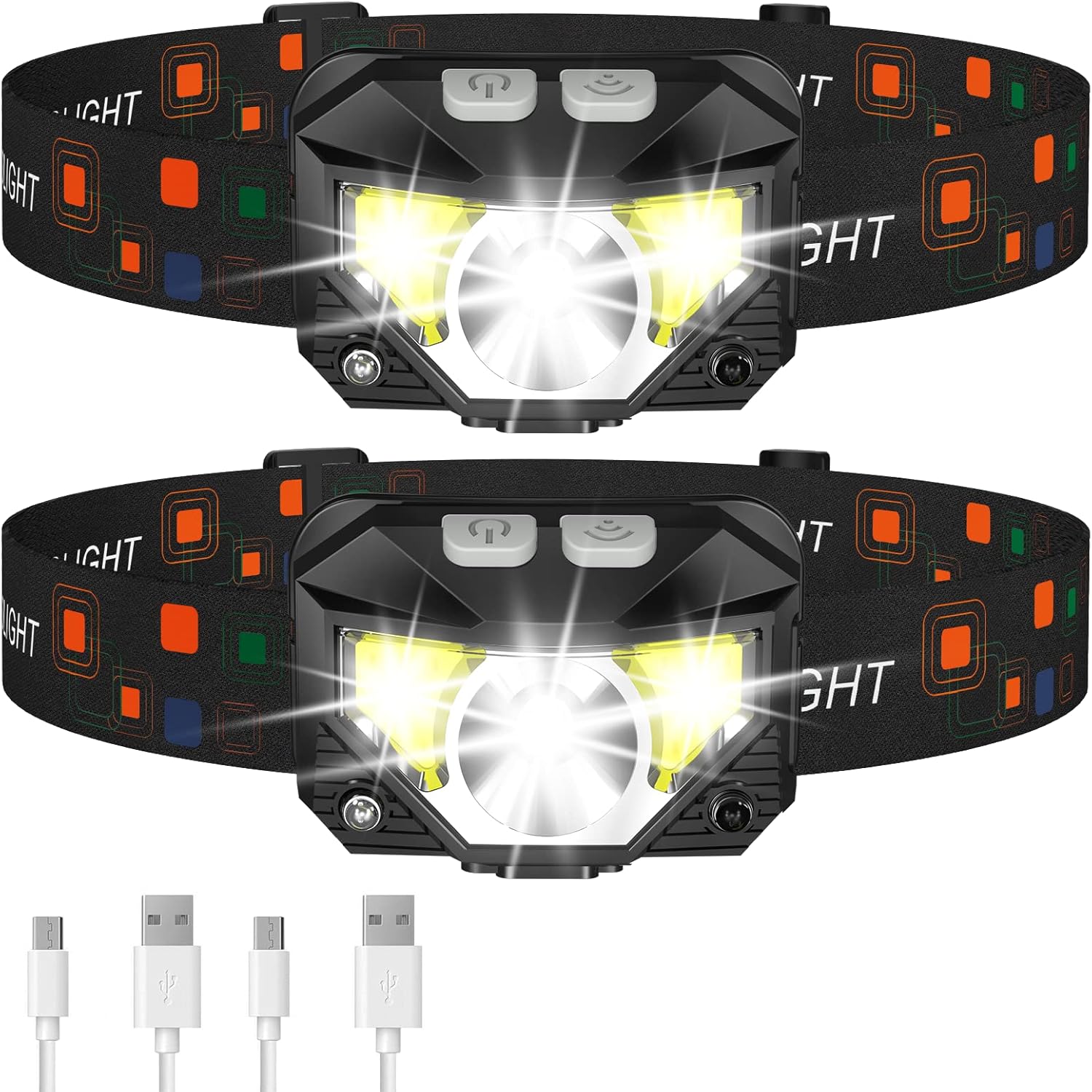
This seems so basic, but it’s critical. You’ll need it for those 6 a.m. hikes to beat the crowds. You’ll need it for navigating the campsite loops to find the restroom at night. You’ll need it for cooking dinner after the sun goes down. It keeps your hands free and makes everything 100x easier than using a phone flashlight.
