
Turning 40 isn’t about “getting older.” It’s the decade when your patterns finally reveal themselves — the beliefs you absorbed, the habits you repeat without noticing, the emotional blind spots that quietly pull the strings.
Psychiatrists often say that before hitting this milestone, you should read a handful of books that help you understand why you think, why you react, and why you keep getting pulled toward the same life loops. These five books don’t just offer insight; they offer a chance to recalibrate before life becomes harder to re-edit.
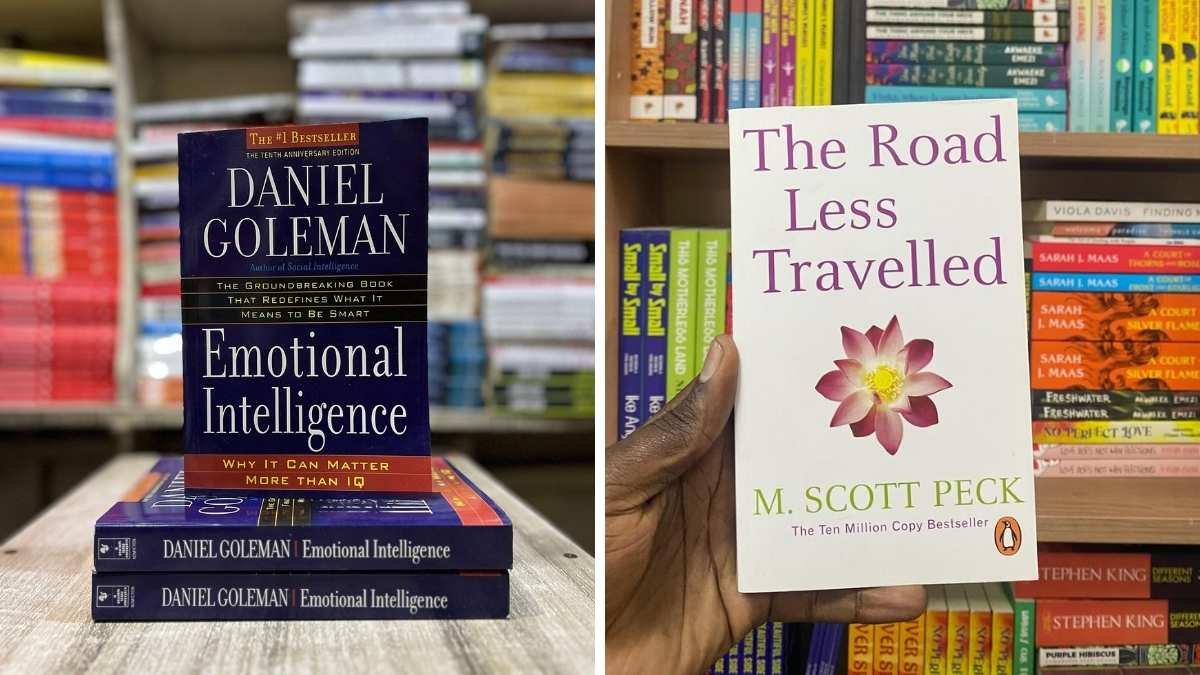
1. “Emotional Intelligence: Why It Can Matter More Than IQ” — Daniel Goleman

Psychiatrists frequently cite this book because emotional intelligence is one of the biggest predictors of life satisfaction—yet it’s rarely taught directly. Goleman breaks down how self-awareness, emotional regulation, empathy, and interpersonal skills quietly determine nearly everything: our career trajectory, the quality of our relationships, and even our ability to recover from setbacks. The book uses accessible psychology and decades of research to explain why some people thrive while others struggle despite having similar intellectual abilities. Readers often say it helps them finally understand why certain conflicts repeat themselves, why people react so differently to stress, and why emotional tone in relationships matters more than logic.
What makes this book so impactful before 40 is that Goleman doesn’t just explain these concepts—he shows how they become lifelong habits. By the time you finish, you begin noticing how you respond under pressure, how you interpret others’ actions, and where your emotional blind spots live. It’s a book that builds quiet self-mastery, one chapter at a time.
2. “The Road Less Traveled” — M. Scott Peck
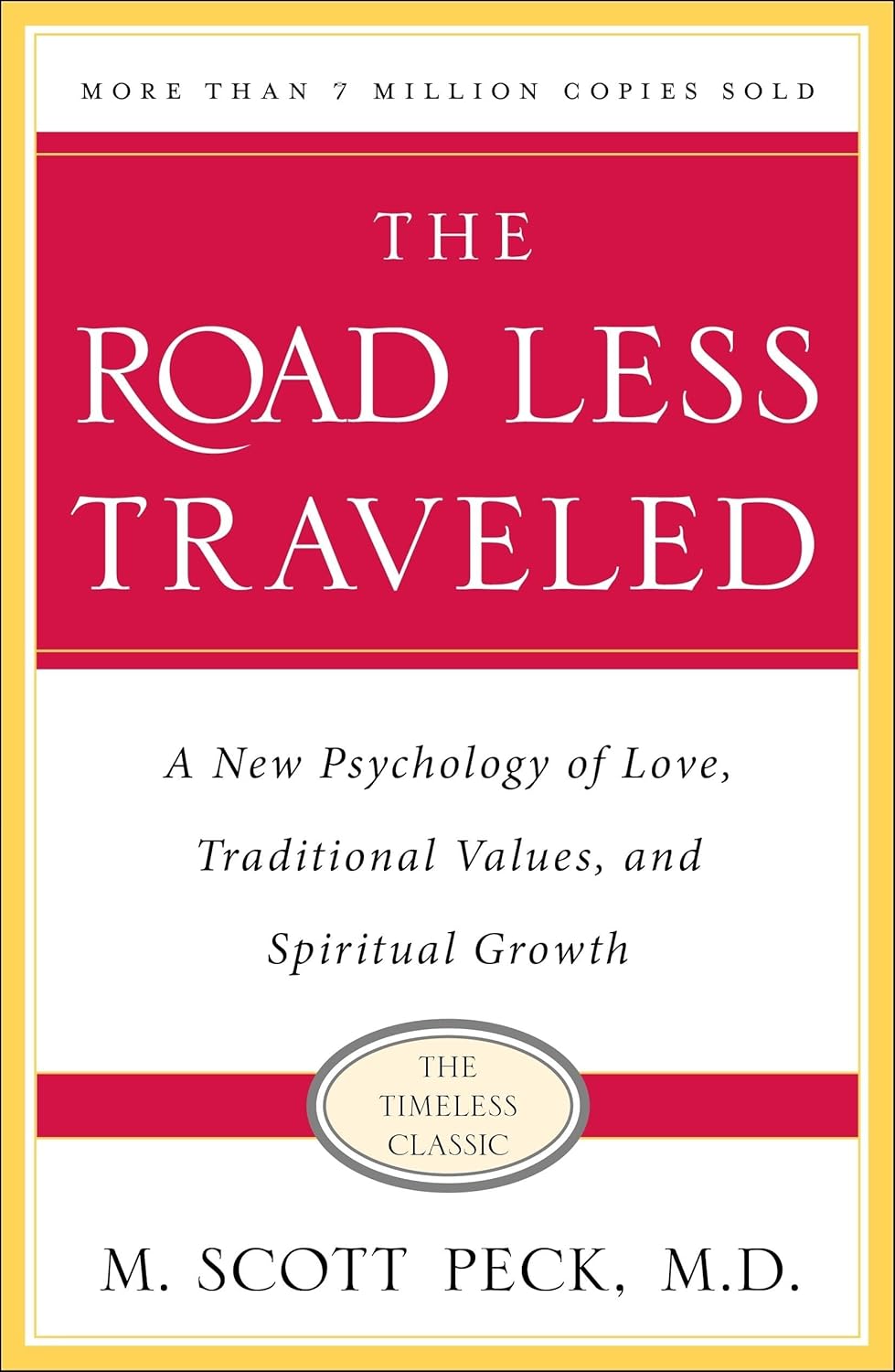
This classic blends psychiatry, spiritual growth, and tough-love wisdom about what it actually takes to grow up emotionally. Peck opens with the unforgettable line, “Life is difficult,” and then spends the rest of the book explaining why accepting that fact is the beginning of genuine psychological strength. He dives into discipline, responsibility, love, and spiritual development with the honesty of a therapist who has watched people repeat the same patterns for years. Many psychiatrists recommend it because it forces readers to confront the difference between comfort and growth—especially in relationships where avoidance, fear, and fantasies often cloud reality.
Peck’s chapters on love are especially eye-opening because he dismantles the idea of love as a feeling and reframes it as “a commitment to growth.” The book hits differently in your 30s, when you’ve lived enough life to see where shortcuts don’t work anymore. It’s direct, grounding, and quietly transformative.
3. “Lost Connections: Uncovering the Real Causes of Depression — and the Unexpected Solutions” — Johann Hari

Hari challenges the traditional explanation of depression as a purely chemical imbalance and instead presents nine core disconnections that contribute to emotional pain—disconnection from meaningful work, community, values, and even hope for the future. Psychiatrists appreciate this book because it bridges evidence-based psychology with a compassionate exploration of how modern life often works against mental health. Hari also interviews world-leading researchers, giving readers a broader understanding of depression that goes beyond medication alone.
What resonates most is Hari’s focus on reconnection—to people, purpose, and personal agency. His stories and research make you rethink how your environment shapes your emotional state. Many readers say this book leaves them feeling understood rather than judged, which is a rare quality in writing about mental health.
4. “An Unquiet Mind” — Kay Redfield Jamison

Jamison, one of the world’s leading clinical psychologists, writes fearlessly about her own lifelong struggle with bipolar disorder. Her memoir is frequently recommended by psychiatrists because of how honestly it portrays the inner chaos of mood disorders without romanticizing or sugarcoating the experience. The emotional intensity of her writing helps readers understand the complexities of mental illness—how brilliance and instability can coexist, how stigma damages lives, and how treatment can be both lifesaving and complicated.
The book is powerful not just for people dealing with bipolar disorder, but for anyone who wants a deeper understanding of the human mind. Jamison’s vulnerability reminds readers that expertise doesn’t shield anyone from suffering, and that empathy is one of the most powerful tools we have.
5. “The Drama of the Gifted Child” — Alice Miller

This groundbreaking book explores how many emotionally intelligent, high-achieving adults grew up suppressing their own needs to secure approval or love. Miller explains how childhood emotional wounds—often subtle and unintentional—shape adult behavior in ways people rarely notice. The book helps readers identify patterns like people-pleasing, perfectionism, emotional numbness, and chronic self-criticism, connecting them to early experiences where they learned to perform rather than feel. Psychiatrists often recommend it because it offers clarity, not blame, helping people understand why certain emotional triggers feel so deeply rooted.
This is one of those books that gives language to things you sensed but never articulated. Miller’s insights into the “false self” help many adults reconnect with authentic emotional needs, making it especially important to read before 40, when these patterns often become harder to untangle.
6. “Attached: The New Science of Adult Attachment and How It Can Help You Find—and Keep—Love” — Amir Levine & Rachel Heller

Psychiatrists often recommend Attached because it explains one of the most important—but misunderstood—drivers of adult relationships: attachment styles. This book breaks down how anxious, avoidant, and secure attachment patterns shape the way we communicate, choose partners, fight, withdraw, cling, or shut down. It takes concepts typically used in therapy and turns them into digestible tools that help readers understand their behaviors in love with surprising clarity. Many people say it’s the first time they realized their reactions weren’t personal failures but predictable patterns developed early in life. The book also offers practical ways to break unhealthy cycles and build relationships that feel safe rather than confusing.
What makes Attached worth reading before 40 is that it reframes love not as luck, but as emotional compatibility and self-awareness. It teaches you to recognize partners who fit your emotional needs—and to stop apologizing for having those needs in the first place.
7. “The Art of Happiness” — Dalai Lama & Howard Cutler

This book blends Western psychiatry with Eastern philosophy to explore how happiness isn’t something we find but something we cultivate internally. The Dalai Lama’s reflections, paired with a psychiatrist’s commentary, create a balanced understanding of how emotions form, how the mind distorts reality, and how compassion reshapes mental well-being. The book offers practical tools for reducing anxiety, resentment, and overthinking, while showing why habits like kindness and self-discipline play a far bigger role in happiness than external success ever will.
The strength of this book is how calmly it delivers emotionally grounded wisdom without sounding mystical or abstract. It teaches readers how to create mental habits that hold up even when life becomes chaotic.
8. “Daring Greatly” — Brené Brown

Daring Greatly is a deep dive into vulnerability—why we avoid it, why we fear it, and why it’s the key to emotional resilience. Using decades of research, Brown explains how shame, fear of judgment, and avoidance of discomfort quietly sabotage careers, relationships, and self-worth. Before 40, many people begin to realize that perfectionism and emotional armor don’t protect them at all—they simply prevent authentic connection. Brown’s writing is grounded in psychology but delivered in a warm, human tone that feels like a therapist guiding you gently toward self-acceptance.
The core message—that vulnerability is not weakness but courage—is something most adults don’t fully learn until years of repeating the same emotional patterns. This book helps break that cycle earlier and more intentionally.
9. “Flow: The Psychology of Optimal Experience” — Mihaly Csikszentmihalyi

This groundbreaking work explores what it means to enter a state of deep absorption—where you lose track of time, challenge meets skill, and the mind becomes fully alive. Psychiatrists admire this book because it reveals how fulfillment isn’t about pleasure but engagement, and how people underestimate the psychological importance of meaningful focus. Csikszentmihalyi explains why so many adults feel restless despite achieving external success: they rarely enter flow states in daily life. Through research, stories, and actionable insights, the book shows how to redesign routines, work habits, and hobbies to create more moments of genuine immersion and satisfaction.
What makes this essential before 40 is that it teaches you how to shape your days intentionally, instead of drifting through them. It reframes happiness as something skill-based, not accidental.
10. “Feeling Good: The New Mood Therapy” — David D. Burns

This is a foundational book in cognitive behavioral therapy (CBT), and psychiatrists often recommend it because of its practical, research-backed tools for reducing depression, anxiety, and distorted thinking. Burns explains the ten most common cognitive distortions—like all-or-nothing thinking, catastrophizing, and personalization—and shows how they create emotional turmoil without us realizing it. The book walks readers through exercises that reveal how thoughts shape mood far more than circumstances do. Many readers say it feels like having a therapist in book form.
Because the book teaches you how to challenge unhelpful thoughts with clear, evidence-based techniques, it becomes a lifelong tool. It’s incredibly useful before 40, when work pressures, relationships, and personal expectations often intensify.
11. “Maybe You Should Talk to Someone” — Lori Gottlieb

Gottlieb—a therapist who unexpectedly ends up in therapy herself—offers one of the most honest and engaging looks at the therapeutic process ever written. Through stories of her patients and her own sessions, she reveals how healing is rarely straightforward, and how people often come to therapy seeking one kind of change but needing another. The book shows the patterns therapists see again and again: avoidance, fear, grief, self-sabotage, and the quiet hope for transformation. Psychiatrists value it because it humanizes both sides of therapy and gives readers insight into how emotional growth actually happens.
The beauty of this book is how it leaves you feeling connected to the universal struggles of being human. It reminds readers that everyone carries something heavy, and that seeking help isn’t a weakness—it’s a turning point.
