

Most people talk about the books they read. Brilliant people don’t. They read the titles that quietly rearrange their worldview—the books that don’t always trend on Instagram, but shape how they think, work, solve problems, and decode human behavior. These aren’t “smart-sounding” books. These are the books that actually sharpen someone’s mind, sometimes so dramatically that they hesitate to bring them up in casual conversation.
Below are five of the most quietly passed-around titles among high-performers, creators, and deep thinkers. Each one earns its place because it reveals something essential about life, intelligence, or human nature—often in ways that stay with you for years.
1. “Finite and Infinite Games” by James P. Carse

This is one of those books people only recommend in hushed tones—not because it’s controversial, but because its insights are almost too clarifying. Carse argues that life is made up of two kinds of games: finite games, which we play to win, and infinite games, which we play to keep the game going. It sounds simple, yet the way he unpacks ambition, identity, relationships, creativity, and power forces you to reevaluate what drives you. Many smart readers say this book helped them stop chasing pointless achievements and start choosing goals with long-term meaning.
The beauty of this book is how it dismantles the ego without lecturing. Once you start viewing conflicts, careers, and even arguments as either finite or infinite games, you understand people differently—and you understand yourself better. It’s the kind of clarity that feels strangely obvious only after someone else says it.
This slim book is philosophical without being heavy. Its biggest gift is how it reframes competition; you start asking whether you’ve been “playing to win” when you should be “playing to continue.” That shift alone can recenter your entire life.
2. “The Art of Learning” by Josh Waitzkin

There’s a reason serious performers—chess players, athletes, entrepreneurs—recommend this book quietly among themselves. Waitzkin (the real-life prodigy from Searching for Bobby Fischer) reveals how mastery really works. Not the Instagram version—the real, gritty process of building “deep learning”, managing pressure, and learning the difference between talent and trainable awareness. The book shows how a person becomes world-class in two wildly different fields: chess and martial arts. That dual perspective makes it incredibly practical for anyone aiming to excel at anything.
What sets this book apart from typical “performance” guides is its honesty. Waitzkin shares how he handles frustration, fear, plateaus, and psychological warfare in competition. Brilliant people like this book because it’s not about hacks—it’s about building a mind that stays steady and sharp, even in chaos.
The shorter chapters and story-driven lessons make the book unexpectedly readable. You finish it wanting to approach every skill with more patience, curiosity, and precision.
3. “Antifragile: Things That Gain from Disorder” by Nassim Nicholas Taleb

This is a heavy-hitting book, but those who read it experience a shift that feels almost architectural. Taleb introduces the concept of systems that don’t just survive stress—they get stronger because of it. It applies to everything: economies, health, businesses, personal habits, creativity, and even emotional life. The idea that you can design a life that grows from shocks instead of collapsing under them is extremely liberating.
It’s the kind of book brilliant people love because it forces them to question assumptions: Are you building something fragile, resilient, or truly antifragile? The examples, though dense, are unforgettable—like why overly optimized systems fail, why randomness can be your friend, and why “playing it safe” sometimes creates more danger.
Despite its size, the book pays off. The core message—use volatility instead of fearing it—is something people return to whenever life gets unpredictable.
4. “The Master and His Emissary: The Divided Brain and the Making of the Western World” by Iain McGilchrist

This is one of the most quietly influential books of the last 20 years. McGilchrist argues, with mountains of research, that the left and right hemispheres of the brain don’t just process information differently—they produce entirely different modes of experiencing reality. The left is narrow, analytical, and detail-obsessed. The right is broad, contextual, and relational. And Western society, he argues, has let the “emissary” (left brain) overpower the “master” (right brain) to the point of imbalance.
Brilliant readers love this book because it helps them understand why modern life feels fractured, rushed, and disconnected. It links neuroscience, culture, art, philosophy, and politics into one overarching idea: how we attend to the world shapes the world we create. It’s rare for a book to make you reexamine your thinking style, but this one does it gently and powerfully.
The second half of the book is denser, but its conclusions stay with you. Even if you disagree with some arguments, the framework becomes a mental model you use for life.
5. “The Lessons of History” by Will & Ariel Durant

This book is deceptively small, yet astonishing in scope. The Durants spent a lifetime writing an 11-volume history of civilization—and then distilled the patterns of human behavior, empire, economics, morality, war, and culture into a book you can finish in an afternoon. It’s the kind of distilled wisdom that gives you a sense of how humanity really works across centuries, not just in trends or headlines.
Brilliant people gravitate toward this book because it’s calm, balanced, and relentlessly clear. It shows that human nature doesn’t change as much as we think, and that many “modern” problems are ancient ones with new packaging. The most powerful theme is that life is governed by cycles—growth, decay, struggle, and renewal—and understanding those cycles helps you navigate both personal and global challenges.
In just over 100 pages, you get more perspective than some college courses. It’s a mental reset button—one that leaves you thinking more critically and more patiently.
6. “Thinking in Systems” by Donella Meadows
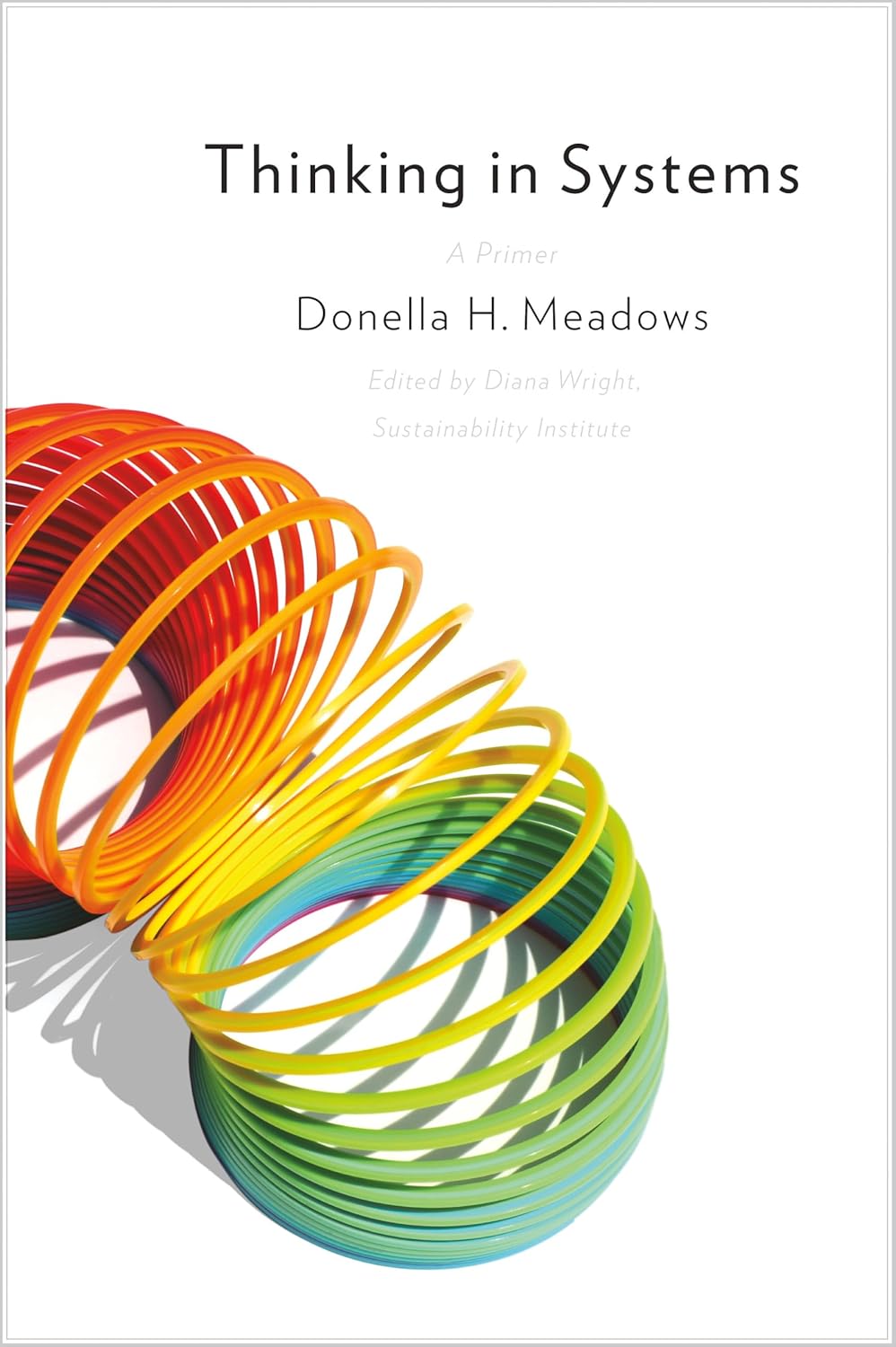
This is the book brilliant people reach for when life feels chaotic or when they’re trying to understand patterns that don’t show up on the surface. Meadows explains how systems—from families to businesses to ecosystems—behave in ways that often confuse us because we focus on events instead of the structure underneath. The genius of the book is its clarity; it breaks down feedback loops, leverage points, and unexpected consequences without drowning you in academic language. Readers often say it permanently changed how they see decision-making, complexity, and the hidden architecture of everyday life.
What makes this book beloved among thinkers is how actionable it feels. Once you grasp concepts like “leverage points” or “reinforcing loops,” you start recognizing why certain problems never go away and why others respond to small, precise shifts.
7. “The Beginning of Infinity” by David Deutsch

Deutsch writes like someone trying to pull you into a larger universe—and he succeeds. This book is part science, part philosophy, part grand tour of human progress. He argues that problems are inevitable, but so are solutions, and that human knowledge, when guided by good explanations, can expand endlessly. Brilliant readers gravitate toward this book because it refuses cynicism; it’s deeply logical, rooted in physics, yet surprisingly optimistic in a way that feels earned, not naive.
The book is dense, but the ideas are energizing. You start seeing creativity, science, and human potential as open-ended systems rather than fixed limits. And that perspective alone can shift how you approach your work and your life.
8. “The Black Swan” by Nassim Nicholas Taleb

Taleb appears twice on lists like these for a reason: his ideas spread privately through boardrooms and labs long before they hit mainstream shelves. “The Black Swan” is about rare, unpredictable events that shape the world far more than the ordinary ones we spend our time measuring. Taleb’s writing is sharp, sometimes abrasive, but always thought-provoking. He forces you to confront how much of life is dominated by randomness, and how blind we often are to it.
Brilliant people love this book because it frees them from the illusion of perfect predictions. It reminds you that much of modern life is built on fragile assumptions—and that acknowledging uncertainty leads to smarter strategies. Its central lesson, “don’t confuse the map with the terrain,” is the kind of idea that sticks.
9. “Gödel, Escher, Bach: An Eternal Golden Braid” by Douglas Hofstadter

This is the book brilliant people read slowly, sometimes over months, because it’s less a book and more a mental workout. Hofstadter weaves together mathematics, art, music, logic, and philosophy to explore the nature of consciousness, self-reference, and systems that loop back on themselves. It’s a cult classic among programmers, mathematicians, and creative thinkers because it reveals how patterns, structures, and meaning emerge from seemingly simple rules.
What’s surprising is how playful the book is. The dialogues, puzzles, and analogies make deep concepts feel accessible. Readers come away feeling like their brain grew new wiring—and that’s exactly why the title is whispered among the intellectually curious.
10. “Meditations” by Marcus Aurelius

This is the quiet favorite of founders, philosophers, thinkers, and people who tend to spend too much time in their own heads. Aurelius didn’t write this book for the world; he wrote it for himself. That’s what makes it so intimate. It’s a manual for how to stay steady in chaos, how to control your reactions, and how to navigate power, pressure, ego, and mortality with dignity. The reason brilliant people read it privately is simple: it’s a toolkit for mastering your internal life, not a book meant to impress others.
What sets it apart is how grounded it is. The writing is clear, direct, and brutally honest. Many people keep it on their desk and return to it daily because its lessons grow in meaning with time. It’s one of the rare books that feels like a lifelong companion, not a one-time read.
11. “Range: Why Generalists Triumph in a Specialized World” by David Epstein

Brilliant people quietly adore this book because it validates something they’ve sensed their entire lives: being curious about many things is not a weakness — it’s a superpower. Epstein dismantles the myth that early specialization leads to excellence, showing instead that broad experience, cross-disciplinary thinking, and the ability to borrow insights from unexpected places create more adaptable, innovative minds. Using research from sports, science, music, medicine, and business, he builds a persuasive case that the world rewards those who can connect dots across fields, not just those who burrow deeply into one.
Generalists love this book because it finally articulates what they’ve felt for years: their varied interests are not distractions but sources of creativity. The message is refreshing and grounding — you don’t need a linear path to become exceptional. In fact, the nonlinear path may be your greatest advantage.
12. “The Denial of Death” by Ernest Becker

This is one of those books brilliant people rarely bring up in conversation, mostly because it cuts deeper than casual talk allows. Becker argues that much of human behavior — ambition, love, culture, conflict, achievement — is driven by an underlying desire to manage our awareness of mortality. It sounds heavy, but the book is far more about life than death. It explains why humans build meaning systems, why we chase heroic projects, and why we struggle with anxiety and identity. Readers describe it as the kind of book that reshapes how you interpret your motives, even long after you close it.
Despite its weighty topic, the writing is surprisingly accessible. Many readers say it brings clarity and a strange sense of peace — not because it solves existential questions, but because it names what we all carry. Becker’s central idea, that facing our deepest fears makes us more fully alive, is what keeps this book circulating quietly among deep thinkers.
