


You know the moment. It’s about 4:30 or 5:00 PM. You walk into the office bathroom or catch a glimpse of yourself in the rearview mirror on the drive home, and you literally do a double-take.
Who is that?
At 8:00 AM, you looked fresh. Your skin was tight, your eyes were bright, and you felt ready to take on the world. But now? The person staring back looks gray, drawn, and—let’s be honest—exhausted. The concealer has settled into lines you didn’t know you had, your forehead has a weird oily sheen, yet your skin feels tight and papery.
Here’s the thing: You aren’t imagining it. And you aren’t just “tired.”
This phenomenon—what we’re calling “The Afternoon Face Collapse”—is a real, biological event. It’s not just in your head (though we’ll talk about that, too). It is a measurable, scientific collision of your body’s internal clocks, the brutal physics of gravity, and the biochemical chaos of a stressful workday.
I’ve dug through the research—from chrono-biology to biomechanics—to explain exactly why our faces seem to age a decade between lunch and dinner. But more importantly, I’ve put together a plan to stop it.
First, let’s give you some relief: this isn’t a personal failure of your skincare routine. It’s evolution.
Your skin isn’t just a static covering; it’s an active organ that runs on a tight schedule, known as a circadian rhythm. Just like you get sleepy at night, your skin cells have their own “clock genes” (specifically CLOCK and BMAL1) that tell them what to do at different times of the day.
The “Leaky Bucket” Effect (Transepidermal Water Loss)
Here’s a fascinating (and slightly annoying) fact: Your skin gets leakier as the day goes on.
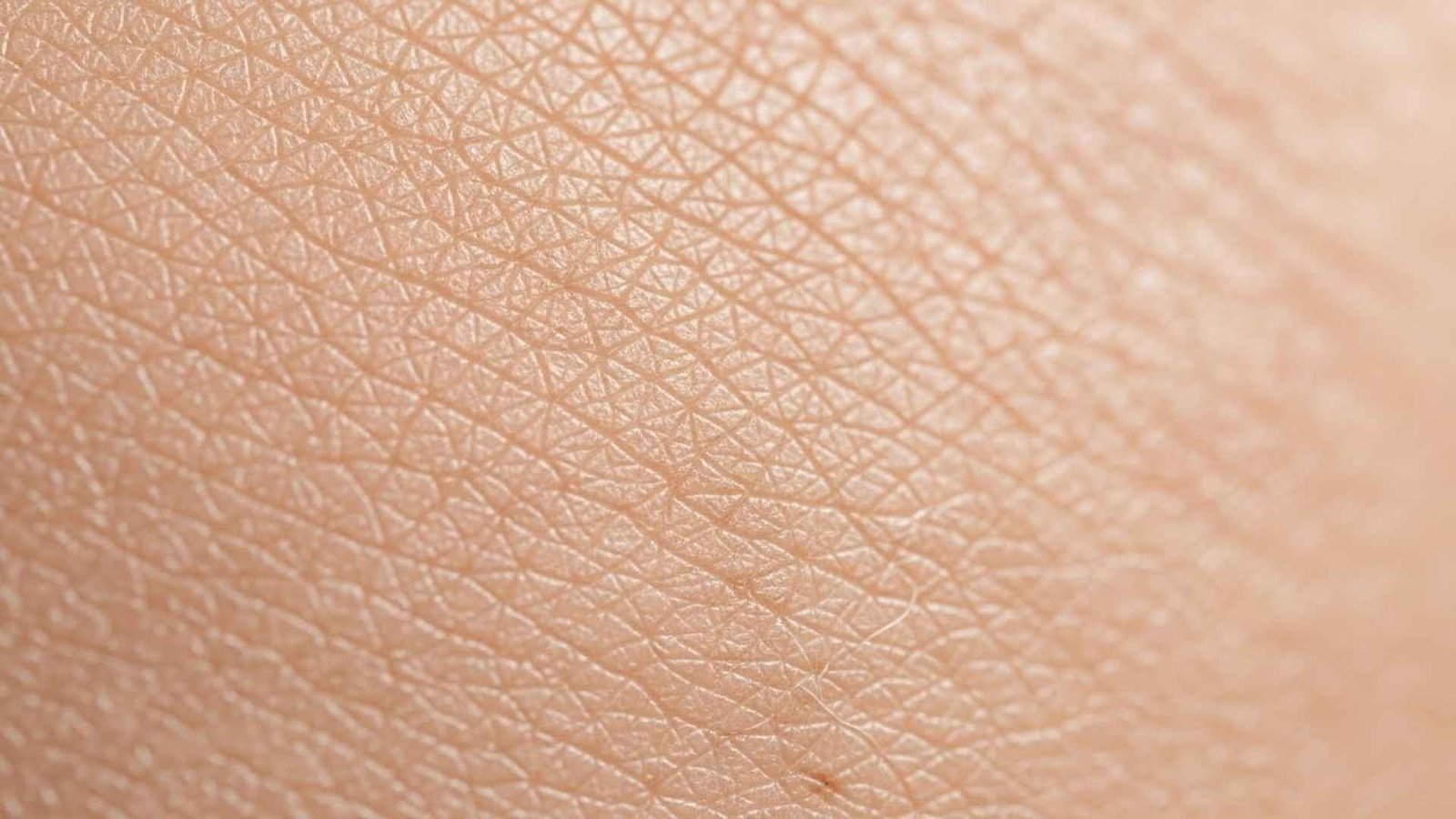
Scientists call this Transepidermal Water Loss (TEWL). In the morning, your skin barrier is tight and secure, keeping hydration locked in. But research shows that this barrier naturally loosens in the afternoon. It’s like a bucket developing microscopic holes. By 4:00 PM, the water inside your skin cells is evaporating faster than it can be replaced.
When a grape loses water, it turns into a raisin. When your skin cells lose water in the afternoon, they deflate. That’s why fine lines suddenly appear deeper—the internal water pressure that was plumping them out at breakfast is gone.
The Sebum Paradox: Oily but Dry?
This is the part that usually confuses people. “If my skin is dry and dehydrated,” you might ask, “why is my forehead so shiny?”
Welcome to the Sebum Paradox.
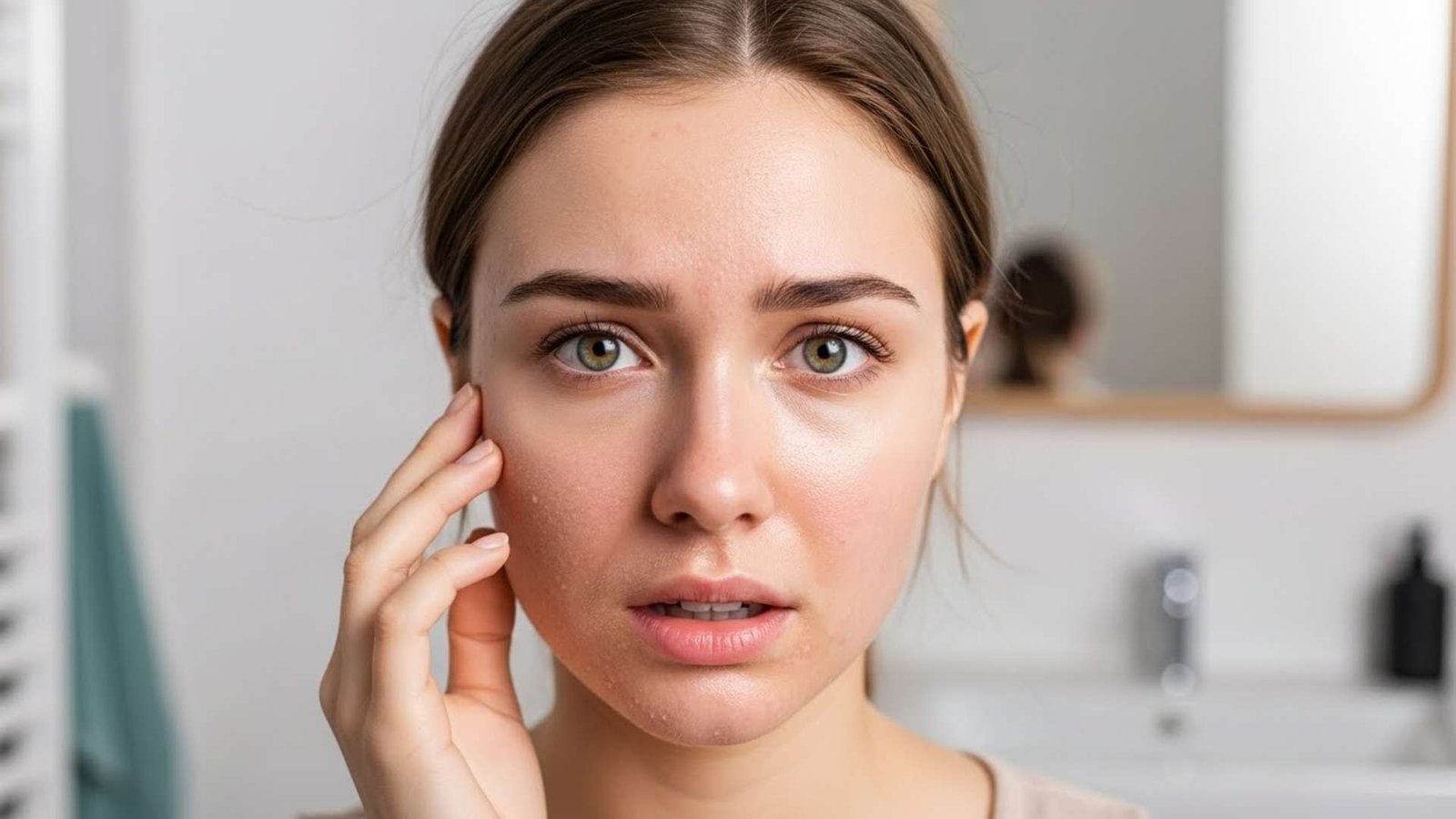
While your skin is losing water, your oil glands are actually working overtime. Studies on sebum excretion rates show a distinct peak between 12:00 PM and 4:00 PM. Evolutionarily, this makes sense—your body is trying to pump out oil to shield you from the midday sun.
But sitting in an office, that oil doesn’t protect you. Instead, it mixes with oxygen and makeup to create “oxidative shine.” It’s not a healthy glow; it’s a dull, yellowish, oily film that sits on top of dehydrated skin. It creates a texture that looks rough and uneven, which is a major reason for that “haggard” afternoon look.
2. The Stress Factor: Wearing Your Worries

We can’t talk about the afternoon slump without talking about stress. By mid-afternoon, the deadlines and emails have piled up, and your body is likely swimming in cortisol.
Cortisol is a Collagen Killer
Cortisol is the body’s main stress hormone. It’s helpful in short bursts, but when it stays elevated all day, it becomes destructive. Cortisol is catabolic—meaning it breaks things down for energy.
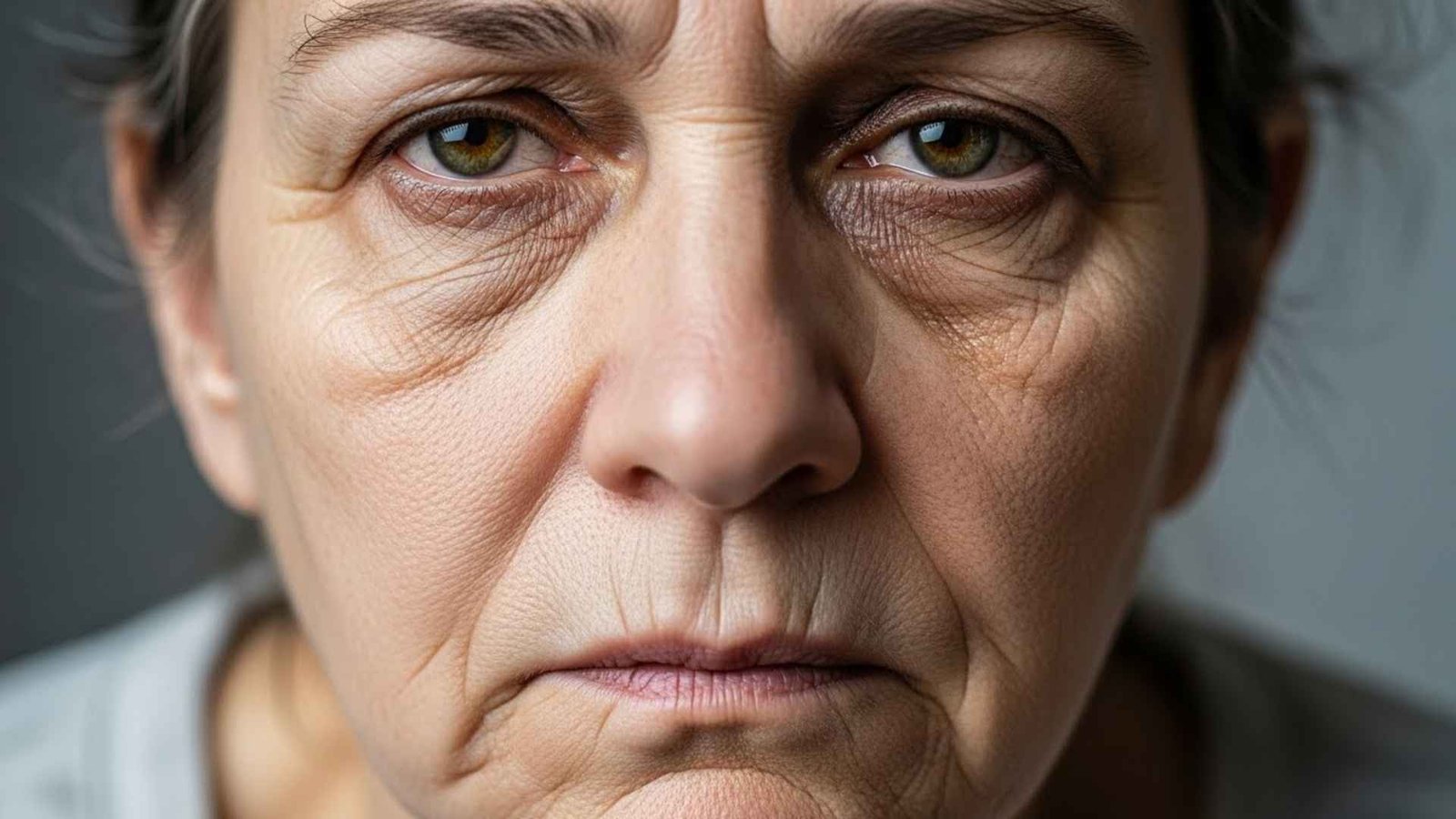
In your skin, high cortisol levels actively target and break down collagen and elastin, the proteins that keep your face firm. It also inhibits the cells (fibroblasts) that are supposed to build new collagen.
Think of it like a construction site where the foreman (Cortisol) sends the builders home and hires a demolition crew instead. By 5:00 PM, the structural integrity of your face has been compromised on a microscopic level.
The “Sugar Sag”

Around 3:00 PM, you probably hit a wall and crave sugar. It’s a natural response to falling energy. But if you grab a donut or a sugary latte, you trigger a spike in blood sugar that leads to glycation.
This is where sugar molecules in your blood bind to your collagen fibers, making them stiff and brittle. While this is a long-term aging process, the acute inflammation from a sugar spike can cause immediate puffiness and a lackluster skin tone.
Okay, let’s talk about the physical forces at play. This is where it gets a little scary.
Gravity is Relentless

When you wake up, your face might be a little puffy, but that fluid is evenly distributed. As soon as you stand up, gravity starts pulling everything down. By the end of the day, fluid has drained from your upper face (leaving your under-eyes looking hollow and dark) and pooled in your lower face (creating jowls).
A Japanese study actually measured this diurnal variation. They found that wrinkles significantly worsened in the afternoon compared to the morning due to gravity acting on dermal fluids and repeated facial expressions.
The 60-Pound Head

Then there’s your phone. We are living through an epidemic of “Tech Neck,” and it’s ruining our jawlines.
When your head is in a neutral position, it weighs about 10-12 pounds. But when you tilt your head forward 60 degrees to look at your phone (which you probably do hundreds of times a day), the force on your neck increases to 60 pounds.
To handle this massive weight, your neck muscles tighten and pull downward. specifically, the Platysma muscle—that sheet of muscle covering your neck—drags the corners of your mouth and your jawline down. It’s creating a permanent frown and “jowls” that seem to appear out of nowhere by late afternoon.
4. The Psychology: Why We Feel Old

It’s not just biology; it’s perception.
A really interesting study published in Psychology and Aging found that 59% of adults aged 50-80 feel they look younger than other people their age. We have a “subjective age” that is usually younger than our chronological age.
But fatigue shatters that illusion. When we are tired, our facial expressions become static, our eyelids droop, and we lose that “spark” of animation. Another study confirmed that sleep-deprived people are perceived by others as having “more hanging eyelids, redder eyes, and darker circles.”
So when you look in the mirror at 5:00 PM, the shock comes because the image doesn’t match your internal “young” self. It’s a reality check your brain wasn’t ready for.
Your 3 PM Rescue Plan
Enough about the problem. You want to know how to fix it. We can’t stop gravity or time, but we can definitely intervene. Here is a tactical, science-backed protocol to reverse the collapse.
Manage the Oil (Don’t Powder It!)
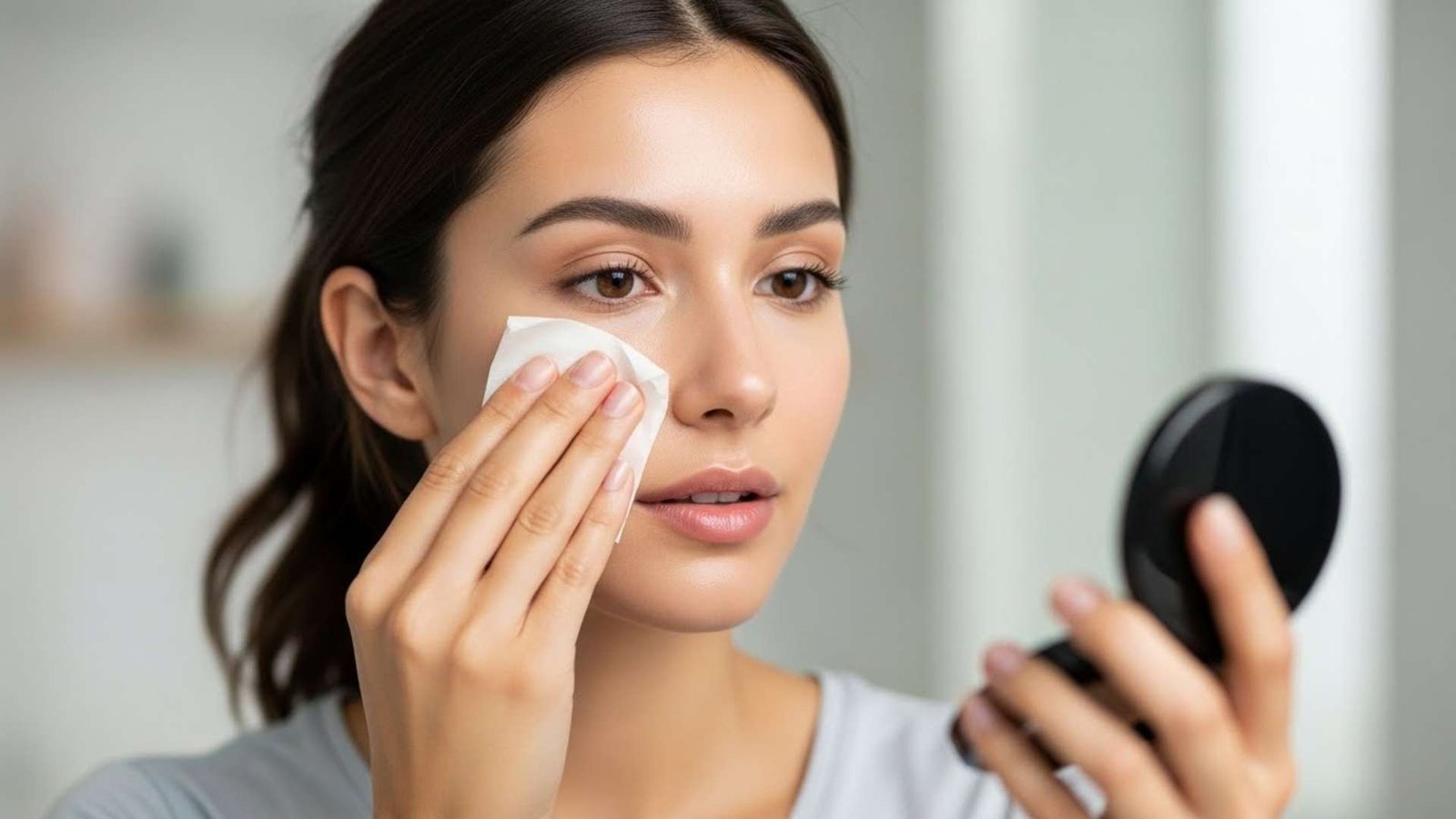
The Mistake: Seeing shine and immediately packing on powder. This mixes with the oxidized oil to create a cakey, gray paste. The Fix: Blotting Papers. You need to lift the liquid lipid off the skin without disturbing the makeup. Press a blotting paper firmly into your T-zone. Don’t rub. Just press and lift.
Re-Hydrate the “Raisin”

The Mistake: Spraying plain water. This actually evaporates and draws more moisture out of your skin (capillary action). The Fix: A Humectant Mist. You need a spray that contains “water magnets” like Glycerin, Hyaluronic Acid, or Aloe. These ingredients hold the water on your skin, re-pumping those dehydrated cells instantly.
The “Tech Neck” Reset

You need to fight the 60-pound force pulling your face down. Try these two desk exercises:
- The Ceiling Kiss: Tilt your head back to look at the ceiling. Pout your lips and “kiss” the ceiling. You should feel a stretch down the front of your neck. This tones the Platysma muscle.
- The Eye Reviver: Place your index fingers at the outer corners of your eyes. Squint your lower eyelids upward (like you’re suspicious of someone). Hold for 5 seconds. This pumps stagnant fluid away from the under-eye bags.
The Anti-Cortisol Snack

Put down the cookies. To lower cortisol and reduce inflammation, you need specific nutrients.
- Magnesium: Dark chocolate (70%+) or pumpkin seeds.
- Vitamin C: Oranges or bell peppers (Vitamin C helps clear cortisol from the blood).
- Hydration: Swap coffee (which dehydrates) for Green Tea (which fights oxidation).
The “Anti-Slump” Smoothie Recipe: If you’re at home or have a blender at work, this mix targets inflammation and fluid retention:
- Spinach (Magnesium)
- Banana (Potassium to balance sodium/puffiness)
- Blueberries (Antioxidants)
- Almond Milk (Vitamin E)
- Optional: A dash of Turmeric (Anti-inflammatory)
Need More Help? The “Desk Drawer” Emergency Kit
Sometimes, willpower and neck stretches aren’t enough. You need the right tools. I’ve curated a list of products that are specifically designed to tackle the biology of the afternoon slump. Think of this as your emergency first-aid kit for your face.
Here are 5 essentials that are worth keeping in your desk drawer:
1. NYX Professional Makeup Matte Blotting Paper:

These are a lifesaver for the “Sebum Paradox.” Unlike powder, which adds texture, these sheets just lift the oxidized oil off your T-zone. They are cheap, effective, and won’t mess up the makeup you apply at 7 AM.
2. Mario Badescu Facial Spray with Aloe, Herbs and Rosewater:

This is a cult classic for a reason. It fights that “Leaky Bucket” effect by delivering a hit of herbal hydration. The rosewater is soothing for stressed skin, and the aloe helps calm any afternoon redness. A quick spritz at 3 PM feels like a mini-spa moment.
3. Esarora Ice Roller for Face & Eye:

If your face feels puffy or heavy from gravity, this is the physical fix. Keep the detachable head in the office freezer if you can. Rolling this over your jawline and under-eyes constricts blood vessels (reducing redness) and physically pushes fluid out of the face. It wakes you up better than espresso.
4. TULA Skin Care Rose Glow & Get It Cooling & Brightening Eye Balm:

This little stick is magic for “computer eyes.” It contains caffeine to tighten the skin and probiotics to smooth texture. But the best part is the instant cooling sensation when you swipe it on. It brightens the under-eye area immediately, making you look like you’ve had a nap.
5. Liquid IV Hydration Multiplier:

Remember, afternoon dehydration starts inside. If water is boring you, these packets use Cellular Transport Technology to hydrate you faster than water alone. They have electrolytes that help your cells actually absorb the fluid, plumping your skin from the inside out.
