
Look, I’m going to be real with you.
Imagine your house’s fire alarm goes off in the middle of the night. It’s deafening. You panic, call a technician, and beg them to make it stop. The technician climbs up a ladder, cuts the wire, and—silence. You thank him, pay the bill, and go back to bed.
But here’s the problem: The fire is still burning. You just can’t hear the warning anymore.
This is exactly how modern medicine treats chronic symptoms. High blood pressure, heartburn, pain, insomnia—these are your body’s alarms. We take pills to cut the wire. We block the acid, numb the pain receptor, or force the body to sleep.
But it gets worse. It’s not just that we’re ignoring the fire. The “wire cutters” we’re using are actually adding fuel to the flames.
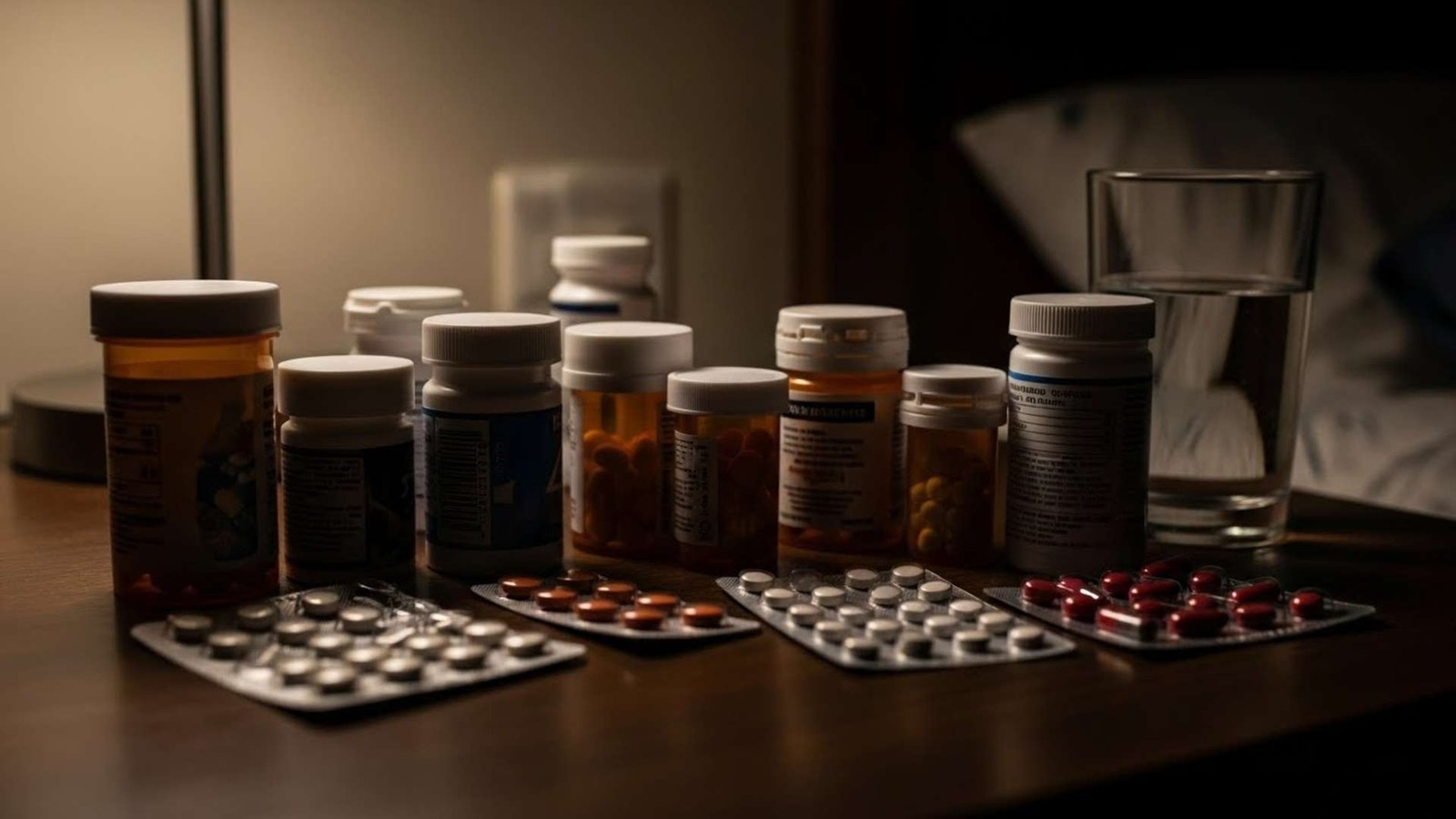
This is what experts call the Medication Trap. It’s a vicious cycle where the “cure” for your first problem causes a second problem, which your doctor treats with a second pill, which causes a third problem. Before you know it, you’re taking five medications, and you feel worse than when you started.
Let’s look at the science behind why this happens, the 9 specific drugs that are likely doing this to you right now, and how you can actually get out.
The 9 Usual Suspects

We need to talk about the specific drugs that cause this. These aren’t obscure, rare medications. These are the pills sitting in medicine cabinets all over the world.
The “Heartburn” Trap
The Acid Myth
We’re told acid is a villain. The Truth? It’s a hero! Your stomach acid defends against bacteria and breaks down proteins for nutrients.
The Steep Cost
Long-term use acts like chemical sterilization.
- Blocks Calcium, Mg, B12
- 80% Higher Gastric Cancer Risk
- Bones “starve” = Fractures
The Rebound Trap
Stopping causes a panic! The stomach produces MORE acid than before, tricking you into staying hooked.
Solution: Taper off slowly.
Common names: Omeprazole (Prilosec), Esomeprazole (Nexium), Pantoprazole
We have been told a lie about stomach acid. We’ve been told it’s a villain that needs to be eliminated. The truth? Your stomach acid is one of your body’s most important lines of defense. It kills bacteria on your food, and it breaks down proteins so you can absorb nutrients.
When you take a PPI long-term, you are chemically sterilizing your stomach. It feels great at first because the burning stops. But the cost is steep.
The Data: Without acid, you can’t absorb Calcium, Magnesium, or Vitamin B12. The research is clear: long-term use is associated with an 80% higher risk of gastric cancer in some studies and a significant rise in fracture risk because your bones are literally starving for calcium.
The Trap: When you try to stop these drugs, your stomach panics. It produces more acid than before—a “Rebound Effect”—which convinces you that you need the drug for life. You don’t. You just need to taper off slowly.
2. The “Energy” Trap (Statins)

Common names: Atorvastatin (Lipitor), Rosuvastatin (Crestor)
Statins are the gold standard for lowering cholesterol, and for people with established heart disease, they save lives. But for many others, they come with a hidden trade-off.
The same biological pathway that your body uses to make cholesterol is also used to make Coenzyme Q10 (CoQ10). Think of CoQ10 as the spark plug for your mitochondria (your cells’ power plants).
The Cascade:
- You take a statin.
- Your CoQ10 levels drop.
- You start feeling tired, “old,” and your muscles ache.
- The Trap: You go to the doctor complaining of fatigue and pain. They don’t blame the statin; they diagnose you with “Fibromyalgia” or “Depression” and hand you an antidepressant.
The Metabolic Hit: There is also a cruel irony here. Statins are meant to protect your heart, but they can increase your risk of developing Type 2 Diabetes. One study showed that for every specific number of patients treated, we create roughly 50-100 new cases of diabetes.
3. The “Brain Fog” Trap (Anticholinergics)

Common names: Diphenhydramine (Benadryl), Oxybutynin, Paxil
This is the one that scares me the most. “Anticholinergic” is a mouthful, but you need to know what it means. These drugs block acetylcholine, a chemical your brain uses for memory and learning.
You might be taking these for allergies (Benadryl) or for an overactive bladder. But the effect on your brain is cumulative. It’s called the Anticholinergic Burden.
The Reality: If you are over 65, these drugs can mimic dementia. I’ve seen patients diagnosed with Alzheimer’s who were actually just taking a sleeping pill and a bladder pill at the same time. The “fog” they were living in was chemical, not degenerative.
4. The “Pain” Trap (NSAIDs)

Common names: Ibuprofen (Advil), Naproxen (Aleve)
We treat ibuprofen like candy. But if these drugs were invented today, they would probably be prescription-only. NSAIDs work by blocking inflammation, but they also clamp down on the blood flow to your kidneys.
The Cascade: When your kidneys get stressed, they hold onto salt. When you hold onto salt, your blood pressure goes up. So, you take Ibuprofen for your knee pain -> Your Blood Pressure rises -> Your doctor prescribes Amlodipine (a Calcium Channel Blocker) -> The Amlodipine causes ankle swelling -> Your doctor prescribes a Diuretic.
You are now taking three drugs because you have a bad knee.
5. The “Happy” Trap (SSRIs)

Common names: Fluoxetine (Prozac), Sertraline (Zoloft)
These drugs can be lifesaving for severe depression. But for many, they create a state known as Emotional Blunting.
Patients tell me, “I don’t feel sad anymore, but I don’t feel happy, either. I just feel… flat.” About 40-60% of patients on SSRIs report this.
The Trap: When you tell your doctor you feel “numb” or “unmotivated,” they often interpret it as residual depression and increase your dose. This just makes the blunting worse. It’s a dopamine problem caused by too much serotonin, yet we treat it with more serotonin.
6. The “Fluid” Trap (Diuretics)

Common names: Hydrochlorothiazide, Furosemide
Doctors love prescribing these for high blood pressure. They work by making you pee out salt. The problem? You don’t just pee out salt. You pee out Potassium, Magnesium, and Zinc.
The Seesaw: When your potassium drops, your insulin stops working correctly. This is why diuretics are linked to new-onset diabetes. Also, diuretics cause uric acid to build up in your blood. This leads to Gout.
- The Cascade: Diuretic -> Gout -> Allopurinol prescription.
7. The Great Nutrient Heist

It’s not just one or two drugs. A huge number of common medications act like muggers in your digestive tract, stealing nutrients before your body can use them.
The “Inflammation” Trap
It’s a miracle drug, but it’s a Deal with the Devil. It mimics your body’s stress hormone: Cortisol.
Prednisone is a miracle drug for inflammation, but it’s a deal with the devil. It mimics your body’s stress hormone, cortisol.
The Cost: It eats your bones (Osteoporosis), spikes your blood sugar (Diabetes), and melts your muscle while depositing fat in your belly. It creates a body that is frail, diabetic, and prone to fracture.
9. The “Just in Case” Trap (Antibiotics)

We all know about resistance. But the immediate threat to you is “Ecological Scarring.” Antibiotics are like dropping a nuclear bomb on a forest to kill one weed. You kill the infection, but you also wipe out the good bacteria that regulate your immune system and your mood.
The Trap: A decimated microbiome makes you more vulnerable to the next infection, which leads to… more antibiotics.
Need More Help? Look Into These
We’ve talked a lot about chemistry, but sometimes the best solutions are physical or nutritional. If you’re trying to break the cycle, you don’t always need another prescription. I’ve dug through the options to find tools that can help you manage side effects or address root causes naturally, so you can stop reaching for that next bottle.
1. Qunol Ultra CoQ10 Softgels

If you are taking a statin, this is non-negotiable for many experts. Statins deplete your body’s CoQ10 levels, which can lead to that heavy, tired, “old” feeling in your muscles. Qunol is a solid choice because it uses a form of CoQ10 that dissolves in both water and fat, meaning your body actually absorbs it rather than just flushing it out.
2. ProsourceFit Acupressure Mat and Pillow Set

This is for the person stuck in the “Pain Trap” of daily NSAIDs (Ibuprofen/Advil). It looks intimidating—like a bed of nails—but lying on it for 20 minutes stimulates blood flow and triggers a release of endorphins (natural painkillers). It’s a fantastic, drug-free way to tackle back pain and tension before popping a pill.
3. MZOO Luxury Sleep Mask

If you’re battling insomnia and trying to avoid the “Brain Fog” trap of sleeping pills or Benadryl, total darkness is your best friend. This mask is a game-changer because it has contoured eye cups—meaning it doesn’t smash against your eyelids or lashes. It blocks 100% of light without the pressure, helping your brain naturally produce melatonin.
4. Levsox Compression Socks (20-30 mmHg)

Caught in the cascade where your blood pressure meds (Calcium Channel Blockers) or Gabapentin are causing swollen ankles? Before you add a diuretic to fix it, try physical compression. These provide firm support to push fluid back up your legs, tackling the swelling mechanically rather than chemically.
5. AUVON Weekly Slide Pill Organizer

Managing a taper or a complex regimen requires precision. If you are working with your doctor to slowly reduce a dose (deprescribing), you can’t rely on memory. This organizer is highly rated because it’s durable, easy to open (arthritis-friendly), and helps you visualize exactly what you’re taking—and what you’re successfully cutting out.
