
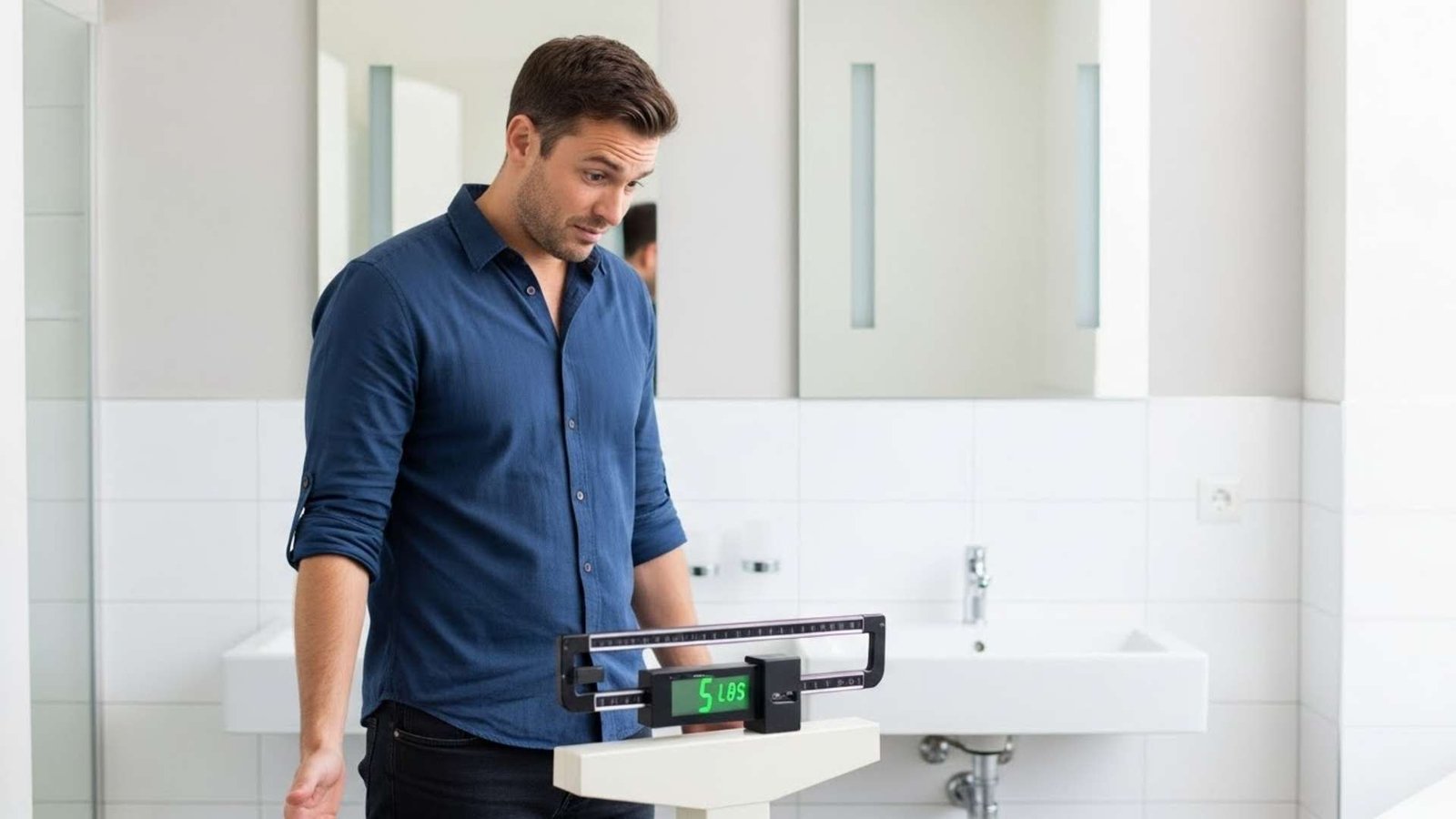

We need to talk about that moment. You know the one.
It’s Monday morning, maybe 6:45 AM. You’ve just had a great weekend—maybe a dinner out with friends, a few drinks, or just some relaxing time on the couch. You step on the scale, feeling pretty good about life, and then you see it.
Your stomach drops. Immediate panic sets in. You do the mental math: How is this possible? I didn’t eat that much. I’ve ruined everything. You start planning how you’re going to starve yourself today to “fix” it. You feel heavy, sluggish, and honestly, a little defeated.
Here is the thing I need you to hear before we go any further: You did not gain five pounds of fat in 48 hours.
Biologically, physically, and mathematically, it is nearly impossible. What you are seeing isn’t a failure of willpower; it’s a predictable, rhythmic biological wave. It happens to almost everyone, including people who are incredibly fit.
The “Sawtooth” Pattern (It’s Not Just You)

We tend to think weight loss should look like a straight line going down. But real human bodies don’t work like spreadsheets. Researchers have actually tracked this, and what they found is fascinating.
In a major study published in Obesity Facts, scientists looked at daily weigh-ins from 80 adults over the course of a year. They found a distinct “sawtooth” pattern. Weight almost universally climbs starting Saturday, peaks on Monday, and then slowly drops back down to its lowest point on Friday morning.
The researchers found something even more surprising: the people who successfully maintained their weight or lost weight long-term still had this weekend spike. The difference wasn’t that they didn’t gain weight on the weekend; it was that they just got back to their routine on Monday without freaking out.
So, if that number on the scale isn’t fat, what is it? It’s a “phantom weight” cocktail of three things: water, energy storage (glycogen), and—to put it politely—digestive traffic.
The Math That Saves Your Sanity

Let’s look at the “fat gain” theory for a second. To gain one pound of actual adipose tissue (body fat), you generally need a surplus of about 3,500 calories above what you burn.
Now, let’s do the math on a five-pound gain. To gain 5 pounds of fat in a weekend, you would need to eat a surplus of 17,500 calories.
That is on top of the 4,000 or so calories you burn just living your life over two days. So, we’re talking about consuming roughly 21,500 calories between Saturday morning and Sunday night.
To put that in perspective, you would have to eat:
- 38 Big Macs
- 70 slices of pepperoni pizza
- Or about 250 apples
Did you do that? I’m guessing no. Even if you had a “bad” eating weekend—maybe you had appetizers, a few drinks, and dessert—you might have hit 3,000 or 4,000 calories. That might result in a fraction of a pound of real fat gain, but it definitely doesn’t explain the other 4.8 pounds staring back at you.
So, where did the mass come from? Let’s break it down.
The Sponge Effect (It’s Not Flab, It’s Fuel)

This is the biggest culprit, and honestly, the most misunderstood. It usually comes down to carbohydrates.
When you eat pasta, bread, rice, or sugar, your body converts it into glucose for energy. What you don’t use immediately gets stored in your muscles and liver as glycogen. This is your body’s backup gas tank.
Here is the catch: Glycogen loves water. It’s “hydrophilic.” For every single gram of glycogen your body stores, it stores about 3 to 4 grams of water along with it.
During the week, if you’re eating clean or exercising, you might be wringing that sponge out, depleting your glycogen levels. Then comes the weekend. You have some pizza or sushi. Your body says, “Awesome! Fuel!” and refills the tank.
- The Refill: You store 400g of glycogen.
- The Water Weight: That 400g of glycogen grabs onto about 1,200g of water.
- The Result: You are suddenly 1.6 kg (about 3.5 lbs) heavier.
You aren’t fatter. You are just fully fueled. It’s functional weight. In fact, athletes try to achieve this state before a race!
The Salt Trap
The Sodium Spike
Restaurant food can pack 3,000mg+ of sodium. This makes your blood “salty,” throwing off your salinity balance.
The “Stop Peeing” Switch
Your body releases ADH (Antidiuretic Hormone). It tells kidneys: “Don’t pee! Keep water to dilute the salt!”
The Heavy Math
A salty weekend can retain 2 liters of fluid.
Tight Ring Theory
Puffy ankles or tight rings on Monday? It’s dilution, not fat gain.
Your body is just trying to restore balance.
Sodium is the other major player here. We all know salt makes us thirsty, but the mechanism is pretty specific.
Your body is constantly trying to maintain a perfect balance of salinity in your blood. When you eat a high-sodium meal—restaurant food is notorious for this, often packing 3,000mg+ of sodium in one sitting—your blood becomes “salty.”
To fix this, your body releases a hormone called antidiuretic hormone (ADH). This tells your kidneys: “Stop! Don’t pee! We need that water to dilute this sodium!”
So, instead of flushing fluid out, you hold onto it. A single salty weekend can easily cause you to retain 2 liters of excess fluid. Since water weighs about 2.2 lbs per liter, that’s nearly 4.5 lbs of water weight right there.
This is why your rings feel tight or your ankles look puffy on Monday. It’s not fat; it’s just your body trying to dilute your weekend sodium intake.
The “Traffic Jam” in Your Gut

We rarely talk about this, but we have to be real: Food has weight before it becomes part of your body.
The average adult digestive tract is about 30 feet long. Transit time—how long it takes food to go from your mouth to the other end—can range from 24 to 72 hours.
If you ate heavier meals on Sunday (maybe a steak, or something low in fiber), that food is physically sitting inside you on Monday morning. It hasn’t been digested yet. It hasn’t been eliminated.
- The Weight: The average adult can carry around 1-2 pounds of waste in their colon.
- The Weekend Effect: Alcohol and low-fiber foods can slow down your digestion (motility), creating a temporary “traffic jam.”
So, when you step on the scale, you are weighing your body, plus the water you’re holding, plus the dinner you ate last night.
The Alcohol Paradox

Alcohol is tricky because it hits you twice.
Phase 1 (Saturday Night): Alcohol is a diuretic. It blocks that ADH hormone we talked about, making you pee more than you should. You actually dehydrate.
Phase 2 (Sunday/Monday Morning): This is the rebound. Your body realizes it’s dehydrated and panics. As the alcohol wears off, your system over-corrects, holding onto every drop of water it can find to restore balance.
Plus, alcohol can irritate your gut lining, causing inflammation (swelling) in your stomach and intestines. That “bloated” belly isn’t just gas; it’s often localized swelling from irritation.
Breaking Up with Scale Anxiety

The problem isn’t the number; it’s how we react to it. We treat the scale like a judge, but it’s really just a data collector.
Dr. Leslie Heinberg from the Cleveland Clinic puts it perfectly: “The scale is a horrible barometer of behavior change. You can do everything right… but then, you get on the scale, and you’re up 2 pounds.”
When you see that +5 lbs, and you panic-diet or punish yourself, you create a cycle of stress. And guess what? Stress raises cortisol, and cortisol makes your body retain more water.
You have to change the narrative. Instead of “I gained weight,” tell yourself: “My glycogen stores are full, and I’m rehydrating.”
The Monday Reset
The Hydration Paradox
To lose water weight, you need to drink water. Drinking 2-3 liters signals your body to stop hoarding.
Potassium Counter-Punch
Sodium and potassium work like a seesaw. High potassium helps excrete excess salt.
Sweat it Out (Gently)
Burn through stored glycogen. Keep it moderate to sweat out salt and use up sugar.
Fiber Up
Get things moving again. Clear the “traffic jam” in your gut.
So, you’re up 5 pounds. Don’t starve yourself. Don’t do a juice cleanse. Here is the physiological way to flush the system and get back to baseline.
1. Drink More Water (The Hydration Paradox) It sounds backward, but to lose water weight, you need to drink water. If you drink 2-3 liters of water, you signal to your body that it’s safe to let go of the hoard. You flush the kidneys and suppress that water-hoarding hormone.
2. The Potassium Counter-Punch Sodium and potassium work like a seesaw. If sodium is high, potassium helps lower it. Eat foods high in potassium to trigger your body to excrete the excess salt.
- Eat this: Bananas, avocado, spinach, sweet potatoes.
3. Sweat it Out (Gently) You need to burn through that stored glycogen. A workout on Monday is great, but keep it moderate. You want to sweat (to lose salt) and move your muscles (to use up the sugar).
- Try this: A 30-minute jog, a spin class, or a lift session.
4. Fiber Up Get things moving again. High-fiber foods like leafy greens, berries, or oatmeal will help clear the “traffic jam” in your gut. Just make sure you drink water with them, or you’ll just make the blockage worse.
Need More Help? Look Into These
While you absolutely don’t need to buy anything to fix a natural body fluctuation, having the right tools can make the process less stressful and more comfortable. Sometimes, swapping the “judgey” bathroom scale for a tape measure, or swapping your morning coffee for a specialized tea, is all the mental shift you need to stop panicking. Here are a few things that can genuinely help smooth out the “Monday Spike.”
1. Renpho Smart Body Measuring Tape:

If the scale stresses you out, stop using it. This smart tape measure connects to an app via Bluetooth and tracks your inches instead of your weight. It’s perfect for seeing that even if the scale is up 3 lbs (water), your waist is actually the same size. It helps separate “bloat” from “fat.”
2. Hydro Flask Wide Mouth Bottle (32 oz):

We talked about the “Hydration Paradox”—you have to drink water to lose water. The easiest way to hit that 3-liter goal is with a bottle you actually like carrying. The Hydro Flask keeps water ice-cold for 24 hours, which makes chugging those necessary liters way less of a chore.
3. Traditional Medicinals Organic Dandelion Root Tea:

Dandelion root is a gentle, natural diuretic that has been used for centuries to help the liver and kidneys flush excess fluid. If you feel incredibly puffy on Monday morning, a cup of this can help your body release that held-onto sodium water a little faster than plain water alone.
4. Dr Teal’s Pure Epsom Salt Soaking Solution:
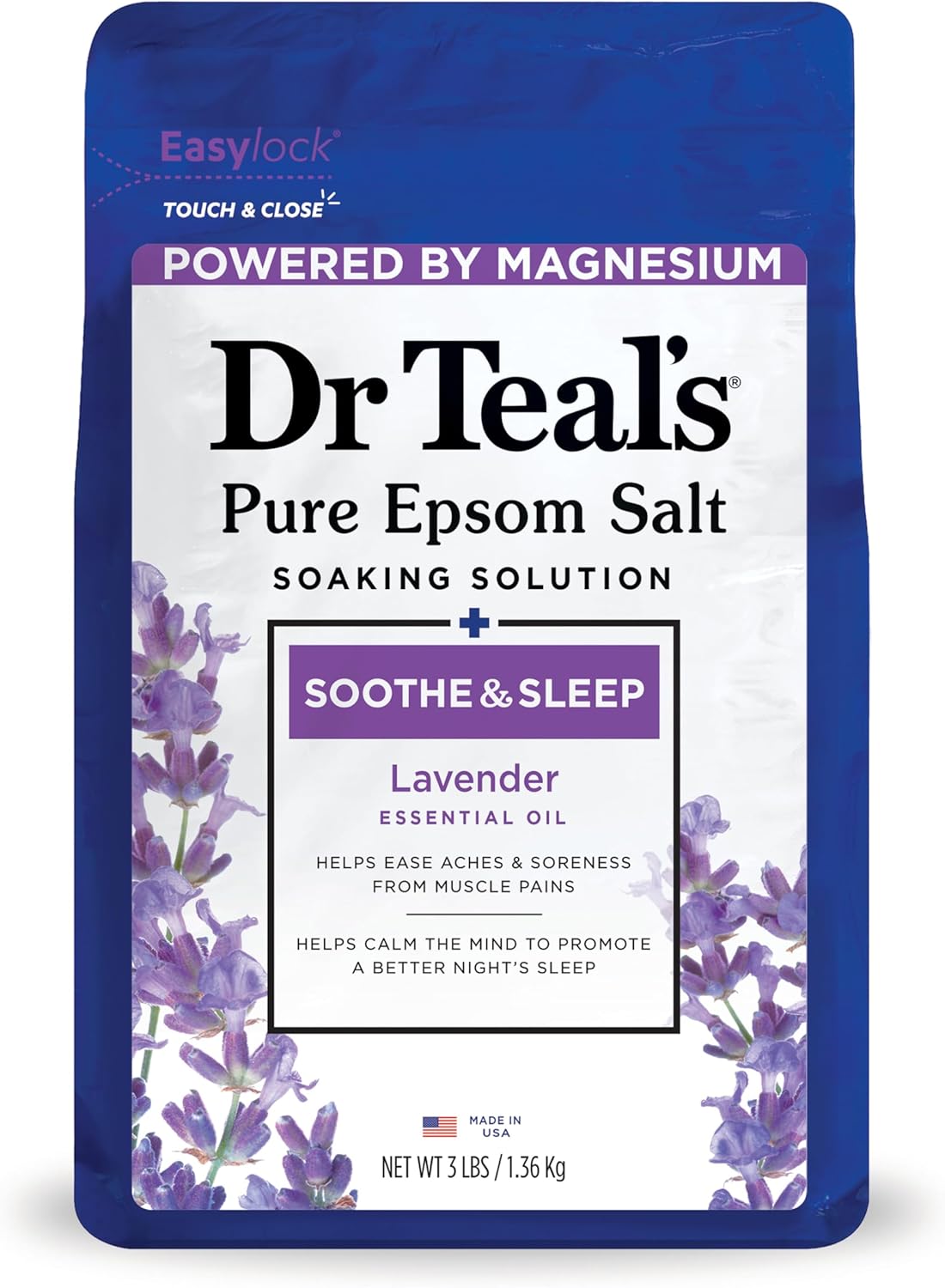
Sometimes the best way to handle the Monday swelling is to soak it away. Epsom salts contain magnesium, which can be absorbed through the skin to help relax muscles and reduce water retention. Plus, taking a 20-minute hot bath helps you sweat out some of that excess salt.
5. The 5-Minute Gratitude Journal:

Monday anxiety is often worse than the weight itself. This simple journal helps shift your focus from “I failed my diet” to “I enjoyed my weekend.” It’s a great way to break the cycle of stress-induced cortisol (which, remember, makes you hold onto more fat!).
