

You’re sitting at your desk, and you’ve done everything “right.” You had the dark roast. Maybe you even had two. For a brief, shining moment at 8:00 AM, you feel human. You feel that familiar buzz of capability. But now? Now you’re staring at a screen that seems to be getting brighter while your brain gets dimmer. You feel a strange, vibrating grayness behind your eyes. You’re tired, but your heart is racing. You’re exhausted, but you can’t look away.
It’s the “Tired But Wired” trap. And if you’re like most of us, your instinct is to reach for another cup.
But here is the hard truth that nobody at the cafe tells you: Coffee doesn’t give you energy. It borrows it. And right now, your brain is calling in the debt.
We are going to walk through exactly what is happening inside your head—not with dry medical jargon, but with the real mechanics of how your body works. We’re going to look at why that third cup is actually making you sleepier, why women are crashing harder than men, and the new science (including a surprising 2024 discovery about creatine) that might actually help you fix it.
🧠 Brain = Parking Lot
Imagine your brain is an event center. Adenosine molecules are the cars, and receptors are the parking spots.
As “cars” park, they signal your brain: “Lot full. Slow down. Sleep.”
☕ The Caffeine Blockade
Caffeine looks just like Adenosine (same chassis, new paint). It rushes in and steals the parking spots.
Crucially, it doesn’t trigger the “tired” signal. It just blocks the real cars. You aren’t energized; you’re just ignoring the traffic.
💥 The Crash
While caffeine blocked the spots, your brain kept making Adenosine. It created a massive traffic jam circling the block.
When the caffeine wears off? WHOOSH. 6 hours of fatigue slams into the lot in 15 minutes.
🏗️ The Construction Crew
If you block spots daily, your brain gets suspicious: “The lot is too small!”
It literally builds more parking spots (upregulation). Now you need coffee just to fill the new empty spots, not for energy. You are drinking to avoid withdrawal.
To understand why the magic bean water stopped working, you have to understand a molecule called Adenosine.
Think of your brain like a massive, busy event center. Every time you have a thought, move a muscle, or process an email, you’re burning fuel (ATP). The “exhaust” from burning that fuel is adenosine.
Here’s the analogy that changed how I see my morning routine:
Imagine your brain has a parking lot for fatigue.
- Adenosine molecules are little cars.
- Adenosine Receptors are the parking spots.
From the moment you open your eyes, these adenosine “cars” start driving into the lot. When a car parks in a spot, it sends a signal to your brain: “Hey, the lot is filling up. We’re getting tired. Slow down.”
By 10:00 PM, the lot is full. The “Sleep” sign lights up. You go to bed, and while you sleep, the valet crew clears the lot so it’s empty by morning.
1. The Caffeine Blockade:

Here’s where coffee pulls a heist. Caffeine is a molecule that looks almost exactly like adenosine. It’s like a car with the same chassis but a different paint job.
When you drink coffee, the caffeine cars rush into the parking lot and steal the spots. But—and this is the key— they don’t trigger the “tired” signal. They just sit there, blocking the real adenosine from parking.
So, your brain looks at the lot and says, “Hey, no tired cars are parked! We must be wide awake!” You feel alert. But you aren’t actually energized; you’re just chemically ignoring how tired you are.
2. The Crash (The Bill Comes Due):

Here is the betrayal. While caffeine is parked in those spots, your brain didn’t stop making adenosine. You were still working, stressing, and thinking. So now, you have a massive traffic jam of real adenosine circling the block, waiting for a spot.
Around 2:00 PM, your liver finally dissolves the caffeine. The caffeine cars pull out. Suddenly, WHOOSH. All that backed-up adenosine slams into the parking spots at once.
You don’t just go back to normal fatigue. You get hit with 6 hours of accumulated fatigue in 15 minutes. That’s the crash.
Why It Stops Working: The Construction Crew
If you do this every single day, your brain gets suspicious. It says, “I know I’m producing fatigue signals, but they aren’t parking. The lot must be too small.”
So, your brain literally builds more parking spots (upregulation).
- Before Coffee Habit: You had 100 spots. You blocked 90. You felt great.
- Current Reality: Your brain builds 50 new spots. Now you have 150. You drink your coffee, block 90… and you still have 60 spots open for fatigue.
Now, you need the coffee just to feel “normal.” Without it, you have 150 empty spots screaming for sleep. You aren’t drinking for energy anymore; you’re drinking to avoid withdrawal.
The “Tired But Wired” Paradox

So, you’re exhausted because of the adenosine. But why do you feel anxious? Why are your hands shaking?
This is where stress hormones enter the chat.
When you dump caffeine into your system, your adrenal glands perceive an emergency. They release cortisol (the stress hormone) and adrenaline. Evolutionarily, this is designed to help you run from a bear. In 2025, it’s just helping you vibrate while you sit in a Zoom meeting.
The Sugar Rollercoaster

This cortisol spike triggers a dirty trick on your metabolism that most people miss:
- The Panic: Cortisol tells your liver, “We need energy to fight the bear! Dump sugar into the blood!”
- The Spike: Your blood sugar rockets up. You feel hyper-alert.
- The Reality: You are sitting in a chair. You don’t burn the sugar.
- The Crash: Your pancreas freaks out and floods your body with insulin to remove the sugar. It overcorrects. Your blood sugar plummets.
By 11:00 AM, you are hypoglycemic. You feel shaky, irritable, and brain-fogged. You think you need more coffee. You actually need a sandwich.
| Stage | What You Do | What Your Body Does | How You Feel |
| 8:00 AM | Drink Coffee | Blocks adenosine; Cortisol spikes. | “I am a god of productivity.” |
| 9:00 AM | Work at desk | Liver dumps glucose; Insulin spikes. | Jittery, knee bouncing. |
| 10:30 AM | Sugar Crash | Blood glucose drops below baseline. | Brain fog, irritability, “Hangry.” |
| 11:00 AM | Drink More Coffee | Repeat the cycle. | “Why is everyone so annoying?” |
The “7 Types of Rest” (Why Sleep Isn’t Enough)

This is the missing piece of the puzzle. You might be sleeping 8 hours and still feel exhausted. Why?
Because “sleep” and “rest” are not the same thing.
Dr. Saundra Dalton-Smith, a leading researcher in this field, identified that we actually need 7 distinct types of rest. Coffee tries to force “Physical” alertness, but it ignores the other six tanks that are empty.
If you feel “burned out,” it’s usually because you are ignoring these:
Sensory Rest: The bright lights, the notifications, the background noise. Your brain is processing terabytes of data. The Fix: 5 minutes of actual silence. No phone. No podcasts. Just quiet.
Emotional Rest: The fatigue of “performing.” If you have to be “on” or polite when you don’t feel like it, that drains energy. The Fix: Being around people where you don’t have to filter your thoughts.
Mental Rest: The inability to turn off your brain at night. You lay down, but your mind is making to-do lists. The Fix: A “brain dump” journal before bed. Get it out of your head and onto paper.
Creative Rest: The exhaustion of constantly solving problems. The Fix: Stop producing. Consume something beautiful (nature, art) without trying to “optimize” it.
If your “Sensory” tank is empty, drinking espresso (a sensory stimulant) is like trying to put out a fire with gasoline.
The Liver Bottleneck
Your liver uses the enzyme CYP1A2 to metabolize caffeine.
The catch? Estrogen competes for the exact same enzyme.
🌿 Follicular Phase
Estrogen is Low.
Your liver processes caffeine normally. The “highway” is clear. You drink coffee, you feel fine.
🩸 Luteal Phase
Estrogen is High.
The liver is busy processing hormones. Caffeine has to wait in line. It stays in your system twice as long.
🕰️ The Delayed Crash
A 9:00 AM coffee might still be blocking sleep receptors at 11:00 PM. This ruins deep sleep ➔ you wake up tired ➔ you drink more coffee.
It’s a vicious cycle.
During the week before your cycle, consider cutting caffeine by 50% or stopping entirely by 10:00 AM. Your sleep quality will thank you. 💤
Ladies, if you feel like caffeine hits you differently at different times of the month, you are not imagining it. The research on this is fascinating and often ignored.
Your liver metabolizes caffeine using an enzyme called CYP1A2. But here’s the catch: Estrogen competes for that same enzyme.
- Follicular Phase (Days 1-14): Estrogen is lower. You metabolize coffee normally. You feel fine.
- Luteal Phase (The week before your period): Estrogen and progesterone are high. Your liver is busy processing hormones. The caffeine has to wait in line.
The Result: A cup of coffee you drink at 9:00 AM during your luteal phase might stay in your system twice as long as usual. It’s still blocking your sleep receptors at 11:00 PM, ruining your deep sleep, and making you wake up exhausted—which makes you drink more coffee. It is a vicious hormonal cycle.
Expert Tip: During the week before your cycle, consider cutting your caffeine intake by half, or stopping entirely by 10:00 AM. Your sleep quality will thank you.
The Fix (How to Reset Your Brain)
Okay, so we’ve identified the problem. You have too many parking spots, your cortisol is messy, and you’re sensually overloaded. How do we fix it without living like a monk?
1. The 90-Minute Rule (The Golden Ticket)

If you take one thing from this article, let it be this protocol from neurobiologist Dr. Andrew Huberman: Wait 90 minutes after waking up before you drink coffee.
Why?
When you wake up, there is still some leftover adenosine (sleepiness) floating around.
- If you drink coffee immediately: You trap that adenosine in the lot. It waits for you. When the coffee wears off at 2 PM, that morning adenosine hits you plus the afternoon fatigue. Double crashes.
- If you wait 90 minutes: Your natural morning cortisol burns off the leftover adenosine first . Then, when you drink coffee, it’s working on a “clean slate.” The energy lasts longer, and the crash is minimal.
2. The Creatine Hack (New Science)

This is surprising. We usually think of Creatine as a gym supplement for swole guys. But 2024 research published in Scientific Reports has shown that a high single dose of creatine can significantly improve cognitive performance during sleep deprivation.
It works by restocking ATP (energy) in the brain’s mitochondria. If you are surviving on 4 hours of sleep and have a massive presentation, creatine might actually be safer and more effective than a fourth espresso.
3. NSDR (Non-Sleep Deep Rest)

When you feel that “mental exhaustion” where you can’t focus but can’t sleep, don’t drink coffee. You need to flush the cache.
NSDR (or Yoga Nidra) is a 10-20 minute guided relaxation. It mimics the brain waves of deep sleep while you are awake. Studies show it can replenish dopamine levels and reduce cortisol by up to 65%. It is the “restart computer” button for the human brain.
- Action: Search “10 minute NSDR” on YouTube. Do it at 2:00 PM instead of the latte.
4. The Taper (Don’t Go Cold Turkey)

If you decide to quit or cut back, do not stop suddenly. The blood vessels in your brain are constricted by caffeine. If you stop suddenly, they dilate rapidly, causing massive pressure—the infamous “caffeine withdrawal headache.
The Gentle Taper Schedule:
- Week 1: Drink your normal amount, but mix it 75% Regular / 25% Decaf.
- Week 2: 50% Regular / 50% Decaf.
- Week 3: 25% Regular / 75% Decaf.
- Week 4: 100% Decaf (Swiss Water Processed tastes best).
This gives your brain time to dismantle the extra “parking spots” (downregulation) without punishing you.
Tools to Help You Reset (Stuff That Actually Helps)
Look, changing your brain chemistry is hard work. You don’t need to buy anything to fix this—water and sunlight are free—but sometimes having the right tool makes the difference between sticking to a new habit and giving up by Tuesday.
Based on the research above (specifically targeting cortisol management, sensory rest, and hydration), here are 5 things worth looking into.
1. A Sunrise Alarm Clock:

Why it helps: We talked about the “Cortisol Awakening Response” (CAR) earlier. If you wake up to a jarring iPhone alarm in a pitch-black room, you aren’t triggering that natural energy spike. A sunrise alarm gradually brightens the room over 30 minutes, simulating dawn. This tells your body to clear out adenosine before you even open your eyes, making the “90-Minute Rule” much less painful.
2. Mushroom Coffee (with Lion’s Mane):

Why it helps: If you want to keep the ritual but ditch the jitters, this is the move. Brands like Four Sigmatic or Ryze blend a smaller amount of organic coffee with Lion’s Mane and Chaga mushrooms. These are “adaptogens”—they help stabilize your stress response rather than spiking it. You get the focus without the “wired” anxiety.
3. A 100% Blackout Sleep Mask:
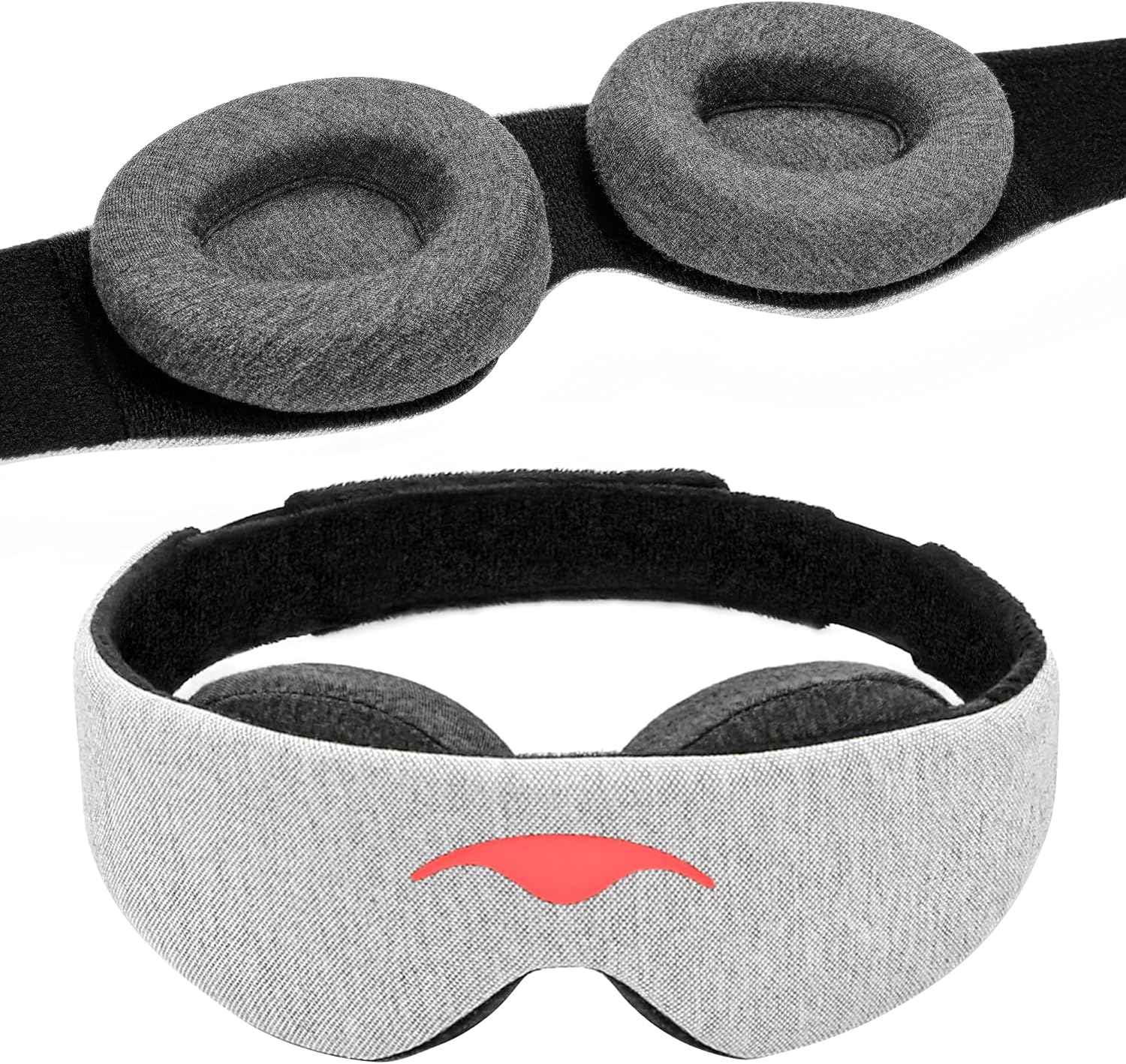
Why it helps: “Sensory Rest” is critical. Even tiny amounts of light (streetlamps, standby LEDs) can suppress melatonin and keep your brain in “vigilance mode” all night. A high-quality mask (like the Manta or Mzoo) that puts zero pressure on your eyes but blocks 100% of light ensures your brain actually enters deep restorative sleep, so you wake up with fewer empty parking spots.
4. Electrolyte Powder (Zero Sugar):

Why it helps: Remember the caffeine withdrawal headache? That’s often caused by blood flow changes and dehydration. Caffeine is a diuretic. When you cut back, or even if you just drink a lot of it, you lose sodium and magnesium. A good electrolyte mix (like LMNT or Liquid IV) helps stabilize your blood pressure and eliminates the “brain fog” headache almost instantly.
5. A “Brain Dump” Journal:

Why it helps: This is for “Mental Rest.” If you lie in bed staring at the ceiling thinking about emails, you need to get the thoughts out of your biology and onto a physical object. The “Anti-Burnout Journal” is great, but any simple notebook works. The act of writing signals to your brain: “This is saved. You can stop processing it now.”
