

You know that moment. Maybe you’re at a dinner party, or maybe you’re just driving home from work, and it hits you: I have nothing new to say.
You realize your last three conversations were about real estate prices, your back pain, or logistics—who’s picking up the kids, what’s for dinner, when the car needs service. The vibrant, chaotic, “I’m going to start a band” energy of your 20s feels like it belongs to a different person.
We jokingly call this “setting down.” But if we’re honest, it feels more like “fading out.” It’s the Beige-ing of the Mind.
For a long time, we were told this is just what up growing looks like. You trade excitement for wisdom. But the latest neuroscience is screaming something different. That “boring” feeling isn’t mature; it’s a biological warning light. It’s a sign that your brain has switched from exploration mode to autopilot mode to save energy.
Here’s the good news: You aren’t actually boring. You’re just biologically efficient. And you can reverse it.
This isn’t just about having more fun (though that helps). It’s about brain health. Emerging research shows that the specific neural networks we let atrophy in our 30s are the same ones that protect us from cognition decline in our 70s. So, let’s look at why the lights dimmed, and exactly how to turn them back on.
Why Your Brain Wants You to Be Boring
The Goal: Your brain’s #1 job isn’t to write poetry. It is to keep you alive using as little energy as possible.
To understand why you feel stagnant, you have to forgive your brain. Its number one job isn’t to write poetry or invent a new app; it’s to keep you alive using as little energy as possible.
1. The “Efficiency Trap” (Or, Why You Stopped Exploring)

When you were 20, the world was full of “prediction errors.” You didn’t know how to do your job, navigate a new city, or cook a turkey. Your brain had to be awake, burning glucose to figure things out. This relies on Fluid Intelligence —the raw processing power used to solve new problems.
By 35, you’ve figured most of it out. You have a “script” for everything.
- Morning commute? Scripted.
- Staff meeting? Scripted.
- Grocery run? Scripted.
Your brain shifts from Fluid Intelligence to Crystallized Intelligence (your internal library of facts and habits). This makes you efficient, but it also makes you rigid. You stop taking “side roads” because your brain knows the “best route.” The sensation of being boring is simply the feeling of living entirely inside these pre-written scripts.
2. The Dopamine Drop

We usually think of dopamine as the “pleasure chemical,” but it’s really the “go get it” chemical. It drives curiosity and the pursuit of the new.
Here’s the hard truth: Starting in early adulthood, we lose dopamine receptor density (specifically D2 and D3 receptors) at a rate of about 6-10% per decade.
This means that a new band or a spontaneous road trip that would have given you a massive dopamine spike at 22 might barely register at 42. The “reward” doesn’t feel big enough to justify the “effort.” So, you stay on the couch. It’s not that you’re lazy; it’s that your neurochemistry has raised the price of admission for excitement.
3. The War in Your Head: DMN vs. CEN

Neuroscience used to talk about “Left Brain vs. Right Brain.” That’s out. Now, we talk about networks. Two are critical here:
- The Central Executive Network (CEN): The “Get Stuff Done” mode. Answering emails, focusing on tasks.
- The Default Mode Network (DMN): The “Daydream” mode. This activates when you zone out. It connects random ideas, memories, and future plans. It’s where creativity lives.
In a creative brain, these two toggle back and forth smoothly. You daydream (DMN), get an idea, then focus (CEN) to execute it.
But the modern midlife brain is broken. We are stuck in Hyper-CEN mode (constant grinding/parenting/working). We never let the DMN turn on. And when we finally stop working, we don’t daydream—we doomscroll (more on that in a second). We’ve lost the ability to just be.
The “Adulting” Crisis

It’s not just biology. We are living through a perfect storm of psychological pressure.
1. The Sisyphean Grind

Psychologists call the mid-30s the “rush hour of life.” You are likely peaking in your career, raising young kids, and caring for aging parents simultaneously. This is Role Overload.
Dr. Elliott Jaques, who coined the term “midlife crisis,” notes that creative output often changes here. It stops being “hot” and spontaneous and becomes “sculpted” and labored. Why? Because the Superego (the inner rule-maker) has taken over. We become disenchanted of looking like beginners. We stick to what we’re experts at because we can’t handle the ego hit of being bad at something new.
2. The Flattening U-Curve
You’ve probably heard of the U-Curve of Happiness—we start happy, dip in middle age, and get happy again in old age. Well, recent data from 2023 and 2024 shows a scary shift: The U-curve is flattening. Young people are unhappier than before, and the midlife slump is starting earlier. We are exhausted earlier.
3. The Digital Lobotomy (Doomscrolling)

This is the big one. When you have 5 minutes of downtime, what do you do? You check your phone. This kills creativity in two ways:
- It murders boredom. Boredom is the incubation phase of creativity. If you fill every gap with a screen, your DMN never gets to run its background updates.
- It creates “Brain Rot.” Consuming short-form, negative content (“doomscrolling”) puts the brain in a state of high arousal but low cognitive engagement. It fragments your attention span and trains you to crave “cheap dopamine” rather than the “earned dopamine” of finishing a project.
⚡ The Spark Ignite System ⚡
(Eggs, Soy)
(Fatty Fish)
(Berries)
(Egg Yolks)
Okay, that’s the depressing part. Here is the fix. These aren’t just “hobbies”; they are targeted interventions to boost plasticity, upregulate dopamine, and fix your brain networks.
1. Neuro-Nutrition: Feed the Spark
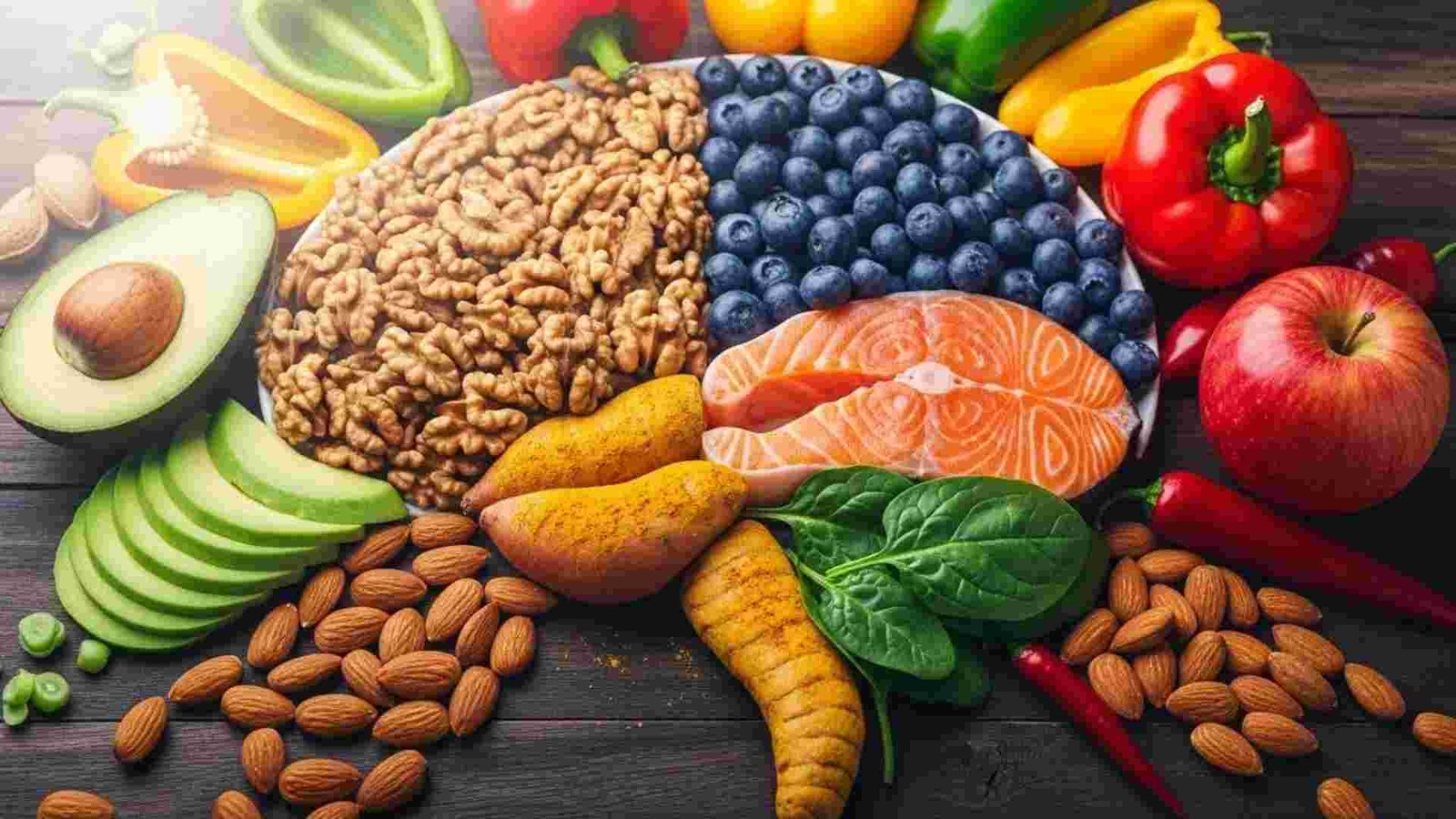
Your brain is a high-performance engine running on dirty fuel. To get the “spark” back, you need to support your neurotransmitters.
| Nutrient | The “Why” | Where to Get It |
| Tyrosine | The building blocks of dopamine. You literally cannot make motivation without it. | Eggs (especially yolks), soy, chicken, almonds, pumpkin seeds. |
| Omega-3s (DHA) | Makes cell membranes fluid so signals travel faster. | Fatty fish (salmon, sardines), walnuts, algae oil. |
| Flavonoids | Increases blood flow to the hippocampus (memory/imagination). | Blueberries, 70%+ Dark Chocolate. |
| Choline | The “connector.” Vital for acetylcholine (focus and learning). | Egg yolks are the gold standard. |
2. The “Sweat Equity” Rule (BDNF)

You know exercise is good for you. But for creativity, the type matters.
- Aerobic (Cardio): Running, swimming, or cycling triggers a massive release of BDNF (Miracle-Gro for the brain) and promotes “transient hypofrontality.” This temporarily shuts down your prefrontal cortex (your inner critic), allowing weird, creative ideas to bubble up.
- The Prescription: If you’re stuck on a problem, don’t lift weights. Go for a 20-minute jog or walk.
3. Strategic Boredom: The “Untethered 20”

We need to reclaim the “shower thought” effect.
The Habit: Give yourself 20 minutes of Active Boredom daily. This means doing a low-focus task without inputs.
- Fold laundry with no podcast.
- Drive to work with the radio off.
- Walk the dog without your phone. This forces your brain to generate its own entertainment, reactivating the atrophy in your imagination.
4. Micro-Dose Novelty
You don’t need to move to Bali to get a dopamine hit. You just need Prediction Errors —small surprises that wake your brain up.
- Change your route: Drive a different way to work. It forces your hippocampus to re-map space.
- The Dopamine Menu: Create a menu of “Appetizers” (quick hits like a specific song or a stretch) to use instead of scrolling when you need a break.
5. Adult Play (Gamify the Grind)

We stopped playing because we thought it’s frivolous. It’s not. Play releases a cocktail of norepinephrine and dopamine that signals “safety” to the brain.
Try this: Gamify your chores. Can you unload the dishwasher in under 3 minutes? Join an improv class (terrifying, but effective). AsDr . Stuart Brown notes, “The opposite of play isn’t work. It’s depression.”
6. Nature: The “Soft Fascination” Reset

Your brain gets tired of focusing (Directed Attention Fatigue). Nature offers “Soft Fascination” —stimuli like leaves or waves that hold your attention without effort .
The Stat: One study showed a 50% increase in creativity scores after 4 days in nature disconnected from tech. Even a 20-minute walk in a park helps.
7. Sleep: Protect the REM

The “Grindset” cuts sleep, usually the last hour. That’s a mistake. The last cycle of sleep is rich in REM , where your brain is bathed in acetylcholine but low in norepinephrine. This is the chemical state for hyper-associative, bizarre connections. It’s where “Aha!” moments happen.
The fix: Sleep 8 hours to get that final, creative rinse cycle.
8. Mindfulness: “Sky Mind” vs. Focus

Meditation isn’t just about focus.
- Focused Attention: (Staring at a candle) helps focus, but narrows thinking.
- Open Monitoring: (Noticing whatever comes up) boosts Divergent Thinking. Sit for 10 minutes and just let your brain be a “sky” where thoughts are clouds passing by. Don’t grab them. Just watch.
9. Find Your “Scenius” (Collaborative Flow)

The “Lone Genius” is a myth. Creativity is contagious. Being around other people in “flow” activates your mirror neurons.
Action: Join a group that does something. A choir, a coding club, a pottery class. The shared focus creates “collective effervescence” that is impossible to replicate alone.
10. The Power of “Yet” (Growth Mindset)

Carol Dweck’s research is clear: If you think you can’t learn, you won’t. When you feel stupid trying something new at 40, reframe it. That feeling isn’t “failure.” It’s the physical sensation of neuroplasticity. It’s your brain growing.
The Mantra: “I’m not good at this yet .”
11. Process Over Product

We are obsessed with outcomes. “Is this side hustle scalable?” “Is this painting good enough to frame?” Stop. As legendary producer Rick Rubin says: “The object isn’t to make art, it’s to be in that wonderful state which makes art inevitable.”
The Habit: Write “Morning Pages”—3 pages of stream-of-consciousness writing first thing in the morning. It clears the gunk out of your brain before the Superego wakes up.
The Longevity Bonus (Why This Matters)

If “having fun” isn’t enough motivation, do it for your future self.
A massive study published in Nature Communications looked at the “Brain Age” of people who engaged in creative acts versus those who didn’t. The results were stunning. Creative brains looked biologically younger.
| Activity | Brain Age Reduction (How much younger the brain looked) | Why? |
| Visual Arts | -6.2 Years | Trains motor skills & visual processing. |
| Dance (e.g., Tango) | -5.5 Years | Integrates movement, music, and social cues. |
| Music | -5.4 Years | Auditory-motor synchronization. |
| Health Gaming | -5.4 Years | Executive control & planning. |
This is called Cognitive Reserve . It’s like a savings account for your neurons. When you learn to paint at 40, you are building the backup generators that will keep the lights on at 80.
Use Some Useful Products That Can Help You Break The Cycle
Reigniting your creative spark isn’t just a mental game; sometimes you need physical tools to break the neurological loops of adulthood. The following resources are curated not just as “items” but as interventions. They are designed to bypass your inner criticism, engage your hands in therapeutic play, and provide structured freedom that lowers the stakes of creation. Think of them as gym equipment for your imagination—simple tools that force your brain into the divergent thinking patterns it has forgotten.
1. The Artist’s Way: 30th Anniversary Edition:

Why it works: This is widely considered the bible of creative recovery. It doesn’t just talk about creativity; it forces you to practice it through specific tools like “Morning Pages” and “Artist Dates.” It acts as a 12-week course in cognitive behavioral therapy for the creative soul, helping you dismantle the “Inner Critic” that keeps you stuck in safe, boring routines.
2. LEGO Icons Flower Bouquet:

Why it works: This set is designed specifically for adults to induce a “flow state.” It engages your hands and visual-spatial cortex, effectively quieting the verbal and analytical centers of the brain where anxiety and boredom live. It offers the satisfaction of building something beautiful without the “blank canvas paralysis” that comes with drawing or painting.
3. Buddha Board Art Set:

Why it works: The ultimate lesson in impermanence. You paint on the surface with water, and as it evaporates, your image slowly disappears. This trains your brain to detach from the outcome and fall in love with the process . It is a powerful antidote to the perfectionism and “monetization mindset” that stifles adult creativity.
4. Wreck This Journal: Now in Color:

Why it works: If you are afraid of making a mess, this book is your cure. It explicitly commands you to destroy it—poke holes in the pages, spill coffee on it, and drag it through the dirt. It functions as exposure therapy for the uptight adult mind, breaking the taboo of “ruining” things and liberating you to experiment without fear of judgment.
5. We’re Not Really Strangers Card Game:
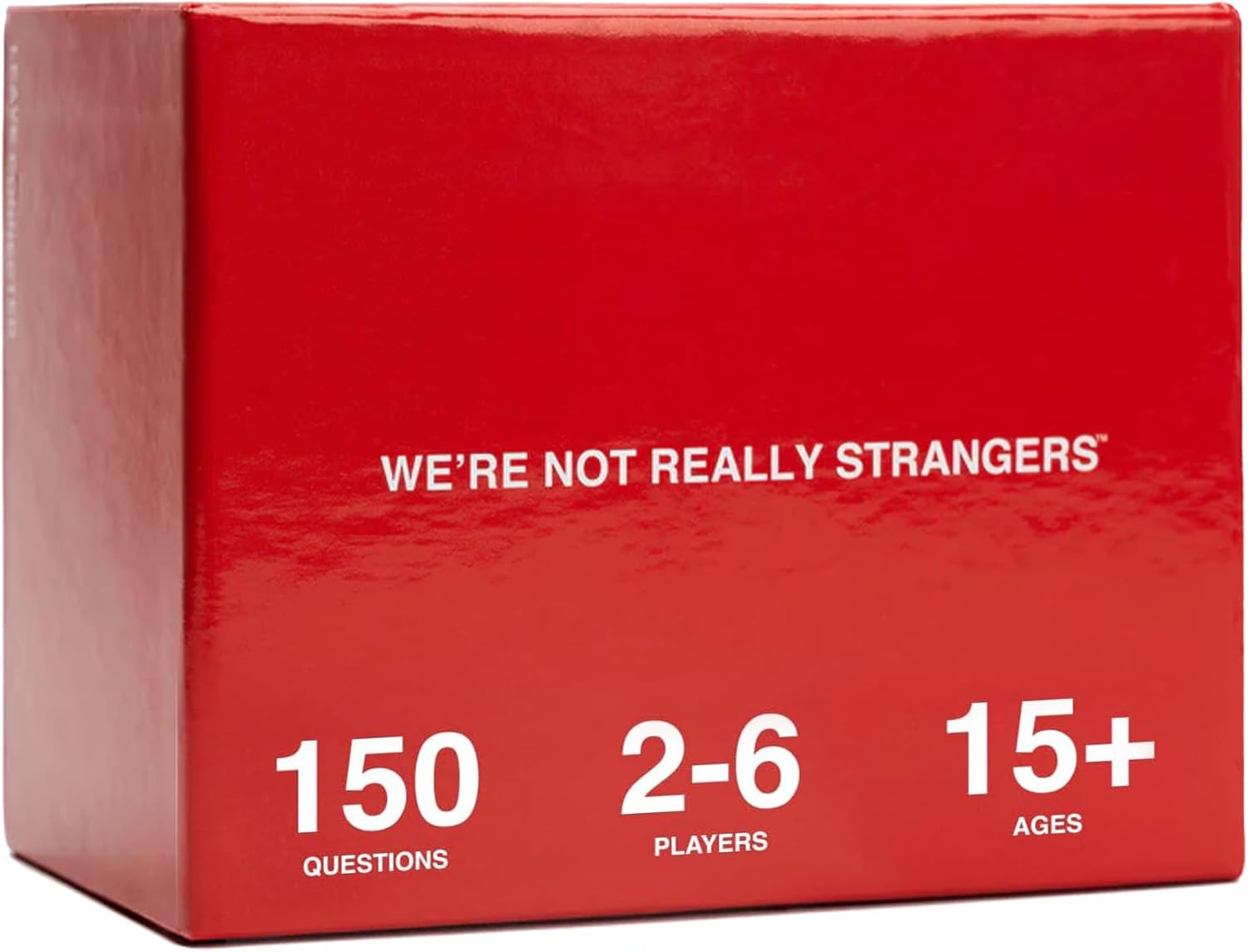
Why it works: Boredom often stems from repetitive, surface-level social interactions. This game provides a structured way to skip small talk and dive immediately into deep, meaningful connection. By asking questions that require vulnerability, it floods your brain with new emotional input, which is the raw material for all creative thought.
