

You’re standing in the middle of the kitchen, staring at the open refrigerator, and you have absolutely zero idea why you walked in there. Or maybe you’re at work, trying to learn a new piece of software, and it feels like your brain is made of Teflon—nothing sticks. You read the same paragraph three times, and ten minutes later, it’s gone.
If you’re over 40 (or honestly, even over 30 these days), you’ve probably felt this shift. It’s that creeping sensation that your mental hardware is outdated. You remember being 16, cramming for a history exam while listening to the radio and texting your friends, absorbing information like a sponge. Now? You need absolute silence and three cups of coffee just to focus on an email.
Here’s the thing—and I want you to really hear this: You are not broken.
For a long time, even neuroscientists got this wrong. They used to tell us that the adult brain was “hardwired”—that once you hit a certain age, your neural pathways were set in concrete. “You can’t teach an old dog new tricks,” they said.
Well, they were wrong.
New research from the last five years has completely flipped the script. We now know that you can rewire your brain at 40, 50, or 70. But here’s the catch: You can’t do it the way you did when you were a kid. The rules have changed.
I’ve dug through the latest studies—from the hormonal rocks of menopause to the “gap effects” discovered in top labs—to break down exactly why learning feels so hard right now, and more importantly, the specific, science-backed protocols to turn the lights back on it.
The “Why” (Or, What Happened to My Brain?)

To fix the problem, we have to understand what’s actually going on under the hood. It’s not that your brain is dying; it’s that it has become efficient .
Think about a jungle. When you’re a child, your brain is like a wild, overgrown rainforest. There are vines and paths everywhere. You can hack a new trail effort in any direction with almost zero. This is called passive plasticity. A kid learns a language just by sitting in the room because their brain is desperate to connect everything.
By the time you’re 40, your brain is no longer a jungle. It’s a manicured estate.
Through a process called synaptic pruning, your brain has looked at the paths you don’t use and said, “We don’t need these anymore.” It paved the superhighways you use every day—your job, your native language, how to drive a car—and it bulldozed the rest to save energy.
This makes you incredibly efficient at being you . But it makes it really hard to be someone new.
The Three Biological Roadblocks

There are three major biological shifts that create that “cement” feeling in the adult brain.
1. The Insulation Problem (Myelin): Imagine your nerves are electrical wires. In your 40s, those wires are wrapped in a thick, fatty insulation called myelin. This is great for speed—it helps signals zip along the circuits you already have. But here’s the downside: that insulation is tough to unwrap. To learn something new, you have to physically restructure those wires, and the myelin resists it. It’s the difference between molding wet clay (childhood) and trying to reshape a fired brick (adulthood).
2. The Fertilizer Shortage (BDNF): You might have heard of BDNF (Brain-Derived Neurotrophic Factor). Think of it as Miracle-Gro for your neurons. It’s what helps new connections survive.
- The Stat: As we age, BDNF levels naturally drop—sometimes by 10-30% in key areas like the hippocampus.
- The Reality: Without enough fertilizer, you can plant the seed (study a new skill), but it struggles to take root. This is why you forget names ten seconds after hearing them.
3. The “Noise” Filter: This one fascinates me. Research published around 2022 shows that aging brains struggle with the balance between GABA (the “calm down” chemical) and Glutamate (the “get excited” chemical).
In English: Your brain has gotten noisier. It’s harder to filter out distractions. A 20-year-old can study in a loud coffee shop because their brain can dampen the background noise. In your 40s, that background noise leaks in, scrambling the signal you’re trying to focus on.
The Cheat Sheet: Youth vs. Experience
| Feature | The 20-Year-Old Brain | The 40+ Brain | The Real-World Feeling |
| Plasticity Style | Passive (Sponge) | Active (Brick) | Learning feels like work now. |
| Chemistry | High Dopamine & BDNF | Lower Dopamine & BDNF | “Why can’t I get motivated?” |
| Structure | Overgrown Jungle | Paved Highways | Harder to start, but faster once you know it. |
| Processing | Fast & Noisy | Slower & Deep | You need quiet to concentrate. |
The Silent Crisis
⚠️ System Failure: Brain Fog
Self-reported cognitive disability in young adults (18-39) has skyrocketed.
📉 Focus Capacity
The Attention Economy is training us to be distracted.
☣️ Toxic Component
Multitasking creates high-alert stress.
Kills hippocampus cells. Blocks learning.
Here’s where I get a little worried. It’s not just biology working against us anymore; it’s our lifestyle.
I found a startingling statistic from a 2025 report: Self-reported cognitive disability—basically saying, “I have serious trouble reminding or concentrating”—has nearly doubled in young adults (ages 18-39) over the last decade, rising from 5.1% to 9.7%.
Think about that. People in their twenties are reporting the kind of brain fog we usually associate with aging.
Why? The Attention Economy.
We are training our brains to be distracted. The average attention span has dropped from 12 seconds in the year 2000 to about 8.25 seconds today. We are constantly multitasking, which keeps our brain in a state of high-alert stress. And guess what stress does? It releases cortisol.
Cortisol is basically kryptonite for neuroplasticity. It kills cells in the hippocampus (the memory center) and blocks the pathways we need to learn. So, if you feel like you’re losing your edge, it might not just be your age. It might be your phone.
The Hormonal Cliff (Yes, It’s Real)

We have to talk about the elephant in the room: Hormones. Whether you’re male or female, your brain runs on these chemicals, and when they shift, everything shifts.
For the Women: The “Energy Crisis”

Dr. Lisa Mosconi, a neuroscientist I really admire, puts it perfectly: Menopause isn’t just about ovaries; it’s a neurological event. Estrogen is a “master regulator” for energy in the female brain. It pushes neurons to burn glucose.
When estrogen drops during perimenopause, your neurons are essentially starving for fuel. That “brain fog” isn’t in your head—well, it is, but it’s physiological, not psychological.
- The Good News: The brain eventually adapts. It finds a new normal. Mosconi calls it a “renovation project.” It feels chaotic while the construction is happening, but the structure does stabilize.
For the Men: The Slow Fade

Guys, you aren’t off the hook. It’s called Andropause. Testosterone is highly neuroprotective. As it dips, so does your synaptic plasticity. Men with low T levels often report a lack of “mental sharpness” or drive. The research shows that testosterone deficiency is directly linked to increased oxidative stress in the brain.
The Protocols (How to Rewire)
Okay, enough bad news. Here is the part I love. The science proves we can override these biological blocks. But we have to stop trying to learn passively. We have to get aggressive.
Here are three protocols—verified by research from labs like Dr. Andrew Huberman’s and others—that you can start using today.
1. Embrace the Suck (The Frustration Signal)

This is going to sound counterintuitive, but I need you to lean into frustration.
When you’re trying to learn something new—say, a chord on the guitar—and you mess it up, what do you usually do? You sigh, you get angry, maybe you quit for the day.
Stop quitting.
That feeling of frustration is actually a chemical release. It’s your brain dumping norepinephrine (for alertness) and acetylcholine (for focus) into your system. These chemicals are the “mark” that tells your brain: “Hey! We messed up! We need to change this circuit!”
If you quit when you get frustrated, you’re walking away right when the door to plasticity opens. You need to make errors to trigger the change.
- The Tactic: Aim for an error rate of about 15%. If you’re getting everything right, you aren’t learning; you’re just practicing what you already know.
2. The “Gap Effect” (Doing Nothing is Doing Something)

This is my favorite because it involves doing absolutely nothing.
A study discussed by Dr. Huberman highlights something called the “Gap Effect.” They found that if people paused for just 10 seconds randomly while learning, their neurons replayed the action they just practiced at super-speed—like 10x or 20x faster.
- The Tactic:
- Study or practice intensely for a few minutes.
- Stop. Close your eyes. Do nothing for 10-15 seconds.
- Your brain is literally “saving the file” during that pause.
- once.
3. NSDR (Non-Sleep Deep Rest)

You can’t always get a perfect 8 hours of sleep, but sleep is when the actual rewiring happens. Enter NSDR. It’s a guided relaxation state (similar to Yoga Nidra) that mimics the brain waves of deep sleep.
- The Data: A 2019 study found that just 13 minutes of this deep rest could improve memory and emotional regulation.
- Why it works: It flushes cortisol and resets your dopamine. It’s like a reboot for your browser when you have too many tabs open.
4. The “BDNF” Workout

You want that fertilizer back? You have to earn it. Walking is great, but to really spike BDNF, you need intensity.
- The Tactic: High-Intensity Interval Training (HIIT). Research suggests that short bursts of near-max effort are far superior to long, slow jogs for releasing BDNF. We’re talking 6 sprints of 40 seconds each. It sucks, but it wakes up your hippocampus.
The “No-Nonsense” Daily Plan
-
Morning Light 10 minutes of sunlight to set your circadian rhythm.
-
Movement A brisk 20-minute walk where conversation is difficult.
-
The Hack One “Gap Effect” pause while reading or learning.
-
The Chemical Cocktail 15 minutes of HIIT to spike BDNF.
-
The Work 90 mins focused learning. No phone. No emails.
-
The Frustration Push until failing 15% of the time. Don’t quit.
-
The Reset Immediately follow with 20 mins NSDR to lock it in.
I know that’s a lot of science. Let’s boil it down to a real life routine. You don’t have to do all of this, but adding just one of these can move the needle.
For the “I’m Just Trying to Stay Sharp” Beginner:
- Morning: 10 minutes of sunlight (sets your circadian rhythm).
- Movement: A brisk 20-minute walk where you can barely hold a conversation.
- The Hack: Do one “Gap Effect” pause when you’re reading the news or learning a new recipe.
For the “I Need to Reinvent Myself” Advanced Learner:
- The Chemical Cocktail: Start with 15 minutes of HIIT exercise to spike BDNF.
- The Work: 90 minutes of focused learning. No phone. No emails.
- The Frustration: Push yourself until you are failing 15% of the time. Don’t quit.
- The Reset: Immediately follow your session with 20 minutes of NSDR (you can find free scripts on YouTube) to lock in the learning.
Tools to Help You Rewire: A “Brain Gym” Starter Kit
You absolutely do not need to buy anything to get your brain back in shape—your own focus and effort are the most powerful tools you own. However, if you are looking to optimize your environment or give your biology a little nudge, there are a few tools that act as force multipliers. Think of these not as “magic pills,” but as equipment for your mental gym. Whether it’s creating the perfect darkness for an NSDR session or ensuring your neurons have the raw materials to build new myelin, these are the specific products that align with the protocols we just discussed to help you learn faster and rest deeper.
Here are 5 useful tools to support your neuroplasticity journey:
1. Manta Sleep Mask (For NSDR & Deep Rest):
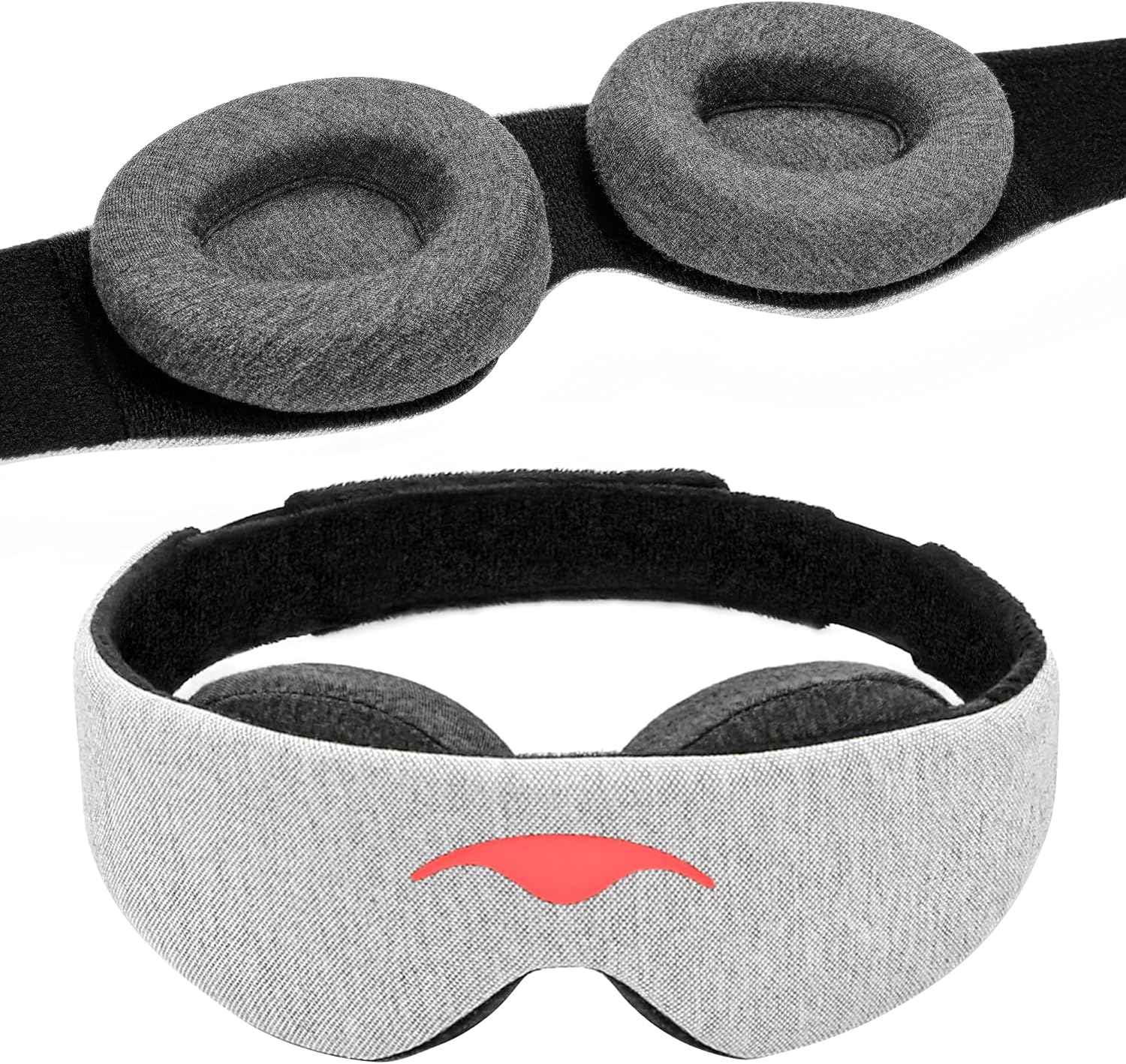
We talked about how critical Non-Sleep Deep Rest (NSDR) is for locking in new information. The problem? It’s hard to trick your brain into “off mode” when it’s 2:00 PM and sunny. The Manta mask is widely considered the gold standard because it has deep eye cups that allow you to blink freely (no pressure on your eyelids) while providing 100% blackout. It’s essential for triggering that parasympathetic shift quickly.
2. Nordic Naturals Ultimate Omega (For Myelin Support):

If you want to rebuild the “insulation” on your neural wires, you need the raw materials. High-quality Omega-3s (specifically DHA and EPA) are non-negotiable for cell membrane health and plasticity. Nordic Naturals is frequently cited by experts because it is third-party tested for purity (no heavy metals) and comes in the triglyceride form, which your body can actually absorb better than cheaper synthetic versions.
3. Duncan Juggling Balls (For Error-Driven Learning):

This might seem silly, but it’s one of the best “hacks” for adult neuroplasticity. Remember how we need errors to trigger the release of acetylcholine and focus chemicals? Learning to juggle is the perfect low-stakes way to generate massive amounts of errors and frustration in a short time. Doing 5-10 minutes of failing to juggle before you sit down to work can prime your neurochemical state for focus.
4. Double Wood Magnesium L-Threonate (For Cognitive Function):

Magnesium is vital for hundreds of bodily processes, but most forms (like citrate) just act as laxatives and never reach the brain. Magnesium L-Threonate, (Magtein) is the only form chemically developed to cross the blood-brain barrier effectively. Many neuroscientists recommend it to support synaptic density and improve sleep quality, which is when your “rewiring” consolidates.
5. Muse S (Gen 2) Brain Sensing Headband (For Focus Training):

If you struggle to know if you are actually meditating or just sitting there worrying, this is for you. It uses EEG sensors (like in a sleep lab) to read your brainwaves in real-time. It turns your mental state into weather sounds—if your mind wanders, you hear storms; if you focus, you hear calm birds. It effectively gamifies the “noise filter” training we discuss, teaching you to suppress neural distractions.
