

Remember when you could inhale a pepperoni pizza at midnight, sleep like a rock, and wake up hungry for breakfast? And now? Now you look at a slice of pizza after 6 PM and your chest tightens. You might feel like your body is betraying you, but it’s actually doing something much more interesting: it’s evolving.
In medicine, we have a fancy word for this: “Homeostenosis.” It basically means “shrinking wiggle room.”[1] When you’re 20, your digestive system has a massive functional reserve—it can handle stress, bad food, and dehydration without blinking. As we age, that reserve narrows. Your system still works perfectly fine for the day-to-day stuff, but it loses the ability to bounce back from insults.
This isn’t about “decay.” It’s about remodeling. We’ve analyzed over 100 clinical studies to map out exactly what is changing in your engine room—from the number of neurons in your gut to the bacterial ecosystem in your colon—so you can stop fighting your body and start working with it.
Here is the roadmap of the terrain we’re dealing with:
1. The Gatekeepers: Why Chewing is Suddenly Hard Work
It starts before you even swallow. You might not think of your mouth as a digestive organ, but it’s the most critical step in the chain, and it’s often the first domino to fall.
We call it Presbyphagia—aging swallowing. It sounds terrifying, but it’s really just a coordination issue. First, there’s the “Dentition Gap.” If you have missing teeth or dentures that don’t fit quite right, you aren’t grinding food down enough. Lillian Craggs-Dino, a dietitian at Cleveland Clinic, puts it simply: “If you can’t chew it, you’re already in trouble.” When you swallow big chunks of food, you are forcing your stomach to do work that your teeth were supposed to do.
Then there’s the moisture problem. As we age, we produce less saliva. Saliva isn’t just water; it’s a chemical shield that protects your throat from acid. Without enough of it, your esophagus is left exposed.
The “Saggy Valve” Problem
Once food goes down, it hits the esophagus. In your younger years, the muscles here were snappy. But research shows that the Upper Esophageal Sphincter—the valve that keeps air out and food down—loses pressure as we get older.
Simultaneously, the Lower Esophageal Sphincter (the one protecting you from stomach acid) gets a little incompetent. It starts “relaxing” at the wrong times. This is why heartburn is so common in older adults. It’s usually not because you have too much acid; it’s because the valve that keeps the acid in the basement has become a bit leaky.
The Fix? Gravity is your best friend. Dr. Brennan Spiegel, a gastroenterologist, talks about this a lot: simple mechanics matter. Don’t lie down after eating. Give your “leaky valve” a break and let gravity do the work for at least an hour post-meal.
2. The Stomach Myth: It’s Not the Acid, It’s the Enzyme
Here is one of the biggest myths floating around the wellness world: “Everyone over 50 has low stomach acid.”
That is statistically false.
A landmark study checked the stomach pH of healthy seniors and found that nearly 90% of them still produced plenty of acid. The only time acid levels really tank is if you have a specific condition called Atrophic Gastritis (which affects about 30% of people over 60) or a H. pylori infection.
But here is the real change that nobody talks about: Pepsin.
Pepsin is the enzyme that smashes proteins apart. While your acid levels might be fine, your pepsin output drops by about 40% as you age. This is huge. It means you can eat a steak, but your body struggles to unlock the amino acids inside it. This contributes to sarcopenia (muscle loss). You’re eating the protein, but you aren’t absorbing it efficiently.
The Strategy:
- Don’t graze all day: Give your stomach time to rest.
- Bitter Herbs: Things like dandelion or gentian root can stimulate those digestive juices before you eat.
- Chew like your life depends on it: Because, biologically, it kind of does.
3. The Downsizing Factory: Liver & Pancreas

If the stomach is the mixing bowl, the liver and pancreas are the chemical factories. And just like any factory that’s been running 24/7 for 60 years, they start to downsize.
The Shrinking Liver
This one blows people’s minds: Your liver physically shrinks. By the time you’re 80, your liver volume might be 20-40% smaller than it was when you were 30.
But it’s not just size; it’s blood flow. The amount of blood pumping through your liver drops by about 35-40%.
Why does this matter? The liver is your detox center. With less blood flow, it clears medications and alcohol much slower. That glass of wine that used to give you a mild buzz? Now it hits you twice as hard and stays in your system longer because your filter is clogged.
The Pancreas Gets “Tired”
Then there’s the pancreas. About 5% of people over 70 and 10% over 80 develop something called Exocrine Pancreatic Insufficiency (EPI). Basically, the pancreas stops making enough enzymes to digest fat.
If you constantly feel bloated or have loose stools after a fatty meal, it might not be “just IBS.” It might be that your pancreas needs a little help breaking down that fat.
The Ecosystem Collapse
Probiotics are just a “drop in the ocean.”
Fiber Diversity (Mediterranean Diet).
You are not just human; you are a walking colony of bacteria. In a healthy young adult, this ecosystem is like a lush rainforest—diverse and chaotic. As we age, that rainforest can turn into a desert.
We see a “Diversity Crash.” The sheer number of different species in your gut drops.[19] But the most telling sign is the ratio of two major families of bacteria: Firmicutes and Bacteroidetes.
- Adults: Usually have a high ratio (lots of Firmicutes).
- Elderly: The ratio flips. It drops significantly, looking more like the microbiome of an infant, but without the growth potential.
This shift is linked to “Inflammaging”—chronic, low-grade inflammation that speeds up aging.
The Myth: “Just take a probiotic.” The Reality: Probiotics are a drop in the ocean. The real secret is fiber diversity. A Mediterranean diet has been shown to boost the good bacteria that fight frailty. You can’t pill your way out of this; you have to eat your way out.
5. Structural Blowouts: The Diverticulosis Epidemic
If the microbiome is the software, Diverticulosis is the hardware failure. These are little pockets that blow out through the side of your colon wall, kind of like a hernia on a tire.
Here are the stats, and they are wild:
- Under 40: Rare.
- Over 60: 50% of people have them.
- Over 80: 75% of people have them.
Basically, if you live long enough, you will get these. It’s a sign of a lifetime of pressure against a weakening wall. The danger is when they get infected (diverticulitis).
The Warning: We are seeing this skyrocket in younger people now, likely due to low-fiber diets. The best protection? Keep things moving. Fiber and water reduce the pressure in the pipe, so the walls don’t blow out.
6. The Great Slowdown: Constipation
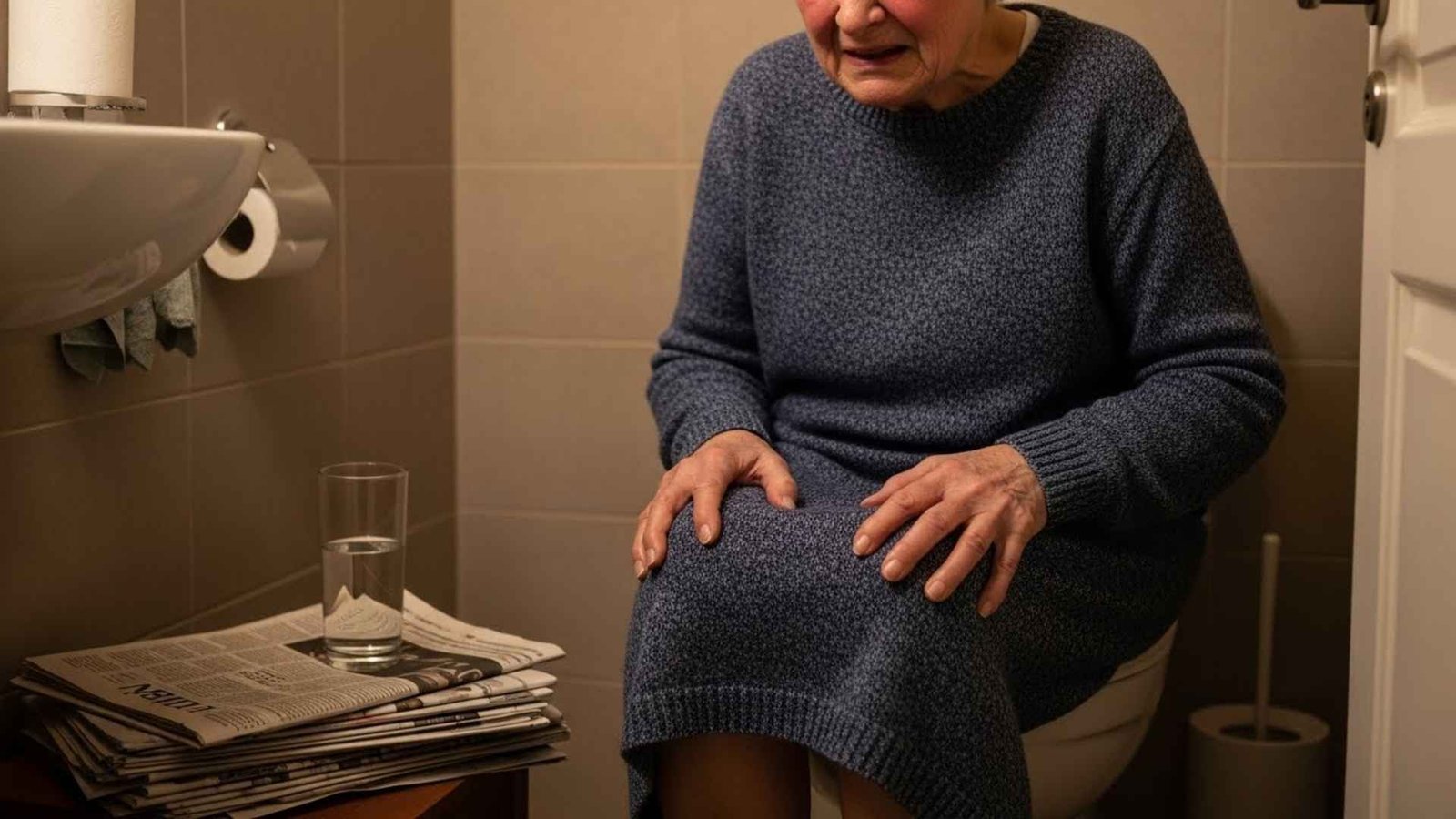
You knew this was coming. Constipation is practically synonymous with aging. But here’s the twist: It’s not inevitable.
While it’s true that you lose some enteric neurons (the nerves that tell your gut to squeeze) the main reason older adults get backed up is lifestyle and meds.
- Nursing Homes: 74% prevalence of constipation.
- Community Living: Only about 30-40%.
That huge gap proves that environment matters. Dehydration, lack of movement, and medications (like painkillers or blood pressure meds) paralyze the gut.
The “Dyssynergia” Factor: Sometimes, it’s not that you can’t go, it’s that you’ve forgotten how. We call it Defecatory Dyssynergia. Your brain tells you to push, but your pelvic floor muscles tighten up instead of relaxing.[1] It’s a coordination failure, not a plumbing blockage.
Suddenly Sensitive? 🥛🚫
Drank a gallon, felt fine.
One latte ruins the day.
Acquired Lactase Non-Persistence
Ever wonder why you could drink a gallon of milk in your 20s, but now a latte ruins your day?
It’s called Acquired Lactase Non-Persistence. Even if you had the gene to digest dairy perfectly fine your whole life, the aging gut can just… stop making the enzyme. It can be triggered by a slow gut (SIBO) or just general thinning of the gut lining.
It’s not in your head. Your biochemistry has changed.
Need More Help For Your Engine? Look Into These Tools
Think of these less like “treatments” and more like providing your vintage car with premium fluids and better maintenance tools. You don’t always need a prescription to help your body adapt; sometimes you just need to give it a mechanical advantage or a chemical assist to replace what it’s not producing as efficiently anymore. We’ve dug through the options to find tools that align with the physiological changes we just discussed—helping you chew, digest, and eliminate without a fight.
1. The Squatty Potty (Toilet Stool)
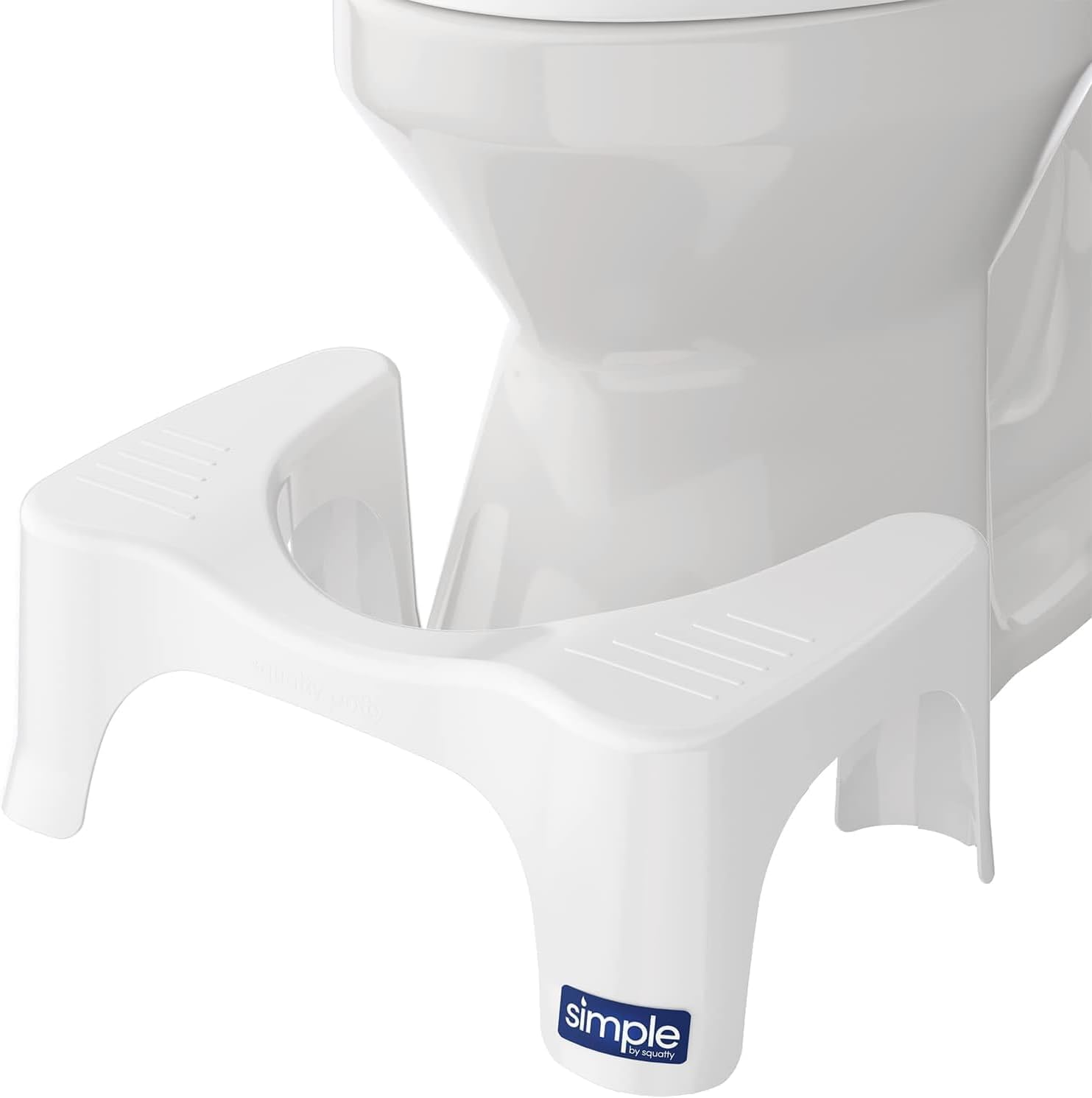
Remember the “Defecatory Dyssynergia” we talked about? This simple stool elevates your legs, straightening out the anorectal angle. It is the single best non-medical intervention to help gravity do the work for you, reducing the need to strain.
2. Fee Brothers Plum Cocktail Bitters

Since we know the stomach gets a little sluggish, a few drops of bitters on the tongue before a meal can stimulate the vagus nerve. It helps wake up your own production of saliva and gastric juices naturally, rather than relying on antacids.
3. Vital Nutrients Digestive Enzymes
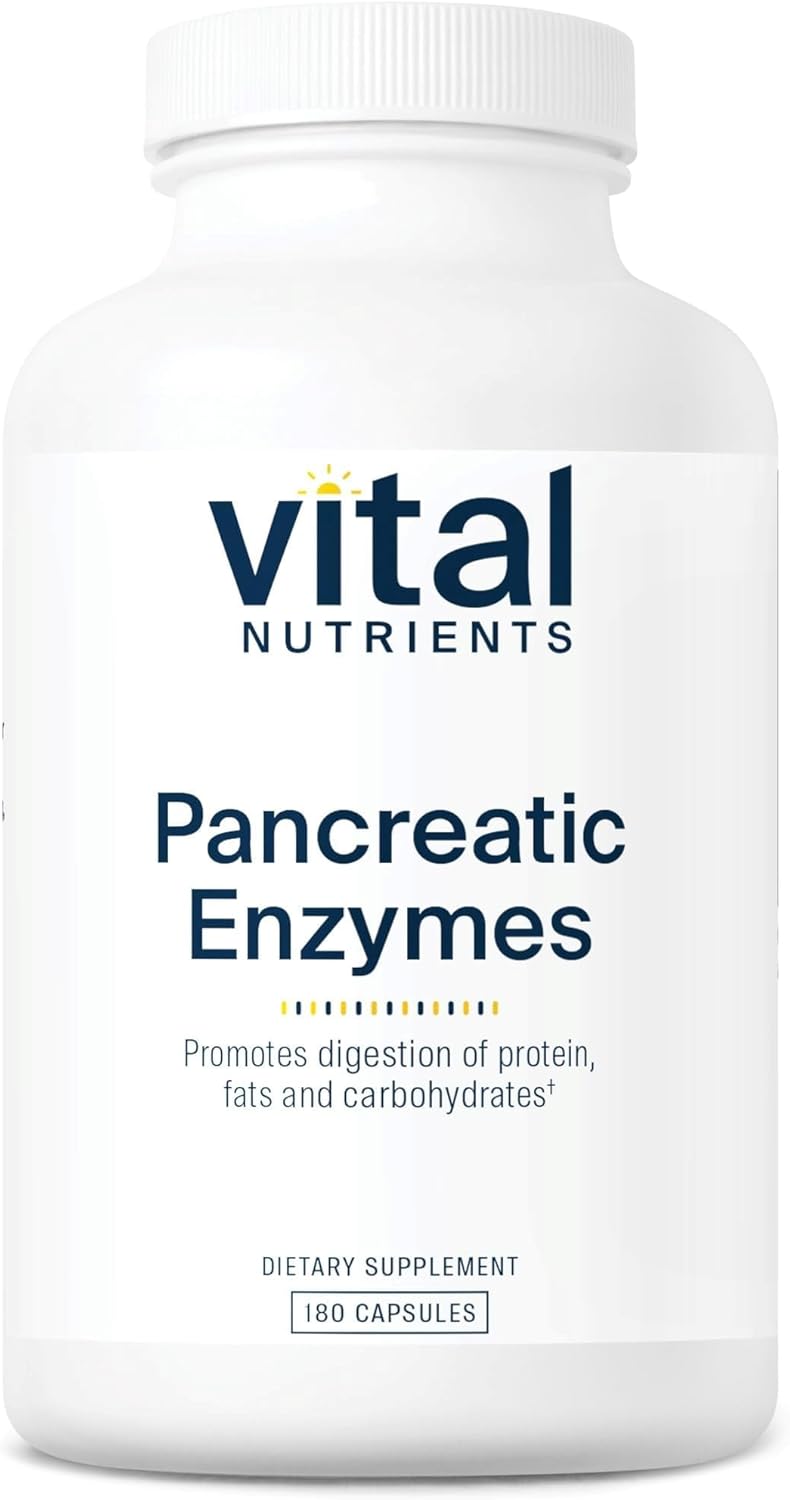
To counter that 40% drop in pepsin and the pancreas getting “tired,” a broad-spectrum enzyme supplement can be a game-changer. Taking this with your biggest meal helps break down proteins and fats that your body might be missing, reducing that post-dinner bloat.
4. Heather’s Tummy Fiber (Organic Acacia Senegal)
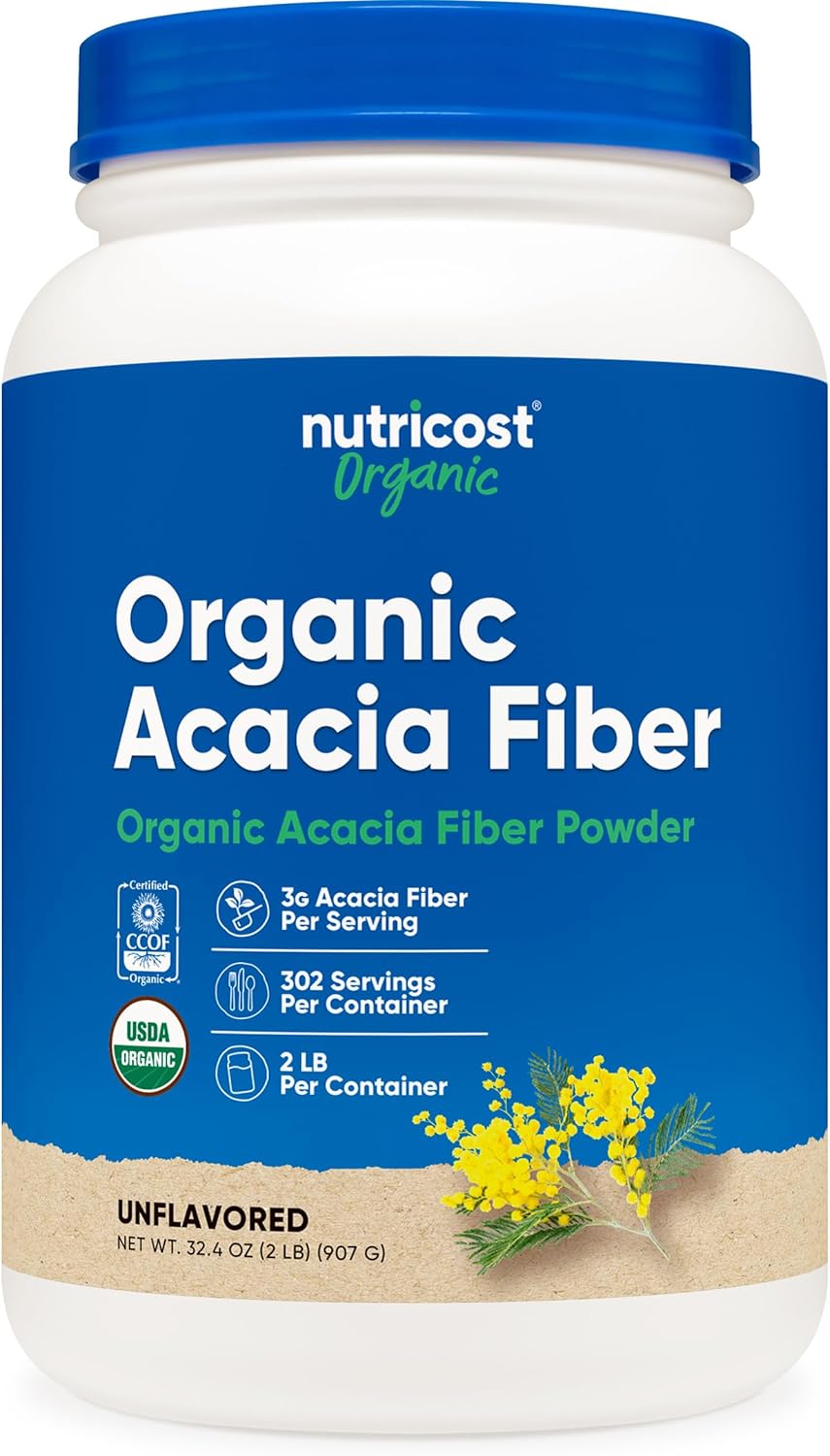
If you are worried about Diverticulosis or microbiome diversity, you need fiber—but typical psyllium husk can be harsh and cause gas in older guts. Acacia is a soluble fiber that is incredibly gentle, acts as a prebiotic fertilizer for your good bacteria, and won’t turn to concrete in your gut.
5. Waterpik Aquarius Water Flosser
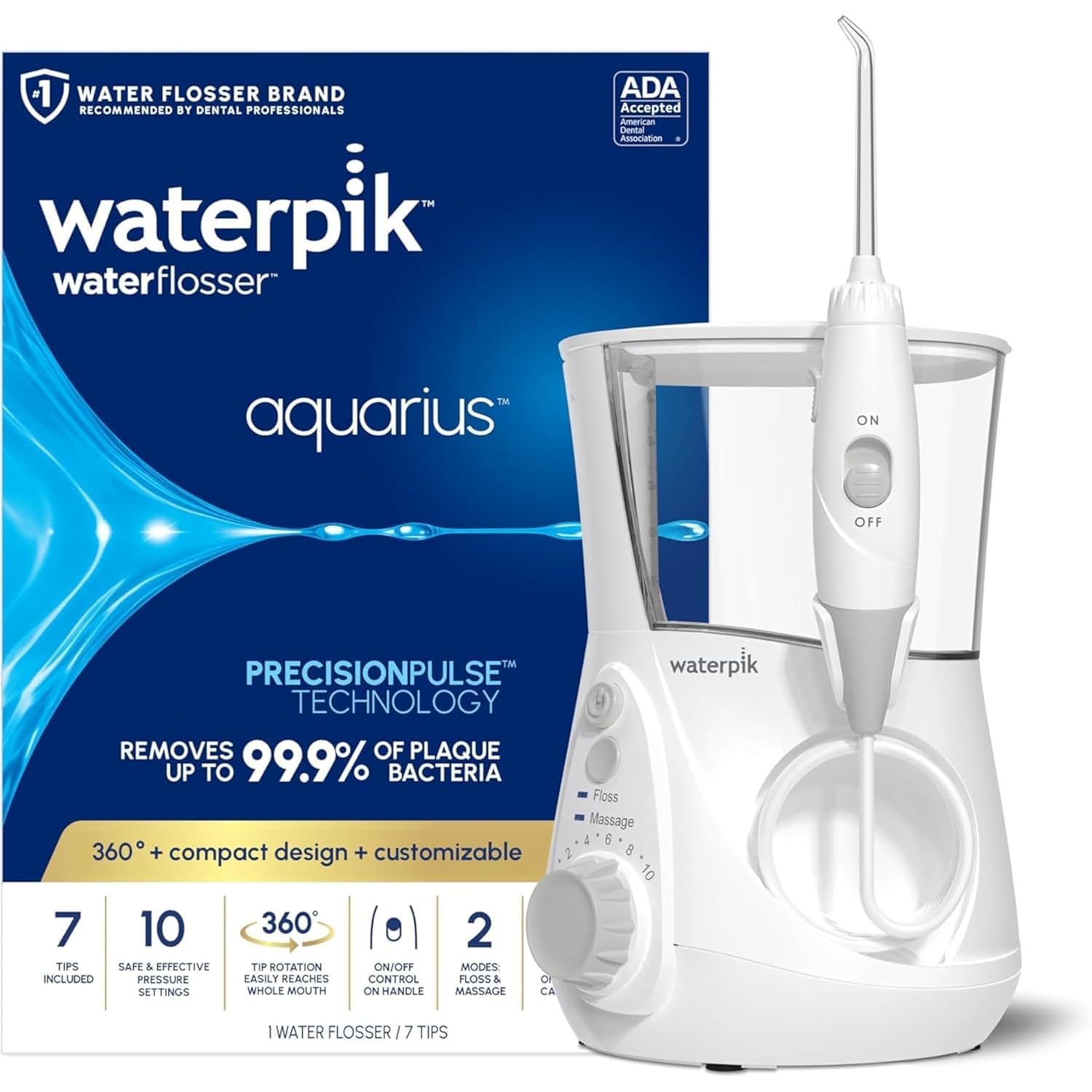
The “Dentition Gap” is real. If you can’t chew, you can’t digest. As gums recede with age, food gets stuck more easily. A water flosser is easier to use than string floss for those with reduced dexterity, keeping your gums healthy so you can keep chewing tough proteins effectively.
