

You know that feeling when you crush a workout? You walk out of the gym, legs shaky, sweat dripping, feeling like you’ve just accomplished something massive. And you have. But here’s the thing we often forget—and honestly, I’ve been guilty of this too: that workout didn’t actually build any muscle. It didn’t make you faster. It didn’t make you stronger.
All that workout did was tear you down. It was the demolition phase. The actual building—the magic that transforms that effort into results—happens entirely while you’re unconscious.
We live in this “hustle culture” that tries to convince us sleep is optional, or worse, a sign of laziness. We wear our sleep deprivation like a badge of honor. But looking at the data, it’s terrifyingly clear that this mindset is backward. Sleep isn’t just a passive “pause” button where nothing happens. It’s a highly active biological construction site.
The research is brutal on this point: if you sacrifice sleep to train harder, you aren’t just slowing down your progress. You are actively negating it. The equation isn’t Work + Diet = Results. It’s (Work + Diet) x Sleep. And if your sleep is zero? Well, you know how multiplication works.
Here is exactly what is happening under the hood when you try to out-grind a bad night.
🏗️ The Hormonal Demolition Crew
1. The Demolition Team (Cortisol)
When sleep-deprived, your body panics and floods the system with Cortisol.
- Cortisol is catabolic: It literally eats muscle tissue for quick energy.
- Biological Tragedy: You build muscle in the gym, but your hormones tear it down overnight.
- One night of poor sleep = Spiked Cortisol & Tanked Muscle Repair.
2. Signals Go Silent (Testosterone & GH)
The “Anti-Aging” hormones are incredibly fussy about when they show up.
- Testosterone Crash: Waking up after 5 hours instead of 8 chops off the peak cycle. 1 week of this = 10–15% drop (aging a decade).
- Growth Hormone (GH) Pulse: 70% of GH happens in deep sleep. Alcohol or late scrolling means you miss the bus entirely.
3. Fat Cells Lock the Doors
Sleep deprivation makes your cells Insulin Resistant.
- The Locked Door: Insulin knocks to deliver energy, but cells change the locks.
- The Kicker: You end up with high blood sugar and cannot burn fat when insulin is high.
- Your body shifts into Storage Mode, mimicking pre-diabetes.
This is where it gets a little scary. Your body has two modes: Anabolic (building up) and Catabolic (breaking down). Sleep is the switch that flips you into building mode. When you don’t sleep, the switch gets stuck in “break down.”
1. You’re accidentally hiring a demolition team (Cortisol)
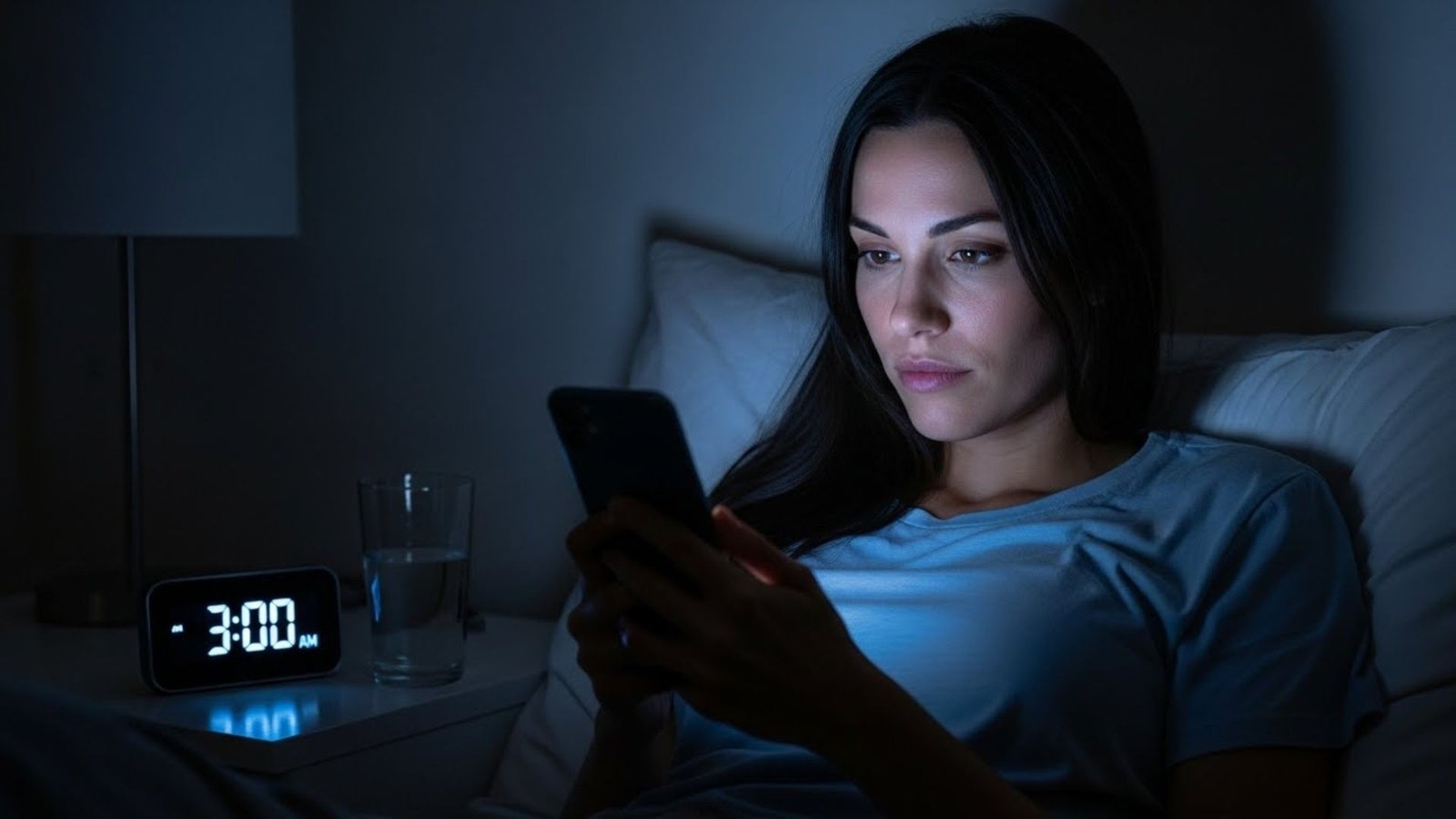
Think of cortisol as your body’s emergency response team. In small doses, it’s great. But when you’re sleep-deprived, your body panics. It thinks you’re in danger, so it floods your system with cortisol.
Here is the problem: Cortisol is catabolic. It literally eats muscle tissue to create quick energy.
There was this fascinating study where researchers looked at people after just one night of poor sleep. The result? Their cortisol levels spiked, and their muscle protein synthesis (the process that repairs muscle) tanked. It’s a biological tragedy: you spent an hour in the gym trying to build muscle, and then your own hormones spent the night tearing it back down.
2. The “anti-aging” signals go silent (Testosterone & GH)
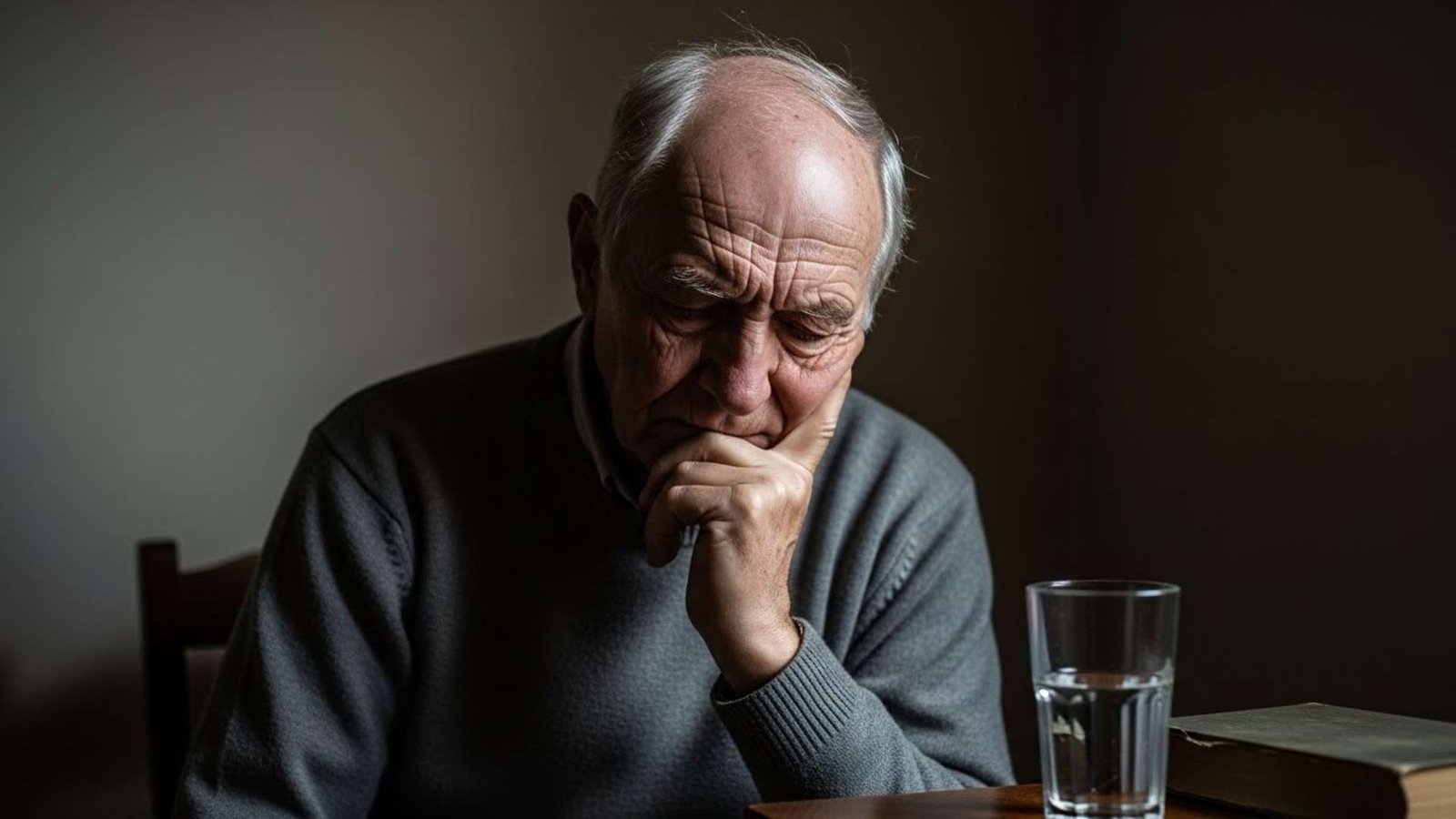
While cortisol is tearing things down, the hormones responsible for rebuilding—Testosterone and Growth Hormone (GH)—are supposed to be fixing the damage. But they are incredibly fussy about when they show up.
- The Testosterone Crash: Most of your testosterone release is linked to REM sleep. If you cut your sleep short (say, waking up after 5 hours instead of 8), you are chopping off the exact cycles where this hormone peaks. We’re talking about a 10–15% drop in testosterone in young men after just one week of restricted sleep. To put that in perspective, that’s equivalent to aging a decade overnight.
- The Growth Hormone Pulse: This one is even more “all-or-nothing.” Your biggest pulse of Human Growth Hormone (up to 70% of the daily total) happens during deep, slow-wave sleep. If you stay up late scrolling or have a few drinks (which kills deep sleep), you miss the bus. It doesn’t come back later. That repair window is just… gone.
3. Your fat cells lock the doors (Insulin Resistance)
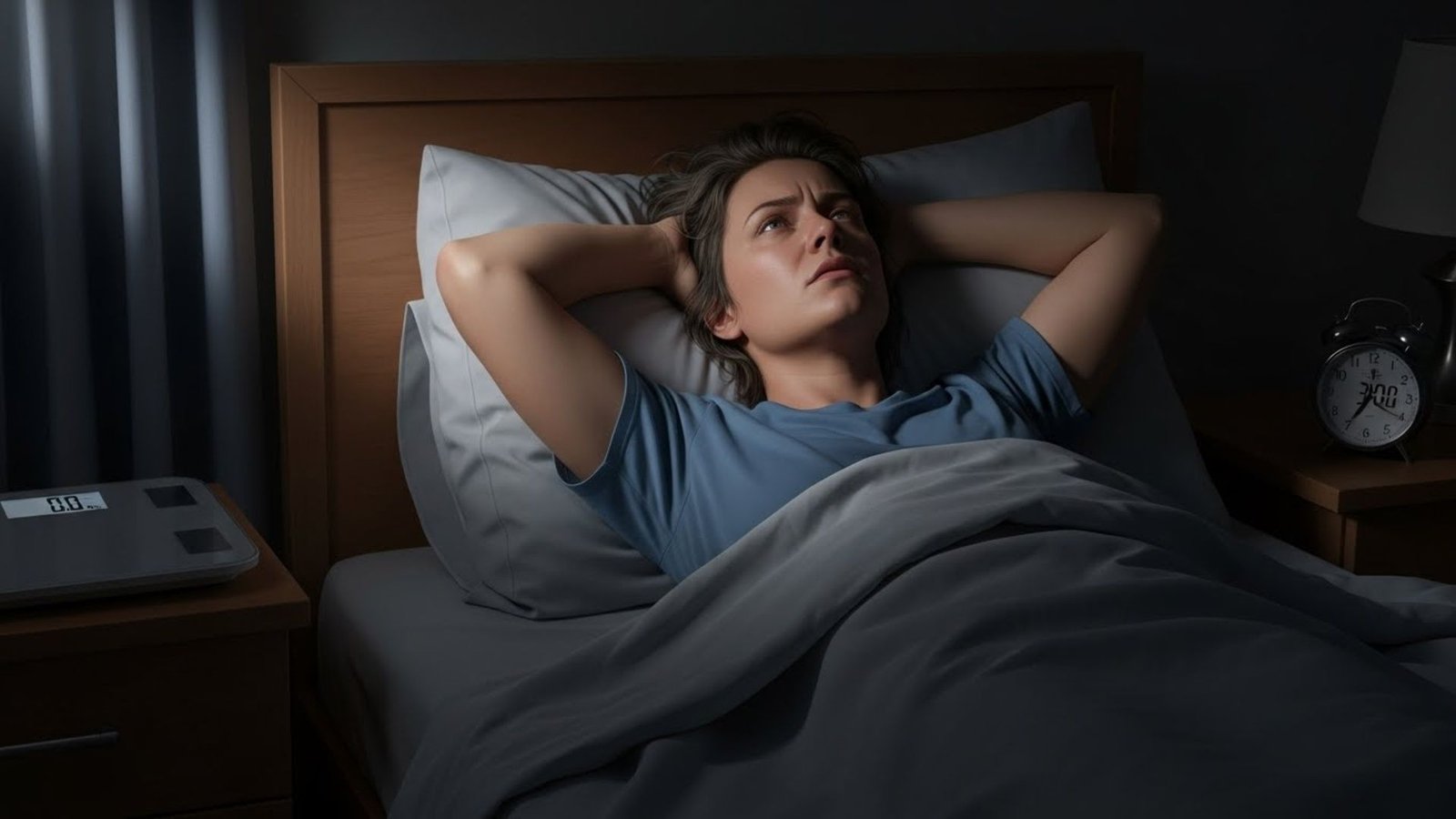
This might be the most frustrating part if you’re trying to lose weight. You can eat clean, track every calorie, and still not see the scale move if you aren’t sleeping.
Why? Because sleep deprivation makes your cells “insulin resistant.”
Imagine insulin is a delivery driver trying to drop off energy (sugar) at your muscle cells. Normally, the cells open the door, take the fuel, and use it. But when you’re tired, the cells change the locks. The driver (insulin) keeps knocking louder and louder, but the door stays shut.
So, your body ends up with high blood sugar and high insulin. And here is the kicker: You cannot burn fat when insulin is high. Your body shifts into storage mode. You become metabolically indistinguishable from a pre-diabetic, just because you missed a few hours of shut-eye.
Your Brain Turns Against You
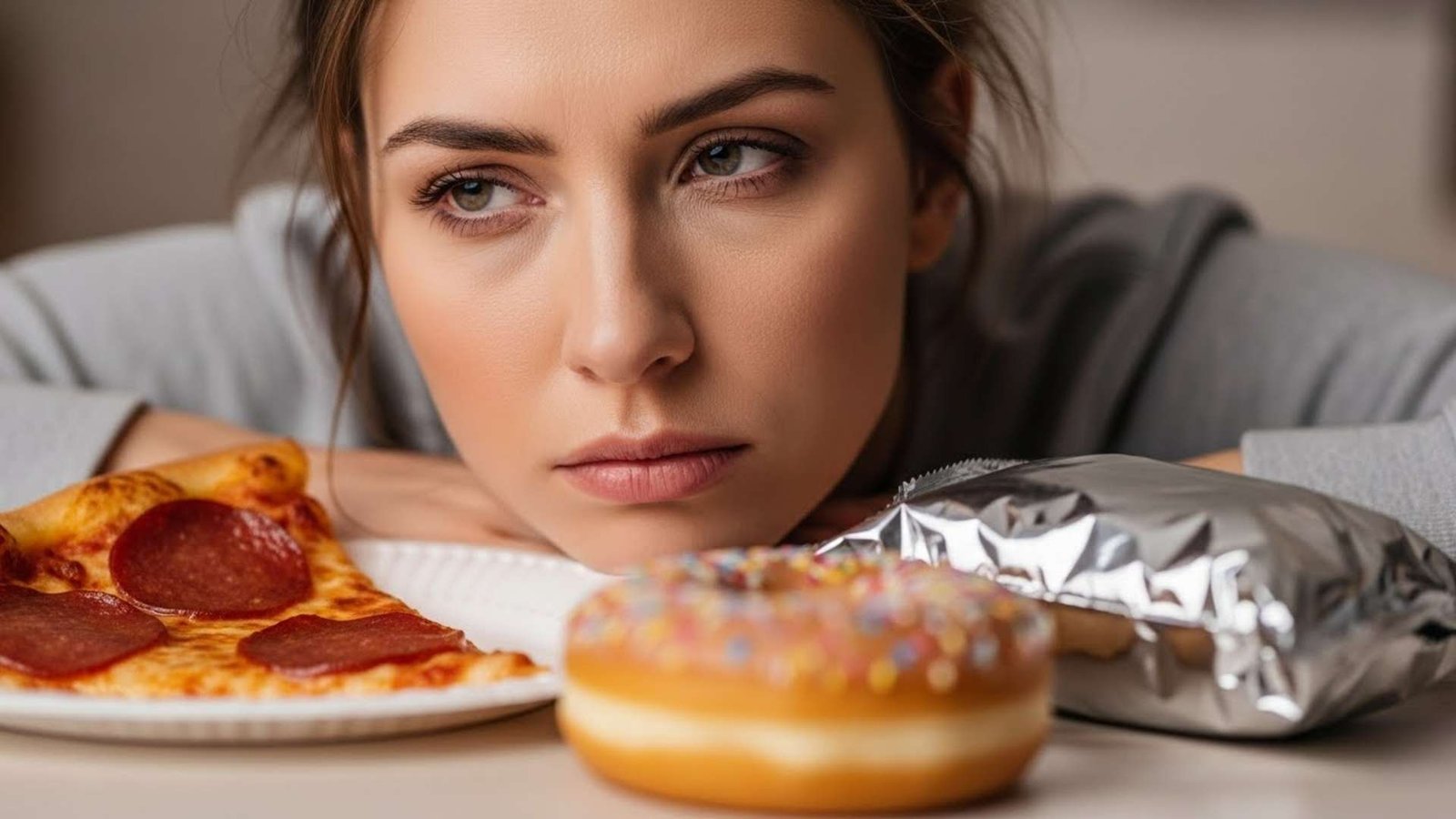
Have you ever noticed that when you’re tired, you don’t crave broccoli? You crave pizza, donuts, and things that come in crinkly wrappers. That’s not a lack of willpower. That is your neurobiology hijacking your behavior.
4. The Appetite Trap (Ghrelin vs. Leptin)

Your hunger is controlled by two hormones:
- Ghrelin: The “I’m hungry” gremlin.
- Leptin: The “I’m full” signal.
When you sleep poorly, this system breaks completely. Ghrelin spikes (telling you to eat everything in sight), and Leptin plummets (so you never feel satisfied). It’s a double-cross. You are biologically programmed to consume about 300–500 extra calories the next day, not because you need them, but because your brain is screaming for quick energy to stay awake.
Check out this chart—it shows exactly how these two hormones diverge the less you sleep. It’s the perfect recipe for overeating.
5. The “Munchies” (Without the drugs)

It gets weirder. Sleep loss actually triggers the same system in your brain that cannabis does—the endocannabinoid system. It lights up the “hedonic” (pleasure) centers of your brain. Suddenly, food isn’t just fuel; it’s a reward. Meanwhile, the prefrontal cortex—the “adult” part of your brain that cares about your long-term goals—basically goes offline.
So you’re standing in the kitchen at 11 PM, and the part of your brain that says “don’t eat that” is asleep, while the part that says “that looks delicious” is shouting through a megaphone.
6. The Workout Feels Heavier (RPE)
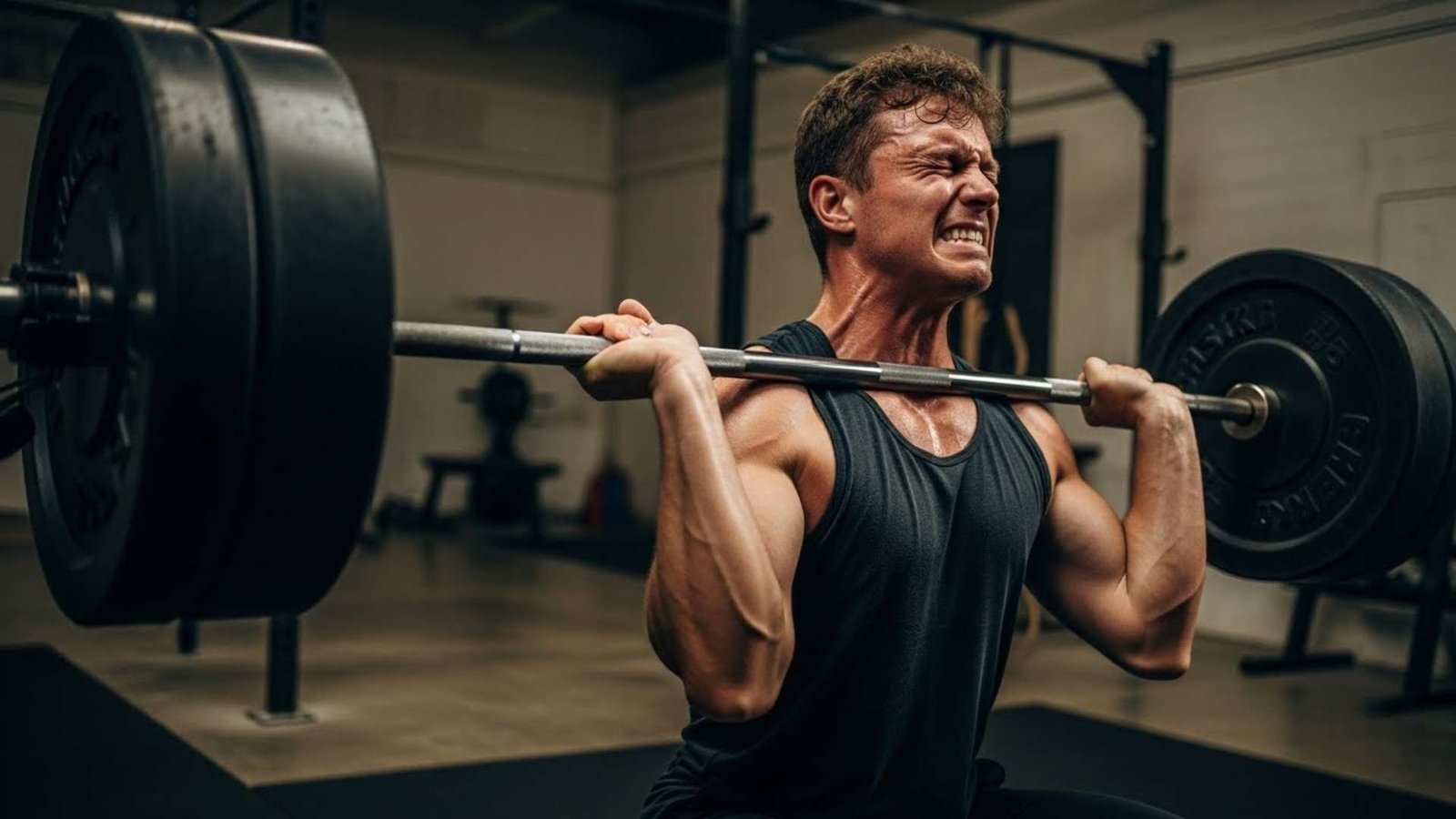
When you finally drag yourself to the gym, it feels awful. We call this “Rating of Perceived Exertion” (RPE). Studies show that when you’re sleep-deprived, everything feels significantly harder. You might physically be able to lift the weight, but your brain tells you it’s too heavy. You quit earlier, run slower, and grind less. You’re working harder to achieve less.
🏗️ The Structural Collapse
7. The Injury Statistic
There is a direct link between sleep and physical fragility.
- Sleeping less than 7 hours = 1.7x Increase in Injury Risk.
- Slower reaction times cause missteps.
- Fatigued stabilizer muscles + incomplete repair = You are literally more fragile.
8. The “Open Window” for Sickness
Sleep is when your immune system reloads. Skipping it sends troops into battle without ammo.
- 3x more likely to catch a cold if sleeping < 7 hours.
- 5.5x more likely if sleep efficiency (tossing/turning) is bad.
9. Heart Health & Glycogen
Sleep deprivation prevents blood pressure from “dipping” at night.
- You are stressing your heart 24/7.
- Muscles cannot replenish glycogen (fuel).
- You start your next workout with a half-empty tank.
If the hormonal and brain stuff didn’t convince you, this part usually does. This is about your physical safety and health.
7. The Injury Statistic You Can’t Ignore
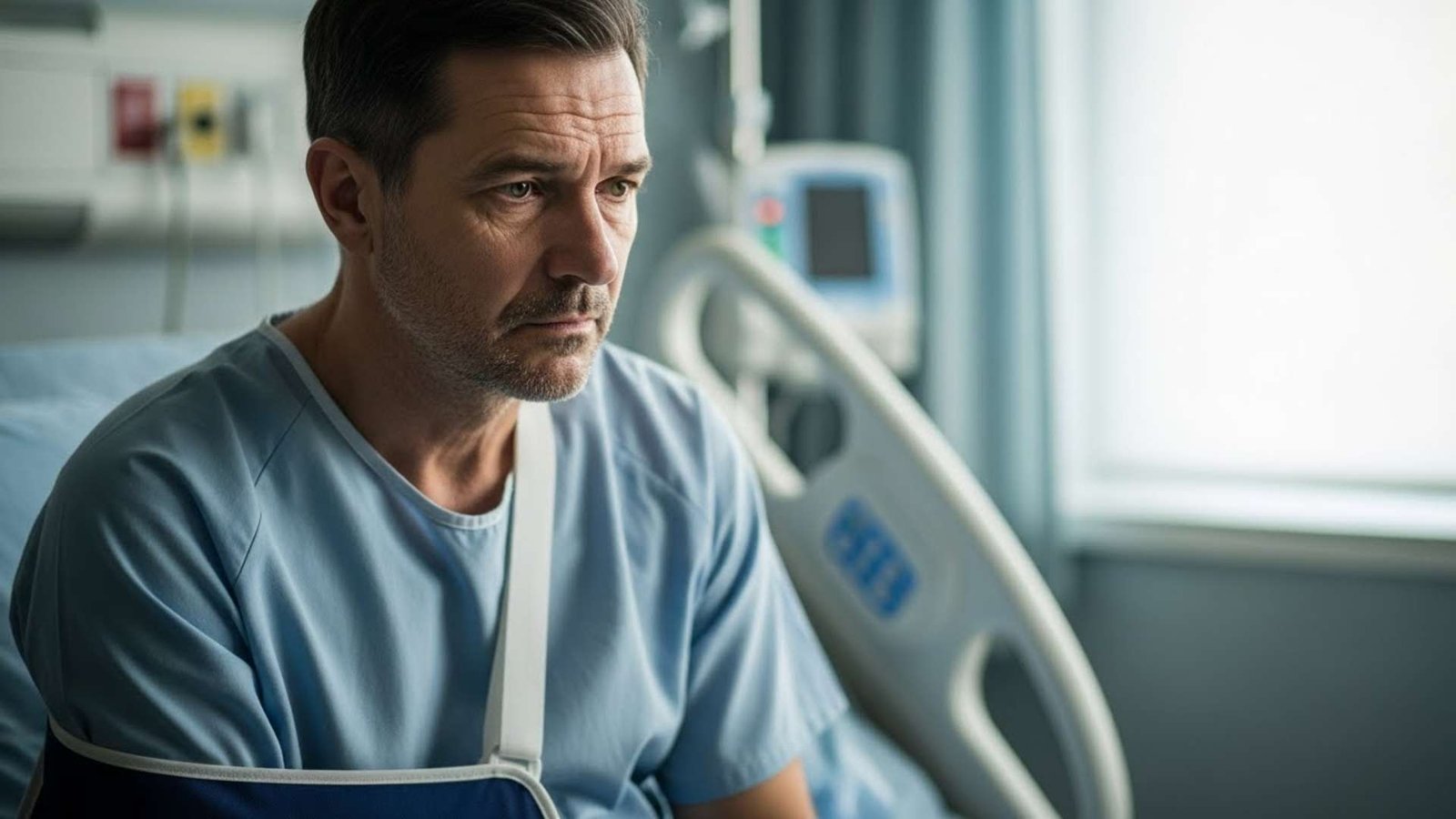
I want you to really look at this next chart. If you are an athlete, or just someone who likes to run or lift, this is the most critical data point in this entire report.
There is a direct, linear relationship between how much you sleep and how likely you are to get injured. We’re talking about a 1.7x increase in injury risk if you’re sleeping less than 7 hours.
Why? It’s a mix of things. Your reaction times are slower (so you miss that misstep). Your stabilizer muscles are fatigued. And because of that cortisol spike we talked about earlier, your ligaments and tendons aren’t fully repaired. You are literally more fragile.
8. The “Open Window” for Sickness
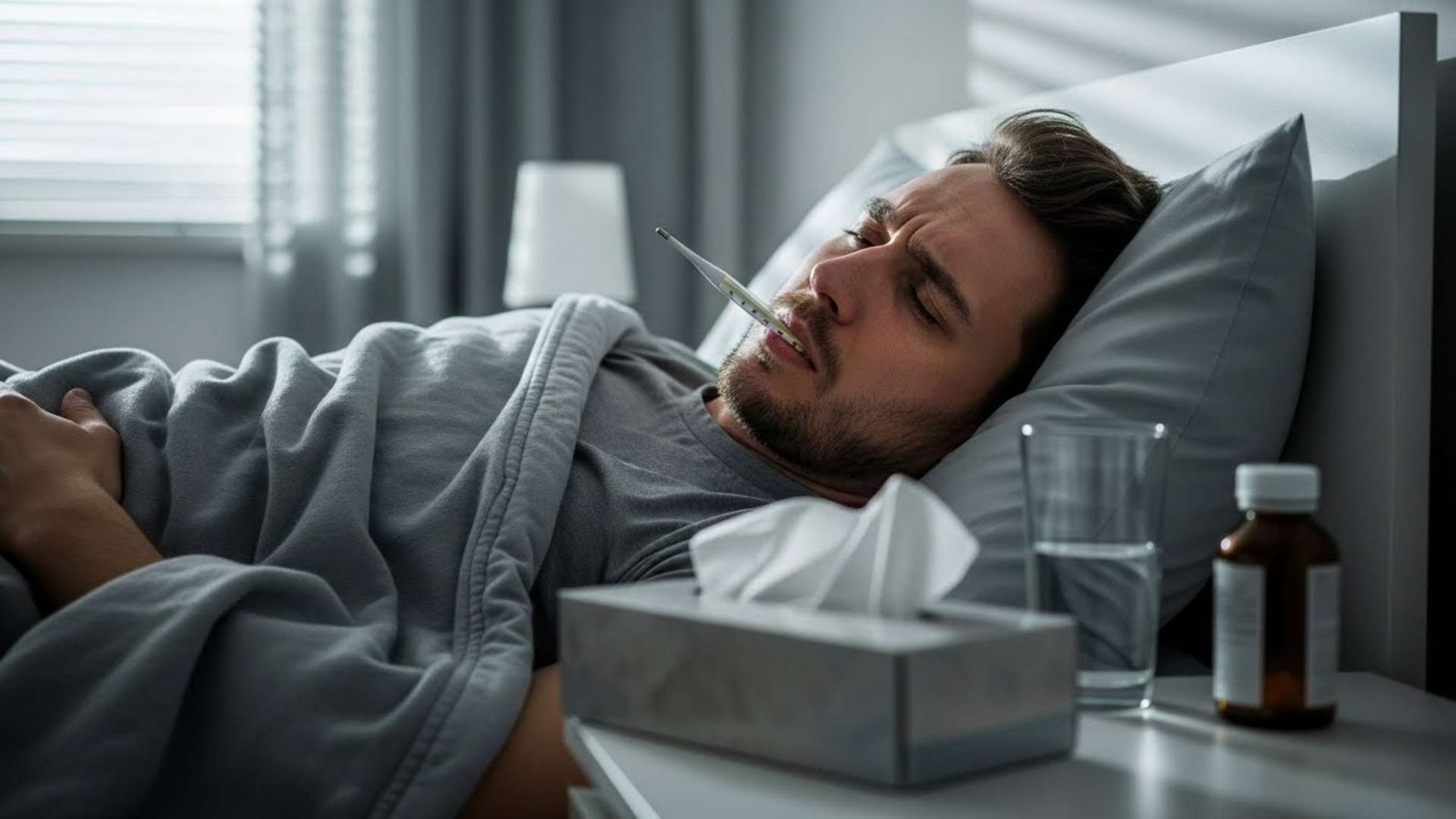
We all know that consistency is key, right? Nothing kills consistency like being sick.
There was this incredible study by Dr. Sheldon Cohen. He actually exposed people to the cold virus (on purpose!) to see who would get sick. The results were wild: People sleeping less than 7 hours were nearly 3 times more likely to catch the cold than those sleeping 8+. If your sleep efficiency was bad (tossing and turning), you were 5.5 times more likely to get sick.
Sleep is when your immune system reloads. If you skip it, you’re sending troops into battle without ammo.
9. Heart Health & Glycogen

Finally, there’s your engine. Sleep deprivation keeps your heart rate elevated and prevents your blood pressure from “dipping” at night like it should. You’re stressing your heart 24/7. Plus, without insulin working correctly, your muscles can’t replenish their glycogen (fuel) stores efficiently. You start your next workout with a half-empty tank.
Myths That Are Holding You Back
We tell ourselves a lot of lies to justify staying up late. Let’s bust a few of them.
Myth: “I’ll catch up on the weekend.”
Reality: You really can’t. Sleep debt isn’t like a credit card; you can’t just pay it off later. If you miss the window for memory consolidation on Tuesday night, that memory is gone. You can feel less sleepy by sleeping in on Saturday, but the metabolic damage and the missed repair windows? Those are permanent.
Myth: “A nightcap helps me sleep.”
Reality: Alcohol is a liar. It’s a sedative, so it helps you lose consciousness, but it destroys your sleep quality. It fragments your sleep and blocks REM. You might be “out,” but you aren’t restoring anything. It’s essentially “junk sleep.”
Myth: “I’m good on 5 hours. I’m just built different.”
Reality: You probably aren’t. There is a gene (DEC2) that allows people to function on 5 hours, but it is statistically incredibly rare. As Dr. Thomas Roth famously said, the percentage of people who can survive on 5 hours without impairment, rounded to a whole number, is zero. Most people who think they adapt to less sleep have just forgotten what it feels like to be truly awake.
Part V: So, How Do We Fix It?
Okay, enough doom and gloom. We live in the real world. We have jobs, kids, and stress. How do we actually fix this?
1. The “Sleep Banking” Strategy
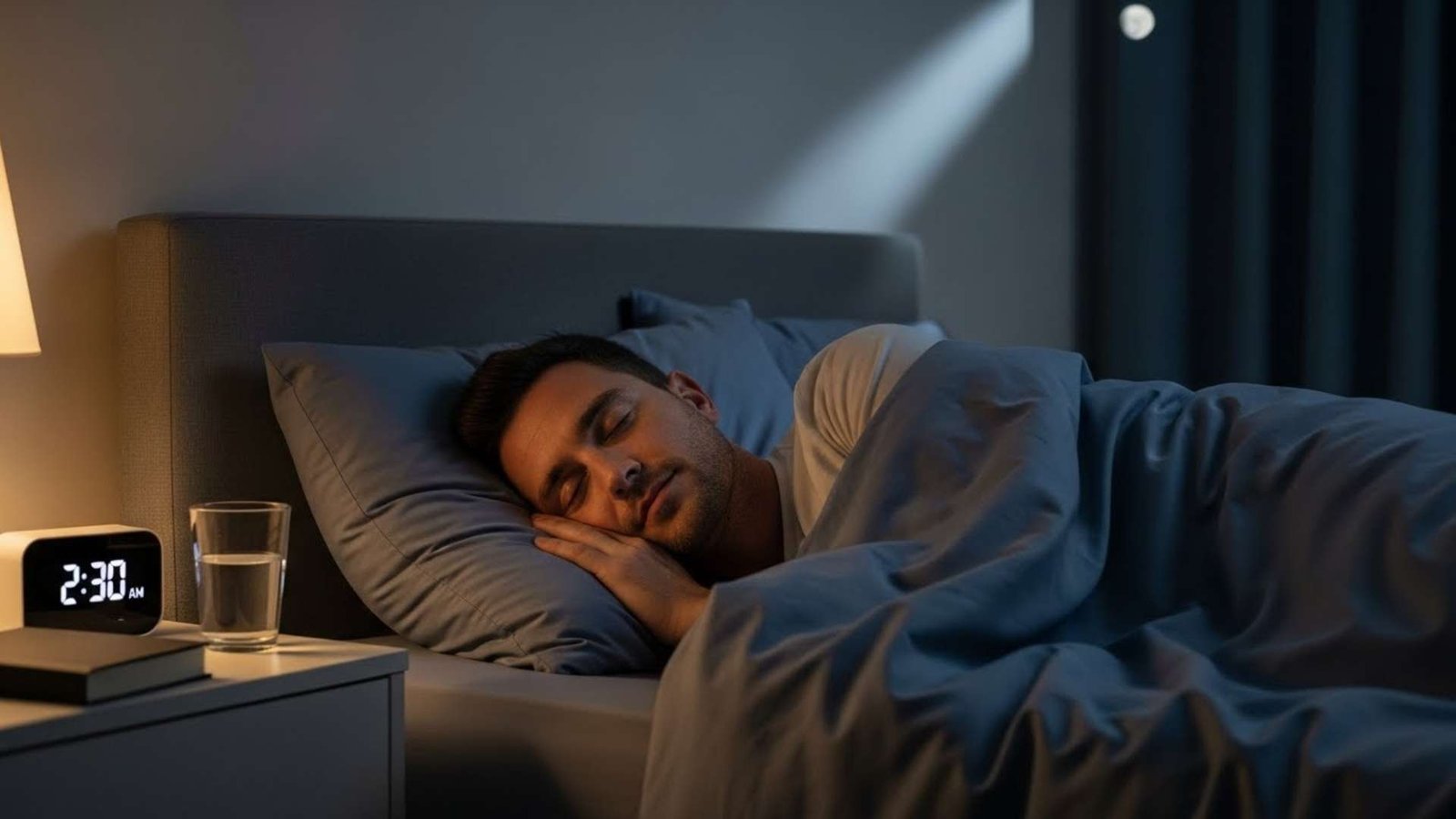
If you know you have a crazy week coming up—exams, a big project, a tournament—you can “bank” sleep beforehand. Studies on basketball players showed that extending sleep to 10 hours for a few weeks before the season improved their sprint times and shooting accuracy by 9%. It builds a buffer.
2. Think in 90-Minute Cycles (The R90 Method)

This changed the game for me. Instead of obsessing over “8 hours,” think about 90-minute sleep cycles.
- A full cycle (Light -> Deep -> REM) takes about 90 minutes.
- If you wake up in the middle of deep sleep, you feel groggy (sleep inertia).
- If you wake up at the end of a cycle, you feel alert.
Aim for 35 cycles a week (that’s 5 cycles a night, roughly 7.5 hours). If you get home late, don’t just crash. Count forward in 90-minute blocks to find your optimal wake-up time. It takes the pressure off the “perfect night” and focuses on the weekly rhythm.
3. Create “The Cave”

Your biology is prehistoric. It expects your sleeping area to be a cave:
- Cool: 65-68°F (18-20°C). Your body temp needs to drop to initiate sleep.
- Dark: Pitch black. Even a little LED light can mess with melatonin.
- Quiet: Or white noise if you live in the city.
Part VI: Tools That Actually Help You Shut Down
Look, knowing the science is one thing, but living it is another. We can’t always control our environment perfectly—maybe your neighbors are loud, your curtains are thin, or your job forces you to look at screens late at night. That’s where having the right toolkit helps.
I’m not about buying gadgets just for the sake of it, but there are a few tools that genuinely help “rig the game” in your favor by mimicking that prehistoric cave environment your biology is craving. If you’re struggling to create the perfect sleep setup, these are the heavy hitters I’d recommend looking into.
1. Manta Sleep Mask
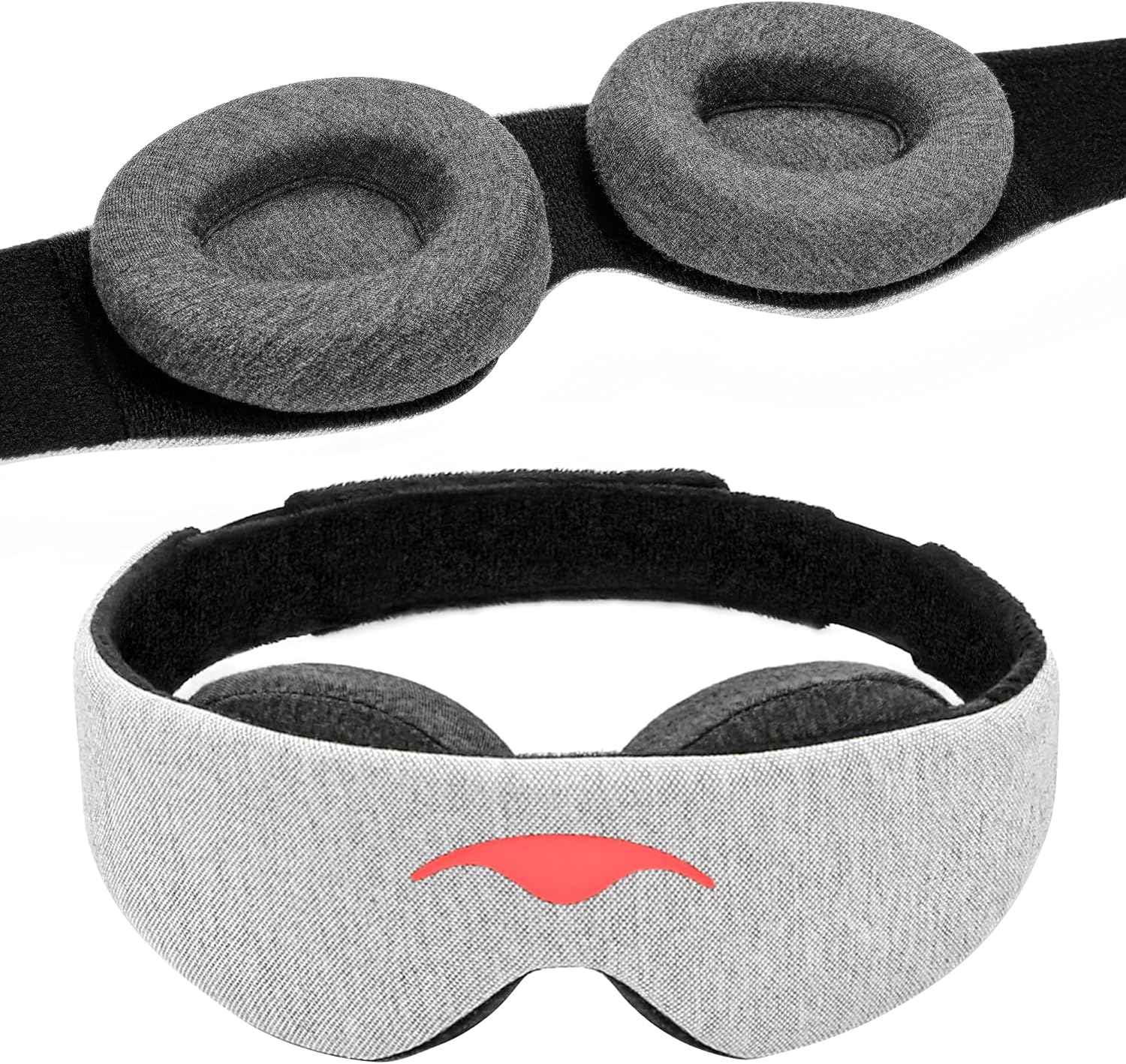
If you can’t paint your bedroom black or buy expensive blackout curtains, this is the next best thing. Unlike cheap airline masks that press on your eyelids, this one has deep eye cups so you can blink freely. It gives you 100% blackout conditions anywhere, which is non-negotiable for melatonin production.
2. Hatch Restore 3

Waking up to a blaring alarm clock triggers a cortisol spike—literally a fight-or-flight response—first thing in the morning. That is the opposite of how you want to start your recovery day. This device mimics a natural sunrise, waking you up gradually with light before sound. It also doubles as a reading light and white noise machine to help you wind down at night.
3. Thorne Magnesium Bisglycinate
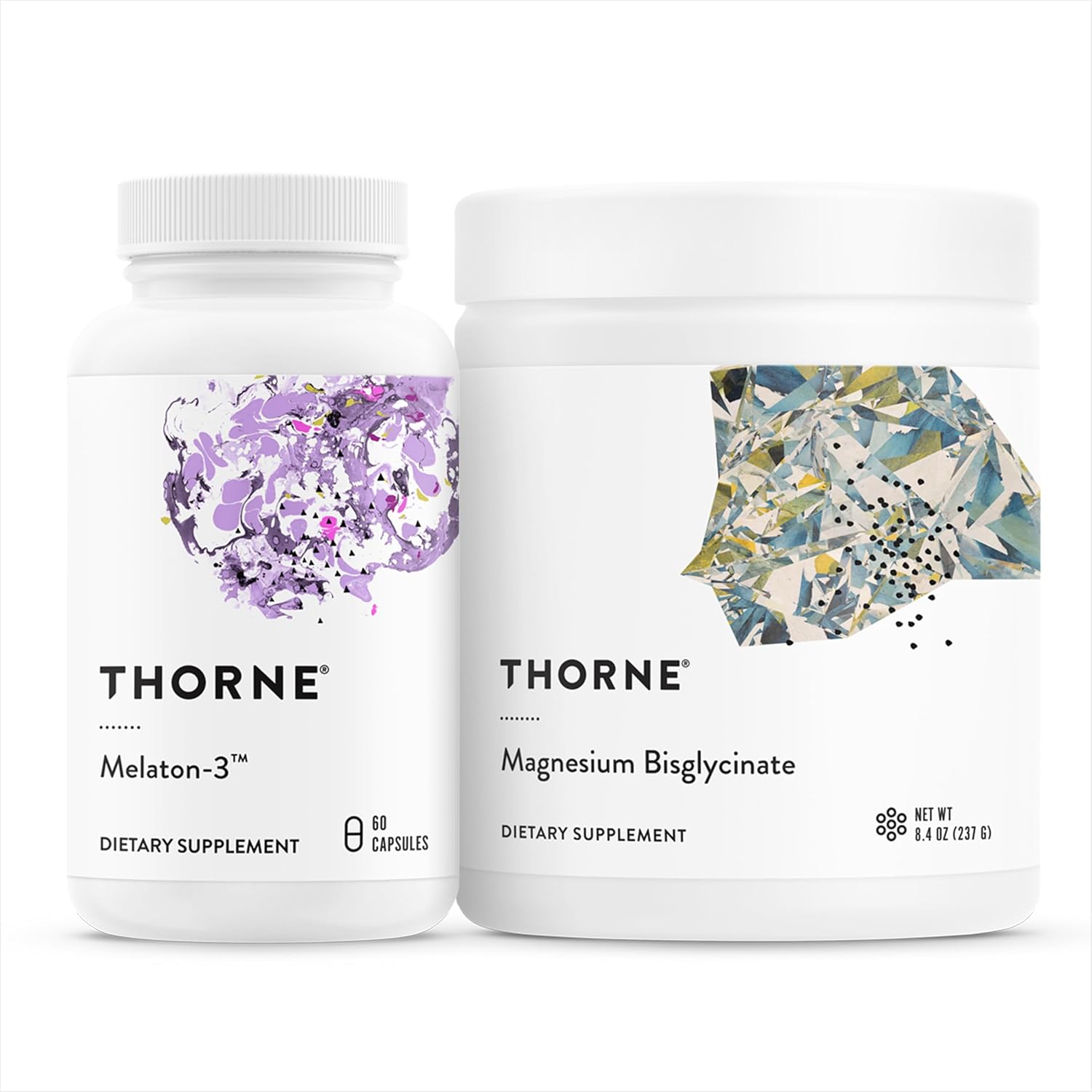
We talked about how “tired and wired” feels. Magnesium is often the missing link for relaxation. It helps calm the nervous system and can improve sleep quality, but the type matters. Bisglycinate is highly absorbable and easy on the stomach compared to cheaper forms. It’s a staple for many athletes to help lower that evening stress load.
4. Yogasleep Dohm White Noise Machine

If you live in a city or have roommates, sudden noises can pull you out of deep sleep cycles without you even realizing it. The Dohm is the classic “fan-based” white noise machine. It doesn’t use a digital loop (which your brain can eventually detect and get annoyed by); it uses an actual fan inside to create a smooth, natural rushing air sound that masks disruptions perfectly.
5. Blue Light Blocking Glasses
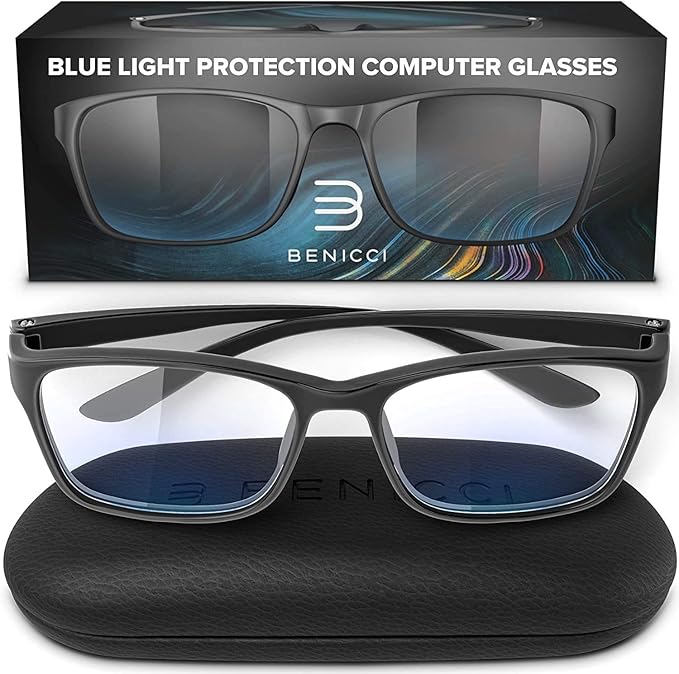
If you have to work late on a computer, you are blasting your brain with blue light, which tells your SCN (master clock) that it’s noon. These glasses filter out that spectrum. They aren’t a free pass to scroll TikTok until 2 AM, but if you must be on screens after sunset, they act as a damage control buffer for your melatonin levels.
