

You know that feeling? The one where you wake up, step on the scale, and just stare at the number in disbelief. You’ve been eating the salads. You’ve been hitting the treadmill. You haven’t changed a thing about your routine, but somehow, your body has changed everything about how it responds.
For years, we’ve been sold this simple math equation: “Calories in, calories out.” And honestly? In our 20s and 30s, that mostly worked. You skipped a few dinners, went for a few runs, and the jeans fit again. But somewhere around age 40, that equation breaks. Strategies that used to be reliable suddenly start backfiring—causing fatigue, brain fog, and weight gain that seems to settle exclusively around the middle.
I’ve dug through the research on this, and here’s the bottom line: It’s not in your head, and it’s not a failure of willpower. It’s a physiological mutiny. Your body is shifting its operating system from “growth and reproduction” to “conservation and survival.” We’ve identified ten specific biological “saboteurs” that drive this shift—from your cells becoming deaf to protein signals to your brain’s reward center effectively going offline.
Understanding this isn’t about fighting your body; it’s about realizing the rules of the game have changed so you can stop playing by the old ones.
The Estrogen-Insulin Breakup 💔
In your 20s, hormones direct food to muscles for fuel. But at 40+, the controller walks off the job.
Insulin knocks to deliver energy. As estrogen drops, your cells don’t open the door (Insulin Resistance). The pancreas freaks out and pounds harder!
Insulin is a fat-storage hormone. When it floods your system, you physically cannot burn fat—even in a calorie deficit.
Deep, inflammatory belly fat wrapping around your organs to “protect” energy.
Here is the first big betrayal. In our younger years, our sex hormones (estrogen for women, testosterone for men) act like traffic controllers for our metabolism. They direct the food we eat into our muscles to be burned as fuel.
But as we hit 40 and those hormones start to dip (or rollercoaster), the traffic controller walks off the job. This leads to something called insulin resistance.
Think of your cells like a house with a front door. Insulin is the neighbor knocking to deliver groceries (sugar/energy). In your 20s, your cells hear the knock and open the door. But as estrogen drops, your cells essentially go deaf. They don’t open the door. So, your pancreas freaks out and sends more insulin to pound on the door.
Here’s the kicker: Insulin is a fat-storage hormone. When it’s flooding your system, your body physically cannot burn fat. It blocks the enzyme responsible for it. So you can be in a calorie deficit, but if your insulin is high, your body is stuck in “storage mode”.
And it’s not just any fat. Dr. Mary Claire Haver points out that this shift specifically targets visceral fat—that deep, inflammatory belly fat that wraps around your organs. It’s not just cosmetic; it’s your body trying to protect itself by hoarding energy in the most accessible place possible.
2: The Muscle Vanishing Act (Sarcopenia)

This one scares me the most because it’s so silent. While we’re worrying about the scale, we’re losing the very thing that drives our metabolism: muscle.
Starting in our 30s, but really accelerating after 40, we enter “anabolic resistance.” Basically, our muscles stop responding to the signals to grow. We lose about 1% of our muscle mass every year.
It’s a vicious cycle. You lose muscle, so your metabolism drops. You feel weaker, so you move less. You move less, so you lose more muscle. It’s a death spiral. And the worst part? You might weigh the same, but your body composition has shifted. You’ve swapped calorie-burning muscle for calorie-storing fat.
Recent research even suggests it’s not just about mass; it’s about leakage. Calcium literally leaks out of muscle channels in older cells, making them weaker. So even when you do try to work out, it feels harder than it should.
3: The “Inflammaging” Fire

I love this term, even though I hate what it does. “Inflammaging” is exactly what it sounds like: chronic, low-grade inflammation that rises with age.
Remember that belly fat we talked about? It’s not just sitting there. Visceral fat is active tissue. It pumps out inflammatory chemicals (cytokines) that keep your immune system on high alert 24/7.
This creates a hostage situation in your brain. Inflammation blocks the signal of leptin—the hormone that tells your brain, “We’re full, stop eating.” So, you have plenty of energy stored as fat, but your brain can’t “see” it. It thinks you’re starving. It ramps up your hunger and turns down your energy levels to “save” you. You’re not weak-willed; your brain is literally being jammed by inflammation.
4: The Cortisol Trap

Stress isn’t new. But your ability to handle it is.
When we were younger, progesterone (in women) and testosterone (in men) acted like a buffer against cortisol, our stress hormone. They were the “chill out” signals. As those hormones drop, we lose the buffer. We get stuck in “fight or flight” mode.
And cortisol is mean. Its job is to dump sugar into your blood for immediate energy (to run from a tiger) and then, if you don’t use it, store it as—you guessed it—belly fat. Visceral fat cells actually have four times more cortisol receptors than other fat cells. They are waiting for stress so they can grow.
5: The Motivation Void (It’s Not Laziness)

Have you ever sat on the couch, knowing you should work out, wanting to have worked out, but physically unable to make yourself get up?
That’s not laziness. That’s neurobiology.
Estrogen and testosterone drive dopamine—the chemical that gives us the “reward” feeling. When those hormones drop, our dopamine pathways take a hit. We don’t get the same “runner’s high.” We don’t get the anticipation of feeling good.
Dr. Andrew Huberman talks about how dopamine is the molecule of “drive.” When it’s low, effort feels expensive. Your brain does a cost-benefit analysis and decides, “Nah, not worth it.” Recognizing this is huge—you have to stop waiting to “feel like it” because your chemistry is actively suppressing that feeling.
The Sleep Sabotage
Staring at the ceiling? Progesterone (nature’s Valium) leaves the building during perimenopause, causing sleep to fragment.
One bad night spikes Ghrelin (Hunger) and crushes Leptin (Satiety). Your “stop eating” button stops working.
You wake up craving carbs not because you’re greedy, but because your exhausted brain is desperate for quick energy.
If you’re waking up at 3 AM staring at the ceiling, you know this one.
Progesterone is nature’s Valium. It calms the brain. When it leaves the building during perimenopause (which can start in your late 30s!), sleep fragments.
This is a metabolic disaster. One bad night of sleep spikes ghrelin (hunger) and crushes leptin (satiety). You wake up craving carbs, not because you’re greedy, but because your exhausted brain is desperate for quick energy.
7: The Brownout (Mitochondria)

Deep inside your cells, your little power plants (mitochondria) are struggling. Research shows their efficiency drops about 8% per decade.
They become “metabolically inflexible.” They struggle to switch between burning sugar and burning fat. So you might go for a walk to burn fat, but your mitochondria are like a sputtering engine that can’t access the fuel tank. You feel heavy, tired, and sluggish because your cellular batteries are literally not holding a charge.
8: The Gut Rebellion

Your gut bacteria change as you age, too. We see a shift toward “dysbiosis”—where the bad bacteria start outnumbering the good ones.
Here’s the crazy part: An unhealthy microbiome is actually better at extracting calories from food. You could eat the exact same apple as your friend, but if you have the “wrong” bacteria, your body might absorb more calories from it. Plus, these bacteria can hijack your vagus nerve and make you crave sugar to feed them, not you.
9: The Protein Barrier
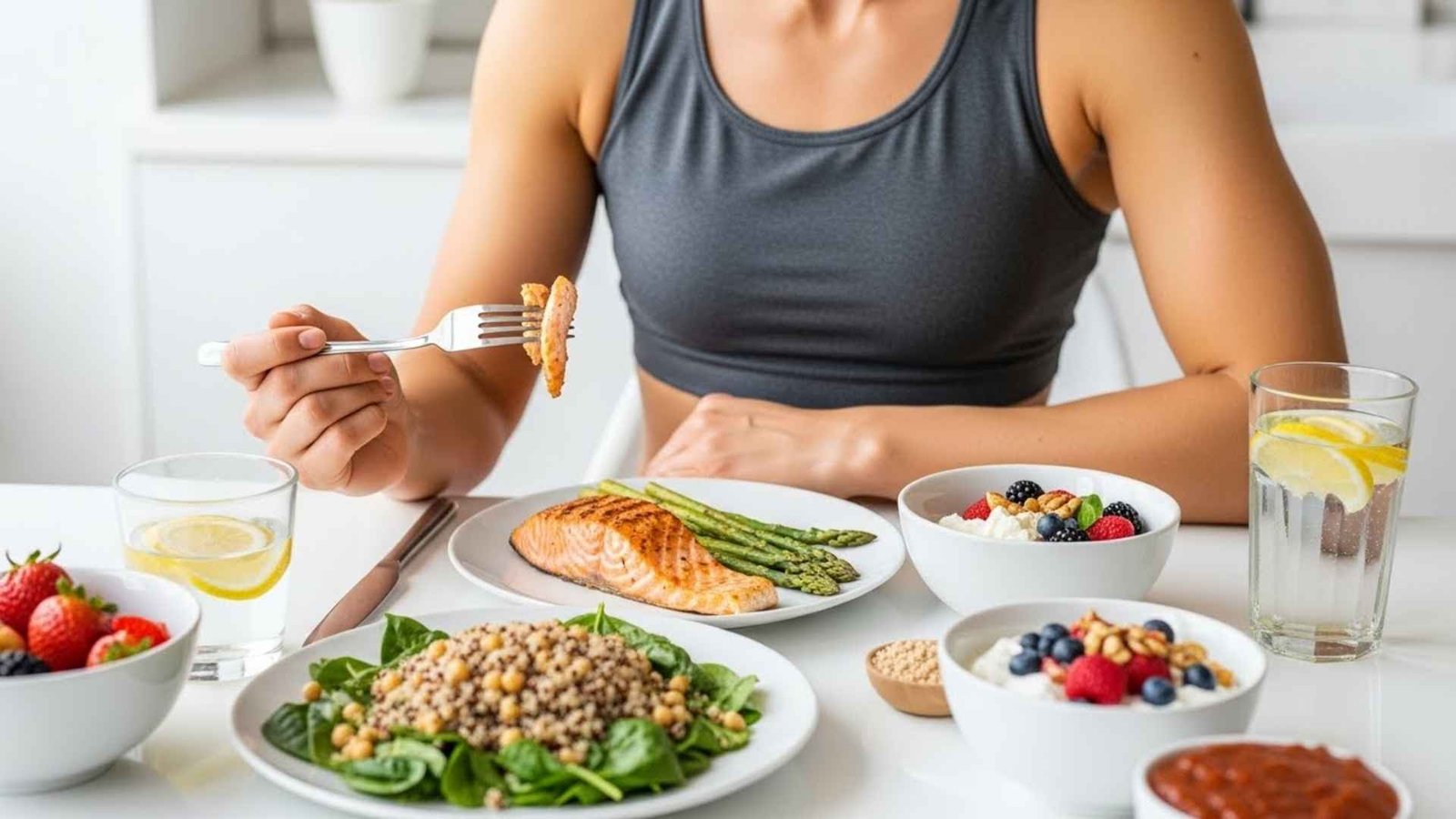
This is the biggest mistake I see people make. They eat “healthy”—a salad with a sprinkle of chickpeas—and wonder why they’re losing muscle.
Because of anabolic resistance, your muscles need a much louder signal to grow than they used to. In your 20s, 15 grams of protein might have been enough. Now? You need 30 to 40 grams of high-quality protein in a single sitting just to flip the “on” switch for muscle repair.
If you don’t hit that threshold, your body stays in breakdown mode. You’re effectively starving your muscles even if you’re eating enough calories.
10: The Grandmother Effect

Evolution is kind of rude, honestly. There’s a theory called the “Grandmother Hypothesis.” Basically, once we pass reproductive age, nature prioritizes our survival so we can help raise the next generation.
How does it do that? By making us really, really good at storing fat. It’s an ancient survival mechanism to get us through famines. Your body isn’t trying to hurt you; it’s trying to ensure you live a long time by hoarding energy. The problem is, we live in a world of Uber Eats, not famine.
Need a Little Extra Help? Look Into These
Look, you absolutely do not need supplements to make progress. Whole foods, sleep, and heavy weights are 95% of the battle. But when your chemistry is fighting you, having the right tools can make the climb a little less steep. Based on the “saboteurs” we just covered, here are five highly-rated products that target the specific issues of 40+ physiology.
1. Vital Proteins Collagen Peptides Powder

When estrogen drops, your joints dry out and ache, making it hard to lift the weights you need to lift. This is the gold standard for a reason. It packs 20g of collagen per serving to support joint lubrication and skin hydration. It dissolves in your morning coffee without a trace.
2. Thorne Creatine Monohydrate

Your muscles and brain are losing their ability to hold energy. Creatine isn’t just for bodybuilders. It hydrates muscle cells, improves strength output, and—crucially for us—supports cognitive function. Thorne is NSF Certified for Sport, meaning it’s pure and free of junk.
3. Sports Research Magnesium Glycinate

You’re exhausted but can’t stay asleep because you lost your progesterone buffer. Most magnesiums wreck your stomach. The “Glycinate” form is gentle and specifically promotes relaxation and deep sleep. Taking this an hour before bed is a game-changer for staying asleep.
4. Bodylastics Resistance Bands Set

You know you need to lift heavy, but the gym is intimidating or inconvenient. If you can’t get to the gym, bring the resistance home. These aren’t the flimsy rubber bands you’re used to; they are heavy-duty, stackable bands that can generate serious tension to simulate heavy lifting and trigger that bone-density signal.
5. Culturelle Metabolism + Weight Management

Your microbiome has shifted to efficient calorie extraction and sugar cravings. This isn’t a magic weight loss pill, but a targeted probiotic. It includes B vitamins and specific bacterial strains designed to help your microbiome process carbohydrates and fats more efficiently, fighting back against dysbiosis.
