
You know that moment? You walk into the kitchen, stop dead in the center of the room, and realize you have absolutely no idea why you’re there. Or you’re at a dinner party, and the name of a movie you saw last week is hovering right on the tip of your tongue, but you just can’t grab it.
In that split second, a little voice in the back of your head whispers: Is this it? Is this the beginning of the end?
Here’s the truth: We’ve been told a scary story about aging for a long time. The old narrative was that your brain is like a car engine—it runs for a while, parts wear down, and eventually, it just clunks out. And frankly, that’s a depressing way to look at your future.
But the science has shifted. Drastically. Thanks to landmark research released in 2024 by the Lancet Commission, we now know that this “wear and tear” view is outdated. The new reality is much more hopeful. We now understand that your brain has a backup generator. It’s called Cognitive Reserve.
This isn’t just about doing crossword puzzles. It’s about building a fortress. The research shows that up to 45% of dementia cases are potentially preventable or delayable .1And the most critical time to start building this reserve isn’t when you’re 80. It’s right now, in the metabolic window between 40 and 65.
This article is your blueprint. We’re going to walk through exactly how to build that backup plan, backed by the latest numbers, without the boring medical jargon.
The Mechanics
How Your Brain Actually Works
🛠️ Brain Maintenance (Hardware)
Keeping the physical machine running. Like keeping your car’s engine clean and oiled. Preserves actual cells.
🧠 Cognitive Reserve (Software)
Your brain’s ability to improvise. If one road is blocked by damage, a high-reserve brain just takes a detour.
The Midlife Pivot (Age 40)
Until 40, networks are stable. Then, the brain becomes insulin resistant (“Type 3 Diabetes”).
It creates an energy crisis. Neurons starve and destabilize.
(The Gunk) Sticky trash piling up outside brain cells, blocking traffic.
(The Knots) Internal support beams collapse and twist. The house falls down.
The Theory of Reserve: Why Some Brains Stay Sharp

To understand how to save your brain, you have to understand Dr. Yaakov Stern. He’s a researcher at Columbia University who noticed something weird a few decades ago. He saw people who, according to their autopsies, had brains full of Alzheimer’s pathology (the physical damage), yet when they were alive, they were sharp as a tack. They had zero symptoms.
How is that possible? Stern proposed two concepts to explain it:
- Brain Maintenance (The Hardware): This is keeping the physical machine running. It’s about preserving the actual cells and connections. Think of this as keeping your car’s engine clean and oiled.
- Cognitive Reserve (The Software): This is where it gets interesting. This is your brain’s ability to improvise. If one road is blocked by damage, a brain with high reserve just takes a tour. It reroutes the signal. It’s resilient.
The “Threshold” Concept
Think of reserve like a bank account. Every day, aging charges a “fee” (damage to brain cells).
- Low Reserve: You’re living paycheck to paycheck. A small fee hits, your account overdrafts, and you see symptoms immediately.
- High Reserve: You have a massive savings account. You can pay those fees for years—decades, even—without going broke. You might have the disease physically, but you don’t show the symptoms.
The Midlife Pivot: The “Energy Crisis” at 40

This is the part most people miss. We tend to worry about dementia in our 70s. But the biological fuse is lit in our 40s.
In 2020, a groundbreaking study published in PNAS showed something startingling. Until about age 40, our brain networks are stable. But right around 40 to 50, the brain starts struggling to burn fuel. It becomes insulin resistant. It’s often called “Type 3 Diabetes”.
This creates an energy crisis. When neurons can’t get fuel, they start to destabilize. This study found that the “bend” in the curve happens in your late 40s, and the “break” accelerates around age 60.
The takeaway? What you do in this midlife window determines your trajectory. You are either investing in your reserve, or you are spending it.
Table 1: The Timeline of Risk (and Opportunity)
| Age Range | What’s Happening Inside | The Strategy | Why It Matters |
| 20–35 | Brain is peaking; pruning is done. | Education & Habits. | Marketing |
| 35–50 | The Pivot. Insulin resistance starts; memory genes fade. | Metabolic health (diet/stress). | Stabilization (Crucial) |
| 50–65 | Network destabilization speeds up. | Complexity & Social connection. | Delay |
| 65+ | Physical shrinkage becomes visible. | Cooperation & Maintenance. | Mitigation |
Understanding the Enemy: The Gunk and The Knots

I promise not to get too dense here, but you need to know what we are fighting for. Alzheimer’s is largely driven by two things:
- Amyloid Plaques (The Gunk): Imagine your brain cells are houses. Plaques are like sticky trash piling up in the streets outside the houses, blocking traffic so the neighbors can’t visit each other.
- Neurofibrillary Tangles (The Knots): This happens inside the house. The internal support beams (made of a protein called Tau) collapse and twist into knots. The house falls down.
When we build reserve, we are trying to stop the Gunk from piling up and the Knots from forming.
The 10 Pillars of Cognitive Reserve

Okay, let’s get practical. The 2024 Lancet Commission identified 14 risk factors. I’ve distilled them down into 10 actionable “Reserves” you can start building today.
1. The Sensory Scaffold (Check Your Ears and Eyes)

This one surprises everyone. You might think hearing loss is just annoying. Actually, it’s dangerous.
Hearing loss is the #1 modifiable risk factor for dementia in midlife. It accounts for about 8% of the risk. Why? Because listening is a brain workout. When you can’t hear well, your brain has to divert massive resources from “thinking and memory” just to “processing sound.” It’s exhausted.
The Proof: A major study found that using hearing aids reduced the rate of cognition decline by nearly 48% in high-risk adults.
- The Fix: Get a baseline hearing test at 45. Don’t wait until you’re shouting “WHAT?” at the TV. And don’t ignore your eyes, either—untreated vision loss was just added to the risk list in 2024.
2. The Metabolic Shield (Strategic Nutrition)

Forget generic “eating clean.” We need to eat for neuroprotection. Enter the MIND Diet.
It’s a hybrid of the Mediterranean diet and the DASH diet, but tweaked specifically for the brain by Dr. Martha Clare Morris. Here is the kicker: You don’t have to be perfect.
- Strict restrictions lower Alzheimer’s risk by 53%.
- Moderate limits still lower it by 35%.
Table 2: The MIND Diet Cheat Sheet
| Food Quick | The Goal | Why? (The Science) |
| Leafy Greens | 6+ servings/week | Vitamin E & Folate (slows decline) |
| Berries | 2+ servings/week | Anthocyanins (cleans up the hippocampus) |
| Nuts | 5+ servings/week | Healthy foods for cell walls |
| Olive Oil | Primary cooking oil | Polyphenols (vascular health) |
| Fried Food | Less than 1/week | High medical channels |
3. The Neurotrophic Pump (Lift Heavy Things)

We all know cardio is good for the heart. But for the brain? You need to lift weights.
When you contract your muscles against resistance, they release chemicals called myokines (specifically one called Irisin). These travel to the brain and trigger the release of BDNF.
Think of BDNF as “Miracle-Gro” for your brain. It helps grow new neurons. The American College of Sports Medicine now specifically recommends resistance training twice a week for brain health.
- The Fix: You don’t need to become a bodybuilder. But you do need to pick up things that feel heavy, twice a week.
4. The Glymphatic Rinse (Sleep is Cleaning Time)

This is my favorite discovery of the last decade. We used to think sleep was just “rest.” Turns out, it’s a cleaning cycle.
In 2012, researchers discovered the Glymphatic System . When you enter deep sleep, your brain cells literally shrink a little bit, opening up gaps. Cerebrospinal fluid rushes in like a power washer and flushes out the toxins (including that amyloid gunk) that build up during the day.
If you sleep 5 hours, you are skipping the cleaning cycle. The trash builds up.
- The Fix: Stop eating 3 hours before bed. Digestion takes energy away from the “nighttime janitor.”
5. Cognitive Complexity (Novelty, Not Sudoku)

Here is where I have to be the bearer of bad news: Those “Brain Training” apps on your phone? They probably aren’t helping much.
The Global Council on Brain Health debunked them quite hard. They make you better at the game, not better at life. Real reserve comes from Novelty and Complexity.
- Bilingualism: Speaking two languages forces your brain to constantly “inhibit” one while using the other. It’s a heavy lift for the prefrontal cortex. Bilinguals tend to get dementia symptoms 4–5 years later than monolinguals.
- Music: Learning an instrument engages vision, hearing, and motor skills all at once. It keeps the brain “youthful” in its processing speeds.
6. Social Architecture (The Anti-Loneliness Plan)

Humans are pack animals. When we are isolated, our brains are stronger.
The Lancet report flagged Social Isolation as a major risk. But it’s important to distinguish isolation (being alone) from loneliness (feeling alone). Loneliness triggers a stress response that floods the brain with cortisol.
- The Fix: Join a group. A book club, a walking group, whatever. It’s called “Social Prescribing,” and it’s becoming a legitimate medical therapy.
7. Vascular Control (The Heart-Head Connection)

The brain is a fuel hog. It’s 2% of your body weight but takes 20% of the energy. It needs clear pipes.
High blood pressure in your 30s and 40s is strongly linked to smaller brain volume later in life. And the new 2024 report added High LDL Cholesterol to the hit list.1If your arteries are clogged, your brain is suffocating.
8. Environmental Detox (Clean Your Air)

This is a new one. Air Pollution accounts for about 3% of dementia risk. Tiny particles (PM2.5) can travel up your nose and straight into your brain, causing inflammation.
- The Fix: You can’t change the air outside, but you can change it inside. Use a HEPA filter in your bedroom. Studies show it can reduce particulate matter by 60%.
9. Purpose (The Psychological Buffer)

It sounds fluffy, but “Purpose” is biological armor.
Studies following thousands of adults found that those who felt they had a “direction” or “goal” in life had a 28% lower risk of developing dementia. Purpose lowers stress hormones. It keeps you engaged. It doesn’t matter if your purpose is running a company or tending a garden—you just need to have one.
10. Stress Regulation (The Cortisol Brake)

Chronic stress is toxic. specifically, the hormone cortisol attacks the hippocampus (the memory center). It actually kills brain cells and stops new ones from growing.
The Fix: Mindfulness isn’t just for hippies. It physically thickens the cortex. Meditators in their 50s have been shown to have the brain structure of people much younger.
The Midlife Audit
Your action plan to layer healthy habits without the overwhelm.
- 🥗 Eat: Add berries to breakfast & salad to dinner. Swap butter for olive oil.
- 🚶 Move: Walk for 30 mins. Just get the blood flowing.
- 😴 Sleep: Protect your 7-8 hour window. No food 3 hrs before bed.
- 👓 Check: Get your hearing and vision tested. Seriously.
- 🏋️ Lift: Pick up weights twice a week.
- 🧠 Learn: Pick a frustrating skill (language/instrument) to build reserve.
- 🤝 Connect: Commit to one recurring social activity.
- ⏱️ Fast: Try an overnight fast (12-14 hrs) for metabolic flexibility.
- 💨 Purify: Put a HEPA filter in the bedroom.
- 🧘 Meditate: 10 mins a day to lower that cortisol baseline.
Knowing this is great, but doing it is better. Here is how to layer this into your life without getting overwhelmed.
Level 1: The Foundation (Do this first)
- Eat: Add berries to your breakfast and a salad to your dinner. Swap butter for olive oil.
- Move: Walk for 30 minutes. Just get the blood flowing.
- Sleep: Protect your 7-8 hour window. No food 3 hours before bed.
- Check: Get your hearing and vision tested. Seriously.
Level 2: The Builder (Once you have the basics)
- Lift: Pick up weights twice a week.
- Learn: Pick a skill that frustrates you slightly. If it’s easy, it’s not building reserve. Try a language app or an instrument.
- Connect: Commit to one recurring social activity.
Level 3: The Optimizer (For the pros)
- Fast: Try an overnight fast (12-14 hours) to help metabolic flexibility.
- Purify: Put a HEPA filter in the bedroom.
- Meditate: 10 minutes a day to lower that cortisol baseline.
A Few Tools to Help Build Your Brain’s Backup Plan
Look, knowing the science is great, but friction is the enemy of habit. If you don’t have the right food in the house, you won’t eat the MIND diet. If you don’t have weights, you won’t do resistance training. I’ve looked through Amazon to find the specific products that remove that friction. These are high-quality, “best-in-class” items that make sticking to your new brain-health protocol a lot easier (and honestly, a little more fun).
Here are 5 products to get you started:
1. The MIND Diet Cookbook:

We talked about how specifically berries, greens, and grains can lower Alzheimer’s risk by up to 53%. But knowing what to eat is different than knowing how to cook it. This cookbook is the standard. It takes the guesswork out of the grocery store run and gives you simple, actionable recipes that don’t taste like cardboard. It bridges the gap between “science” and “dinner.”
2. Bodylastics Resistance Bands Set:

You need to lift heavy things to trigger that BDNF release, but you might not want a rack of dumbbells cluttering your living room. Resistance bands are the perfect solution for the “Midlife Audit.” This set is anti-snap (safety first!) and comes with handles, so you can do chest presses, rows, and squats right in your bedroom. It’s a gym that fits in a bag.
3. Manta Sleep Mask:
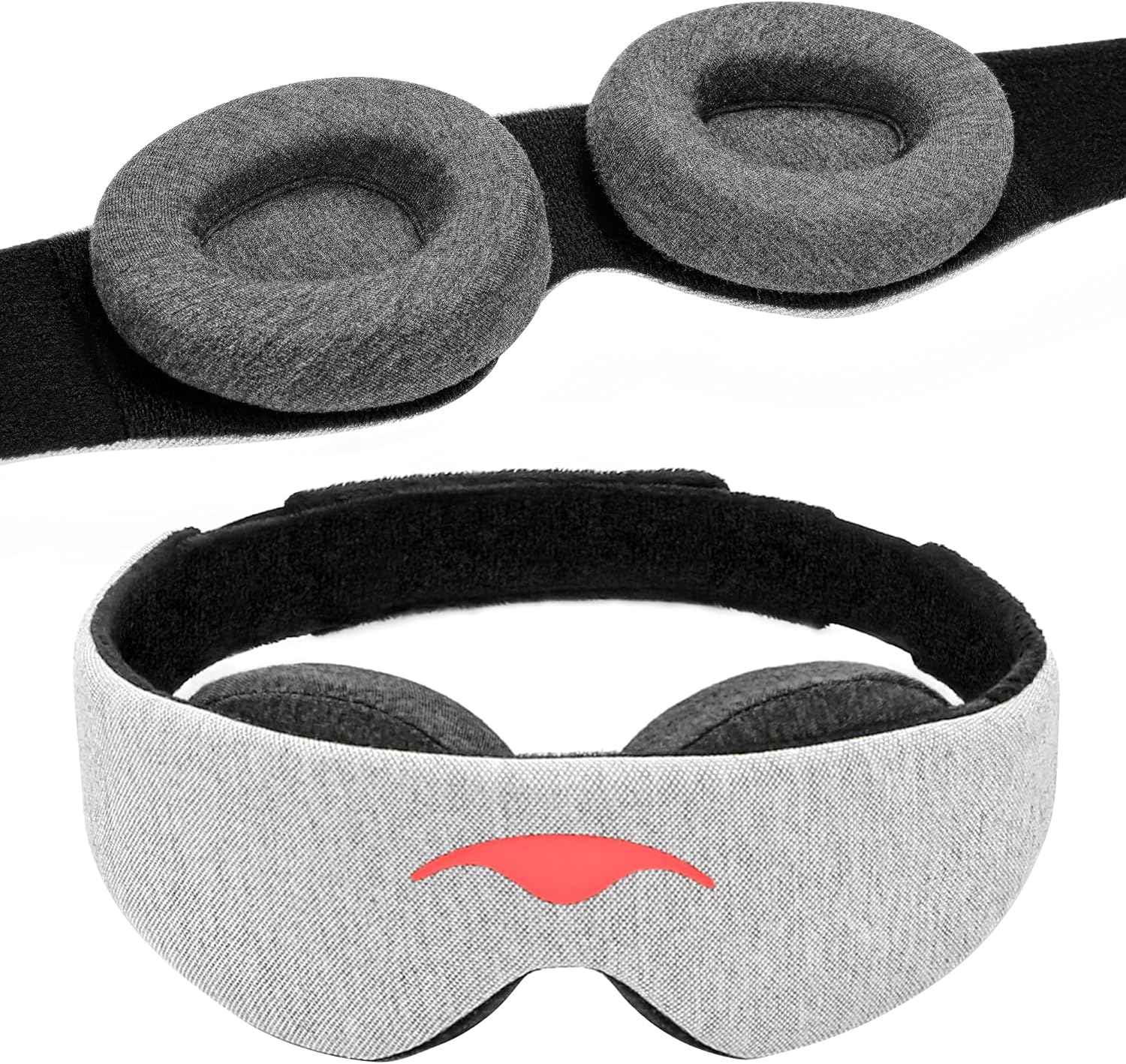
If you want your brain to clean itself at night, you need total darkness to hit those deep sleep cycles. The problem with cheap masks is that they press on your eyelids, which is annoying and disruptive. The Manta mask is different—it has hollow eye cups that let you blink freely and block 100% of the light. It’s a game-changer for protecting that 7-8 hour sleep window.
4. Levoit Core 300S Air Purifier:

We know that air pollution (PM2.5) is a silent risk factor for dementia. You can’t control the air outside, but you can control where you sleep. This Levoit unit is widely rated as the best for bedrooms because it’s whisper-quiet in “Sleep Mode” but powerful enough to scrub the air of particles while you recharge. Think of it as a security system for your lungs and brain.
5. Kala KA-15C Concert Ukulele Bundle:

You need novelty. You need to be bad at something until you get good at it. Learning a musical instrument is one of the best full-brain workouts available. The Ukulele is perfect because the learning curve is gentle—you can learn a song in a week, which gives you that hit of dopamine to keep going. This kit has everything you need to start building new neural pathways.
