


This is not just another health article. Think of this as a conversation we’re having over coffee about something that keeps many of us up at night: watching our parents age, and the quiet, nagging fear that we are destined to follow the exact same path.
You know the feeling. You watch a parent struggle to get out of a deep chair, or forget a name for the third time in an hour, and your heart sinks a little. It’s not just empathy; it’s a preview.
For a long time, we thought this decline was inevitable—the “price of admission” for a long life. But the science has shifted dramatically in the last five years. We now know that much of what we call “aging” is actually just a collection of lifestyle compound interest—small debts paid daily that eventually bankrupt our health.
Here is the reality: Our parents did the best they could with the information they had. They lived in the era of “Medicine 2.0″—a system amazing at fixing broken legs and treating infections but terrible at preventing the slow drift into frailty. We are moving into “Medicine 3.0,” an era defined by Dr. Peter Attia and others, where the goal isn’t just to live longer (lifespan) but to live well until the very end (healthspan).
Let’s look at the 10 specific traps our parents fell into, and exactly how we can dodge them to rewrite the last chapter of our own stories.
1. The Muscle Trap: Why “Just Walking” Isn’t Enough

The Old Mistake: Thinking weightlifting was for bodybuilders and that walking was enough to stay “fit” after 50.
Here’s the scary truth: Sarcopenia (muscle loss) is the silent killer of independence. After age 30, we lose about 3-5% of our muscle mass per decade. After 60, that number accelerates aggressively.
Our parents often ate like birds—toast and tea for breakfast—and stuck to gentle walks. While walking is great, it doesn’t stop the rot. Skeletal muscle is not just for moving; it’s our armor. It’s also our largest metabolic organ, responsible for soaking up blood sugar. When we lose muscle, we become “skinny fat” and metabolically sick.
The Fix: Treat Muscle Like a Retirement Account
We have to overcome “anabolic resistance.” As we age, our bodies get stubborn; they need a louder signal to build muscle.
- Lift Heavy Things: You need resistance training. Data shows it reduces all-cause mortality by 15-27%. You don’t need to be a powerlifter, but you need to struggle against gravity 2-3 times a week.
- The Protein Pulse: Stop grazing. To turn on muscle growth, you need a “leucine trigger”—basically a hit of 30g of protein in a single sitting.
Table: The New Rules of Protein
| Who You Are | Old Advice (RDA) | New Science (Medicine 3.0) | Why? |
| Healthy Adult | 0.8 g/kg | 1.2 – 1.6 g/kg | To fight age-related muscle loss. |
| Active/Lifting | 0.8 g/kg | 1.6 – 2.2 g/kg | To repair tissue and build the “armor.” |
| Recovery/Illness | 0.8 g/kg | 1.5 – 2.0 g/kg | To prevent rapid wasting during bed rest. |
2. The Cardio Trap: The “No Pain, No Gain” Fallacy

The Old Mistake: Believing exercise only counted if you were gasping for air and sweating buckets.
This mentality led a generation to burnout or injury. Or worse, they did nothing because “jogging hurts.” They missed the metabolic magic of Zone 2.
Zone 2 is that sweet spot where you can hold a conversation, but you’d rather not. It feels… boringly easy. But in this zone, your body learns to burn fat for fuel and clears lactate efficiently. Our parents often lost this “metabolic flexibility,” leading to fatigue and Type 2 diabetes. If you only do high-intensity cardio, you’re building a turbocharger without building the engine block.
The Fix: The 80/20 Split
- The Talk Test: Go for a run, bike, or ruck (walk with a weighted backpack). If you can speak in full sentences but sound a little winded, you’re in Zone 2.
- The Prescription: Aim for 3-4 hours a week of this low-stress movement. It builds the mitochondrial base that keeps you energetic at 85. Save the high-intensity, gasping-for-air stuff for just one session a week.
The Old Mistake: “I’ll sleep when I’m dead.”
It turns out, if you adopt that mindset, you get to the “dead” part much faster. Our parents often viewed sleep as a luxury or a waste of time. We now know that sleep is the brain’s janitorial shift.
In 2012, scientists discovered the Glymphatic System. Think of it as a power-wash for your brain. During deep NREM sleep, your brain cells literally shrink to let fluid wash away toxic plaques (like amyloid-beta) that cause Alzheimer’s. If you cut sleep short, you are leaving the trash in the hallways of your brain.
The Fix: Sleep hygiene is non-negotiable.
Neuroscientist Matthew Walker puts it bluntly: “The shorter your sleep, the shorter your life”.
- The Caffeine Cutoff: Caffeine has a quarter-life of 12 hours. A coffee at 2 PM is still affecting your brain at midnight. Cut it by noon.
- The Temperature Drop: Your body needs to cool down to sleep. Keep the bedroom cool (around 65°F/18°C).
4. The Metabolism Trap: Blaming Age for the “Spare Tire”
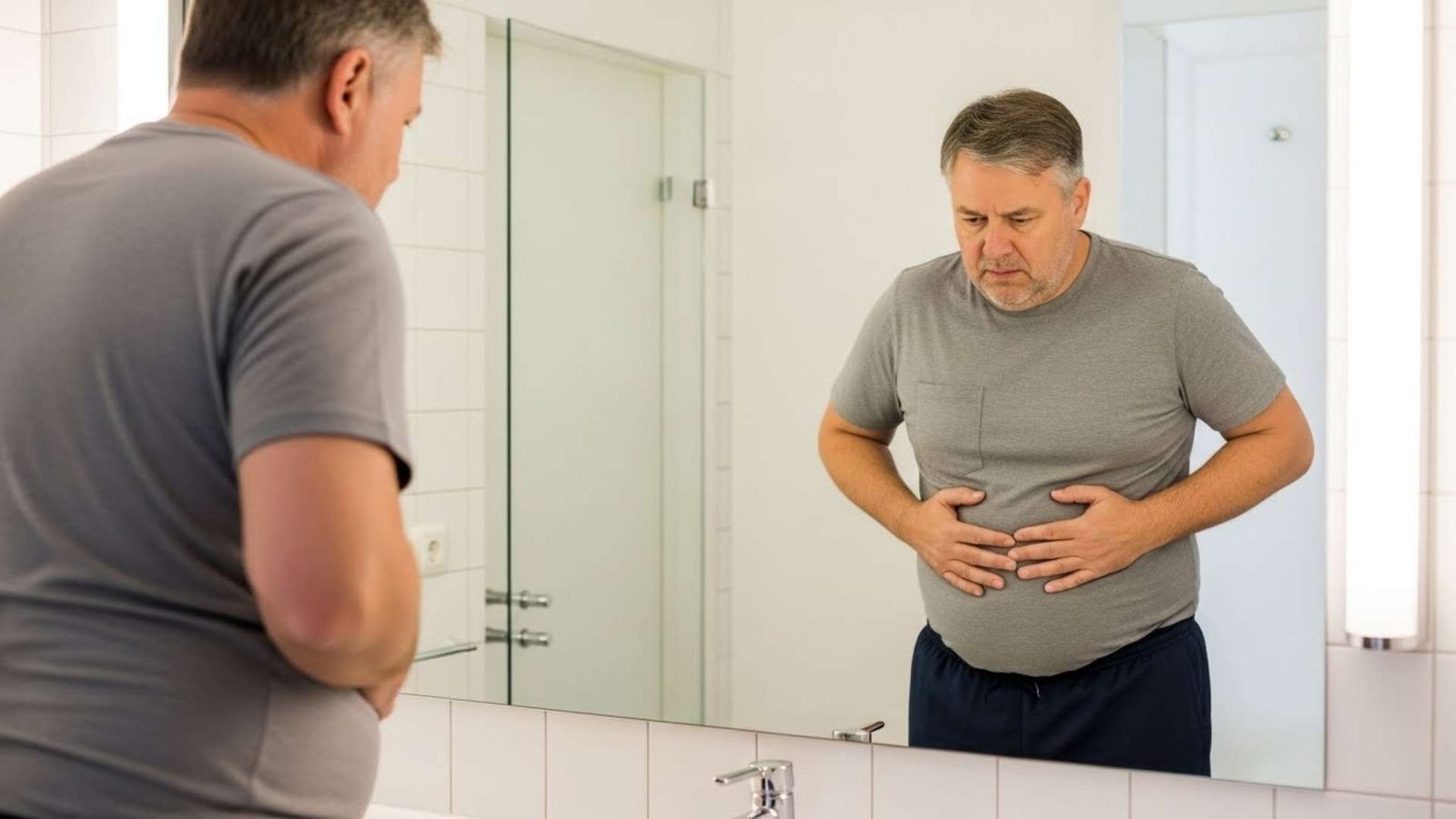
The Old Mistake: “My metabolism slowed down because I hit 40.”
We’ve all heard it. We’ve probably said it. But it’s actually a myth. Groundbreaking research by Herman Pontzer in 2021 blew this wide open. It turns out our cellular metabolism remains rock steady from age 20 to age 60. It doesn’t drop until we are truly elderly.
So why did our parents get heavier? It wasn’t their cells; it was their lifestyle. They moved less, ate more processed food, and lost muscle.
The Fix: Earn Your Carbs
- Walk After Meals: A 10-minute walk after dinner isn’t just nice; it mechanically pushes glucose into your muscles without needing as much insulin.
- Fiber First: Eat your veggies and protein before the pasta. It creates a physical mesh in your gut that slows down sugar absorption, preventing the insulin spikes that age us.
5. The Joint Trap: “Saving” Your Knees

The Old Mistake: Thinking knees are like car tires that wear out after a certain number of miles.
I hear this constantly: “I don’t run; I want to save my knees.” Here is the counter-intuitive truth: Cartilage needs load to survive. Cartilage doesn’t have a blood supply. It gets nutrients only when you compress it (step) and release it (lift). It acts like a sponge. If you sit on the couch to “save” your knees, you are actually starving them to death.
Studies consistently show that recreational runners have lower rates of knee arthritis than sedentary people (3.5% vs 10.2%).
The Fix: Motion is Lotion
- Full Range: Joints need to move through their full range of motion daily. If you never squat deep, you lose the ability to squat deep.
- Strength Protects: Strong glutes and quads act as shock absorbers. If your knees hurt, the problem is usually weak hips.
6. The Hearing Trap: Ignoring the Fade

The Old Mistake: Treating hearing loss as just an annoyance or a sign of getting old, rather than a medical emergency.
This is a big one. The 2024 Lancet Commission identified hearing loss as the #1 modifiable risk factor for dementia in mid-life. When you can’t hear well, your brain has to work overtime just to decode words, stealing resources from memory and thinking. Plus, you withdraw socially because it’s exhausting to keep up.
The Fix: Test Early
- Don’t Wait: If you find yourself saying “What?” more often, get tested. Hearing aids aren’t just amplifiers; they are cognitive prosthetics that keep your brain engaged and sharp.
7. The Isolation Trap: Shrinking Your World

The Old Mistake: Letting social circles naturally dissolve after retirement.
We are tribal creatures. Our parents often let their worlds shrink to just their spouse and the TV. But loneliness triggers a primal stress signal—our bodies interpret isolation as a threat to survival. The Surgeon General recently reported that social isolation carries the same mortality risk as smoking 15 cigarettes a day.
The Fix: Build Your “Moai”
In the Blue Zones (places where people live the longest), they have “Moais”—groups of 5 friends committed to each other for life.
- Schedule Connection: Don’t wait for it to happen. Schedule weekly walks, coffees, or calls. It is as important as your gym session.
8. The Testing Trap: Accepting “Normal”

The Old Mistake: trusting the annual physical and “everything looks normal” results.
“Normal” in a western society just means you are average among a population that is largely sick. Dr. Peter Attia calls this the difference between Medicine 2.0 (treating the heart attack) and Medicine 3.0 (preventing the plaque 20 years earlier).
Standard cholesterol tests (LDL-C) often miss the real risk. You can have “normal” cholesterol but still be building up plaque.
The Fix: The Advanced Panel
Request these tests to see what’s really going on under the hood:
| Standard Test | The Better Version | Why it Matters |
| LDL Cholesterol | ApoB | Counts the actual number of artery-clogging particles. The gold standard. |
| BMI | DEXA Scan | Tells you if you have low muscle mass and dangerous visceral fat. |
| “How are you?” | VO2 Max | The single strongest predictor of longevity. It measures your aerobic engine. |
The Old Mistake: Thinking falls are just “accidents.”
Falls are the leading cause of injury-related death in seniors. But a fall isn’t usually bad luck; it’s a failure of proprioception (knowing where your body is in space) and fast-twitch muscle fibers (the ability to catch yourself).
Our parents stopped doing things that challenged their balance. They stuck to flat, paved sidewalks.
The Fix: The Centenarian Decathlon
Train for the 10 things you want to be able to do at 100.
- The One-Legged Toothbrush: Brush your teeth standing on one leg. Switch halfway. It sounds silly, but it wakes up the tiny stabilizers in your feet and hips.
- Toe Yoga: Strengthen your feet. They are your only contact point with the earth.
10. The Kitchen Trap: High Heat & Hidden Toxins

The Old Mistake: Over-relying on high-heat cooking (grilling, frying) and processed foods.
When we char meat or eat highly processed foods, we consume AGEs (Advanced Glycation End-products). These compounds act like molecular glue, stiffening our arteries and aging our skin from the inside out. They bind to receptors in our body and trigger chronic inflammation.
The Fix: Low and Slow
- Moist Heat: Stewing, poaching, and steaming prevent AGE formation.
- The Acid Hack: If you must grill, marinate meat in lemon juice or vinegar first. It can reduce AGE formation by up to 50%.
Gear to Help You Pivot: Tools for the Trade
We’ve talked a lot about habits, and truthfully, you don’t need fancy equipment to fix your health. Gravity is free, and so is walking. However, sometimes the right tool can bridge the gap between “knowing what to do” and actually doing it. If a specific gadget can keep you honest about your Zone 2 intensity, or a simple piece of foam can turn your teeth-brushing routine into a stability workout, that is a high return on investment.
Here are five specific tools that align with the science we’ve discussed to help you avoid those common traps.
1. Polar H10 Heart Rate Monitor:

To avoid the “Cardio Trap” (Mistake #2), you need to be precise about your intensity. Most wrist-based watches are okay, but they often lag during exercise. The Polar H10 is the gold standard for accuracy. It straps to your chest and tells you exactly when you are drifting out of that critical fat-burning Zone 2, ensuring you aren’t accidentally turning your recovery run into a stress session.
2. TheraBand CLX Resistance Bands:

If weights feel intimidating or you want to work on “The Muscle Trap” (Mistake #1) at home, these are brilliant. Unlike old-school bands that snap or require awkward knots, the CLX has loops built right in. You can easily slip your hands and feet in to create drag and tension, safely building that crucial muscle armor without needing a gym membership.
3. Yes4All Foam Balance Pad:

This is the cheat code for “The Stability Trap” (Mistake #9). It’s just a simple, squishy rectangle of foam, but standing on it destabilizes you just enough to wake up those dormant proprioceptors in your feet and ankles. Throw this on the floor while you wash dishes or brush your teeth—it’s “passive” training that prevents falls later.
4. Transparent Labs 100% Grass-Fed Whey Protein Isolate:

We mentioned the “Leucine Trigger” earlier—that 30g pulse of protein needed to start muscle repair. Getting that from food alone can be tough, especially for breakfast. This isolate is clean, high in leucine, and strips out the fillers. It’s an easy insurance policy to ensure you aren’t falling into the catabolic “tea and toast” habit.
5. NIYIKOW Adjustable Grip Strength Trainer:

Grip strength is one of the strongest biomarkers for overall longevity. A weak grip is a major red flag for frailty. This simple tool adjusts from 22 lbs to 132 lbs, meaning it can grow with you. Keep it next to the remote control or at your desk. It’s a small habit that pays dividends for your independence.
