


You know exactly the moment I’m talking about.
Maybe it was a Tuesday. You went out for dinner—nothing crazy, just the same pepperoni pizza or spicy pasta you’ve been eating since college. You had a couple of slices, maybe a glass of wine. You went to bed happy.
Then, at 2:00 AM, you woke up.
It felt like you had swallowed a brick, a balloon, and a small brush fire all at once. You spent the next day bloated, tired, and unbuttoning your jeans in the car, wondering, “What just happened? I used to be able to eat chili cheese fries at midnight and sleep like a baby.”
It feels like a betrayal, doesn’t it? Like your body suddenly changed the locks and didn’t give you the new key.
First, I want to tell you something important, because I know how frustrating this is: It is not in your head.
You aren’t imagining it, and you aren’t just “getting old” in some vague, mysterious way. The research backs you up completely. According to UCLA Health, at least 40% of older adults report meaningful digestive complaints every single year. And if you’re a woman going through perimenopause? The numbers are staggeringly higher—studies show up to 94% report gut issues during the transition.
But here’s the reality check: Your stomach isn’t broken. It’s just… different. It is undergoing a massive biological “software update” that nobody clicked “Agree” on.
I’ve dug through the medical journals, parsed the stats from the last five years, and gathered the expert opinions to break down exactly why this is happening. We found 11 specific reasons your gut has turned on you—and more importantly, how to sign a peace treaty.
The Chemistry Set
The Acid Drop
Digestion is a bonfire. But after 40, your stomach goes from incinerator to scented candle.
The Myth: Heartburn = too much acid.
The Reality: By age 60, 30% of us have low acid (Hypochlorhydria).
Result: Food doesn’t burn; it ferments. Hello, bloating and gas!
Enzyme Walkout
Enzymes are the workers that cut your food apart. But the factory is understaffed.
Missing in Action:
🥛 Lactase: Breaks down dairy.
🥓 Lipase: Handles fats.
Without the crew, that ice cream or fried calamari causes chaos in the colon.
The Saliva Shortage
Digestion starts in the mouth. Saliva is the “pre-wash” cycle.
The Problem: Aging and meds dry us out. Without the pre-wash, undigested food creates a backlog in the stomach.
Let’s start with the chemistry. Digestion is basically a series of intense chemical reactions designed to turn a steak into energy. For the first 35 years of your life, your body is an incinerator. It burns through anything. But after 40? The flame starts to flicker.
1. The Acid Drop (Hypochlorhydria)

We tend to think heartburn means we have too much acid. We pop antacids like candy. But often, especially as we hit midlife, the opposite is true.
Your stomach produces hydrochloric acid to break down food and kill bacteria.1 It’s powerful stuff. But research published in Oxford Academic shows that the prevalence of atrophic gastritis (thinning stomach lining leading to low acid) jumps significantly after age 50. By age 60, roughly 30% of us have significantly reduced acid production.
Think of it like this: In your 20s, your stomach was a roaring bonfire. You threw a log (protein) on it, and whoosh—gone. Now, your stomach is more like a couple of scented candles. You throw that same log on, and it doesn’t burn. It just sits there.
And when food sits there? It ferments. That’s the bloating. That’s the gas. That’s the heavy “brick” feeling. You feel the burn because the pressure pushes what little acid you have up into your throat, but the root cause is actually low power.
2. The Great Enzyme Walkout
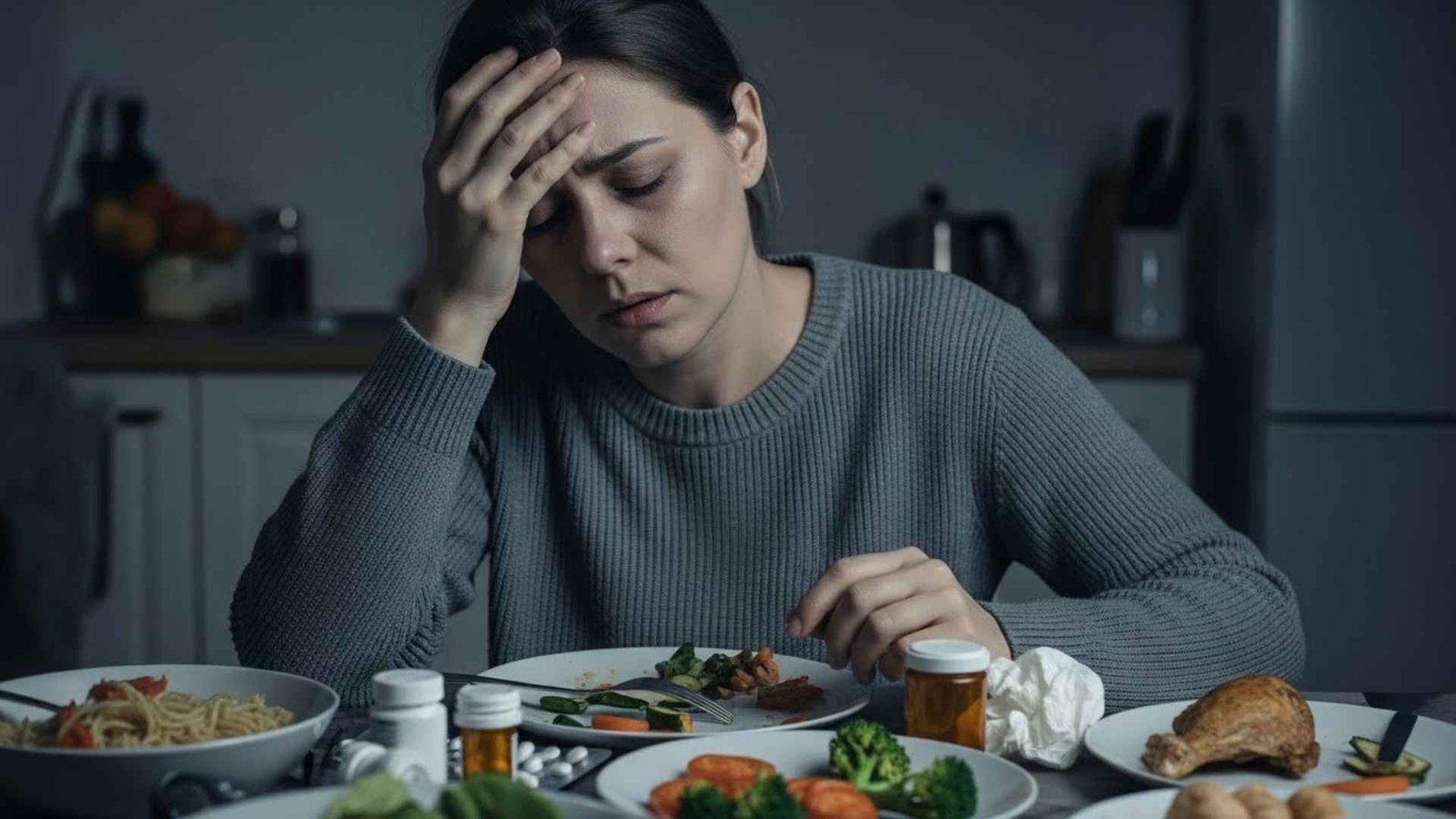
If acid is the fire, enzymes are the workers that take the machinery apart. They are the chemical scissors that snip food into absorbable nutrients.
Around age 40, your pancreas starts to slow down production of two key players:
- Lactase: The enzyme that breaks down dairy sugar.
- Lipase: The enzyme that handles fats.
This is why you might suddenly look at a bowl of ice cream or a plate of fried calamari with fear. You literally don’t have the staff on duty to process the shipment anymore. The food passes through undigested, causing chaos in the colon.
3. The Saliva Shortage

This one sounds minor, but it’s huge. Digestion actually starts in your mouth. Saliva contains amylase, which starts breaking down carbs before you even swallow.
But as we age, salivary glands get a little sluggish (and many medications dry them out further). Without that “pre-wash” cycle, huge chunks of undigested food hit your already weak stomach acid, creating a backlog right at the start of the assembly line.
The Plumbing (Rusty Pipes and Loose Valves)

Okay, so the chemistry is off. But we also have to talk about the mechanics. Your digestive tract is basically a long muscular tube, and just like our knees and backs get a little stiff, so does the gut.
4. The “Lazy” Conveyor Belt (Motility Issues)

There’s a medical term called sarcopenia, which usually refers to losing muscle in your arms or legs. But guess what? Your intestines are muscle, too.
Dr. Ira Hanan, a gastroenterologist at the University of Chicago, explains it perfectly:
“Just like squeezing a toothpaste tube… As we age, this process sometimes slows down, and this can cause food to move more slowly through the colon.”
This is called slow motility. The wave-like squeezing motion (peristalsis) that pushes food through your system gets weaker. The result? “Constipation-lite.” You might go to the bathroom, but it feels incomplete, or things just sit in your system way longer than they should, extracting too much water and becoming hard to pass.
5. The Leaky Gatekeeper (GERD)

Let’s go back to heartburn for a second. If acid levels are dropping (Point #1), why does it burn?
Between your esophagus and stomach, there’s a valve called the Lower Esophageal Sphincter (LES). Its only job is to open for food and slam shut to keep acid down. As we age, that muscle gets loose. It gets floppy.
So, even if you have less acid than you used to, that acid is sloshing up into your throat because the door is unlatched. It’s a mechanical failure, not necessarily a chemical surplus.
6. Potholes in the Road (Diverticulosis)

This is one of those things nobody tells you about until you’re in the ER. Over time, weak spots can develop in the wall of your colon, ballooning out to form little pockets. This is called diverticulosis.
According to the NIDDK, this is rare before age 40 (<20%), but by age 60? 30–50% of us have them.
Usually, they don’t hurt. But they are essentially “potholes” where food (like seeds or popcorn) can get stuck, fester, and cause inflammation. It changes the topography of your gut, making it trickier to navigate.
The “Adulting” Tax
💊 The Medicine Cabinet Effect
By our 40s and 50s, most of us are taking something. But these “helpers” come with a price!
🤧 Surprise! Adult Allergies
Your immune system is getting a bit cranky with age.
Sometimes the hardware is fine, but the software is glitchy. This is where things get really interesting (and frustrating).
7. The Great Hormone Hijack

If you are a woman in perimenopause or menopause, this is likely your smoking gun.
Estrogen and progesterone don’t just control your cycle; they influence cortisol and gut motility. When estrogen drops, the gut slows down. A massive 2024 study presented to The Menopause Society found that 94% of perimenopausal women reported digestive symptoms, with bloating being the #1 complaint.
Dr. Stephanie Faubion, Medical Director of The Menopause Society, notes that because we focus so much on hot flashes, “it can be easy to overlook or underestimate the significance of digestive issues” during this transition.
But guys, you aren’t off the hook. As testosterone drops, abdominal muscle tone decreases, often leading to increased “visceral fat”—that hard belly fat that physically squishes your stomach and messes with digestion.
8. The Thirst Signal Glitch

This is one of the weirdest parts of aging. Your hypothalamus—the part of your brain that tells you “Hey, drink some water”—loses sensitivity.
You can be clinically dehydrated after 50 and not feel thirsty.
Here is the problem: Digestion requires massive amounts of water. If you don’t drink enough because your brain didn’t tell you to, your colon steals water from your food waste to keep your vital organs running. The result? Rock-hard stool and a sluggish system. You aren’t constipated; you’re dried out.
9. The Microbiome Makeover

You’ve heard of the gut microbiome—the trillions of bacteria living in your intestines. Think of it like a garden.
Giulia Enders, scientist and author of Gut, puts it beautifully:
“The gut is a garden, requiring care and nourishment to thrive… [In aging] weeds can start to take over.”
As we age, the diversity of our “good” bacteria drops, and “weeds” (inflammatory bacteria) multiply. This state, called dysbiosis, leads to “inflammaging”—chronic, low-grade inflammation that makes your gut sensitive to foods it used to ignore.
The “Adulting” Tax (Lifestyle Accumulation)

Finally, we have to look at the external factors. These are the things we do to ourselves, often out of necessity.
10. The Medicine Cabinet Effect
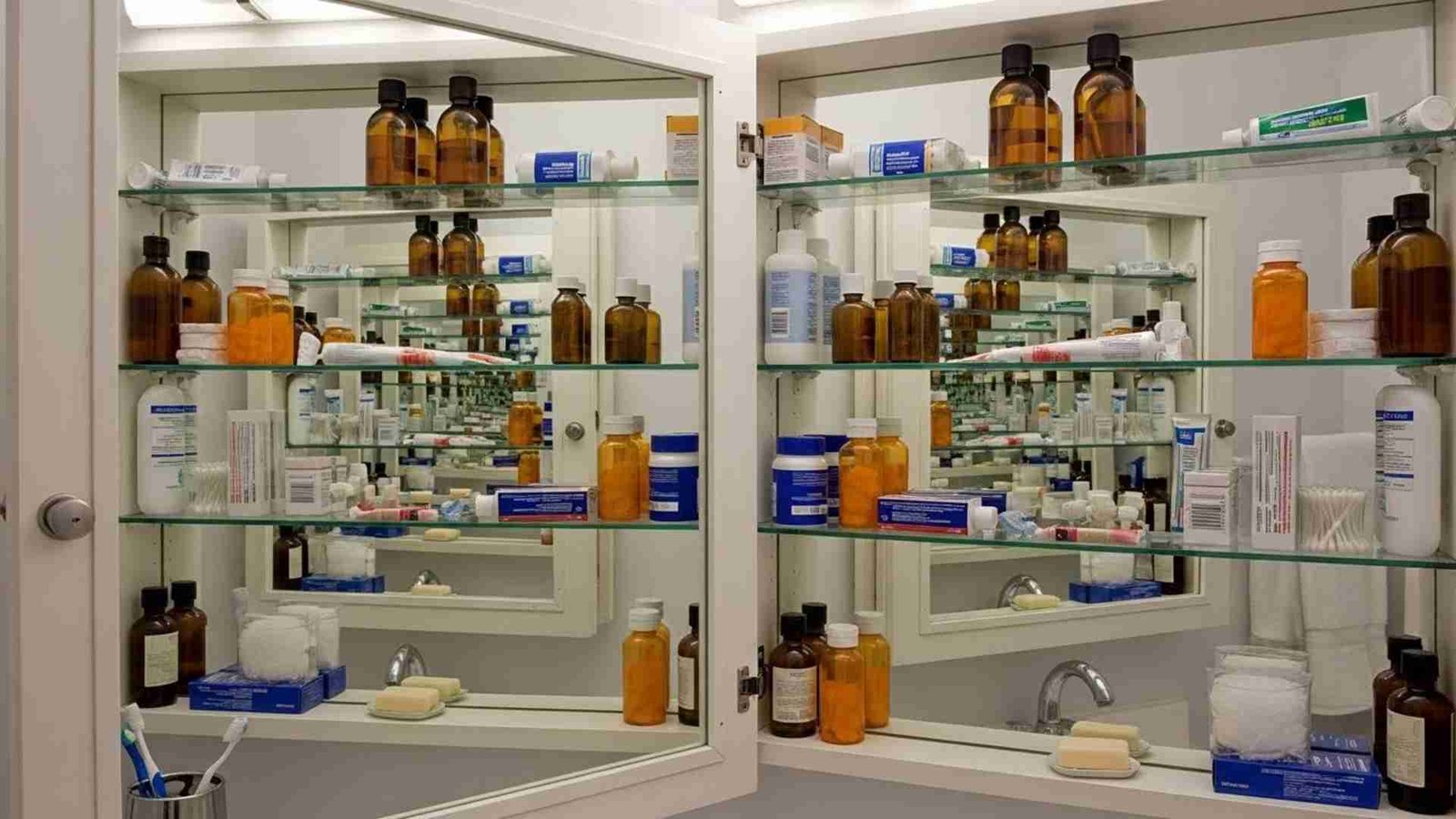
By our 40s and 50s, most of us are taking something. Maybe it’s a statin, maybe it’s blood pressure medication, or maybe it’s just Ibuprofen for that bad knee.
- NSAIDs (Advil/Motrin): Regular use increases the risk of stomach bleeding or ulcers by 3–5 times in older adults (Frontiers in Pharmacology, 2022). They strip away the stomach’s protective mucus layer.
- Blood Pressure Meds: Many work by relaxing blood vessels (calcium channel blockers), but they don’t discriminate—they also relax the gut muscles, worsening constipation.
11. Surprise! Adult-Onset Allergies
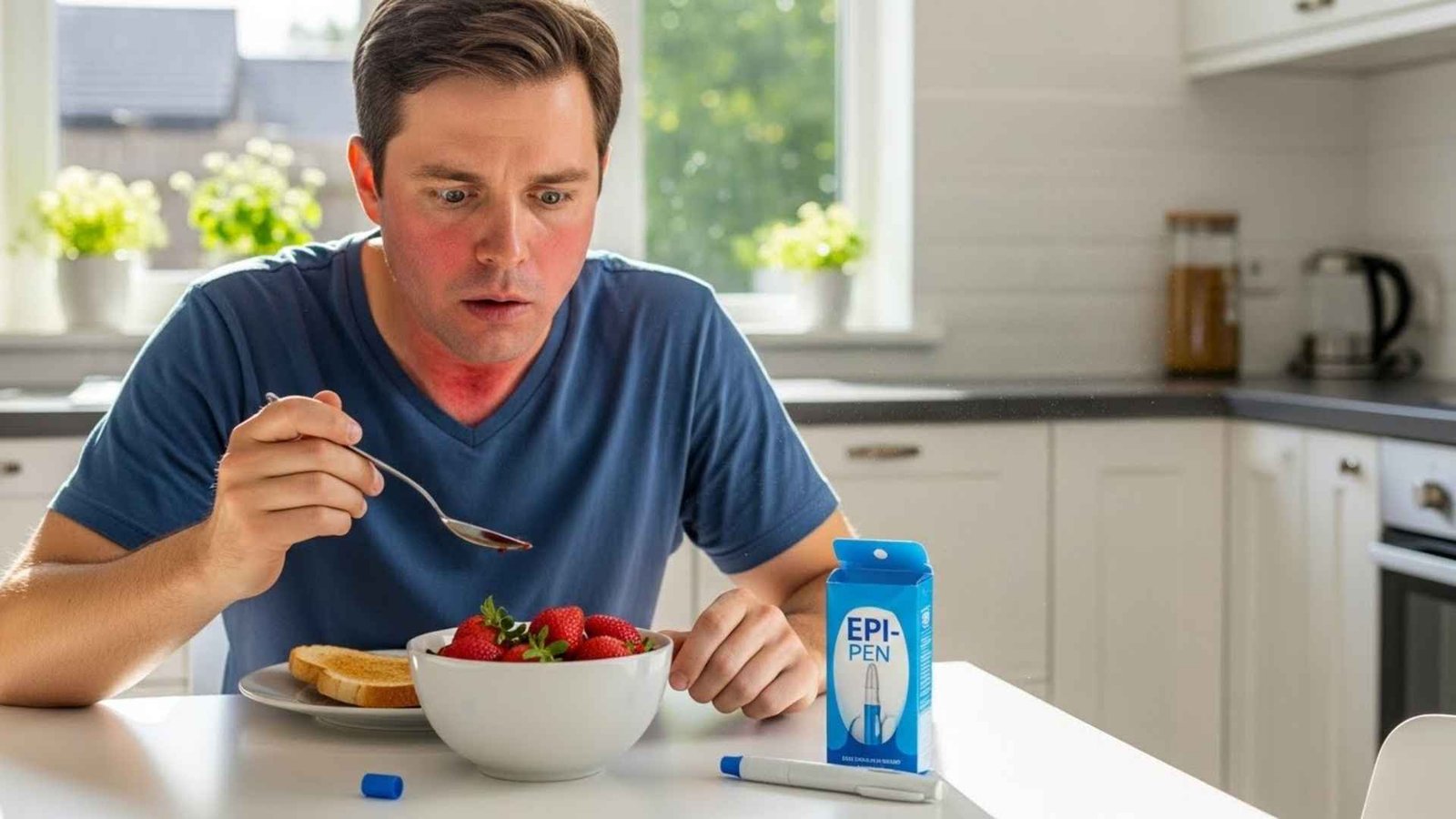
You ate peanut butter your whole life. Suddenly, you eat a cookie and your throat itches.
We used to think food allergies were for kids. But a study in JAMA Network Open found that 45% of adults with food allergies developed them after age 18. Shellfish and tree nuts are the usual suspects. Your immune system, which is getting a bit cranky with age, suddenly decides that a food you’ve loved for decades is now an invader.
Need More Help For The “New Normal”? Look Into These
Sometimes, knowing why it’s happening isn’t enough—you need a few tools to handle the job. If the strategies above help but you still feel like your system needs a “support crew,” there are products designed specifically to handle these midlife shifts. I’ve rounded up five that actually target the mechanical and chemical failures we just talked about.
1. Zenwise Digestive Enzymes

We talked about the “Enzyme Walkout” (Reason #2). This is essentially hiring temporary workers to replace the ones that retired. This particular blend is highly rated because it includes prebiotics and probiotics along with the enzymes, so you’re tackling digestion and gut health in one go. It helps break down fats, fiber, and proteins so your stomach doesn’t have to do all the heavy lifting alone.5
2. Kölbs Bed Wedge Pillow

For the “Leaky Valve” sufferers (Reason #5), lying flat is the enemy. This pillow keeps your upper body elevated just enough to use gravity to keep acid in your stomach where it belongs, so you don’t wake up with that fire in your chest at 2 AM. 6It’s a simple mechanical fix for a mechanical problem.
3. Squatty Potty Toilet Stool

This fixes the “Rusty Pipes” and motility issues (Reason #4) almost instantly. It unkinks your colon by putting you in a natural squatting position, making gravity work for you instead of against you. It sounds silly until you try it—then you’ll never want to go without it.
4. Garden of Life Dr. Formulated Probiotics (50 Billion CFU)

Your gut garden needs weeding and replanting (Reason #9). This specific blend is heavy-duty and shelf-stable, designed to restore diversity to a gut that has been through decades of stress and dietary shifts. It helps calm down the bloating and reset the “inflammaging.”
5. Giotto Motivational Water Bottle

Since your brain won’t tell you when you’re thirsty anymore (Reason #8), this bottle will. With clear time markers printed on the side (8 AM, 10 AM, 12 PM…), it turns hydration into a simple schedule you can see, rather than a guessing game. It solves the “I forgot to drink” problem perfectly.
