


You know that feeling. You wake up one morning, maybe a few months after your 44th or 45th birthday, and it feels like someone came in during the night and swapped out your body for a different one. The workout that uses to keep you lean isn’t working. The salad you ate for lunch seems to have settled directly onto your waistline. You feel tired in a way that coffee doesn’t touch.
For years, doctors (and probably a few well-meaning friends) have told us this is just a slow, gradual slide. “It’s just aging,” they say. “Eat less, move more.”
But here’s the thing: You aren’t crazy, and you aren’t imagining it.
New research has finally vindicated what millions of us have felt for years. Aging isn’t a slow slide; it’s a series of rocks. And the first big one happens right around age 44.
We’re going to walk through exactly what has shifted under the hood of your metabolism—from your cells to your hormones—and, more importantly, I’m going to give you the manual to restart the engine.
The “Age 44” Event: It’s Not Gradual

If you feel like you aged “overnight,” you’re closer to the truth than you think. A massive molecular profiling study from Stanford Medicine recently tracked thousands of molecules in people aged 25 to 75. They expected to see a smooth, linear line of aging.
Instead, they found two massive “spikes” of dysregulation—periods where the body undergoes rapid, dramatic change. The first one? Age 44.
During this window, the study found significant shifts in how our bodies handle:
- Lipids (Fats): Suddenly, your ability to clear fat from your blood drops.
- Alcohol: Your capacity to metabolize that glass of wine plummets (more on this later).
- Cardiovascular Structure: The stiffness of heart tissues begins to change.
This creates a “metabolic storm.” The rules that govern your body at 35 simply do not apply at 45 because the molecular environment has fundamentally shifted. It’s like trying to run a new software update on an old operating system—things are going to crash unless we upgrade the hardware.
The Muscle Crisis 📢
Think of your muscles like an engine. In your 20s, that engine was sensitive! 🏎️
But in your 40s? Your muscles go “Deaf.” They barely hear the signal to build.
The “Leucine Threshold” Gap
The Consequence ⚠️
Because the signal is weak, muscles slowly atrophy (shrink).
Since muscle is your main calorie-burner, your metabolic rate drops.
“You aren’t eating more; you’re just burning less because your engine is smaller.”
If there is one concept you need to take away from this, it’s Anabolic Resistance.
Think of your muscles like an engine. In your 20s, that engine was sensitive. You’d eat a chicken breast or do a few squats, and your muscles would scream, “Okay, let’s build and burn!”
But as we hit our 40s, our muscles started to lose their hearing. They become “deaf” to the signals that used to work. You eat the same protein, you do the same workout, but your muscles barely register the call to action.
Researchers call this the “leucine threshold.” Leucine is the amino acid responsible for turning on the muscle-building switch. In our youth, a small amount of protein (like 15-20g) was enough to flip that switch. Now? You need significantly more—about 30 to 40 grams per meal —just to get the same response you used to get for free.
Here is something that gap looks like visually. Notice the “gap” in the middle—that’s where your metabolism is getting lost.
The Consequence: Because your muscles aren’t getting the signal to repair, they slowly atrophy (shrink). Since muscle is your primary calorie-burning tissue, your metabolic rate drops. You aren’t eating more; you’re just burning less because your engine is smaller.
The “Skinny Fat” Epidemic (Sarcopenia)

We tend to think of muscle loss, or Sarcopenia, as something that happens to frail 80-year-olds. But the data shows it starts in your 40s. We lose about 3-8% of our muscle mass per decade after age 30, but the rate accelerates after 50.
But it’s not just about size; it’s about quality. We developed something called myosteatosis. This is basically “marbling,” as in a steak. Fat starts to infiltrate the muscle tissue itself. This makes the muscle weaker and, crucially, insulin resistant.
When your muscle is filled with fat, it can’t soak up blood sugar effectively. So, that sugar stays in your blood, insulin levels rise, and your body shifts into “storage mode” (usually right around the belly) rather than “burn mode.”
The Hormonal Perfect Storm
For Women: The Estrogen Exit

For women, perimenopause is a metabolic emergency. Estrogen was your metabolic guardian—it helped keep you sensitive to insulin and directed fat to be stored in your hips and thighs (which is relatively safe).
When estrogen leaves the building, two things happen:
- Insulin Resistance Rises: You become less able to handle carbohydrates.
- Fat Relocates: Without estrogen’s guidance, fat storage moves to the visceral area (deep belly fat). This isn’t just vanity; this fat is inflammatory and drives metabolic disease.
For Everyone: The Cortisol “Belly”

At 45, we are often at the peak of our career stress and family responsibilities. Enter Cortisol.
Cortisol is the “stress hormone,” and it has a nasty relationship with your waistline. It specifically tells your body to:
- Break down muscle (to free up quick energy).
- Store fat in the belly (because visceral fat has more cortisol receptors).
So, if you’re stressed, under-sleeping, and over-caffeinated, you are chemically programming your body to burn muscle and build belly fat. It’s a survival mechanism for a famine that never comes.

The Alcohol Reality Check

I know this one hurts, but we have to talk about it. Remember that Stanford study? It highlights a massive dysregulation in alcohol metabolism at age 44.
Here’s why that glass of wine hits differently now:
- Enzyme Drop: Levels of Alcohol Dehydrogenase (the enzyme that breaks down booze) decline. Your liver takes longer to clear the toxins.
- Fat Burning Pauses: Your liver prioritizes clearing alcohol over everything else. While it’s dealing with that glass of Merlot, it completely stops burning fat.
- Sleep Destruction: You might fall asleep faster, but alcohol destroys your REM and Deep Sleep. This raises cortisol the next day, which leads to… you guessed it, sugar cravings and belly fat.
The “Active Sedentary” Trap (NEAT)

This is the most hidden cause of metabolic slow-down. You might go to the gym for 45 minutes a day (which is great!), but what are you doing for the other 15 hours?
If you sit at a desk, commute in a car, and sit on the couch, you are what researchers call “Active Sedentary.”
Your metabolism relies heavily on NEAT (Non-Exercise Activity Thermogenesis)—all the little movements like walking, fidgeting, and standing. In our 40s, as we take “senior” roles at work or get tired, our NEAT collapses.
Look at the difference in calorie burn below. The person who skips the gym but stays active all day actually burns more than the office worker who hits the gym but sits the rest of the day.
Okay, enough bad news. The beautiful thing about physiology is that it is responsive. You can’t turn back the clock, but you can change the inputs to get a different output.
Here is the protocol to restart your engine at 45+.
1. The 30-Gram Protein Rule

We have to scream loud enough for your “deaf” muscles to hear.
- The Change: You must eat 30-40 grams of high-quality protein at every meal. No more “coffee for breakfast and salad for lunch.”
- Why: This hits the leucine threshold, triggering muscle repair and halting sarcopenia.
- Action: 3 eggs + egg whites at breakfast; a palm-and-a-half of chicken at lunch.
2. Lift Heavy (Stop the “Toning”)

Your bones and muscles need a reason to stay. Light pink dumbbells aren’t going to cut it.
- The Change: Strength training 2-3 times a week with heavy weights (where you can only do 6-12 reps).
- Why: This creates “mechanical tension,” the only thing strong enough to force your body to keep its Type II (fast-twitch) muscle fibers.
3. Walk Like Your Life Depends On It

We need to revive your NEAT.
- The Change: Aim for 8,000–10,000 steps a day.
- The Hack: “Exercise Snacking.” Every hour you sit, get up for 2 minutes. Do some air squats or just walk the hall. This flushes glucose out of your blood and wakes up your metabolism.
4. Sleep Is Medicine

You cannot fix your metabolism if you are sleep-deprived.
- The Change: 7-9 hours of cool, dark sleep.
- The Science: Just one week of poor sleep can reduce your insulin sensitivity by 25%. It essentially makes you pre-diabetic until you catch up.
5. Check Your Nutrients

Two common shortcomings can stall your progress:
- Vitamin D: Low levels are linked to insulin resistance and belly fat. Get checked.
- Magnesium: Essential for blood sugar control and sleep. Most of us are deficient.
Need More Help? Look Into These
I’m generally skeptical of “gadgets” because no device can do the push-ups for you. But, in my experience, the hardest part of this midlife transition isn’t knowing what to do—it’s removing the friction so you actually do it. Sometimes, a simple tool can bridge the gap between “I should walk more” and “I just walked 5 miles while answering emails.” If you’re looking to invest in your metabolism restart, these are the few tools I’ve found that are actually worth the money and can help you stick to the protocols above.
1. Optimum Nutrition Gold Standard 100% Whey Protein:

Hitting that 30g protein threshold at breakfast is tough with just eggs or yogurt. A high-quality whey isolate is the fastest, easiest way to ensure your muscles get the “loud” signal they need to repair. This one mixes easily and doesn’t taste like chalk.
2. UREVO Under Desk Treadmill (Walking Pad):
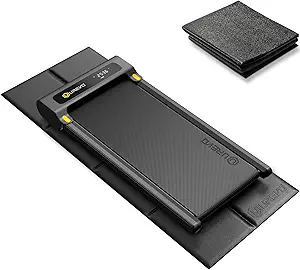
This is the ultimate cheat code for fixing a sedentary job. By sliding this under your desk, you can easily hit 10,000 steps a day without ever “going for a walk.” It completely reverses the NEAT collapse we talked about earlier.
3. Fit Simplify Resistance Loop Exercise Bands:

You don’t always need a gym membership to build muscle. These inexpensive bands are fantastic for waking up “dead” glutes and adding resistance to squats and lunges at home. They are perfect for sneaking in a workout while watching Netflix.
4. MUSICOZY Sleep Headphones Bluetooth Eye Mask:

If you struggle with sleep quality (or a partner who snores), this is a game-changer. It blocks out 100% of light while letting you listen to white noise or meditation tracks comfortably—perfect for protecting that deep sleep window we need for insulin regulation.
5. Doctor’s Best High Absorption Magnesium Glycinate:

Most of us are magnesium deficient, which wreaks havoc on sleep and blood sugar. This “glycinate” form is easy on the stomach and highly absorbable. Taking this before bed can help relax muscles and support deeper restorative sleep.
