
I Tried 5 Passive Income Streams: Here’s What Actually Paid the Bills.



Let’s be honest for a second. We’ve all done it. It’s 11 p.m. on a Tuesday, you’re exhausted from work, and you find yourself scrolling through TikTok or YouTube watching some guy in a rented Lamborghini tell you how he made $50,000 while sleeping.
It feels… gross, right? But also, a little bit seductive.
Because the dream isn’t really about the Lamborghini. It’s about the freedom. It’s about the idea that maybe—just maybe—you don’t have to trade every single hour of your life for a paycheck until you’re 65.
So, I decided to treat this like a science experiment. I looked at the five most popular “passive” income streams in the 2025 economy to see what actually works, what’s a total scam, and what will actually pay your electric bill.
And here’s the first thing I learned: “Passive” is a spectrum.
There is no such thing as “do nothing, get paid.” You either pay with money upfront (Capital), or you pay with sweat upfront (Labor). You can’t skip both.
1. The Inflation Shield: High-Yield Savings Accounts (The “Boring” Hero)

I know, I know. You clicked on this for secrets about AI dropshipping or crypto bots. And here I am talking about a savings account.
But hear me out.
For the last decade, savings accounts were a joke. You’d put in $1,000, and a year later, the bank would insult you with eighteen cents of interest. But in late 2024 and 2025, the game changed. Thanks to the Federal Reserve’s war on inflation, we are living in a “Golden Age” for savers.
How It Actually Works (No Jargon)
This is purely a Capital-Based stream. You put money in, and the bank pays you to keep it there. It’s powered by Compound Interest.
Think of it like a snowball rolling down a hill.
- Day 1: It’s a small ball.
- Day 50: It picked up some snow. Now the ball is bigger.
- Day 51: Because the ball is bigger, it picks up even more snow on the next roll.
The bank pays you interest on your money, and then—this is the magic part—they pay you interest on the interest they just paid you.
The Real Numbers
Let’s look at a real-world scenario. Say you have $25,000 sitting in an emergency fund.
- In a traditional bank (Chase, BofA): You’re likely earning 0.01% to 0.40%. You might make $2.50 to $100 a year. That’s a coffee.
- In a High-Yield Savings Account (HYSA): You’re earning 4.00% to 5.00%. That’s $1,000 to $1,250 a year.
The Verdict: This is the only stream that pays you immediately with zero risk. It won’t make you rich, but an extra $100 a month covers your internet and Netflix. That’s a bill you no longer have to work for.
2. The “Rich Uncle” Strategy: Dividend Stocks

If an HYSA is like a safe, boring friend, Dividend Stocks are like a wealthy uncle who slips you cash at family gatherings just because he likes you.
When you buy a dividend stock, you aren’t just betting a line on a chart goes up. You are buying a tiny piece of a real company. And because you’re an owner, when that company makes a profit, they send a cut of it directly to your brokerage account.
The Trap You Need to Avoid
New investors always make the same mistake: they chase the highest number. They see a company paying a 12% yield and think, “Jackpot!”
Don’t do this.
Usually, if a yield is that high, it’s because the company is in trouble and the stock price has crashed. It’s called a Yield Trap.
Instead, you want to look for the “Dividend Kings.” These are companies that haven’t just paid a dividend, but have raised it every single year for 50 years straight. Through wars, recessions, pandemics—they just keep paying.
Can It Pay the Bills?
Yes, but it takes money to make money. To generate $1,000 a month in passive dividends (assuming a safe 4% yield), you’d need a portfolio worth about $300,000.
It’s a long game. But unlike the savings account, your principal (the stock price) can grow over time, giving you a raise without you lifting a finger.
REITs
The Hands-Off Landlord
Stop fixing toilets at 2 a.m.
There is nothing passive about being a traditional landlord.
Back
Buy Shares, Own Skylines.
A REIT is a company that owns massive portfolios (Malls, Apartments) and pays taxable income back to you.
The Losers: Office
Empty cubicles & 20% vacancy rates. Remote work is the new normal.
The Winners: Data
Server Farms. Every time you use AI, these landlords get paid premium rent.
Real estate is the classic “passive income” dream. But have you ever fixed a clogged toilet at 2 a.m.? There is nothing passive about being a landlord.
Enter the REIT (Real Estate Investment Trust).
A REIT is basically a company that owns massive real estate portfolios—shopping malls, apartment buildings, data centers—and you can buy shares of it just like a stock. By law, they have to give 90% of their taxable income back to you, the shareholder.
2025: A Tale of Two Cities
Here’s what the research told me: Not all real estate is winning right now.
- The Losers: Office buildings. With remote work still going strong, vacancy rates are high (~20%). You don’t want to own empty cubicles.
- The Winners: Data Centers. Think about it. Every time you use ChatGPT or stream a movie, that data lives somewhere. REITs that own the server farms are charging premium rent right now.
The Verdict: REITs are a fantastic middle ground. High yields (often better than stocks) and exposure to real estate appreciation, without the 2 a.m. plumbing calls.
4. The Recommendation Engine: Affiliate Marketing

Okay, we’re crossing the line now. The first three streams required Capital (money). These next two require Labor (time).
Affiliate marketing is simple: You recommend a product. Someone buys it. You get a commission.
The “Pizza Coupon” Analogy
Think of an affiliate link like a coupon for a pizza place with your name encoded on it.
- You give the coupon to a friend.
- They don’t buy pizza today.
- Next week, they get hungry, find your coupon, and order a pepperoni pie.
- The pizza shop owner sees your name and hands you $5.
That’s how “cookies” work on the internet. You can get paid for a sale that happens 30 days after someone clicked your link.
The Brutal Truth About Earnings
This is where the “get rich quick” dreams usually die. The data shows a massive gap between beginners and pros.
- Beginners (<1 Year): Most earn $0 – $1,000/month. It’s the “Valley of Despair.” You’re writing blogs or making videos that nobody sees.
- Pros (3+ Years): Suddenly, it clicks. Traffic compounds. Trust builds. The average income jumps to over $9,000/month.
The Secret: In 2025, people are sick of AI-written “Top 10 Toasters” articles. They want human connection. The affiliates making bank today are the ones making honest videos showing the product in their hands, talking about what they hate about it, not just what they love. Trust is your currency.
Create Once,
Sell Forever
The Digital Product Model
Why It Works?
Zero Marginal Cost. Make a product once and sell it a million times without spending a dime on inventory.
- ❌ 2025 Daily Planner (Flopped)
- ✅ Postpartum C-Section Recovery Tracker
- ✅ Budgeting Sheet for Graphic Designers
Specific sells. Solve a painful problem for a small group.
This is my personal favorite. It’s the only business model where you can make a product once and sell it a million times without spending a dime on inventory.
We’re talking about eBooks, Notion templates, printable planners, or online courses.
Why It Works: Zero Marginal Cost
If you sell chairs, selling 100 chairs means you have to build 100 chairs. That’s expensive. If you sell a PDF guide on “How to Build a Chair,” selling the 100th copy costs you… $0.
The “Niche Down” Rule
I tried selling a “2025 Daily Planner.” It flopped. Why? Because there are a million generic planners. Then I looked at the data. The people making money are selling things like “Postpartum C-Section Recovery Tracker” or “Budgeting Spreadsheet for Freelance Graphic Designers.”
Specific sells. If you can solve a very painful, very specific problem for a small group of people, they will happily pay you $20 for a PDF that solves it.
Need More Help For Your Journey? Look Into These
Starting a passive income stream is rarely about the “one big idea” and mostly about having the right tools to stay consistent when things get boring. Whether you are sketching designs for a digital product, recording audio for a course, or just trying to get your mindset right, having reliable gear can make the difference between giving up and breaking through.
Here are 5 useful tools that can smooth out the process:
1. Atomic Habits by James Clear:

If you’re struggling to work on your side hustle consistently, this book is the manual. It’s not about motivation; it’s about building a system so you don’t need motivation.
2. Clever Fox Planner PRO:

Digital tools are great, but sometimes you need to write it down to make it real. This planner is designed specifically for goal-setting and tracking daily productivity, which is essential when you are your own boss.
3. Blue Yeti USB Microphone:

If you plan on making courses or YouTube videos, audio quality is non-negotiable. People will forgive bad video, but they click away from bad audio. This mic is the industry standard for a reason—plug and play, studio quality.
4. Wacom Intuos Graphics Drawing Tablet:
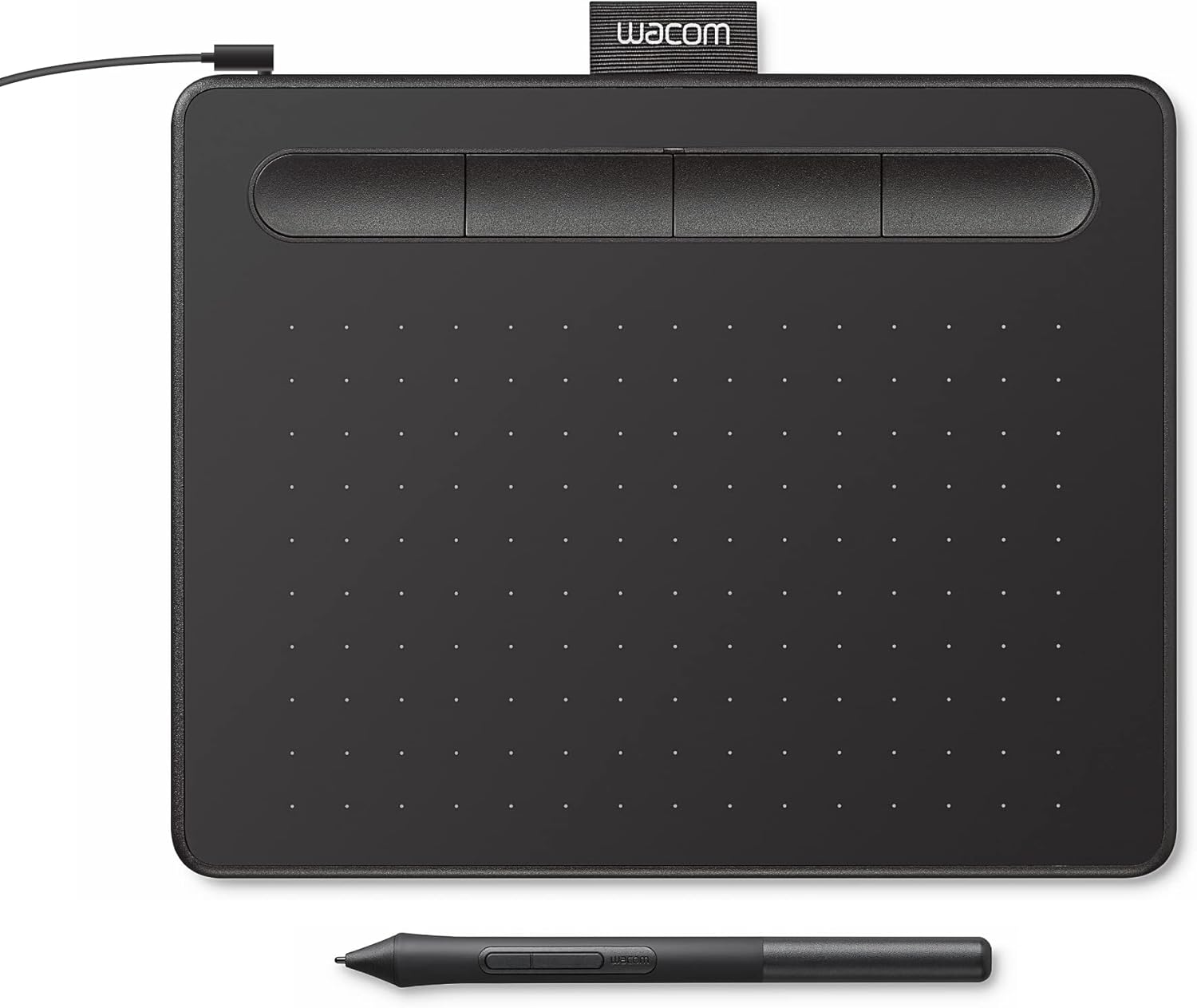
For anyone looking to sell digital art, printables, or handwritten fonts on Etsy, a mouse won’t cut it. This tablet allows you to draw naturally directly into your computer.
5. The Psychology of Money by Morgan Housel:

Before you make money, you need to understand your relationship with it. This book is a masterclass in why we behave the way we do with money—crucial for anyone looking to transition from “spender” to “investor.”