
The Pre-Diabetes Signs Your Doctor Missed: 14 Early Warnings Your Body Is Giving You Right Now


Look, we need to talk about something that’s happening to nearly one in three of us right now. It’s not something you’ll see on the evening news like a virus outbreak, but it’s just as widespread.
It’s called prediabetes. And if you’re sitting there thinking, “I feel fine, so this isn’t about me,” I need you to stay with me for a second.
Here’s the scary reality: about 98 million American adults have prediabetes right now. That’s 38% of the adult population. But the statistic that keeps me up at night isn’t the 98 million—it’s that more than 80% of them have no clue they have it.
They’re walking around with a metabolic engine that’s running way too hot, causing silent damage to their blood vessels and nerves, all while their standard lab tests might look “normal” or “borderline.” By the time a doctor officially diagnoses diabetes, the body has often been struggling for years.
The good news? Your body is talking to you. It’s actually been trying to warn you for a while. It doesn’t send you a text message; it sends “soft signals”—little changes in your skin, your mood, your vision, and your energy.
We’re going to walk through 14 of these signs. If you recognize yourself in this list, don’t panic. This isn’t a diagnosis of doom; it’s a massive opportunity to turn the car around before you hit the cliff.
The Mirror Test (What Your Skin Is Screaming)

Our skin is weirdly accurate at reflecting what’s happening inside our blood. When your insulin levels are chronically high (which happens long before your blood sugar stays permanently high), it acts like a growth hormone for your skin cells. It makes things grow and change in ways that can look like “just aging” or “bad hygiene,” but are actually biological red flags.
1. The “Dirty” Neck That Won’t Scrub Off

You might notice a patch of skin on the back of your neck, your armpits, or maybe the groin area that looks… well, dirty. It’s darker, maybe a bit velvety or leathery to the touch. You might have even tried scrubbing it in the shower, but it doesn’t budge.
Doctors call this Acanthosis Nigricans. It’s not dirt. It’s your skin cells multiplying too fast because they’re being over-stimulated by insulin. It’s essentially a “brand” of insulin resistance. If you see this on yourself or your kids, it’s a major sign that the metabolic system is under stress.
2. The Skin Tag Explosion

We usually write off skin tags as annoying little things that happen when we get older. And sure, an occasional tag is normal. But if you suddenly notice a crop of them popping up—especially on your eyelids, neck, or under your arms—pay attention.
These little “sentinel growths” love friction and insulin. High insulin acts like fertilizer for them. In fact, studies show that having multiple skin tags is strongly linked to high triglycerides and insulin resistance. Think of them as little flags waving for help.
3. The Mystery Shin Spots

Have you ever looked at your shines and seen small, round, brownish spots? They look a bit like age spots or maybe old bruises that never quite healed?
This is called Diabetic Dermopathy , or “shin spots.” Because the skin on your shins is thin and has poor blood supply, it’s one of the first places to show damage when high sugar levels start messing with your tiny blood vessels (capillaries). It’s a silent sign that your micro-circulation is taking a hit.
4. Yellow Bumps Near Your Eyes
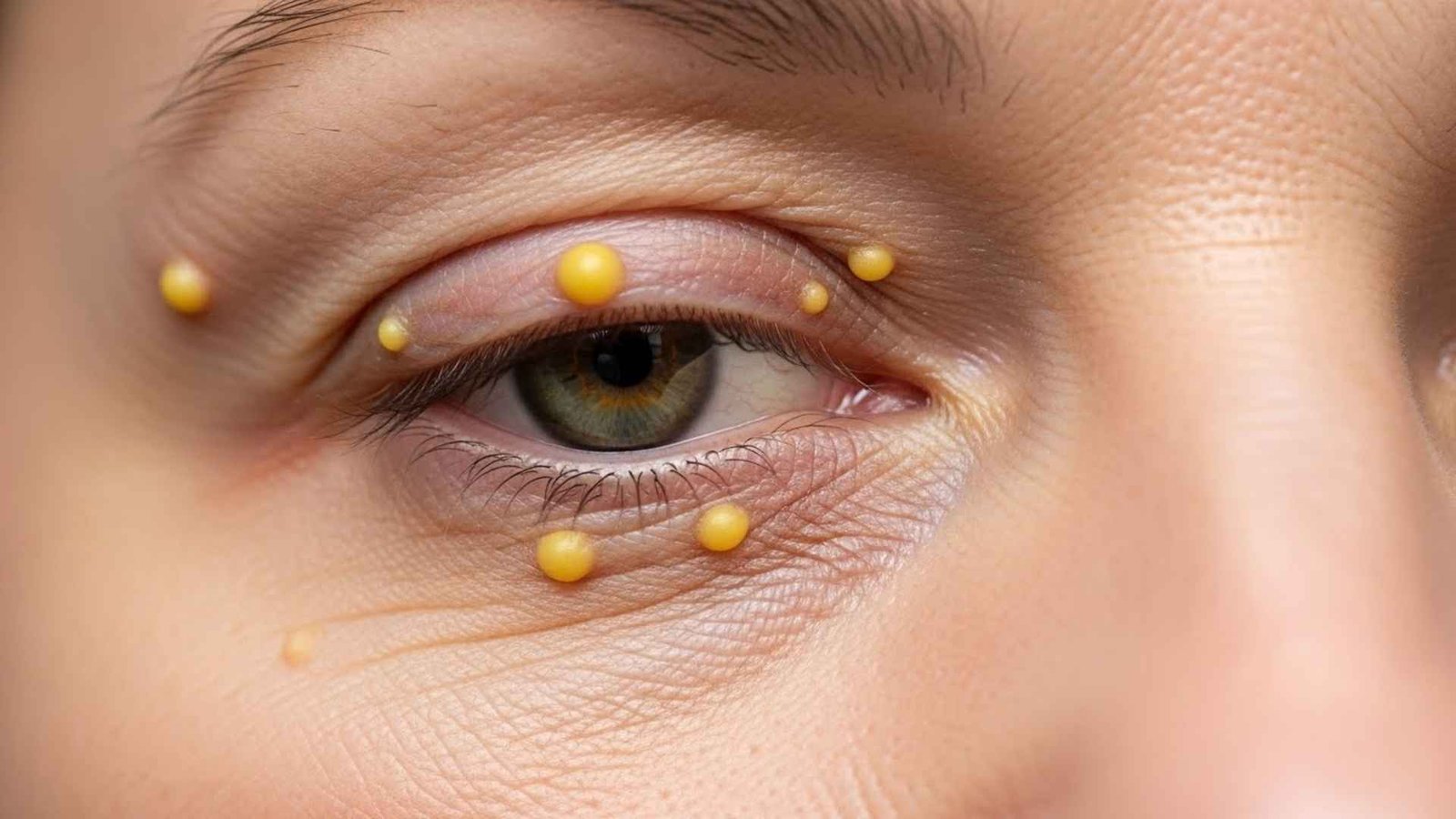
If you see soft, yellowish lumps on your eyelids or near the corners of your eyes, don’t just cover them with concealer. This is Xanthelasma. These are deposits of cholesterol.
“But wait,” you might say, “isn’t that a heart thing?” Yes, but it’s also a diabetes thing. Insulin resistance wrecks how your body handles fats, often raising your triglycerides and lowering your good cholesterol (HDL). When that fat has nowhere to go, it can deposit under your skin.
The Sensory Shift
Silent Hearing Loss
Hearing loss is twice as common in diabetes. High sugar damages the tiny vessels feeding your inner ear (cochlea). It’s not just “getting old”—it’s energy starvation.
The “Shifting” Vision
Blurry one day, clear the next? High glucose makes the lens swell with water, physically changing its shape. It’s like a camera that keeps zooming in and out on its own.
Bleeding Gums
Gum disease and high sugar feed each other. Sugar in saliva feeds bacteria. If you have red, puffy gums despite good hygiene, your body is struggling to fight the inflammation.
This condition doesn’t just change how you look; it changes how you experience the world.
5. The “Silent” Hearing Loss

This one floored me when I first researched it. Did you know hearing loss is twice as common in people with diabetes and 30% higher in those with prediabetes?
It’s not just about “getting old.” The inner ear is incredibly demanding on energy and blood flow. When high sugar damages the tiny vessels feeding your cochlea (the hearing organ), you start losing the ability to hear high frequencies. If you’re constantly asking your spouse to stop mumbling or you can’t hear in a crowded restaurant, it might be your blood sugar, not just your ears.
6. The “Shifting” Vision

One day your glasses work fine; the next day things are blurry. Then, a few hours after dinner, it cleared up.
This fluctuation is key. High glucose can actually seep into the lens of your eye, pulling water with it. This swells the lens and physically changes its shape. It’s like looking through a camera lens that keeps zooming in and out on its own. If your vision is unstable, check your glucose before you buy new glasses.
7. Bleeding Gums (The Dentist Knows)

Your dentist might be the first person to spot your prediabetes. Gum disease and high blood sugar feed off each other. High sugar in your saliva feeds bacteria, and the inflammation from infected gums makes your insulin resistance worse.
If you floss and bleed every time, or if your gums are red and puffy despite good hygiene, your body’s ability to fight bacteria in your mouth is compromised.
The Internal Alarms

8. Gout: The Joint Warning
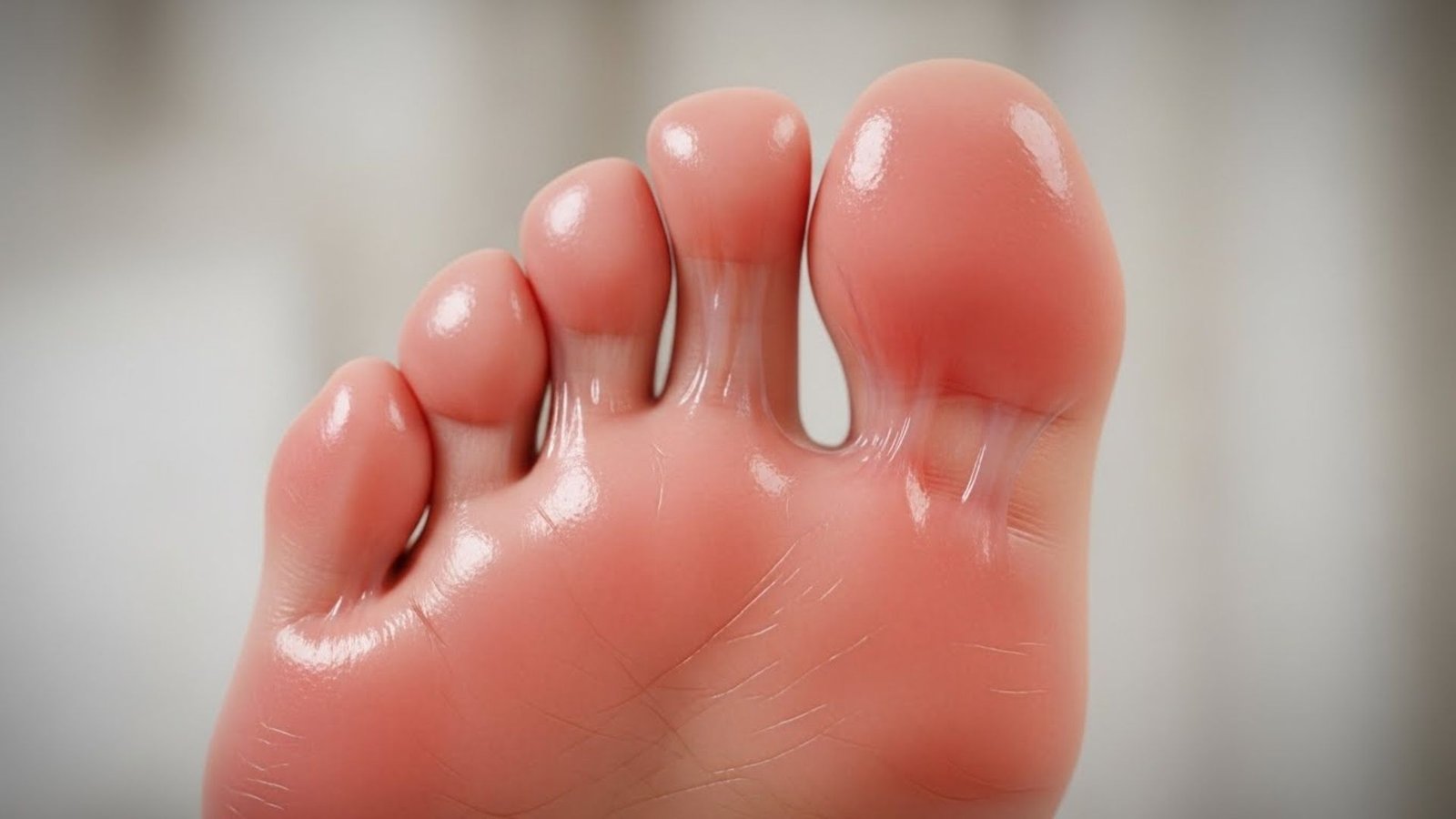
Gout used to be called the “disease of kings,” associated with rich diets. But today, it’s a huge red flag for metabolic syndrome. High insulin tells your kidneys to hold onto uric acid instead of peeing it out.
When that uric acid builds up, it crystallizes in your joints (usually the big toe). Ouch. If you’re having gout flares, you need to check your insulin, not just cut back on red meat.
9. Infections That Won’t Quit
Yeast feeds on sugar. Period. If you are dealing with recurrent yeast infections (ladies, looking at you, but this happens to men too as “jock itch” or balanitis), it’s a sign your system is sugary.
High sugar also stuns your white blood cells, making them slower at killing bacteria. So, if you feel like you catch everything going around or can’t shake a simple fungal infection, your immune system might be fighting a sugar war.
10. The Slow-Motion Healing

You get a paper cut, a mosquito bite, or a blister, and it’s still there two weeks later. It’s not “just aging.” It’s vascular efficiency. Your blood needs to deliver oxygen and nutrients to heal a wound. If your blood is thick with sugar and your vessels are stiff, that delivery service slows to a crawl.
11. Sexual Dysfunction (The Canary in the Coal Mine)

This is a tough one to talk about, but it’s vital. For men, erectile dysfunction (ED) is often an early vascular warning. The arteries in the penis are tiny—much smaller than the ones in your heart. So, they get clogged or damaged by sugar first , often years before a heart attack happens. In women, it manifests as dryness or a drop in sensation.
Brain & Energy 💥
Later, diabetes causes the body to starve and eat its own muscle.
Sugar Spike ➔ Pancreas Panic ➔ Insulin Dump ➔ CRASH!
Adrenaline hits, making you anxious and hangry.
Your brain needs glucose, but insulin resistance locks the door.
You are swimming in fuel, but your engine is stalling.
12. Unexplained Weight Changes

This is the paradox. In the early stages (prediabetes), high insulin locks your fat cells in “storage mode,” making it nearly impossible to lose weight, especially around the belly.
But later, if things progress toward full-blown diabetes, you might lose weight rapidly without trying because your body is literally starving for energy and eating its own muscle.
13. The “Hangry” Monster & The Crash

Do you get shaky, irritable, or anxious if lunch is an hour late? That’s not just a personality quirk; it’s likely reactive hypoglycemia.
Here’s what happens: You eat a bagel. Your sugar spikes. Your pancreas panics and dumps a massive load of insulin. Your sugar crashes hard. That crash releases adrenaline, making you feel anxious and “hangry.”
14. The Post-Lunch Coma (Brain Fog)

If you need a nap at 2 PM every day, or if you feel like your brain is full of cotton wool after a meal, that’s a metabolic crisis. Your brain runs on glucose, but in insulin resistance, it can’t get the fuel into the brain cells efficiently. You’re swimming in fuel, but your engine is stalling.
Need More Help? Look Into These
I’m a big believer that you can’t just buy health in a bottle—lifestyle is always king. But let’s be honest, sometimes having the right tools makes the job a heck of a lot easier. If you’re looking to track your progress or give your body a little extra support while you make these changes, here are a few things that are actually useful and worth checking out.
1. Contour Next One Blood Glucose Monitoring System:

If you really want to know what’s happening, you can’t guess. This is widely considered one of the most accurate meters available. It has a “second-chance” sampling feature (so you waste fewer strips) and syncs to your phone so you can actually see patterns, not just numbers.
2. CeraVe Diabetics’ Dry Skin Relief Moisturizing Cream:

If you are dealing with that persistent dry skin or those rough patches we talked about, this stuff is a lifesaver. It’s specifically formulated with ceramides and urea to hydrate skin that is struggling due to high blood sugar. It’s non-greasy and actually helps repair the skin barrier.
3. Diabetes Portion Plate (3 Sections):

Sometimes the hardest part is just visualizing “veggies first” or portion control. This plate does the thinking for you. It visually splits your meal: half for veggies, a quarter for protein, and a quarter for carbs. It’s a simple “cheat code” for eating without obsessively counting calories.
4. Horbäach Organic Apple Cider Vinegar Gummies:

We know vinegar helps blunt sugar spikes, but drinking liquid vinegar isn’t exactly a joy for everyone. These gummies are a top-rated alternative. They give you the benefits of ACV without the harsh taste, making it way easier to stick to the habit before meals.
5. Ceylon Cinnamon Capsules (Nutricost):

Cinnamon has been shown in studies to help mimic insulin and improve glucose transport. But you need the right kind (Ceylon), and it’s hard to eat enough of it on oatmeal alone. These capsules are a high-potency, easy way to add this metabolic supporter to your daily routine.