Cruise Directors Won’t Tell You: 19 Hidden Fees Eating Up Your Vacation Budget

You know that feeling when you spot an absolute steal of a cruise deal? You’re scrolling through your phone, and there it is: a seven-day Caribbean escape for $499. Your brain immediately starts packing your swimsuits. You’re thinking about the endless buffets, the turquoise water, and that sweet, sweet feeling of doing absolutely nothing for a week.
But here’s the thing—and I’m telling you this as a friend who’s seen the “final bill” shock way too many times—that $499 is rarely the final number. Honestly, it’s more like a “cover charge” just to get in the door. Once you’re on that ship, you’re stepping into a perfectly designed world where everything is set up to nudge you into spending just a little bit more.
In the industry, they call this “unbundling.” Think of it like a budget airline, but with better views and unlimited soft-serve ice cream. The cruise lines keep that initial fare low to get you excited, but they make their real profit on the “extras.” By the time 2025 rolled around, this became the standard way of doing business. It’s not that they’re trying to ruin your vacation; they’re just running a business where 40% to 50% of their money comes from what you spend after you board.
To give you an idea of the scale we’re talking about, the global cruise market is projected to serve a record 37.7 million passengers in 2025. That is a lot of people buying a lot of cocktails. And while the industry contributes over $168 billion to the global economy, they’ve gotten very good at making sure a big chunk of that comes out of your pocket $10 at a time.
Why Your “Cheap” Fare is Actually a “Loss Leader”
Before we get into the fees, you have to understand the psychology behind it. It’s called “Choice Architecture.” Basically, the cruise lines are the architects of your environment. They use something called the “Anchoring Effect.” If you’ve already committed $2,000 to your fare, a $100 specialty dinner feels like a minor “add-on,” even though you’d probably think twice about spending $100 on one dinner back home.
The ship itself is often a “loss leader.” This means they might sell the cabin for less than it costs them to run it, just to get you on board where they can sell you Wi-Fi, photos, and margaritas. Major companies like Royal Caribbean have seen their “Net Per Diems”—that’s the fancy way of saying “revenue per person per day”—increase by 26% since 2019.
Now, let’s get into the nitty-gritty. Here are the nineteen fees that are currently eating up vacation budgets in 2025.
1. Port Fees and “Head Taxes”
This is the first surprise you’ll hit, usually before you even board. You see a fare of $499, but when you go to pay, it jumps to $650. That extra bit? It’s a combination of docking fees and “head taxes” that local governments charge for every person stepping off the ship.
It’s non-negotiable, and depending on your itinerary, it can easily add $100 to $200 per person to your total. Even if you never leave the ship, you’re still paying for the privilege of being in that water.
2. Automatic Daily Service Charges (The “Gratuity” Nudge)

This is the one that catches almost every first-timer off guard. You’ll wake up on the last morning, check your account on the TV, and see a charge of $130 or more for “service.” Most lines now automatically bill you between $16 and $21 per person, per day.
For a family of four, that’s an extra $500 to $600 for the week. While some lines let you adjust this at Guest Services, there is a massive psychological “nudge” to leave it alone. It’s meant to cover your room steward and the dining staff, but it’s a big chunk of money to forget in your initial budget.
⚓ Service Fees
3. Digital Connectivity and Wi-Fi Access

We all want to post that sunset photo, right? But unless you’re on a luxury line, Wi-Fi is a major revenue stream for the ships. Even though most now use Starlink—which is actually quite fast—it isn’t cheap. You’re looking at $20 to $31 per day, per device. And look, if you want to stream Netflix or use Zoom, you have to pay for the “Premium” tier. If you don’t, you’re stuck with basic internet that feels like 2005.
4. Specialty Dining Surcharges
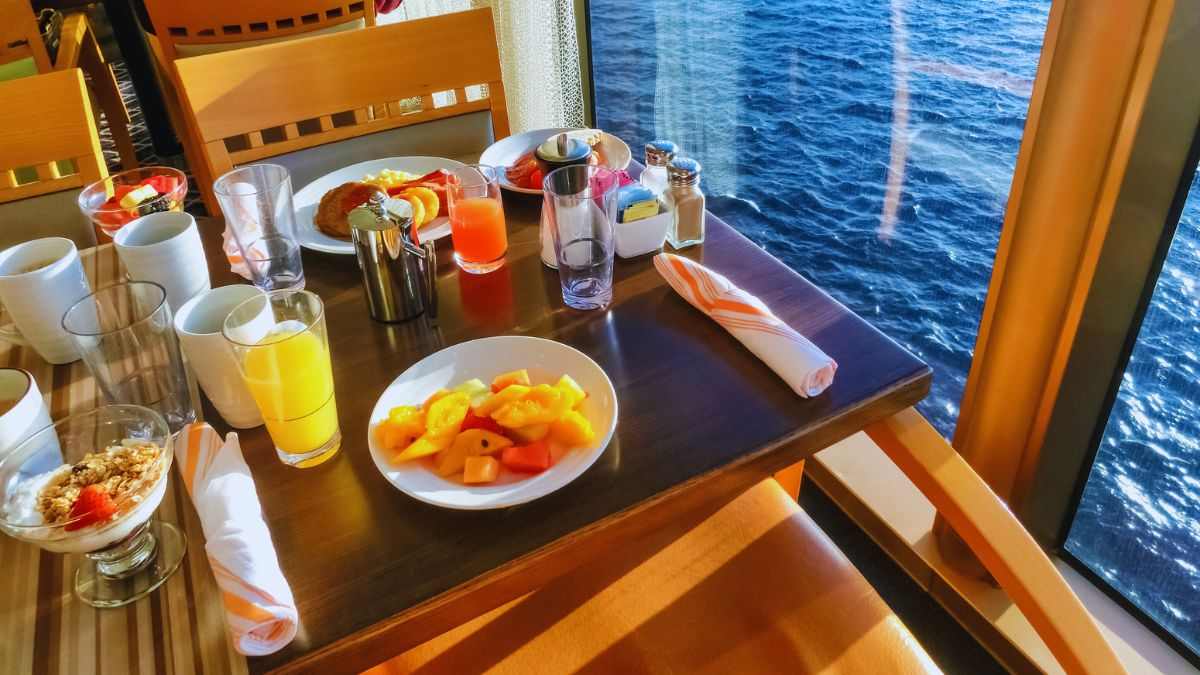
The main dining room is “free,” and the food is usually great. But the cruise lines have turned their ships into floating food malls. The steakhouses, sushi bars, and Italian trattorias carry “cover charges” that range from $25 to over $110 per person. When the buffet gets crowded and loud, that quiet, elegant steakhouse starts looking really good—and that’s exactly the nudge they’re counting on.
5. Premium Menu Upcharges (The “Decoy” Steak)

Lately, I’ve noticed a sneaky trend in the complimentary dining rooms. You’re looking at the regular menu, and at the bottom, there’s a little box: “Upgrade your dinner: Chops Grille Filet Mignon for $20.” This is the “Decoy Effect” in action. By placing a $20 steak next to a free chicken entree, they make it easy for you to spend extra money without even leaving your seat.
6. The “Third Entree” Rule

In a big departure from the traditional “all-you-can-eat” cruise culture, some lines like Carnival have started charging for excessive orders. You can usually get two entrees for free, but if you want that third plate of lobster or a second steak, they’ll tack on a $10 fee. It’s marketed as a sustainability move to reduce food waste, but it’s also a direct financial deterrent to the behavior people have come to expect.
7. Room Service “Convenience” Fees

It used to be that a 2 a.m. club sandwich was a rite of passage. Not anymore. Most big lines now charge a “convenience fee” of $7.95 to $9.95 every time you order. And some even add an automatic 18% tip on top of that fee. If you’re hungry at night, you’re often better off walking to the 24-hour pizza stand to avoid a $12 “free” snack.
8. Alcoholic Beverage Gratuities and Surcharges

Alcohol is the biggest profit center on the ship. You see a cocktail for $14 on the menu and think, “Okay, typical vacation price.” But when you get the bill, it’s $16.52. Why? Because an automatic 18% to 20% service charge is added to every single drink purchase. If you don’t have a beverage package, these “hidden” percentages will destroy your budget by day three.
9. Non-Alcoholic Beverages: Soda and Bottled Water

Unlike a land-based all-inclusive, most mass-market ships don’t include soda or bottled water. A single can of soda can cost $4. And those fancy bottles of water sitting on your desk? Those are $5.50 “traps” that will be charged to your account the second you crack the seal. If you’re a big water drinker, bring a reusable bottle and use the filtered stations in the gym or buffet.
10. Specialty Coffee and Artisanal Brews

If you’re like me and need a real latte to function, prepare your wallet. The “free” coffee in the buffet is… well, it’s coffee-flavored water. But if you want a cappuccino or a cold brew, you’re paying $4 to $7 a cup. Over a week, that can easily be $50 just to stay caffeinated.
11. Public Venue Corkage Fees

Many lines allow you to bring a bottle or two of wine on board. But be careful where you open it. If you take that bottle to a restaurant or bar, they’ll hit you with a “corkage fee” of $15 to $25. Norwegian Cruise Line even charges this fee the moment you step on the ship with the bottle. To avoid this, open it in your room and carry a glass out with you.
12. Access Fees for Adults-Only Enclaves
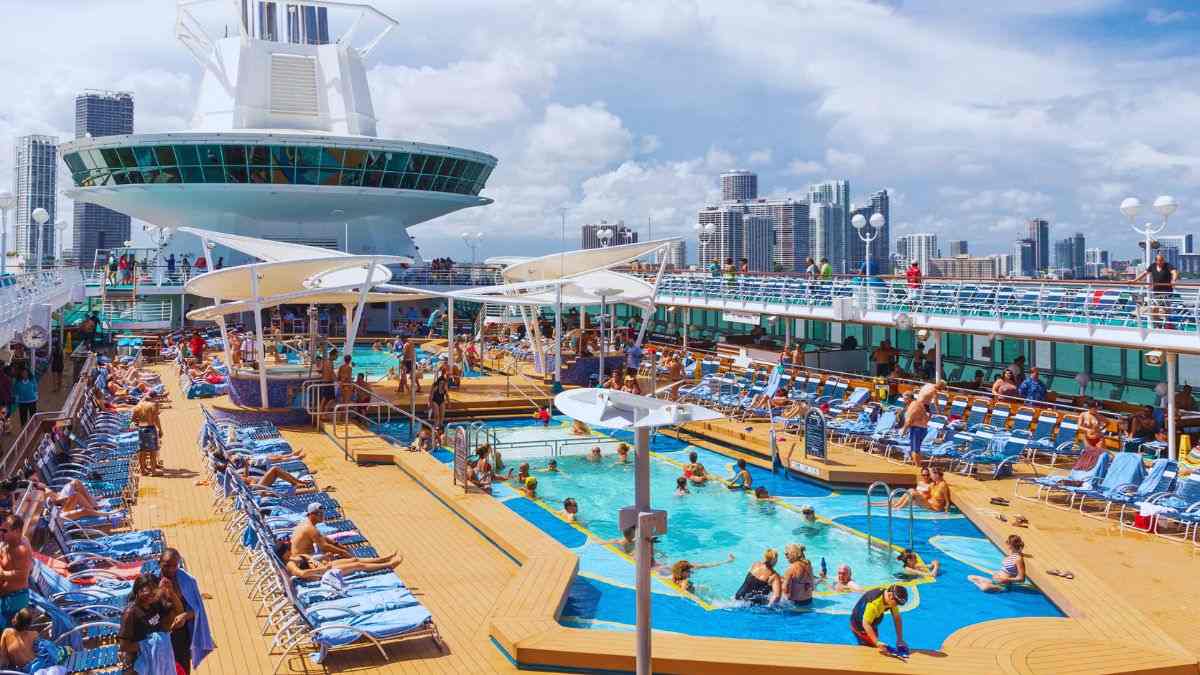
When the pool deck gets too loud with kids splashing, you’ll see a beautiful, quiet area with padded loungers. It looks like heaven. Then you see the price: $20 to $40 for a day pass, or even $99 for “exclusive” beach club access. You’re essentially paying a “peace and quiet” tax to escape the very crowds that the cruise line’s business model created.
13. Spa Area Access and Thermal Suites

Most people know a massage costs money (usually starting around $200). But many are surprised that they can’t even use the saunas or steam rooms for free. To get into the “Thermal Suite,” you usually have to buy a weekly pass, which can cost $199. Without it, your access to wellness is strictly limited to the treadmill in the gym.
14. Signature Top-Deck Attraction Fees
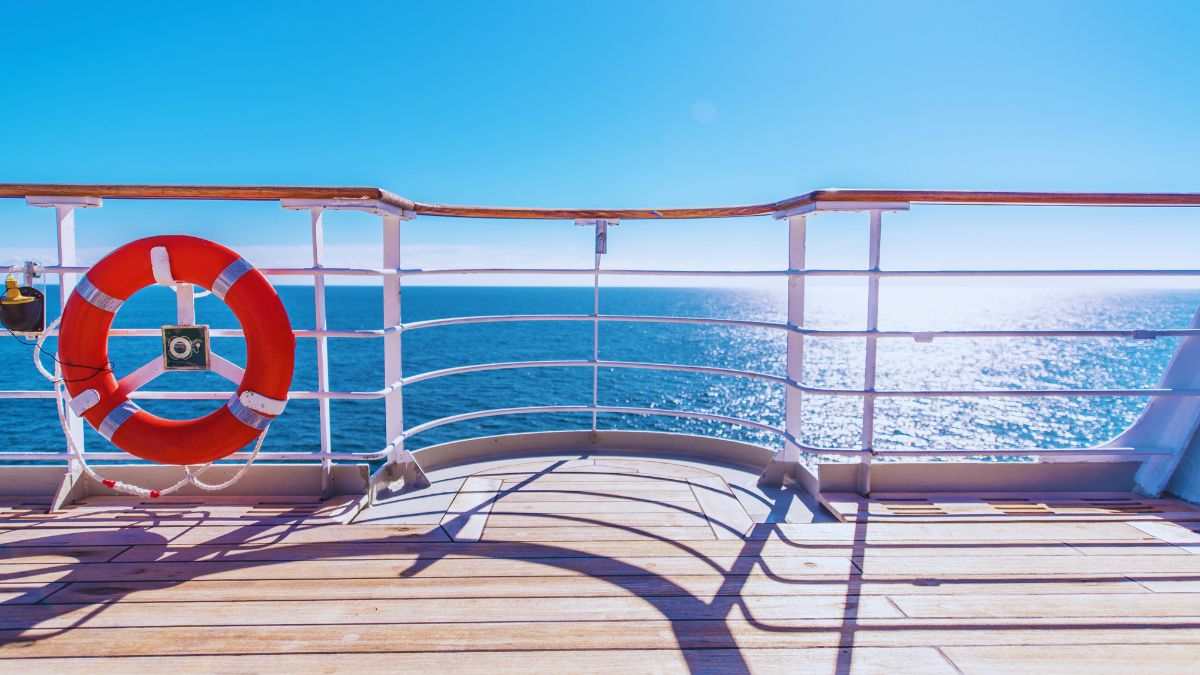
Modern ships have go-karts, laser tag, and even rollercoasters. But most of the “cool” stuff isn’t included. A ride on the go-karts might be $15. A round of laser tag could be $20. For families with kids, these repeat-use attractions can add hundreds of dollars in “hidden” fun costs by the end of the trip.
15. Specialized Fitness and Wellness Classes

The gym is free, but if you want to take a yoga, Pilates, or spinning class, expect to pay $10 to $25 per session. For health-conscious travelers, this “unbundling” of fitness means that staying in your routine can become a very expensive daily habit at sea.
16. Professional Photography and Digital Packages

The photographers are everywhere—at dinner, on the gangway, on formal night. A single printed photo typically costs $20 to $45. Digital packages can run into the hundreds. It’s hard to say no to a great family photo, and the cruise lines know that emotional value is a powerful motivator for opening your wallet.
17. The “Heart-Stop” Medical Center Bill

This is the one that isn’t just a “fee”—it can be a financial disaster. Shipboard medical facilities are private clinics. They don’t take your home insurance or Medicare. A basic consultation for something as simple as the flu can cost $100 to $200, but if things get serious—like IV fluids or X-rays—you could be looking at a bill of $12,000 or more.
Cruise Medical Services
18. Laundry and Garment Pressing

Laundry is a high-margin convenience. Self-service loads are about $3 to $7. But if you want them to do it for you, “wash and fold” or dry cleaning can range from $2 to $35 per item. Many lines offer a “fill the bag” special for $25 midway through the cruise—that’s your best bet if you’re traveling light.
19. Pre-Embarkation Logistics (The “Sunk” Costs)
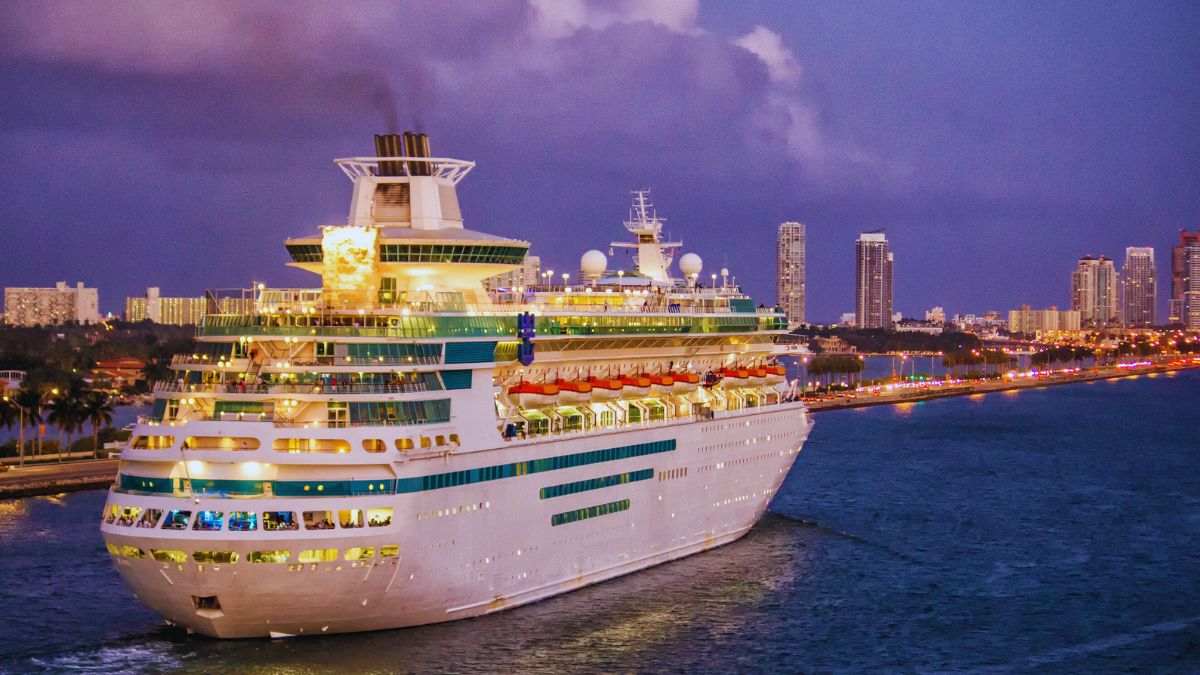
Technically, this happens off-ship, but it’s part of the cruise experience. Port parking in 2025 is around $20 to $30 per day. Plus, with flight delays being so common, a pre-cruise hotel stay is practically mandatory, adding another $150 to $300 to your budget before you ever see the ocean.
The Rise of the “Private Destination”
One big trend for 2025 is the expansion of private islands like Royal Caribbean’s Perfect Day at CocoCay or Carnival’s Celebration Key. These are “controlled environments” where the cruise lines capture 100% of your spending. While the food is usually included, the “extras”—like a $1,800 overwater cabana or a $150 waterpark pass—are the primary drivers of budget erosion. CocoCay alone saw visitor volume jump from one million in 2019 to over 3.5 million in 2024.
The Bottom Line: How to Navigate the 2025 Economy
Look, I’m not trying to be a buzzkill. Cruising is still an incredible value compared to land-based resorts. But you have to go in with your eyes open. The “Choice Architects” are counting on you being relaxed and impulsive.
My best advice? Pre-purchase everything. If you know you want Wi-Fi or a beverage package, buy it weeks before you sail. You’ll save 20% to 30% and avoid the “bill shock” on the last day. Most importantly, buy specialized cruise travel insurance. It might cost $100, but it’ll save you $50,000 if you need a helicopter ride off the ship.
At the end of the day, a cruise is a perfectly balanced dance between the lure of a low base fare and the reality of an unbundled, fee-driven world. Now that you know where the traps are, you can skip the $12 room service and focus on the sunset.
Need a Little More Help to Save Your Sanity (and Wallet)? Check These Out:
1. Insulated Stainless Steel Travel Mug

Those tiny plastic cups at the buffet are fine, but they don’t hold much and your drink is lukewarm in five minutes. If you fill one of these with coffee in the morning or ice water/juice in the afternoon, you can head back to your balcony and actually relax. Plus, it’s the best way to avoid buying those $4 cans of soda or $5 bottled waters throughout the day.
2. Cruise-Specific Luggage Tag Holders

Most lines make you print your own paper tags now. If you just staple them to your bag, there’s a high chance they’ll get ripped off in the luggage mountain at the pier, which means your bag ends up in “lost and found” limbo while you’re trying to enjoy embarkation. These clear, waterproof sleeves with steel loops are practically indestructible and save a lot of first-day stress.
3. Non-Surge Protected Power Strip (Cruise Approved)

Cruise cabins are notorious for having exactly one usable outlet. But here’s the trap: you cannot bring a regular power strip from home because surge protectors are a fire hazard on ships and will be confiscated. This one is designed without the surge protector, giving you extra outlets and USB ports for your phone, watch, and camera without getting a “naughty” note from security.
4. Heavy-Duty Magnetic Hooks

It sounds weird until you realize that cruise cabin walls are almost always made of metal. These hooks are a game-changer for tiny rooms. You can stick them to the walls or ceiling to hang up wet swimsuits, lanyards, hats, or even your daily itinerary. It keeps the clutter off the small desk and makes the room feel twice as big.
5. Universal Waterproof Phone Pouch

If you’re headed to a private island like CocoCay or doing a boat excursion, you don’t want to leave your phone and cruise card sitting on a beach chair while you swim. These pouches let you take photos in the water and keep your valuables on you at all times. It’s a lot cheaper than buying a $45 “waterproof” case in the ship’s gift shop.