12 Jaw-Dropping USA National Park Views No Guidebook Mentions (Under 1-Mile Walk)

Quiet steps often lead to the loudest moments. A short walk, a bend in the trail, and suddenly the landscape opens in a way that stops conversations mid-sentence. No crowds fighting for space. No long hikes demanding commitment.
Just raw views that feel almost personal, as if they weren’t meant to be found so easily. These are the places that reward curiosity over endurance, where less than a mile delivers more than most full-day treks ever do.
Each stop on this list proves that the most unforgettable scenes aren’t always marked with bold signs or glossy photos. Stay with it—every view ahead earns its place.
1. Olmsted Point – Yosemite National Park
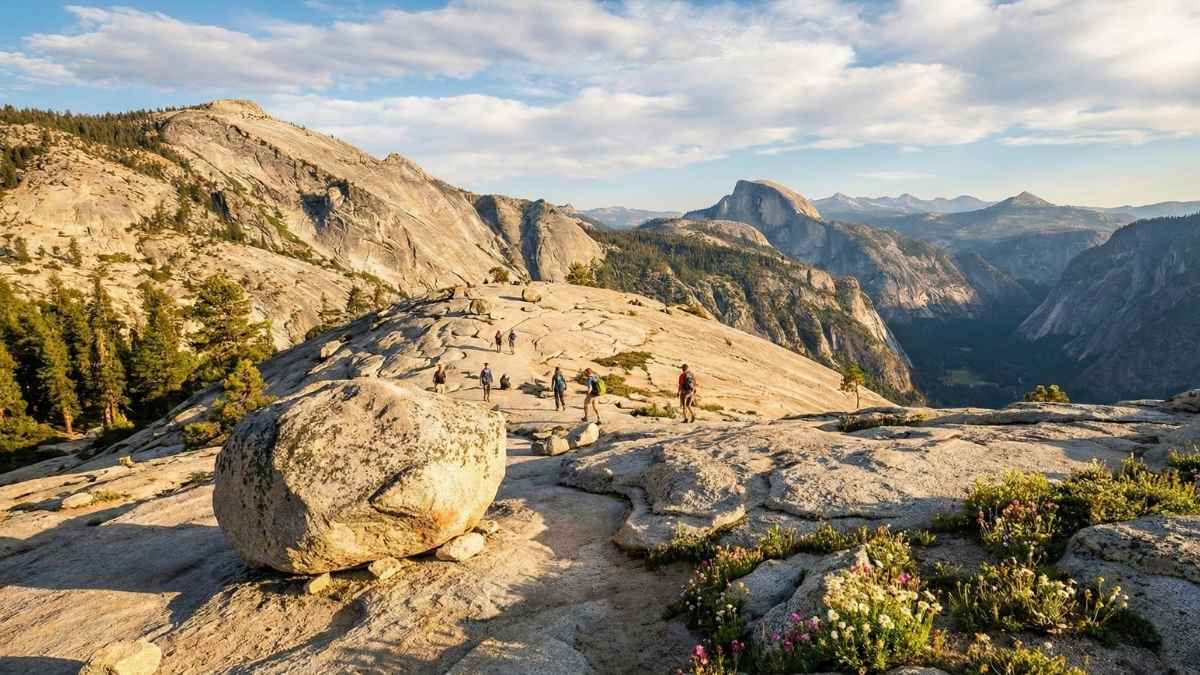
Olmsted Point feels like stumbling into Yosemite’s private balcony. The walk itself is barely a warm-up, but the payoff is instant and dramatic. Instead of the crowded valley viewpoints, this spot flips the perspective—you’re looking down on Half Dome from behind, watching it rise like a stone wave frozen mid-crash. The granite underfoot feels raw and unfinished, as if nature stopped carving mid-sentence.
What makes this view special isn’t just the angle—it’s the scale without chaos. You see Tenaya Canyon slicing deep into the landscape, with glacial scars that feel ancient and deliberate. No guardrails trying to choreograph your experience. Just open rock, clean air, and the quiet understanding that Yosemite doesn’t need drama to impress.
This is one of those places where people talk less. Phones come out, sure—but then they go back into pockets. The stillness does the talking. If Yosemite has a contemplative side, Olmsted Point is where it lives.
Quick Info
- Best months: May to October
- Walk distance: ~0.2 miles
- Elevation: High—cooler than Yosemite Valley
- Crowds: Light to moderate
- Sunrise or sunset: Late afternoon light hits Half Dome beautifully
2. Canyon Overlook Trail – Zion National Park
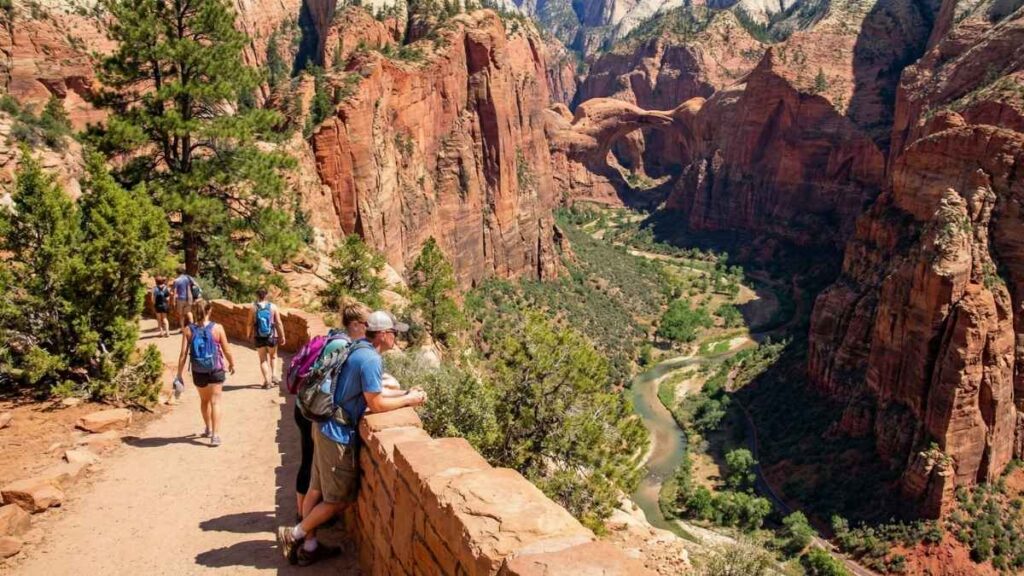
This trail wastes no time. Within minutes, Zion’s vertical drama unfolds in full force—massive Navajo sandstone walls dropping into Pine Creek Canyon, layered in reds, creams, and shadows that shift by the minute. The viewpoint feels cinematic without feeling staged, which is a rare quality for a park of this popularity.
What sets Canyon Overlook apart is how much terrain you absorb at once. You’re not just seeing cliffs—you’re seeing movement in the landscape, from winding roads far below to distant peaks fading into haze. It’s Zion compressed into a single frame, minus the crowds that dominate the valley floor.
Standing here, there’s a strange sense of balance. The exposure feels thrilling, but never reckless. Just enough edge to keep your attention sharp. This is the kind of view that sticks with you long after you leave the park.
Quick Info
- Best months: March–May, September–November
- Walk distance: ~1 mile round trip
- Crowds: Moderate, lighter early morning
- Parking: Limited—arrive early
- Safety note: Drop-offs near the viewpoint, stay aware
3. Schooner Head Overlook – Acadia National Park
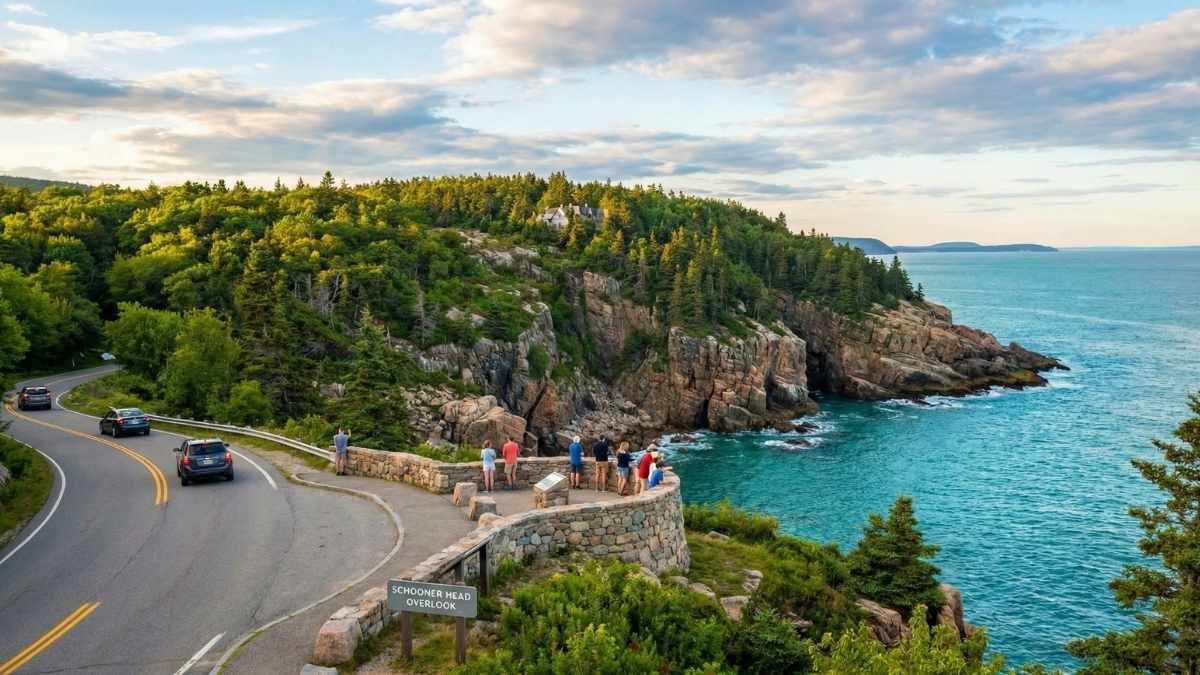
Schooner Head Overlook is proof that Acadia’s drama isn’t confined to mountaintops. This quiet coastal viewpoint offers raw Atlantic energy colliding with pink granite cliffs, where waves don’t politely crash—they crash with a force. The wind smells like salt and pine, and the sound alone feels cleansing.
Unlike Acadia’s more famous summits, this place doesn’t demand effort or endurance. You walk a short path, step out, and suddenly you’re watching the ocean perform. The light here changes fast—sun, fog, and storm clouds all feel equally at home.
It’s especially powerful on moody days, when the coastline feels wild and unfiltered. No sweeping speeches needed. Just sea, stone, and motion doing what they’ve always done.
Quick Info
- Best months: May to October
- Walk distance: Very short roadside walk
- Best time of day: Early morning or stormy afternoons
- Crowds: Low compared to Cadillac Mountain
- Wildlife: Occasional seals offshore
4. Skyline Arch Viewpoint – Arches National Park
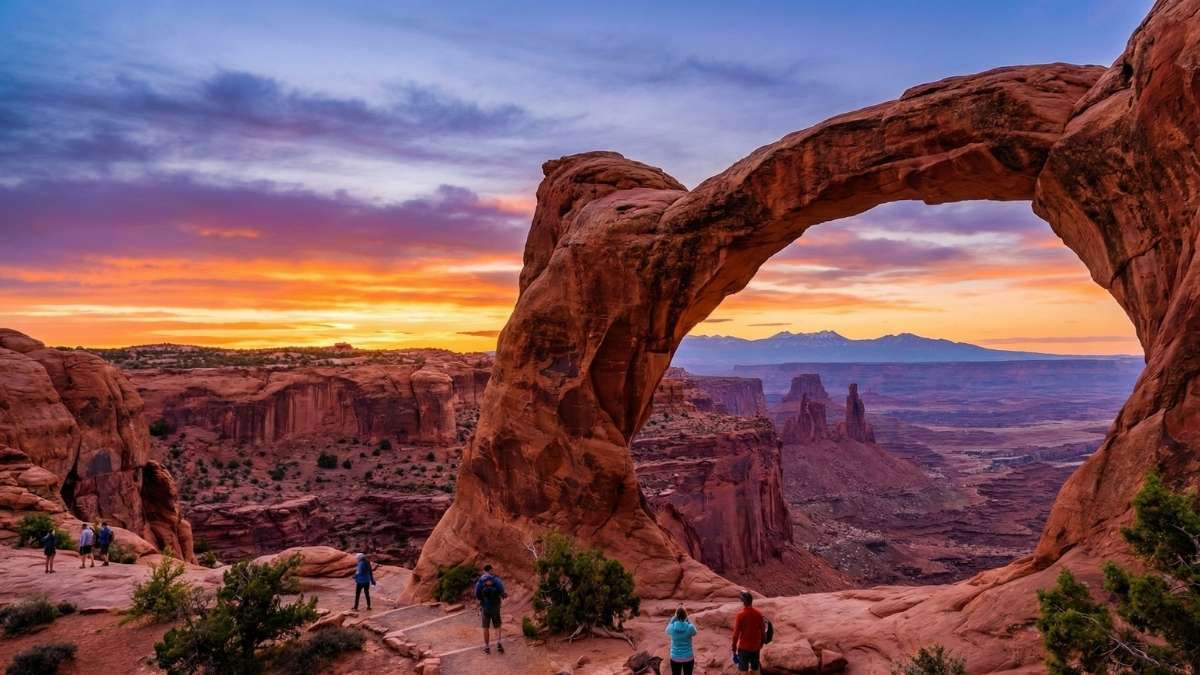
Skyline Arch doesn’t scream for attention—and that’s exactly why it works. The short walk delivers you to a massive arch framed by open desert sky, where space feels infinite, and silence feels intentional. The arch itself was reshaped by a rockfall in the 1940s, which only adds to its quiet authority.
What makes this spot special is the contrast. One moment you’re surrounded by scrub and dust, the next you’re standing before something that feels impossibly precise. The arch frames clouds, sunsets, and stars without asking you to earn the view.
It’s also one of those rare Arches moments where you can linger without feeling rushed. No loops, no pressure—just time to absorb the geometry of erosion doing its slow, perfect work.
Quick Info
- Best months: April–May, September–October
- Walk distance: ~0.4 miles
- Best light: Late afternoon
- Crowds: Light
- Accessibility: Flat, easy terrain
5. Plaikni Falls – Crater Lake National Park
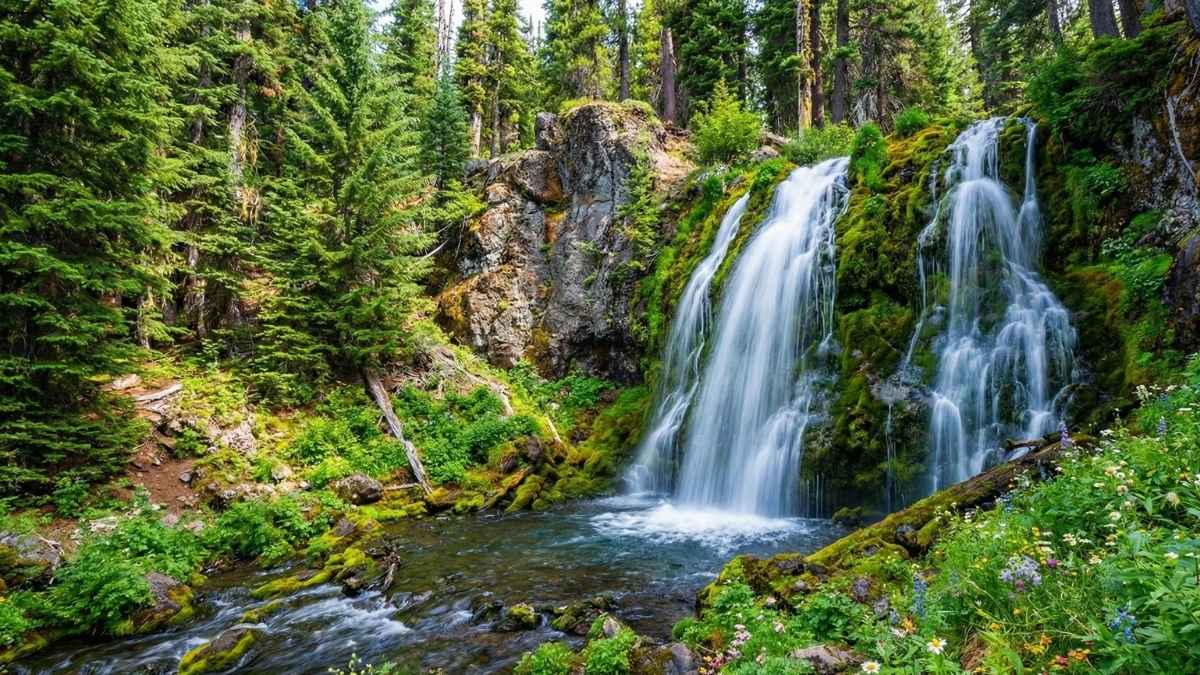
Plaikni Falls feels like a secret tucked away from Crater Lake’s famous blue. The trail winds gently through the forest before revealing a waterfall that feels unexpectedly intimate, especially given the volcanic drama nearby. The sound arrives before the view, pulling you forward step by step.
The falls spill over mossy rock in a way that feels soft, almost calming—an unexpected contrast to Crater Lake’s intensity. Instead of vastness, you get detail: dripping water, cool shade, and air that smells unmistakably alive.
This walk is proof that jaw-dropping doesn’t always mean massive. Sometimes it means quiet beauty arriving at exactly the right moment.
Quick Info
- Best months: July to September
- Walk distance: ~1 mile round trip
- Snow conditions: Trailhead often snow-covered until early summer
- Crowds: Very light
- Bonus: Cooler temperatures even in summer
6. Mossy Cave Viewpoint – Bryce Canyon National Park
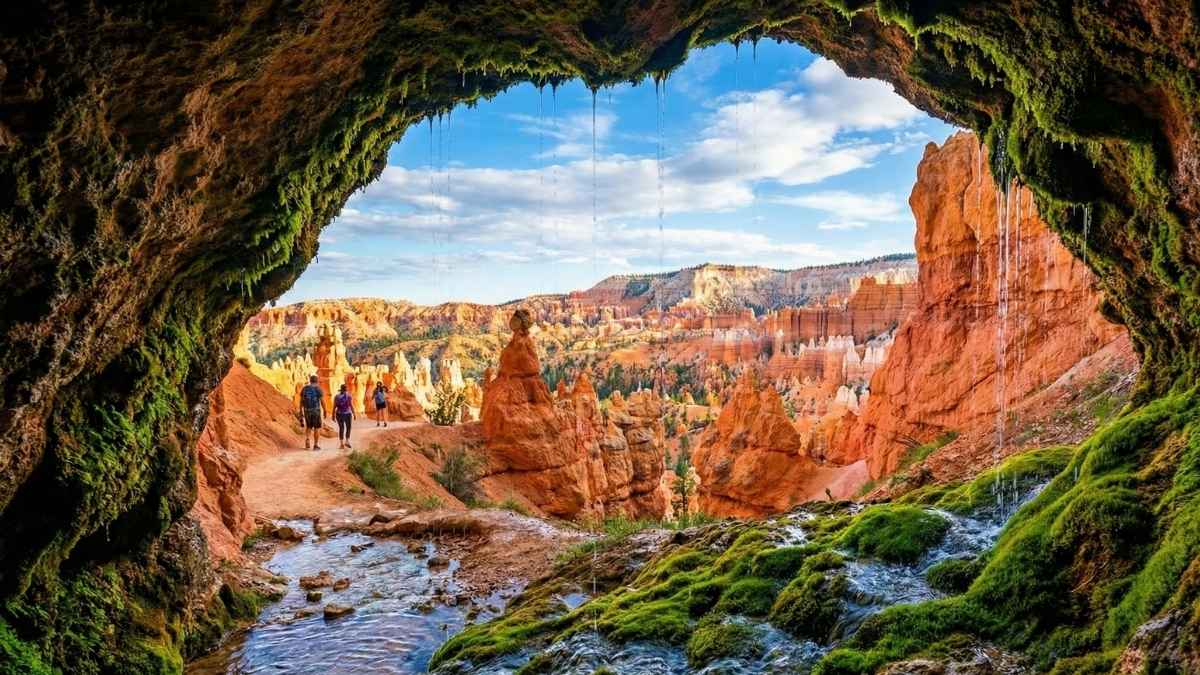
Mossy Cave feels like Bryce Canyon taking a quieter breath. While most visitors chase hoodoos and sweeping amphitheaters, this short walk leads to a scene that feels almost hidden—a stream-fed grotto tucked beneath rust-colored rock, shaded, cool, and unexpectedly lush.
The contrast is what makes it memorable. Bryce is known for its dry, otherworldly formations, yet here you’ll find dripping water, moss clinging to stone, and a small waterfall that changes personality with the seasons. In winter, it freezes into delicate ice sculptures; in summer, it hums softly in the background.
This spot doesn’t overwhelm—it invites you to slow down. The kind of place where people linger longer than planned, not because they’re tired, but because leaving feels unnecessary.
Quick Info
- Best months: May to October (winter for ice formations)
- Walk distance: ~0.8 miles round trip
- Crowds: Light to moderate
- Terrain: Flat and family-friendly
- Seasonal bonus: Ice falls in winter
7. Hidden Valley Nature Trail Views – Joshua Tree National Park
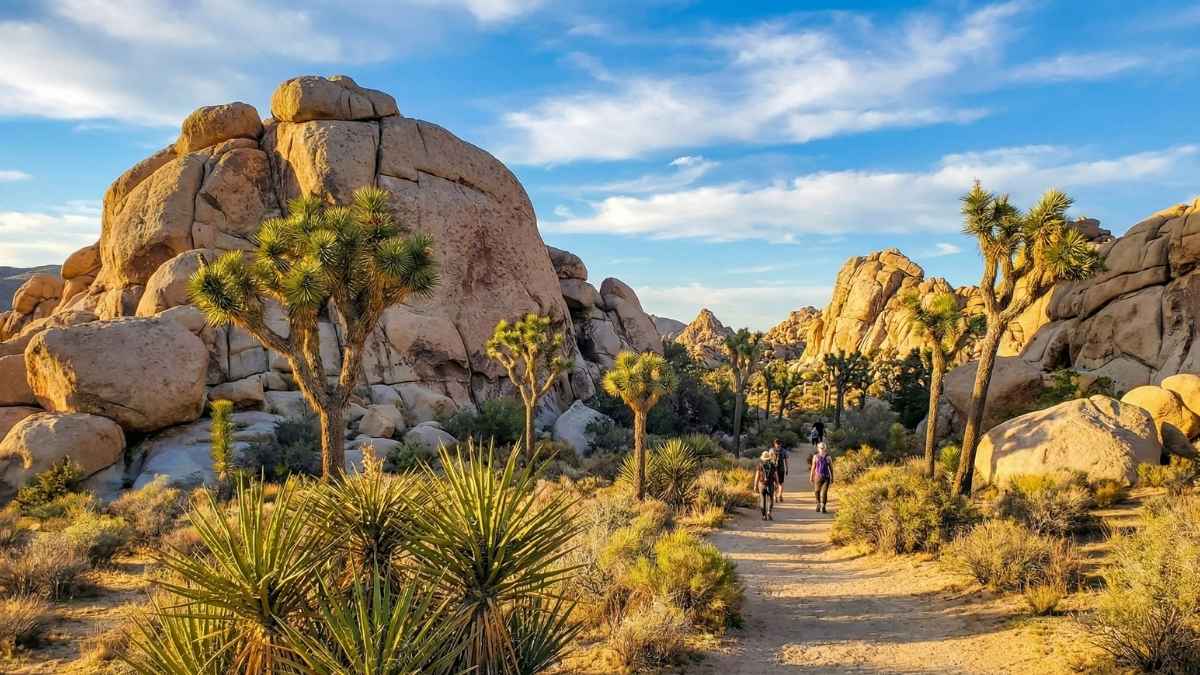
Hidden Valley feels like stepping into a natural amphitheater carved for silence. The short loop drops you into a ring of massive boulders and twisted rock formations, where the desert suddenly feels enclosed, intentional, and oddly peaceful.
As you walk, the scenery shifts constantly—towering monoliths, narrow passages, and open pockets where sunlight pours in. The views aren’t about distance; they’re about texture and scale, where every turn offers something tactile and grounding.
There’s a timeless quality here. Even with other visitors around, the space absorbs sound. It’s easy to see why legends of hidden cattle rustlers once surrounded this valley—it feels removed from everything else.
Quick Info
- Best months: October to April
- Walk distance: 1-mile loop
- Crowds: Moderate, spread out
- Best time of day: Morning or golden hour
- Extra: Rock climbers nearby add subtle movement to the scene
8. Cave Spring Trail Viewpoints – Canyonlands (Needles District)
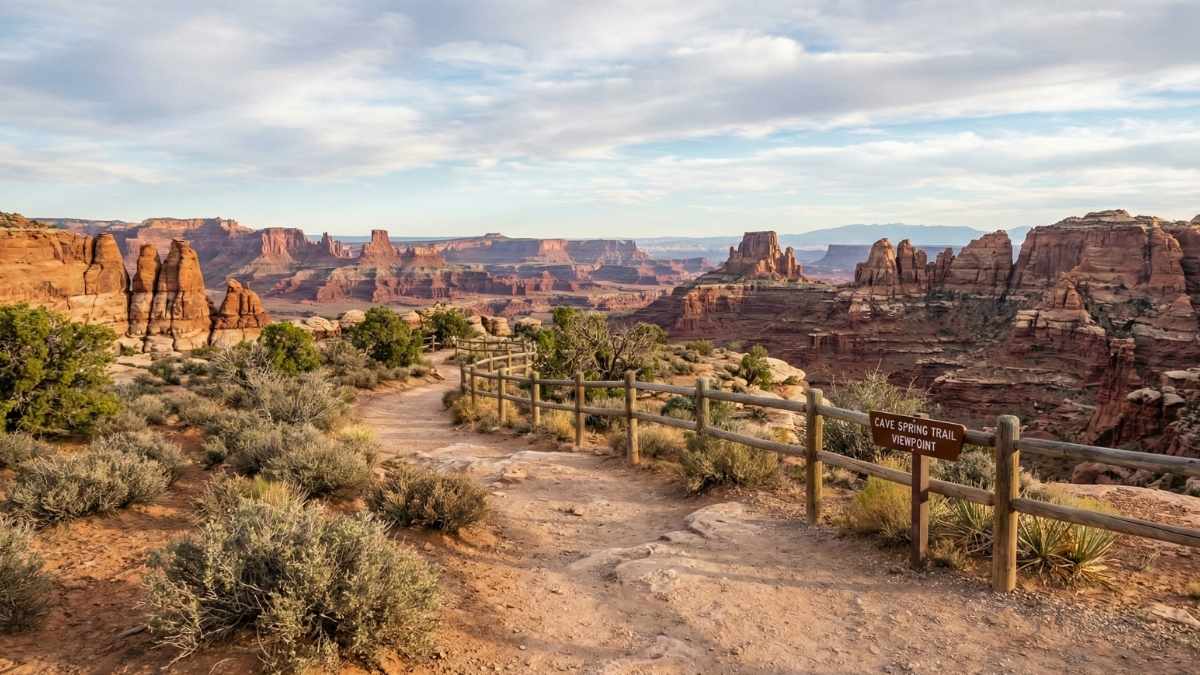
Canyonlands doesn’t announce itself—it unfolds. Along the Cave Spring Trail, the views arrive quietly, revealing layered canyons, desert plains, and distant rock spires that feel endless without being overwhelming.
The magic here is subtle but powerful. You’re not standing at a single dramatic overlook—you’re moving through a landscape that keeps opening up. Old cowboy inscriptions, wind-sculpted rock, and sudden canyon drop-offs create a sense of discovery that feels earned, even on a short walk.
This area feels untouched in an increasingly rare way. No spectacle chasing. Just space, depth, and silence stretching in every direction.
Quick Info
- Best months: March–May, September–October
- Walk distance: ~0.6 miles
- Crowds: Very light
- Terrain: Rocky but manageable
- Bonus: Historical inscriptions along the trail
9. Walnut Canyon Rim Trail Views – Walnut Canyon National Monument
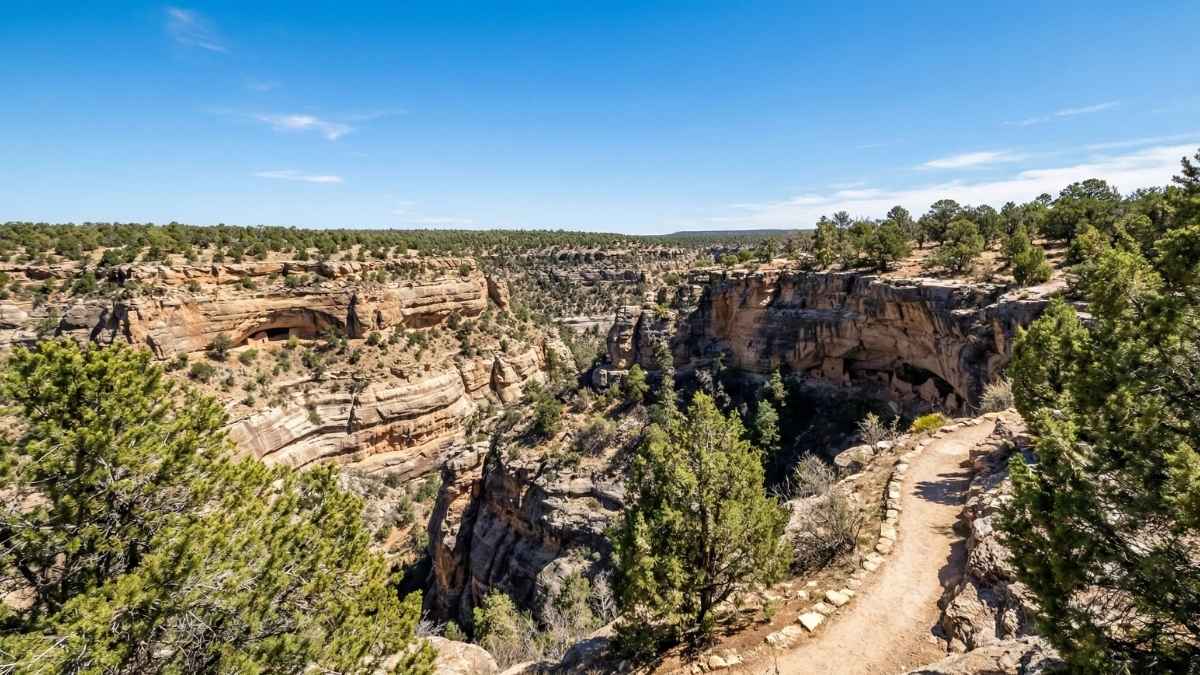
Walnut Canyon’s rim delivers one of the most underrated canyon views in the Southwest. The trail hugs the edge, offering repeated overlooks into a deep, winding canyon carved by time and patience rather than brute force.
What makes this view stand out is how close everything feels. You’re not staring into the distance—you’re peering directly into cliff walls dotted with ancient dwellings, watching shadows crawl across stone as the day moves on.
The walk flows easily, and each viewpoint feels slightly different from the last. It’s educational without feeling like a lesson, and dramatic without trying too hard.
Quick Info
- Best months: April to October
- Walk distance: ~0.7 miles
- Crowds: Light
- Accessibility: Paved sections
- Extra: Interpretive signs add context without clutter
10. Riverside Overlook – Kolob Canyons (Zion National Park)
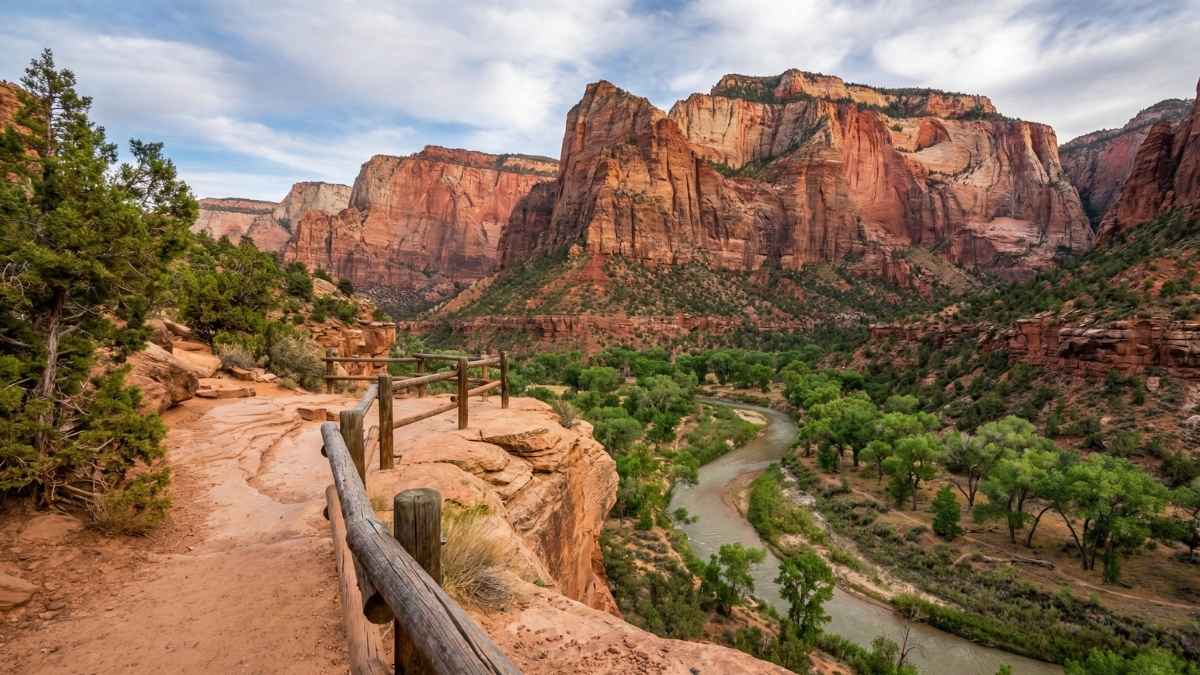
Kolob Canyons feels like Zion’s quieter sibling—same towering red walls, none of the valley chaos. The Riverside Overlook walk is short, gentle, and ends with a view that feels unexpectedly grand.
The canyons here are deeper and narrower, creating a sense of vertical intensity without crowds pressing in. The colors shift dramatically with the light, and the absence of noise makes the space feel almost private.
This is Zion stripped down to its essentials. No lines, no shuttles, no distractions—just cliffs, sky, and time moving slowly.
Quick Info
- Best months: March–May, September–November
- Walk distance: ~1 mile
- Crowds: Very low
- Best light: Late afternoon
- Location tip: Separate entrance from main Zion Canyon
11. Cadillac Summit Loop Panoramic Point – Acadia National Park
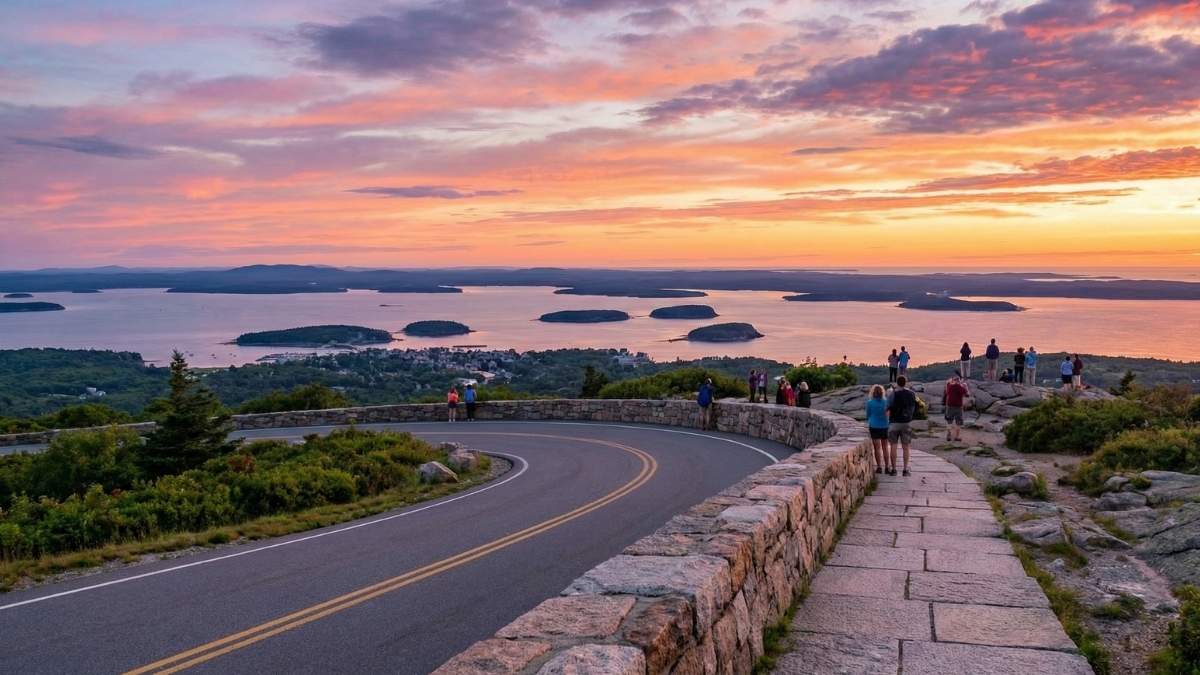
Cadillac Summit delivers a sense of openness that’s hard to match on the East Coast. The short loop traces the crown of the mountain, where land, sea, and sky stretch outward in every direction. Islands scatter across the Atlantic like brushstrokes, and the coastline curves gently instead of dropping away in dramatic cliffs.
What stands out here is the clarity. On a good day, the air feels polished, making distant headlands and tiny islands appear closer than they should. The elevation gives the view authority, but the walk itself stays relaxed—wide paths, steady footing, and space to pause without pressure.
There’s also a quiet satisfaction in how accessible this panorama is. No long climb, no endurance test. Just a brief walk that delivers one of Acadia’s most complete visual summaries, all in a single sweep.
Quick Info
- Best months: June to October
- Walk distance: ~0.5 miles
- Crowds: Moderate, spread out along the loop
- Best time: Early morning or late afternoon
- Weather note: Windy at the summit—layers help
12. Bristlecone Loop Overlook – Bryce Canyon National Park
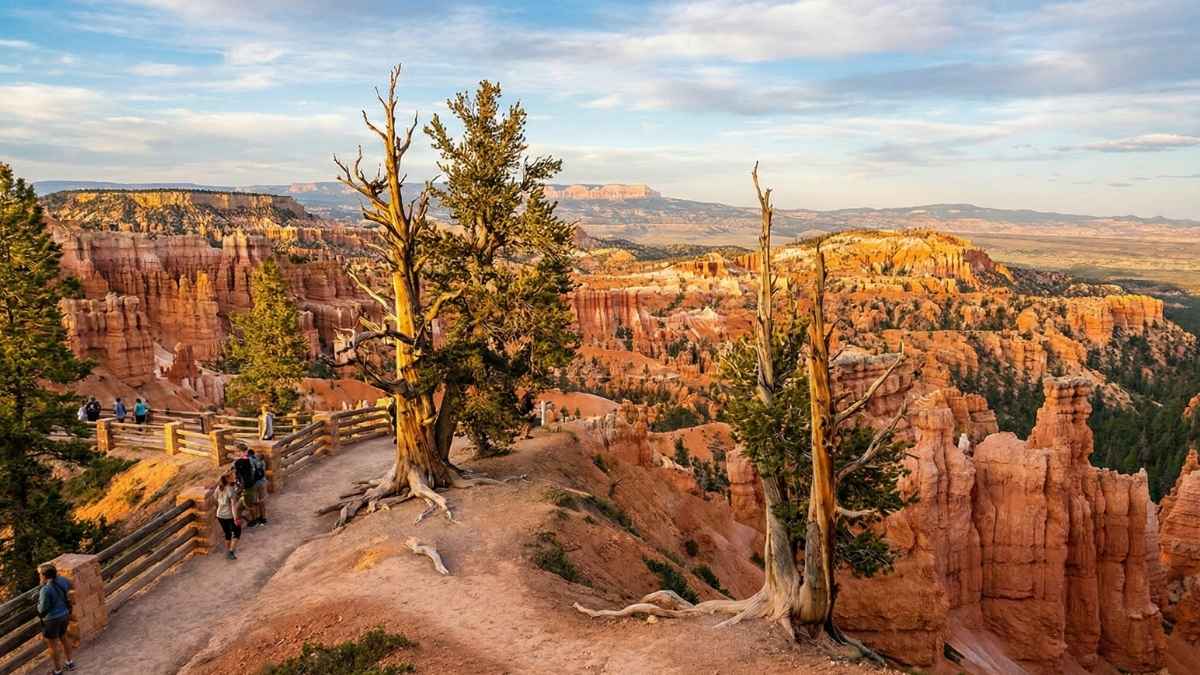
The Bristlecone Loop doesn’t try to outshine Bryce Canyon—it reframes it. This near-mile walk trades packed viewpoints for quiet overlooks where hoodoos stretch endlessly toward the horizon, layered with forest, sky, and distance.
What sets this overlook apart is the mood. Ancient bristlecone pines line the path, twisted and weathered, standing like witnesses to time. The view feels slower here. Less spectacle, more substance. You’re not just seeing Bryce—you’re feeling how old and patient this place really is.
By the time you reach the overlook, the park feels less like a postcard and more like a presence. It’s the kind of ending that lingers long after the walk is done.
Quick Info
- Best months: June to September
- Walk distance: ~1 mile loop
- Elevation: High—cooler temps, thinner air
- Crowds: Light
- Bonus: Excellent stargazing nearby