Hotel Manager Reveals 9 Words That Instantly Get You Room Upgrades Without Elite Status (And 3 That Guarantee You’ll Stay in the Worst Room)

You know that feeling. You’ve been traveling for six hours, your back hurts, and you finally slide your credit card across the front desk. You hold your breath as the agent types—clack, clack, pause, clack—hoping against hope that they won’t hand you a key to the room overlooking the dumpster.
We often think of hotel room assignments as a lottery, or worse, a rigid system controlled by a cold, unfeeling computer. But after digging into industry data, talking to insiders, and looking at the psychology behind the check-in counter, I’ve found that’s not quite true. It’s actually a negotiation. And like any negotiation, there are magic words that open doors, and “cursed” words that slam them shut.
This guide isn’t just about “hacks.” It’s about understanding the human and economic machinery working behind that desk, so you never have to sleep next to the ice machine again.
The “9 Words”
That Change Everything
The Magic Phrase
A polite question can unlock a $500 suite upgrade.
Why It Works
Don’t be a robot. Be a person.
Transact ➡️ 👩💼
Connect
This triggers the Principle of Reciprocity. You acknowledge their authority to help you.
Hotel Logic
Suites are “perishable”. If unsold by tonight, value = $0.
ignored.
solves their inventory problem!
The “Sandwich” Trick?
Slipping $20 with ID? 🚫
In 2024, Kindness > Cash.
💖 > 💵
Reward a nice guest, don’t break rules for a tip.
Let’s start with the good news. There is a phrase—a specific sequence of nine words—that has been floating around TikTok and travel forums for a reason. It actually works.
The phrase is:
“I was wondering if you have any upgrades available?”
Or, if you want to be precise about it:
“Do you have any complimentary upgrades available for today?”
It sounds almost too simple, right? Why would a polite question unlock a suite that usually costs $500 more?
Why It Works (It’s Not Magic, It’s Psychology)
The secret here isn’t the words themselves; it’s what they signal. When you walk up to the desk, most interactions are purely transactional. You give ID, they give key. Robot to robot.
By pausing and asking this specific question with a smile, you trigger the Principle of Reciprocity. You are treating the agent like a person with power, not a kiosk. You’re acknowledging they have the authority to help you.
Here is exactly what happens in the agent’s brain when you say those words:
As you can see in the chart above, you are essentially volunteering to solve a problem for them. Hotels are rarely perfectly booked. They might be oversold on Standard Kings but have empty Junior Suites. Those suites are “perishable”—if they aren’t sold by tonight, their value hits zero. The agent needs to move someone up to balance the house. Who are they going to pick? The grumpy guy on his phone? Or you, the nice person who just asked?
The “Sandwich” Trick
You might have heard of the “Sandwich Trick”—slipping a $20 bill between your ID and credit card while asking those 9 words. Does it work? Sometimes. But in 2024, kindness is a stronger currency than cash. Many corporate chains have strict rules against taking tips for upgrades, but there is no rule against rewarding a nice guest.
The “3 Words” That Guarantee the Worst Room
Now for the scary part. There are three words that, if they appear on your reservation, act like a giant “Do Not Upgrade” neon sign. They might even land you in the room with the broken AC or the pillar blocking the window.
Those words are:
“I booked Expedia”
(And by “Expedia,” we mean any third-party site: Booking.com, Priceline, Orbitz, etc.)
I know, I know. The deals are great. But you need to understand why hotels hate these bookings to understand why they get treated differently.
The Economics of “Distressed Inventory”
It comes down to cold, hard cash. When you book directly with the hotel, they keep 100% of your money. When you book through a third-party site, the hotel pays a commission of 15% to 25%.
So, if you pay $200 for a room:
- Direct Booker: Hotel gets $200.
- Expedia Booker: Hotel gets ~$160.
Here is the financial reality the hotel manager is looking at:
Because you are statistically “worth less” to them on that specific night, you are assigned a code in their system: ROH (Run of House). This is industry-speak for “put them wherever.” And “wherever” usually means Distressed Inventory—the rooms that are hardest to sell.
Industry insiders admit this openly. One source noted that while they don’t maliciously target third-party guests, those guests are “the first to be booted in case of overbooking”. If the hotel is full and someone has to be “walked” to a different hotel down the street, it’s almost always the person who paid the least.
The Anatomy of a “Bad Room”
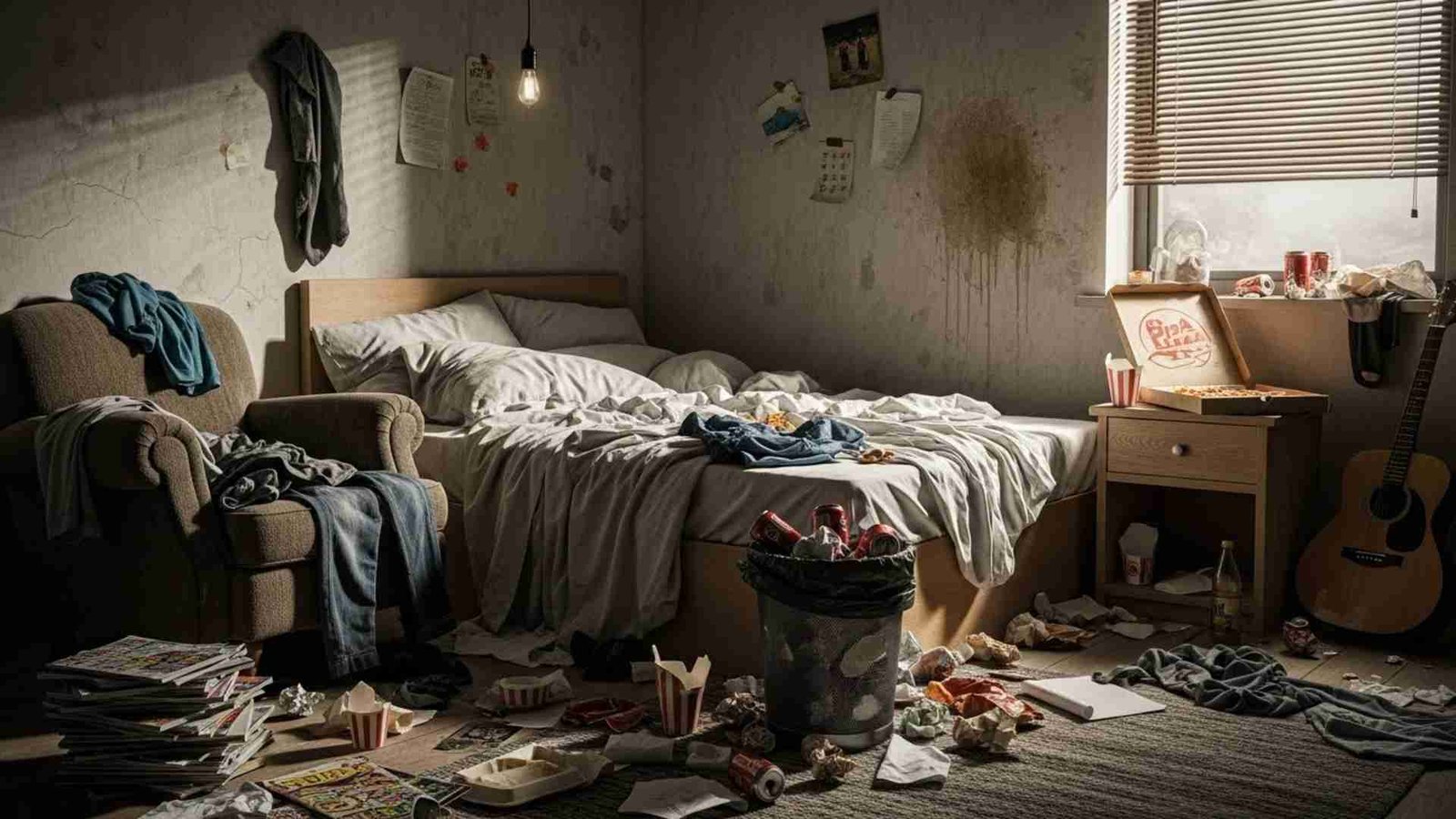
When we talk about the “worst room,” we aren’t just talking about ugly wallpaper. We are talking about the Red Zones. These are specific spots on the floor plan that suffer from high noise, low light, or bad smells.
If you use the “3 words” (I booked Expedia), this is likely where you’re going:
The Red Zone Checklist:
- The Elevator Trap: You will hear the mechanical whirrr and the ding of the bell all night. Plus, every drunk guest coming home at 2 AM will have a loud conversation right outside your door.
- The Ice Machine: The crashing of ice cubes is the soundtrack of the “ROH” guest.
- The Connection Door: A room with a connecting door to the next room is a curse. Sound travels through those doors like they are made of paper. You will hear your neighbor’s TV, and worse.
The “Ghost Amenities”
Sometimes, the worst room isn’t about location; it’s about what’s missing. Third-party bookings are often given rooms with “Ghost Amenities”—the mini-bar is an empty fridge, the “view” is a brick wall, and the Wi-Fi is throttled.
The Ego Trap
The “DYKWIA” Syndrome: These words attack the ego. The retaliation is swift and silent.
The Math of Being a Jerk
Research shows arrogance is mathematically the worst strategy.
Malicious Compliance
The agent stops trying to “wow” you and does the bare minimum.
FLOOR
Result: Higher floor, but next to the noisy elevator.
There is another set of three words that is even more dangerous than “I booked Expedia.” These words attack the ego of the staff, and the retaliation is swift and silent.
“Do you know…” (As in: “Do you know who I am?” or “Do you know I’m a Diamond Member?”)
I found a fascinating look at how these different behaviors—from kindness to arrogance—impact your chances of getting an upgrade. It turns out, being a jerk is mathematically the worst strategy you can use.
The “DYKWIA” Syndrome
Service workers call this “DYKWIA” (Do You Know Who I Am). It triggers immediate defensive behavior. The moment you say this, the agent stops trying to wow you and starts doing the bare minimum to get you to go away.
This often leads to Malicious Compliance.
- You: “I demand an upgrade! I’m a Platinum member!”
- Agent: “Certainly. I have upgraded you to the ‘Club Floor’.”
- Reality: They moved you to the same size room on a higher floor… but it’s the one right next to the noisy elevator. You got your “upgrade,” but you lost the war.
How to Win the Hotel Game
Okay, so we know what not to do. How do you actually secure that suite? Based on the research, here is your game plan for your next trip.
1. The “Detach and Reattach” Strategy
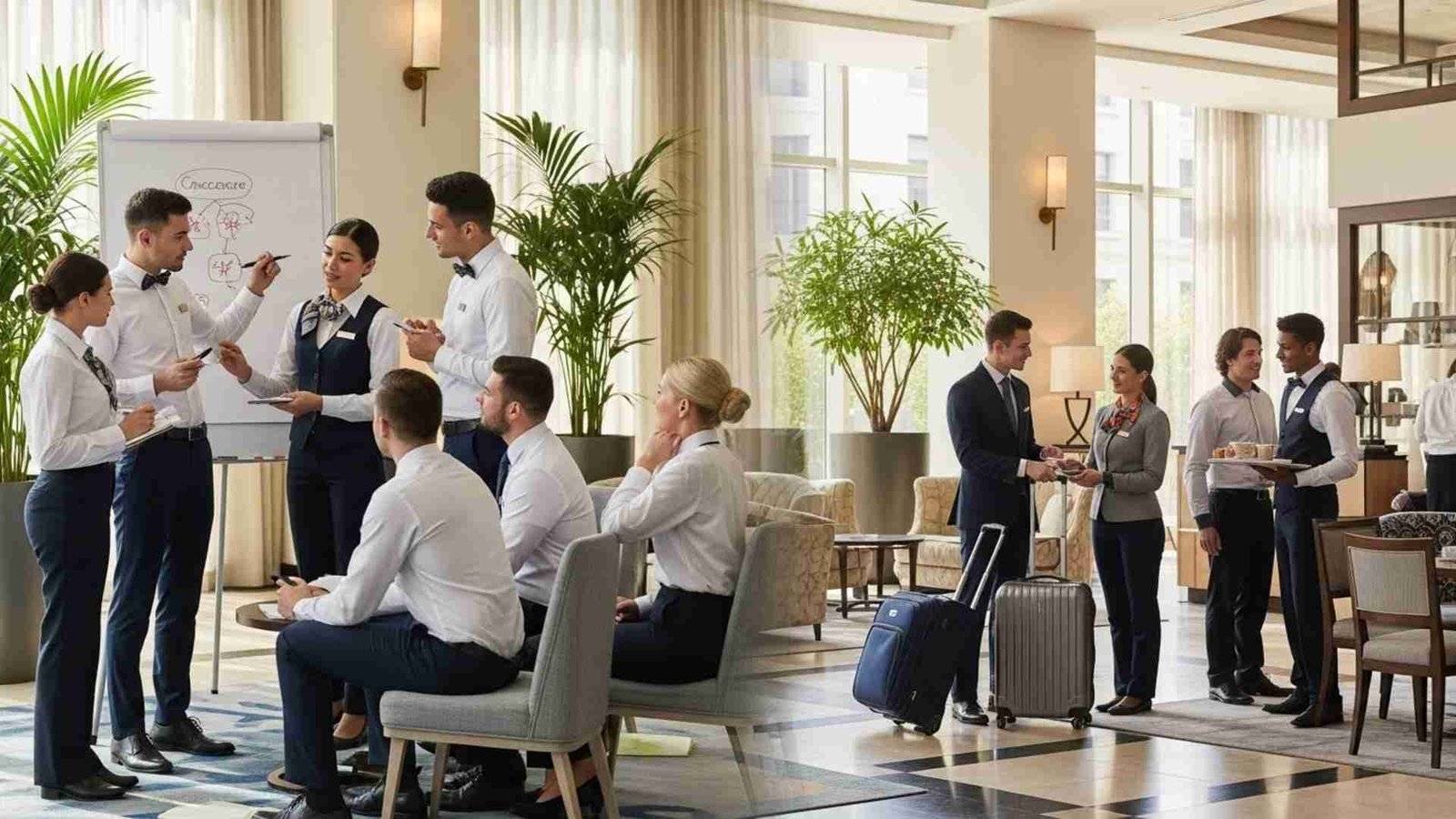
If you absolutely must book via Expedia (sometimes the savings are just too good), you need to trick the system.
- Wait 24 hours after booking so your info hits the hotel’s system.
- Call the Front Desk (not the 1-800 number).
- Say this: “Hi, I know I booked through a third party, but I wanted to double-check that you received it? Also, it’s my first time in [City] and I was hoping to get a quiet room away from the elevators.”
- Why it works: You just turned yourself from a nameless “Expedia Booking” into a human being with a specific preference. The agent is likely to add a note to your file right then and there.
2. The Goldilocks Arrival Time
Timing is everything.
- Don’t arrive too early (11 AM – 1 PM): The only rooms ready are the ones nobody wanted last night, or the ones that were easiest to clean (the small ones).
- Don’t arrive too late (10 PM+): Everything good is gone. You get the leftovers.
- Arrive between 3 PM and 5 PM: This is the sweet spot. Housekeeping has finished the best rooms, and the manager knows exactly what inventory is left for the night. This is when the “9 words” are most powerful.
3. Read the Room
Look at the agent. Are they stressed? Is there a line of ten people behind you? If so, don’t ask for the upgrade yet. Just be incredibly nice. “I can see you’re slammed, take your time.” Then, come back later when it’s quiet. “Hey, I checked in earlier when it was crazy. I was wondering…” Empathy buys you more loyalty than status points ever will.
The “Worst Room” Survival Kit: 5 Things to Pack Just in Case
Look, even with the best words and the warmest smile, sometimes you just get stuck with the short straw. Maybe the hotel is legitimately full, or maybe the algorithm just hates you that day. If you do end up in the room next to the elevator or the one with the questionable duvet, having a few key items in your bag can turn a nightmare stay into a tolerable one. Here are five things I suggest keeping in your carry-on, just to be safe.
1. Portable Door Lock

If the deadbolt on your door feels a little flimsy, or you just want absolute peace of mind while you sleep, this little gadget is a life-saver. It installs in seconds without tools and adds an extra layer of steel between you and the hallway.
2. Loop Quiet Earplugs

Did you get stuck in the “Red Zone” next to the ice machine? These are comfortable enough to sleep in and will dampen the sound of the elevator dings and hallway chatter so you can actually get some rest.
3. Vumos Sleeping Bag Liner (Travel Sheet)

We’ve all walked into a room, pulled back the comforter, and felt a little… icky. This silk-like liner acts as a barrier between you and the hotel sheets. It’s lightweight, packs down tiny, and guarantees you’re sleeping in something clean.
4. Outlet Extender with USB Ports

Older hotel rooms (aka the “Worst Rooms”) often have exactly one outlet, and it’s usually hidden behind the heavy dresser. This turns that one plug into a charging station for your phone, watch, and laptop.
5. She’s Birdie Personal Safety Alarm

This is for the solo travelers. If you’re put in a room at the end of a long, dark hallway, having this on your keychain adds a layer of confidence. Pull the pin, and it creates a loud siren and flashing light to deter anyone bothering you.