Flight Physicians Shared These 7 Exercises—Prevent Blood Clots and Arrive Energized

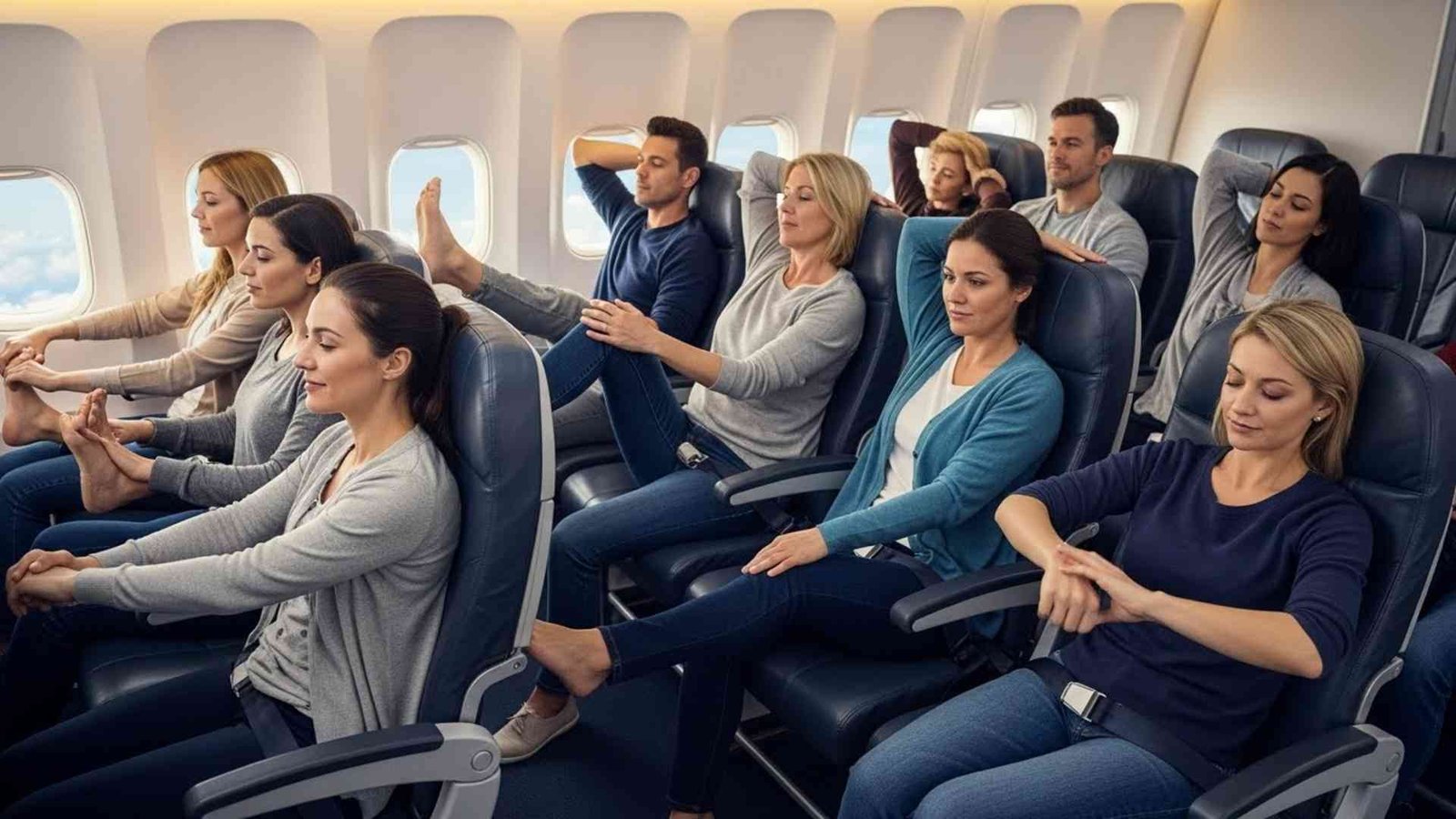
Look, I get it. We’ve all been there. You wrestle your carry-on into the overhead bin, wedge yourself into seat 34B, and mentally resign yourself to the next eight hours. You think of the flight as a pause button on your life—a miserable, stagnant limbo you just have to endure to get to the good stuff.
But here’s the thing: your body doesn’t have a pause button.
While you’re trying to find a comfortable angle for your neck, your physiology is actually running a marathon. You’re sitting in a metal tube where the air is as dry as the Sahara (literally, 10-20% humidity), the oxygen is thinner than you’re used to, and you’re immobilized in a way that would make a Victorian corset look forgiving.
I used to think the grogginess, the swollen ankles, and that “brain fog” feeling were just the price of admission. Then I dug into the research from flight physicians—the doctors who keep pilots in the air—and realized we’ve been doing it all wrong.
It turns out, the difference between stumbling off the plane like a zombie and stepping off ready to explore isn’t about buying a First Class ticket. It’s about biology. Specifically, it’s about managing your “Second Heart.”
Here is the no-nonsense, science-backed protocol to keeping your blood moving and your energy high, no matter where you’re sitting.
The “Perfect Storm” Taking Place in Your Veins
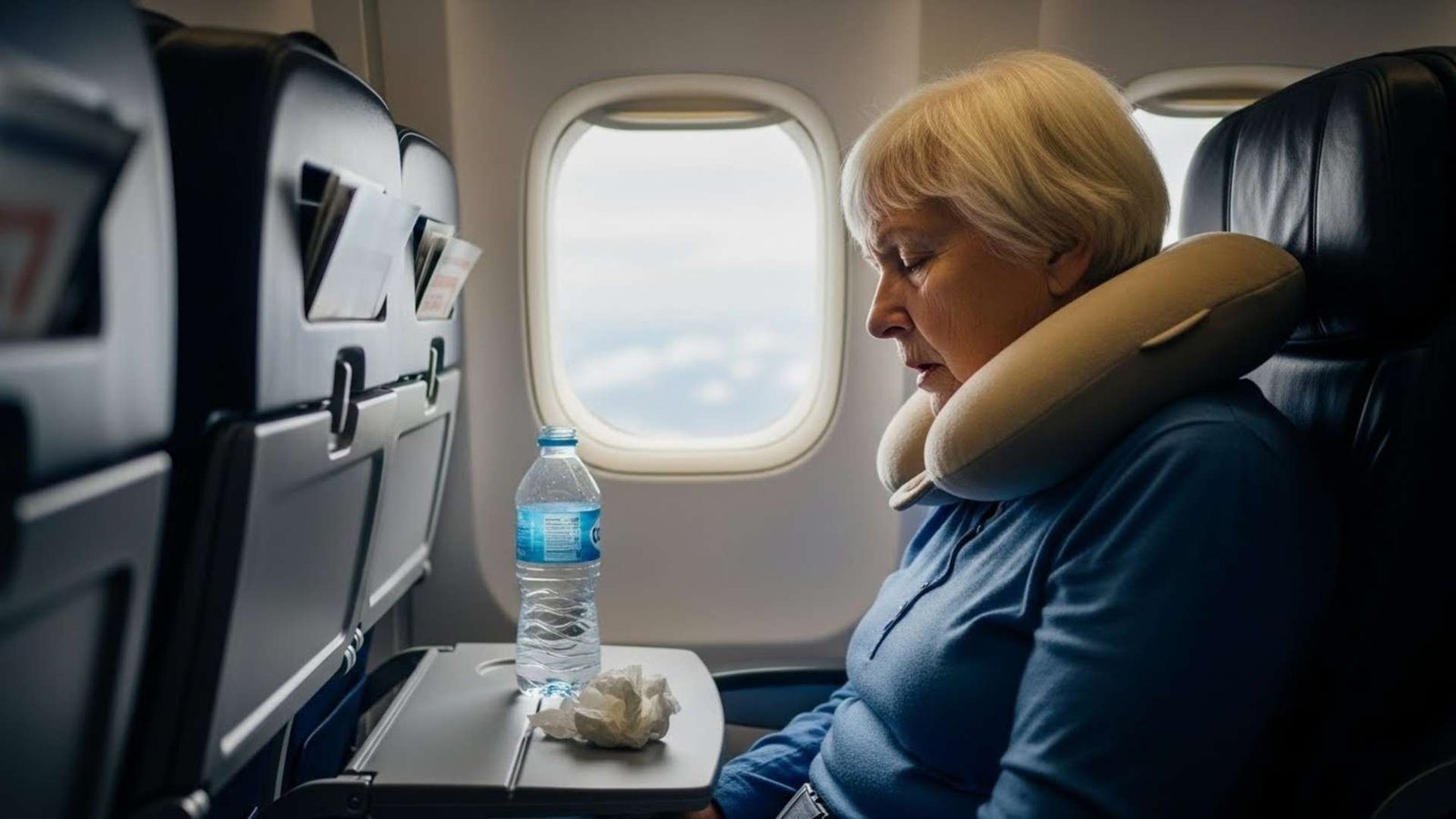
Before we get to the moves, you need to understand why you feel so terrible. Medical experts call it Virchow’s Triad, but you can think of it as the “Triple Threat” of air travel.
- Stasis (The Stopped River): This is the big one. When you sit for hours with your knees bent, you’re kinking the hose. Blood flow in your deep leg veins slows down to a crawl.
- Hypercoagulability (The Sticky Blood): Because the cabin air is so dry, you dehydrate faster than you realize. Your blood literally gets thicker. Add in the mild hypoxia (lower oxygen), and your body actually primes itself to clot because it thinks the stress means you might be injured.
- Vessel Trauma (The Squeeze): That seat edge digging into the back of your thighs? It’s compressing the vein walls.
When these three meet, you risk Deep Vein Thrombosis (DVT)—a blood clot. Now, don’t panic. For most of us, the risk is low (about 1 in 6,000 flights). But the symptoms of this triad—swelling, fatigue, stiffness—hit almost everyone.
The Myth of the “Economy Class Syndrome” Let’s bust this right now: Moving to Business Class doesn’t automatically save you. In fact, lying flat in a pod for 10 hours without moving might actually be riskier than fidgeting in Economy. Your blood doesn’t care about your legroom; it cares about your movement.
Meet Your “Second Heart” (And Why It Needs You)
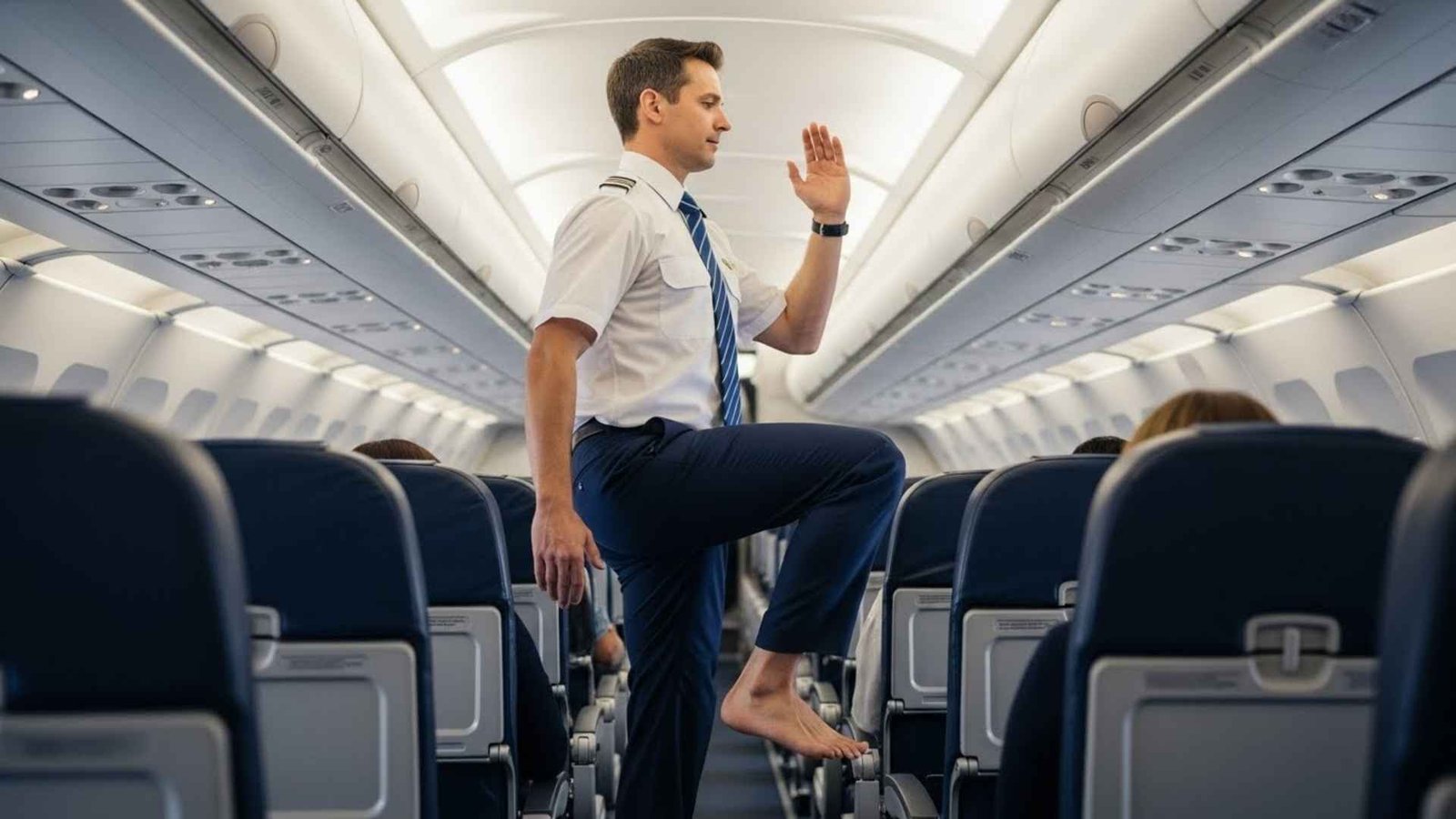
Here is the coolest piece of biology you’ll learn today. Your heart is great at pumping blood out to your toes. But it’s terrible at getting it back up.
To fight gravity, your body relies on the Calf Muscle Pump.
Think of your calf muscles as a sponge full of water. When you walk, you squeeze the sponge, shooting blood back up to your heart. When you sit? The pump turns off. The water (blood) sits there, pools, and gets stagnant.
The 7 exercises below are just manual overrides for this pump. You don’t need to do yoga in the aisle. You just need to squeeze the sponge.
The Protocol: 7 “Stealth” Moves to Stay Alive
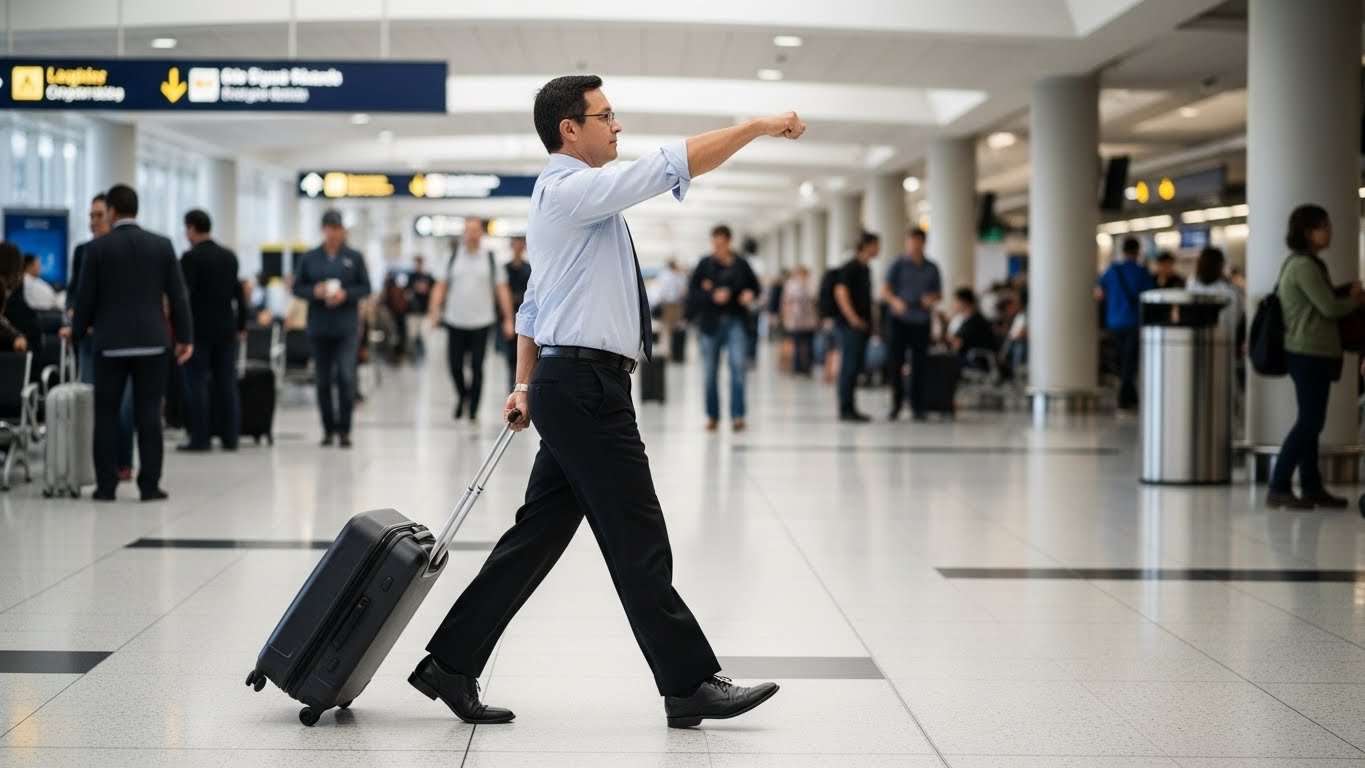
The Rules:
- When: Every 60-90 minutes. Set a timer. Seriously.
- How: Smooth and controlled. No jerky movements.
1. The Soleus Pushup (The Metabolism Hack)
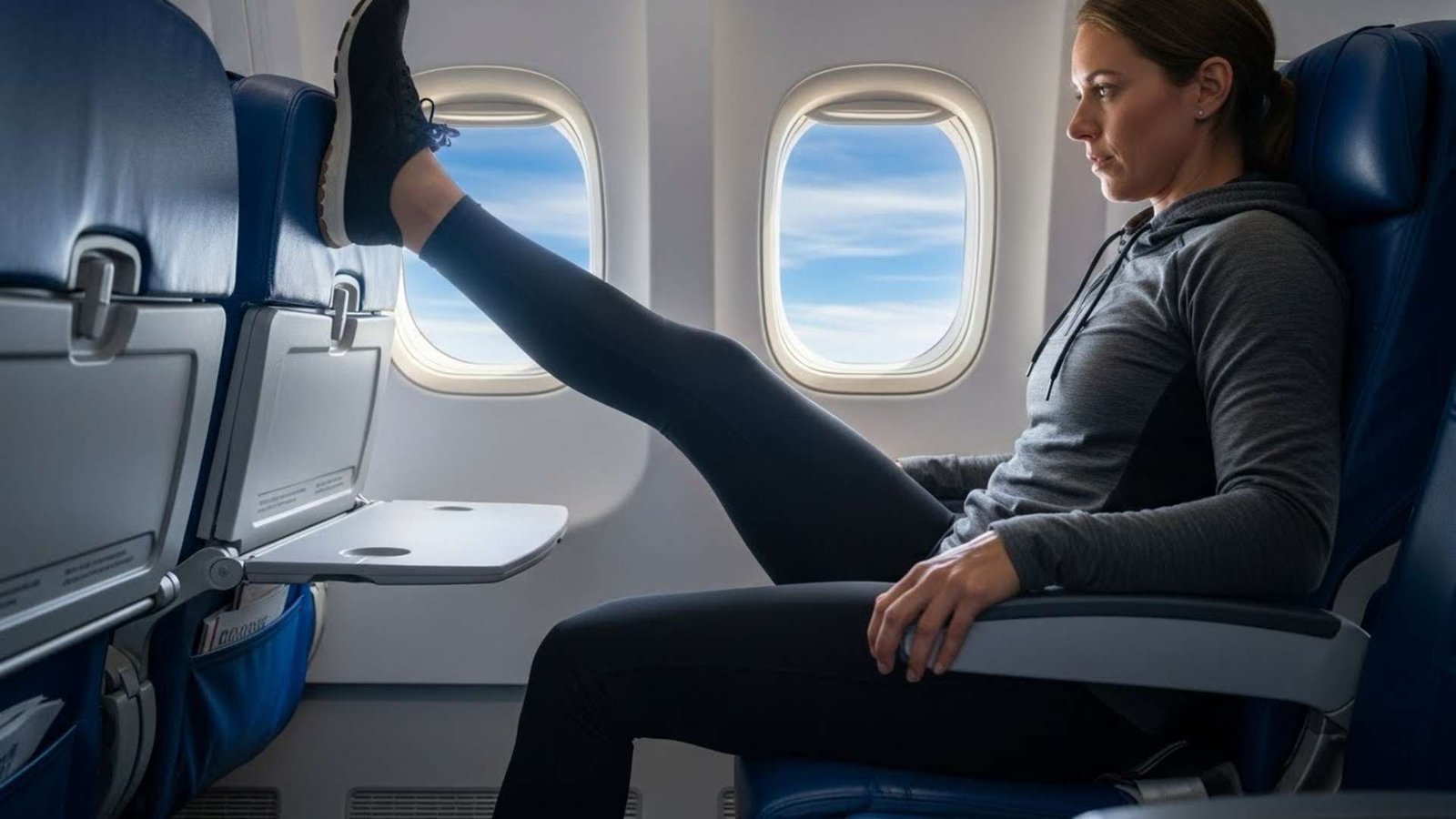
This is new science. Researchers at the University of Houston recently discovered that activating the soleus muscle (a deep calf muscle) can elevate your metabolism and regulate blood sugar for hours while you sit, with almost zero fatigue.
- The Move: Keep your toes flat on the floor and lift your heels as high as they go. Drop them freely. Repeat.
- The Pace: Do this rhythmically for a few minutes.
- Why it works: It’s not just about clots; this specific move burns blood glucose and keeps your metabolic engine running even though you’re sedentary.
Ankle Circles
The Joint Oiler 🛢️Lift one foot. Draw the biggest circle you can with your big toe.
Go 15 seconds clockwise, then 15 seconds counter-clockwise.
Lubricates the joint (like oil!) and forces blood out of the foot.
- The Move: Lift one foot slightly (or just the heel). Draw the biggest circle you can with your big toe.
- The Detail: Go 15 seconds clockwise, 15 seconds counter-clockwise.
- Why it works: This moves the ankle through its full range of motion, lubricating the joint and forcing blood out of the foot.
3. Knee Lifts (The Hip Opener)
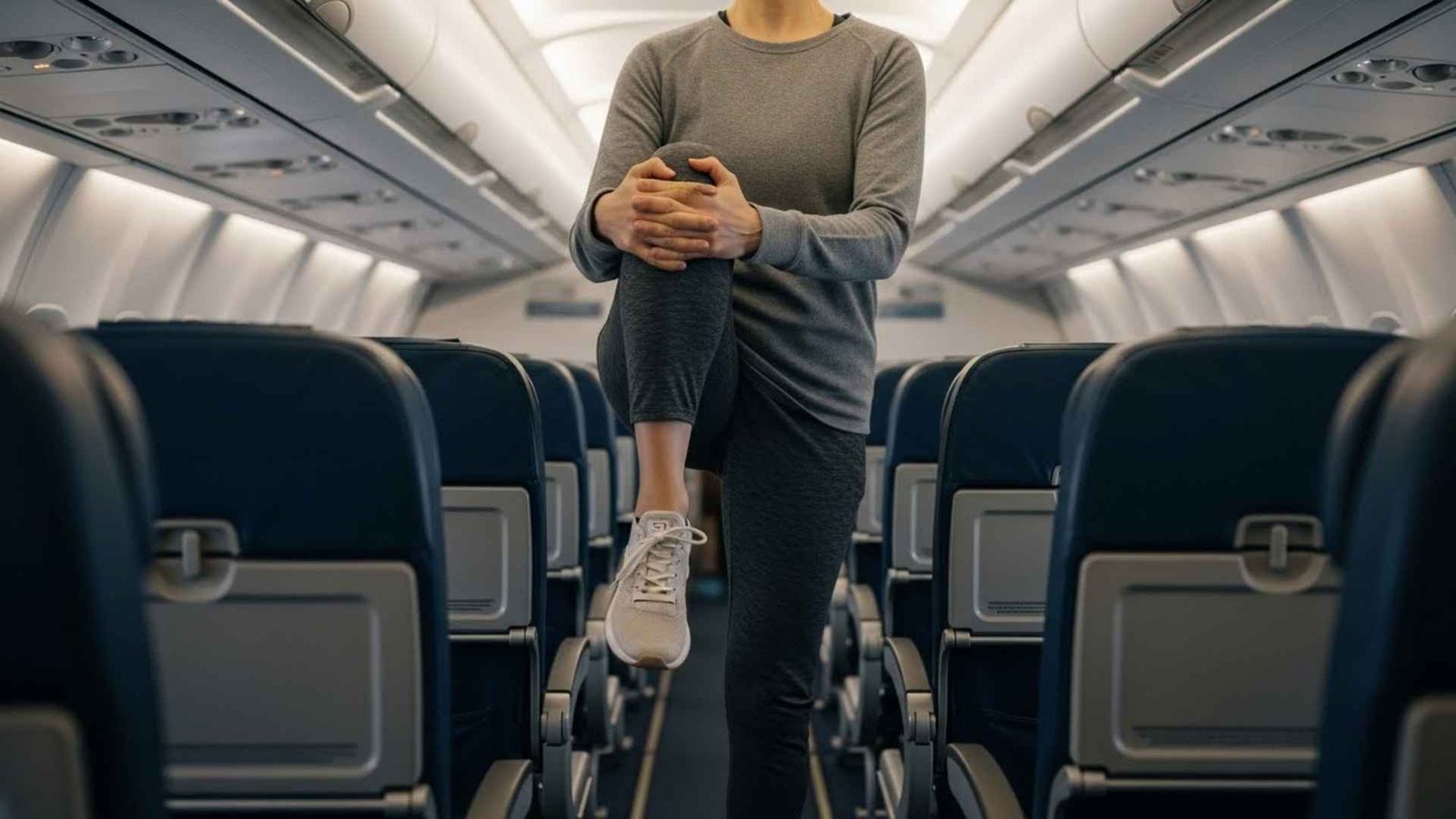
- The Move: While seated, keep your knee bent and lift your thigh up a few inches off the seat. Hold for 2 seconds, then lower slowly.
- The Detail: Don’t just jerk it up. Squeeze your core and thigh.
- Why it works: Sitting at 90 degrees kinks your femoral vein (in the groin). This briefly opens that kink and engages the big quad muscles.
4. Neck Tilts (The Headache Prevention)
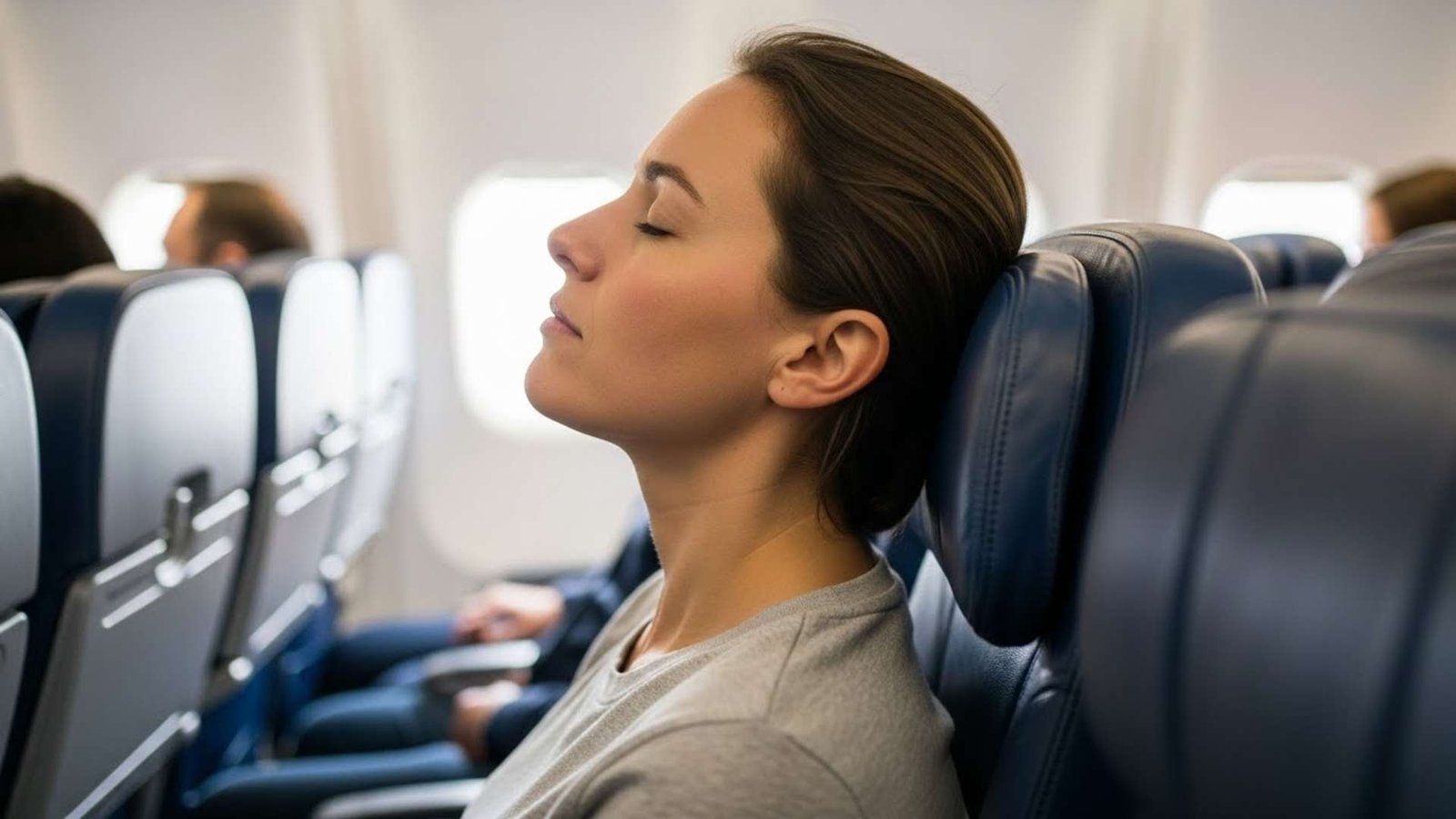
- Safety Update: You might have heard of “neck rolls” (spinning your head in a circle). Stop doing those. For many people, especially if you’re over 50, grinding your cervical spine in a circle can compress nerves.
- The Better Move: Sit tall. Drop your right ear to your right shoulder. Hold for 5 breaths. Switch sides. Then, drop your chin to your chest.
- Why it works: It releases the tension in the trapezius muscles that causes those throbbing travel headaches.
5. Shoulder Rolls (The Lung Opener)
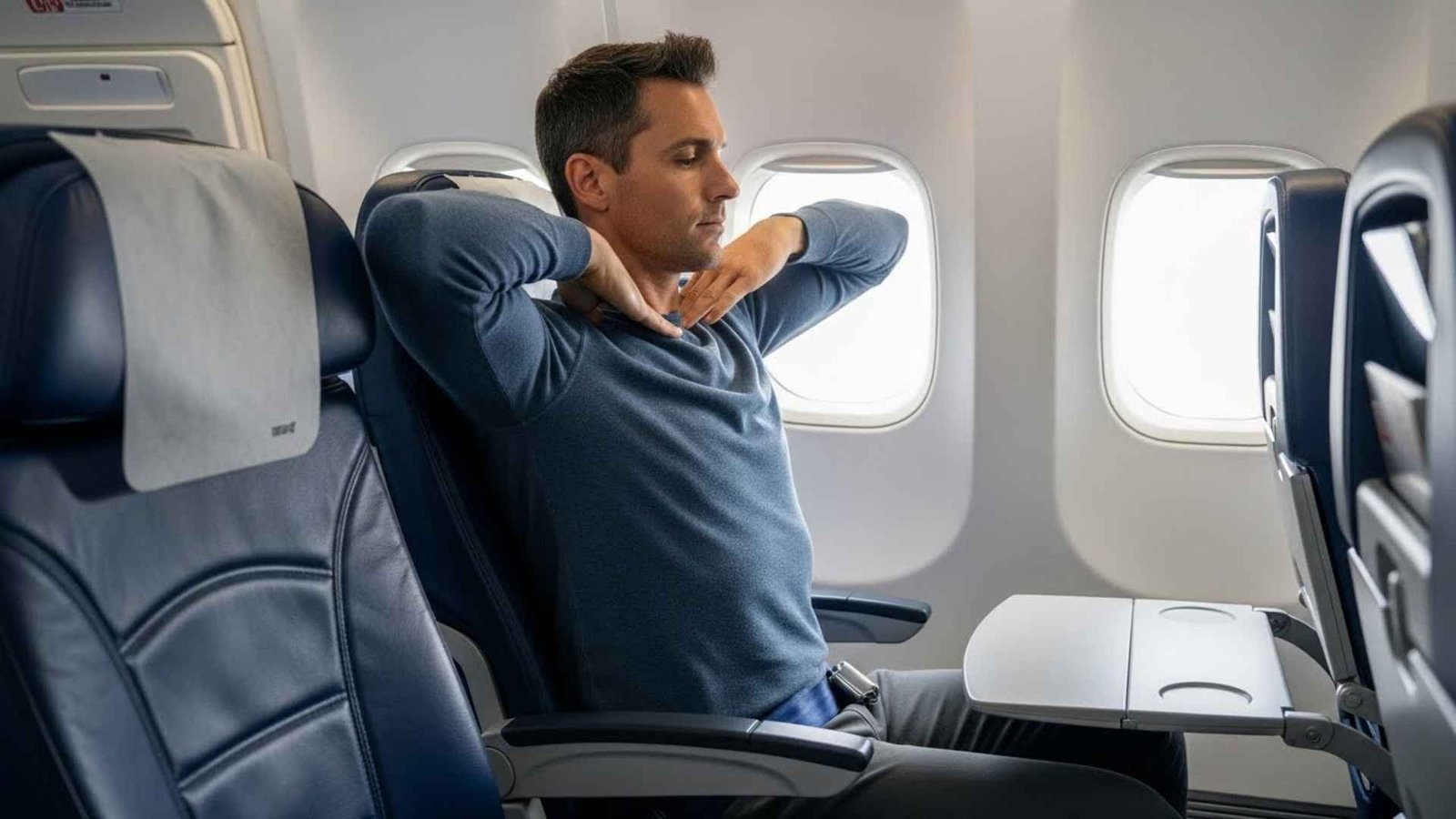
- The Move: Shrug your shoulders up to your ears, roll them way back (squeeze your shoulder blades like you’re holding a pencil), and slide them down.
- Why it works: Most of us “turtle” on planes—shoulders forward, chest collapsed. This crushes your lungs, making the low oxygen levels feel even worse. This move opens your chest so you can actually breathe.
Seated Spinal Twist
The Detox ✨Keep hips forward. Place right hand on left knee. Twist upper body to look over shoulder.
Twist from your belly button, not your neck!
Combats “Jet Bloat” (gas expands at altitude!). Gentle compression massages organs & moves digestion.
- The Move: Keep your hips forward. Place your right hand on your left knee. Gently twist your upper body to look over your left shoulder.
- The Detail: Twist from your belly button, not your neck.
- Why it works: This helps massage your abdominal organs. Since gas expands by 30% at altitude (hello, “jet bloat”), this gentle compression helps keep your digestion moving.
7. The Forward Fold (The Decompressor)
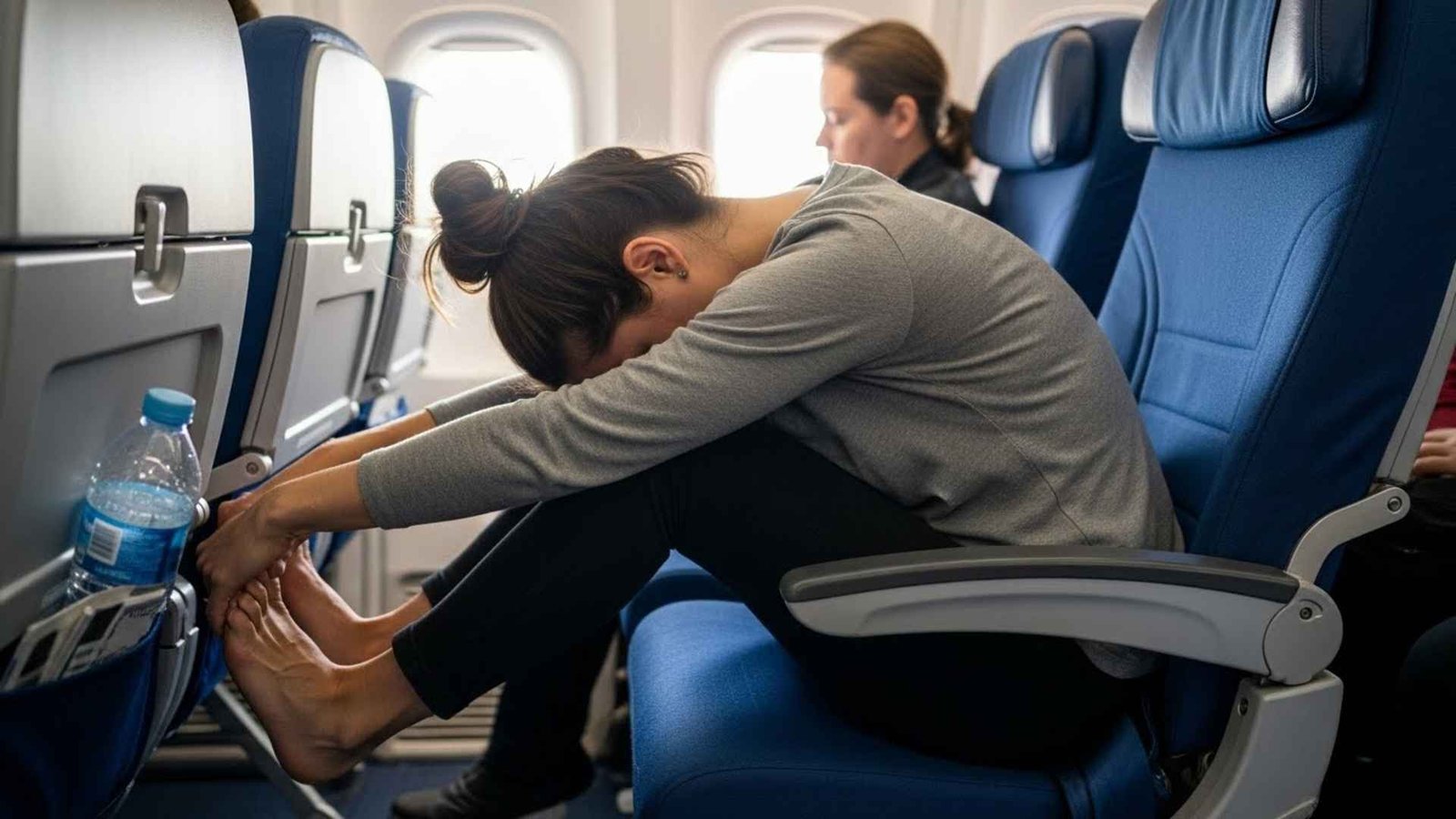
- The Move: Feet wide. Hinge at the hips and lean forward, resting your elbows on your knees or, if you have room, dropping your hands toward the floor. Let your head hang heavy.
- Why it works: It relieves the pressure on your lower back discs that have been compressed by gravity for hours.
The “Extras”: What Actually Works?
I dug through the medical advice to filter the gimmicks from the essentials.
1. Hydration: It’s Not Just Water
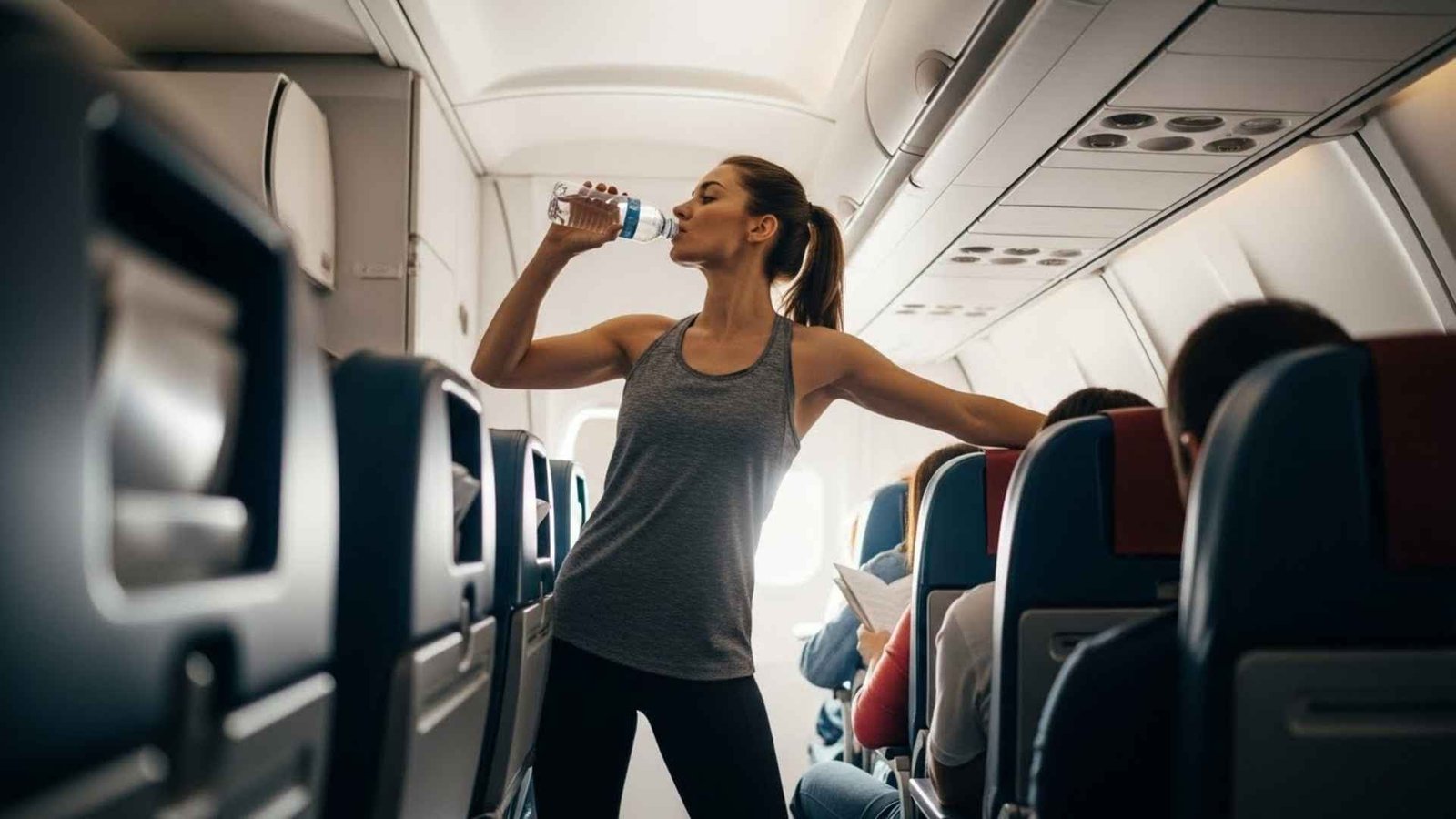
Yes, drink water. But here’s a pro tip: Add electrolytes. Plain water goes right through you (hello, tiny airplane lavatory). Electrolytes help your body hold onto the fluid in your blood vessels, which keeps your blood volume up and your viscosity down.
- The Rule: 8 oz of fluid for every hour of flight.
2. Compression Socks: The Hug Your Legs Need
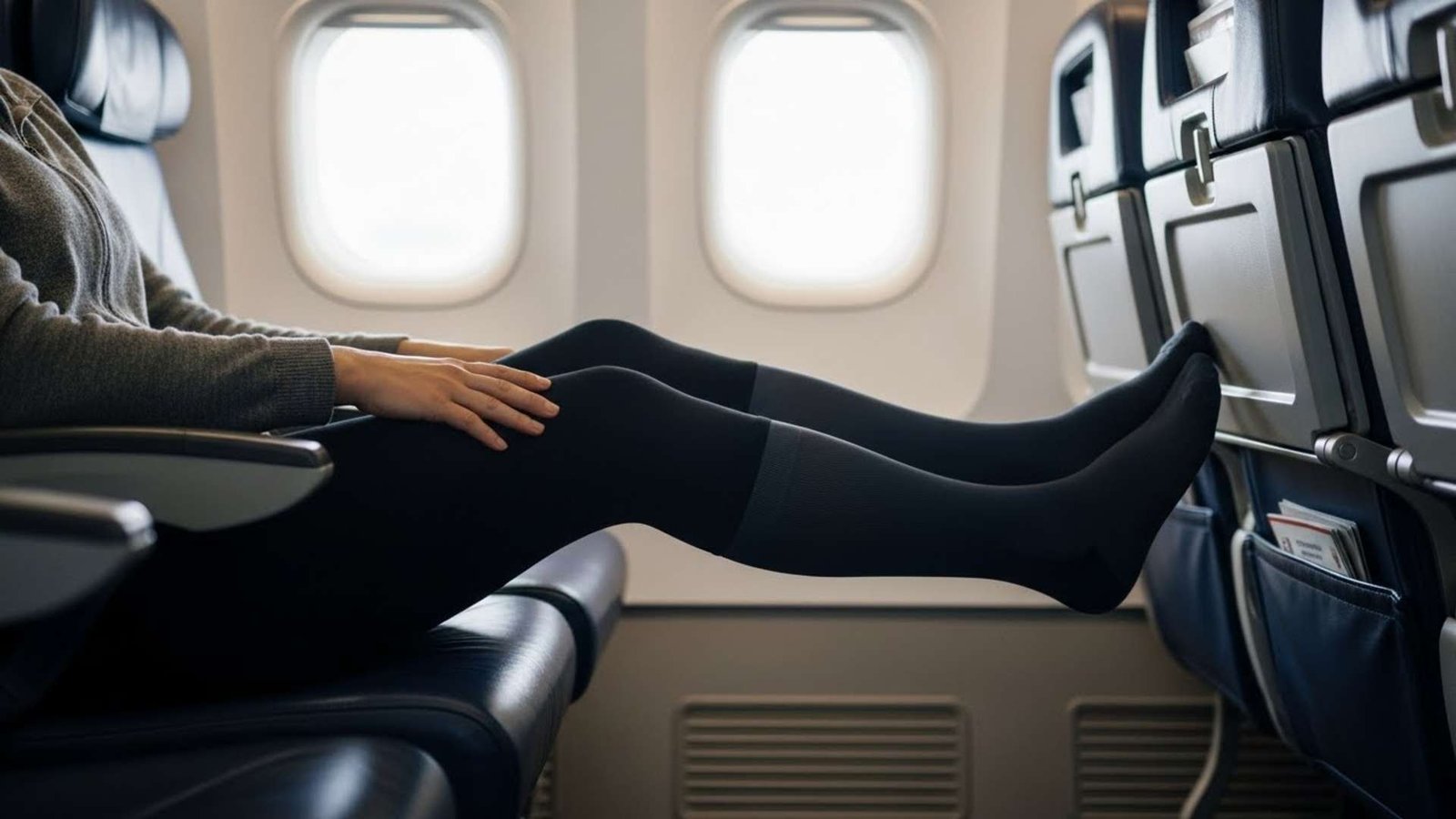
I used to think these were just for grandma. I was wrong. Graduated compression socks apply pressure at the ankle and loosen up near the knee. This mechanically forces blood upward.
- What to buy: Look for 15-20 mmHg pressure.
- Warning: Do not roll them down! If you roll them, you create a tourniquet, which is the exact opposite of what you want.
3. The Aspirin Myth
You might have heard, “Take a baby aspirin before you fly to prevent clots.” The Verdict: Most guidelines advise against this for healthy travelers. Aspirin is great for preventing arterial clots (heart attacks), but DVT is a venous clot. The mechanism is different. Unless your doctor specifically told you to take it, you’re likely just increasing your risk of stomach issues without much protection. Stick to the exercises—they work better.
5 Tools to Upgrade Your In-Flight Physiology
You don’t need gear to do these exercises, but if you fly often, a few strategic investments can make the “maintenance” a lot easier. I’m not talking about useless gadgets; I mean tools that actually support the biological mechanisms we just talked about.
1. Physix Gear Sport Compression Socks (20-30mmHg)

These aren’t your grandpa’s medical socks. They look like normal athletic wear but provide the firm graduation needed to squeeze blood out of your lower legs. They are durable, breathable, and hit that sweet spot of tightness without cutting off circulation at the knee.
2. Liquid I.V. Hydration Multiplier

Airplane water is just wet; it doesn’t always hydrate you efficiently because you’re losing so many electrolytes in the dry air. These packets use “Cellular Transport Technology” to hydrate you faster than water alone. Plus, they taste good enough that you’ll actually want to drink them.
3. Sunany Inflatable Foot Rest

If you are on the shorter side, your feet might dangle, which increases the pressure on the back of your thighs (the “Vessel Trauma” from our Triple Threat). This simple inflatable cushion fills the gap between seats, giving you a solid platform to plant your feet and engage your muscles.
4. Trtl Travel Pillow

Standard U-shaped pillows often push your head forward, closing your airway and straining your neck. The Trtl is different—it’s essentially a scarf with a hidden internal support structure. It holds your head in a neutral position, preventing the “head bob” and keeping your airway open for better oxygenation.
5. TriggerPoint Massage Ball

This is your secret weapon for the “Economy Coma.” Small enough to fit in your pocket, this ball is perfect for rolling out tight arches in your feet or placing behind your back to work out knots in your glutes and shoulders while you sit. It forces blood flow into compressed tissues.