Food Plus Movement Cut Frailty by 61% in 6 Months: 7 Pairings That Protect You After 60


Frailty sounds like a word for other people. In medicine it means something specific: your body has less reserve than it used to, so a cold, a fall, or a week in bed hits harder and takes longer to recover from. Walking slows. Grip weakens. Tiredness creeps in. It is common after 60, and it is one of the strongest predictors of losing independence.
A new study from a geriatric clinic in Beijing asked a simple question: does eating better and moving more together protect people better than either one alone? Researchers followed 1,584 adults aged 60 and older for six months. Some received nutrition help only. Some received exercise help only. Some received both. The rest received standard care.
The both group won by a wide margin. After six months, frailty had progressed in only 14.2 percent of the people who combined food and movement, against 36.4 percent of those on standard care. In relative terms, that is about 61 percent lower. Exercise alone and nutrition alone landed in between, at 21.5 and 23.8 percent. The combined group also had stronger grips, faster walking, more muscle, and better heart measures, with fewer falls, hospital stays, and emergency visits.
One honest note before we start. This was a retrospective observational study, which means researchers looked back at clinic records instead of running a randomized trial. It found a strong link, not proof of cause. People were not randomly assigned, so other differences could play a part. This article is general information, not medical advice. Check with your doctor before starting exercise or changing your diet, especially if you have a heart condition.
The Study at a Glance
Published in Frontiers in Nutrition, 2026. A retrospective cohort study using electronic health records from January 2020 to December 2024, with six months of follow-up per person. The study shows an association, not proof that the combination causes the result. The standard care group also had more missing six-month data than the other groups, which is a real limitation.
The 61 Percent Number, in Plain English
Researchers at Aerospace Center Hospital in Beijing reviewed electronic health records from January 2020 to December 2024. Of 1,820 eligible adults aged 60 and older, 1,584 had complete baseline and six-month data and were included. Each person was grouped by the lifestyle plan already written in their clinic record: combined nutrition and exercise (480 people), exercise only (425), nutrition only (375), or standard care (304).
Frailty was tracked with the Clinical Frailty Scale, a standard rating doctors use to judge how much help a person needs with daily life. Progression meant the score rose by one point or more over six months. That happened to 14.2 percent of the combined group, 21.5 percent of the exercise only group, 23.8 percent of the nutrition only group, and 36.4 percent of the standard care group.
Read the headline number the right way. The gap between 14.2 and 36.4 percent is 22.2 percentage points in absolute terms. The 61 percent figure is the relative comparison: 14.2 is about 61 percent lower than 36.4. Both numbers describe the same result, and the absolute gap is the one that tells you how many people were affected.
After adjusting for age, other illnesses, baseline frailty, nutrition status, and how closely people followed their plans, the combined group still came out ahead. Their odds of frailty progressing were 38 percent lower than the comparison, an adjusted odds ratio of 0.62. Their odds of cardiac dysfunction, meaning the heart pumping less well, were 42 percent lower, an odds ratio of 0.58. Average frailty scores fell slightly in the combined group and rose slightly under standard care.
Keep the limits in view. This was one hospital in one city, and people chose their groups with their doctors rather than being randomly assigned. The standard care group also lost far more records to missing six-month data, 29.3 percent against about 8 percent in the other groups, which can tilt results. Six months is short, so treat the findings as promising, not final. The full study is published in Frontiers in Nutrition.
Pairing 1: Protein at Every Meal Plus Resistance Training
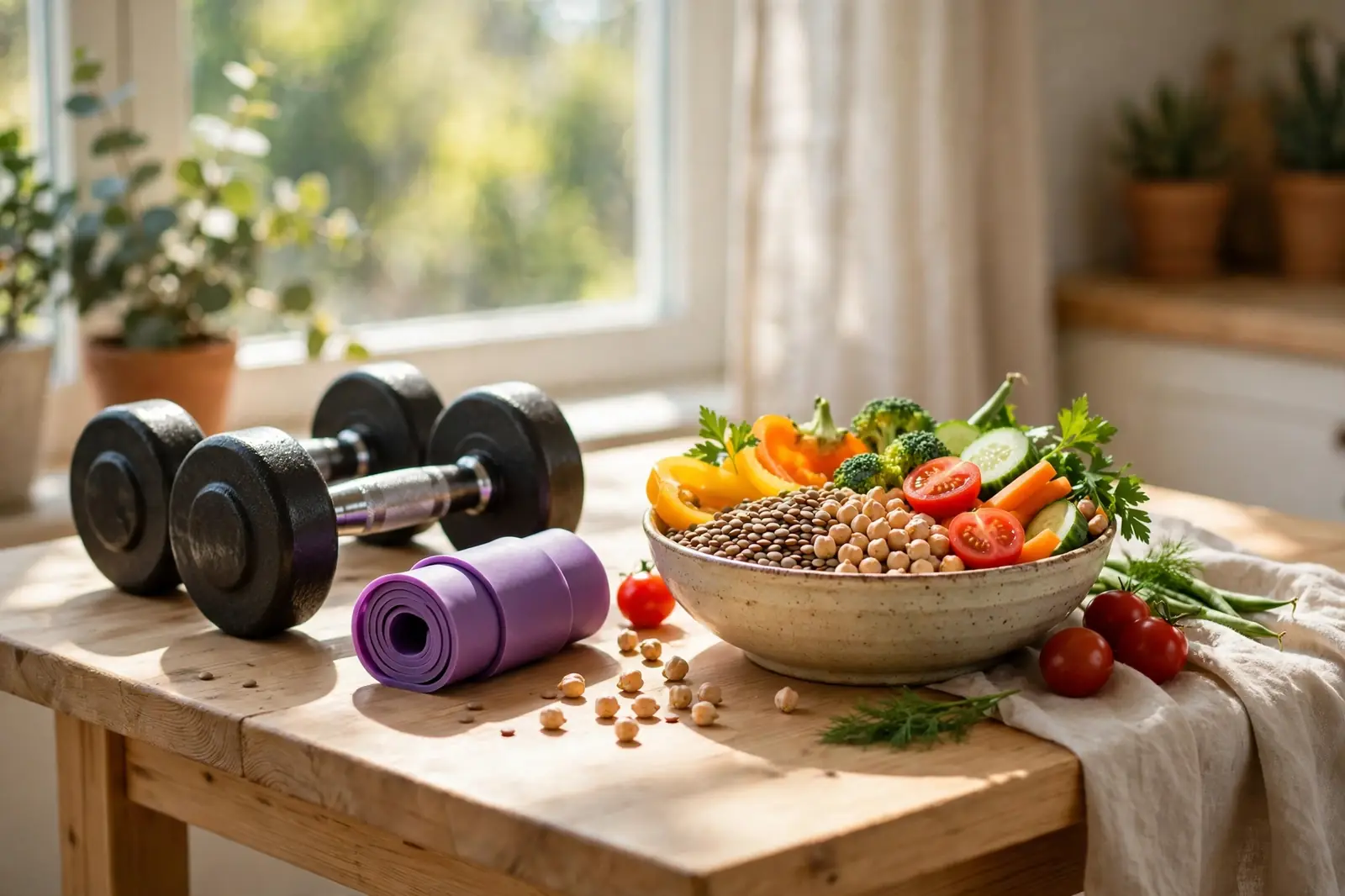
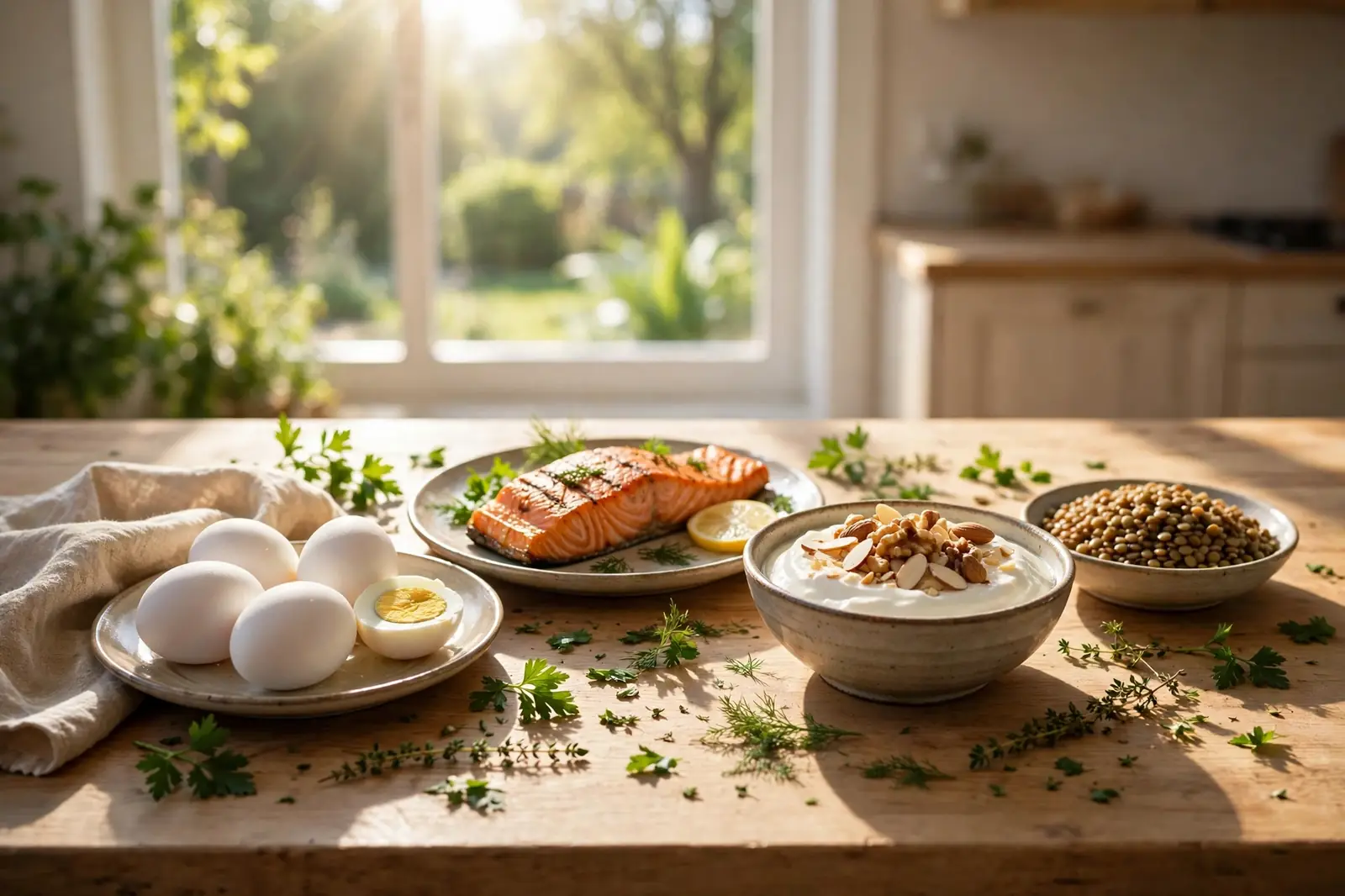
This is the pairing the whole study turns on. In the clinic, the combined group aimed for 1.2 to 1.5 grams of protein per kilogram of body weight per day, spread across meals, with an emphasis on high-quality sources. That is the target the study itself used, and it was set by dietitians for each person, not a number to adopt on your own without advice.
There is a reason the target is higher than many people expect. As we age, muscles respond less strongly to protein, a change scientists call anabolic resistance. The same serving that built muscle at 40 builds less at 70. Older adults often need more protein per meal, and they need the trigger that tells muscle to use it. That trigger is resistance work.
The study exercise plan mixed aerobic activity, progressive resistance training, balance, and flexibility, 30 to 45 minutes per session, 3 to 5 days a week, at a moderate pace where you breathe harder but can still talk. Start with bodyweight moves you can do safely: chair rises, wall push-ups, seated leg lifts, or light resistance bands. Add a little difficulty every week or two, and keep good form.
Randomized trials back up the pairing. A 2026 network meta-analysis of 22 trials with 2,055 adults over 60 found combined exercise and nutrition improved frailty scores more than any single approach, while nutrition alone did not reach statistical significance. Read the meta-analysis on PubMed. The practical rule is simple: put protein on the plate at breakfast, lunch, and dinner, eggs, yogurt, fish, beans, or chicken, and give your muscles something to push against most days.
Pairing 2: Vitamin D Plus Outdoor Walking
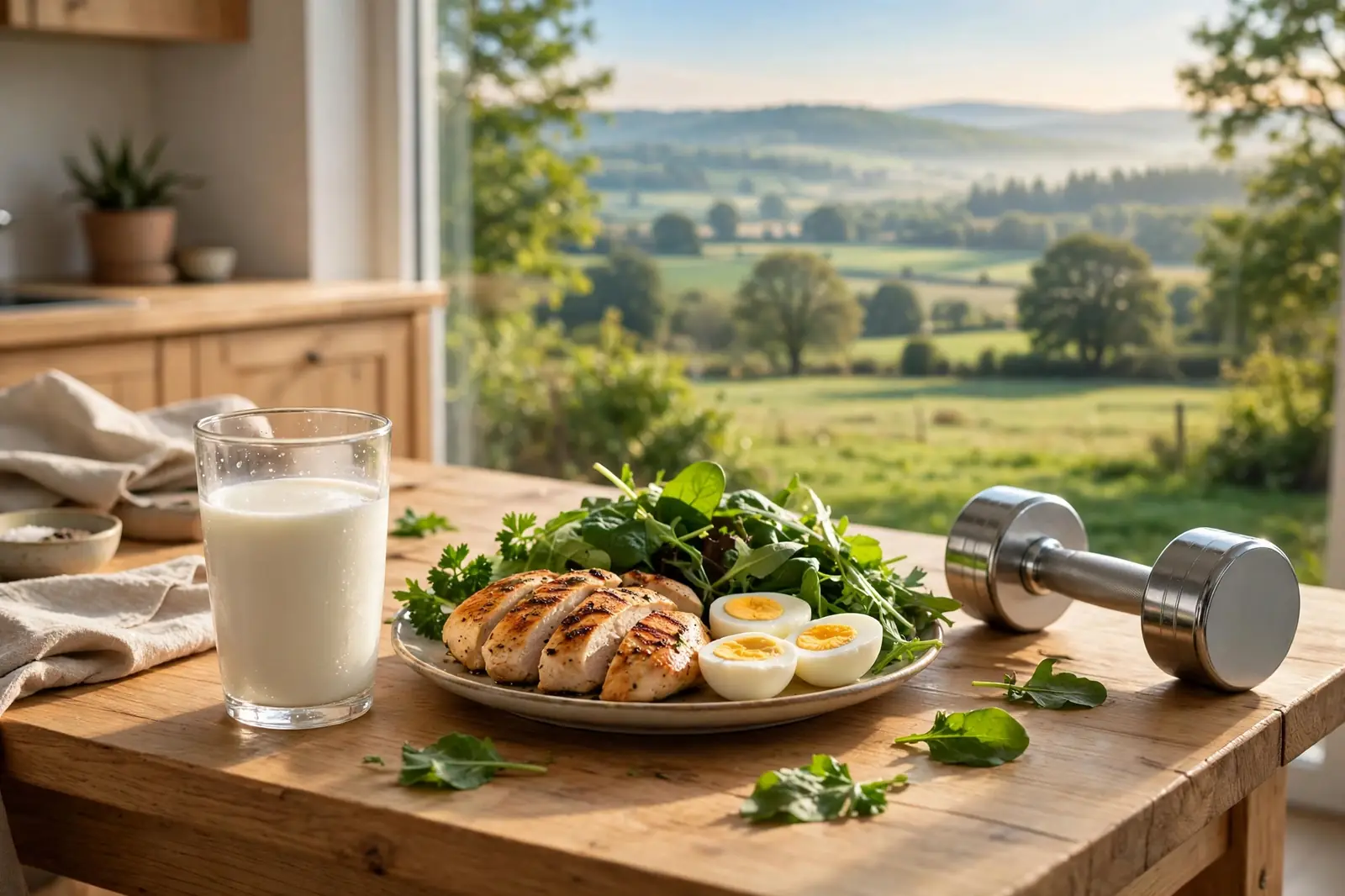
Protein was not the only nutrition target in the clinic. Dietitians also corrected vitamin D insufficiency, checked calcium intake, and watched hydration. That detail matters, because about 40 percent of the study participants were vitamin D deficient at the start, a common problem after 60, when skin makes less vitamin D from sunlight and diets often fall short.
Vitamin D helps muscles work and bones stay strong, and low levels are linked to weaker legs and more falls. But guessing at a dose is a bad idea. The sensible step is a blood test through your doctor, who can tell you whether you are low and what dose fits you. Food helps too: oily fish, eggs, and fortified milk or yogurt all contribute, and calcium from dairy or leafy greens supports the same bones.
Walking outdoors pairs the sunlight with the aerobic half of the study plan. Morning light is the easiest way to get both at once, and a daily walk is the most forgiving exercise there is. The World Health Organization advises adults 65 and older to aim for 150 to 300 minutes of moderate aerobic activity a week, with muscle strengthening on two or more days and balance work on three or more days if mobility is poor.
Start where you are. Twenty minutes around the block most mornings is a real beginning, and you can build toward 30 minutes as stamina grows. Walk with a friend if you can. Wear supportive shoes, pick even ground, and carry water. If balance is shaky, walk where there are benches and rails, and save hills for later.
Four Groups, Six Months: Who Got Worse
Share of each group whose frailty score rose by one point or more in six months. The combined group did best, and either single approach beat standard care. Source: Meng, Li and Yu, Frontiers in Nutrition, 2026.
Pairing 3: Balance Practice Plus Everyday Movement

Balance and flexibility were part of the exercise mix in the study, not an afterthought, and the combined group ended the six months with fewer falls than any other group. That is the payoff that matters most in daily life. A fall can break a hip, and a broken hip can end independent living. Strong legs help you catch yourself. Good balance helps you avoid needing to.
The good news is that balance responds to short, regular practice. Stand on one foot while holding the kitchen counter, and switch sides. Walk heel to toe along a hallway wall. Rise from a chair without using your hands, then sit down slowly. Ten minutes, most days, is enough to start, and these moves use the same leg and hip muscles that resistance training builds.
Everyday movement counts alongside formal exercise. Gardening, climbing stairs, carrying groceries, and housework all load muscles and challenge balance. The study defined a sedentary lifestyle as sitting for seven or more hours a day, so stand up and move for a few minutes every half hour.
Make your home a partner in this pairing. Clear cords and clutter from walkways, tape down rug edges, and put a night light on the path to the bathroom. Wear shoes with grip and closed backs, even indoors. If you feel unsteady, ask your doctor for a physical therapy referral. A therapist can test your balance properly and build a plan that fits your body, which is far safer than copying a routine from a video.
Pairing 4: Heart-Smart Eating Plus Aerobic Movement
Frailty and heart trouble share the same roots: low-grade inflammation, weakening muscle, and blood vessels that stiffen with age. That is why the study tracked heart measures alongside frailty, and why the combined group did best on both. Their pumping strength, heart rate variability, and a blood marker of heart strain all improved more than in the other groups, and their blood pressure improved too.
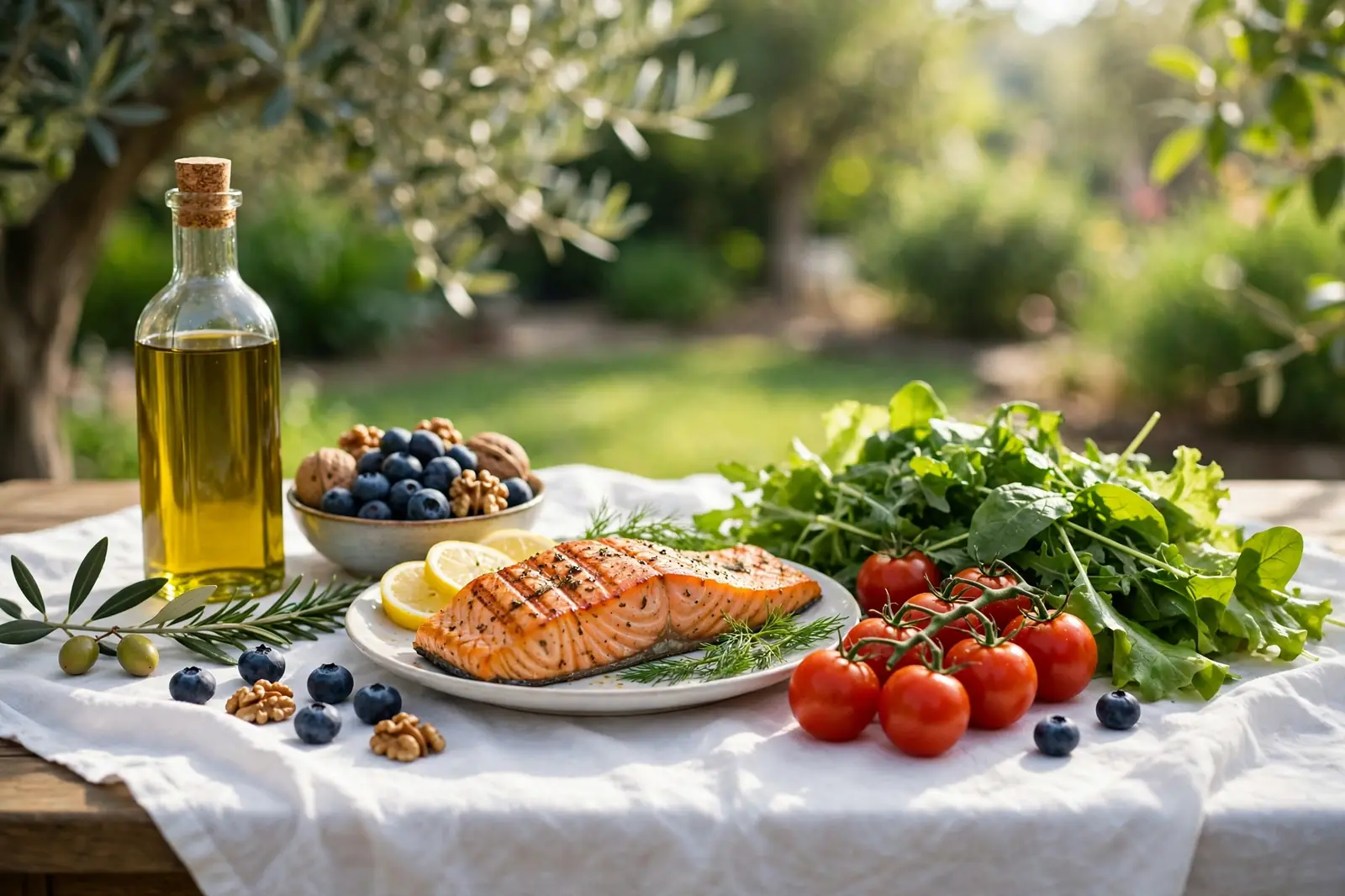
The eating side looks a lot like a Mediterranean pattern: oily fish twice a week, olive oil instead of butter, nuts, beans, whole grains, and plenty of vegetables. A major 2026 review of 248 studies linked Mediterranean-style eating to healthier aging and lower sarcopenia risk. Read the review summary. Cut back on salt and heavily processed foods, not ban them outright.
The movement side is steady aerobic work at a conversational pace: brisk walking, cycling, swimming, or dancing. This is the part of the study plan that trains the heart directly, and it pairs naturally with the outdoor walk in pairing two. A walk after meals does double duty, since gentle movement after eating also helps blood sugar stay steadier.
Check with your doctor before pushing the pace, especially if you have a heart condition or take heart medicine. A good first goal is 30 minutes of brisk walking on most days, built up slowly from wherever you start. If you get chest pain, unusual breathlessness, or dizziness during exercise, stop and seek medical help the same day.
Pairing 5: Steady Fuel Plus Regular Meals
The clinic did not just add protein. Dietitians optimized total calories, checked in monthly, and reviewed three-day food records with each person. That matters, because under-eating is a quiet risk after 60. Appetite fades, cooking for one feels like a chore, and weight drifts down a pound at a time. When calories fall short, the body burns muscle for fuel, and no amount of exercise can rebuild what food never supplied.
Regular meals are the fix. Three meals a day, with protein at each one, beats a small lunch and a huge dinner, because muscle building switches on after each protein-containing meal. A practical plate is a palm-sized portion of fish, chicken, eggs, or beans, plus vegetables and a starchy food for energy. Keep a glass of water with each meal, since the clinic also monitored hydration.
Watch for the warning signs. Clothes fitting looser, less interest in food, or weight dropping without trying are all worth mentioning to your doctor. Weigh yourself once a week at the same time of day, and keep a simple note. Unintentional weight loss is a medical issue, not a victory, and it deserves a checkup, not a celebration.
If cooking feels like too much, simplify rather than skip. Rotisserie chicken, canned beans, eggs, yogurt, and frozen vegetables are all real food with real protein, and they take minutes to put on a plate. A dietitian can help tailor portions to your weight and health conditions, which is exactly what the monthly check-ins in the study were for.
Pairings 6 and 7: Sleep, Checkups, and a Routine That Sticks

Pairing 6: sleep that repairs plus a morning routine. The study did not test sleep, so be clear about that. Muscle repair happens largely overnight, and poor sleep leaves you tired, unsteady, and less likely to exercise the next day. Keep regular sleep hours and a dark, cool bedroom. If sleep trouble lasts more than a few weeks, talk to your doctor instead of reaching for sedatives, since many raise fall risk.
Pairing 7: a weekly plan plus regular check-ins. The combined group stuck with their plans: 78.5 percent followed the program, and about 60 percent attended supervised exercise sessions. Monthly dietitian follow-ups kept the nutrition side on track. That is the real lesson of this pairing. Small habits, repeated and reviewed, beat a heroic week followed by a month off.
Put the week on paper. Three to five sessions of 30 to 45 minutes, mixing aerobic work, strength, balance, and flexibility. Protein at every meal. A walk outdoors most mornings. Check in each Sunday: did the week happen, and what got in the way?
Before you begin, book the doctor visit. Bring your medicine list, mention any heart condition, and ask what intensity fits you. Then start small, track what you do, and add one pairing at a time.
Your 7-Pairing Weekly Checklist
- 1. Protein plus resistance: protein at every meal, strength work most days.
- 2. Vitamin D plus outdoor walking: get levels checked, walk in morning light.
- 3. Balance plus everyday movement: 10 minutes of balance practice, break up sitting.
- 4. Heart-smart eating plus aerobic movement: fish, olive oil, vegetables, brisk walking.
- 5. Steady fuel plus regular meals: three meals a day, watch for unintentional weight loss.
- 6. Sleep plus a morning routine: regular hours, dark cool bedroom, no self-prescribed sedatives.
- 7. A weekly plan plus check-ins: write the week down, review it Sundays, see your doctor first.
This article is general information, not medical advice. Check with your doctor before starting exercise or changing your diet, especially with a heart condition. Sources: Frontiers in Nutrition, 2026; network meta-analysis, 2026; WHO physical activity guidance; study coverage.
The headline number is a comparison, not a promise. Sixty-one percent lower in relative terms, from one clinic, over six months, in a study that watched rather than randomized. Treat it as direction, not destiny. The reassuring part is that randomized trials point the same way: a 2026 network meta-analysis of 22 trials found combined food and movement programs improved frailty scores more than either approach alone.
Start with the easiest pairing, not the hardest. A protein-rich breakfast tomorrow. A twenty-minute walk in the morning light. One balance move at the kitchen counter. Add a second pairing next week, and a third the week after. Small steps, repeated for six months, are exactly what the study measured.
Share this article with someone you love who is over 60. They may be eating less than they think and moving less than they used to, and they may not know the two work better together. A short conversation today, and a doctor visit this month, could be why they stay strong on their feet tomorrow.