13 Neuroscience Books That’ll Rewire Your Brain (Literally, According to Science)


If you’ve ever wondered why your brain clings to old habits, reacts before you think, or lights up at the smallest reward, you’re not alone. Modern neuroscience has finally pulled back the curtain, revealing how much control we actually have over our thoughts, emotions, and behaviors — far more than most people ever realize.
The following books don’t just fill your head with information; they give you tools to reshape the wiring underneath your thoughts. Whether you’re trying to break patterns, build sharper thinking, or better understand the human mind, these reads bring science down to earth in a way that genuinely sticks.
Below are the first five books on the list — deeply detailed, conversational, and structured so readers get everything in one place.
1. “Behave: The Biology of Humans at Our Best and Worst” — Robert Sapolsky

Few books dig into human behavior as thoroughly as Sapolsky’s Behave. This is the kind of neuroscience that doesn’t just explain your reactions — it lays out the millisecond-by-millisecond biological timeline behind every choice you make. Sapolsky moves through the brain, hormones, childhood, culture, and even evolution, showing how layers of influence stack together. The result is a wildly comprehensive look at why humans act the way they do, backed by decades of neurobiology research. Readers call it transformative not because it’s simple, but because Sapolsky treats complexity with clarity, humor, and a kind of intellectual compassion that makes you rethink everyone you’ve ever interacted with.
The second half of the book connects science to real-world issues — violence, morality, empathy, tribalism — and it lands hard. It leaves you with a renewed appreciation for how astonishingly interconnected your biology and environment really are.
2. “The Brain That Changes Itself” — Norman Doidge, M.D.

This is the book that brought neuroplasticity into mainstream conversation. Doidge compiles groundbreaking case studies — stroke survivors who regain abilities, chronic pain patients who rewire sensory maps, people with learning disorders who build new neural pathways — and makes them accessible without watering them down. You walk away realizing that the brain is not fixed; it is a living, adaptive, self-repairing system. The storytelling is strong, the science is solid, and the message is surprisingly empowering.
The shorter chapters on cognitive enhancement are especially compelling. They show how small, intentional behaviors can stimulate deep neural rewiring, not just temporary self-improvement.
3. “Why We Sleep: Unlocking the Power of Sleep and Dreams” — Matthew Walker

If you’ve ever underestimated sleep, this book will correct that permanently. Walker breaks down the science of sleep in a way that’s not just fascinating — it’s urgent. He explains how sleep impacts memory consolidation, creativity, emotional regulation, immune strength, and even life expectancy. Each chapter builds a compelling case that sleep is the single most underrated tool for improving brain function. Readers often say it shifts their perspective immediately, and for good reason: once you understand the neuroscience, staying up late starts to feel like self-sabotage.
The final chapters highlight strategies for improving sleep quality by working with your brain’s natural rhythms. It’s a practical and surprisingly motivating look at how optimizing rest can truly rewire your cognitive and emotional baseline.
4. “The Extended Mind: The Power of Thinking Outside the Brain” — Annie Murphy Paul

This book takes a bold stance: your thinking doesn’t happen only in your head. It unfolds through your body, environment, tools, and relationships. Paul presents compelling research showing how movement, physical space, and social dynamics shape cognitive performance. If you’ve ever felt smarter in a certain room, calmer when walking, or more insightful during conversation, this book finally validates that with solid, peer-reviewed neuroscience. It reframes intelligence as something fluid, not just biological.
The shorter closing chapters explain how to design your surroundings and routines to enhance thinking. It’s a refreshingly practical take on expanding the brain’s true processing power beyond its physical limits.
5. “Livewired: The Inside Story of the Ever-Changing Brain” — David Eagleman

Eagleman specializes in showing how the brain constantly updates itself — not occasionally, but every second. Livewired explains how neural circuits reorganize in response to experience, how unused brain regions get repurposed, and how technology might one day merge with neural systems. It’s science written with momentum, clarity, and a sense of wonder. What makes this book stand out is its exploration of how the brain builds reality, not just how it processes it.
The learner sections toward the end explore adaptable brains in extreme environments — blindness, sensory substitution, technological augmentation — highlighting just how agile and opportunistic your neural wiring can be.
6. “How Emotions Are Made: The Secret Life of the Brain” — Lisa Feldman Barrett

Barrett challenges one of the longest-held assumptions in psychology: that emotions are universal, hardwired reactions. Instead, she argues they’re constructed by your brain using past experiences, predictions, and cultural learning. This idea overturns traditional neuroscience and helps readers understand why two people can respond so differently to the same moment. Barrett’s work is especially helpful for anyone trying to break emotional patterns, as she demonstrates the considerable flexibility our emotional life truly has. Her research-backed explanations make it clear that your brain is constantly predicting and shaping your feelings, not just reacting to the world.
The shorter chapters on emotional control give practical ways to retrain your emotional predictions. They highlight how updating your internal concepts can reduce stress and improve relationships.
7. “The Science of Happiness: How Our Brains Make Us Happy—and What We Can Do to Get Happier” — Stefan Klein

Klein takes the reader through what neuroscience actually knows about long-term happiness — and it’s far more complex than mood boosters or quick fixes. He breaks down the roles of neurotransmitters, genetics, social bonding, stress regulation, and environmental design in shaping emotional well-being. What makes the book compelling is how it blends rigorous research with stories that show how people apply these findings in everyday life. Klein explains how happiness stems from deeply wired biological systems, not surface-level positivity, which is refreshing and grounding.
The closing sections offer evidence-backed habits that support happier brain chemistry. They’re practical and emphasize sustainable, physiology-driven changes rather than trendy advice.
8. “The Tell-Tale Brain” — V. S. Ramachandran
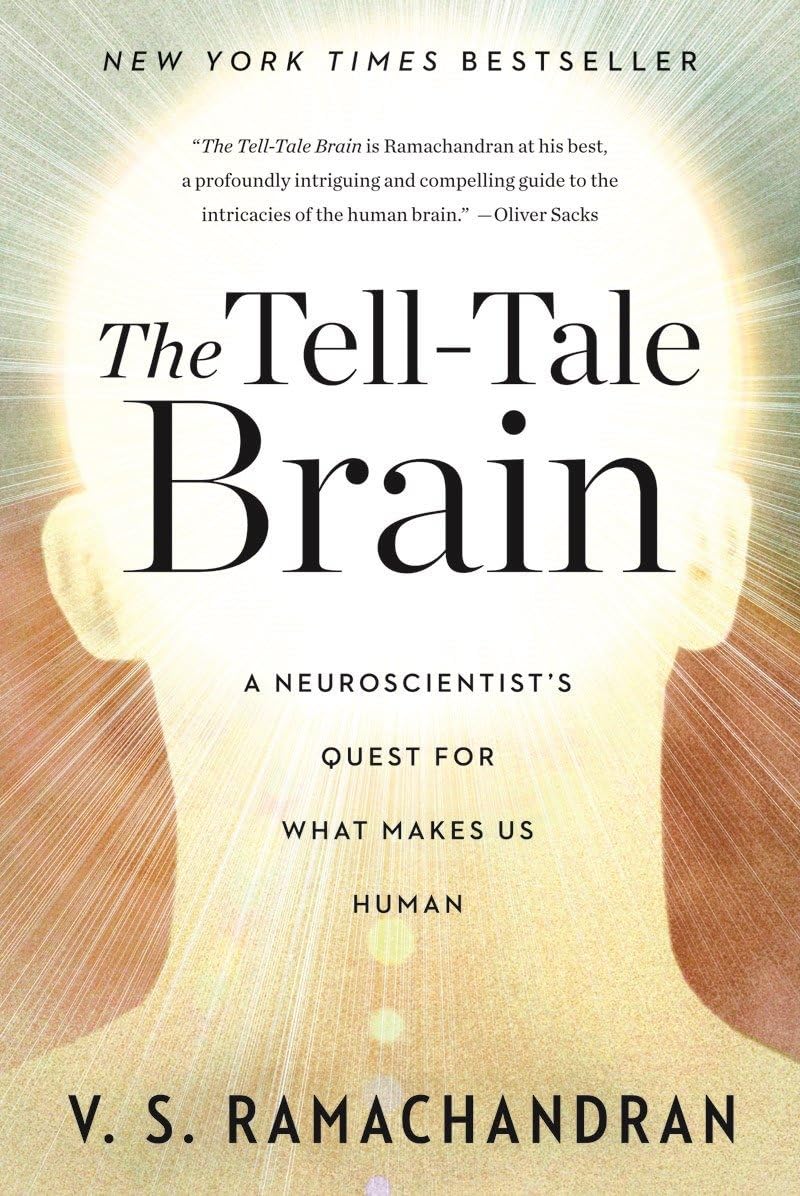
Ramachandran has a gift for turning neuroscience into detective work. He explores phantom limbs, face blindness, synesthesia, and many other neurological quirks that reveal how the brain constructs reality. His cases are gripping, and his explanations make even the strangest symptoms deeply understandable. What sets this book apart is how elegantly it shows the connection between brain structure and personal experience. Ramachandran argues that our sense of self is stitched together from countless neural shortcuts, and once you see how they work, human behavior becomes a lot less mysterious.
The final chapters discuss creativity, art, and evolution through a neurological lens. They offer a clearer view of how the brain improvises meaning at every moment.
9. “The Brain: The Story of You” — David Eagleman

In this book, Eagleman takes readers through the brain’s inner workings with a mix of adventure-style storytelling and modern science. He examines identity, memory, perception, decision-making, and consciousness, breaking down what the brain is doing when you aren’t aware of it. If you’re new to neuroscience, this is one of the most accessible yet meaningful places to start. Eagleman reinforces how your brain is sculpted by childhood, culture, and every moment of experience, which makes the science feel personal rather than abstract.
The compact end sections explore how technology might increasingly shape thought. They raise compelling questions about where human cognition is heading in the near future.
10. “The Inflamed Mind: A Radical New Approach to Depression” — Edward Bullmore

Bullmore makes a groundbreaking case for the link between chronic inflammation and mood disorders, especially depression. He simplifies complex immunological science without losing accuracy, and he explains why traditional mental health treatments often miss a major biological factor. The core argument — that systemic inflammation influences neural circuits involved in mood, energy, and motivation — is supported by decades of emerging research. This perspective offers a refreshing shift from purely psychological explanations of depression.
The shorter practical chapters show how lifestyle, diet, and medical interventions target inflammatory pathways. They help readers grasp the mind–body connection with a new level of clarity.
11. “The Genius Within: Unlocking Your Brain’s Potential” — David Adam

Adam blends cutting-edge cognitive research with an exploration of how people push the limits of their own minds. He covers memory enhancement, attention control, creativity, neurofeedback, and even cognitive prosthetics. What makes this book stand out is its balance of science and self-experimentation — Adam tries many of the techniques himself and explains what actually works. His central message is that human intelligence is more flexible than most people assume, shaped constantly by training, environment, and internal patterns.
The final chapters highlight realistic brain-boosting strategies grounded in science. They help readers see how small cognitive upgrades compound into meaningful change.
12. “Connectome: How the Brain’s Wiring Makes Us Who We Are” — Sebastian Seung

Seung argues that your “connectome” — the total wiring diagram of your neural connections — is what defines your personality, memories, quirks, and abilities. His writing makes this deep biological topic surprisingly graspable. Seung explains how billions of neural links develop, strengthen, weaken, or reroute over time, shaping everything you think and feel. The idea that you are defined not by your neurons, but by their connections, reframes how we understand identity and change. This book is especially powerful for readers who want a scientific reason to believe that personal transformation is real.
The shorter chapters discuss future research and brain mapping technologies. They show why mapping the human connectome could be as revolutionary as decoding the genome.
13. “Mindsight: The New Science of Personal Transformation” — Daniel J. Siegel, M.D.

Siegel blends neuroscience with clinical psychology to explain how awareness, emotional balance, and self-regulation change the physical structure of the brain. Mindsight is essentially a guide to using introspection and attention as tools for neural rewiring. Siegel explains how focusing the mind reshapes neural pathways, helping people reduce anxiety, heal old emotional patterns, and improve relationships. His explanations are grounded in research yet written in a warm, accessible tone that resonates with readers who want both science and practical application.
The shorter end chapters offer exercises that illustrate how intentional awareness can strengthen neural integration and support long-term mental resilience.