The 10 Most Divisive Books of All Time: Love Them or Hate Them, You Can’t Ignore Them


Some books don’t just sit quietly on a shelf—they spark arguments at dinner tables, divide book clubs, and make readers swear they either found their personal gospel or wasted precious hours of their life.
These are the stories that inspire fierce loyalty or fiery disdain, often for the same reasons. And that’s what makes them unforgettable. Whether they challenge beliefs, break storytelling rules, or simply demand more from the reader than most books dare to ask, these titles have earned their place on the “love it or hate it” spectrum.
Below, we dive into the first five of the most famously polarizing books ever published—what makes them beloved, why they infuriate others, and why they continue to sit at the center of heated debates decades after publication.
1. Ulysses — James Joyce

Few books have earned such a legendary reputation for brilliance and frustration at the same time. Ulysses is hailed by scholars as a groundbreaking masterpiece, yet many readers consider it nearly unreadable. Joyce experiments with language so intensely that the novel can feel like you’re decoding someone’s dream. For some, that layered complexity is intoxicating—each page feels like a puzzle, rewarding those willing to dig. For others, the shifting writing styles and dense references come across as pretentious or exhausting. But there’s no denying its impact on modern literature; Ulysses reinvented what a novel could be, and its legacy is impossible to overstate, even if you never finish it.
Many who admire the book say the trick is surrendering to its rhythm instead of forcing it to “make sense” in traditional ways. Its detractors, however, argue that a book shouldn’t require a study guide to be “good.” Either way, Ulysses leaves you with opinions you’ll cling to, whether glowing or scathing.
2. Lolita — Vladimir Nabokov

Lolita remains one of the most debated novels in literary history, not because it’s poorly written, but because Nabokov’s writing is almost too good for such a disturbing subject. The novel follows Humbert Humbert, whose attraction to a twelve-year-old girl is both horrifying and difficult to look away from. Readers are often shocked by how beautifully the prose flows—Nabokov’s talent makes the psychological manipulation feel even more unnerving. Some champion it as a brilliant study of obsession, linguistics, and unreliable narration. Others feel that no amount of artistry can justify spending hundreds of pages inside the mind of a sexual predator. Its ability to provoke deep discomfort, yet maintain literary elegance, is exactly why it’s so divisive.
Even today, millions feel torn between appreciating its craft and questioning its existence. Supporters say it forces necessary conversations; critics believe it crosses an ethical line. But no one leaves Lolita feeling neutral. It’s a book that demands a reaction, which is precisely why it endures.
3. On the Road — Jack Kerouac

Kerouac’s stream-of-consciousness journey across mid-century America turned him into the face of the Beat Generation. Some readers find the book electrifying—raw, restless, and full of youthful hunger. They see it as a celebration of freedom at all costs, capturing a generation desperate to break from the ordinary. But to others, the story feels chaotic, self-indulgent, and careless. The constant movement can become repetitive, and the glorification of spontaneity—often at the expense of responsibility—rubs certain readers the wrong way.
Still, Kerouac’s voice carries a rhythm that resonates with anyone who has ever felt trapped and wanted more. Even those who dislike the book admit it changed American literature. Fans argue it’s a spiritual call to seek meaning beyond structure. Critics argue it’s just a group of men behaving badly. And both sides, surprisingly, have a point—which keeps the debate alive decade after decade.
4. Infinite Jest — David Foster Wallace

Few books divide modern readers like Infinite Jest. At over a thousand pages, with nearly 400 footnotes, Wallace’s novel practically dares you to quit. Some readers take that as a challenge—an invitation to explore addiction, entertainment culture, mental illness, and the pursuit of meaning through one of the most ambitious narratives ever attempted. Others feel the book is intentionally dense and overwhelming, almost designed to exclude anyone who’s not willing to obsessively annotate. Still, those who fall in love with Wallace’s style call it life-changing, saying the novel’s complexity mirrors the chaos of modern life and rewards those who push through its layers.
Its critics say it’s a book people “pretend” to love more than they actually do, fueled by literary elitism. But even that criticism is part of the book’s legacy. Whether you admire its depth or resent its difficulty, Infinite Jest remains a cultural landmark, sparking arguments everywhere from college campuses to online forums.
5. The Catcher in the Rye — J.D. Salinger

Holden Caulfield might be the most polarizing teenager in literary history. For generations of young readers, he embodies honesty—someone who refuses to pretend life is fine when it isn’t. They see him as a rare character who says what so many quietly feel. But for many adults, Holden’s cynicism and constant complaining become difficult to tolerate. The very qualities that make him relatable to some make him irritating to others. Still, the book’s themes of alienation, authenticity, and emotional confusion strike a deep chord, especially during transitional times in life.
Part of the division comes from when you read it. Those who meet Holden as teenagers often feel fiercely protective of him, while those who meet him later sometimes find him exhausting. But that difference in perspective is exactly why the book remains essential. Love or hate Holden, he stays in your head—loud, flawed, unforgettable.
6. American Psycho — Bret Easton Ellis

No novel has pushed readers’ limits quite like American Psycho. Some hail it as a biting critique of consumerism and the emptiness of 1980s Wall Street culture, delivered through the lens of Patrick Bateman’s chilling detachment. They argue that Ellis exposes how society glamorizes wealth even when it’s tied to moral decay. Others view the graphic violence and disturbing content as gratuitous, even repulsive, making the book feel less like social commentary and more like shock for shock’s sake. Yet it’s this exact tension—between satire and monstrosity, between clever critique and extreme brutality—that keeps the book at the center of ongoing debate.
Supporters insist the discomfort is intentional, a mirror held up to toxic masculinity. Detractors say no message requires this level of gore. But everyone agrees on one thing: once you enter Bateman’s world, you carry an unsettling aftertaste long after the final page.
7. The Fountainhead — Ayn Rand

Few authors provoke such strong emotional reactions as Ayn Rand, and The Fountainhead is her lightning rod. To fans, it’s a passionate defense of individuality, creativity, and staying true to one’s vision at any cost. They admire the uncompromising nature of Howard Roark, seeing him as an embodiment of unfiltered personal integrity. But critics argue the novel glorifies selfishness, dismisses empathy, and oversimplifies complex moral questions. Rand’s ideological intensity makes the book both magnetic and abrasive, depending entirely on the reader’s worldview.
Even decades later, the arguments haven’t softened. Admirers find the book empowering, while skeptics consider it dangerously one-sided. Still, its capacity to provoke fierce reactions—positive or negative—is exactly why it remains one of the most discussed novels in modern literature.
8. Beloved — Toni Morrison
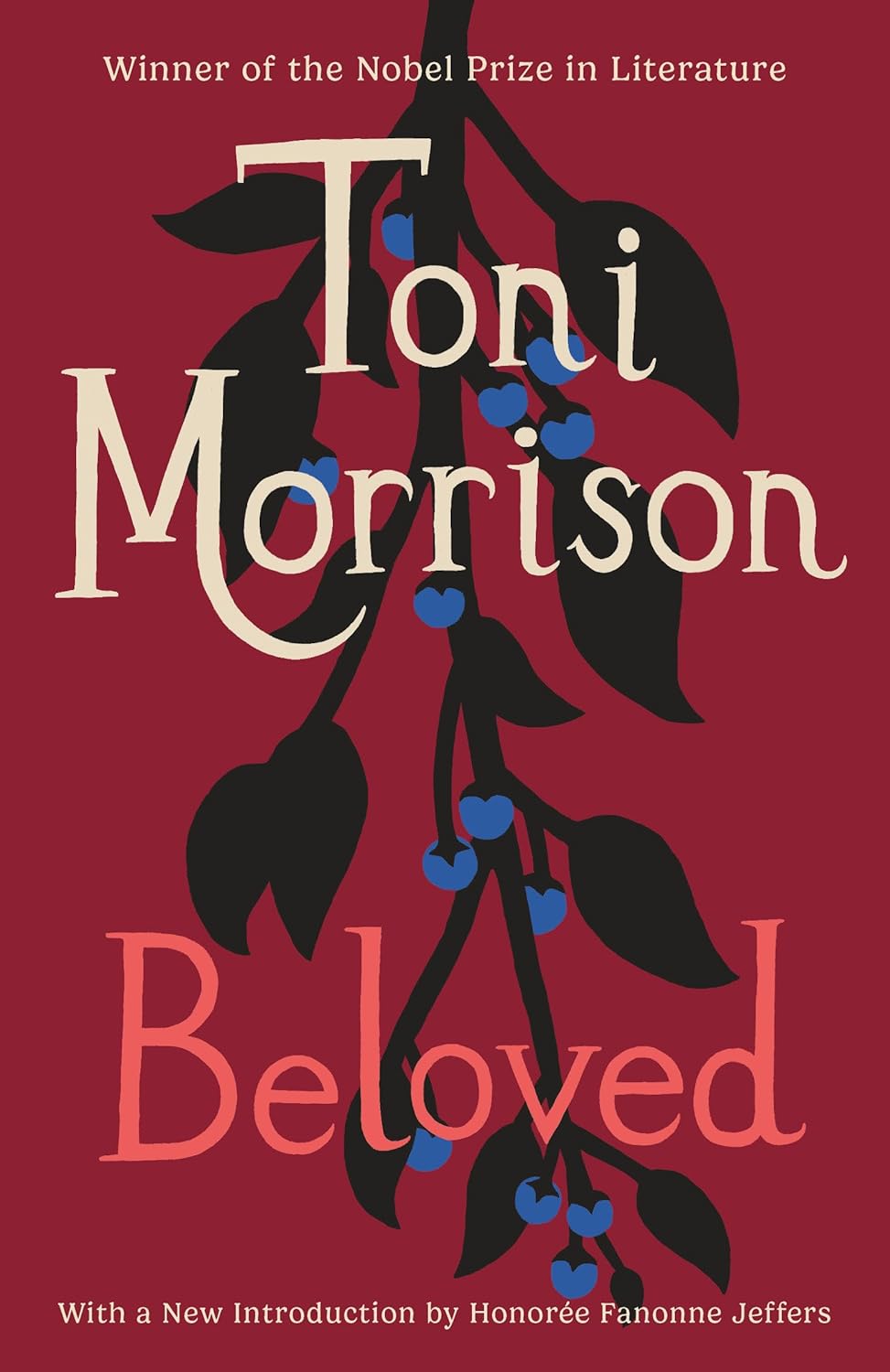
Beloved is widely considered a masterpiece—powerful, poetic, and unflinching. Morrison confronts the horrors of slavery and its generational trauma through a story that blends realism with the supernatural. The depth of emotional pain, the lyrical prose, and the symbolic layering leave many readers breathless. But the same qualities that make the book brilliant can also make it overwhelming. Some feel the nonlinear structure and intense themes require more emotional endurance than they were prepared for, creating a mix of admiration and hesitation. Morrison’s refusal to soften the truth is part of what makes the novel both devastating and essential.
For some readers, the book feels like an unbearable emotional weight. For others, it’s the most important American novel ever written. But almost no one walks away untouched. Its haunting presence lingers, challenging readers to sit with uncomfortable truths they may prefer to avoid.
9. A Clockwork Orange — Anthony Burgess

Burgess crafted one of the most controversial novels of the 20th century by combining youthful violence with an invented slang called “Nadsat.” Fans argue this bold linguistic experiment allows readers to step into Alex’s mind without fully absorbing the brutality; the partial linguistic distance creates a unique psychological effect. But for others, the slang serves as a barrier, making the book feel inaccessible or intentionally confusing. Then there’s the moral dilemma: can someone who commits horrific acts be “reformed,” and who gets to decide what morality means? These questions make the novel a moral minefield of interpretations.
Even Burgess himself had mixed feelings about the book’s legacy, which only adds to its mystique. Some see it as a timeless warning about state control, while others believe its violence overshadows its message. Either way, its cultural impact is undeniable.
10. The Da Vinci Code — Dan Brown

Few thrillers have created such a global uproar. The Da Vinci Code hooked millions with its fast pacing, historical puzzles, and controversial religious theories. For many, it’s pure entertainment—an irresistible blend of suspense and mystery that makes history feel alive. But critics argue the writing is clunky, the theories are misleading, and the book sacrifices accuracy for drama. Religious groups condemned its central claims, while literary critics mocked its prose. Yet despite these criticisms, the novel became a massive bestseller because it tapped into universal curiosity about hidden histories and forbidden knowledge.
Some dismiss it as sensational fiction. Others credit it with sparking their love for historical mysteries. But one thing is clear: few books have been able to ignite worldwide controversy and excitement simultaneously the way Brown’s thriller did.