
Why You Can’t Remember What You Walked Into the Room For: 13 Early Brain Changes Starting at 35 (And Which Ones to Worry About)


I’m going to bet you know this feeling.
You’re sitting on the couch, and you have a thought: I need the scissors. You get up, walk twelve steps to the kitchen, cross the threshold, and… nothing. The thought is gone. Vaporized. You are standing next to the fridge, confused, wondering if you’re losing your mind.
You aren’t. But your brain is changing.
Here’s the thing nobody tells us about our 30s and 40s. We think of brain aging as something that happens to our grandparents. We think we have until 65 before we need to worry about “cognitive decline.” But the research—and I mean really recent, fascinating research—shows that the shift actually kicks off right around age 35.
I’ve dug through the studies so you don’t have to. What’s happening isn’t necessarily a “decline” (though it feels like it). It’s more like a massive renovation project. Your brain is moving from a “growth” phase into a “maintenance” phase.
Here are the 13 things actually happening inside your head right now, why the “Doorway Effect” is real, and honestly, which ones you actually need to worry about.
The Doorway Effect
“Location Updating Effect”Your brain works like a computer. When you walk through a door, it hits “Save & Close” on the old room and opens a blank file for the new one.
🧠
It’s a Feature, Not a Bug!
Your brain is compartmentalizing to save energy.
Let’s start with the kitchen incident. Scientists actually have a name for this: the Location Updating Effect , or more commonly, the Doorway Effect .
There’s a theory called the Event Horizon Model .Think of your brain like a computer writing a document. When you’re in the living room, your brain is typing in the “Living Room” file. The moment you walk through a door, your brain says, “Okay, new scene,” saves the old file, closes it, and opens a blank one called “Kitchen.”
If you didn’t copy-paste your intention (“get the scissors”) from the old file to the new one, you arrive in the kitchen with a blank page.
Why it feels worse now: As we hit our late 30s, our processing speed slows down just a tiny bit. We can’t hold quite as many files open at once. So that “save and close” function becomes a little more abrupt. It’s annoying, but it proves your brain is working correctly—it’s compartmentalizing to save energy.
2. The Great Shrinkage (0.2% a Year)

This one sounds scary, but stay with me. Around age 35, we start losing brain volume. It’s about 0.2% per year .By age 60, that speed increases to about 0.5%.
It’s mostly happening in the prefrontal cortex (where you make decisions) and the hippocampus (memory). Think of it like pruning a rose bush. Your brain is getting leaner. It’s trying to be efficient. But because you have slightly fewer neurons to work with, you might feel that loss of “multitasking” power. You know, that ability you had at 22 to listen to a podcast, write an email, and cook dinner simultaneously? Yeah, that’s the volume loss talking.
3. The “Frayed Charger Cable” (Myelin Loss)
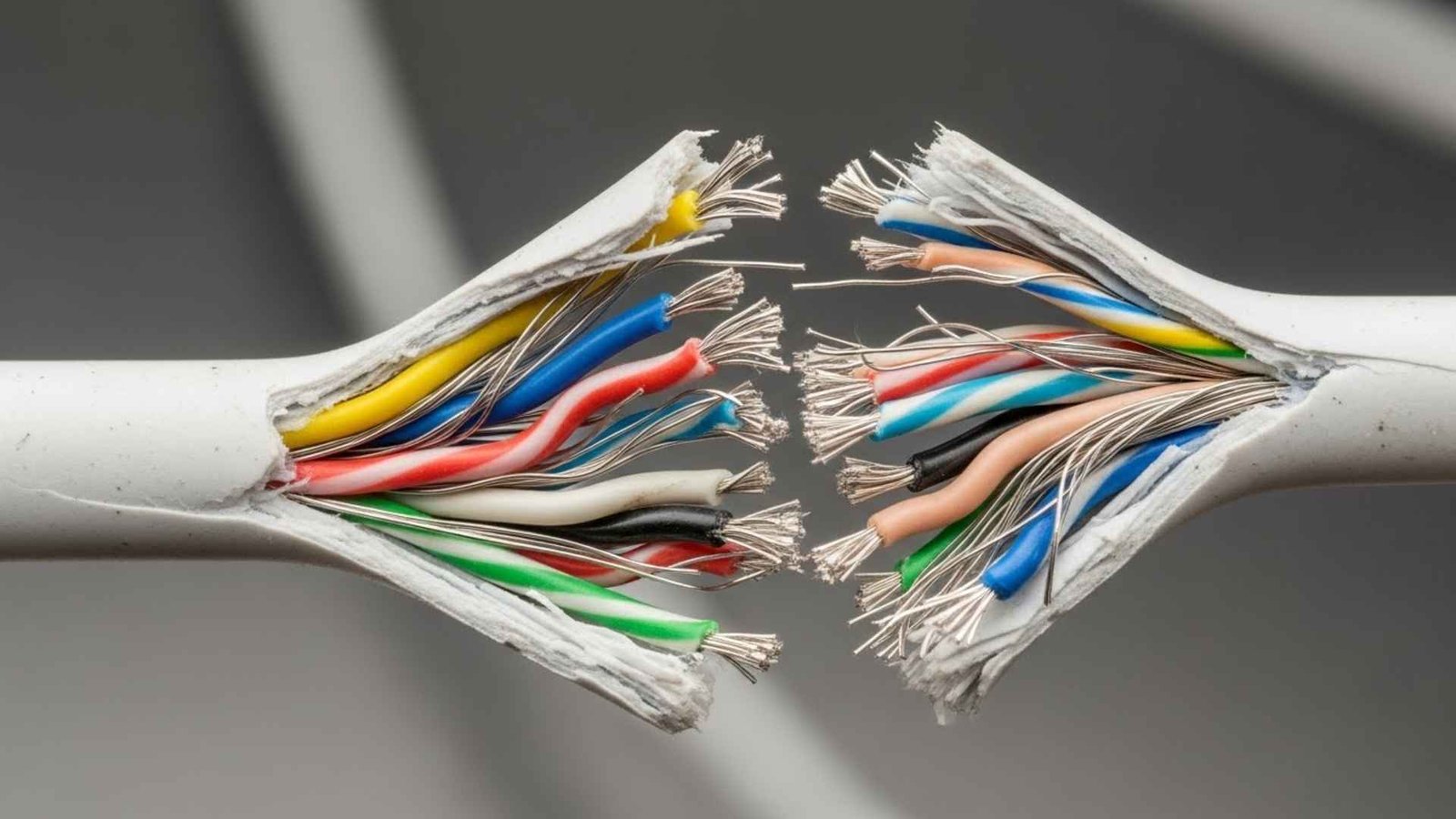
You know how your iPhone charger eventually starts to fray and the white plastic peels off, making the charging spotty? That’s happening to your nerves.
Myelin is the white, fatty insulation that wraps around your brain’s wires (axons) to make signals move fast. In our 40s, our body gets a little worse at repairing this insulation. When the myelin frays, the signal “leaks.”
This is why you might feel a split-second delay when trying to recall a word or react to a brake light. The signal is getting there; it’s just taking the scenic route.
4. Potholes in the Highway (White Matter Hyperintensities)

If you put a healthy 45-year-old in an MRI, there’s a decent chance (about 34% ) you’ll see these little bright spots called White Matter Hyperintensities.
I like to call these potholes. They are tiny lesions often caused by blood pressure issues. They aren’t strokes, but they are little areas where the traffic flow of your brain gets improved. They are usually the first sign that our vascular health (heart/blood vessels) is starting to impact our brain health.
5. The “Energy Crisis” (Glucose Dip)

Your brain is an energy hog. It uses 20% of your calories. But somewhere in our 40s, our brain cells can become a little “insulin resistant.” They stop absorbing glucose (sugar) as efficiently as they used to.
This is huge. A 2024 study suggests this is a “critical window” where the brain is starving for energy, but the fuel line is clogged. This is often why you get that afternoon brain fog. Your brain is literally running on low battery mode.
The Night Janitors
Aging & stress lower the “water pressure.”
Poor sleep = Janitors don’t show up.
This is my favorite piece of brain trivia. You have a system called the Glymphatic System that works like a nightly cleaning crew. When you sleep, your brain cells actually shrink to open up gaps, and fluid washes through to clear out the trash (like amyloid plaques).
But as we age, the “water pressure” in this system drops. Plus, if you’re in your 40s, you probably aren’t sleeping well (kids, stress, work). If you don’t get deep sleep, the janitors don’t show up. You wake up with a brain full of yesterday’s trash.
7. The Hormonal Glitch (It’s Not Just Hot Flashes)

For the women read this: Perimenopause is a neurological event. Estrogen protects the brain. When it starts fluctuating in your late 30s and 40s, it’s like someone is dimming the lights. It causes temporary metabolic dips in the brain that feels exactly like brain fog.
For the guys: Testosterone drops gradually (Andropause), which hits your spatial memory and motivation. If you’ve lost your drive to start new projects, check your hormones before you blame your personality.
8. The Kinked Garden Hose (Blood Flow)

Blood flow to the brain drops as we get older. The arteries get a little stiffer (arteriosclerosis). It’s like kinking a garden hose—the water (oxygen) still comes out, just with less pressure. This is why exercise is non-negotiable now. It un-kinks the hose.
9. Cleaning Out the Garage (Synaptic Pruning)

Your brain operates on a “use it or lose it” policy. In your 40s, it looks at the neural pathways you haven’t used in a while (like high school French or how to solve a quadratic equation) and deletes them to save energy.
This is Synaptic Pruning . It makes you an expert at the things you do every day (your job, your routine), but it makes it harder to learn new things because the “blank” space is being repurposed.
10. The Dopamine Dip

Dopamine levels drop by about 10% per decade. Dopamine isn’t just about pleasure; it’s about speed and motivation . Lower levels mean we think a little slower and feel a little less “spark.”
11. The Slow Drain (Amyloid Turnover)

We all produce a protein called beta-amyloid. In a young brain, we flush it out every few hours. In our 30s and 40s, the “half-life” of this protein extends. It hangs around longer. It’s not clogging the drain yet (that’s Alzheimer’s), but the water is draining slower than it used to.
🚨 The Fire Alarm
(Inflammaging)Pumps inflammatory chemicals into your blood.
Microglia (immune cells) become hyper-reactive.
If you carry extra weight around your middle (which, let’s be honest, gets easier to do after 35), that visceral fat pumps inflammatory chemicals into your blood. This creates low-grade inflammation that crosses into the brain, making the brain’s immune cells (microglia) hyper-reactive. It’s like a fire alarm that’s constantly beeping in the background, distracting your neurons.
13. The “Bad Zoom Connection” (Network Desynchronization)

In your 20s, your brain regions talked to each other in perfect sync. Now, those connections are getting a little “noisy”. To compensate, your brain starts recruiting extra areas to do simple tasks. This is called scaffolding. It works, but it’s exhausting. It’s why a day of deep work feels more draining at 45 than it did at 25.
Here are 5 things worth looking into if you want to give your brain a little extra support:
1. Nordic Naturals Ultimate Omega:

If you only buy one supplement, make it this one. We talked about myelin—the insulation on your brain’s wires that starts to fray in your 40s. Omega-3 fatty acids (specifically DHA and EPA) are the raw materials your body needs to repair that insulation. Nordic Naturals is widely considered the gold standard because they use the triglyceride form, which your body absorbs much better than the cheaper ethyl ester forms found in budget brands.
2. Thorne Magnesium Bisglycinate:

Since the “night janitors” (your glymphatic system) only work when you are in deep sleep, sleep quality is non-negotiable. Magnesium Bisglycinate is a specific form of magnesium bound to glycine, which helps relax the nervous system without the digestive issues common with other forms. It’s fantastic for helping you stay in that deep, restorative sleep phase where the brain cleaning happens.
3. The Brain Health Kitchen Cookbook:

We know the MIND diet works, but figuring out how to actually cook “6 servings of leafy greens a week” can be annoying. This cookbook by Dr. Annie Fenn (a physician and chef) is excellent because it doesn’t just give you recipes; it explains why the ingredients matter. It turns the science of neuro-nutrition into food you actually want to eat.
4. Brain Food: The Surprising Science of Eating for Cognitive Power:

If you’re the type of person who needs to understand the “why” before you commit to a lifestyle change, this book by Dr. Lisa Mosconi is a must-read. She is a neuroscientist who explains the “energy crisis” our brains face in midlife and provides a clear roadmap for fueling your brain properly to bypass that insulin resistance we discuss.
5. Life Extension BioActive Complete B-Complex:

B-Vitamins (especially B6, B12, and Folate) are crucial for managing homocysteine levels—a compound that, when high, is toxic to brain cells and contributes to brain atrophy. As we age, we often absorb B12 less efficiently. A high-quality, methylated B-complex like this one ensures your brain has the co-factors it needs to make neurotransmitters like dopamine and serotonin.