You Used to Be Sharp: 9 Reasons Smart People Feel Slower After 40 (And How to Get Your Edge Back)


It usually happens in the kitchen.
You walk in with a purpose—a clear, urgent mission—and then, poof. You’re standing in front of the refrigerator, staring at a jar of pickles, completely paralyzed. The mission is gone. The file has been deleted.
Or maybe it’s the names. You’re introducing a colleague you’ve known for five years, someone whose kids’ names you know, and suddenly their name is just… a void. A blank space where “Sarah” or “David” used to be.
If you’re over 40, you know exactly what I’m talking about. And if you’re like most of us, that moment is followed by a cold, quiet spike of fear: Is this it? Is this the beginning of the end?
I want to stop you right there. You are not losing your mind. You are experiencing a hardware update.
This feeling has a name: Subjective Cognitive Decline (SCD). And honestly, it’s incredibly common. According to 2024 data from the CDC, about 12.2% of adults aged 45-64 reported experiencing this kind of confusion or memory loss. Paradoxically, that’s actually higher than the percentage of people over 65 (10.1%) who reported it.
Think about that for a second. The people feeling the most “brain fog” aren’t the elderly; it’s us. It’s the people in the thick of their careers and raising families.
The science tells us that your brain isn’t dying; it’s transitioning. It’s undergoing a massive physiological shift involving your hormones, your wiring, and how you process energy. The good news? Unlike a computer that just gets obsolete, you can actually upgrade your hardware.
Here is the honest truth about why you feel slower, and exactly what you can do to fix it.
⚠️ System Status: Buffering
Diagnostic Report: 9 Critical Errors Found
The Issue: White matter shrinkage.
Your myelin (the fatty insulation on neural cables) is fraying. Signals take the “scenic route,” causing slower processing speed.
The Trap: “Use it or lose it.”
Your brain has paved over the backroads of learning to build super-highways for habits. You’re in a neurological rut.
Estrogen (Women): Drops cause an energy crisis (less glucose burning).
Testosterone (Men): Drops reduce dopamine (drive & focus).
The Toxin: Chronic Cortisol.
It attacks the hippocampus (memory center) and stops new neurons from being born. Stress is inflammation.
Energy Crisis: Insulin Resistance in the brain.
Neurons are starving because they can’t access fuel. Linked to the 3:00 PM brain fog crash.
Sleep Architecture: Loss of deep sleep.
The Glymphatic System (the cleaning crew) only works in deep sleep. Without it, toxins clog your neural streets.
Vascular Aging: Stiffer arteries.
Less consistent oxygen delivery to the brain. Your processor is literally gasping for air.
Cognitive Load: Hearing/Vision loss.
Brain power is wasted just trying to decode input (e.g., “cat” vs “hat”) instead of processing the meaning.
The Google Effect: Outsourced memory.
We are training brains to find info, not hold it. Multitasking fragments attention spans.
We tend to blame stress or “just getting old” for our mental lags. But if we look under the hood, there are nine very specific, measurable things happening to your biology right now.
1. Your Wiring is Losing its Insulation (White Matter Shrinkage)

Imagine your brain is a massive computer network. The gray matter is the processor (where the thinking happens), and the white matter is the cabling connecting everything.
In our youth, those cables are wrapped in a thick, fatty coating called myelin. Think of myelin like the rubber insulation on a high-speed ethernet cable. It lets signals zip from point A to point B instantly.
Here’s the kicker: Starting in our 40s—and hurriedly after 50—that insulation starts to fray. We experience a “cortical disconnection” as white matter volume shrinks.
The Result: The signal still gets there, but it takes the scenic route. That split-second lag when you try to do mental math, or that feeling that you can’t follow a fast-talking teenager? That’s not stupidity. That’s just slower conduction velocity.
2. You’ve Become Too Efficient (The “Use It or Lose It” Trap)

We love efficiency. But for the brain, efficiency can be a trap.
By midlife, you are likely an expert at your daily life. You know your job, you know your commute, you know how to load the dishwasher. Your brain has built super-highways for these habits. But because the brain is an energy-hoarder, it looks at the tiny, unused backroads (the synaptic connections for learning new things) and decides to pave them over.
This is called synaptic pruning. Research shows a significant drop in “thin spines”—the structures responsible for flexibility—during midlife.
In Simple Terms: You’re in a rut. A physical rut. You’ve become amazing at being you , but you’ve lost the neurological hardware to be anyone new.
3. The Hormonal Rug-Pull (It’s Not Just Hot Flashes)

We need to talk about hormones, and not just in a reproductive sense. Estrogen and testosterone are neurosteroids. They are premium fuel for your brain.
For the Ladies:
Dr. Lisa Mosconi, a leading neuroscientist, describes menopause not just as an ovarian event, but as a neurological renovation project. Estrogen protects your neurons and pushes them to burn glucose. When estrogen drops, your brain literally has less energy. It’s like trying to run a Ferrari on 87-octane gas. This is why “menopause brain” feels like a fog—your neurons are sputtering.
For the Guys:
It’s more gradual, but the drop in testosterone reduces dopamine—the chemical of drive and focus. If you feel like you just don’t have the “edge” or motivation you used to, that’s likely a dopamine reception issue linked to testosterone.
4. You’re Running on “Stress Rust” (Inflammation)

If you are between 40 and 60, you are likely in the “Sandwich Generation.” You’re managing kids, aging parents, and a career. That chronic pressure releases cortisol.
In short bursts, cortisol is great. In long, chronic drips, it is toxic. Cortisol specifically attacks the hippocampus —the part of your brain responsible for memory. It literally stops the birth of new neurons.
It gets worse. A study from UCSF found that inflammation levels in your 20s and 30s predict your cognitive speed in your 40s. Stress isn’t just a feeling; it’s a neurotoxin that inflames your brain, making it harder for signals to fire.
5. Your Brain Has “Type 3 Diabetes” (Energy Crisis)

We usually think of insulin resistance as a waistline issue. But your brain can become insulin resistant, too.
Neurons are hungry—they eat 20% of your body’s energy. If you are insulin resistant (which many of us are by midlife without knowing it), your brain cells can’t open the door to let the fuel in. They starve.
Some researchers are now calling Alzheimer’s “Type 3 Diabetes” because of this link. If you get “hangry” or have a massive brain fog crash at 3:00 PM, your brain is likely struggling to metabolize glucose efficiently.
6. The “Rinse Cycle” is Broken (Sleep Architecture)

You might still be sleeping 7 hours, but are you sleeping?
In your 40s, you start losing Slow Wave Sleep (Deep Sleep). This is tragic because of the Glymphatic System. Imagine that every night, a cleaning crew comes out to sweep the trash (toxins like amyloid plaques) out of your brain’s streets. This crew only works during Deep Sleep.
If you drink alcohol before bed or wake up often (thanks, bladder or hot flashes), you miss the cleaning crew. You wake up with yesterday’s trash still clogging your neural pathways.
7. The Pipes are Stiff (Vascular Aging)

It’s simple plumbing. Your brain needs oxygen. As we age, our arteries get stiffer (arteriosclerosis). This stiffness means the “pulse” of blood hits the delicate brain vessels too hard, causing damage, while simultaneously delivering less consistent oxygen.
If you feel slow, your brain might just be gasping for air.
8. You’re Spending Too Much CPU on Hearing and Seeing

This one surprised me. We don’t realize how much brain power it takes just to listen.
If your hearing or vision has degraded even slightly (hello, reading glasses), your brain has to reallocate massive resources just to decode the input. It’s called Cognitive Load.
Instead of using your processing power to think about what someone is saying, you’re using it to figure out if they say “cat” or “hat.” You feel tired and forgetful, not because your memory is gone, but because your processor is overwhelmed by the sensory input.
9. Digital Dementia (The Google Effect)

Be honest: When was the last time you memorized a phone number? Or navigated somewhere without GPS?
We have outsourced our memory to our phones. This is often called Digital Dementia. We are training our brains to be good at finding information, but terrible at holding it. Add in the “switch cost” of multitasking—checking emails during a Zoom call—and we are fragmenting our attention span into useless slices.
🔪 The Re-Sharpening Protocol
How to Get Your Edge Back
Silver Lining: Neuroplasticity.
Your brain can change, heal, and grow. But you can’t wish for it. You have to train for it.
🏃 Move Like You Mean It
Walking is okay, but to grow brain cells, you need to sprint.
The Science: HIIT produces lactate → triggers BDNF (Miracle-Gro for neurons).
The Protocol (3x/Week):
Go Hard (1 min) → Recover (2 min) → Repeat 5-7 times.
20 minutes to save your brain.
🥦 Eat for Your Mind
Forget fads. The MIND Diet lowers Alzheimer’s risk by up to 53%.
🧠 “Neurobics”
Force your brain off autopilot. You need Novelty.
- ✋ The Wrong Hand: Brush teeth with non-dominant hand.
- 🚿 The Blind Shower: Wash hair with eyes closed (Tactile maps).
- 🗺️ New Routes: Drive a different way. No GPS.
💤 The NSDR Reset
Non-Sleep Deep Rest (or Yoga Nidra).
10-20 Minute System Reboot:
Turns off the sensory firehose, flushes cortisol, and resets dopamine.
🦸 Be a “SuperAger”
80-year-olds with 50-year-old brains.
The Secret: They learn complex skills that hurt a little to learn.
This thickens the Anterior Cingulate Cortex (Willpower & Motivation).
Okay, take a deep breath. I know that sounds heavy. But here is the silver lining: Neuroplasticity.
Your brain can change. It can heal. It can grow new connections. But you can’t just wish for it; you have to train for it. Here is the protocol, backed by hard science, to get your edge back.
1. Move Like You Mean It (HIIT vs. Cardio)

Walking is great for your heart, but if you want to grow new brain cells, you need to sprint.
The Science: High-Intensity Interval Training (HIIT) produces lactate, which travels to the brain and triggers BDNF (Brain-Derived Neurotrophic Factor). BDNF is basically Miracle-Gro for your neurons. Studies show HIIT is far superior to moderate jogging for boosting neurogenesis.
The Protocol:
- Don’t overcomplicate it: 3 times a week.
- The Drill: Go hard for 1 minute (run, bike, row so you can’t talk). Recover for 2 minutes. Repeat 5-7 times.
- That’s it. 20 minutes to save your brain.
2. Eat for Your Mind (The MIND Diet)

Forget fad diets. The only one with serious clinical data for the brain is the MIND Diet. It’s a mashup of the Mediterranean and DASH diets.
The Stat: Strict adherence can lower Alzheimer’s risk by up to 53%.
Here is your cheat sheet. Print this out and put it on your fridge:
| Eat This (Brain Fuel) | How Much? | Why? |
| Green Leafy Veggies | 6+ servings/week | Vitamin K & folate slowly decline. |
| Berries | 2+ servings/week | Blueberries are king. Flavonoids delay memory loss. |
| Nuts | 5+ servings/week | Healthy fats for your myelin insulation. |
| Olive Oil | Use daily | Polyphenols protect against stress. |
| Fish | 1+ servings/week | Omega-3s keep cell walls flexible. |
| Beans/Legumes | 4+ meals/week | Fiber for the gut-brain axis. |
Quick Win: Start every day with the “Brain Bowl”: Oats, walnuts, and blueberries. You hit three categories before you even check your email.
3. “Neurobics”: Break the Autopilot

You need to force your brain off the highway and into the weeds. You need Novelty.
Try these “Neurobic” exercises:
- The Wrong Hand: Brush your teeth with your non-dominant hand. It’s frustrating, but that frustration is your brain building new motor maps.
- The Blind Shower: Wash your hair with your eyes closed. You force your brain to use tactile maps instead of visual ones.
- New Routes: Drive to work a different way. Turn off the GPS. Force your hippocampus to navigate.
4. The “Non-Sleep Deep Rest” (NSDR) Reset

If you can’t fix your sleep overnight, you need to rest your nervous system during the day.
Neuroscientist Andrew Huberman champions a technique called NSDR (Non-Sleep Deep Rest), or Yoga Nidra. It’s a 10-20 minute guided relaxation that mimics the restorative effects of slow-wave sleep.
Why it works: It turns off the sensory firehose. It flushes cortisol and resets dopamine. Think of it as a “system reboot” in the middle of the day.
5. Be a “SuperAger”

Researchers have identified a group of people called “SuperAgers.” These are 80-year-olds with the brains of 50-year-olds.
What’s their secret? It’s not just genetics.
- They work hard. They don’t just do Sudoku (which is easy); they learn new languages or complex skills that hurt a little to learn.
- They have thick Anterior Cingulate Cortices. This is the part of the brain linked to willpower and motivation.
Need More Help? Tools to Keep You Sharp
Look, you can’t buy a new brain, but you can buy tools to support the one you have. I’ve dug through the research to find a few things that actually align with the science we just discussed. These aren’t magic pills; they are support systems for the protocols above. If you’re going to invest in gear, these are the ones that actually make a physiological difference.
1. Life Extension Neuro-Mag (Magnesium L-Threonate):

We talked about “synaptic density.” This specific form of magnesium is unique because it can actually cross the blood-brain barrier (most magnesium supplements can’t). It’s patented (Magtein) and shown to boost magnesium levels in the brain, supporting memory and sleep. If you’re going to take one supplement for the “fog,” this is the one backed by the hardest science.
2. Manta Sleep Mask (100% Blackout):
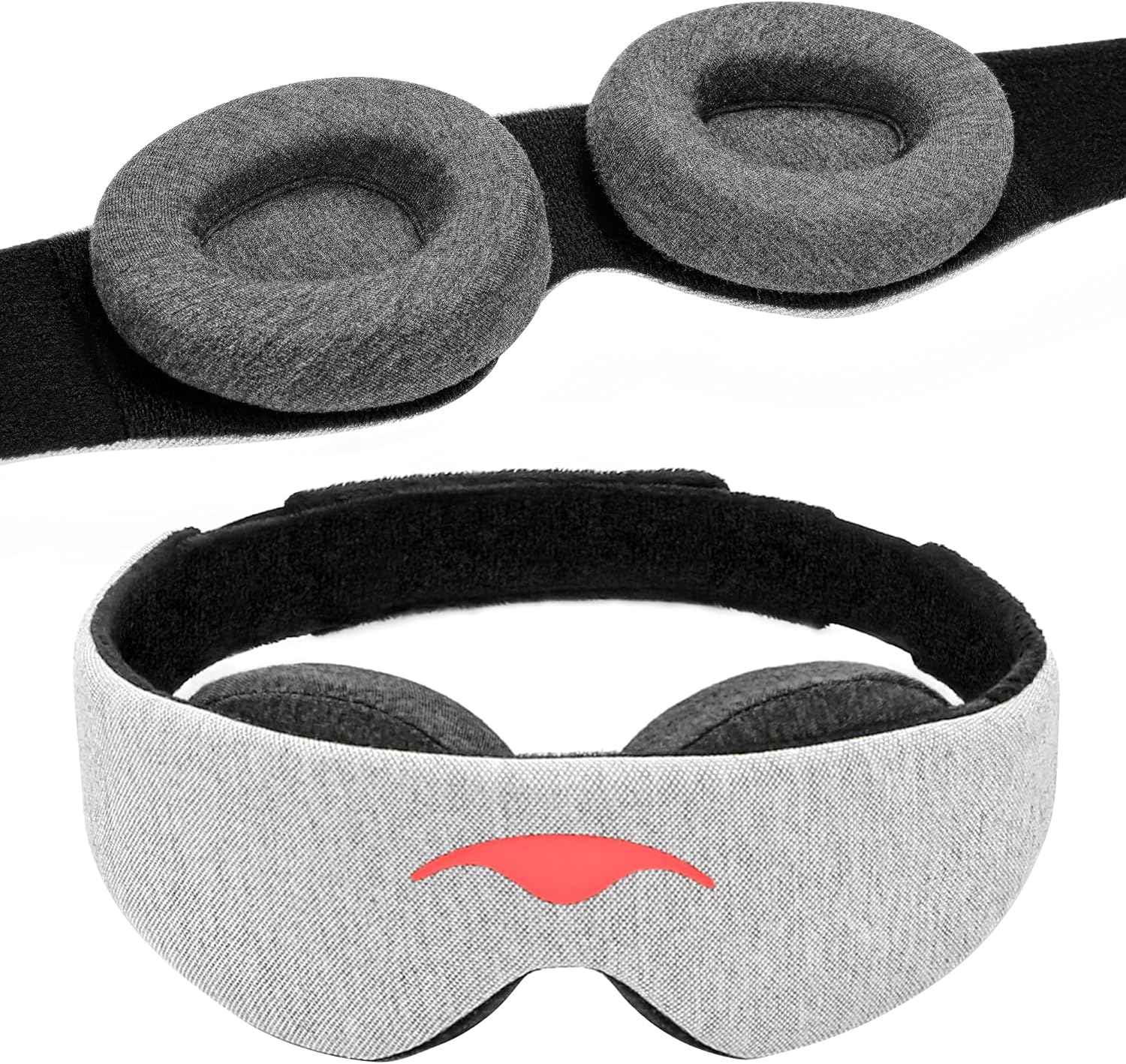
Remember the “cleaning crew” that only comes out during deep sleep? Light pollution kills that process. The Manta mask is different because it has deep eye cups—you can open your eyes while wearing it, but it blocks 100% of the light. It’s essential for protecting that fragile Slow Wave Sleep architecture we discuss.
3. Nordic Naturals Ultimate Omega:

Your white matter needs insulation (myelin). Omega-3 fatty acids are the raw material for that insulation. Nordic Naturals is the gold standard for purity—no fishy burps, just high-dose EPA and DHA to help keep those neural highways paved and smooth.
4. Time Timer MOD (Home Edition):
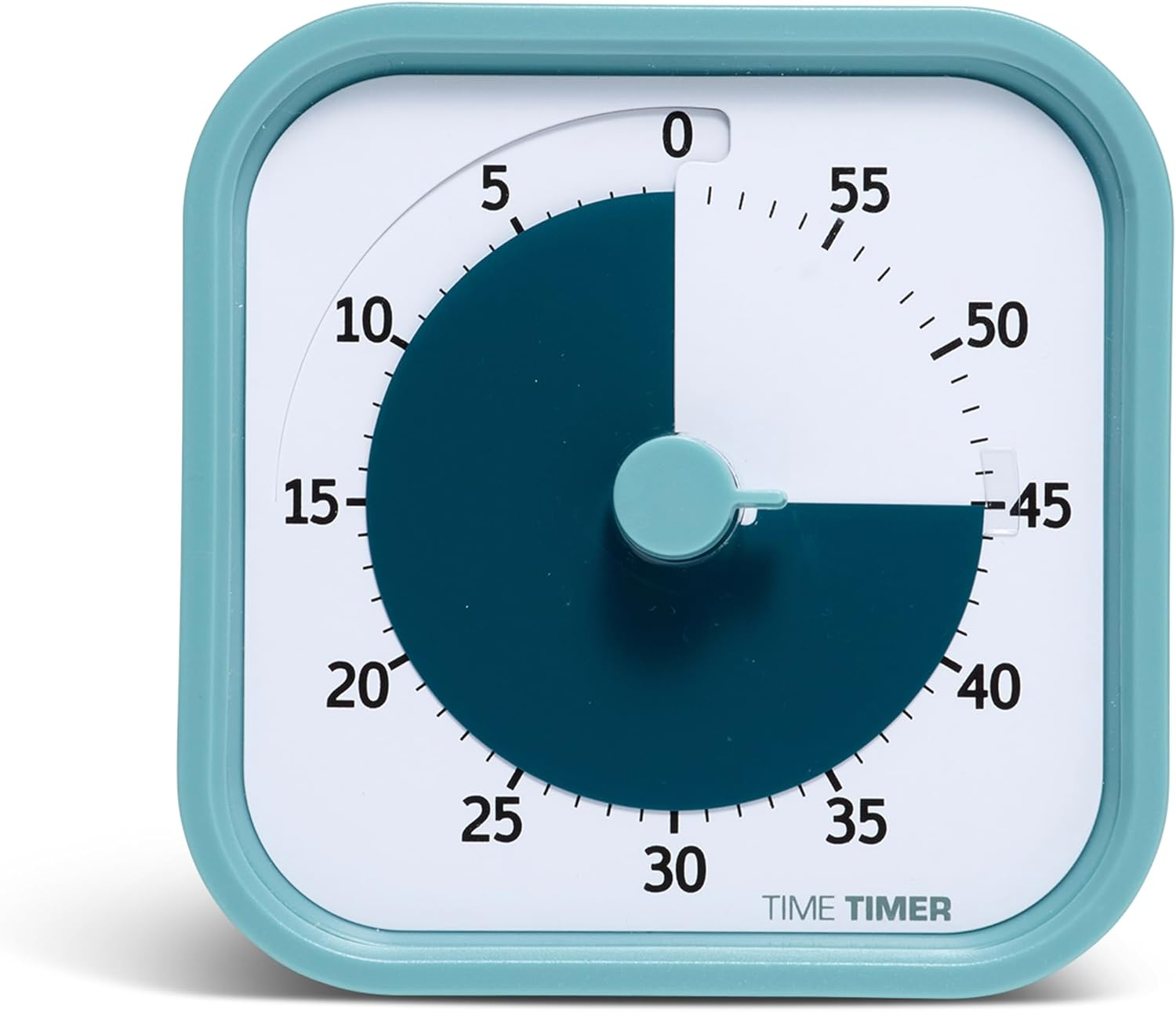
To fight “Digital Dementia,” you need to stop multitasking. The Time Timer is a visual tool that shows you exactly how much time is left in a red disk. It sounds simple, but it anchors your brain to one task at a time. It’s a physical artifact that prevents you from checking your phone “just to check the time” and getting sucked into a scroll hole.
5. Kanoodle 3D Brain Teaser Puzzle:

We mentioned “Neurobics”—using your brain in new ways. Kanoodle is a tactile puzzle game that forces you to use spatial reasoning (a different part of your brain than your daily spreadsheets). It’s frustratingly fun and perfect for waking up those dormant “thin spine” connections we talked about.