Hostel Owner Exposes 8 ‘Social’ Behaviors That Get Solo Travelers Robbed (And the Counterintuitive Moves That Keep You Safe)


You know that feeling when you first walk into a hostel? You drop your heavy pack, the air conditioning hits your face, and you hear the familiar buzz of accents—Australian, German, American—bouncing off the common room walls. You breathe a sigh of relief. I made it. I’m safe here.
You want to be cool. You want to be the “chill traveler” who makes friends instantly, says yes to the pub crawl, and isn’t afraid of the local culture.
But here’s the hard truth that most travel blogs won’t tell you: that exact desire—the urge to be “chill” and “nice”—is often what paints a target on your back.
I’ve dug through the data, talked to security experts who train spies (seriously), and parsed the warnings from hostel owners who have seen it all. The reality of solo travel isn’t about paranoia; it’s about a fundamental disconnect between how safe we feel and how safe we actually are.
And the numbers back this up. We are in the middle of a solo travel boom. The market is huge—nearly $95 billion—and growing fast. But look at the gap in this chart. While everyone is rushing to book their solo tickets, anxiety is still through the roof. We want the freedom, but we’re terrified of the risk.
This article isn’t about scaring you into staying home. It’s about closing that gap. It’s about understanding why the “friendly backpacker” routine is dangerous, and learning the counterintuitive moves—like “tactical rudeness”—that actually keep you safe.
(Predators choose targets)
Inmates watched silent tapes. They picked victims purely based on MOVEMENT.
- 🚶 Gait (Stride length)
- 😵 Awkward Sync
- 🗺️ Looking Lost
- 😟 Hesitant/Disconnected
Before we get to the specific habits, we have to debunk the biggest myth in travel safety: bad luck.
Getting robbed is rarely about bad luck. It’s about selection.
Back in 1981, two researchers named Betty Grayson and Morris Stein did a study that changed everything we know about street crime. They filmed random people walking down a street in New York City. Then, they went to a prison and showed the silent footage to inmates convicted of violent assaults on strangers. They asked one simple question: “Who would you target?”
The results were terrifyingly consistent. The inmates didn’t pick victims based on size, gender, or age. They picked them based on how they moved.
In as little as seven seconds, a predator can read your “gait.” If your stride is too short or too long (shuffling), if you move awkwardly (like your arms and legs aren’t in sync), or if you look disconnected from your surroundings, you are flagged as “soft.”
Basically, if you look lost, hesitant, or overly eager to please, your body language screams, “I won’t fight back.”
The 8 “Social” Behaviors That Betray You

So, how does this translate to your trip to Bali or Barcelona? It means the specific “social behaviors” we use to be polite travelers are the very things disrupting our focus and signaling vulnerability.
Here are the eight traps hostel owners see guests fall into every single day.
1. The “Safety in Numbers” Myth (The Complacency Trap)
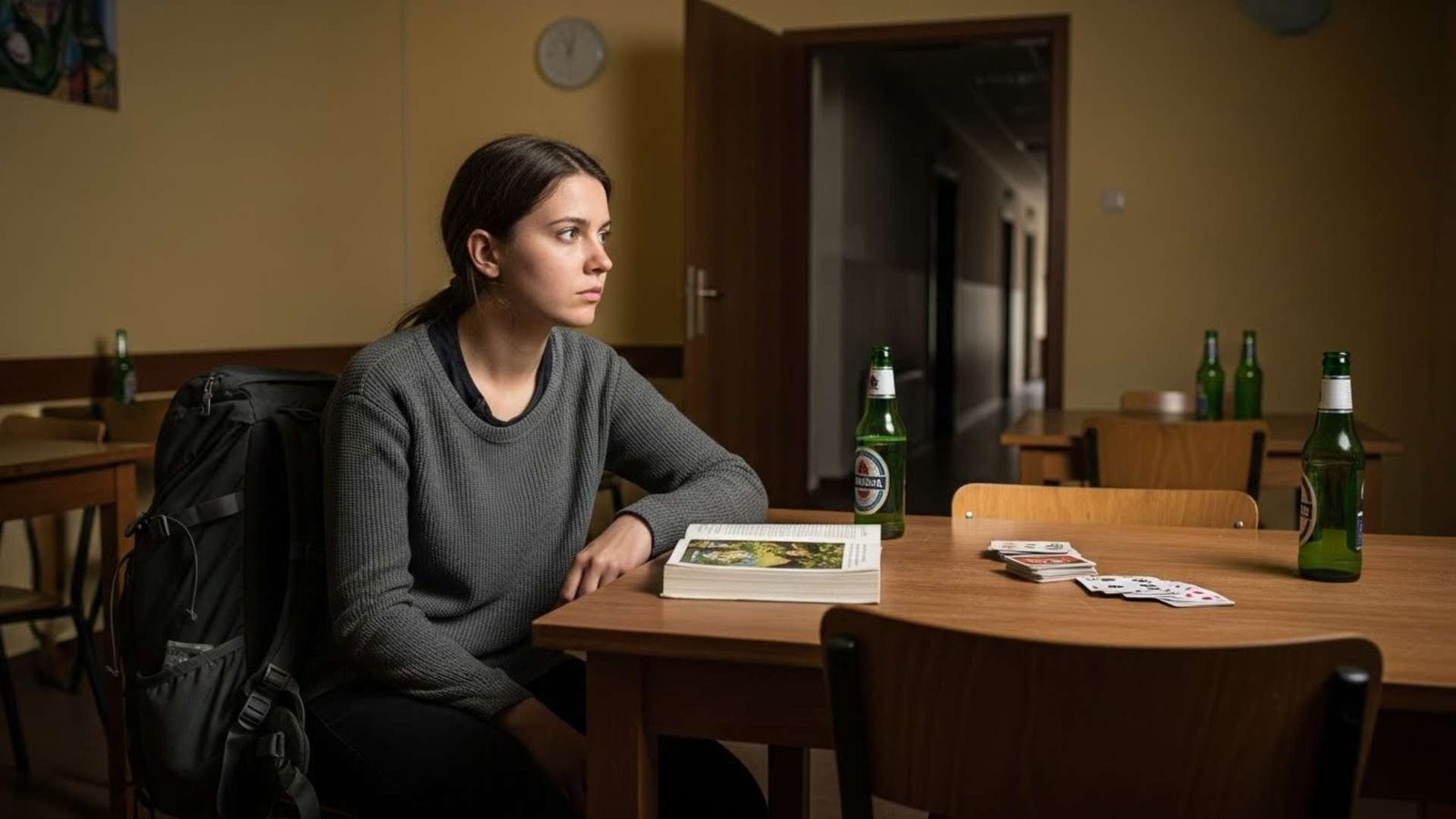
We’ve been told since kindergarten: “Stay with the group.” It feels intuitive. If you have four people with you, you’re invincible, right?
Wrong.
Security experts call this Risk Homeostasis. When you join a temporary “hostel family”—those three people you met in the lobby ten minutes ago—your brain switches off. You outsource your vigilance to the group. You assume someone else is watching the bags. You assume someone else knows the way back.
But here’s the kicker: they are assuming the same thing about you.
As this model shows, the bigger the group, the lower your individual awareness drops. A solo traveler is hyper-vigilant because they know they are their own backup. A drunk group of six is just a loud, distracted buffet for pickpockets.
2. Weaponized Politeness (The “Nice” Syndrome)
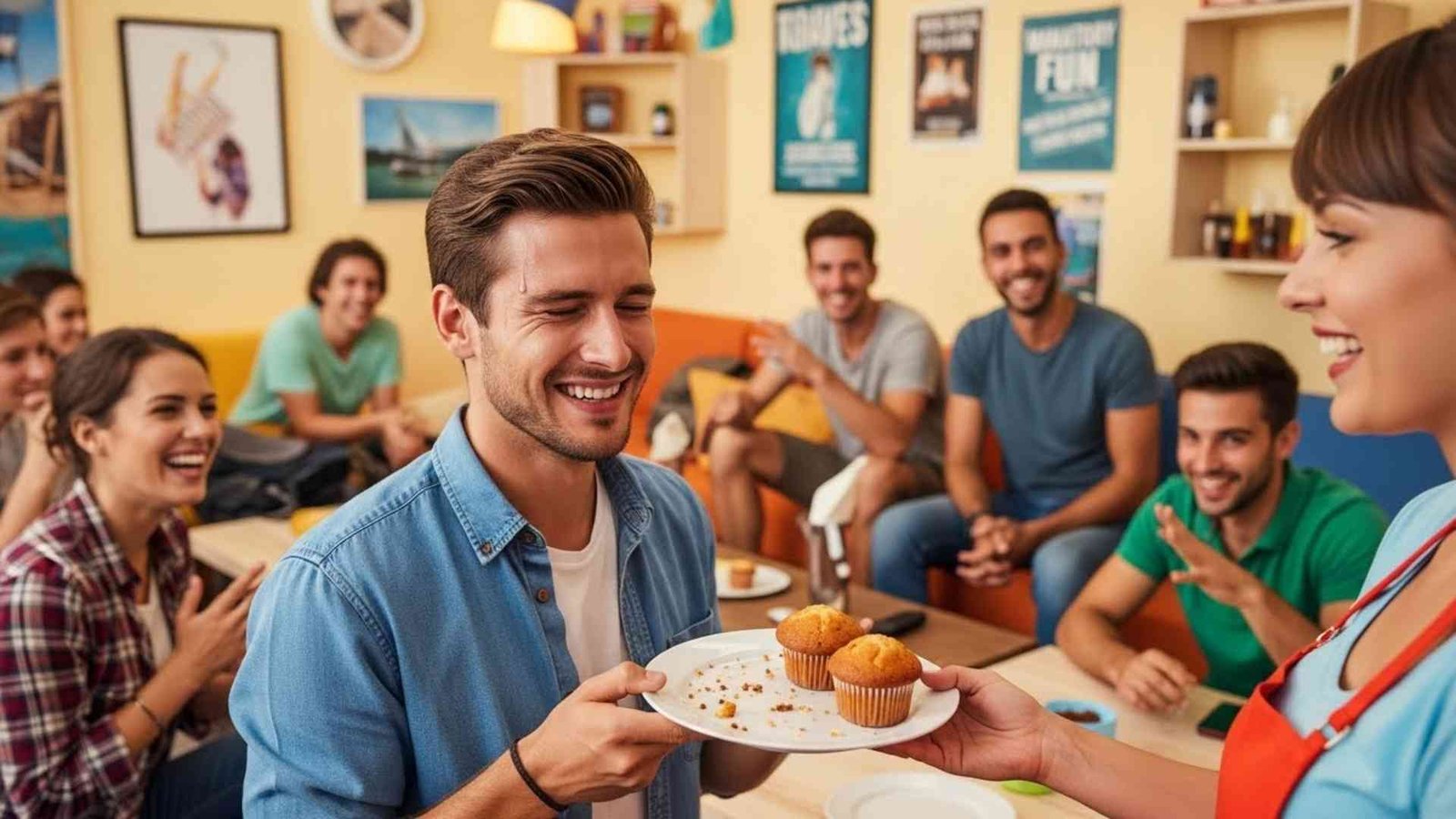
This is the big one, especially for women who have been socialized to be accommodating.
Security specialist Gavin de Becker, author of The Gift of Fear, famously said: “Niceness is a decision, a strategy of social interaction; it is not a character trait.”
Predators know this. They weaponize your fear of appearing rude.
- The Scenario: You’re waiting for an Uber. A guy approaches and asks for the time, or offers to help with your bag. Your gut says “no,” but your social training says, “Don’t be a jerk, just answer him.”
- The Trap: By engaging, you’ve just passed his interview. You showed him that you are willing to ignore your intuition to satisfy his request. Plus, while you’re worrying about being polite, you aren’t watching your surroundings.
3. The Digital Breadcrumb Trail
We all want to flex on Instagram. But posting your location in real-time is arguably the stupidest thing you can do while traveling alone.
If you post a Story tagged at a specific beach club, you are telling the world (and the local thieves who follow tourist hashtags) two things:
- Exactly where you are right now.
- Exactly where you aren’t (your hostel room, leaving your heavy luggage unguarded).
It’s open-source intelligence for criminals. Stop it. Post on a delay.
4. The “Open Book” Leak

Hostel common rooms are interrogation centers disguised as social hubs.
- “Where are you going next?”
- “Are you traveling alone?”
- “Is this your first time here?”
It seems like friendly chatter. But if you tell a stranger you’re leaving tomorrow, they know you’re not coming back to check on your locker. If you say it’s your first time, they know you don’t know the local scams. You don’t need to lie, but you need to be vague.
5. The “Flash” (It’s Not Just Jewelry)
You probably know not to wear a Rolex in Rio. But you probably don’t think twice about wearing your $500 AirPods Max around your neck or charging your iPhone 15 Pro on the hostel table while you grab a coffee.
In many parts of the world, that phone is six months of rent. When you flash tech, or worse, walk around with noise-canceling headphones on, you are sending a dual signal: “I have money” and “I can’t hear you coming.” It’s a sensory deprivation tank that makes you an easy mark.
6. The Drunken Bond

There is a unique phenomenon in hostels where we get drunk with strangers and instantly decide we trust them with our lives. Alcohol degrades your ability to spot those subtle “Grayson and Stein” predator cues. It makes you sloppy.
Hostel owners have endless stories of guests who went out getting wasted with their “new best friends,” only to have those friends disappear with their wallets, or worse, lead them to an ATM “to help them out.”
7. The “Savior Complex”
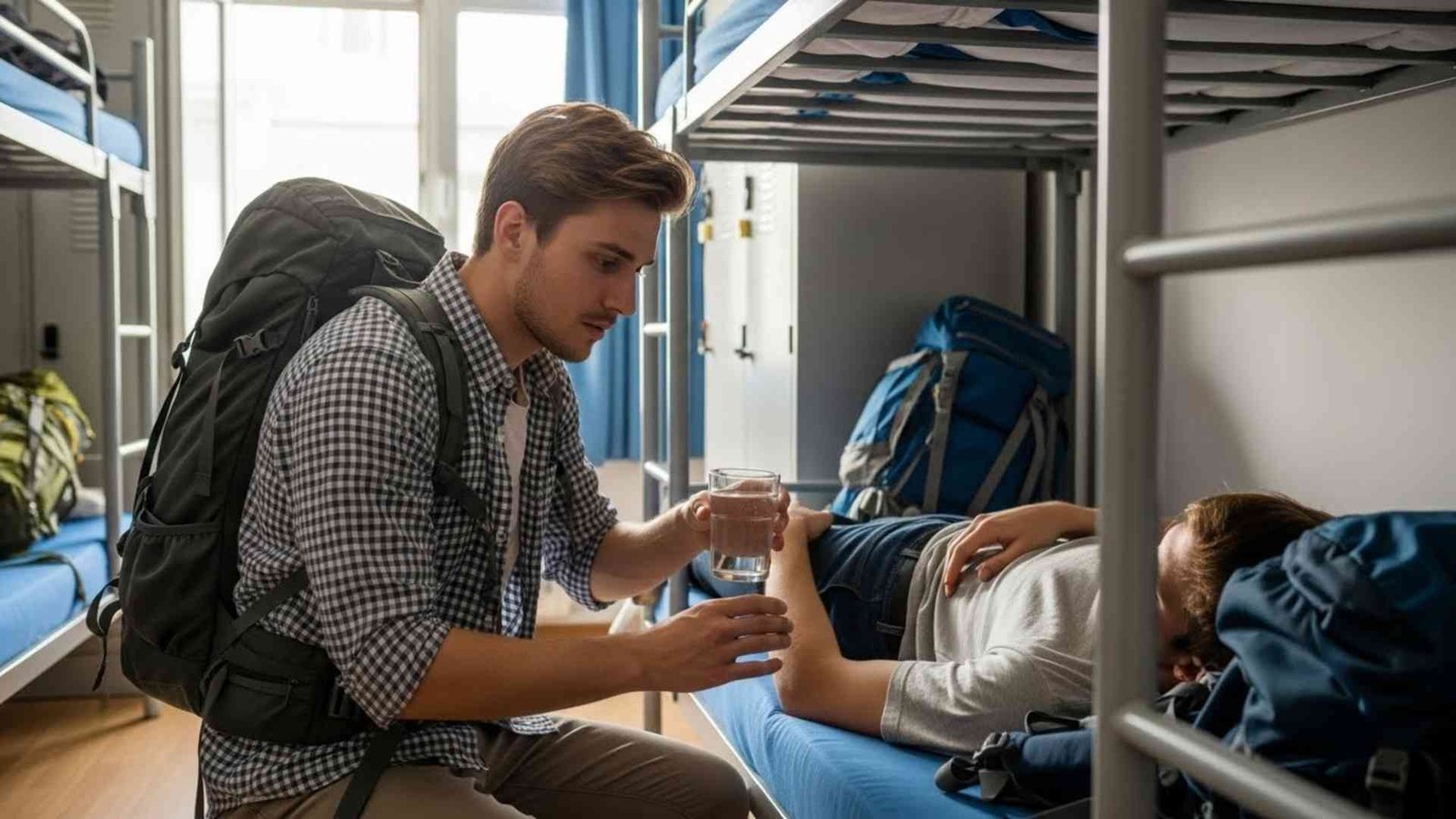
We want authentic experiences. We want to meet “real locals.” So when a friendly guy offers to show us a “secret” bar or a shortcut, we say yes because we don’t want to miss out.
This exploits the reciprocity rule. If someone does something nice for you (gives you directions, compliments you), you feel a psychological debt to say yes to their next request. Predators use this to move you to a second location—a location they control.
8. Spatial Oblivion (The “Inside” Fallacy)
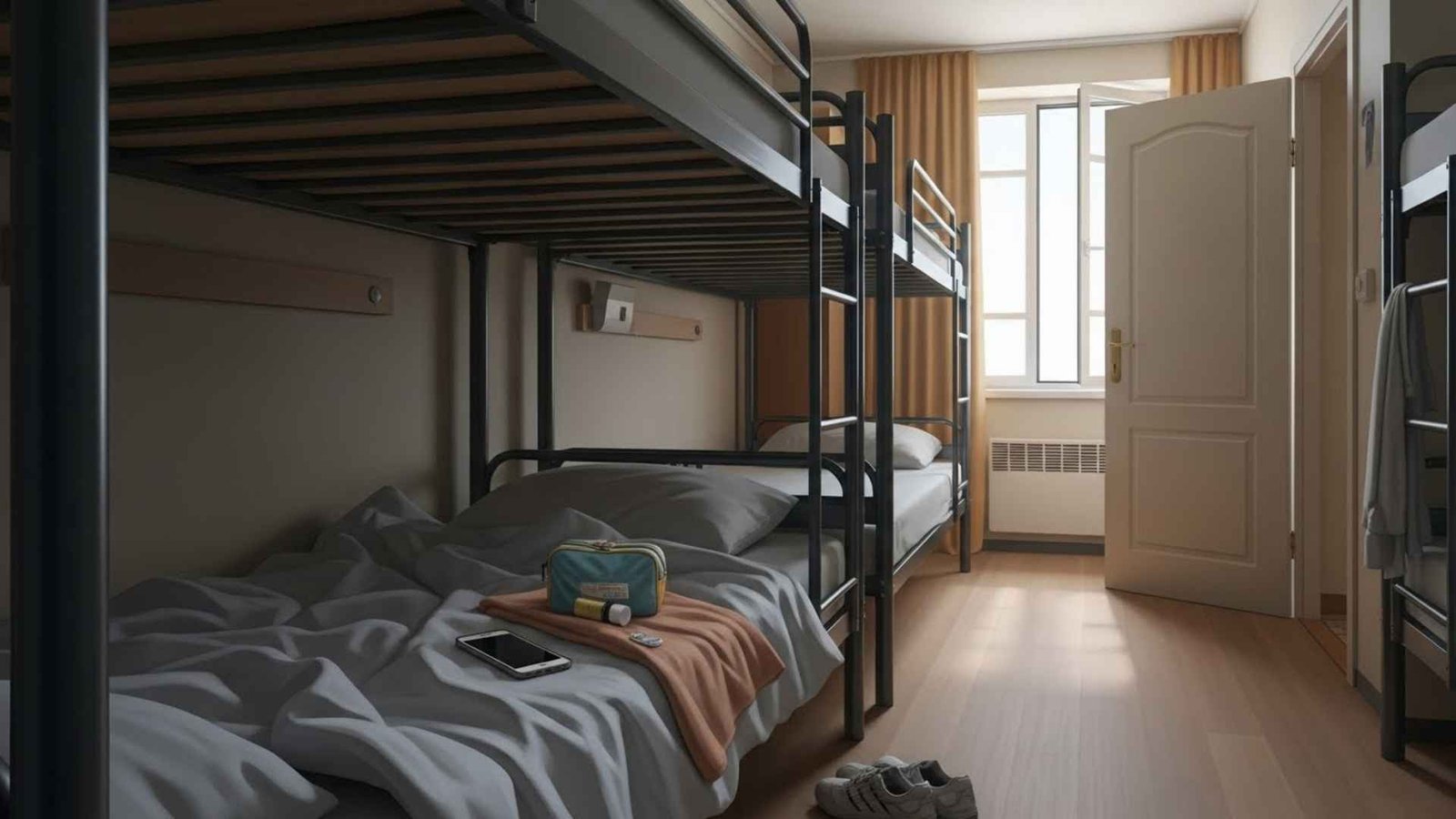
Why do we lock our doors at home but leave our dorm rooms unlocked “for air flow”? Why do we leave our phones on the bed while we shower?
A hostel is a semi-public space. “Tailgating”—following someone through a secure door—is the oldest trick in the book. Just because someone is inside the building doesn’t mean they belong there. Treat the hostel like the street: keep your guard up.
The Protocol: Counterintuitive Moves to Stay Safe
Okay, that’s the scary stuff. Now, how do we fix it? The answer is to override your social programming. You have to be willing to be “weird” to be safe.
Move 1: Tactical Rudeness

If a stranger approaches you and your gut tightens—even a little bit—you have permission to be a jerk.
- Don’t smile.
- Don’t say “sorry.”
- Don’t stop walking.
Use the “No” Muscle. Put your hand up in a “stop” gesture and keep moving. As Lloyd Figgins, a former soldier and travel safety expert, puts it: “If something feels off, it is off.” Your intuition is thousands of years of evolution trying to save your life. Don’t silence it with politeness.
Here is a decision tree to help you visualize this. It feels aggressive, but it works.
Move 2: Strategic Boredom (The “Gray Man”)
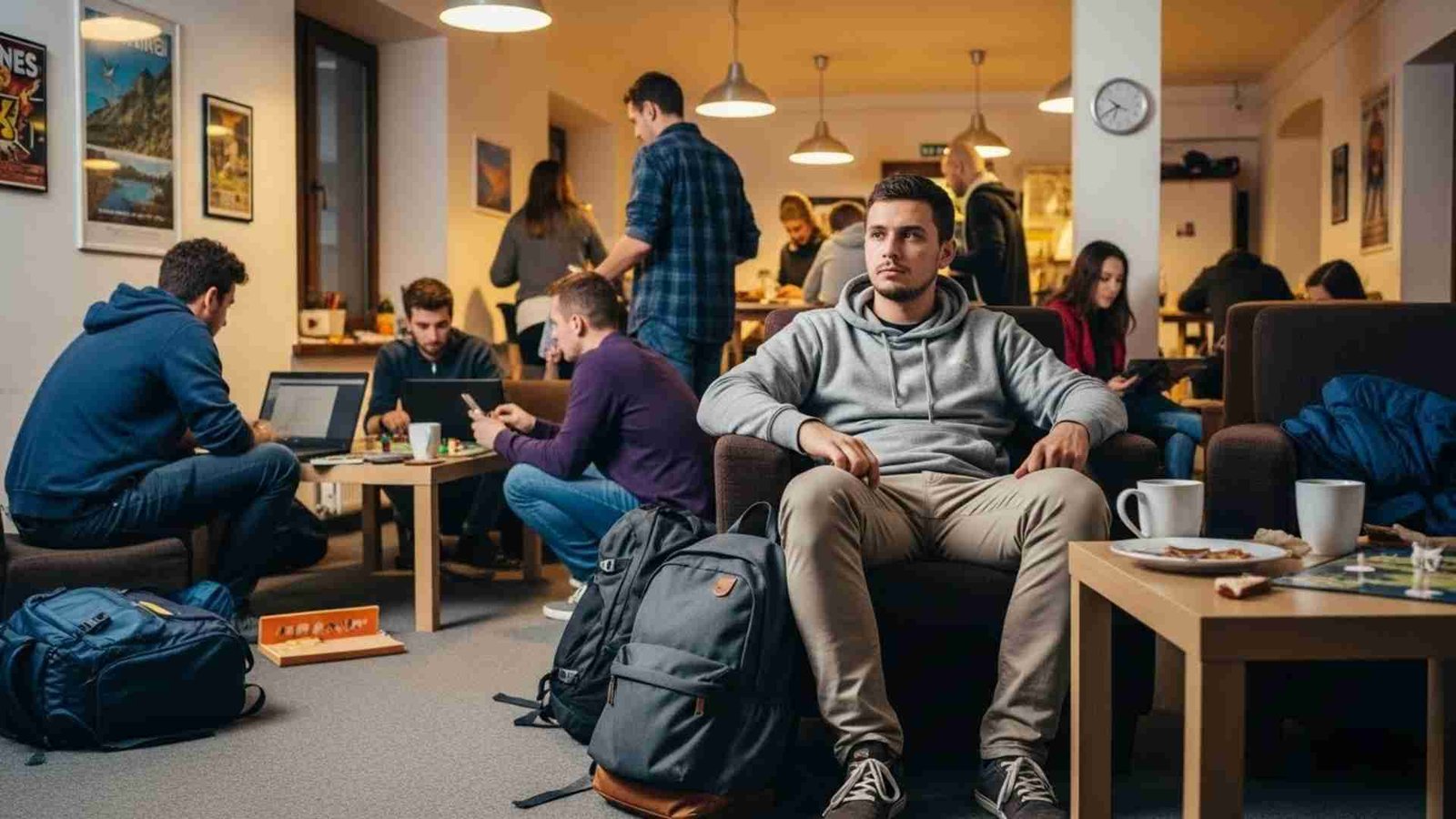
Predators are looking for high arousal: fear, confusion, or excitement. If you are walking through a sketchy area, don’t look terrified. But don’t look fascinated either. Look bored. Slump your shoulders slightly (in a relaxed way, not a weak way), look like you’ve walked this street a thousand times, and you’re just trying to get to work. If you look like a local who is bored of the scenery, you become invisible.
Move 3: The Decoy Wallet
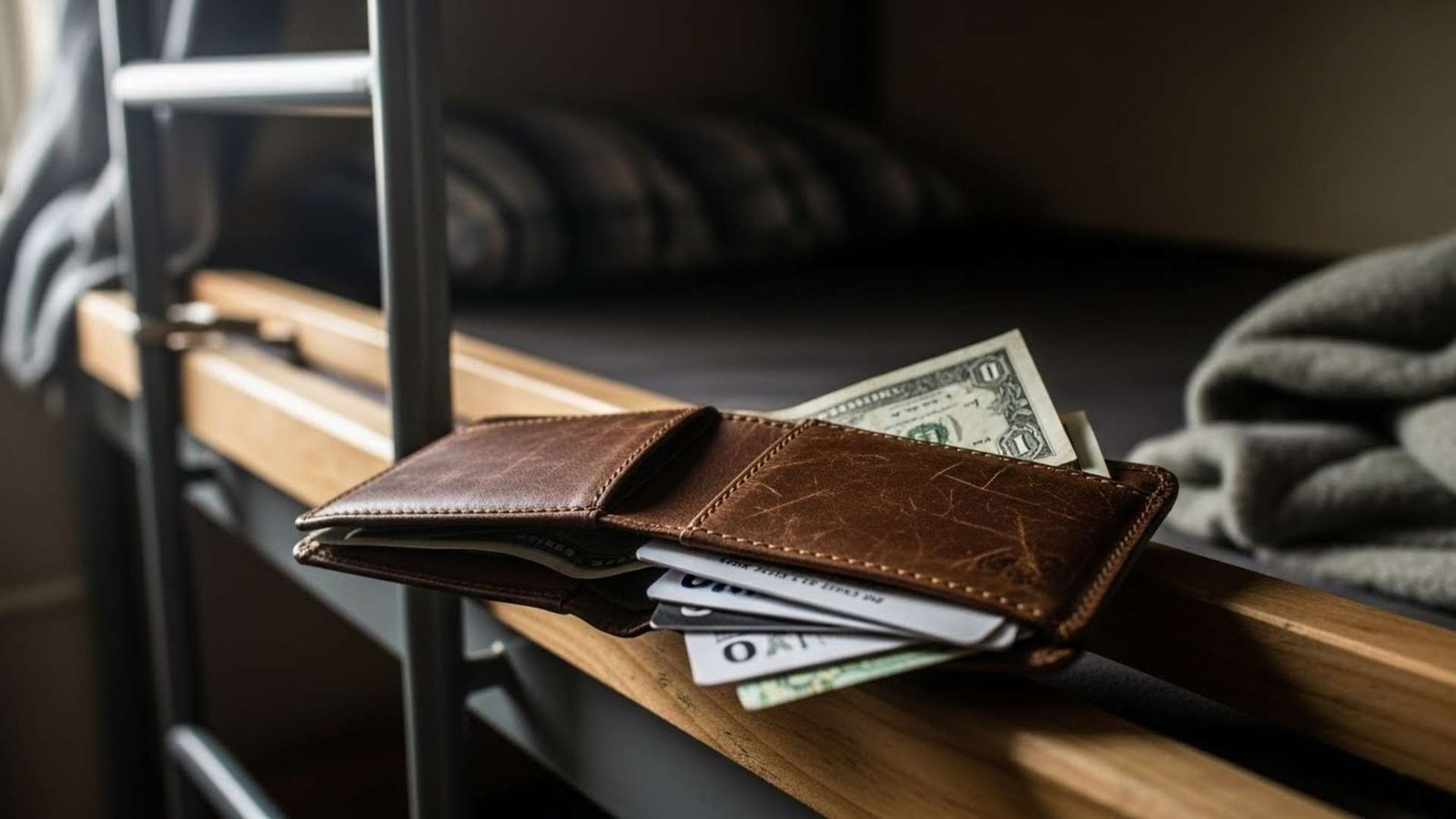
This is debated, but many experts swear by it. Carry a cheap, throwaway wallet with:
- $20 in small bills.
- Some expired credit cards.
- A library card (filler).
If you are mugged, you toss the decoy wallet one way and run the other. You give the predator a “win” (he got a wallet) without losing your main cards or passport, which should be strapped to your body or hidden in a secret pocket. It turns a disaster into a $20 inconvenience.
The Door Wedge
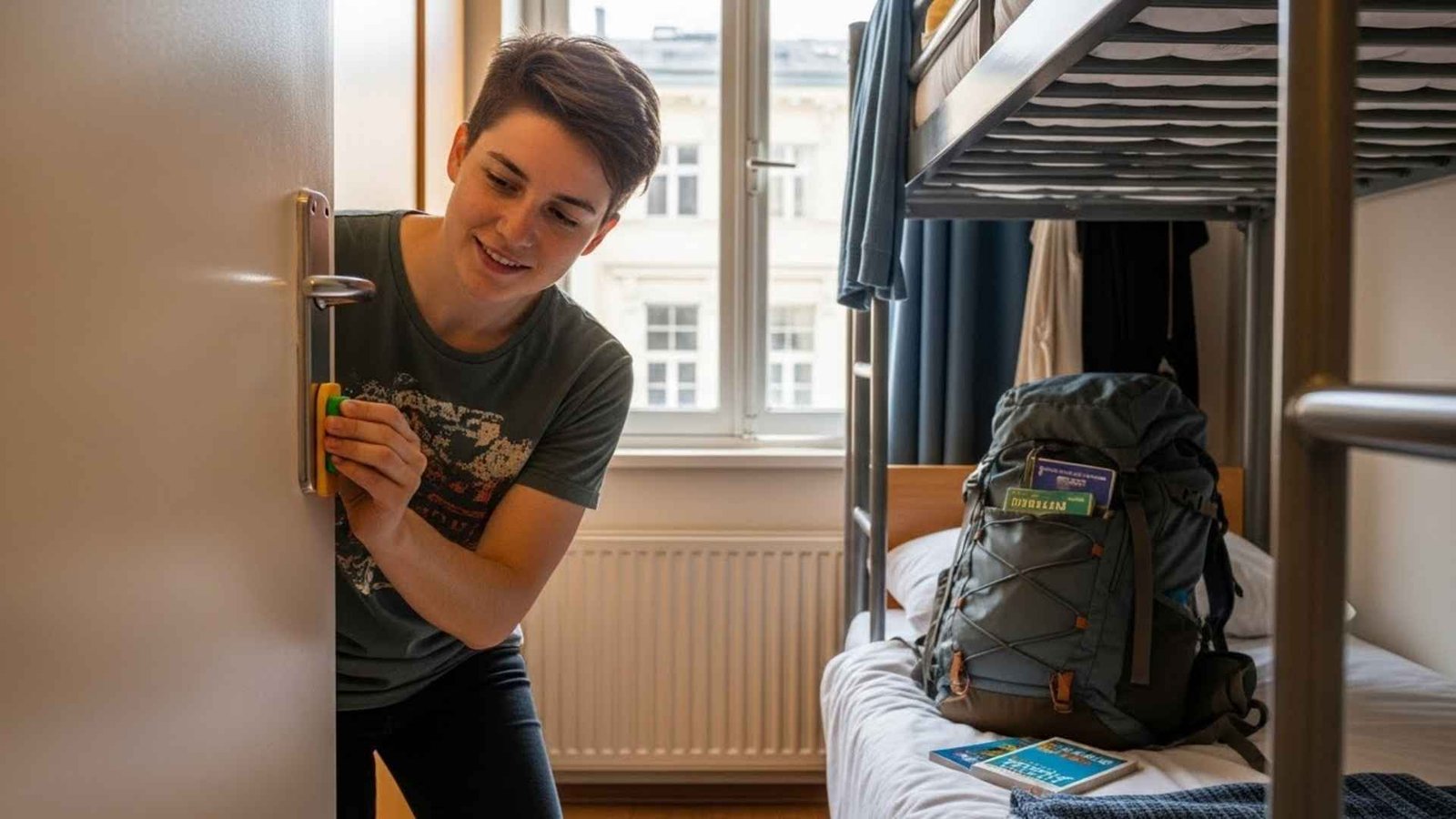
Hostel locks are often a joke. Keys get copied. Staff have master keys. Buy a rubber door wedge (some come with alarms). When you are in your room—even a private room—wedge it under the door. It’s a mechanical barrier. Even if someone hacks the keycard, they physically cannot force the door open without waking you (and the whole floor) up.
Gear That Evens the Odds
You don’t need to turn into a survivalist to travel safely, but having a few pieces of strategic gear can give you peace of mind when the hostel lock looks dodgy or you’re navigating a busy terminal. Think of these items as cheap insurance policies that fit in your pocket—they buy you options when your intuition tells you something is wrong.
1. Addalock Portable Door Lock

This is the gold standard for “hardening” a room. It fits into the strike plate of almost any door, making it impossible to open from the outside, even if someone has a keycard. It’s perfect for private hostel rooms or Airbnbs with questionable security.
2. SABRE Wedge Door Stop Security Alarm

If you can’t lock the door, wedge it. This stopper has a 120-decibel alarm that screams if anyone tries to force the door open. It not only physically blocks entry but wakes you (and the entire floor) up instantly.
3. Pacsafe Coversafe S25 Secret Bra Pouch

This is essential for the “Decoy Wallet” strategy. While you keep your dummy wallet in your pocket, your actual credit cards and emergency cash stay clipped securely to your bra or undergarments, completely invisible to pickpockets.
4. USB Data Blocker (“Juice Jacking” Defender)

Hacking public charging ports is a real thing. This tiny adapter sits between your charging cable and the public USB port, blocking data transfer while still letting power through. It keeps your phone safe from malware at airports and cafes.
5. Heavy Duty TSA Compatible Padlock

Hostel lockers are notoriously flimsy, but a solid lock is a visual deterrent. Skip the cheap combination locks that can be decoded in seconds and go for a heavy-duty key lock. It signals to a thief that your locker is “too much work.”