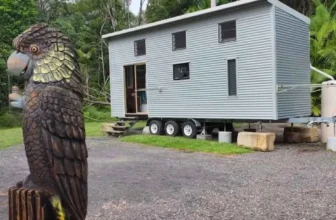
How to Live in a Tiny House With Kids (and Stay Sane)

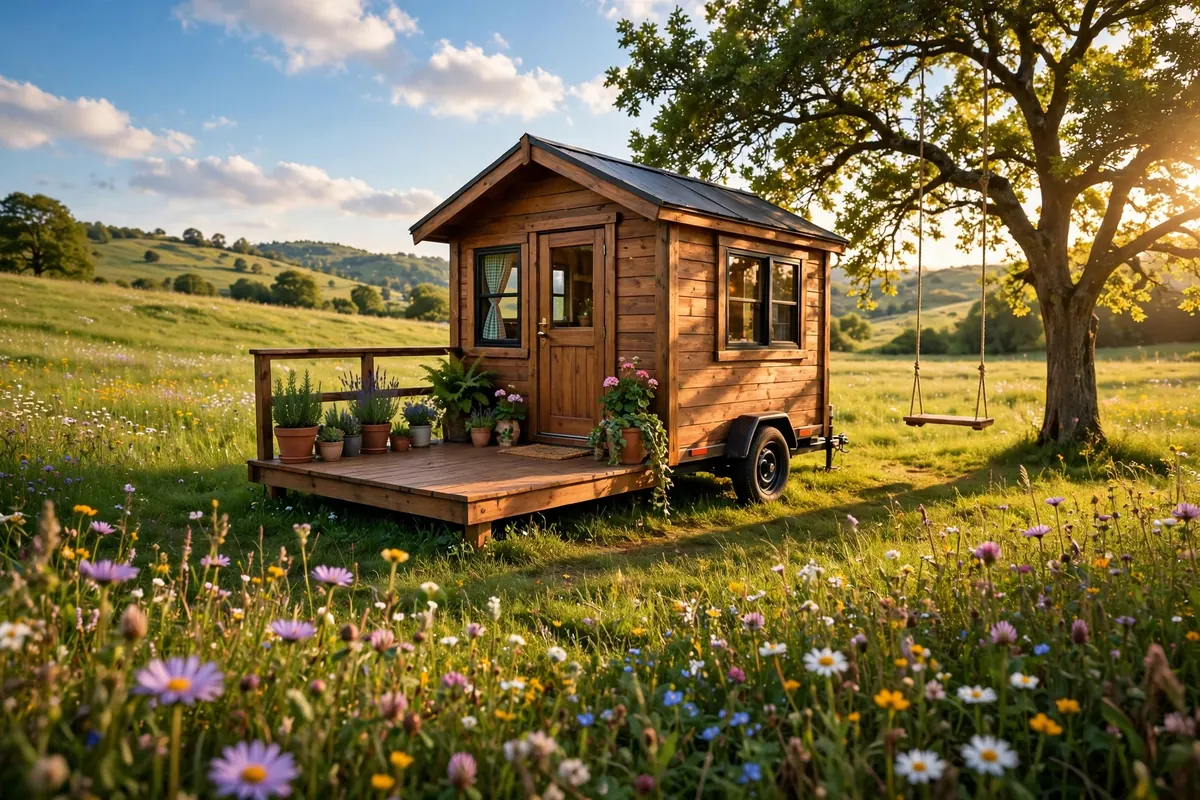
Yes, you can live in a tiny house with kids. Families do it every day, and many of them would never go back.
It is not magic, though. It is planning. A tiny house with kids works when the layout fits your real daily life, not the pretty version of it.
The families who struggle are usually the ones who picked a house first and figured out the kid part later. Do it the other way around.
This guide walks through the decisions that matter most: space, sleeping, safety, storage, school, meals, and the outdoors. Get those right and the small square footage stops feeling small.
At a Glance: Tiny House Life With Kids
- Typical size: Most tiny houses run 100 to 400 square feet, and the building code caps the definition at 400 square feet, not counting lofts. Families usually want 350 to 400 or more.
- Sleeping: Bunks or a kids loft on the ground floor work best for little ones. High lofts suit older kids and adults.
- Safety first: Loft railings, safety gates, and stairs with handrails are non negotiable when kids climb.
- Storage rule: Everything a child uses daily must sit at their height. Everything else goes up high.
- The real living room: A deck and a fenced yard add more usable space than any floor plan trick inside.
- The honest test: If a family of four needs under 100 square feet per person, the design has to be excellent, not just cute.
Size figures drawn from ToGaze. Safety guidance reflects Tiny Homes DIY and Tiny House Comfort.
1. Be Honest About the Space You Really Need
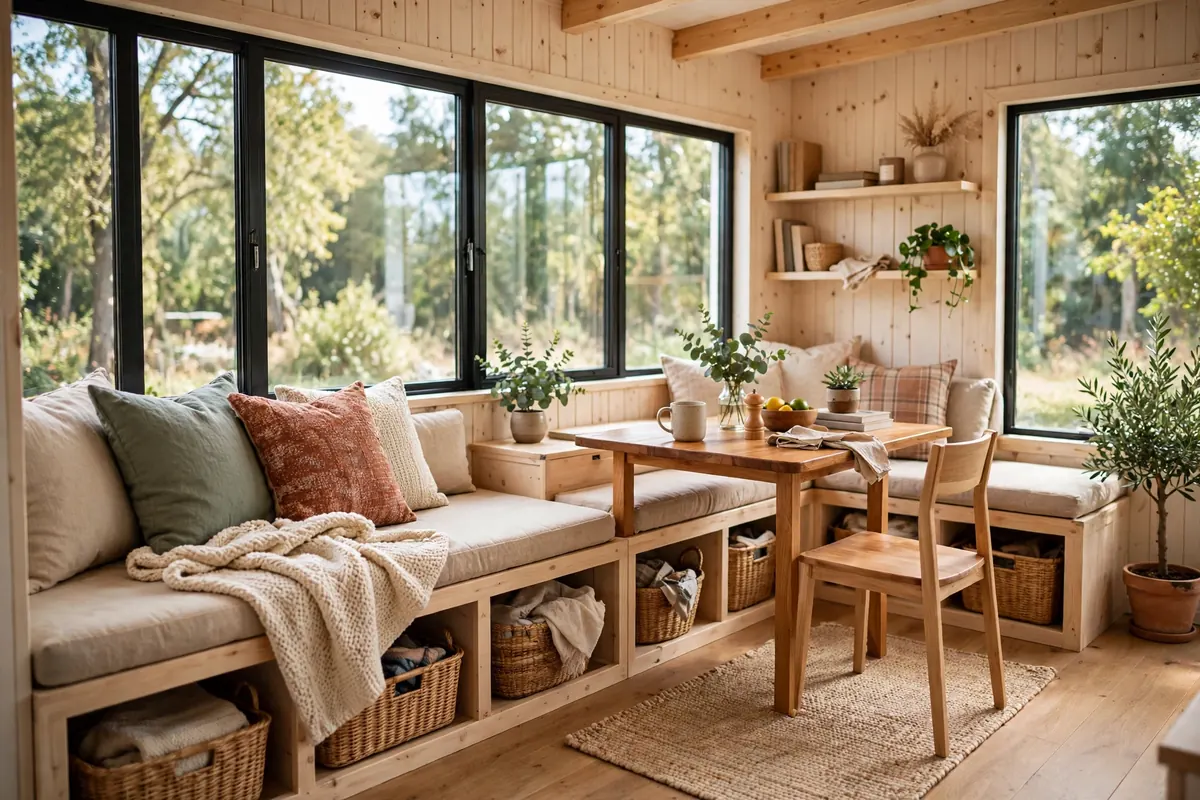
Start with the math, not the mood board. A typical tiny house on wheels runs 200 to 300 square feet. The building code defines a tiny house as 400 square feet or less, not counting loft space.
That sounds workable until four people share it. A good rule of thumb is about 200 square feet per person for comfort. Below 100 square feet per person, the design has to carry the whole load.
For a family, aim for the top of the range. A 320 to 400 square foot house with two lofts feels very different from a 200 square foot one. The extra feet buy a real kitchen and a homework spot.
Count the people you will actually have in five years, not just today. A toddler becomes a teenager fast. A house that fits a baby and a preschooler can feel cramped once both kids need desks and doors that close.
When in doubt, go slightly bigger or plan an addition. A covered deck, a small shed for bikes and gear, or a second tiny structure for a teen all count as space. The walls are not the only place to find it.
2. Design Sleeping So Everyone Actually Sleeps
Sleep is where tiny house life with kids is won or lost. If nobody sleeps well, nothing else works.
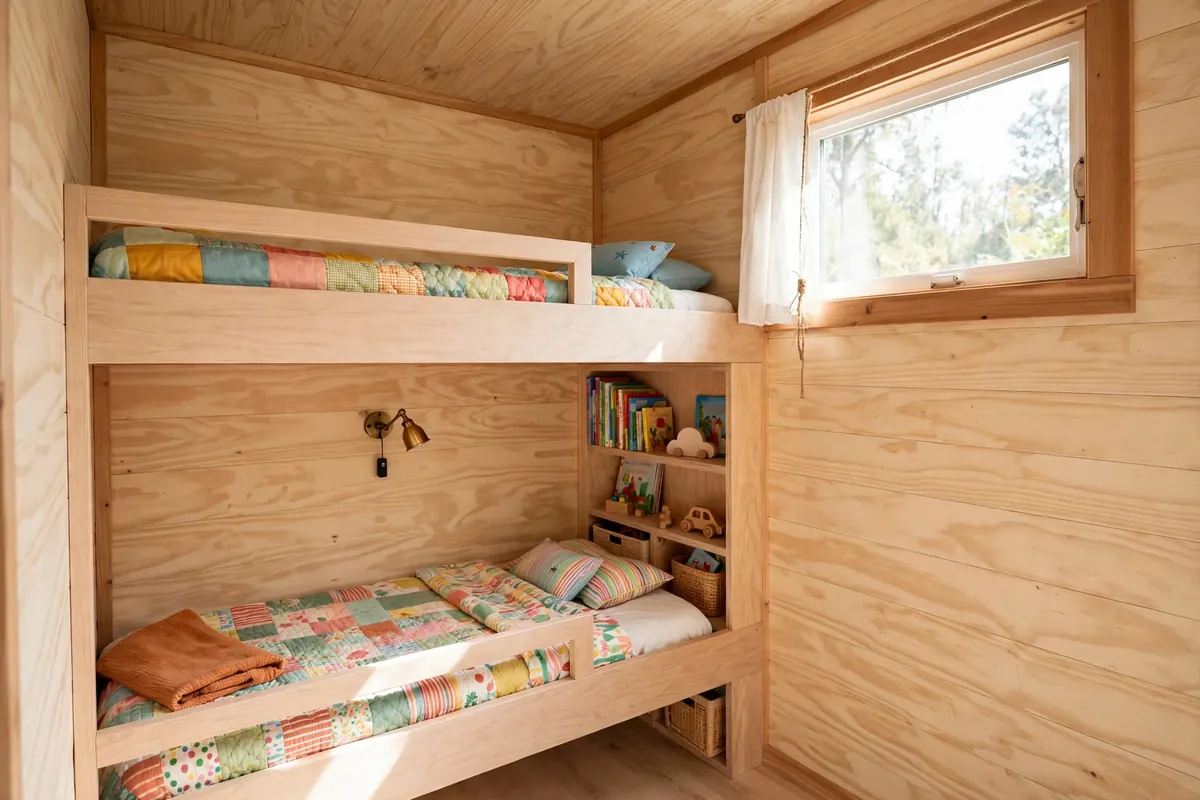
Give kids a real bed, not a couch that converts every night. Built in bunks work beautifully. They tuck into a corner, use vertical space, and give each child a small territory of their own.
Little ones belong on the ground floor. A low bunk or a small bedroom nook lets you reach them at 2 a.m. without climbing a ladder in the dark. Save the loft for older kids who climb safely and can get down alone at night.
Parents need a door that closes. Even a curtain across the main bedroom helps. Everyone in a tiny house hears everything, so a little separation protects the grownups’ sleep and the kids’ bedtime.
Let each child personalize their bunk. A reading light, a small shelf, a curtain they can pull shut. In a shared house, a bunk that feels like theirs is worth more than a whole extra room.
3. Make Lofts and Stairs Kid-Safe
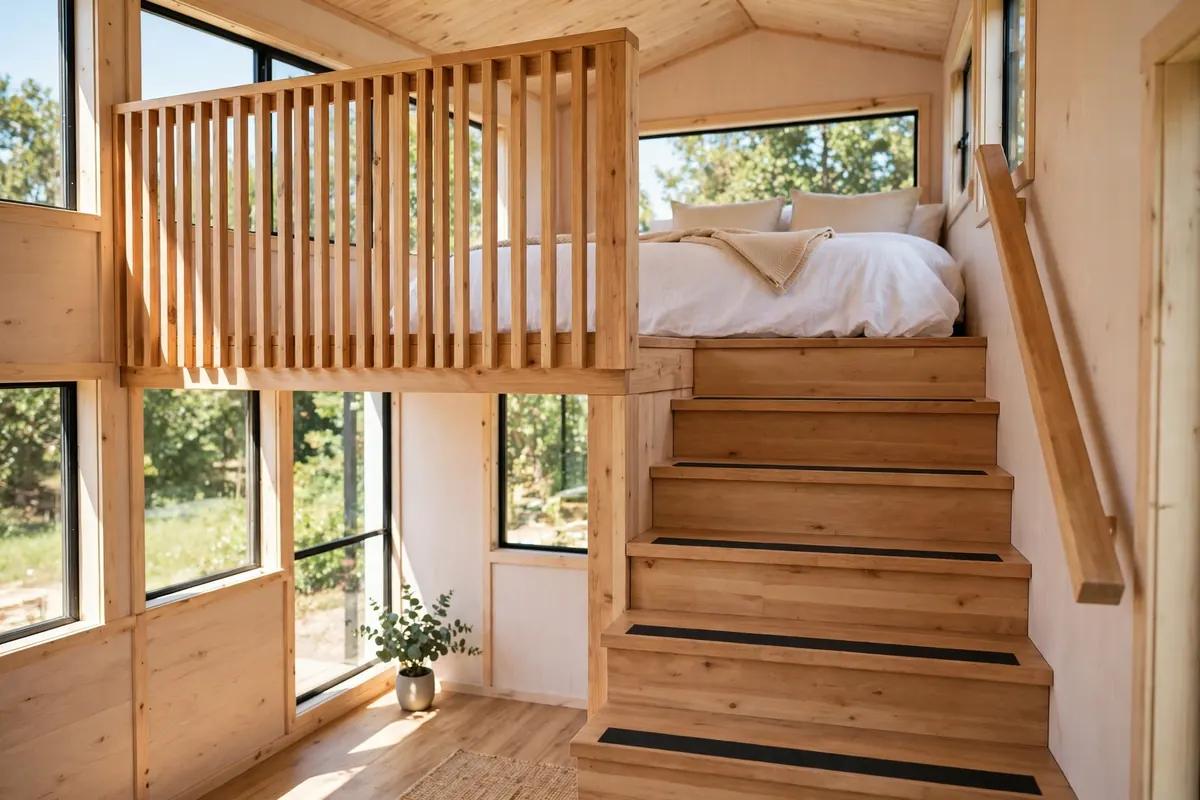
Lofts are the best and riskiest feature in a tiny house. They add a whole room for free. They also add a fall from eight feet up.
Treat railings as non negotiable. A loft needs a solid guard rail along every open edge, high enough that a child cannot topple over it. Check it yourself. Lean on it. Shake it. If it flexes, fix it.
Stairs beat ladders for kids, every time. Wide treads, a handrail, and non slip strips make the nightly trip to bed safe even when a child is half asleep. Storage stairs do double duty, with drawers or cubbies built into each step.
For toddlers and preschoolers, add a safety gate at the top of the stairs. Keep climbable furniture away from loft rails and windows. A chair pushed against a railing becomes a ladder in a curious child’s mind.
Anchor heavy furniture to the walls. Bookcases, dressers, and shelves can tip when a child climbs them. In a small house, a tipping shelf has nowhere to fall except onto someone.
Loft and Stair Safety Checklist
- Solid guard rail on every open loft edge, tested by leaning on it.
- Stairs with a handrail and non slip treads, not a steep ladder, for young kids.
- Safety gate at the top of the stairs for toddlers and preschoolers.
- No climbable furniture near rails, windows, or loft openings.
- Heavy furniture anchored to the wall so it cannot tip.
- Rounded corners on built in furniture and low beams, plus outlet covers and cabinet latches.
- An escape route from every sleeping area, with windows that open easily.
- Low VOC paint and solid wood finishes, so the air stays healthy in a small sealed space.
4. Storage Kids Can Actually Use
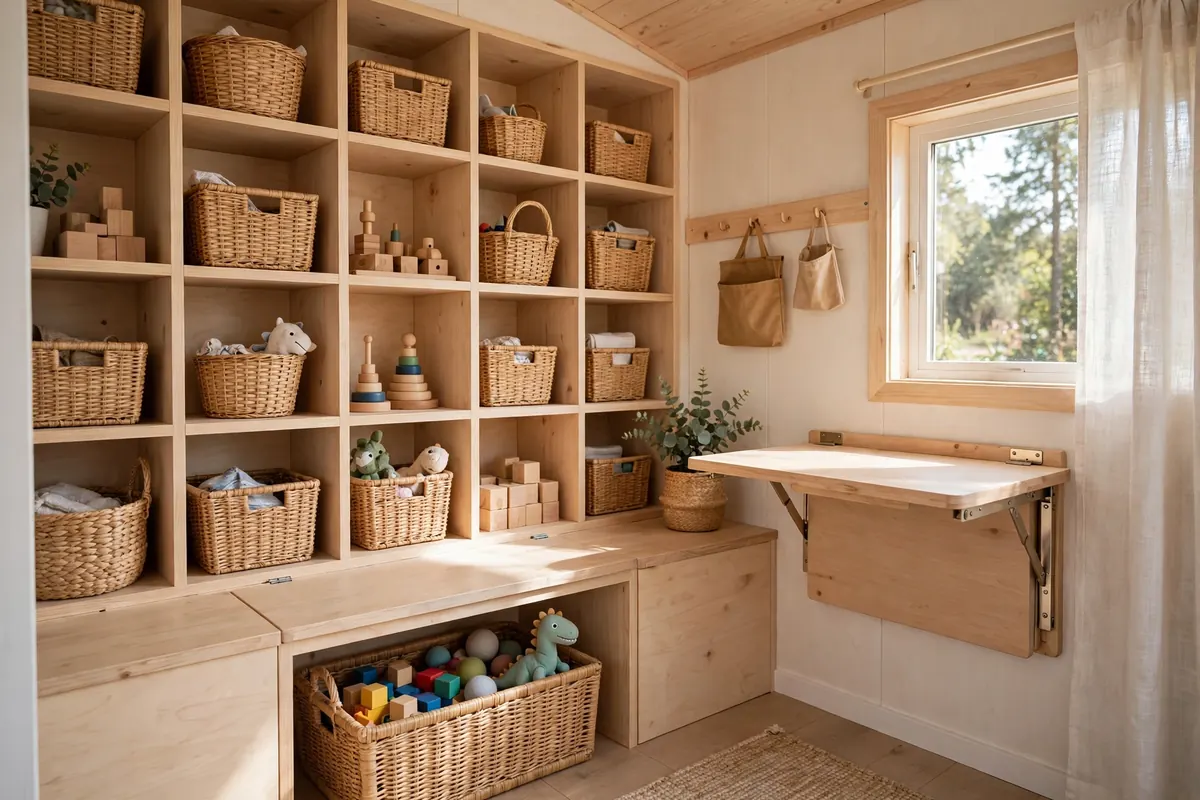
Toys multiply. In a tiny house, they multiply in plain sight. The fix is not fewer toys, though fewer helps. The fix is storage a child can use without your help.
Put daily items at kid height. Low cubbies, open baskets, and labeled bins let a four year old clean up alone. High shelves hold the things you control: craft supplies, the good markers, the Lego set with a thousand tiny pieces.
Give every category a home. One basket for blocks, one for cars, one for art supplies. When a bin has a job, cleanup takes five minutes. When toys live in a pile, cleanup never happens.
Use the one in, one out rule. A new toy arrives, an old one leaves. Donate it, gift it, or rotate it into a bin in the shed. Rotating toys keeps the house tidy and makes old toys feel new again.
Build storage into the furniture. Benches with hidden bins, beds with drawers underneath, stairs that open. In a tiny house, every flat surface should hide something useful.
5. School, Homework, and Quiet Time
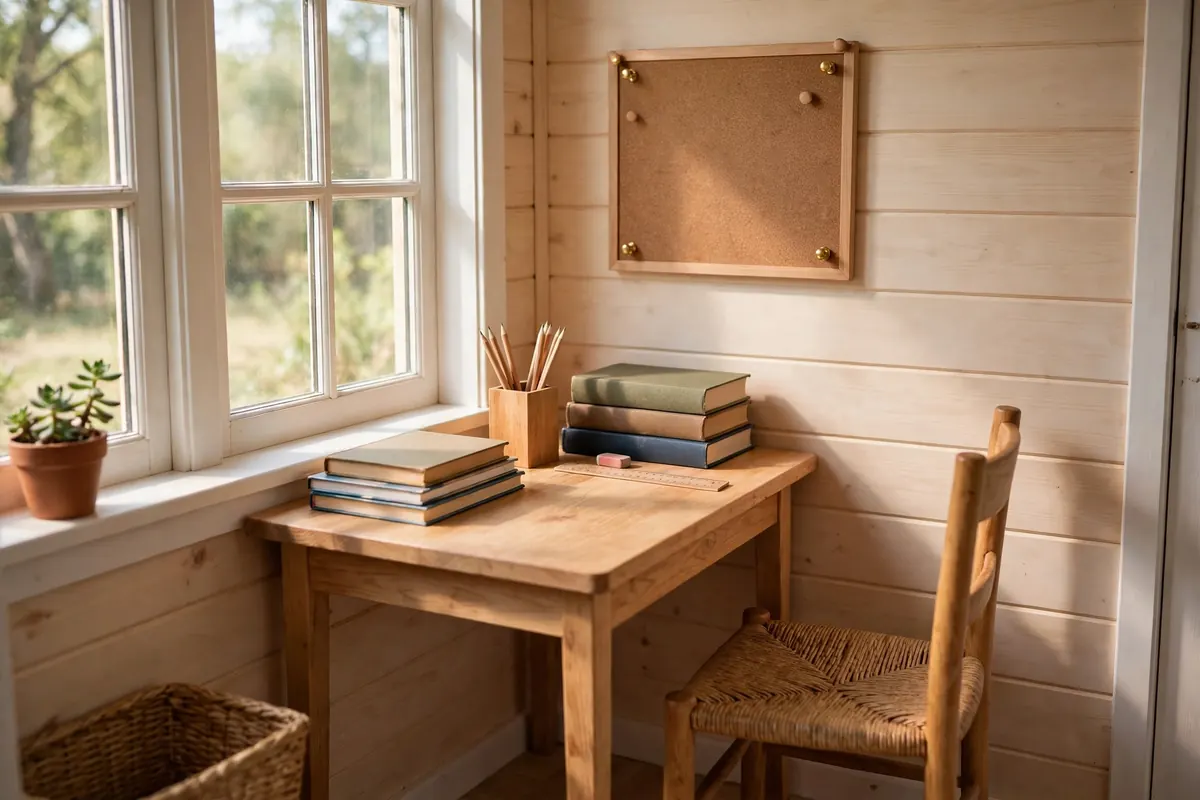
Kids need a place to focus, even in 300 square feet. It does not need to be a room. It needs to be a spot.
A small desk by a window works well. A fold down table mounted to the wall appears for homework and vanishes for dinner. The key is a surface that belongs to schoolwork at schoolwork time.
Keep supplies in one caddy or drawer. Pencils, paper, and books live together, so homework never starts with a ten minute hunt. When the caddy closes, school is done for the day.
Quiet time needs a plan, not a room. Headphones help older kids. A reading nook in a bunk with a curtain gives a younger child a place to retreat. Outside counts too. A porch chair with a book is a perfectly good quiet corner.
If you homeschool, plan the day around the space. Table work happens when the kitchen is free. Loud projects move outside. The rhythm matters more than the square footage.
6. Meals, Bathrooms, and the Daily Routine
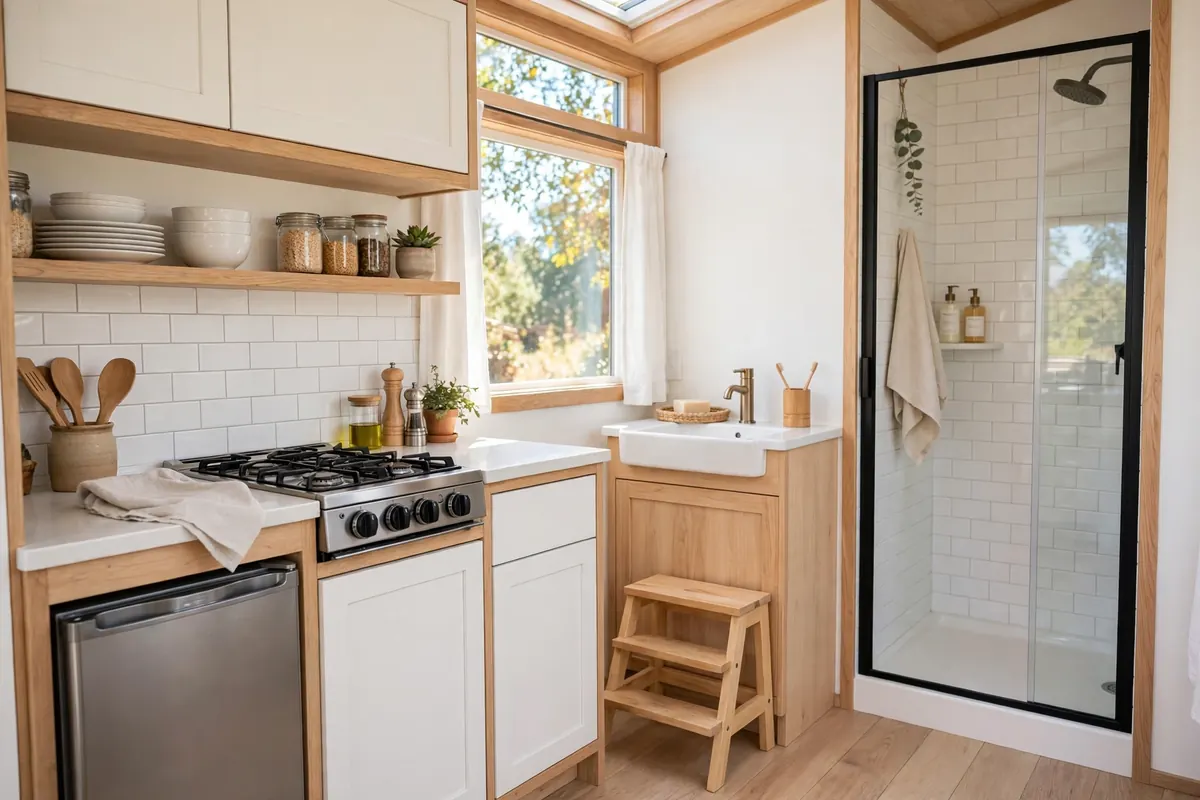
Daily routines are where tiny living shows its seams. Meals, baths, and mornings all happen in the same few feet.
Keep the kitchen simple and kid reachable. A step stool by the sink lets little hands wash up alone. Low hooks hold their cups and plates. When kids can serve themselves breakfast, mornings get calmer for everyone.
Cook in batches. A tiny kitchen has little counter space, so one big cook session beats three small ones. A slow cooker or a single sheet pan dinner keeps the mess down and the counters clear.
Bathrooms need a schedule more than a remodel. One shower, four people, one school morning. Stagger bath times the night before. Keep towels on hooks, not in a pile, and give each person a small basket for their own things.
Laundry is the quiet enemy. A compact washer dryer combo or a laundromat run twice a week beats a mountain of clothes in a house with no closet to hide it in. Fold it the same day, or it becomes furniture.
7. Give Kids an Outdoor Life
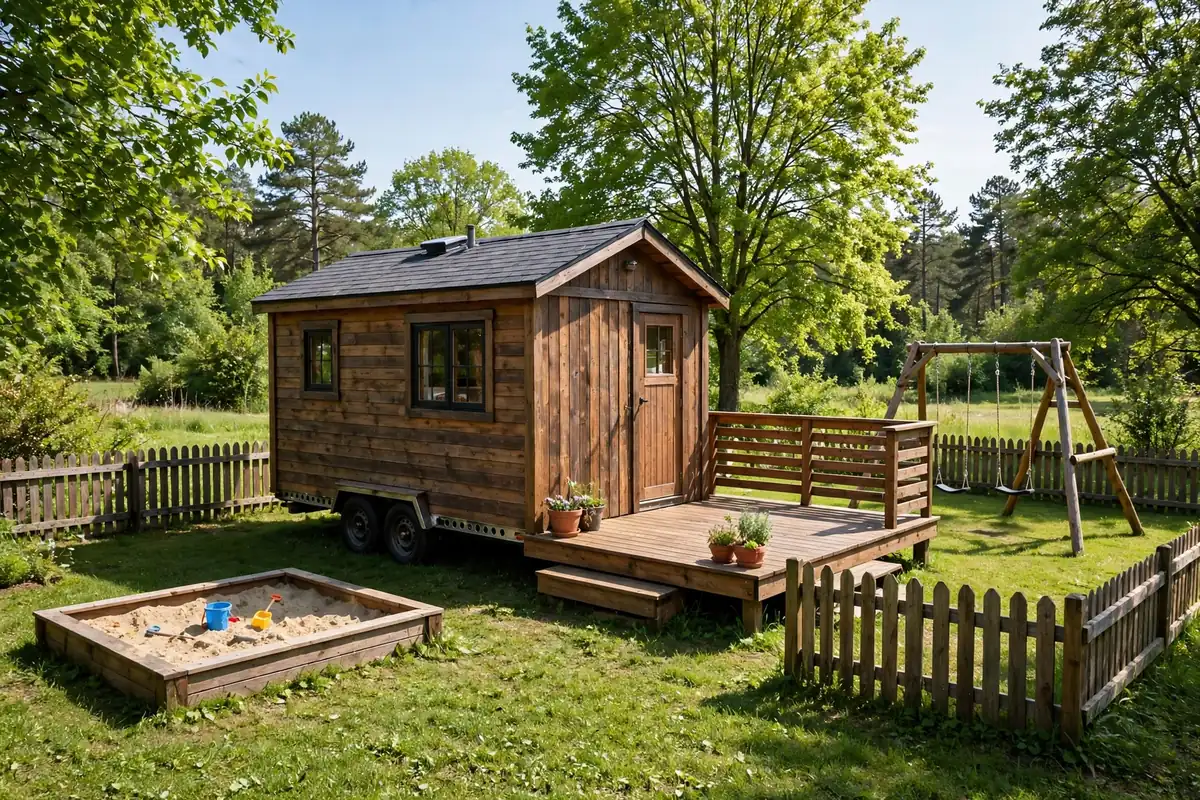
Here is the secret of happy tiny house families. The house is small because the outdoors is big.
A deck doubles your living space in good weather. Add a rug, a few chairs, and a small table, and the deck becomes the dining room, the classroom, and the playroom. A roof or a sail shade keeps it usable in rain and hot sun.
Fence a yard if you can. A safe, contained space lets kids play outside while you cook dinner. A swing set, a sandbox, and a patch of dirt beat any indoor playroom.
Grow something together. A few garden beds or pots on the deck teach patience and give kids a job they own. Watering plants and picking tomatoes are chores children actually ask to do.
Choose your parking spot with the outdoors in mind. Shade in summer, sun in winter, flat ground for bikes, and room to run matter more than a fancy interior. The yard is part of the house, so pick it like one.
8. Rules, Routines, and Staying Sane
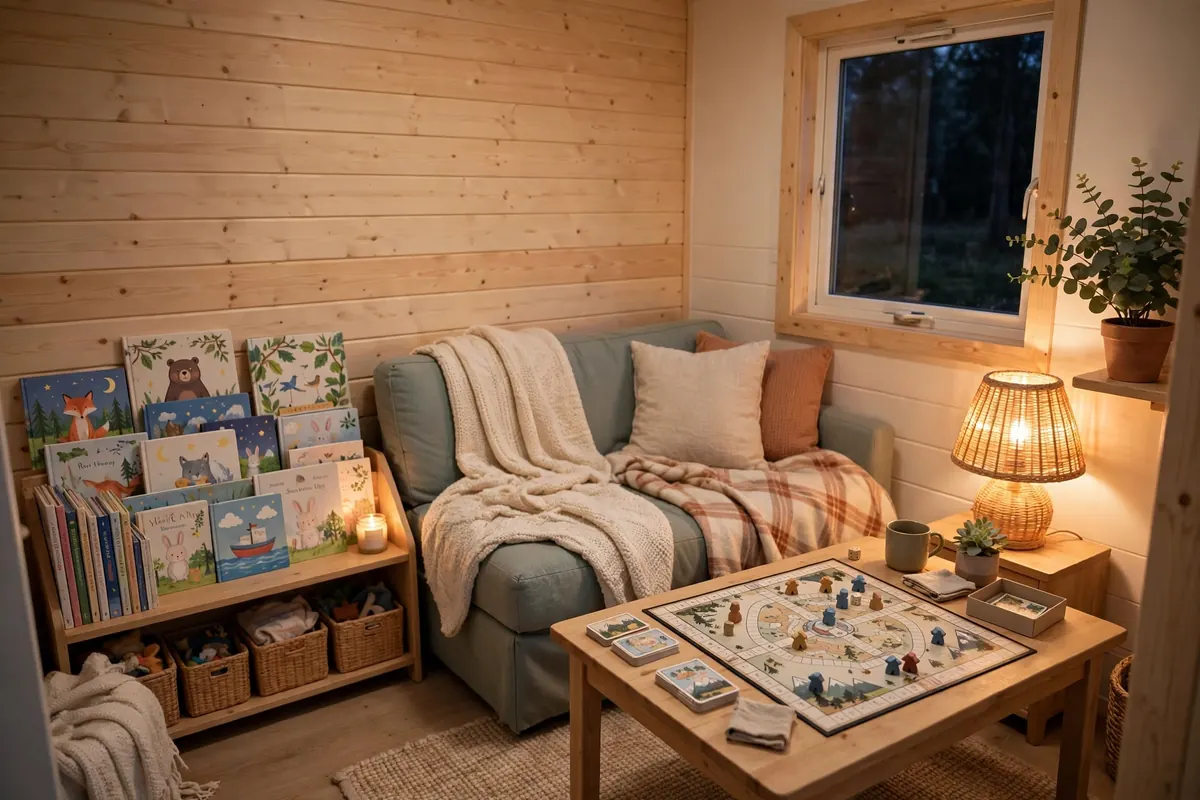
Small spaces punish chaos. They reward routine. The families who thrive in tiny houses are not the tidiest people alive. They are the ones with the clearest habits.
Set three house rules and keep them simple. Shoes by the door. Toys back in their bins before dinner. One person talks at a time. Rules that fit on a sticky note get followed. A long list gets ignored.
Build in alone time, for kids and for parents. Everyone needs a few minutes a day that belong only to them. A walk, a book in a bunk, coffee on the porch before the kids wake up. Protect those minutes like appointments.
Expect hard days. Rainy weeks, sick kids, and broken routines will make the house feel tiny. That is normal. A small house does not cause those days. It just removes the space to hide from them.
Talk about it as a family before you move in. Let kids name what they will miss and what they are excited about. A child who chose this life, even a little, handles the hard days far better than one who was dragged into it.
Before You Move In With Kids
- Try a trial run. Rent a tiny house or an RV for a weekend and live in it for real.
- Let each child pick their bunk or bed spot before move in day.
- Sort every toy into keep, donate, and rotate bins before packing.
- Test the stairs, rails, and gates with your actual kids, not just your eyes.
- Agree on the three house rules together, and write them down.
- Plan the outdoor space first. Deck, fence, and shade before fancy finishes.
- Check the parking rules, school options, and local laws for your spot.
- Keep a small fund for fixes. Tiny houses need small repairs often.
Living in a tiny house with kids is not about squeezing a big life into a small box. It is about choosing a smaller box so the life outside it gets bigger.
Do the planning, build the routines, and let the outdoors do the heavy lifting. The house will feel like home faster than you expect.