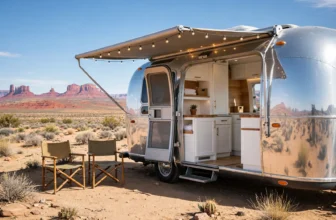
17+ RV Bedroom Ideas That Finally Make a Queen Bed Comfortable

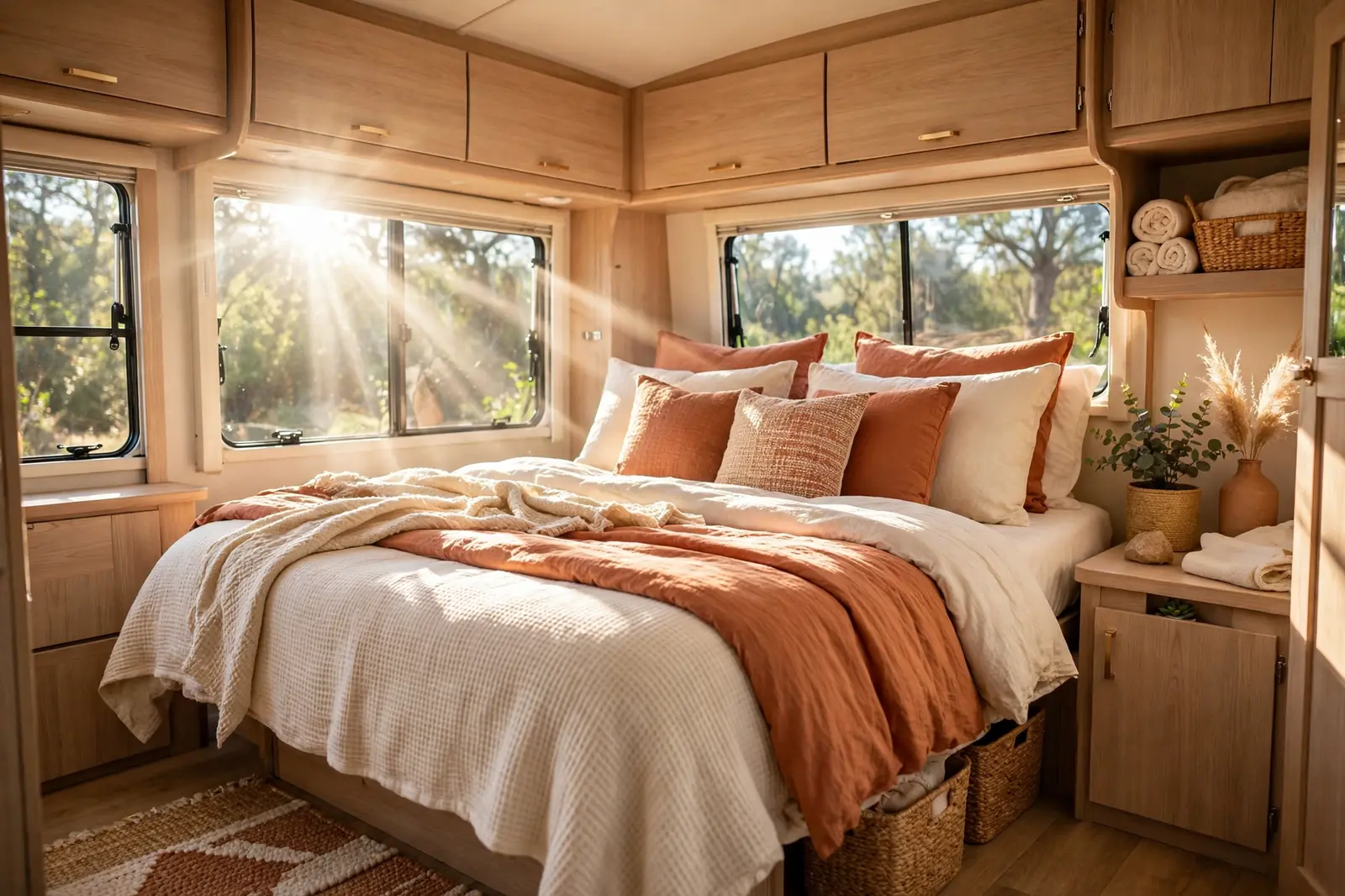
Most RV queen beds fail the comfort test. The mattress is thin. The corners are cut. The sheets never stay tucked, and one partner always sleeps in a crack of cold air where the slide seal meets the wall.
But a queen bed in an RV does not have to feel like a compromise. With the right layout, storage, lighting, and bedding strategy, it can sleep better than the bed back home. The secret is treating the bedroom like the most engineered room in the rig, because it is.
These 17 ideas cover every angle: platforms that hide storage, beds that fold away, lighting that makes reading easy, and bedding tricks that fix the cold corners. Every one is beginner friendly. Most can be done in a weekend.
Start with the idea that solves your biggest annoyance first. Comfort stacks fast once the worst problem is gone.
RV Queen vs. Regular Queen: the size gap
Measure your platform before buying anything. Most RV queens are “short queens” at 60 by 74 inches.
1. The Platform Bed With Cubbies
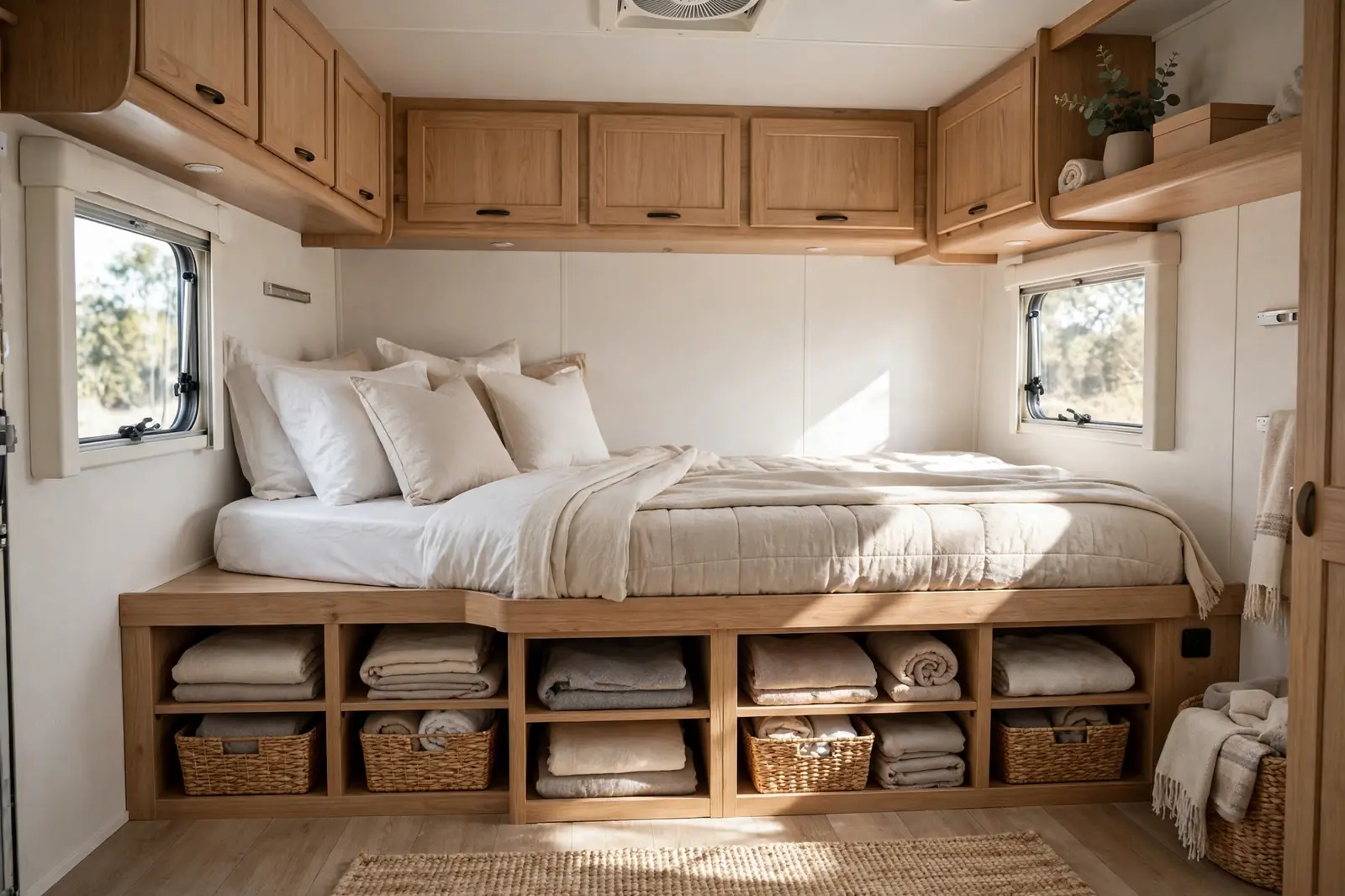
Dead space under the bed is the biggest waste in an RV bedroom. A platform bed with open cubbies turns that void into your dresser. Folded clothes, baskets of socks, spare blankets, all of it lives under the mattress instead of in bags on the floor.
Build or buy a low platform with cube openings sized to standard fabric bins. Keep the platform height under 14 inches so climbing in stays easy. The mattress sits on a solid deck, which also stops it from sagging in the middle the way slats allow.
This is the single best upgrade for rigs with no closet space. You gain the storage of a full dresser without giving up a single inch of floor. It also makes the whole bedroom look calmer, because clutter has a home.
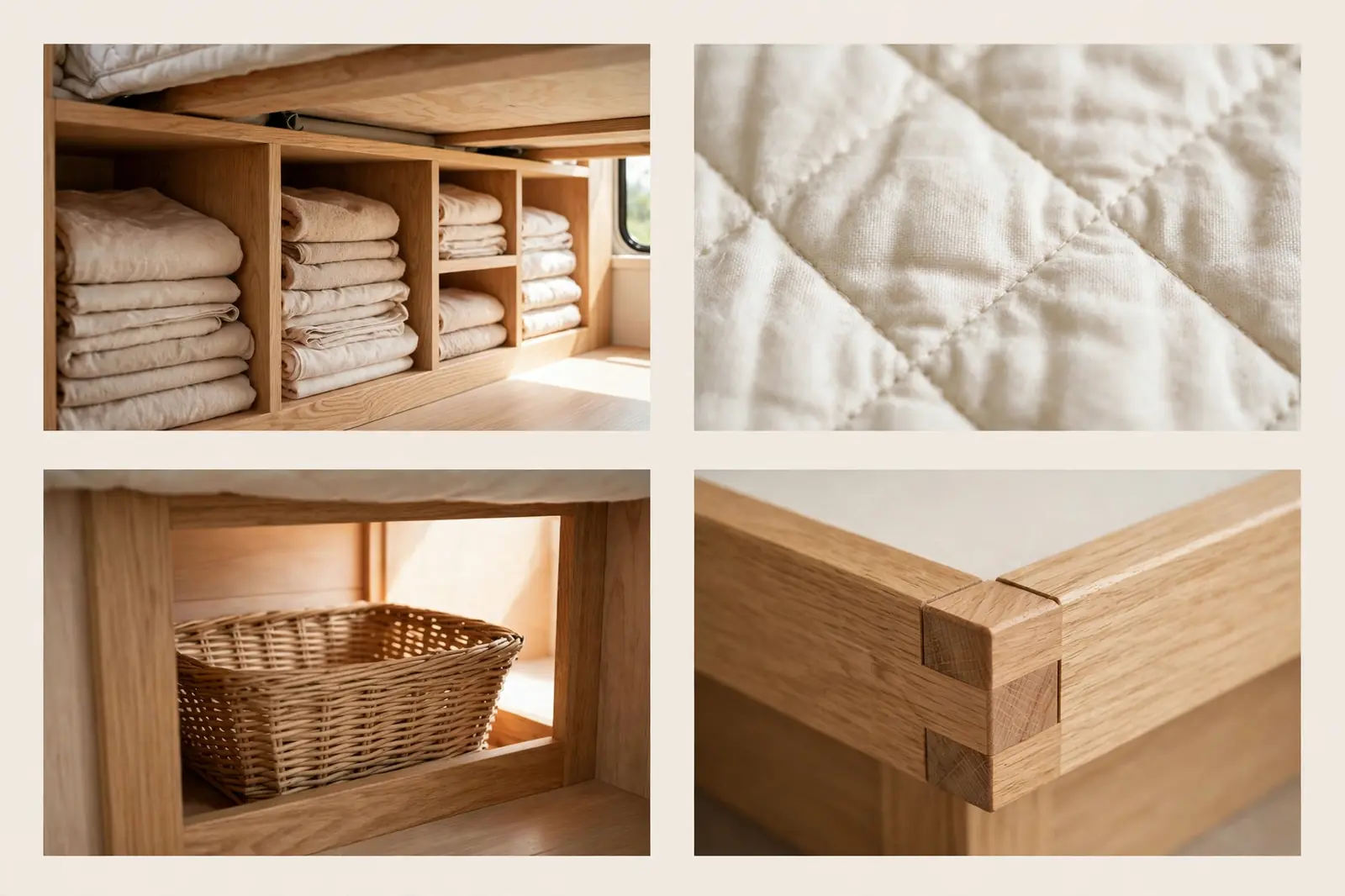
Pro tip: line the cubbies with cedar panels or moisture-absorbing liners. RVs get humid, and enclosed storage near an exterior wall can trap damp air. A small gap at the back of each cubby keeps air moving.
2. The Fold-Down Murphy Bed
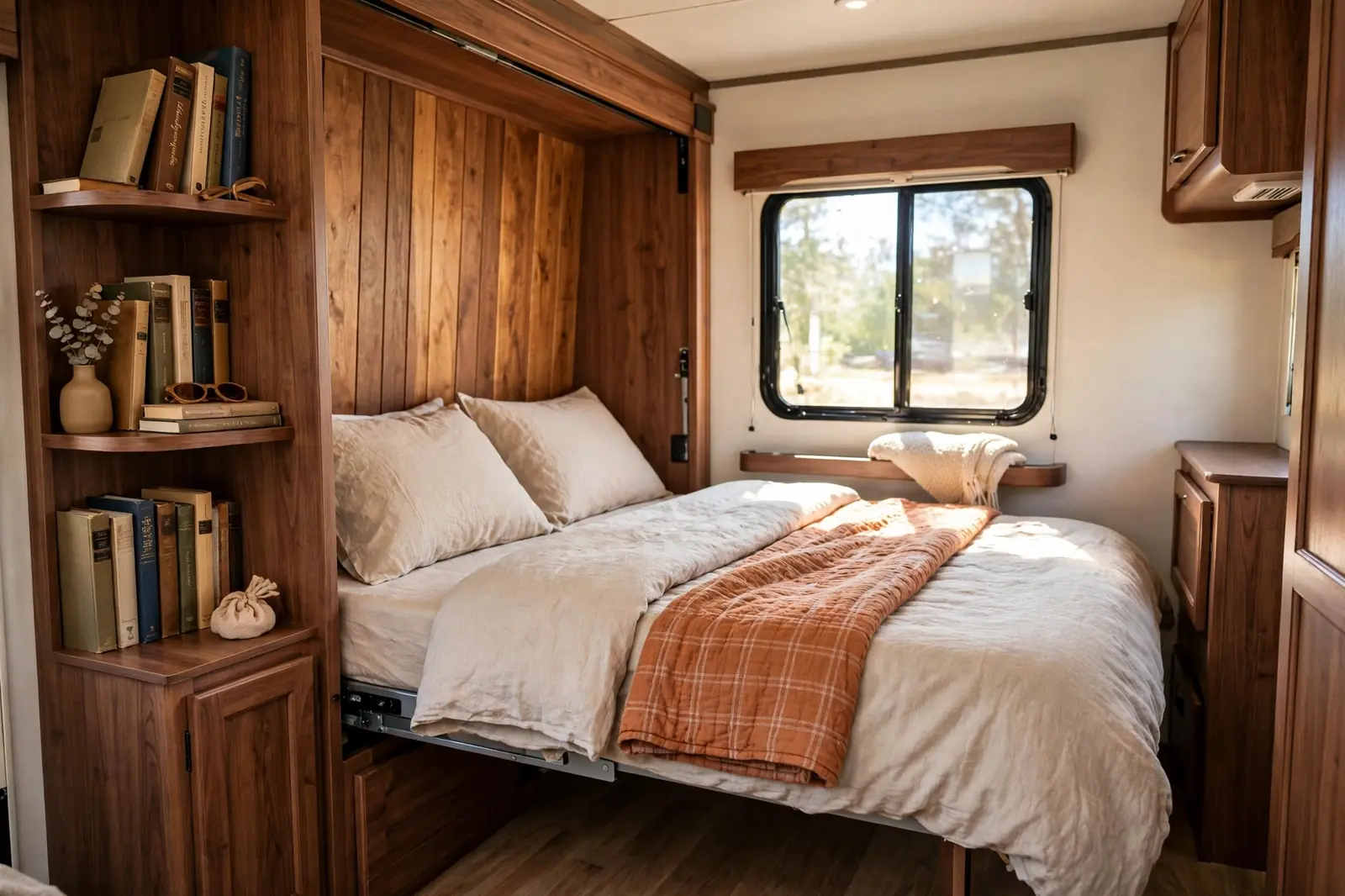
In smaller rigs, the bedroom is also the living room, the office, and the rainy-day hangout. A murphy bed that folds vertically into a wall cabinet gives you all that floor space back by day. Fold it down at night, and you have a real queen.
The trick is a quality pivot mechanism rated for the mattress weight. Cheap hardware sags and squeaks. Look for a wall-bed kit with locking legs that swing down automatically as the bed lowers. The cabinet face doubles as a bookshelf or desk when the bed is up.
Keep the bedding strapped on with elastic bed straps so the whole thing folds in one motion. No remaking the bed twice a day. Thirty seconds, up or down, and the room changes purpose completely.
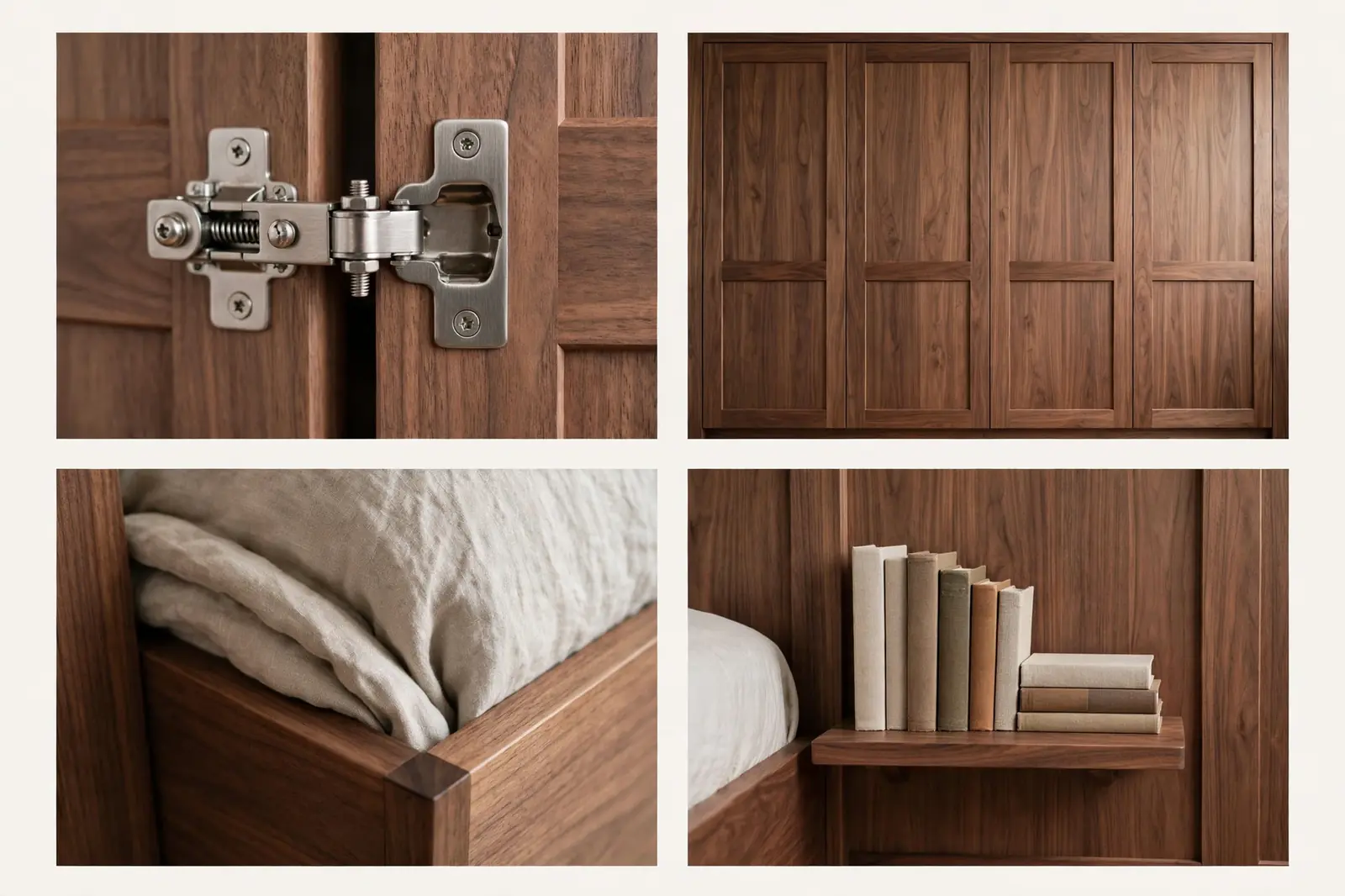
One caution: murphy beds need a solid wall to anchor to. RV walls are thin. Spread the load across multiple studs with a wide mounting plate, or anchor into the floor as well. A bed that pulls loose on a bumpy road is nobody’s idea of fun.
3. Under-Bed Lift Storage
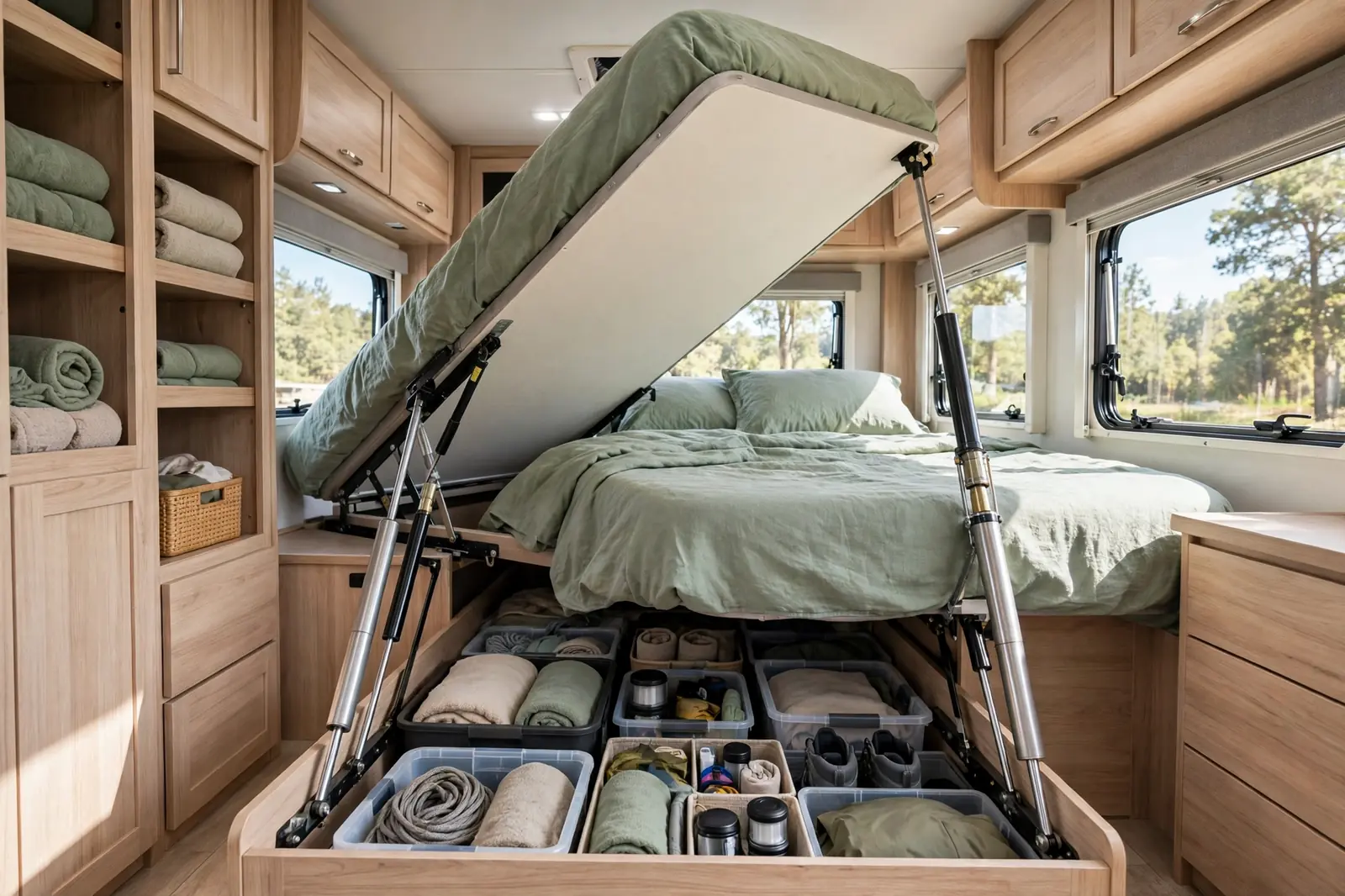
If cubbies feel too open, a hydraulic lift platform is the neater answer. The whole mattress deck rises on gas struts, revealing one big storage well. Off-season clothes, tools, spare parts, even a folding bike pump, it all disappears under the bed.
Struts come rated by weight. Weigh your mattress and platform deck first, then buy struts rated about 20 percent above that number. Too weak and the deck will not stay up. Too strong and you will fight it to close.
Add dividers or shallow bins inside the well. Without them, everything slides to one end the first time you hit the brakes. Clear bins with lids keep dust out and let you see what is where.
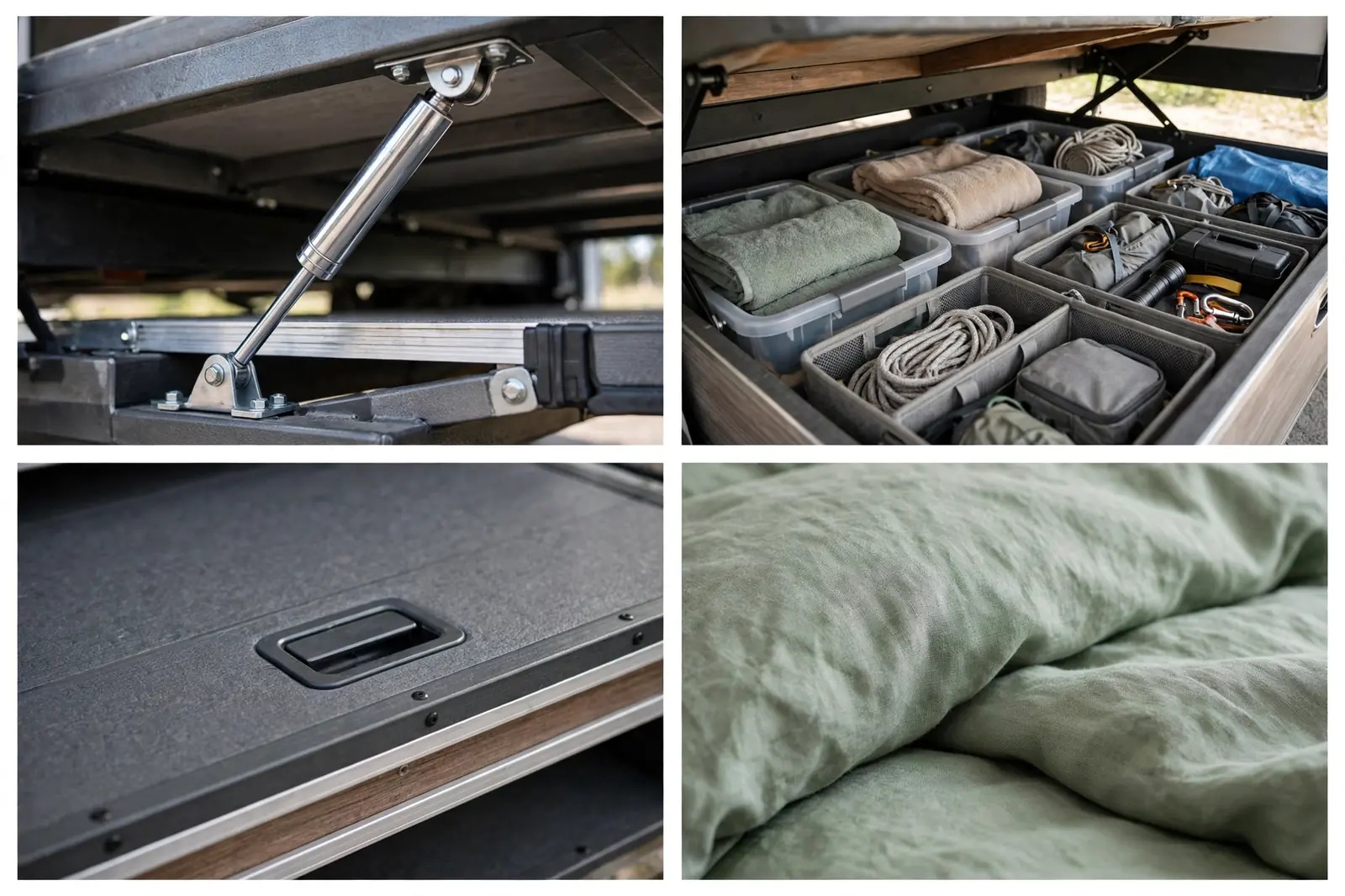
Safety note: never let kids play with the lift deck. A falling platform edge pinches hard. Choose struts with a locking position, and teach everyone in the rig to keep hands clear when it comes down.
4. Built-In Nightstands With Charging
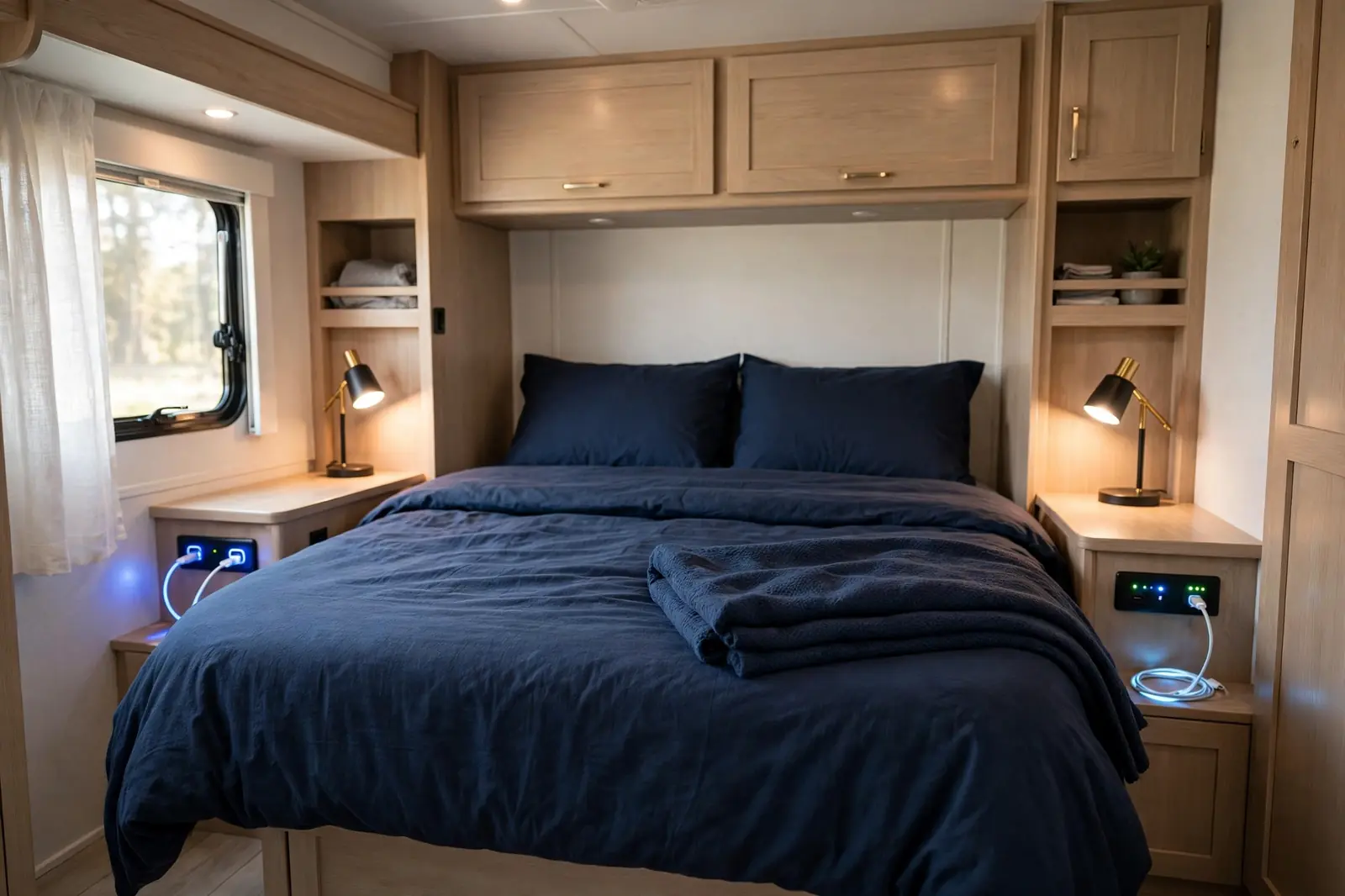
Loose nightstands slide around while you drive. Built-in ones do not. A pair of small cabinets flanking the bed, screwed to the wall framing, gives each sleeper a shelf, a drawer, and a home for the phone that does not end up under the mattress.
Wire a USB charging port into each nightstand while you build. A 12-volt dual USB outlet tucked at the back of the shelf keeps cords off the pillow and phones off the floor. Add a small reading lamp on a swing arm and the setup is complete.
Keep the nightstand tops shallow, about 8 inches deep. In an RV bedroom, every inch of width matters, and a deep nightstand steals elbow room from the person sleeping next to it.
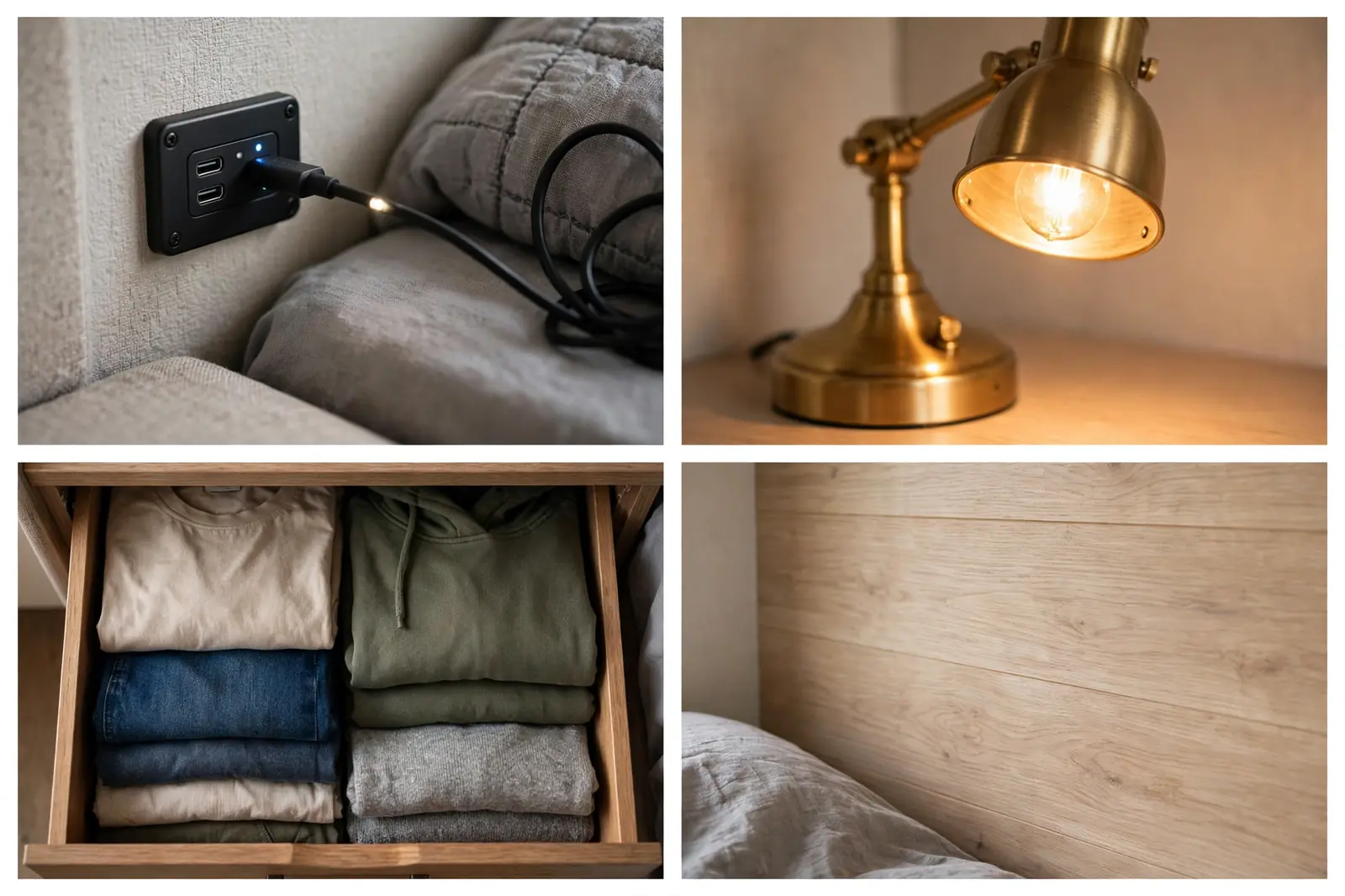
Label nothing, but keep a rule: nightstand drawers are for night things only. Glasses, book, lip balm, meds. The moment chargers and snacks move in, the drawer stops closing, and the whole point is lost.
5. The Rear Slide-Out Suite
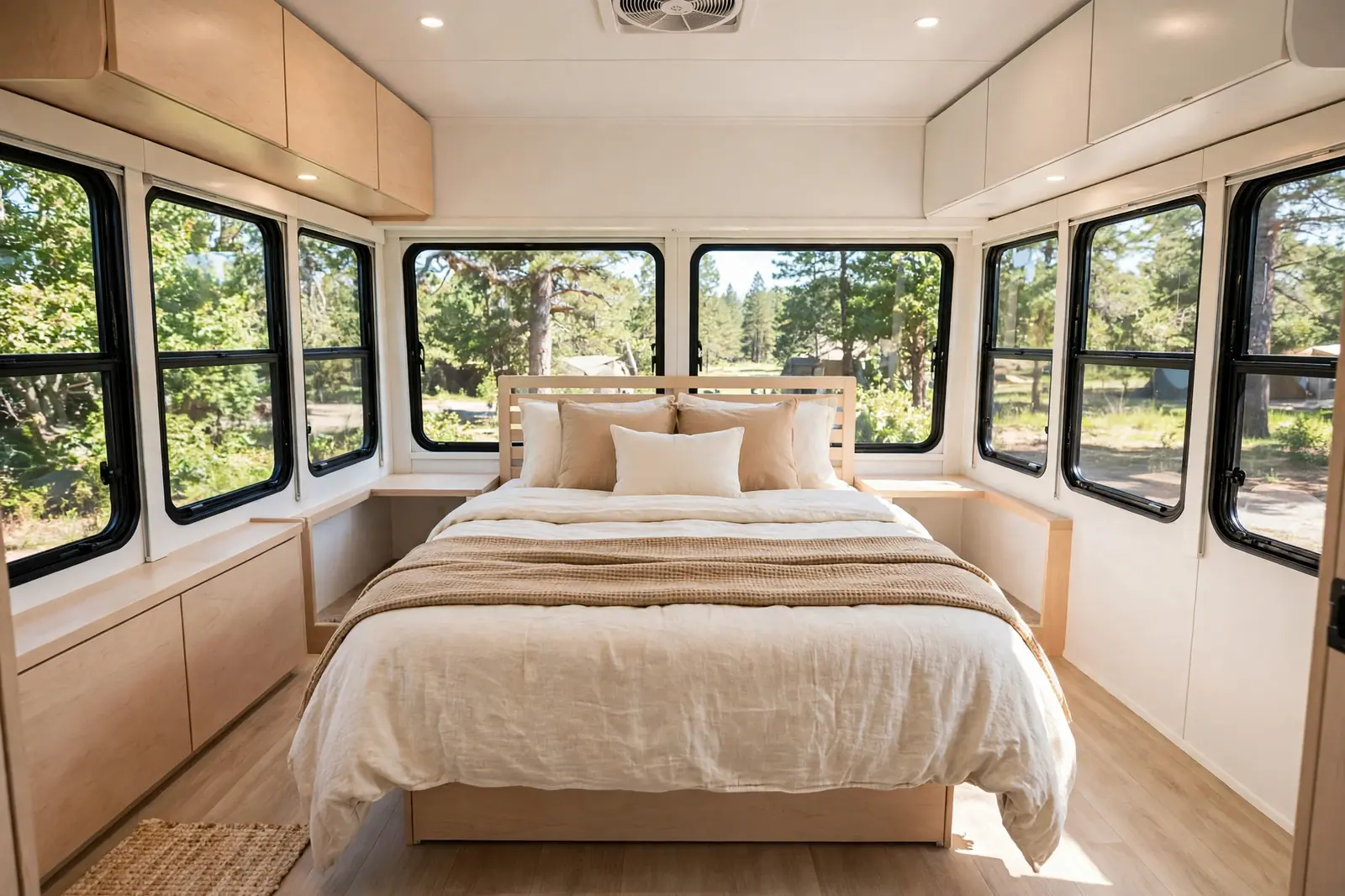
A rear slide-out changes the entire feel of an RV bedroom. With the slide extended, you get a true walk-around queen, the kind where both people can get out of bed without climbing over each other. It is the closest an RV bedroom gets to a real bedroom.
Take advantage of the windows. Slide-outs usually have glass on three sides, so keep the bedding light and let the daylight do the decorating. A simple headboard wall with two floating shelves is all the furniture this room needs.
The trade-off is setup time and seal maintenance. Keep the slide seals clean and conditioned twice a year. A gritty seal leaks, and a leaking seal ruins a mattress faster than anything else in this list.
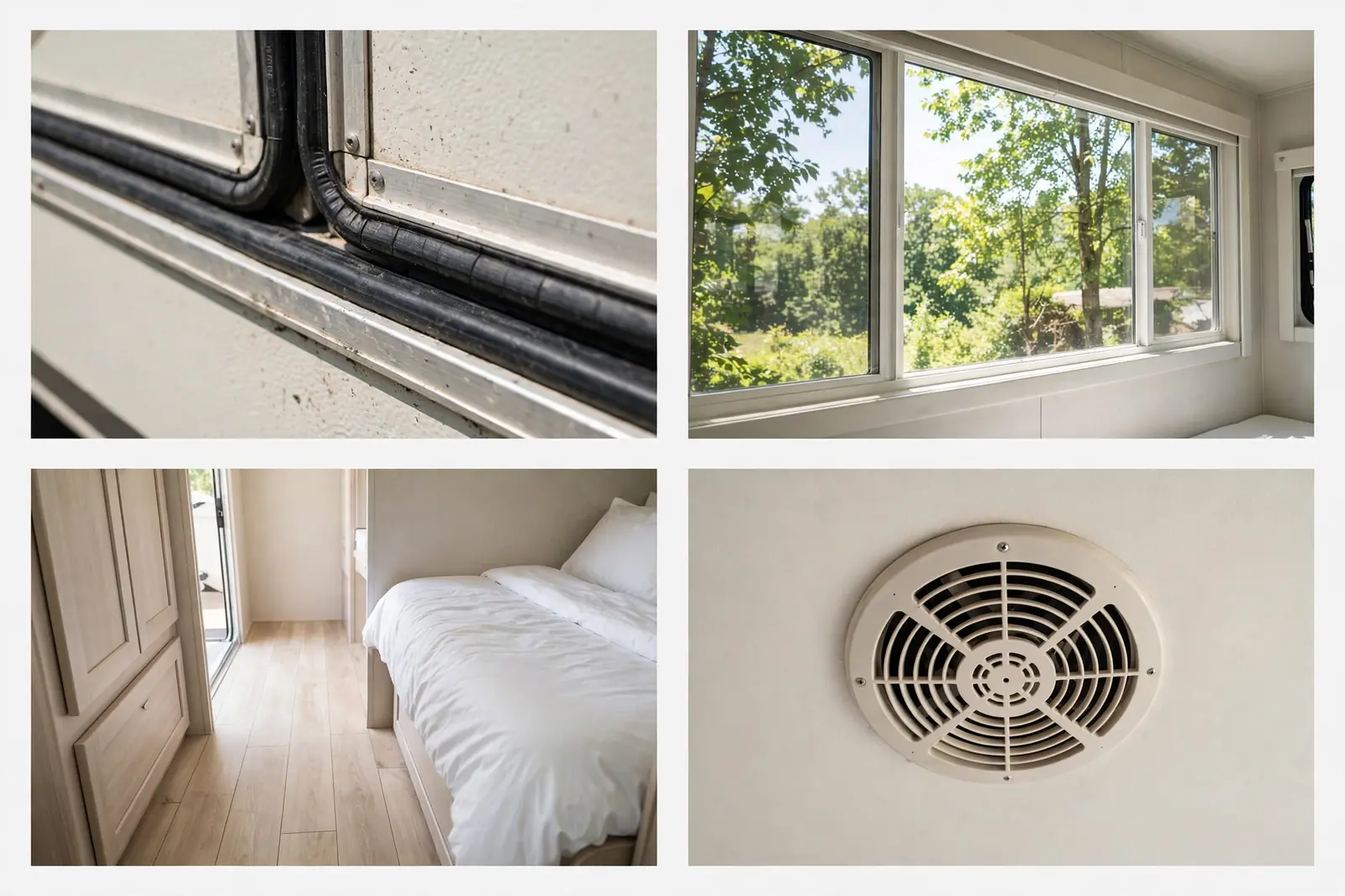
Before you buy a rig for the bedroom, lie on the bed with the slide IN. Some layouts make the bed unusable when traveling. You want to at least be able to nap on travel days without deploying anything.
6. Wardrobe Wall With Mirrored Doors
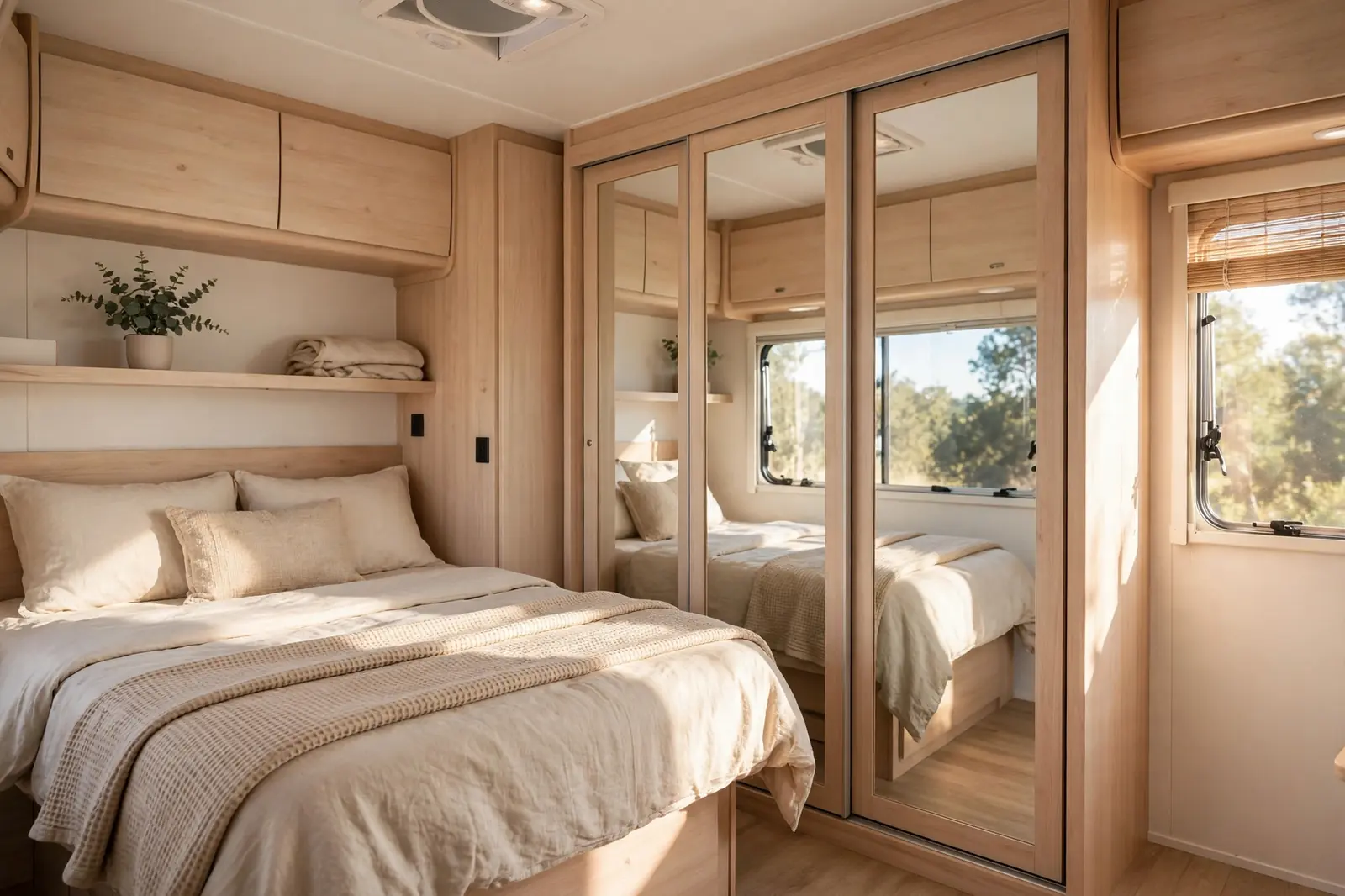
Mirrors are the oldest small-room trick there is, and they work double duty in an RV. A wardrobe wall with mirrored sliding doors stores a full wardrobe and visually doubles the bedroom. Morning light bounces around the room instead of dying in a dark corner.
Sliding doors beat hinged ones in tight spaces. Nothing swings into the bed or blocks the walkway. Use lightweight mirror panels, not glass, to keep weight down. Acrylic mirror sheets look convincing and will not shatter on a rough road.
Inside, hang double rods: short items up top, short items below, and long items on one side. Add a few baskets for the things that do not hang. A wardrobe only works if everything inside has a defined spot.
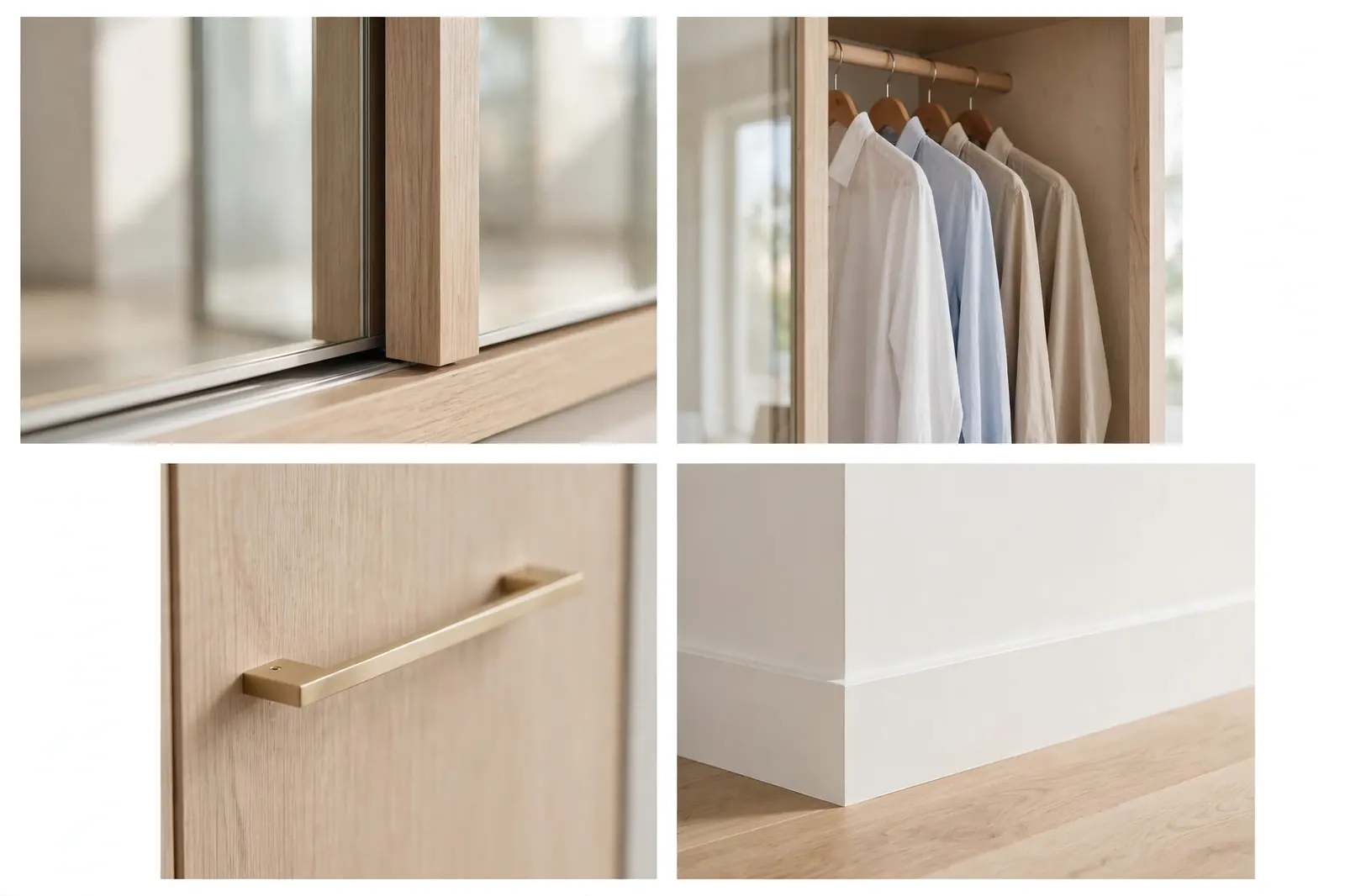
Keep one mirror door slightly ajar while driving? Do not. Sliding doors need a travel lock or a bungee. A mirror sliding open mid-turn is startling, and the noise it makes will wake the whole campground.
7. Skylight Over the Bed
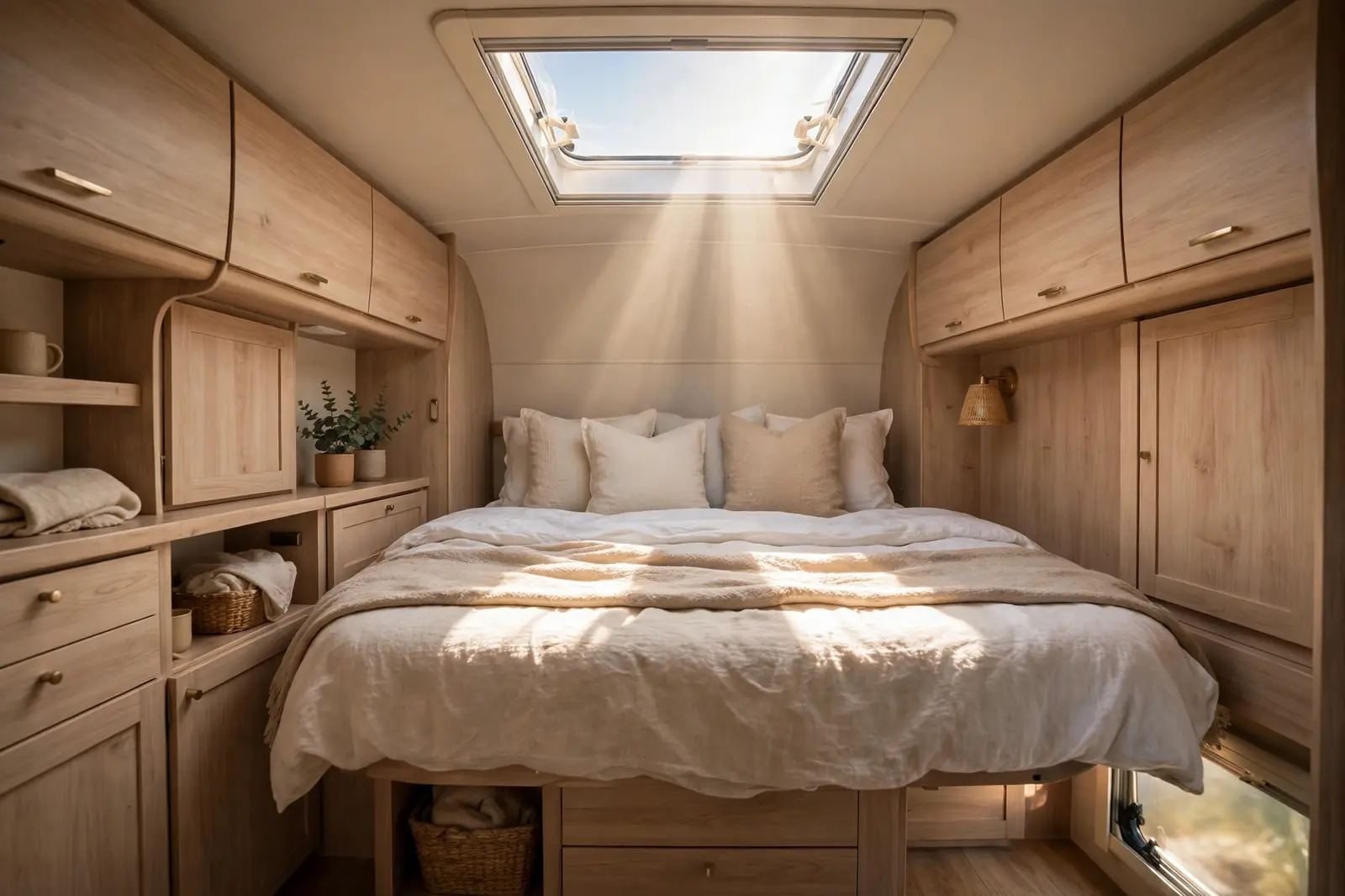
Falling asleep under the stars without leaving the bed is one of the great RV pleasures. A skylight over the bed brings in daylight all day and a view of the sky all night. It makes a small bedroom feel open in a way no paint color can.
Most RV skylights are just roof vents with clear domes. If yours is frosted, swapping to a clear dome is a cheap upgrade. Add a blackout shade on a track for mornings when the sun arrives before you are ready.
Watch the heat. A skylight is a hole in your insulation. In summer, a reflective cover during the day keeps the bedroom from turning into a greenhouse. In winter, crack it with a vent fan running to dump humid air before it condenses.

Check the sealant around the skylight every spring. Dicor lap sealant cracks with age, and a skylight drip lands directly on the bed. Five minutes with a tube of sealant beats a soggy mattress every time.
8. Reading-Nook Bench at the Foot

The foot of the bed is usually wasted space in an RV. A low bench there becomes a reading nook, a dressing seat, and a luggage landing zone all at once. Sit with your back against the pillows, feet up, book open, and the bedroom finally has a second seat.
Keep the bench the same height as the mattress top so it reads as one long surface. A thick cushion in a washable cover handles dirty jeans and muddy dog paws. Underneath, it is more hidden storage for the things you use weekly, not daily.
If the bench sits under a window, you get the best reading light in the rig for free. Morning coffee tastes better there than anywhere else in the RV. This is a small luxury that gets used every single day.
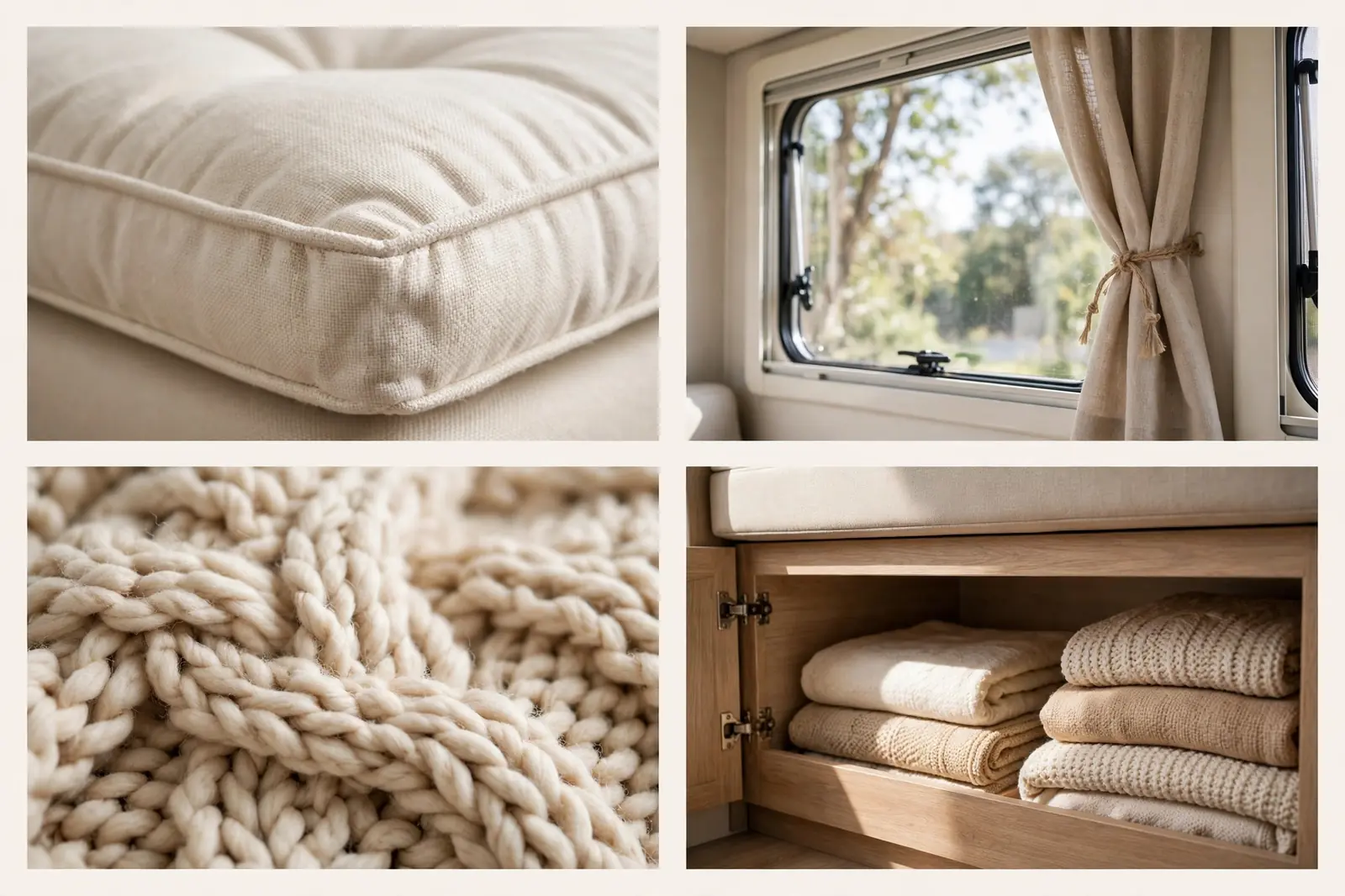
Measure twice: the bench plus the bed must still leave a walkway to the bathroom. In most RVs that means a bench no deeper than 16 inches. Any deeper and someone is shimmying sideways at 2 a.m.
Mattress thickness vs. slide clearance
In slide-out bedrooms, stack height matters. Measure with the slide closed before buying a thick mattress or topper.
9. The Convertible Daybed Lounge

Some days the bedroom is the only quiet room in the rig. Styling the queen as a daybed, with back cushions stacked against the wall, turns it into a lounge by day and a bed by night. It is the same trick studio apartments have used forever.
The key is a firm mattress edge and structured back pillows. Bolsters and large square cushions in a washable fabric hold their shape when leaned on. A throw across the middle hides the sleeping side and makes it look intentional, not like an unmade bed.
Add a small tray table that hooks over the bed edge. It holds a laptop, a coffee, a book. Suddenly the bedroom is a home office with a door that closes, which is priceless when the rest of the rig is chaos.

Keep the daytime pillows to five or fewer. Every extra cushion is one more thing to stack on the floor at bedtime. In an RV, pillow math is real math.
10. Curved Ceiling With Cove Lighting
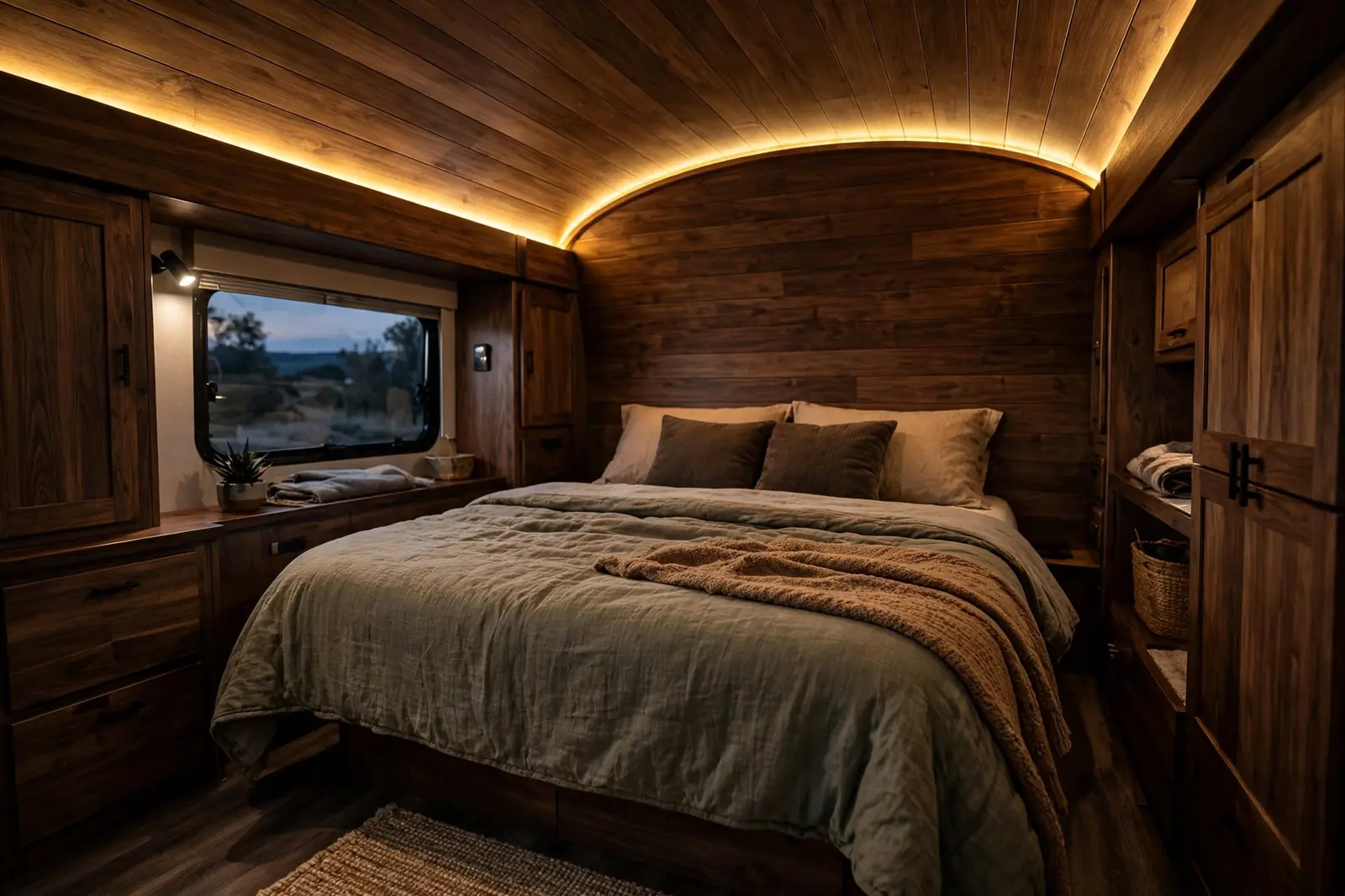
RV ceilings are usually flat, white, and forgettable. A curved wood ceiling with hidden LED cove lighting makes the bedroom feel like a boutique hotel cabin. The warm glow washes the walls and flatters everything, including tired travelers.
This is easier than it sounds. Thin bendable plywood over the existing ceiling, with an LED strip tucked behind a small valance where the curve meets the wall. A dimmer switch lets you go from bright packing light to a low evening glow.
Warm white LEDs, around 2700K, are the move. Cool white makes an RV bedroom feel like a clinic. The whole project can run off the 12-volt system, so it works off-grid without touching the inverter.

Secure every panel with screws into framing, not just adhesive. Heat and vibration loosen glue over time. A ceiling panel that drops at 3 a.m. on a forest road is a story you only want to hear, not live.
11. Hanging Organizers and Wall Pockets
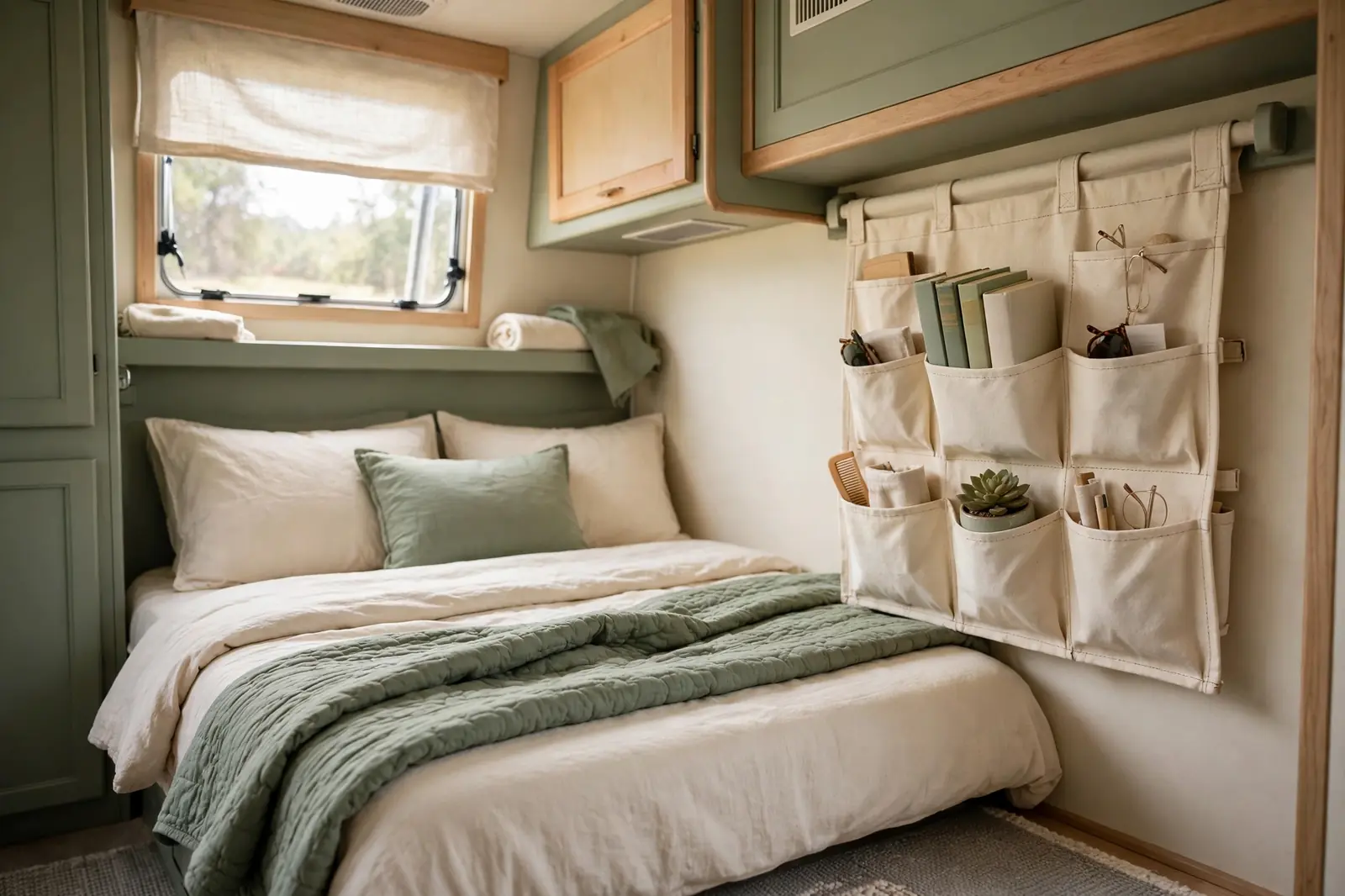
When there is no room for a nightstand, the wall becomes the nightstand. Canvas hanging organizers and stitched wall pockets hold books, glasses, chargers, and the remote without a single piece of furniture. Everything is visible and grabbable in the dark.
Hang them on sturdy hooks screwed into wall studs or on an over-door style bar mounted to the bed frame. The canvas kind with reinforced grommets lasts years. Avoid the flimsy clear vinyl ones, which crack and yellow.
Give each pocket a job: top row for glasses and meds, middle for the book and phone, bottom for the things that migrate. When every pocket has a purpose, the organizer stays tidy instead of becoming a junk drawer on the wall.
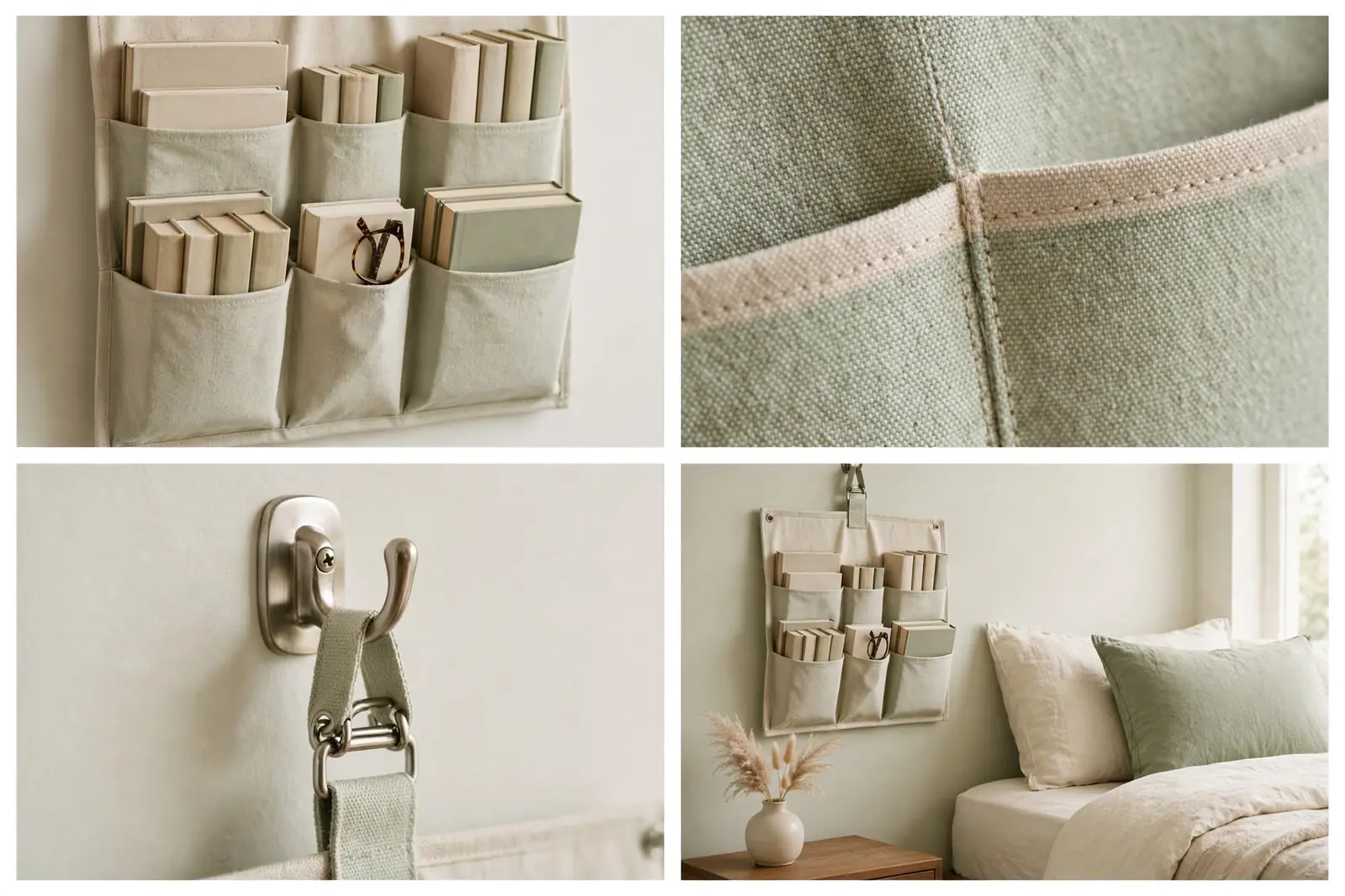
Wash the canvas organizers once a season. They collect dust and sunscreen and campfire smell. Most are machine washable, and they look brand new after a wash.
12. Curtain-Divided Privacy Zone
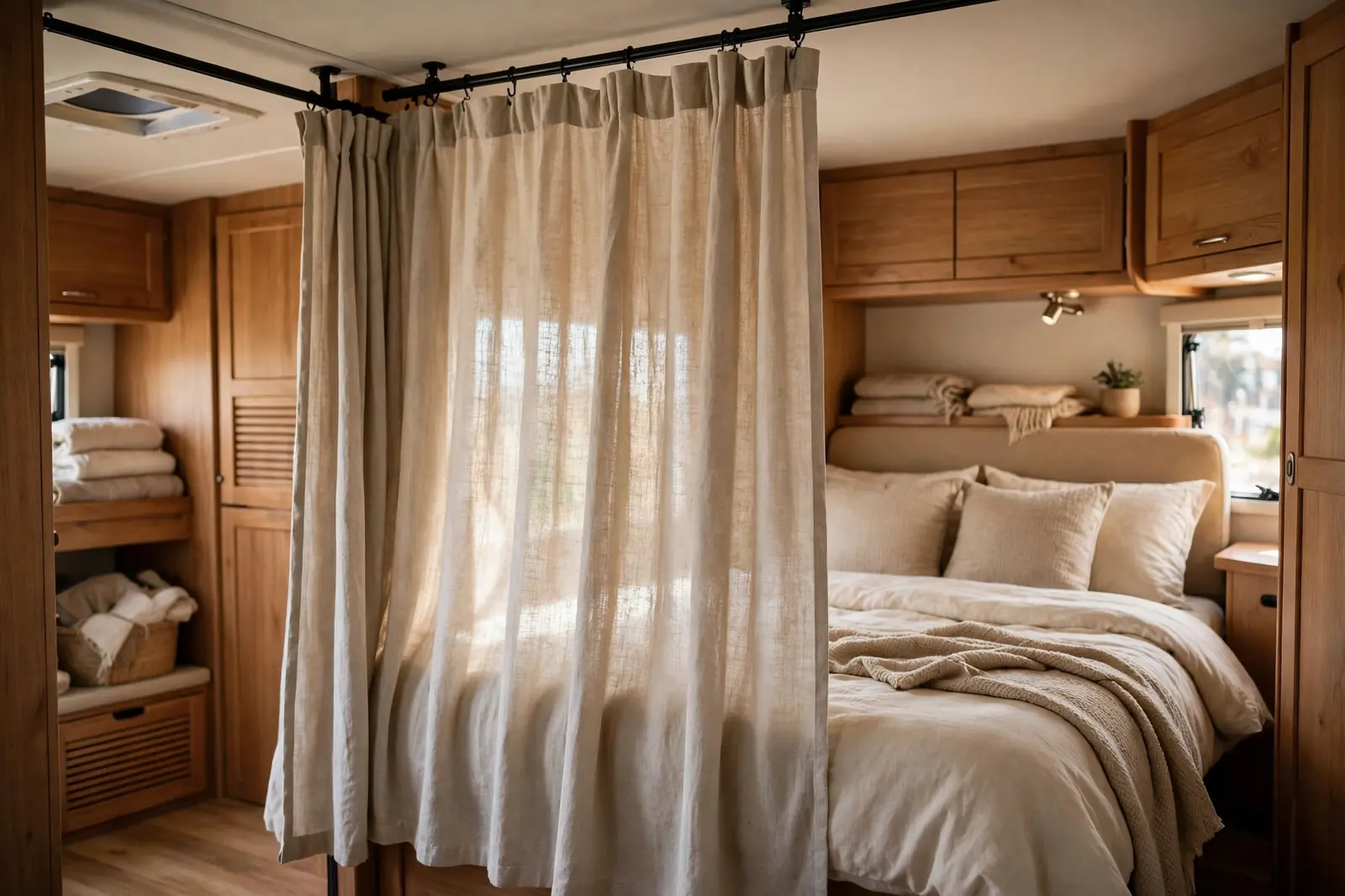
In an open-plan rig, the bedroom is a concept, not a room. A ceiling-mounted curtain track with a linen curtain creates a real divider. Pull it closed and the sleeping area feels private. Open it and the whole rig breathes again.
Use a flexible ceiling track that follows the ceiling curve, mounted with screws into framing every 8 inches. Linen or a linen blend hangs beautifully and lets some light through, so the bedroom never feels like a cave. Blackout fabric is an option for light sleepers.
The curtain also muffles sound more than you would expect. It will not silence a snoring partner or a late movie, but it takes the edge off, and the psychological effect of a closed curtain is half the battle.
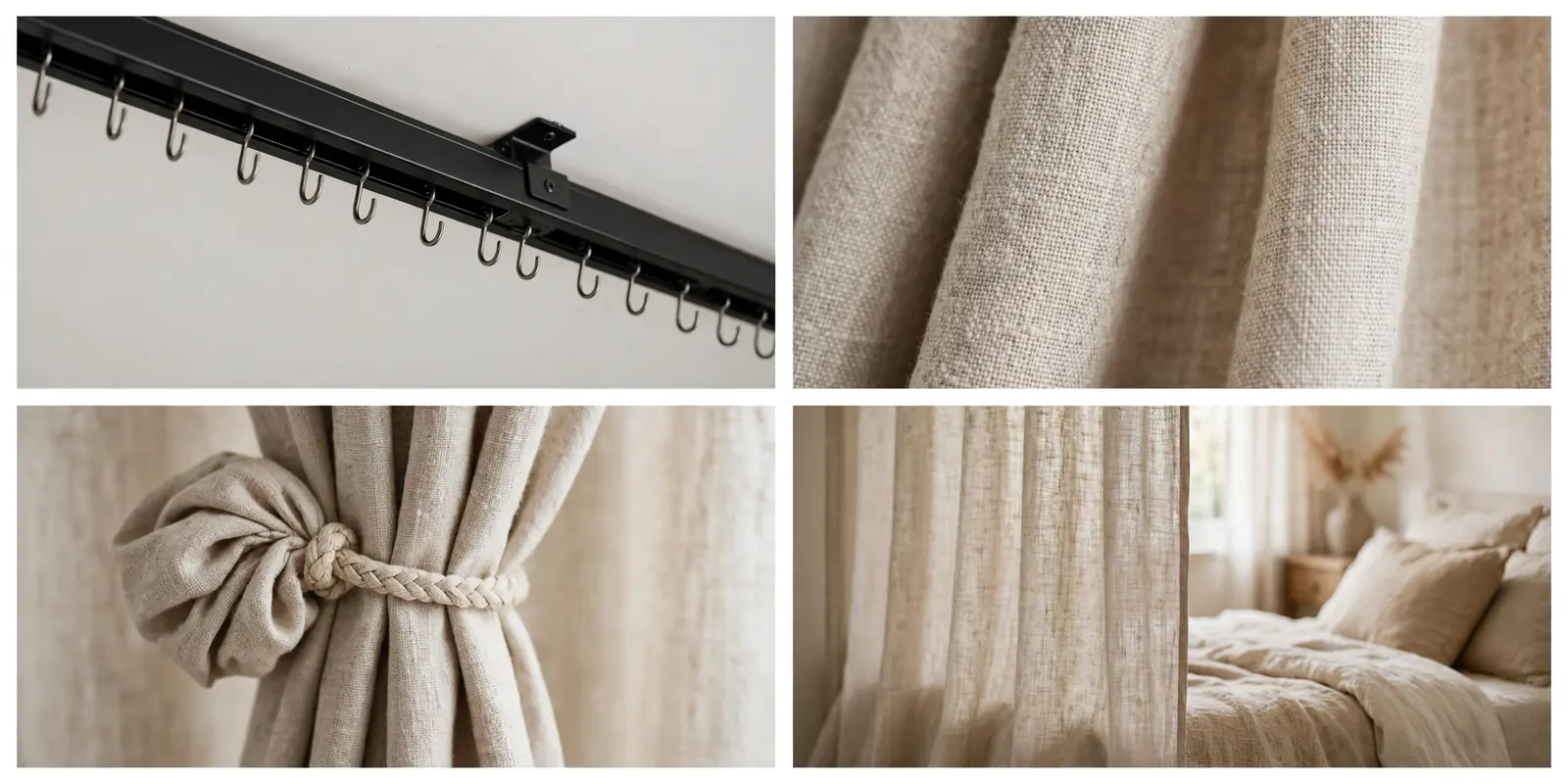
Tie the curtain back with a wide fabric tie during travel days. A loose curtain swinging in a moving RV tangles, snags, and eventually tears. Thirty seconds of tying saves a forty-dollar curtain.
13. Window Seat End With Storage
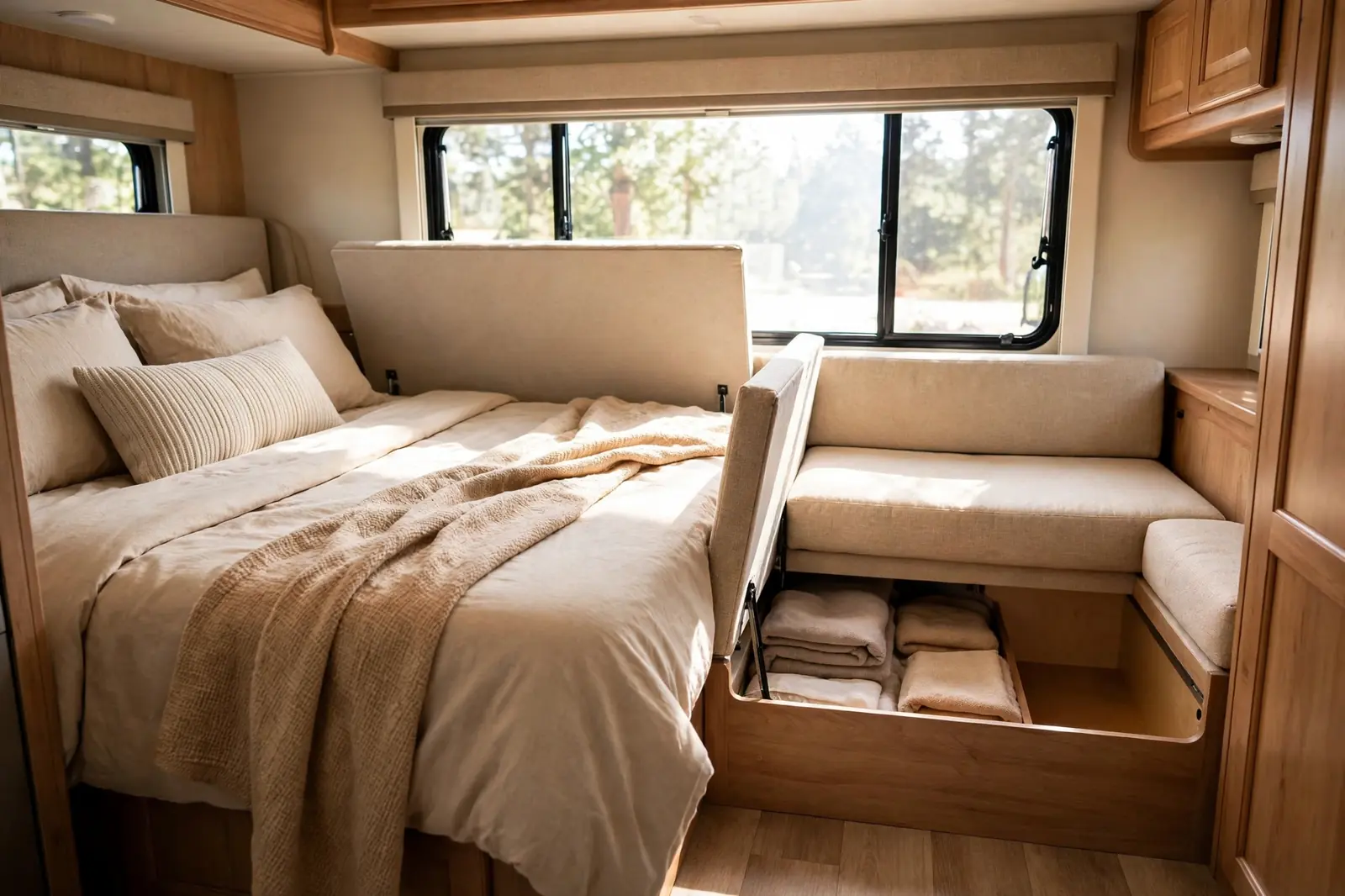
A window seat at the foot of the bed is the reading-nook bench taken one step further. Built under the window, it catches the best light in the room and the lift-top lid reveals deep storage for bulky items like extra blankets and winter coats.
Build it as a simple box with a hinged lid and a cushion on top. Piano hinges run the full length and never sag. Gas struts hold the lid open while you dig around inside, which matters when the lid is heavy with a thick cushion.
This is also the best seat in the house for putting on shoes. Sit, lace up, and you are out the door. Small thing, but when you do it twice a day for months, it earns its keep.
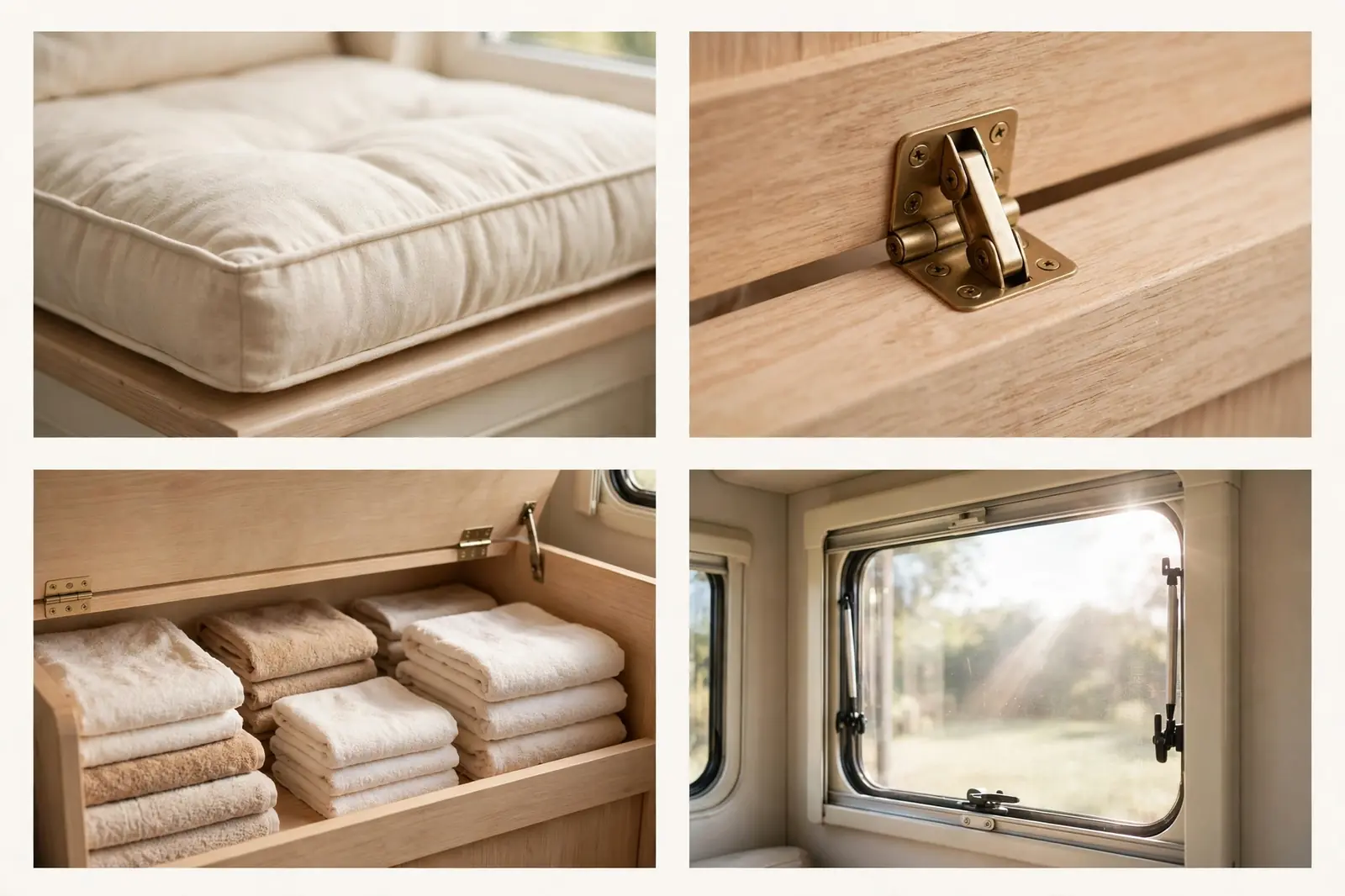
Ventilate the storage box. Drill a few discreet holes in the back panel or leave a finger gap under the lid. Sealed boxes in RVs grow musty, and musty blankets are a miserable discovery.
14. Articulating Reading Sconces
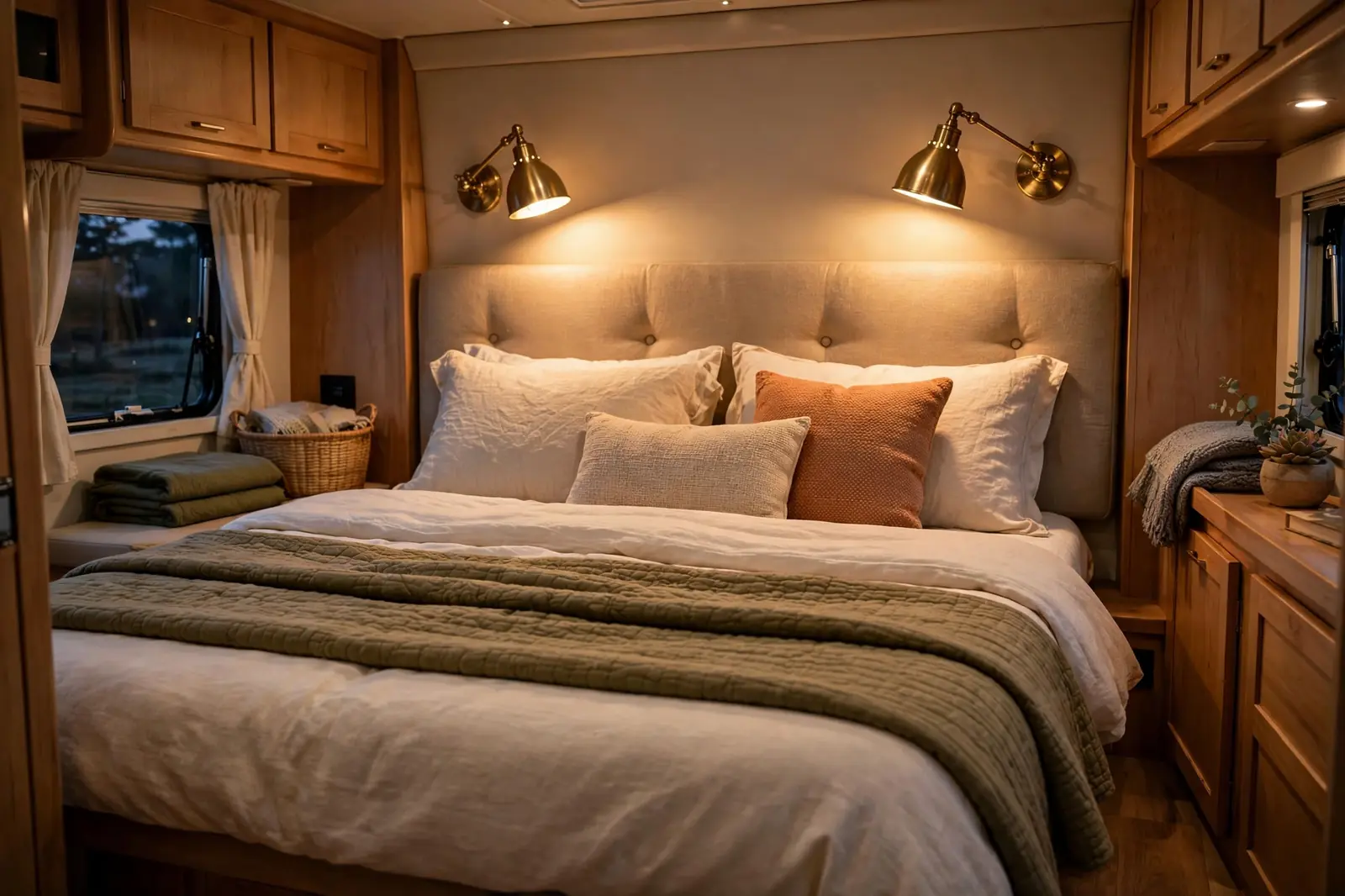
Overhead RV lights are terrible for reading. They glare, they light the whole room, and they wake the person next to you. A pair of articulating brass sconces above the headboard puts a pool of warm light exactly on your book and nowhere else.
Articulating arms swing and rotate, so each sleeper aims their own light. Look for 12-volt models with a built-in switch on the shade. Warm white bulbs, and keep a spare pair in the parts bin, because RV vibrations kill cheap bulbs fast.
Mount them at about shoulder height when sitting up in bed. Too high and the light spills everywhere. Too low and the shade blocks your own book. Test the position by sitting up and holding the shade before you drill.

Wire each sconce to its own switch so one reader does not light up the whole headboard wall. Independent control is the difference between a reading light and a room light.
15. Zoned Comfort Layering

Two people rarely agree on sleep temperature. Zoned layering solves it without a fight: a shared fitted sheet and base blanket, then individual top layers in different weights. One side gets the heavy quilt, the other gets a light throw. Everybody wins.
A low-wattage heated mattress pad is the secret weapon for cold nights. It draws far less power than heating the whole rig, and pre-warming the bed for twenty minutes before sleep is pure luxury. Look for dual-zone models so each side sets its own heat.
Layer from thin to thick: sheet, light blanket, then the heavier quilt on top. Trapped air between layers insulates better than one thick blanket. It is the same principle as dressing in layers for a hike.

Run the heated pad on a timer, not all night. Most people overheat after the first sleep cycle. An hour of pre-heat plus the first hour of sleep is the sweet spot, and it saves battery.
16. Split His-and-Hers Closet

Sharing one tiny RV closet with a partner is a fast track to arguments. Splitting the storage, a wardrobe on each side of the bed with a drawer bank between, gives each person their own zone. No more digging through someone else’s shirts to find your own.
Flank the bed with two tall wardrobes and bridge them with overhead cabinets or a shelf. The drawers between hold the shared stuff: socks, underwear, the first-aid kit. Each side gets a small mirror on the wardrobe door.
Keep the wardrobes shallow, about 20 inches deep. Standard hangers fit fine, and shallow cabinets keep the bedroom feeling open. Deep wardrobes in an RV just become caves where clothes go to wrinkle.

Agree on the split before you load a single hanger. Write names on painter’s tape inside each wardrobe for the first month. It sounds silly. It prevents exactly the argument you are imagining.
17. Overhead Lift Cabinets

The wall above the bed is prime real estate that most RVs waste. Overhead cabinets with flip-up doors store the light, bulky stuff: spare pillows, off-season bedding, the beach towels. Flip-up doors stay open on their own and never bonk a forehead the way drop-down doors do.
Keep the cabinets shallow, 12 inches max, so they do not loom over the pillows. An open display shelf at one end breaks up the wall of doors and holds a few pretty things: baskets, a small plant, the books you are actually reading.
Add an LED strip under the cabinets. It washes the headboard wall with soft light and makes the bedroom feel finished. Under-cabinet lighting is the cheapest luxury in this entire list.

Respect the weight limit. Overhead cabinets are rated for light loads. Pillows and blankets, yes. The toolbox and the cast iron skillet, absolutely not. Heavy things up high shift the center of gravity and strain the mounts.
The 5-minute humidity check (do this weekly)
Two sleeping adults release about a pint of moisture overnight. In a small RV bedroom, that water has to go somewhere. Vent it out.
A comfortable RV queen bed is not about one big purchase. It is about a dozen small decisions that stack: storage where the dead space was, light where you read, air that stays dry, and bedding that fits the actual mattress.
Pick the idea that fixes your worst annoyance and do it this weekend. Then pick the next one. By the third upgrade, you will wonder why you ever thought a short queen could not sleep like a real bed.
Sleep well out there. The road is better rested.