21+ Black Exterior Tiny Homes That Look Way More Expensive Than They Are

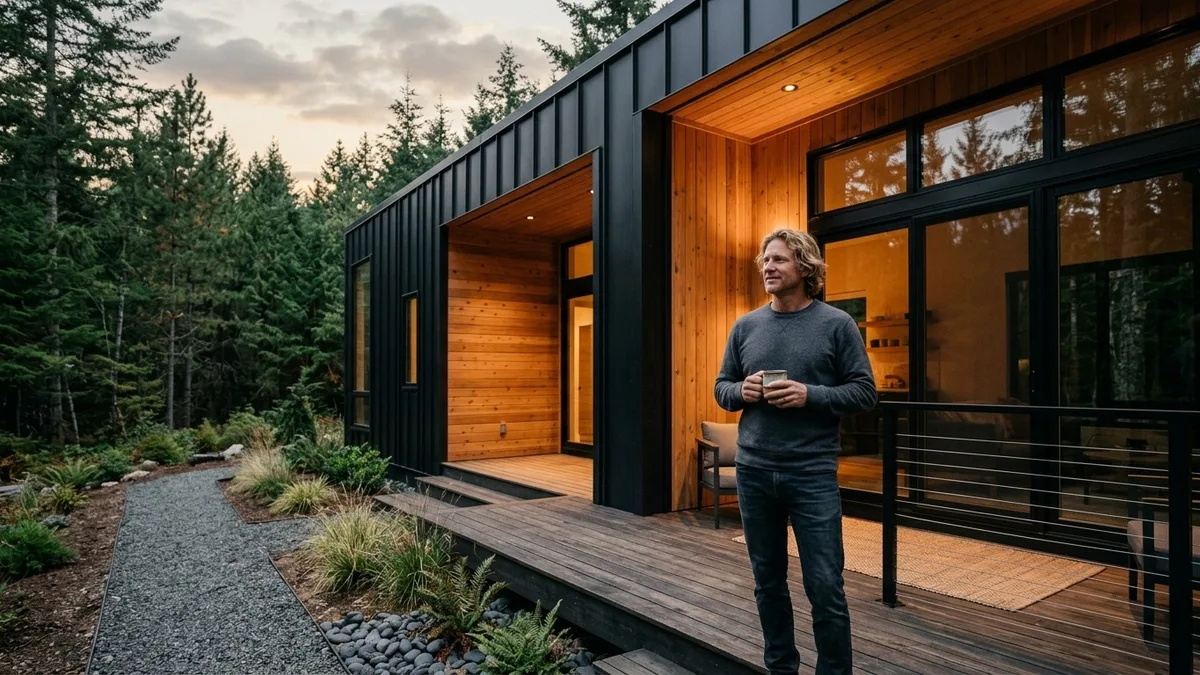
Your tiny home exterior can look like a custom architectural build when you use the right dark finish.
Dark siding absorbs imperfections and creates a sleek silhouette that elevates small footprints instantly.
Quick Tips Before You Start
Test Samples First
Paint or stain a large board and view it in direct sun before committing.
Manage Heat Gain
Select high-reflectance dark coatings to keep indoor temperatures comfortable.
Add Natural Wood
Pair dark walls with raw cedar or oak trim to prevent a stark look.
1. Charred Shou Sugi Ban Wood Siding
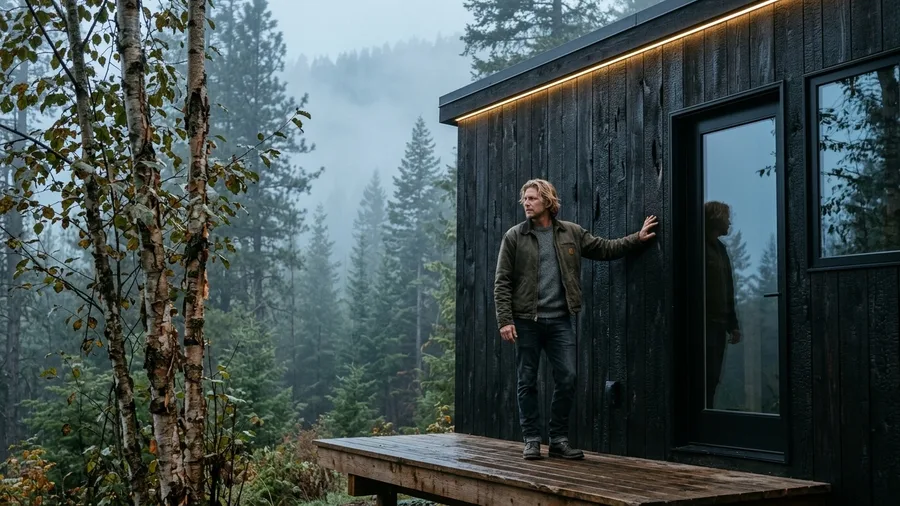
Traditional Japanese burning techniques create an incredible textured finish.
The deep charcoal grain catches morning light while gracefully hiding weathering and minor surface imperfections through every changing season. This ancient preservation treatment transforms standard timber into a resilient architectural shield that actually develops richer character as the years pass.
This bold application works best for off-grid builds wanting rugged natural durability without high maintenance requirements.
💡 Tip: Re-seal charred wood every three years to maintain its deep luster.
💡 PRO TIP
Maximize Visual Contrast
Pair dark siding with crisp white window frames to define the architectural lines.
2. Matte Black Standing Seam Metal
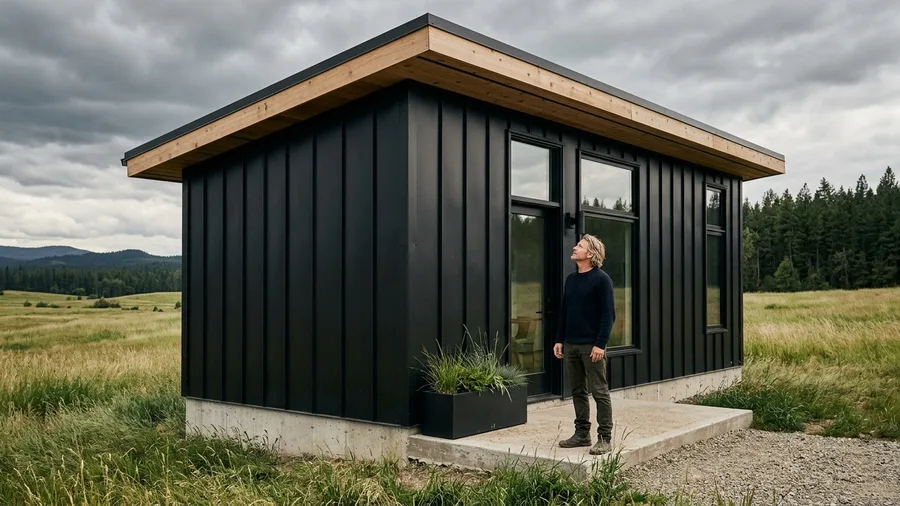
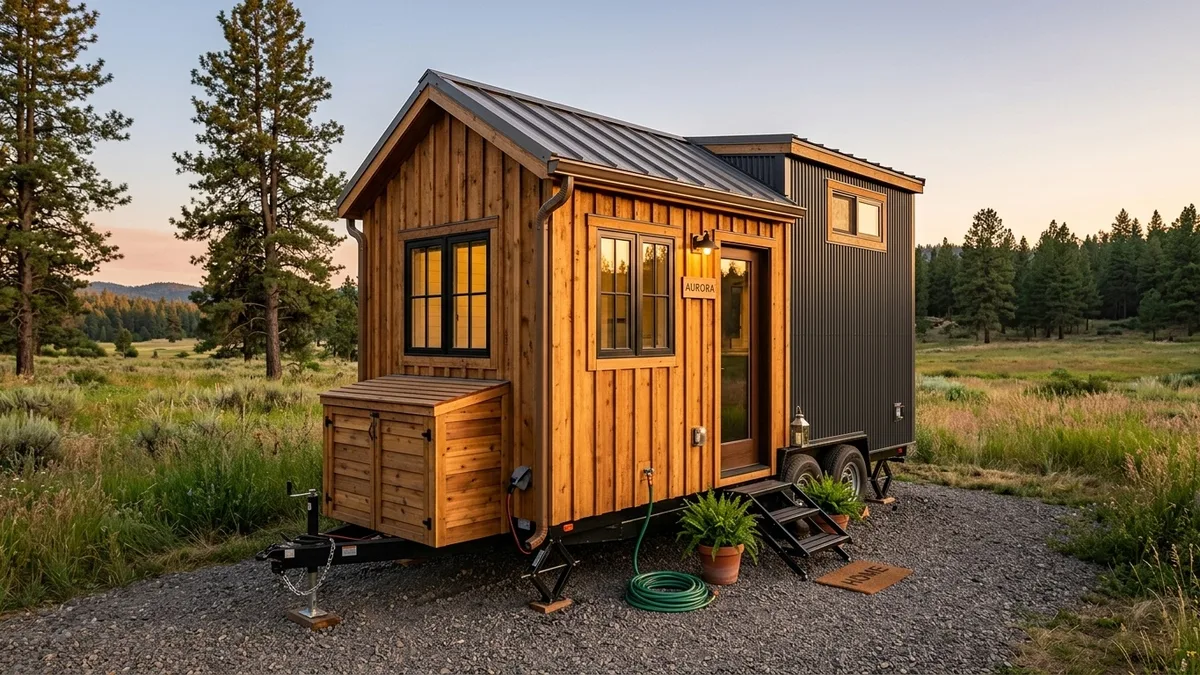
Most compact home exteriors fail because horizontal panels chop up the visual line and stunt the structure.
Sleek vertical lines draw the eye upward and make compact structures feel taller, transforming a boxy footprint into a soaring architectural statement.
Matte finishes absorb glare, giving the home a grounded, expensive architectural presence that looks custom-built rather than prefabricated.
This approach suits modern rural retreats and tight urban infill lots alike, pairing effortlessly with untreated cedar soffits or raw concrete foundations.
Siding Material — At a Glance
🔩 Durability
High (50+ years)
💸 Cost Tier
Mid-High
🧽 Maintenance
Low
Pro Choice
Standing seam metal offers superior weather resistance for dark exteriors.
3. Dark Stained Board and Batten
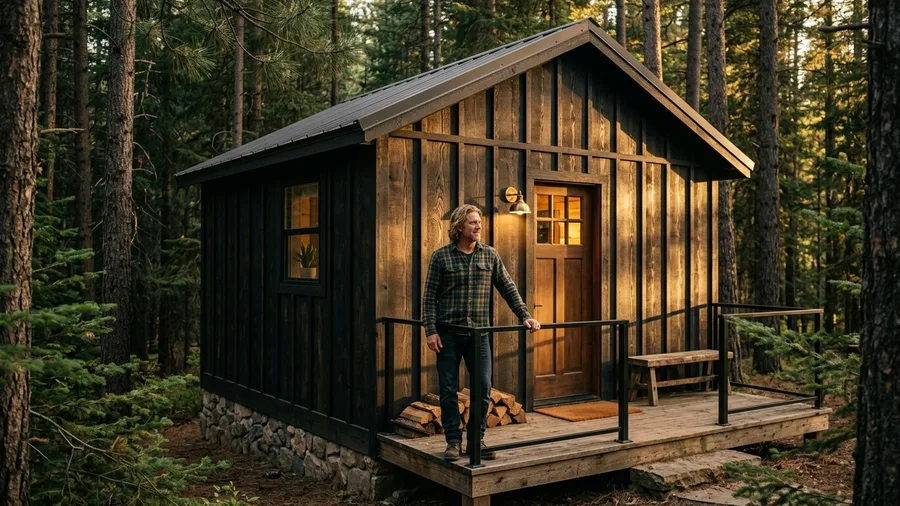
Most dark exterior builds fall flat because the flat siding absorbs all the natural daylight without giving your eye any texture to latch onto.
Vertical battens create rhythmic shadows that add dimension to flat walls, catching the shifting sun from morning to dusk.
Deep ink stain lets wood texture show through while delivering maximum saturation, keeping the material looking rich rather than painted over.
It fits beautifully into wooded lots and mountain settings, echoing the vertical lines of surrounding pine trunks.
⚠️ COMMON MISTAKE
Avoid Glossy Finishes
High-gloss black paints highlight every warp and wave in exterior framing.
4. Minimalist Black Shipping Container
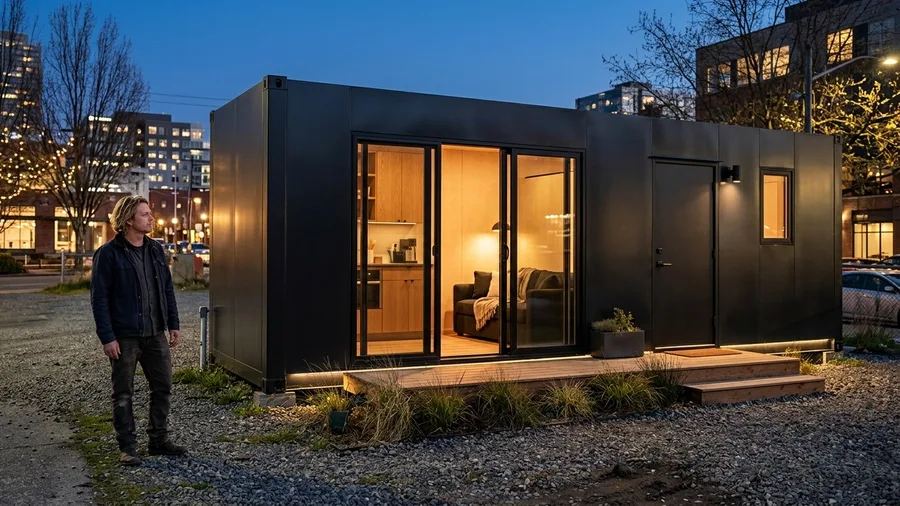
Industrial corrugation disappears under a unified coat of dark satin paint.
Clean geometry turns an industrial box into a sleek modernist sculpture. This approach completely reframes the raw steel structure by absorbing harsh shadows and highlighting sharp architectural lines against natural surroundings. A low-profile matte black entry door paired with flush-mount charcoal window frames anchors the exterior aesthetic without breaking the streamlined facade.
This option excels for budget-conscious builders who want high visual impact.
Best For Container Conversions
5. Black Corrugated Aluminum Panels
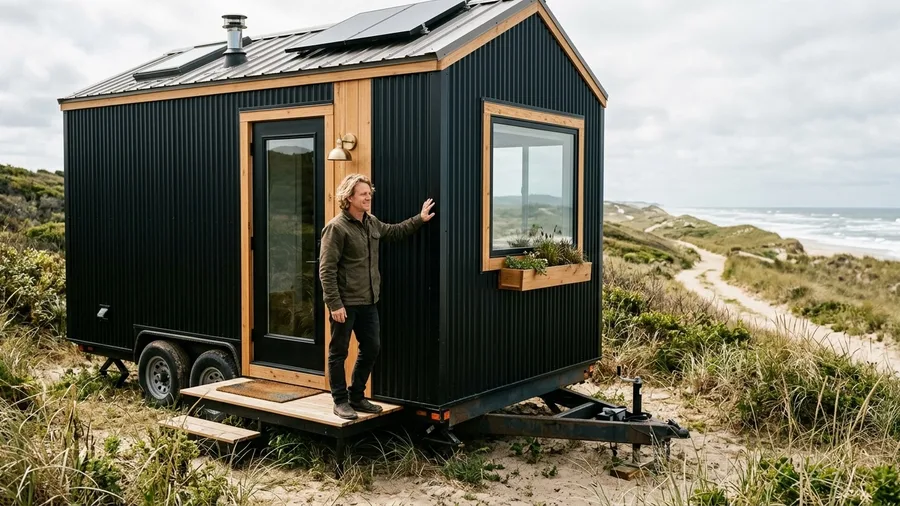
The aluminum siding is doing all the heavy lifting here, turning a simple transportable footprint into a sharp modern silhouette.
Lightweight panels install quickly and provide a crisp industrial edge that completely shifts the tiny home away from a generic trailer look into custom architecture.
The low-profile ribs catch daylight differently throughout the day, creating subtle shadow lines that keep the matte black surface from looking flat.
This approach is great for mobile tiny houses on wheels where weight is a primary factor.
Pair these corrugated metal walls with untreated cedar trim and a low-voltage brass sconce to soften the metallic finish right beside the entryway.
Maintenance Effort Spectrum
Comparing upkeep needs across common dark exterior cladding types
- Metal Siding: Minimal rinsing required annually.
- Fiber Cement: Repaint every 10 to 15 years.
- Natural Wood: Frequent re-staining and sealing.
6. Matte Black Fiber Cement Panels
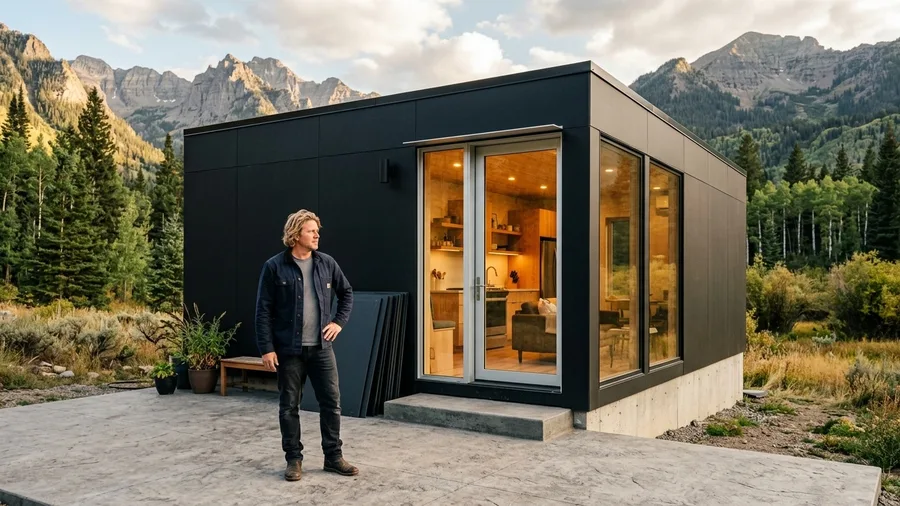
Most tiny home exteriors look choppy because people use standard siding sizes that create too many visual seams.
Large-format matte black fiber cement panels give a seamless, high-end commercial aesthetic that instantly makes a small footprint look architectural and expensive.
The expansive dark panels anchor the structure against the landscape, while fire-resistant properties offer essential peace of mind in wildfire-prone regions.
This clean-lined approach is ideal for permanent foundation tiny homes with contemporary styling where durability and sleek geometry matter most.
🌱 GROWING TIP
Keep Edges Clean
Use matching dark metal trim pieces around corners for a seamless look.
7. Charcoal Horizontal Lap Siding
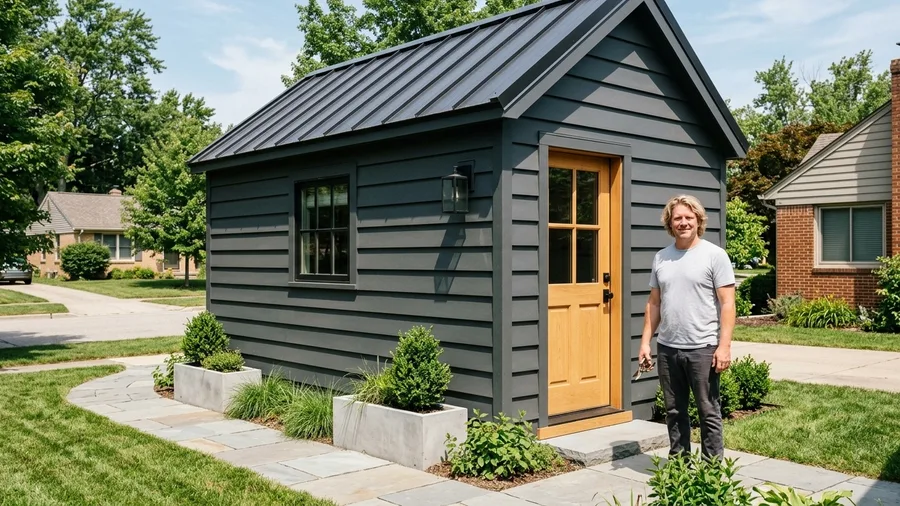
Traditional lap siding gets a modern update in deep charcoal gray.
Most exterior makeovers fail because light washes out flat colors, turning dark paint into a muddy gray blob by noon.
Shadow lines between boards create subtle depth under bright sun.
Wide horizontal planks finished in a matte charcoal pigment catch shifting daylight, casting crisp horizontal shadows that give a compact footprint architectural weight.
Perfect for homeowners blending tiny living with classic neighborhood aesthetics.
8. Black Stained Cedar Shingles
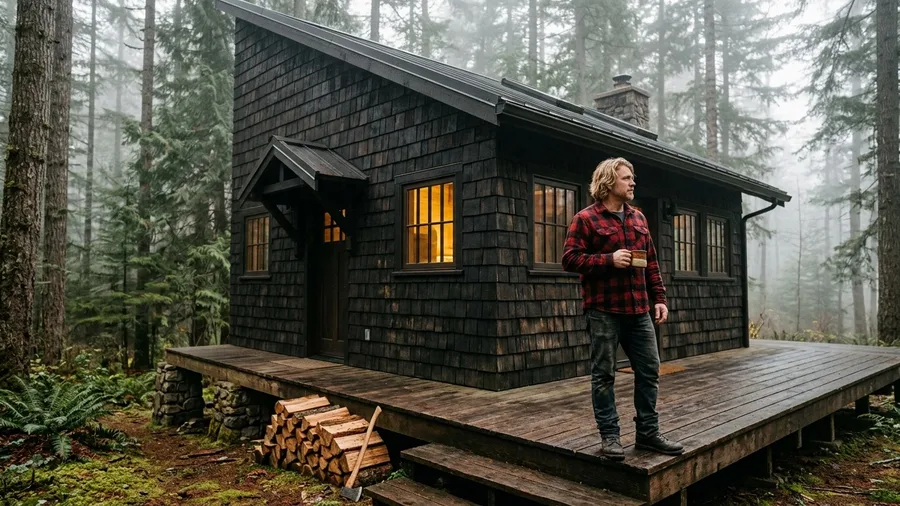
Natural variations in wood grain peek through the translucent black stain.
Most dark exterior designs fall flat because of one thing: a lack of tactile depth that makes flat surfaces look heavy.
Textured shingles soften the starkness of a dark color palette by catching shifting daylight across every individual wooden edge.
Suits rustic woodland settings and coastal properties alike.
9. Sleek Dark Stucco Finish
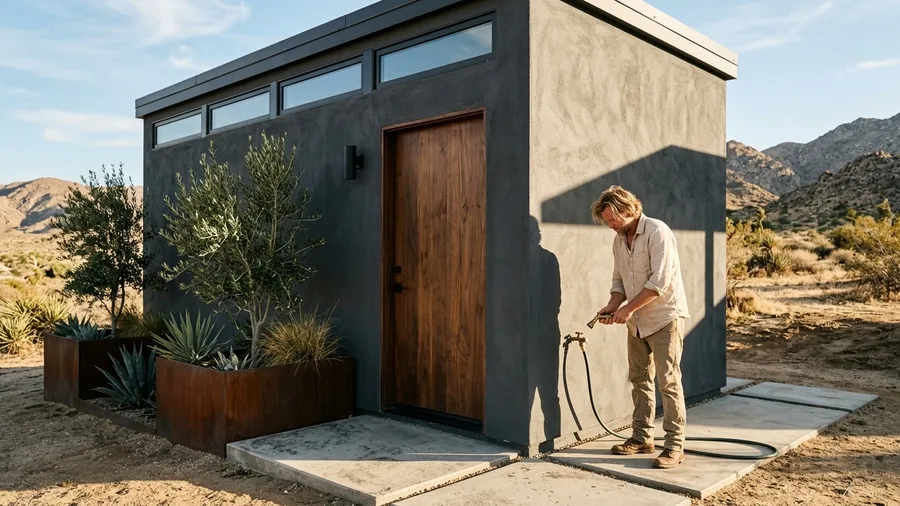
Monolithic plaster walls offer a clean, Mediterranean-modern hybrid look.
Dark gray mineral pigments won’t fade under harsh UV exposure. This means your exterior keeps its moody saturation even under blistering afternoon sun, bypassing the chalky bleaching that ruins standard paint.
Pair the smooth plaster surface with raw concrete pavers and drought-tolerant olive trees in rusted corten steel planters to anchor the minimal envelope.
Works wonderfully in dry climates with desert landscaping.
10. Black Steel Frame Glass Walls
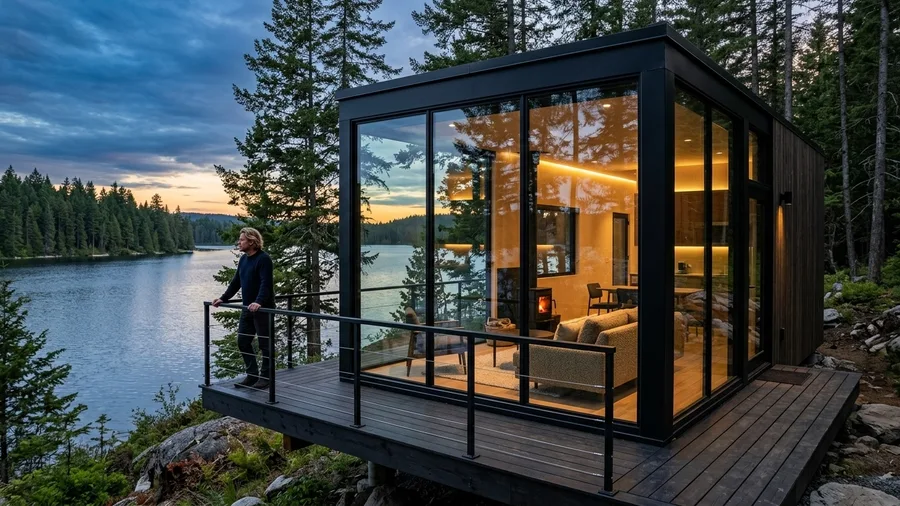
Most tiny home windows fall flat because heavy framing chops up the scenery instead of framing it like art.
Floor-to-ceiling glass framed in black steel blurs indoor and outdoor spaces, creating an uninterrupted visual flow that makes small footprints feel surprisingly vast.
Reflective panes mirror surrounding trees and sky for a chameleon effect, shifting tones throughout the day so the dark exterior dissolves completely into the landscape.
This configuration works best for scenic view lots where nature takes center stage and you want the architecture to step back and let the outdoors do the heavy lifting.
11. Dark Zinc Panel Architecture
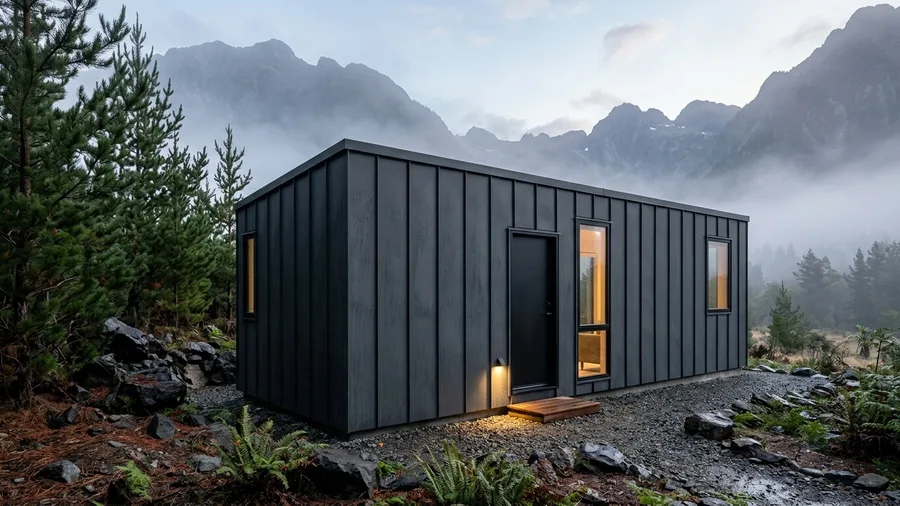
Dark zinc panel architecture creates a striking silhouette against natural landscapes.
Most modern exterior builds fall flat because the metal finishes look sterile and unyielding over time, failing to interact with the environment.
Natural patinating zinc develops a rich, velvety dark charcoal tone over time, softening the hard architectural lines with a living finish that responds directly to weather and sunlight.
A seamless standing seam installation of dark gray zinc panels paired with a recessed matte black steel entry door establishes the focal point.
Self-healing properties make it virtually maintenance-free for decades.
Pair this durable cladding with flush-mounted exterior LED uplighting to highlight the subtle textural evolution of the metal after dark.
12. Matte Black Standing Seam with Cedar Porch
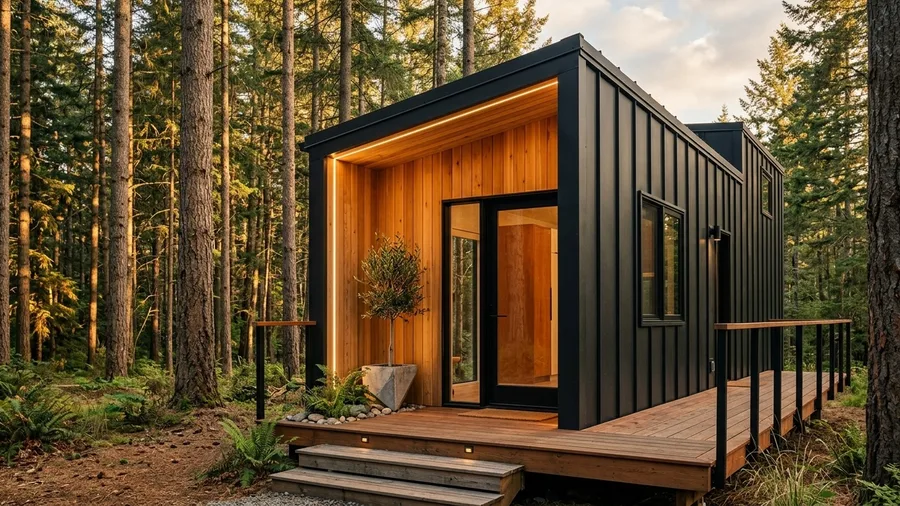
Most black exterior builds fall flat because they lack a single point of organic relief.
Warm honey-toned cedar recesses create an inviting entryway against dark walls.
The color contrast prevents the metal shell from feeling austere.
Great for welcoming guests into a cozy interior.
13. Dark Gray Standing Seam with Solar Integration
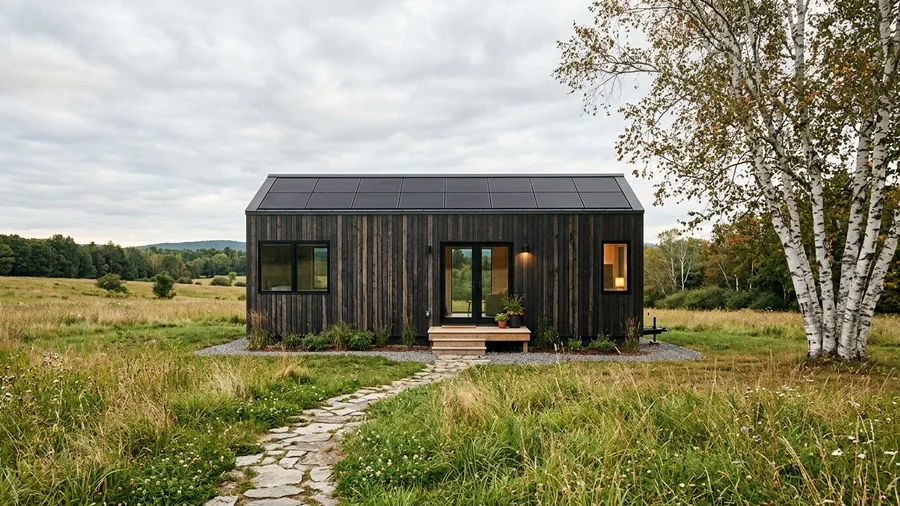
Low-profile black solar panels blend seamlessly into a dark roofline.
Most tiny home sustainable upgrades fail because reflective blue photovoltaic cells ruin the moody architectural envelope you spent months planning.
By contrast, modern monocrystalline panels featuring a sleek black backsheet and dark frame lock flush against charcoal standing seam metal roofing, allowing high-output renewable energy generation to disappear into the overhead plane without looking like an afterthought.
Function meets high design without sacrificing aesthetic appeal.
Essential for off-grid sustainability.
14. Monolithic Black A-Frame Cabin
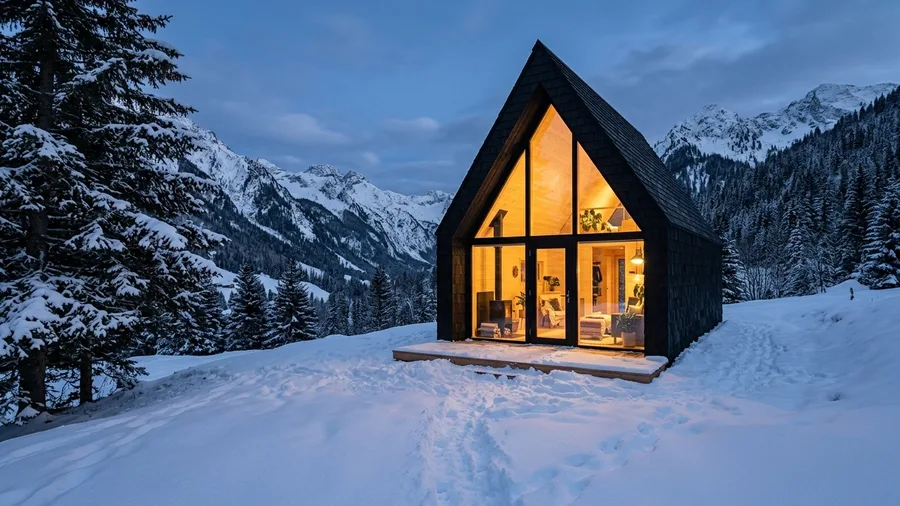
Most tiny home rooflines fall flat because of one thing: a weak pitch that fails to command attention against a heavy landscape.
Steep rooflines wrapped entirely in dark shingles create a striking silhouette.
This simple geometric form feels timeless and deeply grounded against the surrounding terrain.
A sharp, pitch-dark roof draws the eye upward while shedding heavy weather effortlessly.
Ideal for snowy mountain landscapes.
15. Industrial Black Steel Accents
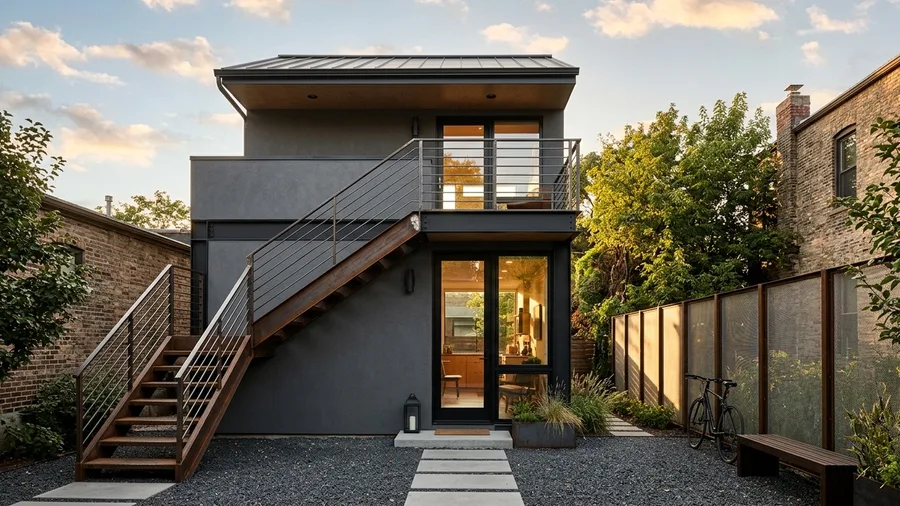
Most black exterior schemes look flat because they lack architectural weight, but exposed steel beams and railings anchor the dark exterior scheme.
A raw hot-rolled steel exterior staircase paired with custom matte black structural brackets creates a striking juxtaposition against smooth charcoal cladding, catching the afternoon light while giving the compact footprint a grounded, architectural presence.
Raw metal finishes develop a rich patina over time.
This approach suits urban and industrial aesthetic preferences, bringing a raw workshop edge to remote cabin builds.
16. Dark Gray Composite Wood Siding
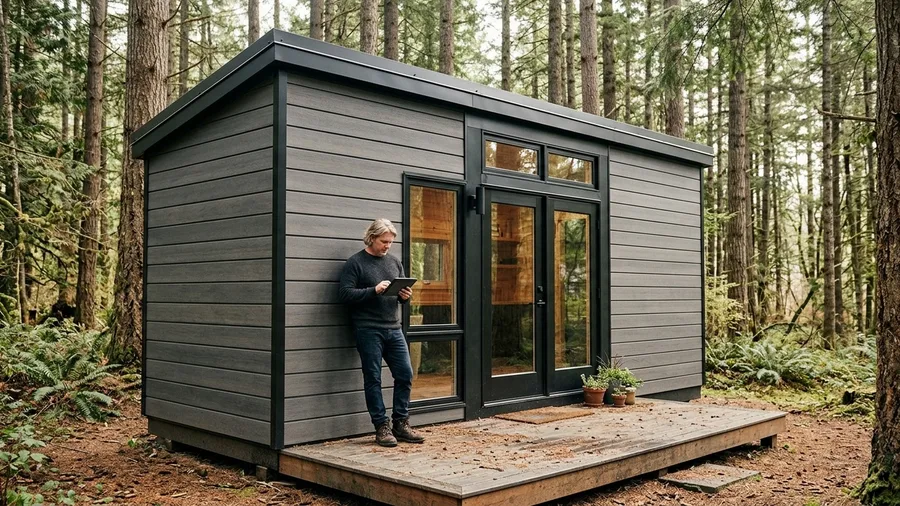
Dark gray composite wood siding handles the elements without the headache.
Engineered wood provides the rich look of natural timber with zero warping, meaning your exterior lines stay crisp and clean year after year regardless of rain or humidity.
Deep charcoal tones stay vibrant under intense sun while offering a sophisticated, modern silhouette that makes a tiny footprint look significantly more substantial.
This approach is perfect for low-maintenance tiny home living, letting you skip the annual staining chores to focus entirely on enjoying your space.
17. Charcoal Metal with Warm Wood Soffits
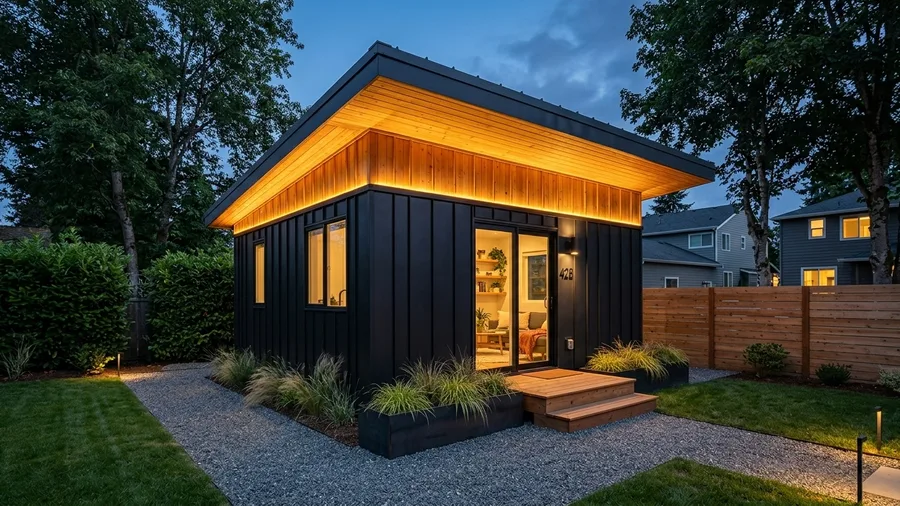
Most black exterior tiny homes fall flat because of one thing: a total lack of temperature contrast against cold metal panels.
Unfinished pine soffits cast a warm glow down onto dark exterior walls, completely shifting the mood from stark to grounded the moment the sun goes down.
Contrasting temperatures make the small footprint feel curated.
This approach works best for modern backyard ADUs looking to soften an industrial profile.
18. Black Board and Batten with Stone Base
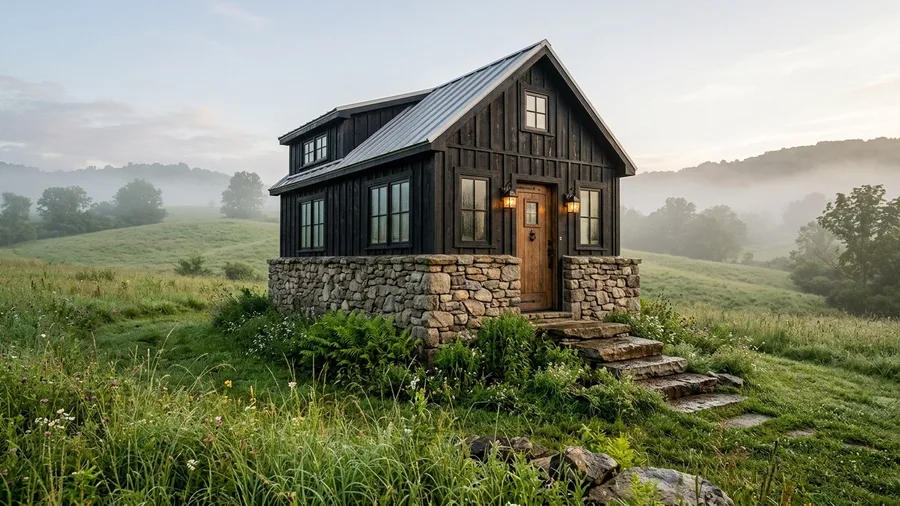
Most black exterior tiny homes fall flat because they lack architectural weight at ground level.
A stacked stone foundation grounds the dark vertical siding above.
Mixed textures elevate the exterior past a basic budget build.
This approach suits rural properties and rolling hills.
Save the ideas you would actually live with.
19. Minimalist Dark Box Architecture
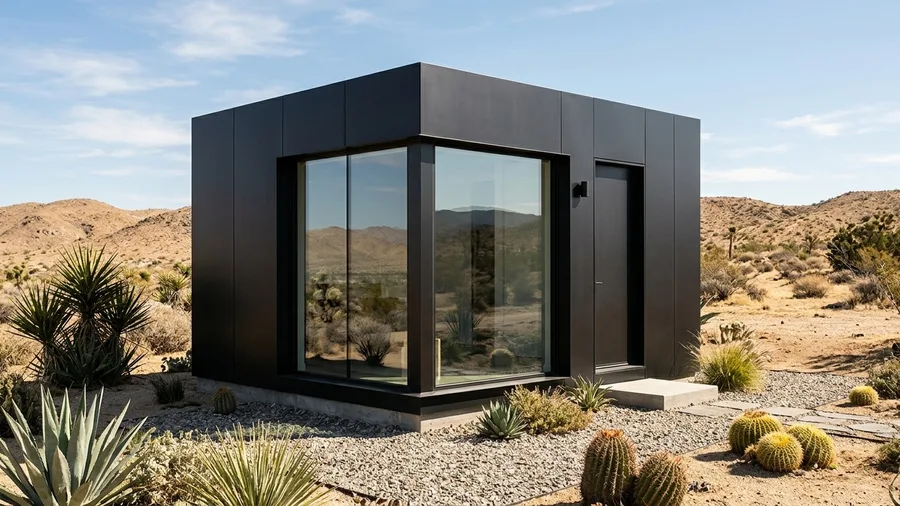
Clean cubic forms wrapped in matte black panels command attention.
Most modern exterior projects fail because unnecessary roof overhangs and decorative brackets interrupt the silhouette.
Absence of ornate trim highlights pure geometric lines.
The architectural volume relies on razor-sharp flush wall junctions paired with recessed black aluminum window frames and a hidden drainage system.
Ideal for contemporary art lovers and minimalists.
20. Dark Wood Slat Privacy Screens
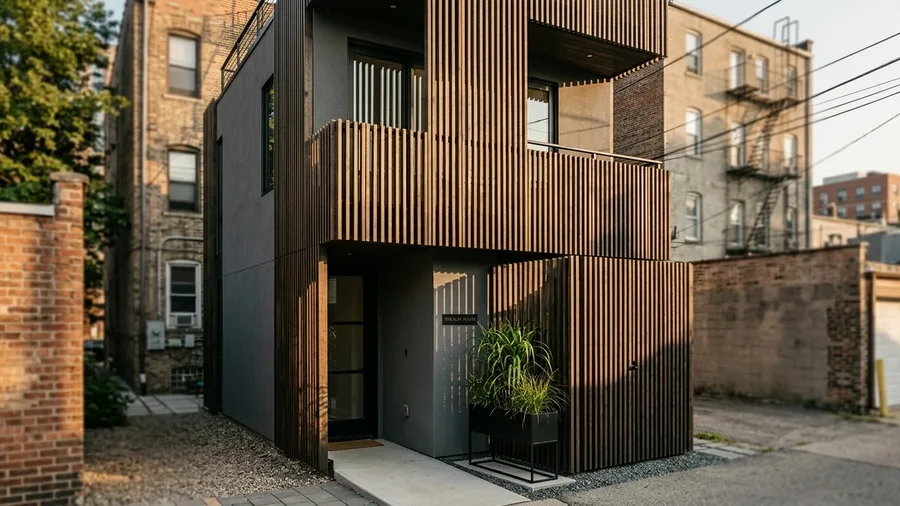
Most urban tiny home exteriors fail because every square inch feels entirely exposed to the street.
Vertical dark wood slats add architectural depth while offering shade.
Creates playful shadow patterns across the facade.
Great for urban tiny homes needing seclusion.
21. Matte Black Finish with Warm Lighting
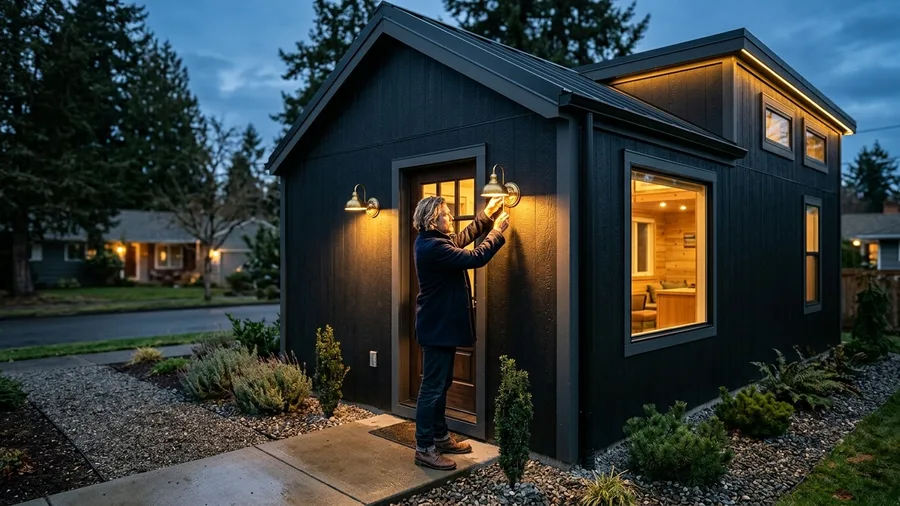
Nighttime illumination turns a modest tiny home into a glowing jewel box.
Brass exterior sconces cast golden pools of light across dark walls, creating an expensive feel after sunset that catches every eye from down the street.
This clever styling trick fixes the flatness that often plagues dark exteriors when the sun goes down.
Essential for creating an expensive feel after sunset, warm lighting turns shadows into architectural assets rather than hidden corners.
Works best for small-space builds where you want to highlight exterior textures without overwhelming a compact footprint.
Frequently Asked Questions
Do dark exterior tiny homes get too hot inside?
Dark colors do absorb more solar heat, but proper insulation, radiant barriers, and wall cavity ventilation keep indoor temperatures entirely comfortable.
What type of paint or stain works best on metal siding?
High-grade acrylic latex exterior paints or factory-applied PVDF coatings offer maximum UV resistance and prevent fading on dark metal panels.
How do I keep black siding from looking dusty?
Choosing satin or matte finishes rather than high gloss helps disguise minor dust, and a yearly low-pressure rinse keeps surfaces looking fresh.
Can I mix wood accents with a black exterior?
Pairing dark siding with warm cedar or oak elements adds necessary contrast and prevents the small structure from feeling overly severe.
Your Exterior Build Timeline
You do not need to tackle every custom architectural detail at once to achieve a high-end black exterior.
Focus on your primary cladding and lighting first, leaving secondary wood accents for your next free weekend.
Ready to Plan Your Exterior?
Review the siding materials above and pick the finish that matches your climate and maintenance style.