He Built a Solar-Powered Tiny House on a Mexican Beach — and Spends Summers Whale Watching From a Boat

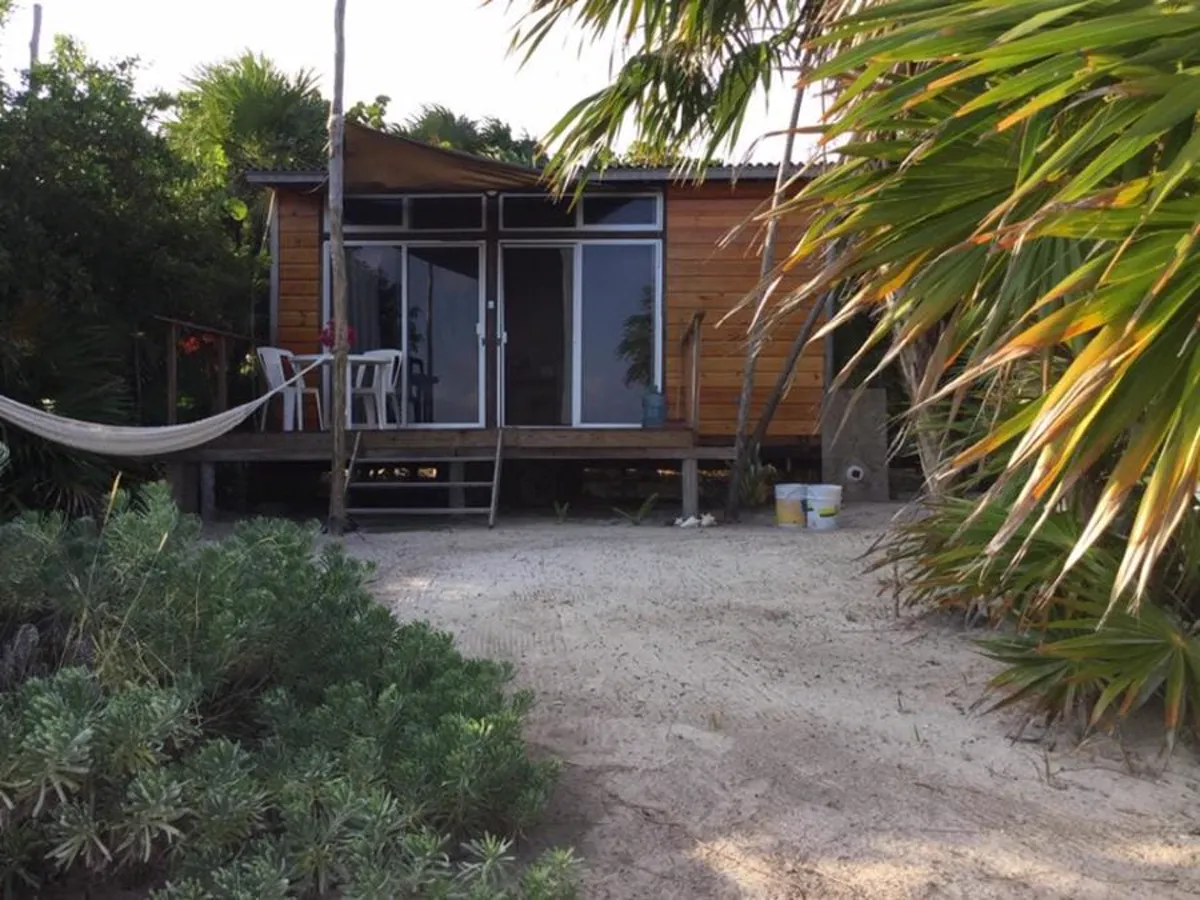
Most tiny houses sit in a backyard, a field, or a quiet patch of woods. David Gauci built his on a beach in Mexico.
His little wood-sided house stands on the sand in Mahahual, a small town on the Caribbean coast of Quintana Roo. Palm trees crowd around it. A hammock hangs nearby. The sea is a few steps from the front deck.
David built it with his wife Peggy. It runs completely off the grid, powered by the sun and watered by the rain. And when summer comes, David trades the beach for a boat, working as a whale-watching captain and guide in Campbell River, British Columbia.
This is the story of a house that lives two lives. Part beach rental, part family getaway, and part proof that a determined amateur can build something beautiful in a place with no hardware store for hours.
At a Glance
- Who: David Gauci and his wife Peggy
- Where: Mahahual, Quintana Roo, Mexico, on the Caribbean coast
- What: A small wood-sided tiny house on a trailer frame, built to be pulled back from the beach
- Power: Fully off-grid solar, 3 x 300W panels, Outback inverter and charge controller, 4 Trojan T-105 batteries at 48 volts
- Water: Rainwater collected into a 450-litre tank, shuttled into a 2,500-litre main cistern
- Toilet: Separett composting toilet, so no septic system was needed on a remote beach
- Summer life: David works as a whale-watching boat captain and guide in Campbell River, British Columbia; the couple’s Canadian home is a 40-foot trawler named Bear Paw
1. A Tiny House Right on the Sand

Photo: David Gauci via Tiny House Talk
The house sits so close to the water that the beach is basically the front yard. White sand runs right up to the deck. Palm trees lean over the roof. It looks like a beach cabin that grew out of the sand, and that was the point.
Sliding glass doors open the main room to the breeze. When they slide back, inside and outside blur into one space. A covered deck runs across the front, with chairs for watching the sea and a hammock strung nearby for slow afternoons.
There is nothing fancy about the setup, and that is the charm. The house is small, simple, and built from wood. It does not try to impress. It just sits there, warm and solid, with the Caribbean a few steps away.
David and Peggy did not build a showpiece. They built a place to live, rent out, and come back to. The beach does the rest.
2. Built on Wheels, Ready to Roll Back
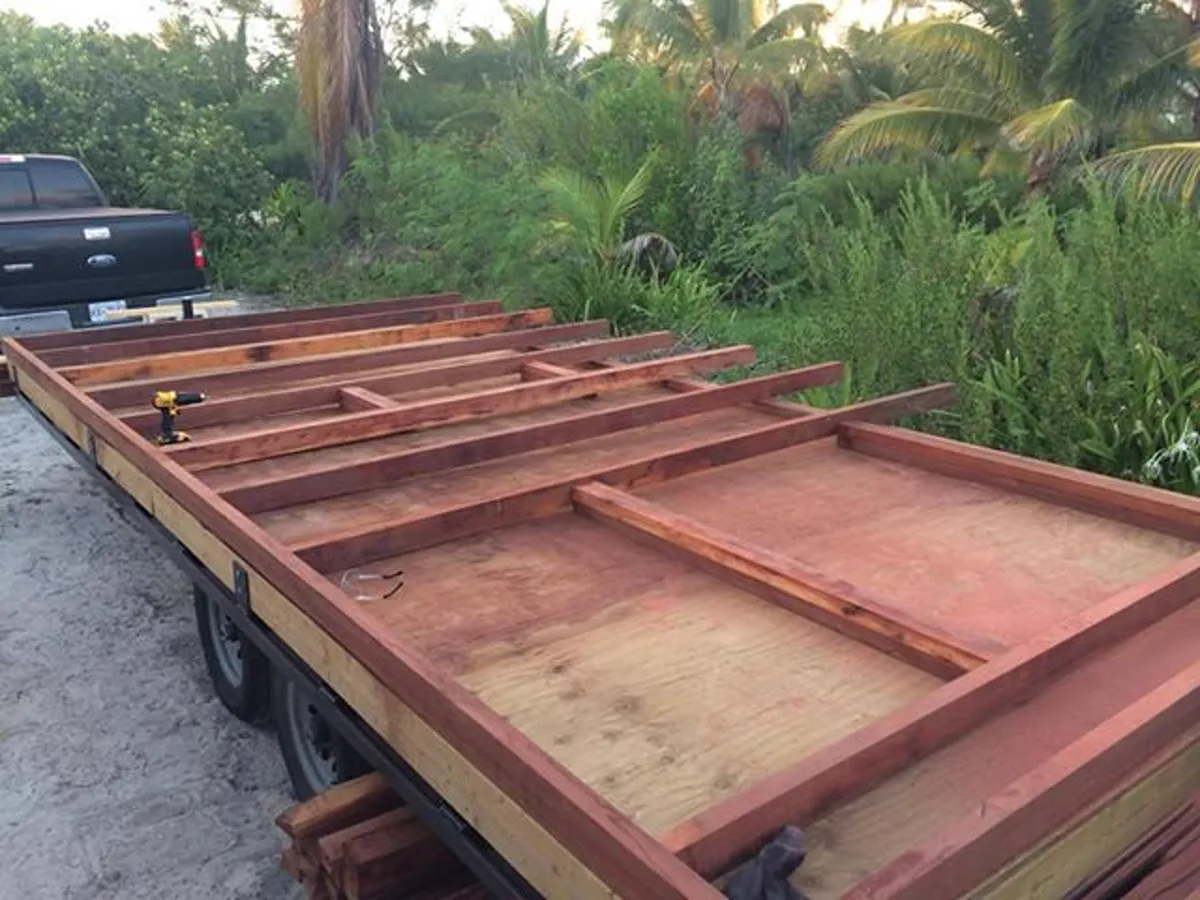
Photo: David Gauci via Tiny House Talk
The house stands on a trailer frame, and that choice was no accident. A house on a beach needs an escape plan. When the weather turns, the whole thing can be pulled back from the sand.
While they built, David and Peggy lived in a 22-foot trailer parked just north of the site. It was their base camp for the build.
This was not David’s first time building off the grid. His first project was a shed kit on 5 acres of oceanfront on Gambier Island, just north of Vancouver in Howe Sound. Everything came over from the mainland by boat, and there was no electricity and no services at all.
He remembers the lesson clearly. “Yep, first one was a 14′ X 20′ shed kit that we built on 5 acres of oceanfront on Gambier Island just north of Vancouver in Howe Sound. Everything had to be brought over from the mainland by boat, no electricity, no services. First year, I was determined to do it ‘old school’ using hand tools only. That was dumb. Second season, I refused to do more without a generator and things sped up nicely.”
The Mexico house was his second off-grid build. The first one taught him the essentials. Bring power, bring the right tools, and build so the house can move when nature says so.
3. The Wood That Fights Back

Photo: David Gauci via Tiny House Talk
Getting materials to a remote beach in Mexico was a challenge. The nearest big hardware store was hours away, so most of the wood came from a local mill in Noh-Bec, a Maya community inland.
There was a catch. The people in Noh-Bec do not speak Spanish. They speak Mayan. David found a way through anyway, and ordered a few hundred 2x4s in zapote, a very dense hardwood that insects and rot cannot touch.
Zapote is so hard that it bends a nail like a toothpick. Every hole had to be pre-drilled and oiled before a screw could be set. Each 10-foot piece weighed about 60 lbs, and the mill first supplied rough stock that had to be planed to size.
David put it plainly. “It was my second build off the grid. Tho there is a Home Depot 3 hours away, few materials were bought there. Most wood came from a local mill where you go look at logs and tell them what you want. Problem is, they don’t speak Spanish in Noh-Bec, they speak Mayan. Still we made it happen and ordered a few hundred 2X4’s in Zapote, a very dense hardwood that is impervious to insects and rot. It’s so hard that it bends a nail like a toothpick so every home needs to be tediously pre-drilled and oiled before trying to set a screw.”
4. An Interior of Solid Wood

Photo: David Gauci via Tiny House Talk
Step inside and the house feels like a woodworker’s love letter. The walls, doors, cabinets, and counters are almost all solid wood. The dark hardwood counters in the kitchen catch the light from the windows.
The woodwork was a salute to David’s dad, who always had a wood shop downstairs. Nothing looks store bought. It looks made by hand, by someone who cared about every joint.
The kitchen is compact but complete, with a sink, a two-burner cooktop, and storage tucked into every corner. The bed sits by the window, with the sliding doors open to the beach just beyond.
David is honest about the work. He is not a professional builder, and he says so himself. “I’m not a pro by any means and I had a bunch of re-do’s on this one but very happy with the results. Still a work in progress. I’m working on a really cool swinging ladder in solid mahogany. And still lots of cubbies to make. Fun fun!”
That attitude runs through the whole house. It was never meant to be perfect. It was meant to be lived in, fixed, and improved a little at a time.
5. Power, Water, and a Toilet With No Septic

Photo: David Gauci via Tiny House Talk
The house is completely self-sufficient. Three 300W solar panels sit on the roof. An Outback inverter and charge controller manage the power, charging four Trojan T-105 batteries running at 48 volts. There is no grid connection and no power bill.
Water comes from the sky. Rainwater is collected into a 450-litre tank, then shuttled into a 2,500-litre main cistern as needed. When it rains, the tank fills. When it does not, the big cistern carries them through.
The toilet is a Separett composting toilet. It needs no septic system, which matters a lot on a remote beach where digging one would be a nightmare. No pipes in the ground, no tanks to pump.
David sums up the setup in his own words. “I should also mention that it is also pretty self-sufficient with 3X 300W panels on the roof, a nice little Outback Inverter/controller charging 4 Trojan T-105 batteries running at 48 Volts and a Separett composting toilet. It also collects rainwater to a 450 liter that I can shuttle back into a 2500 liter main cistern as needed.”
Simple systems, well chosen. Solar for power, rain for water, composting for waste. Nothing here needs a utility company.
The Off-Grid Systems, in Plain Terms
- Solar power: 3 x 300W roof panels, Outback inverter and charge controller, 4 Trojan T-105 batteries at 48 volts
- Water: Rainwater into a 450-litre tank, moved into a 2,500-litre main cistern when needed
- Toilet: Separett composting toilet, no septic system required
- Total build cost: Not shared. David did not state a total cost for this build, so no figure is given here
- Known costs to expect: Solar panels, batteries, inverter, composting toilet, cistern, and hundreds of zapote boards planed to size, plus a trailer frame and a 22-foot trailer to live in during the build
6. What Daily Life on the Beach Looks Like

Photo: David Gauci via Tiny House Talk
Life in the house moves at beach speed. Mornings start with the doors open and the sea breeze coming through. Meals happen in the little kitchen or out on the deck. Evenings end with bare feet on the boards and the sun going down over the Caribbean.
For part of the year, the house earns its keep. It is rented to guests from mid-November to mid-April on Airbnb. The rental season covers the cooler months, when visitors want the sun and the sand most.
When there are no guests, David and Peggy move in themselves for a mini-vacation. Note that the Airbnb listing is no longer active as of October 24, 2026.
David explains the rhythm. “We take everything off the beach during hurricane season and park it close to 2 big walls. Though, when we don’t have guests in the Tiny Home, we move into it for a mini-vacation. So rentals are only from Mid November to Mid April on Airbnb.”
That is the honest shape of the life. A few months of guests, a few months of their own quiet time, and a plan for the storms in between.
7. Summers on the Water, Whale Watching

Photo: David Gauci via Tiny House Talk
When summer arrives, the beach house waits and David goes back to the water. He works summers as a whale-watching boat captain and guide in Campbell River, British Columbia. Out on the water, he helps visitors spot humpback whales breaching and surfacing in the cold northern sea.
It is a long way from a sunny beach in Mexico, but the two lives fit together. Winter is for the warm sand. Summer is for the boat and the whales.
In Canada, the couple’s home is a 40-foot trawler named Bear Paw. So David and Peggy live small in both places. A tiny house on the sand in winter, a boat on the water in summer.
There is a nice symmetry to it. Both homes are compact. Both run on careful systems. And both sit close to the water, which seems to be where this couple is happiest.
It also means the beach house never has to carry the whole year. It works hard for five months, rests through the storm season, and waits for its owners to come home.
8. What to Know Before You Copy This Idea

Photo: David Gauci via Tiny House Talk
A tiny house on a Mexican beach sounds like a dream, and in many ways it is. But David’s story comes with practical warnings for anyone tempted to try the same thing.
First, land and location matter more than the house. A beach site brings salt air, storms, and rules about building near the water. Check ownership, permits, and hurricane rules before you buy a single board.
Second, plan for the storms. David takes everything off the beach during hurricane season and parks it close to two big walls. A house on a trailer frame makes that possible. A house on a fixed foundation would not have that option.
Third, materials may not come easy. The nearest big hardware store was hours away. The wood came from a local mill, in a language David did not speak, and every piece needed planing, pre-drilling, and oiling. Budget extra time and extra patience for sourcing.
Finally, think about utilities and your own skills. Solar, rainwater, and a composting toilet kept this house independent, but each system needs care. David rebuilt parts of his house more than once, even with a previous off-grid build behind him. Expect re-dos.
The Honest Pros and Cons
Pros
- Beachfront living in a warm climate, steps from the Caribbean
- Fully off-grid: solar power, rainwater, and a composting toilet mean no utility bills
- Trailer frame lets the house be pulled back from the beach in hurricane season
- Rental income from mid-November to mid-April, with the house free for the owners the rest of the time
- Built from zapote, a hardwood that resists insects and rot
Cons
- Hurricane season forces a full move off the beach every year
- Remote site: the nearest big hardware store is hours away
- Zapote is brutally hard to work with: heavy boards, pre-drilling and oiling every screw
- Language barrier at the local mill, where Mayan is spoken, not Spanish
- Small off-grid systems need ongoing care: batteries, cistern, and composting toilet
- No total build cost was shared, so budgeting from this story alone is not possible
David and Peggy built a small house, a solar setup, and a way of life that fits them. The beach gave them the view. The boat gave them the summers. And the house gave them a place to come back to.
If you dream of building on a beach, start the way David did. Build small. Build to move. And be ready to redo a few things along the way.
Sources: He Built a Tiny House on the Beach in Mexico, via Tiny House Talk. All photos by David Gauci via Tiny House Talk.