15+ Tiny House Laundry Setups That Actually Work

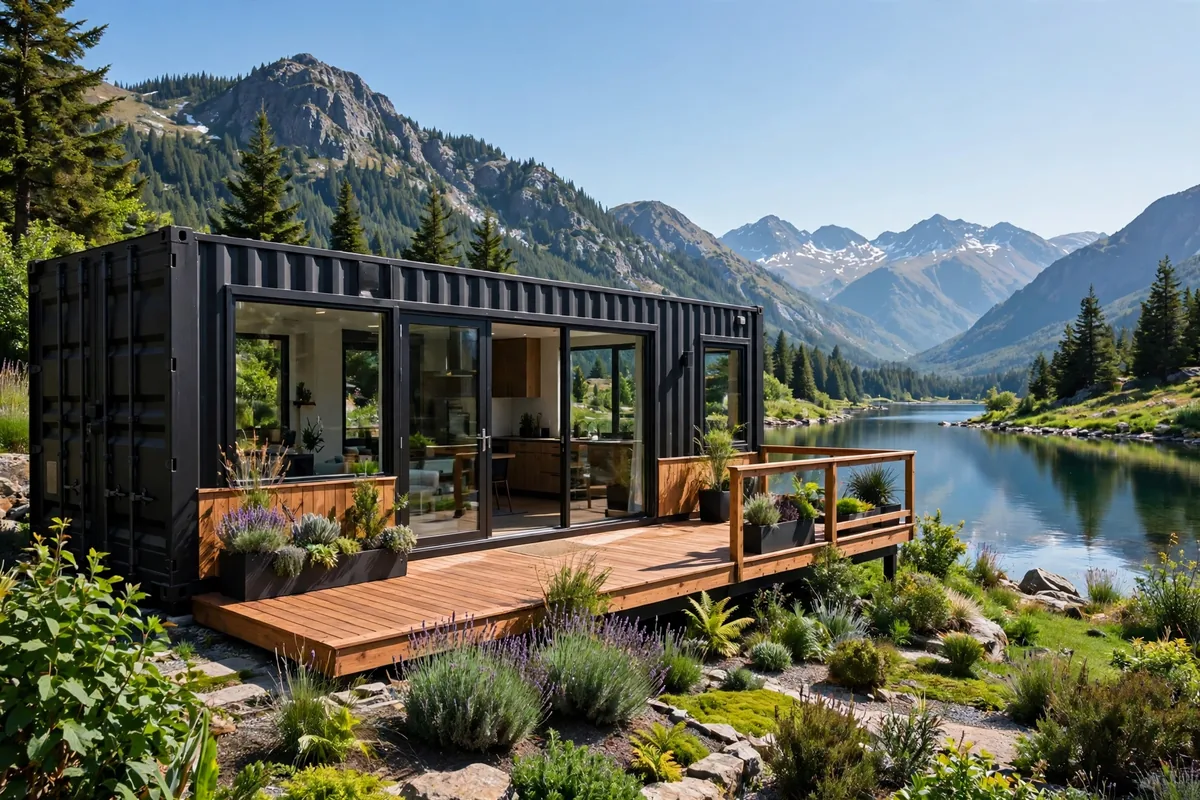
Laundry in a tiny house sounds like a problem. It is not, once the setup fits the space. The trick is to stop thinking about a laundry room and start thinking about a laundry spot. A closet, a stairwell, a kitchen run, even a shed on the deck can do the job.
Every setup in this list lives in a real tiny house footprint. No full-size laundry rooms hiding behind the photos. Just washers and dryers that fit, dry, and fold without taking over the house.
Some of these ideas win on space. Some win on drying, which is the part most people forget. All of them were picked because they work day after day, not just in a photo.
Start with how you actually do laundry. Big weekly loads or small daily ones? Do you line dry or need a dryer? Your answers point straight to the right setup on this list.
1. Stacked Washer-Dryer in a Hall Closet
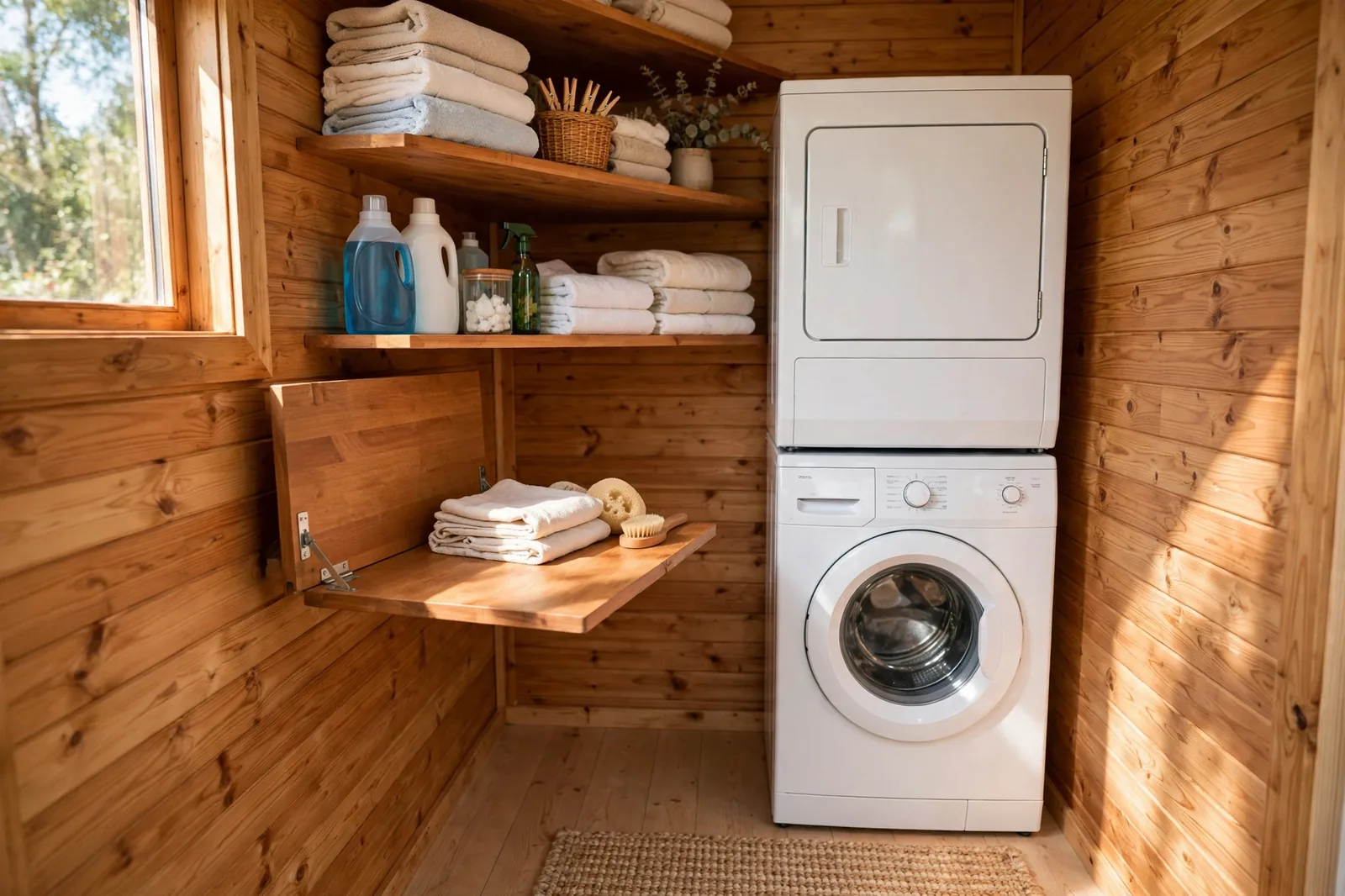
This is the classic for a reason. A 24 inch stacked pair fits a standard closet. You get a real washer and a real dryer in about two feet of floor.
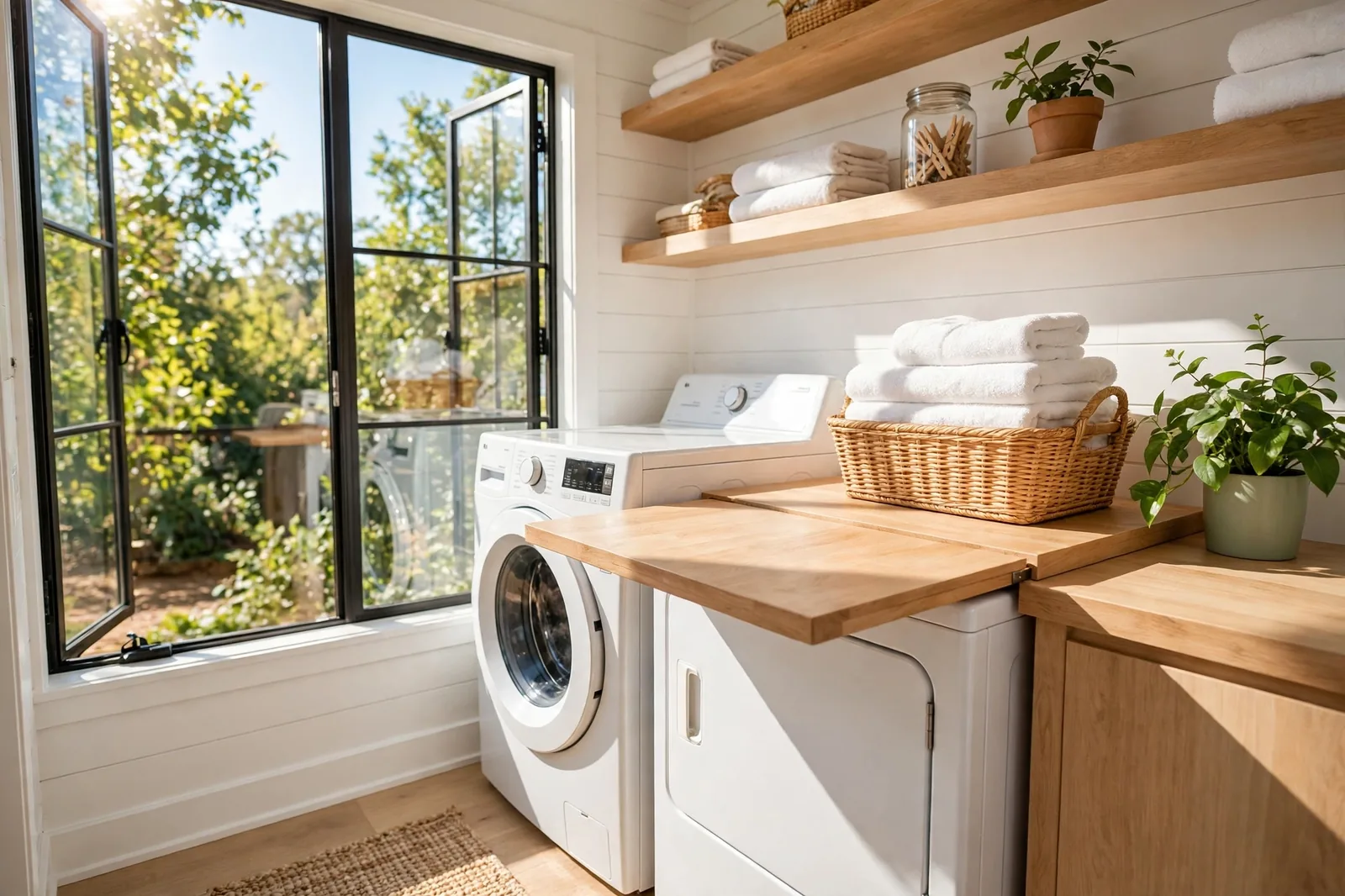
The folding counter on top of the machines is the part people love most. It turns dead space into your folding station. Add a shelf above for detergent and a basket below for dirty clothes.
Ventless dryers work well here. They need no duct through the wall. That matters when your closet sits in the middle of the house.
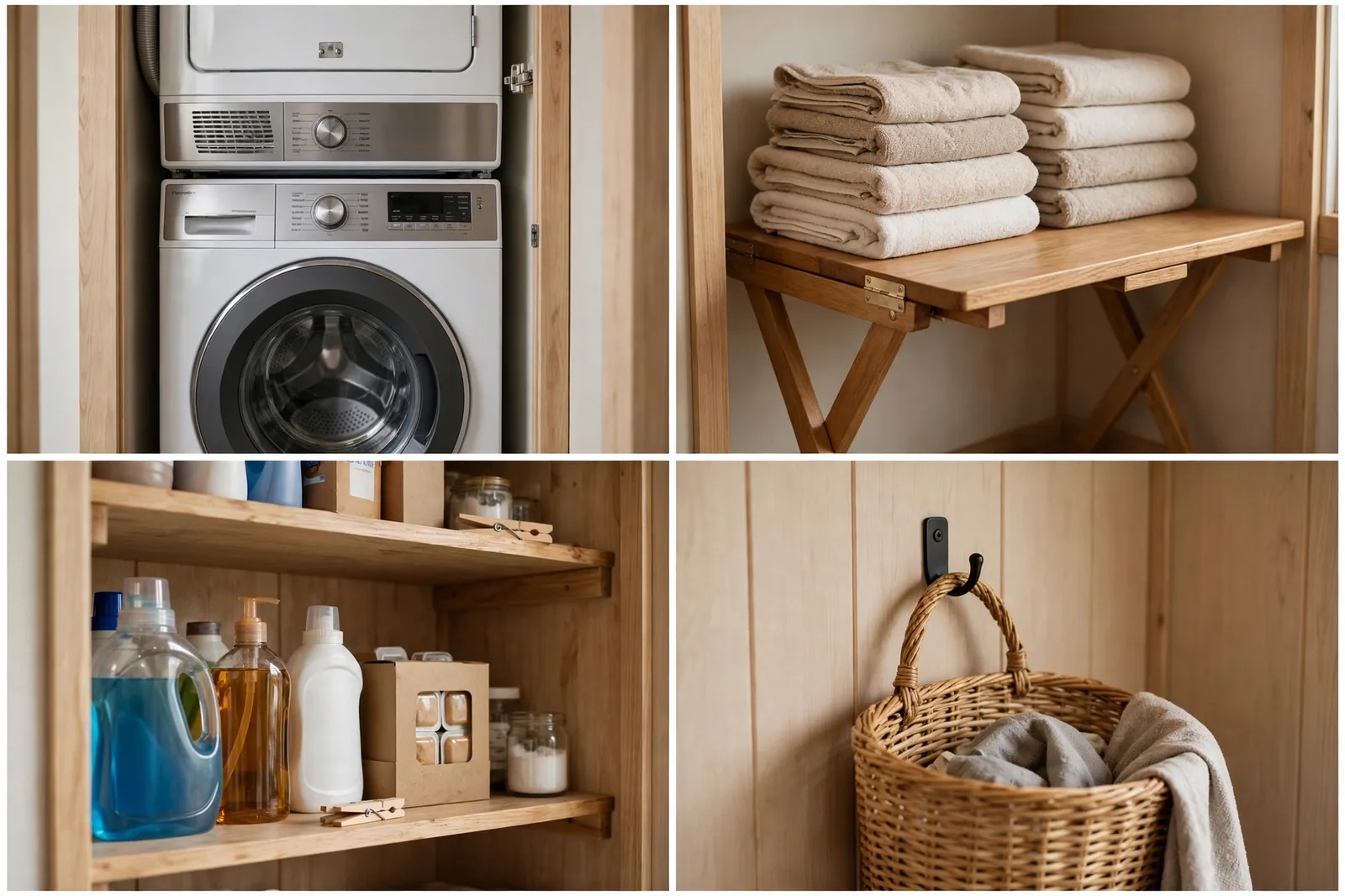
Watch the depth before you buy. Some stacked pairs run deeper than a standard closet. Measure twice, and leave room for hoses behind.
A louvered door or a small vent grille keeps air moving. It also hides the machines when guests visit. Simple, tidy, done.
2. All-in-One Washer-Dryer Combo Under the Counter
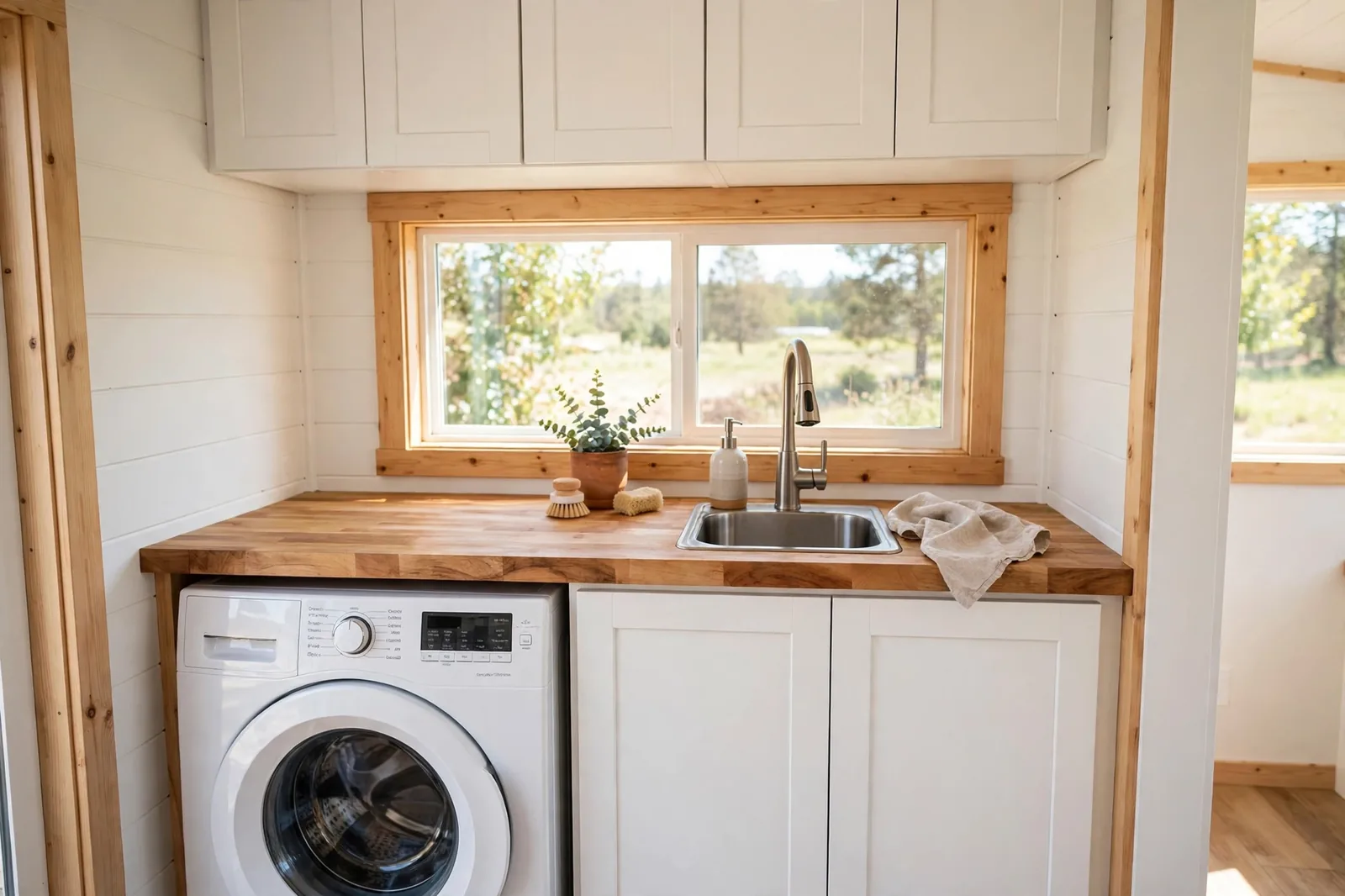
One machine does both jobs. It washes, then dries in the same drum. That saves the space a second machine would take.
Under a kitchen counter is the natural home for it. The plumbing is already there. The machine slides in like a dishwasher and disappears behind a panel.
Drying takes longer than a separate dryer. Plan for it. Smaller loads dry faster, so washing more often actually saves time here.
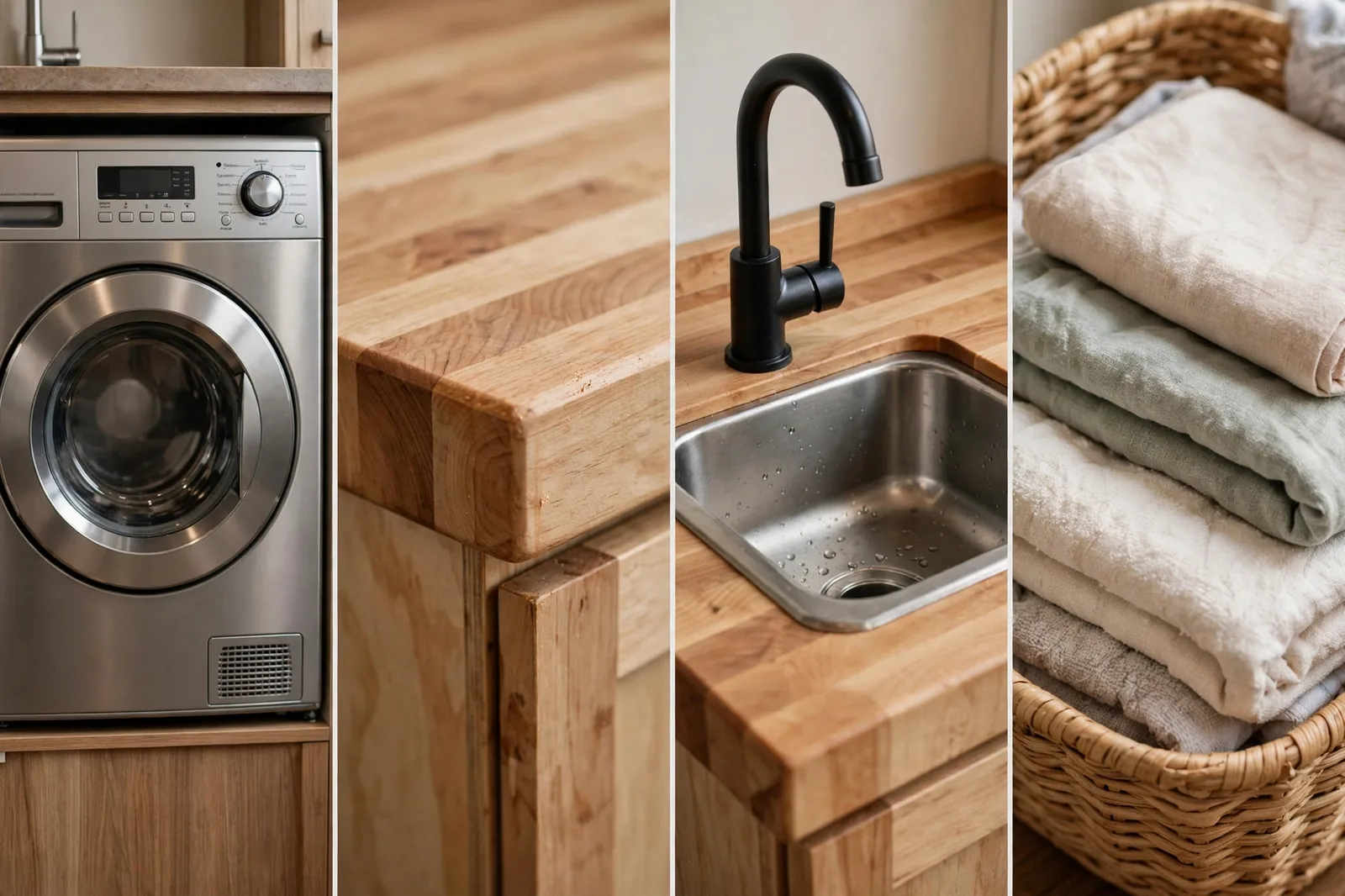
Ventless combos need only a drain and a standard outlet. That makes them a strong pick for off-grid homes and rentals where you cannot cut a vent hole.
Keep a small drying rack nearby for anything that should not go in the dryer. The combo handles the rest.
3. Laundry Nook Beside the Bathroom
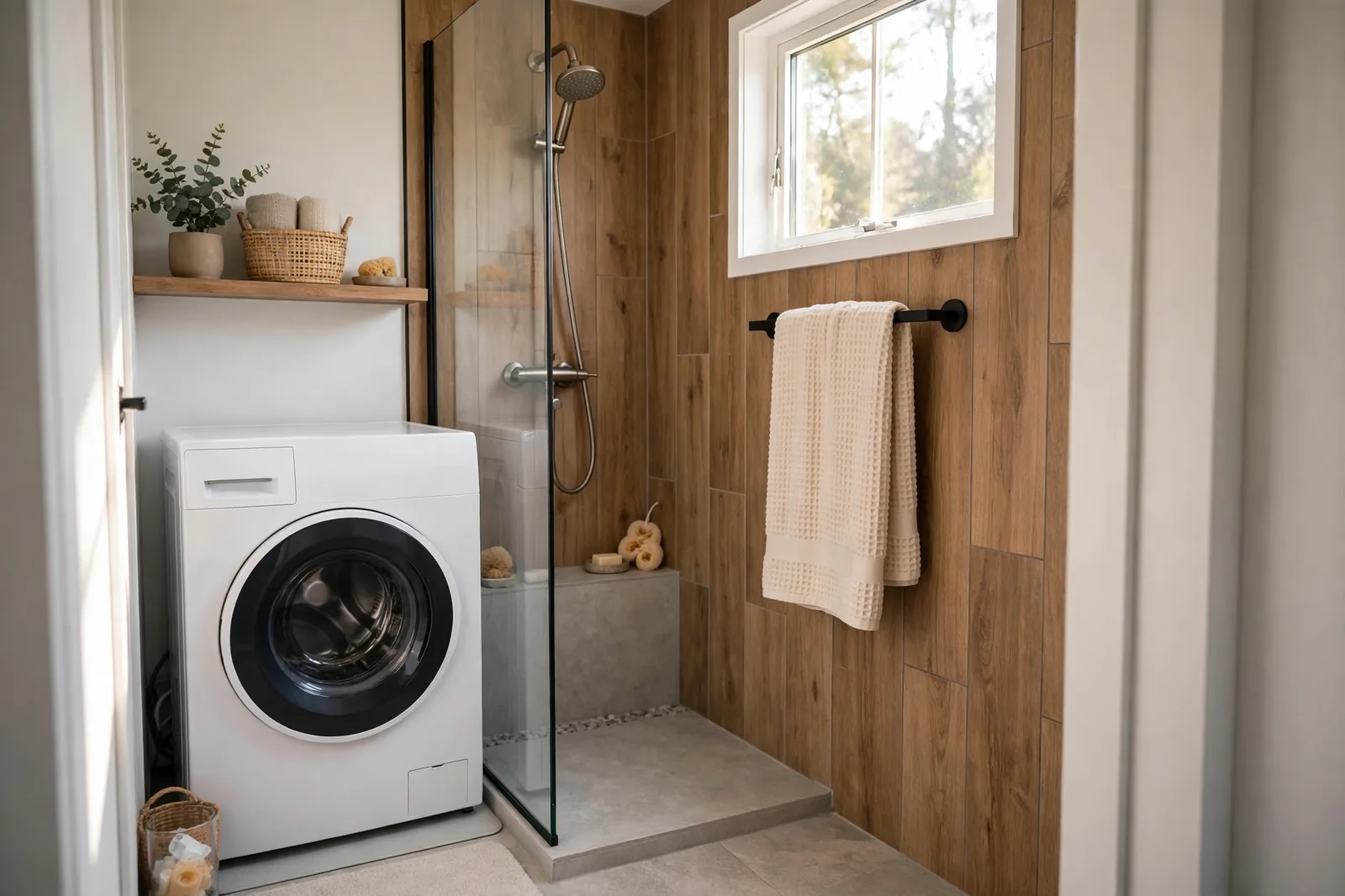
Dirty clothes live in the bathroom. So why walk them across the house? A slim washer beside the shower cuts the trip to zero.
A 24 inch front-loader slides into a nook barely wider than itself. The shower gives you a drain close by. The window gives you fresh air.
Wood-look tile keeps the nook feeling like part of the bathroom, not an afterthought. A towel rail above doubles as a drying spot for delicates.
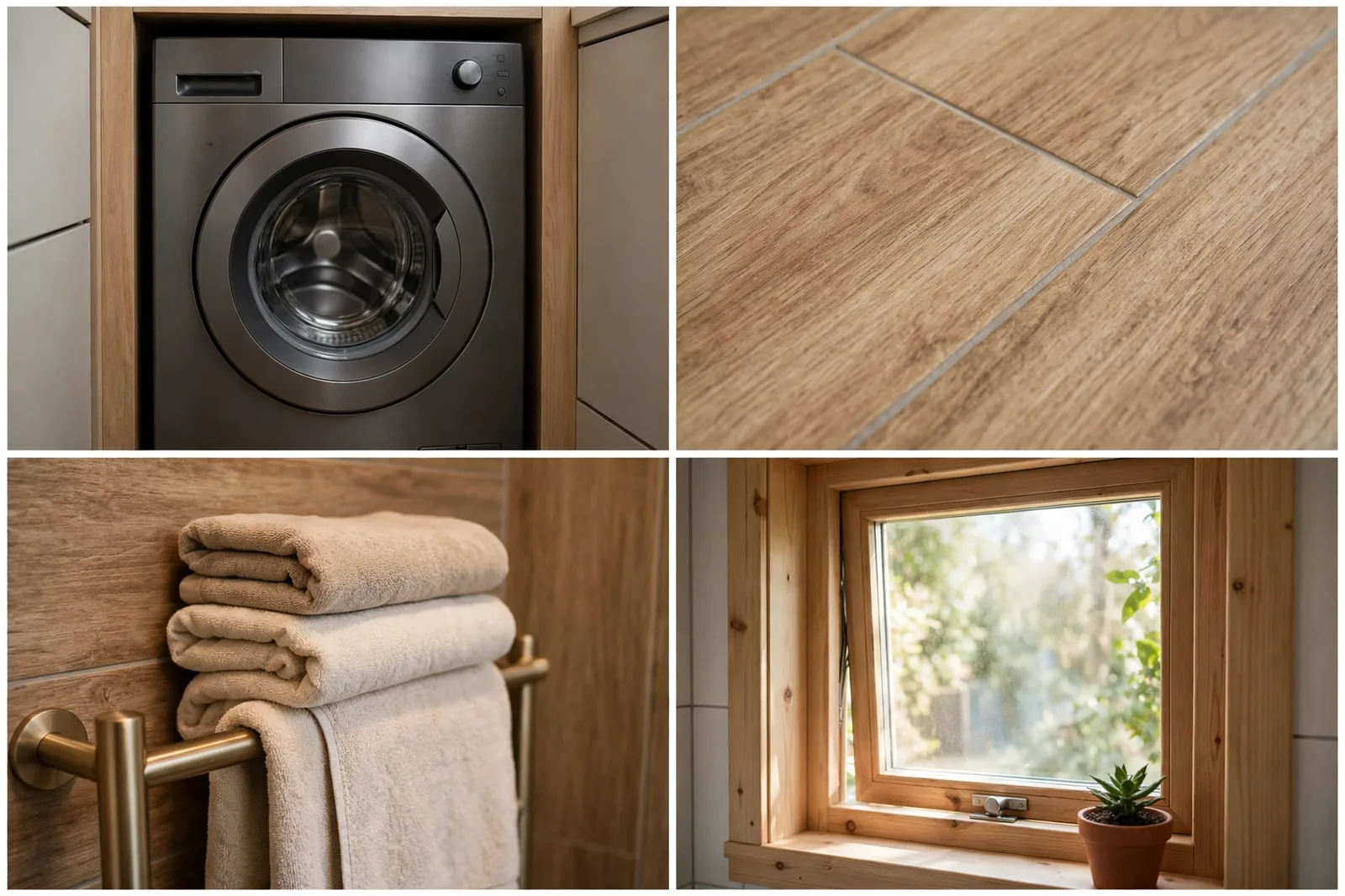
Moisture is the thing to manage. Run the bathroom fan during and after a wash. It keeps the nook dry and the machine happy.
This setup suits one or two people best. Loads stay small, and the washer never has to fight for space with the rest of the house.
4. Washer and Dryer Tucked Under the Stairs
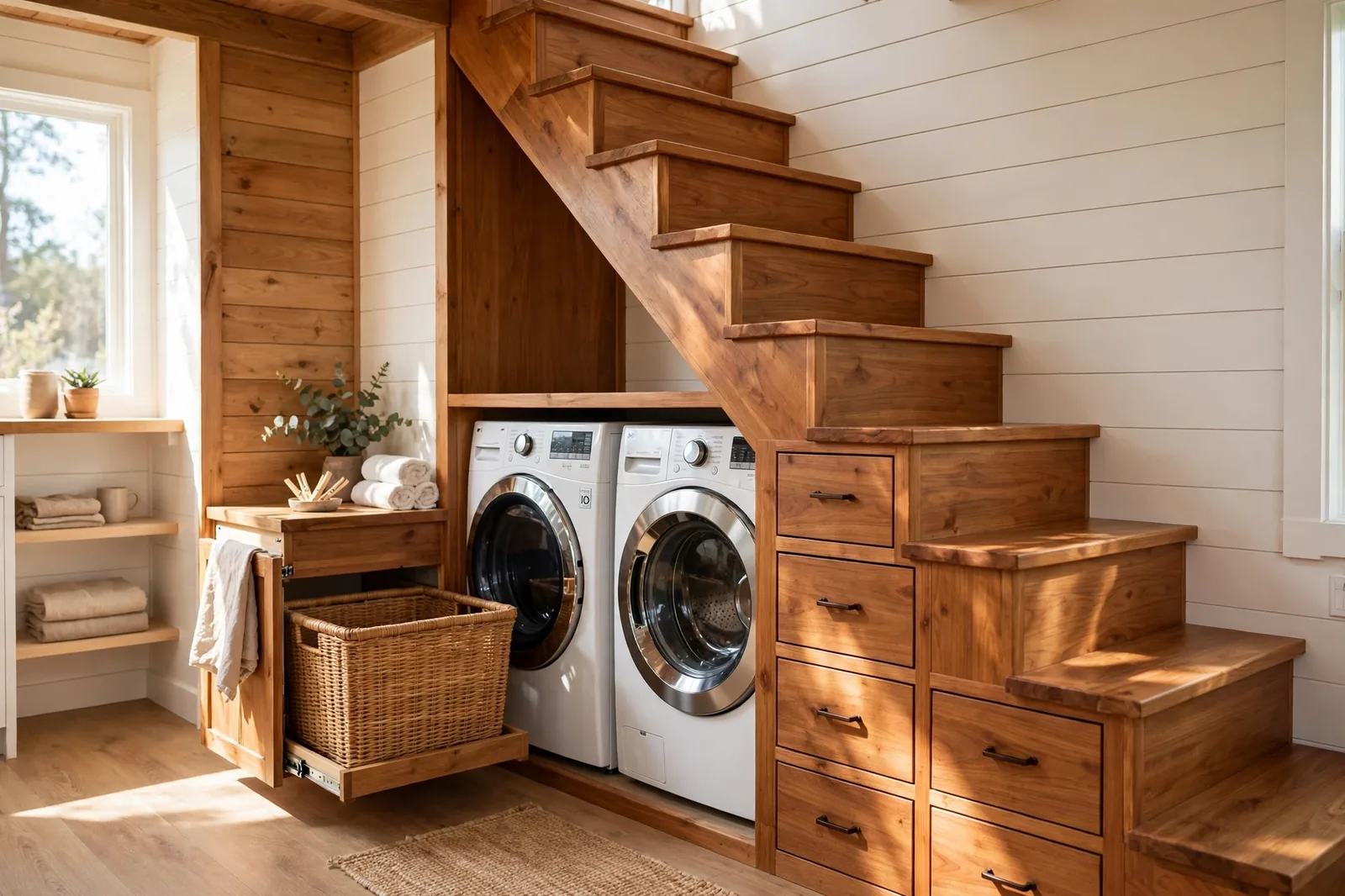
The space under the stairs is usually wasted. A pair of compact machines fits there with room to spare.
Pull-out baskets make this setup work. Dirty clothes roll out on a drawer, clean clothes fold on the counter above. Nothing gets lost in a dark corner.
Stair drawers hold detergent, clothespins, and stain spray. Every tool stays within reach of the machines.
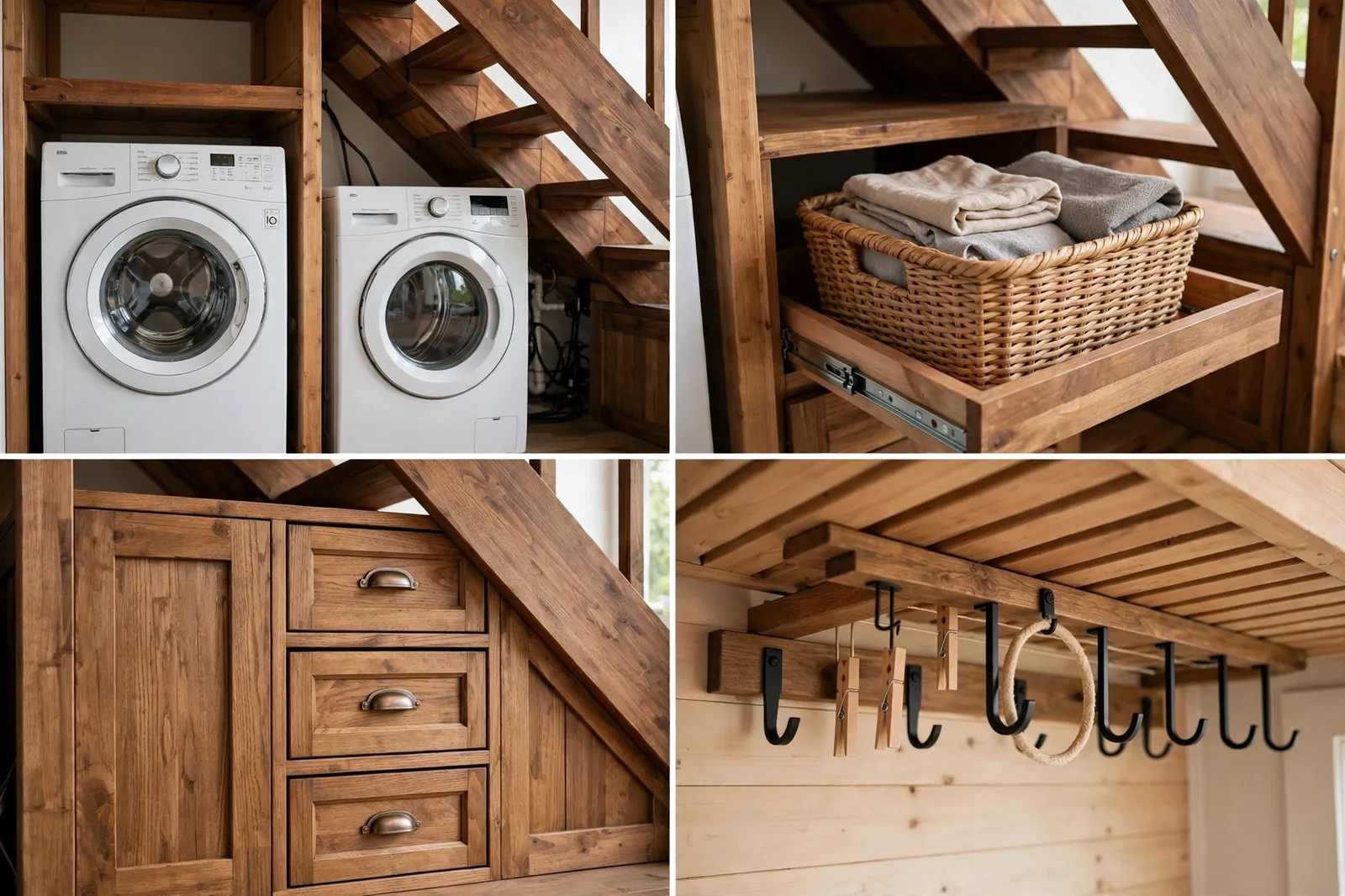
Check the height at the low end of the stairs. Front-loaders need clearance for the door to swing open. A sliding door or curtain can cover the nook without eating swing space.
This spot also keeps laundry noise away from the bedroom. The stairs act as a natural buffer.
5. Fold-Down Drying Rack Above the Machines
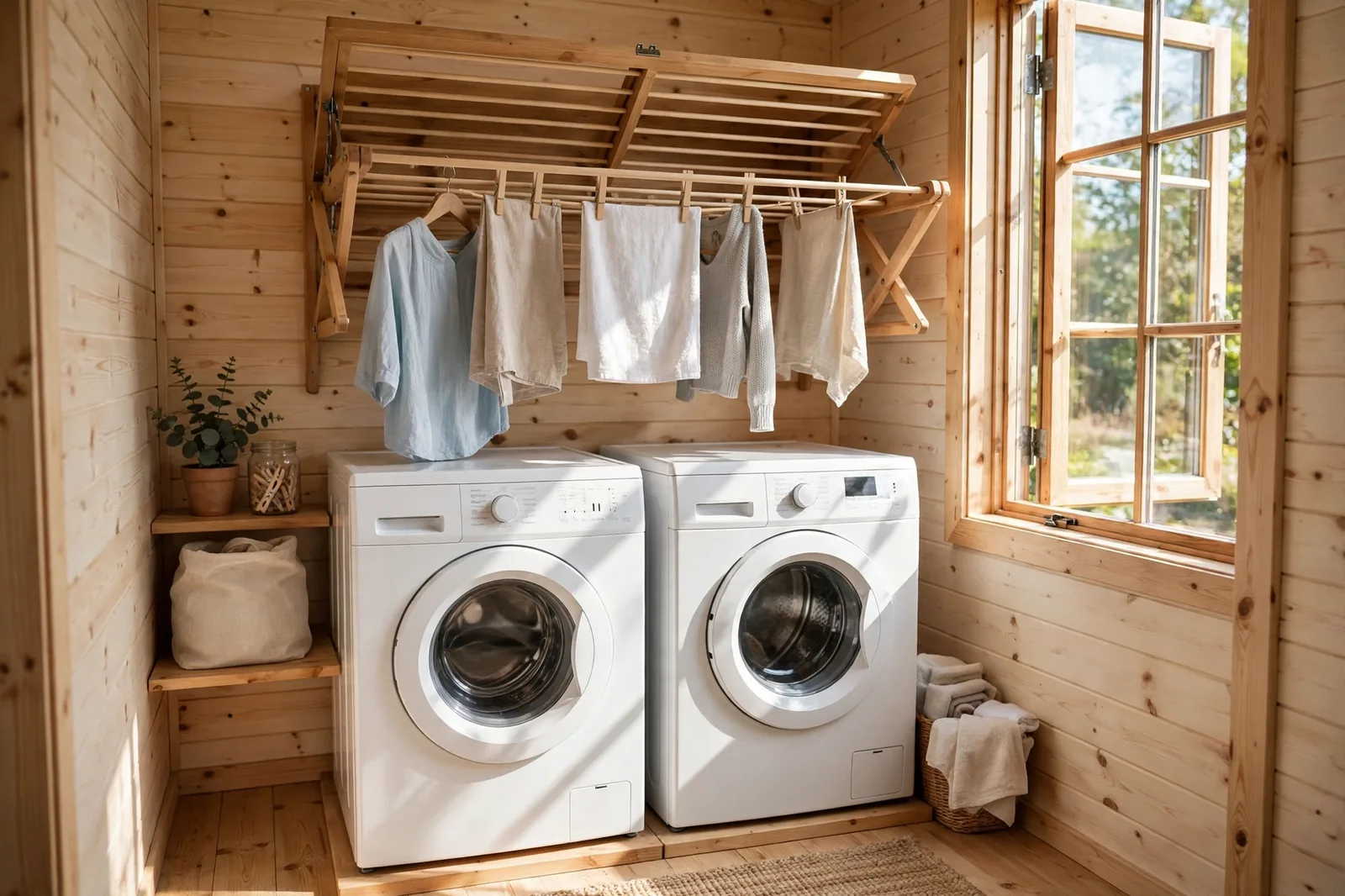
Drying is the hidden half of laundry. A fold-down rack above the machines solves it without taking a single square foot of floor.
The rack folds flat against the wall when you are done. While it is open, it holds a full load of shirts and delicates. Air moves freely around them.
Wood racks look better than wire ones and hold more weight. Mount into studs, not just drywall. Wet clothes are heavy.
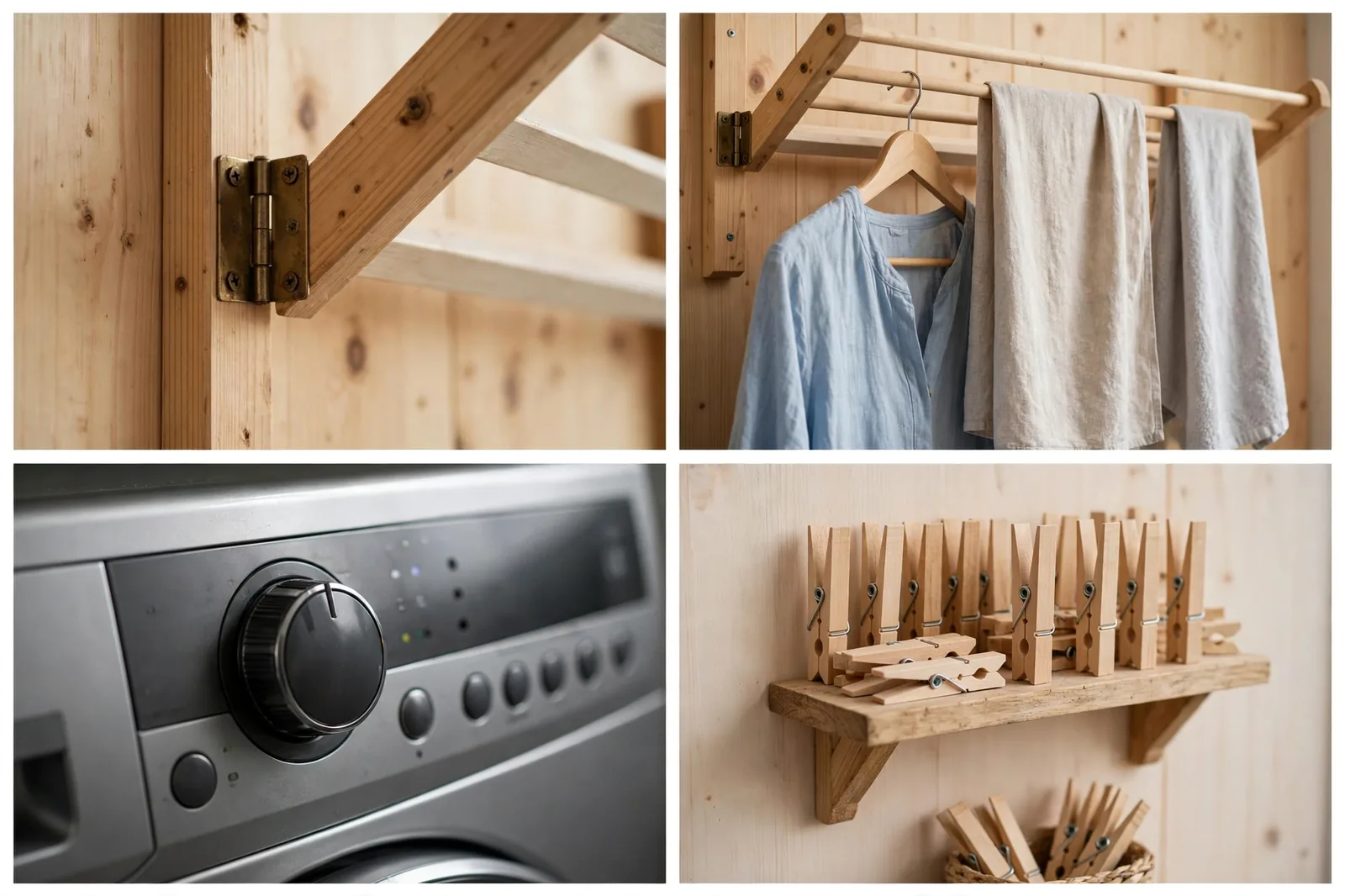
Pair the rack with a small fan or an open window. Moving air dries clothes twice as fast as still air.
This is the cheapest upgrade on this list. One rack, four screws, and your dryer runs half as often.
6. Laundry Closet With a Sliding Barn Door
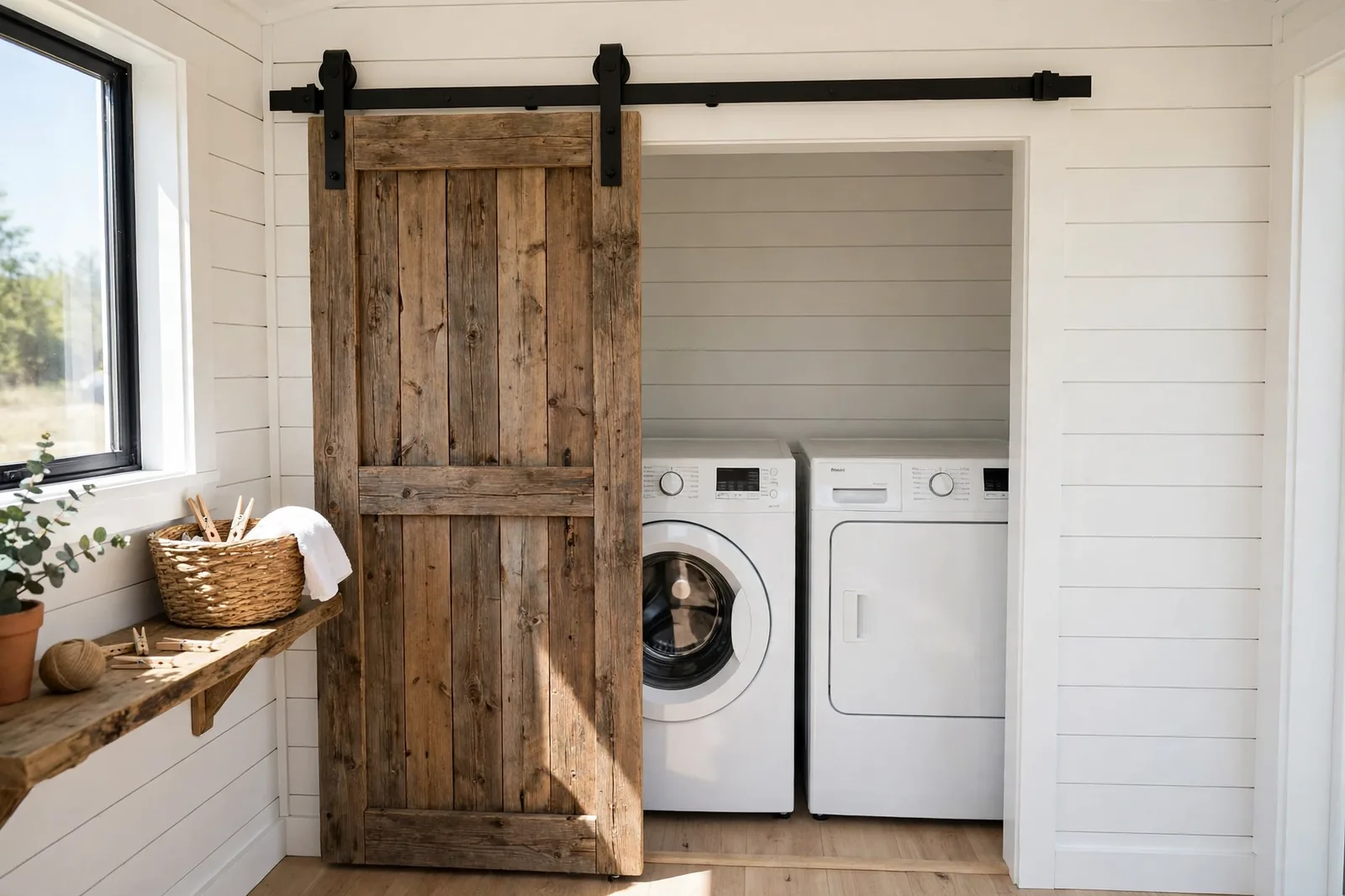
A barn door turns a laundry closet into a design feature. Slide it open to work, slide it shut to hide the mess.
The door needs no swing space. That is the whole point in a tiny house. A regular door would eat the floor you need to stand on.
Inside, the layout is simple. Stacked machines, a shelf, a basket. The door does the decorating.
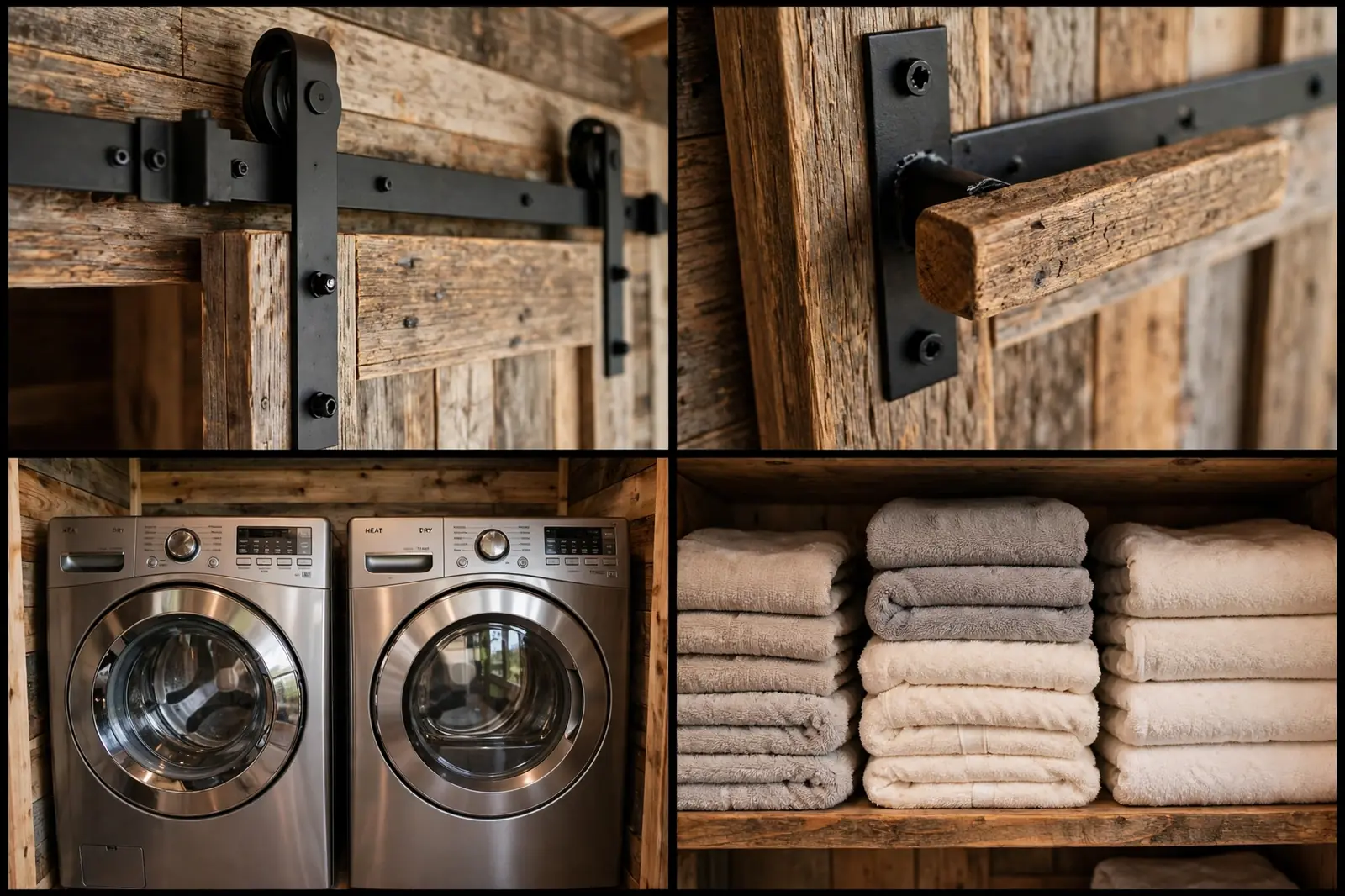
Leave a small gap at the bottom of the door for air. Dryers and washers need ventilation, and a sealed closet traps humidity.
Barn doors also work well in hallways. The rail mounts on the wall, so the closet can sit anywhere with a flat stretch of wall beside it.
7. Outdoor Laundry Shed on the Deck
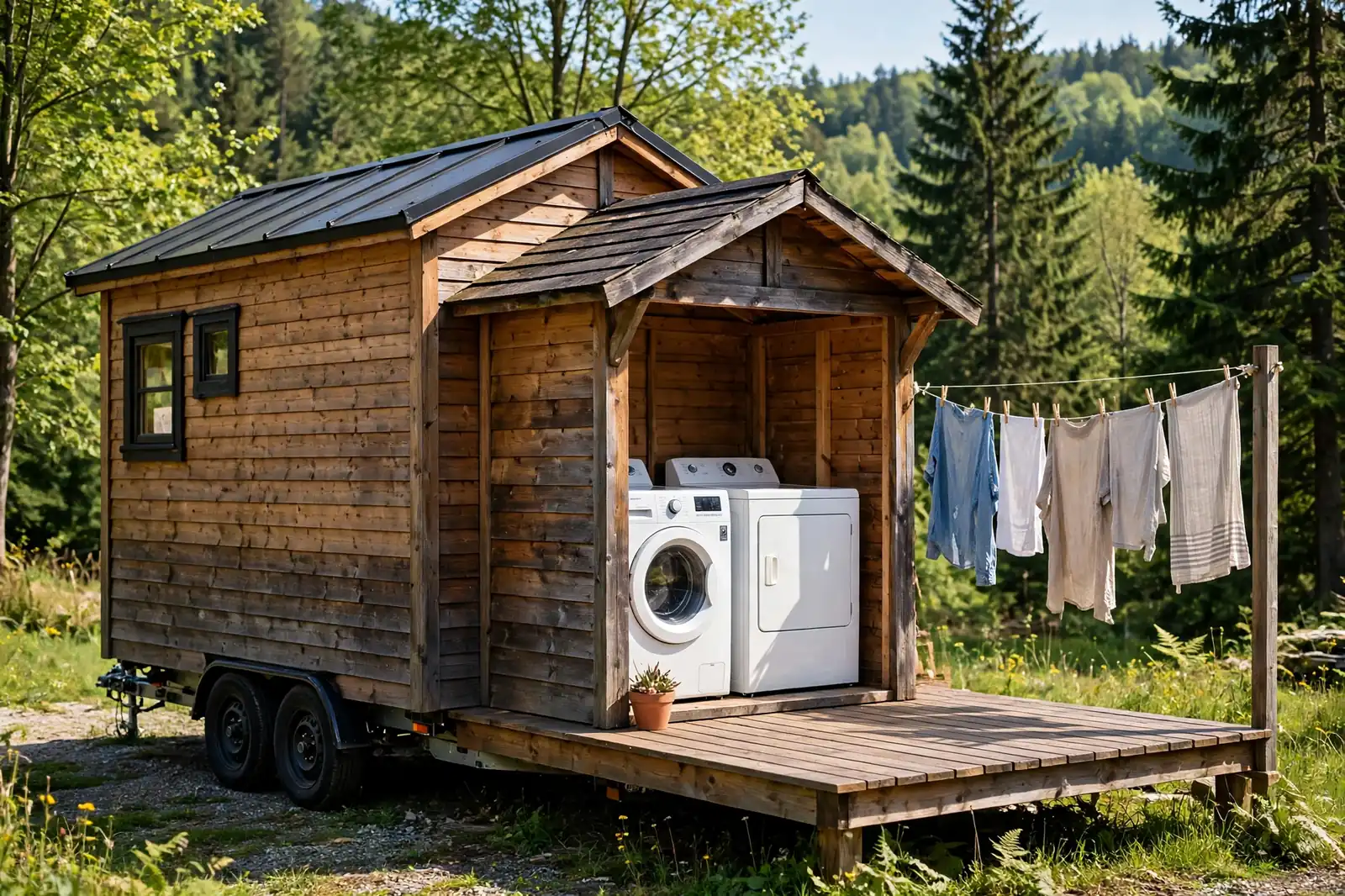
Some tiny houses move laundry outside entirely. A small shed on the deck holds the machines, and the clothesline does the drying.
Sun and wind dry clothes for free. They also smell better than anything from a dryer. Ask anyone who line dries.
The shed needs power, water, and a drain. Run those lines when you build the deck, not after. It is far cheaper that way.
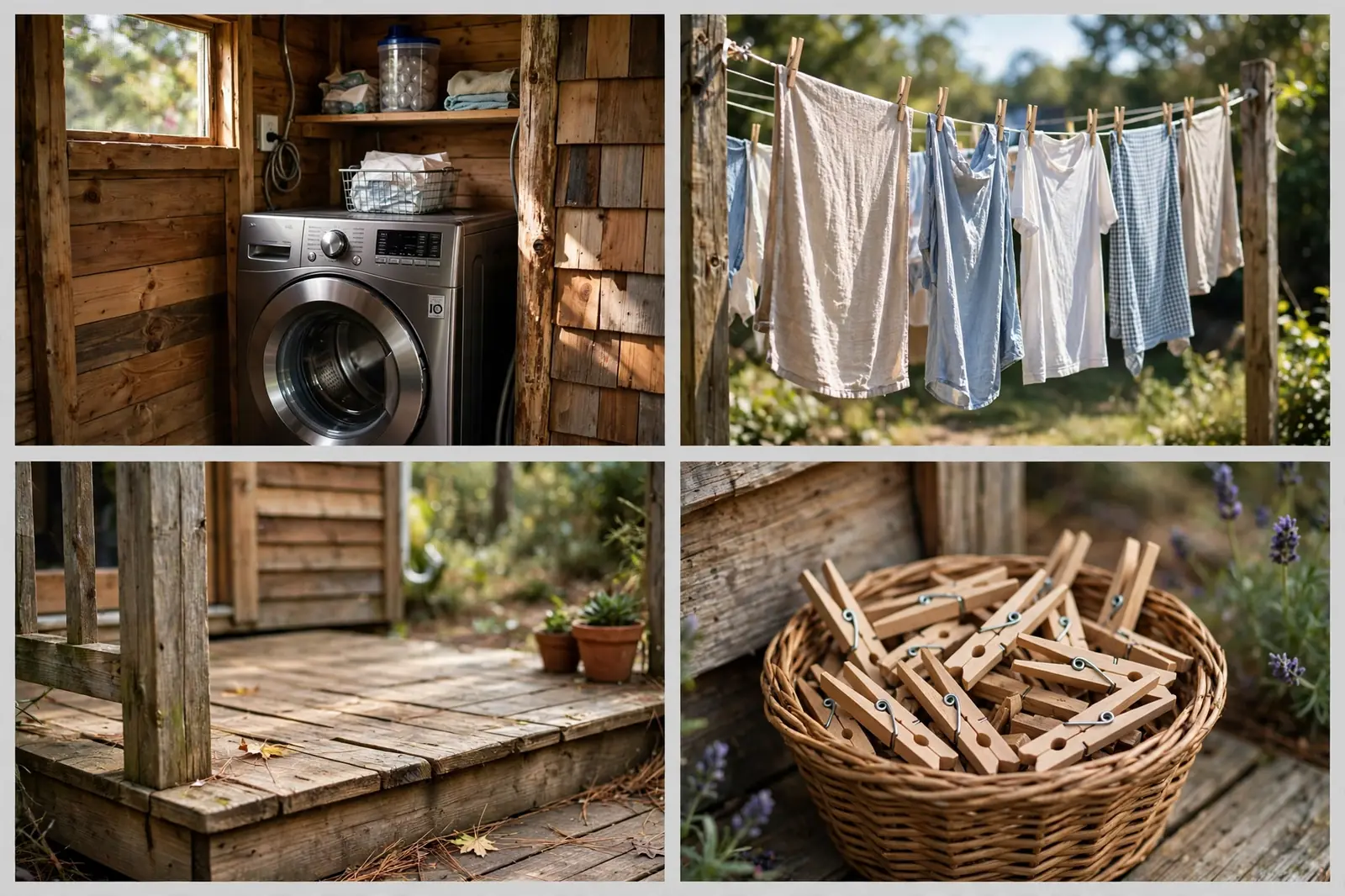
Insulate the shed if you get freezing winters. A frozen pipe will end your laundry week fast. A small heater on a frost setting does the job.
This setup frees up precious indoor space for living. It suits warm climates best, and anyone who loves hanging laundry outside.
8. Washer Built Into the Kitchen Run
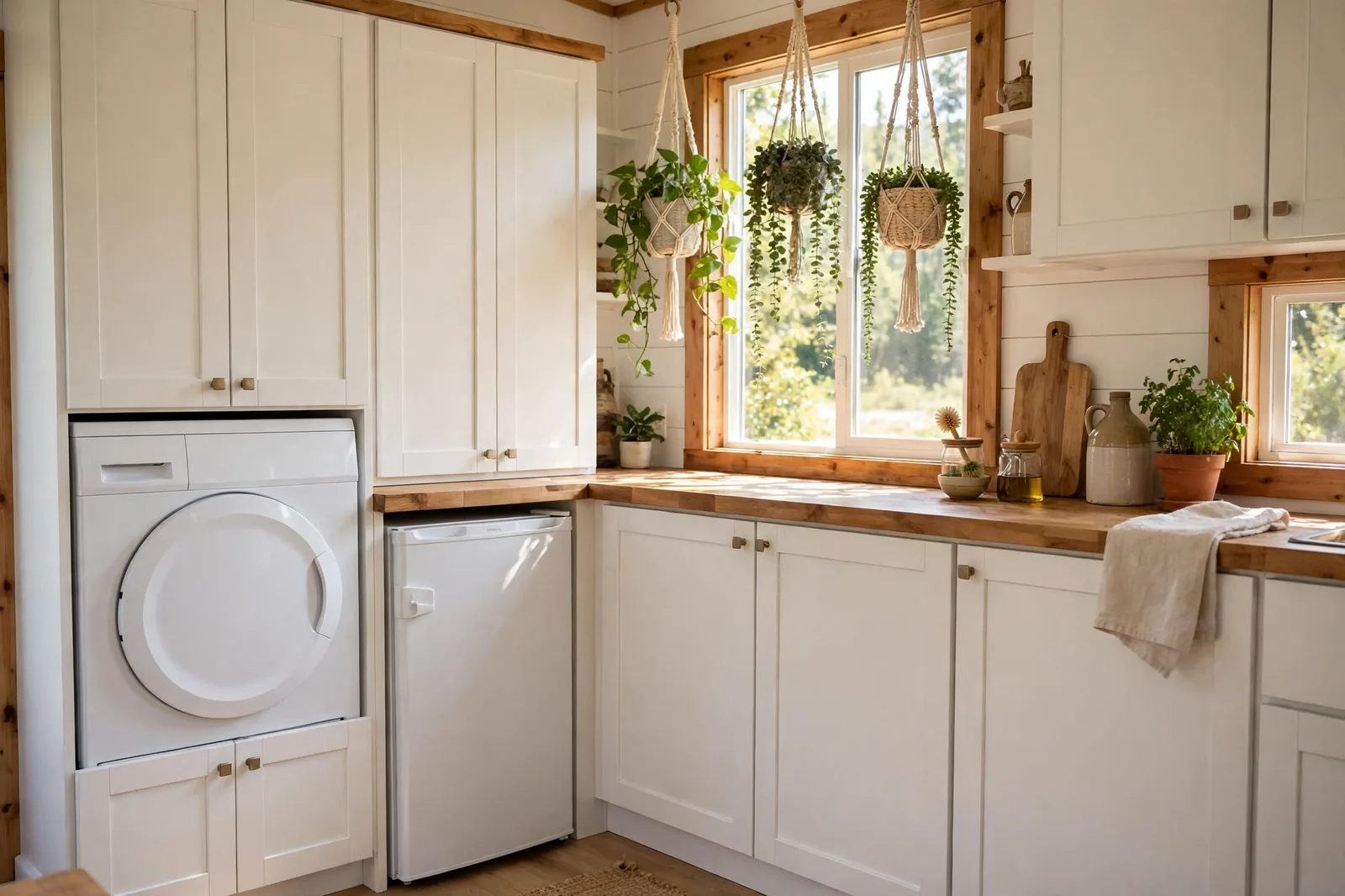
The kitchen already has water, drainage, and power. A washer built into the run uses all three without new plumbing.
A cabinet panel on the front makes the machine vanish. Guests see a kitchen, not a laundry room. You see clean clothes.
Keep the washer at the end of the run, near the sink. Short hose runs mean fewer leaks and easier fixes.
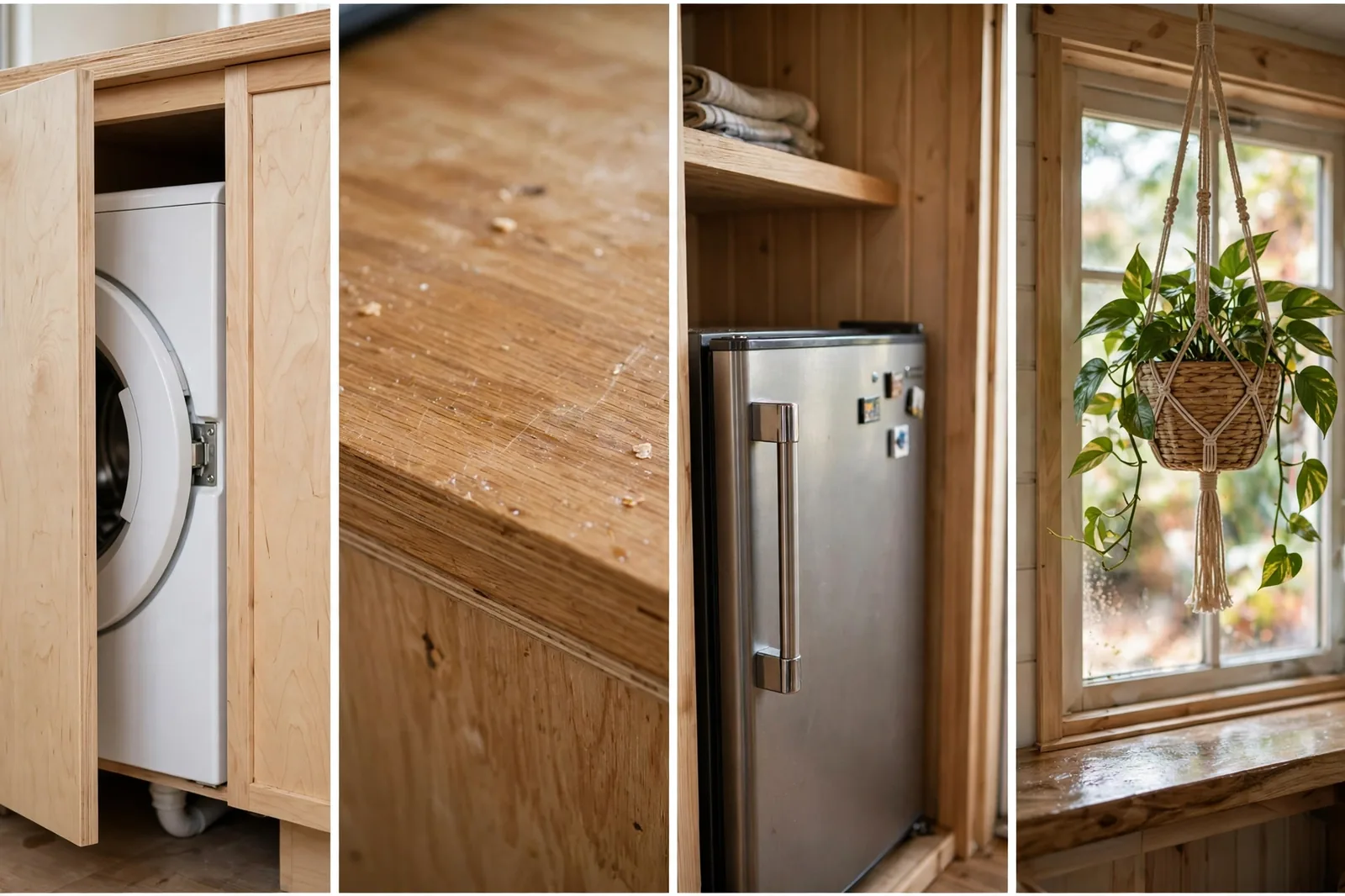
Noise is the only real drawback. A quiet model matters when the machine runs during dinner. Check the decibel rating before you buy.
This setup shines in small households. One or two people can wash daily loads without the machine ever feeling in the way.
9. Portable Washer in the Wet Bath
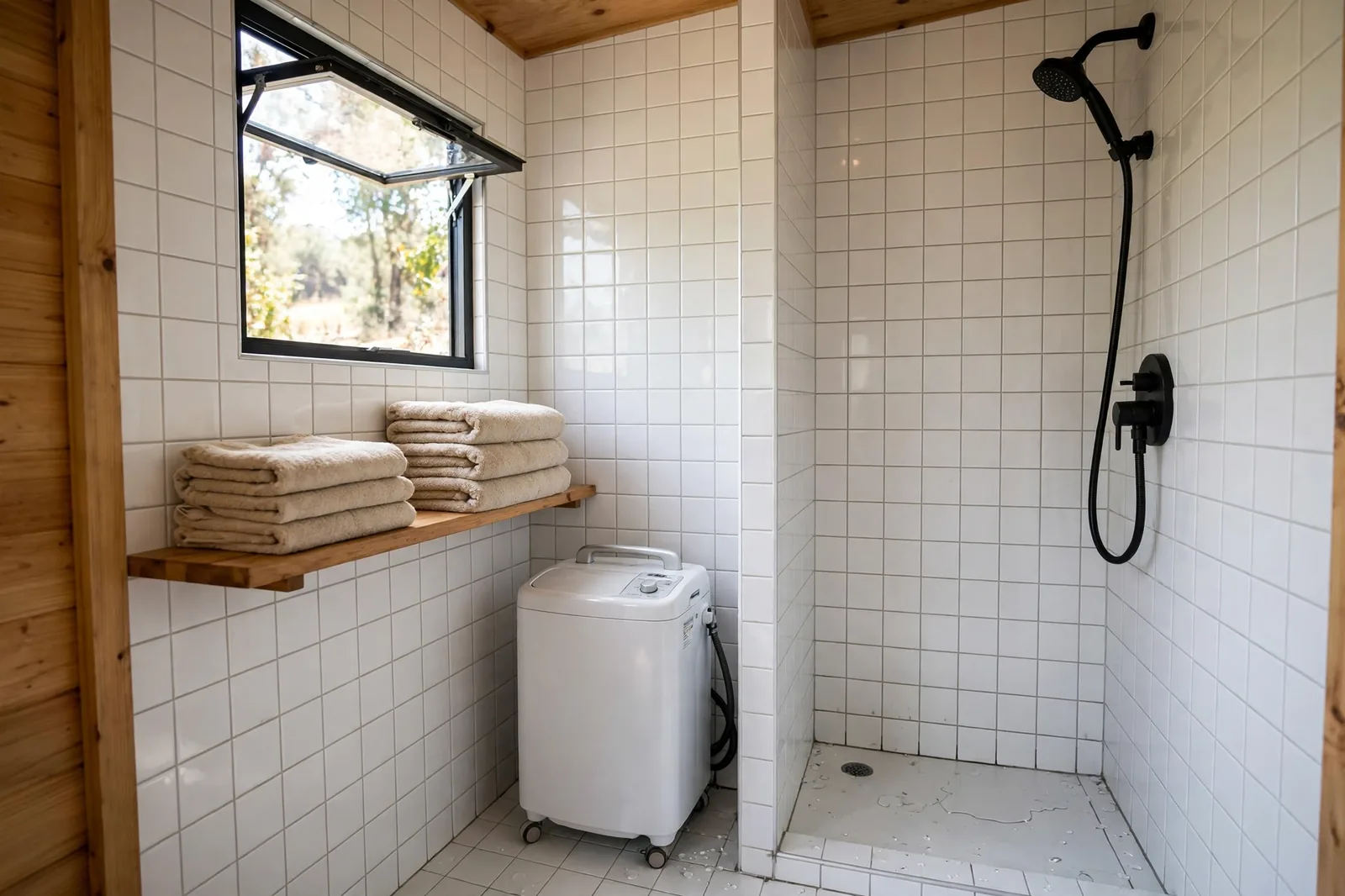
A portable washer is the lowest commitment setup on this list. It hooks to a tap, drains into the shower, and rolls away after.
It suits renters and anyone testing tiny living before committing. No holes, no plumbing changes, no permanent install.
Loads are small, usually around 10 pounds. That covers a few days of clothes for one person. Wash more often and it keeps up fine.
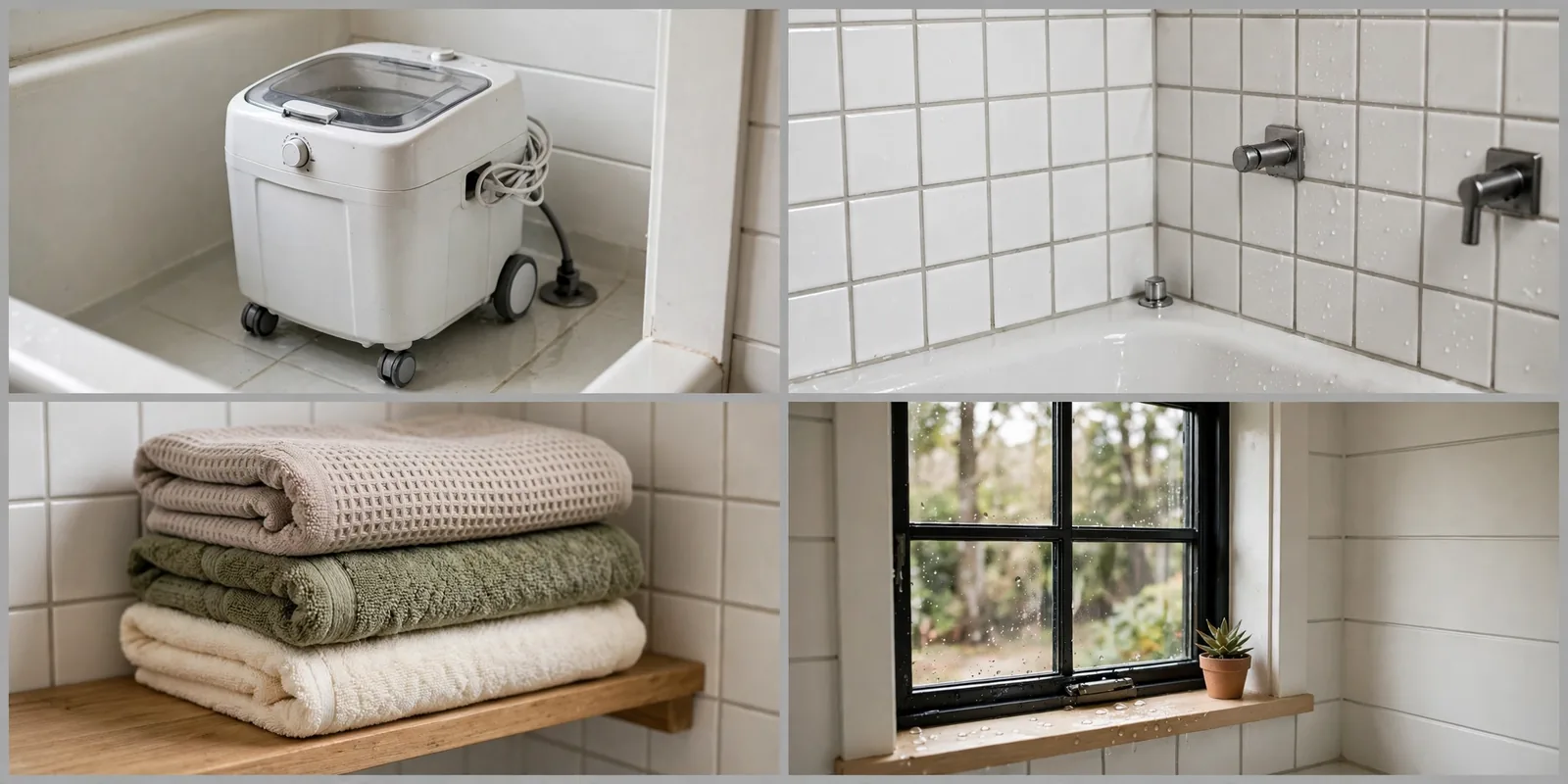
Store it under a shelf or beside the shower when not in use. A wheeled model moves easily, even in a tight bathroom.
Pair it with a drying rack or a spin dryer. The spin dryer pulls out extra water so clothes dry faster on the rack.
10. Laundry Wall on the Loft Landing
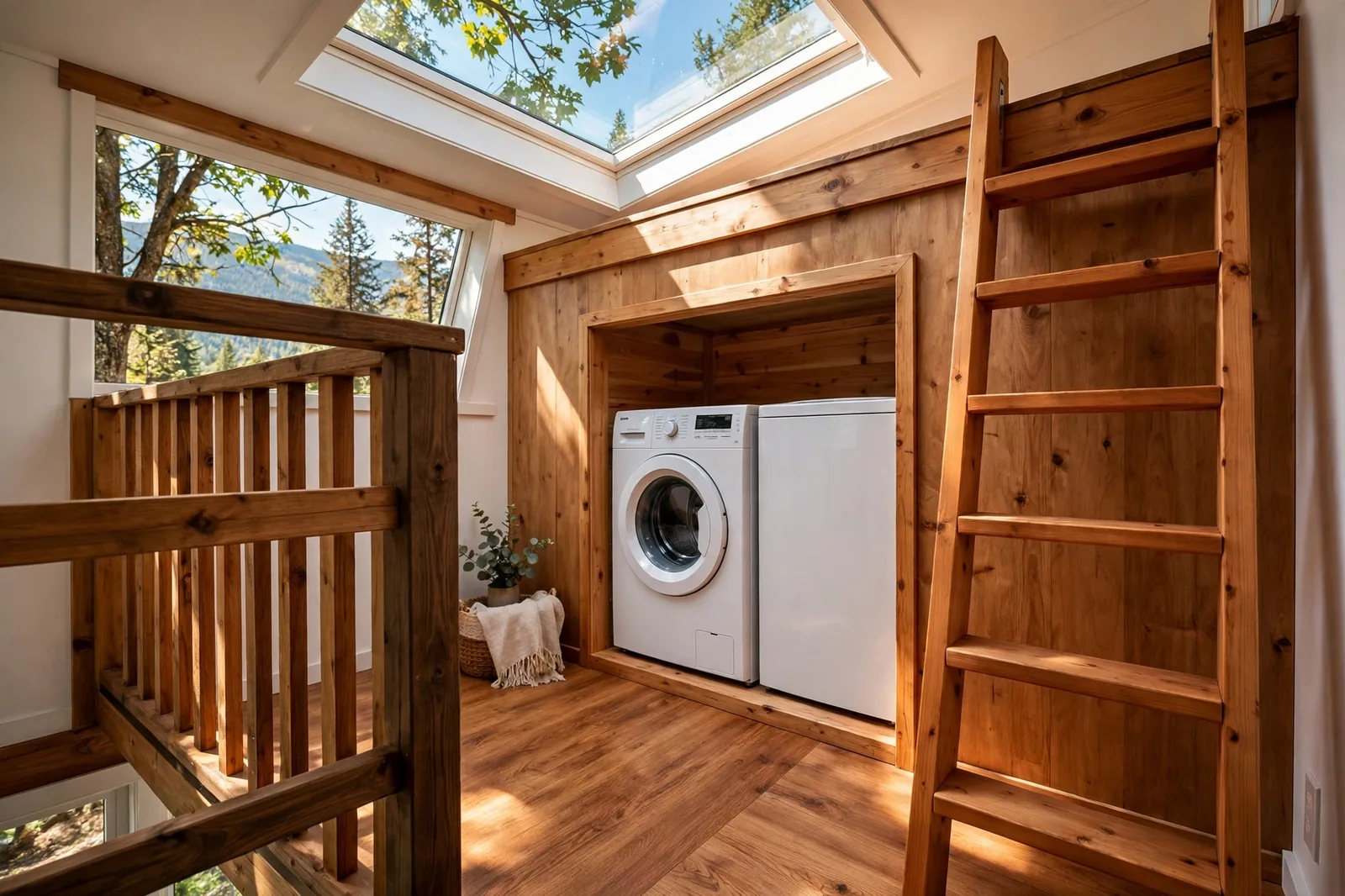
The loft landing is dead space in most tiny houses. A slim washer set into the wall turns it into a laundry station.
Clothes come off upstairs, where the bedroom is. Washing them right there skips the trip down the ladder with a full basket.
A skylight above keeps the landing bright and helps clothes dry fast. Warm air rises, and the loft is the warmest spot in the house.
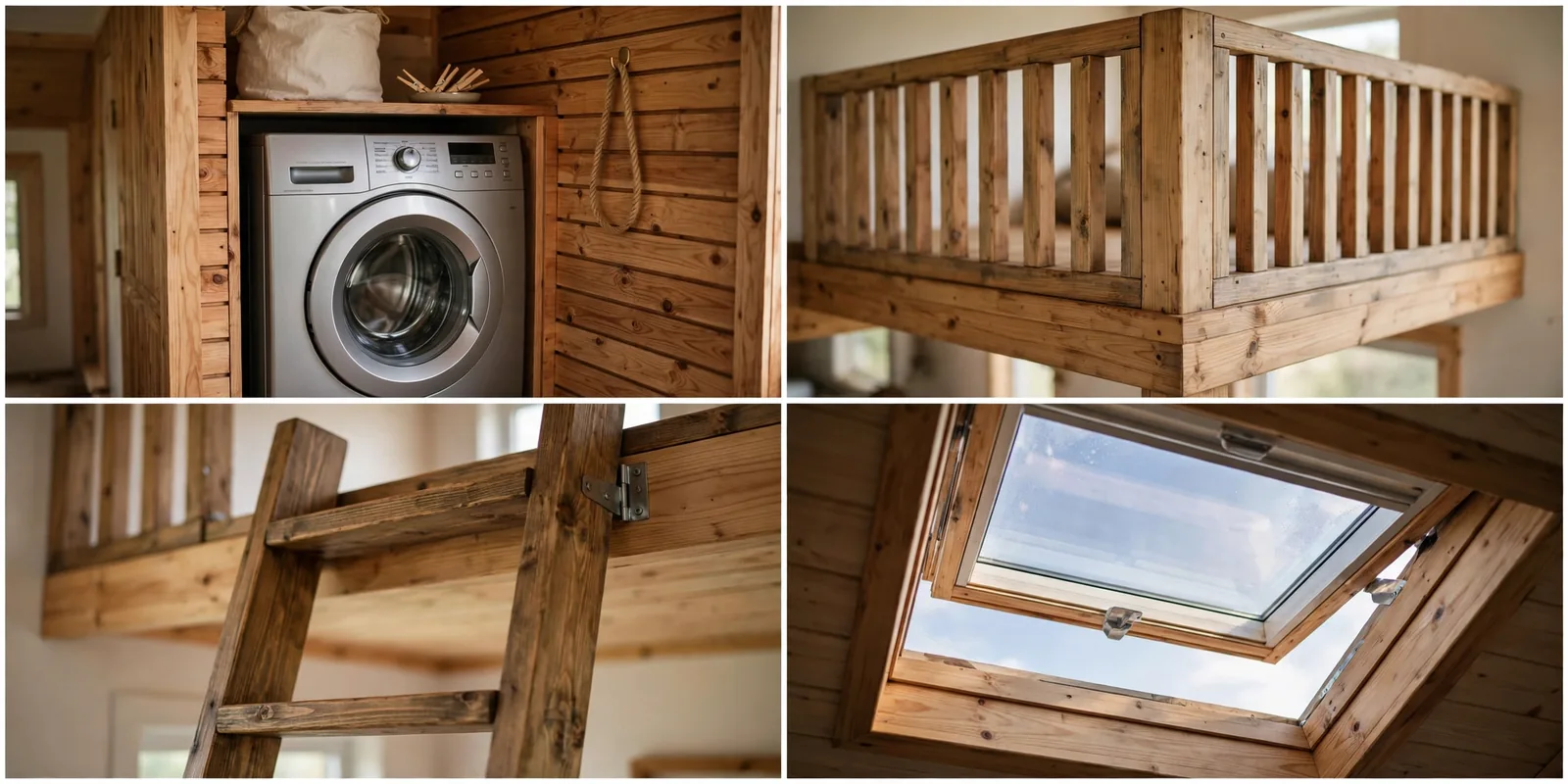
Plumbing is the challenge here. The drain and supply lines need to run up the wall. Plan this during the build, or pick a spot near an existing bathroom stack.
A ventless combo works best in this spot. No duct to route, and the machine fits the shallow niche.
11. Hidden Laundry Behind Shaker Cabinet Doors
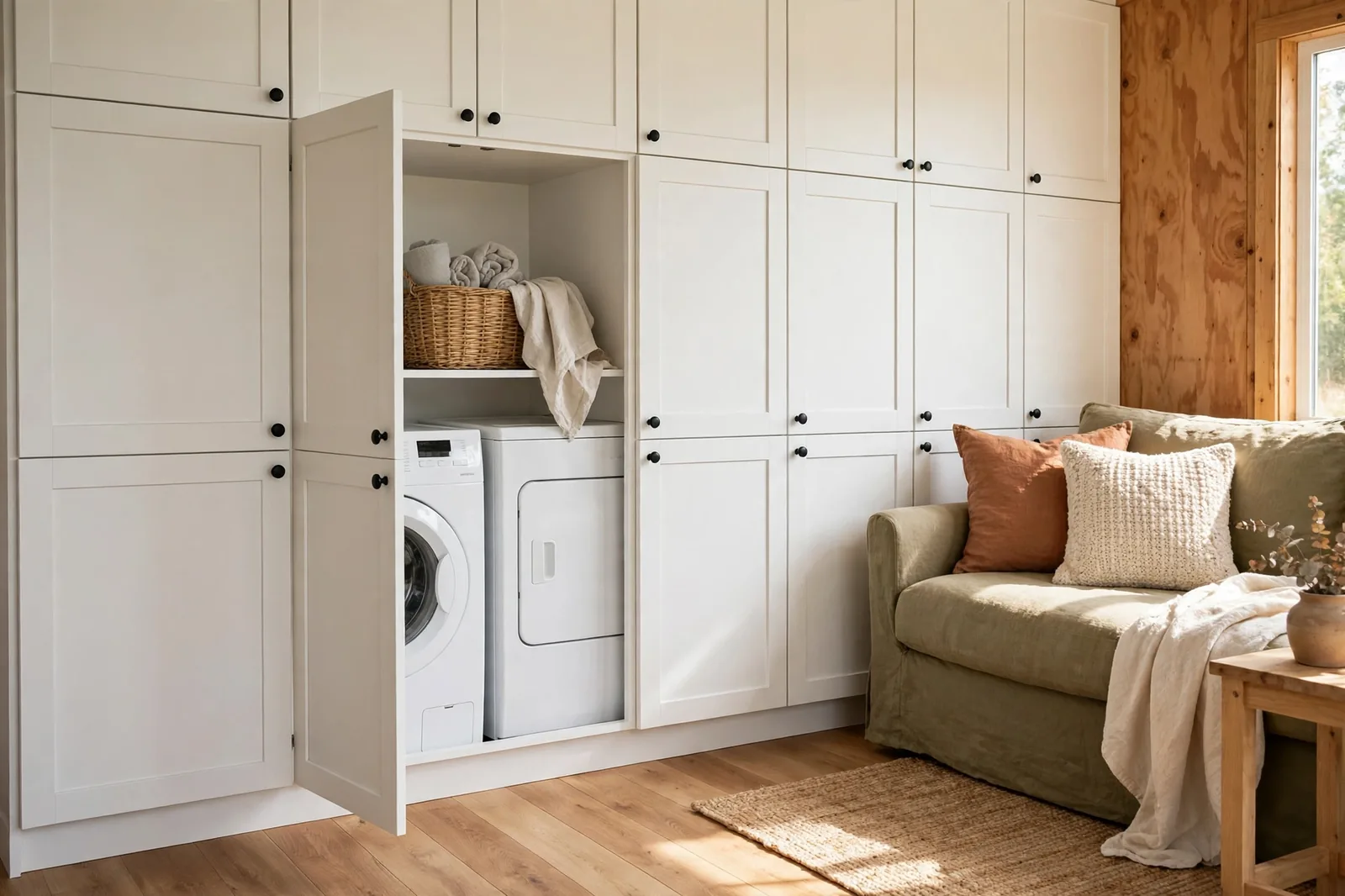
Some people do not want to see a washer at all. Shaker cabinet doors hide the machines behind a wall that looks like furniture.
The trick is ventilation. Doors need gaps or grilles so air can move. A hidden machine that cannot breathe will smell damp.
Inside, keep it simple. Washer, dryer, one shelf. The cabinet does the decorating, so the inside can stay practical.
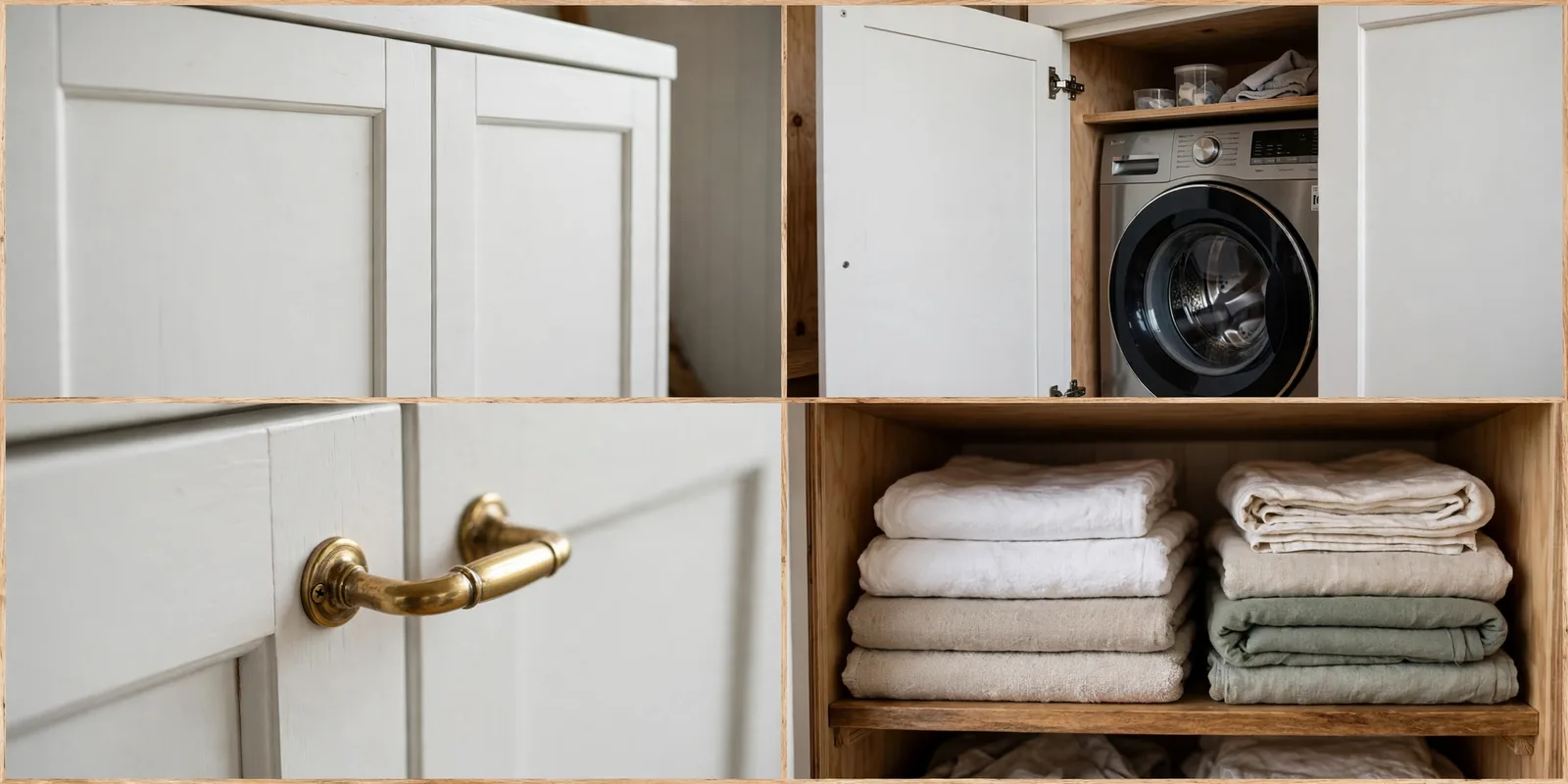
This setup works anywhere with a flat wall. Living room, hallway, bedroom. The machines go where the plumbing allows, and the doors make them disappear.
Use soft-close hinges. Slamming cabinet doors next to a spinning washer gets old fast.
12. Countertop Washer on a Rolling Cart
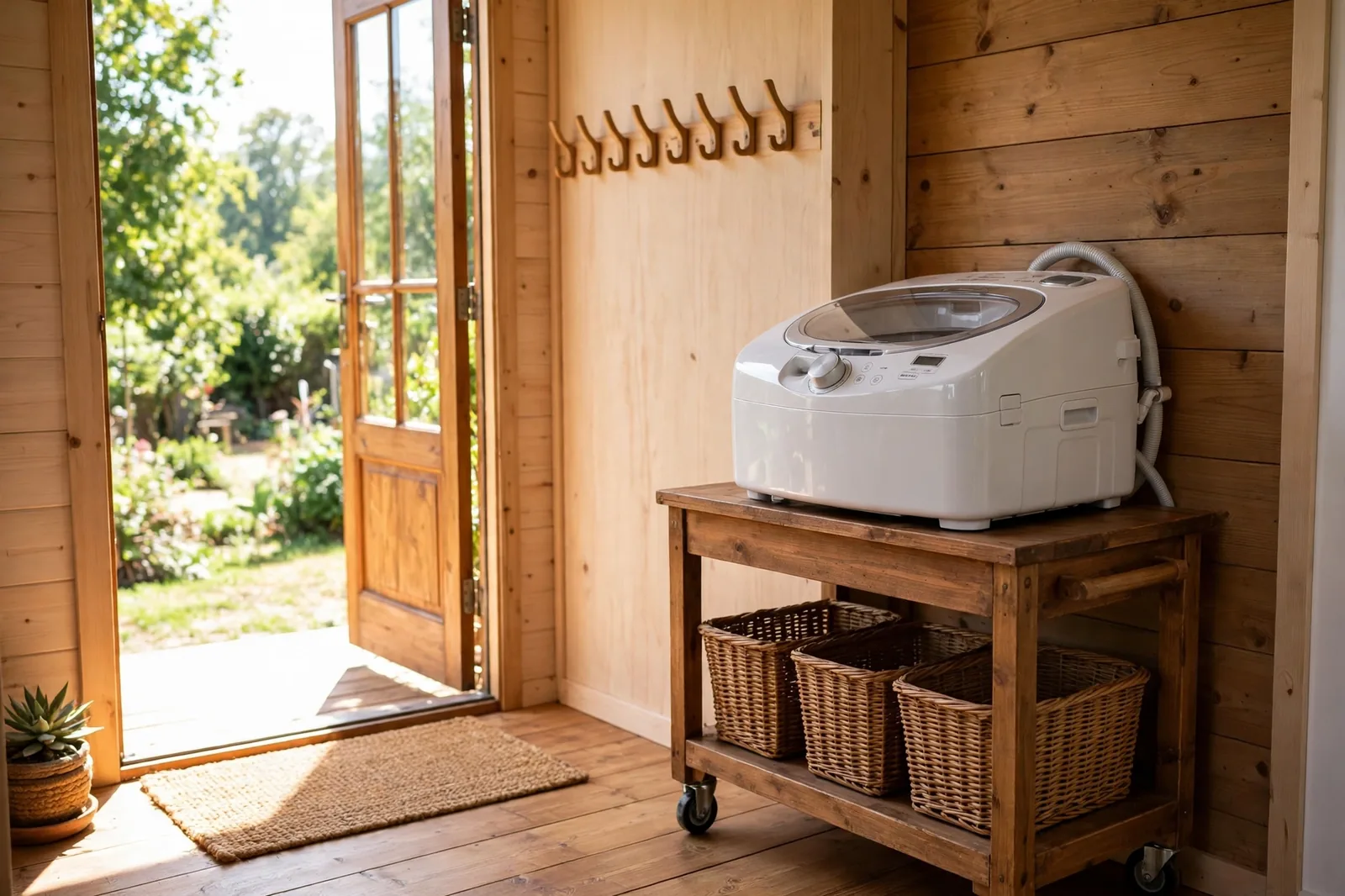
A countertop washer is the smallest real washer you can buy. On a rolling cart, it becomes a laundry station you can park anywhere.
Roll it to the sink to fill and drain. Roll it to a corner to store. The cart holds detergent and a basket underneath.
This setup fits a single person or a couple with light laundry habits. It will not keep up with a family of four.
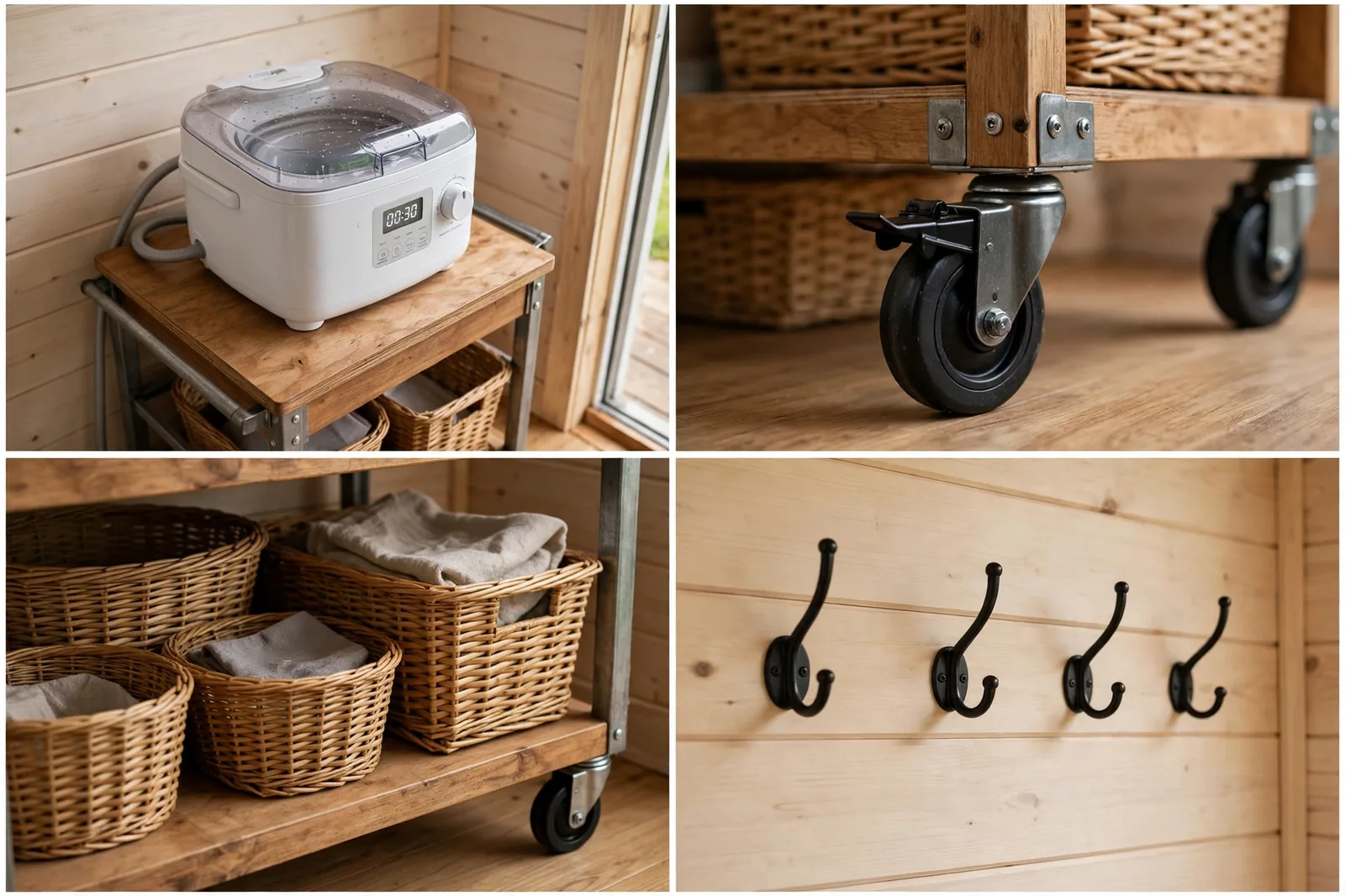
The cart needs locking wheels. A spinning washer on a rolling cart is a recipe for a flooded floor.
It also works as a backup. Keep one in storage for the week your main machine breaks down. It has saved more than one tiny house owner.
13. Laundry in the Mudroom Entry
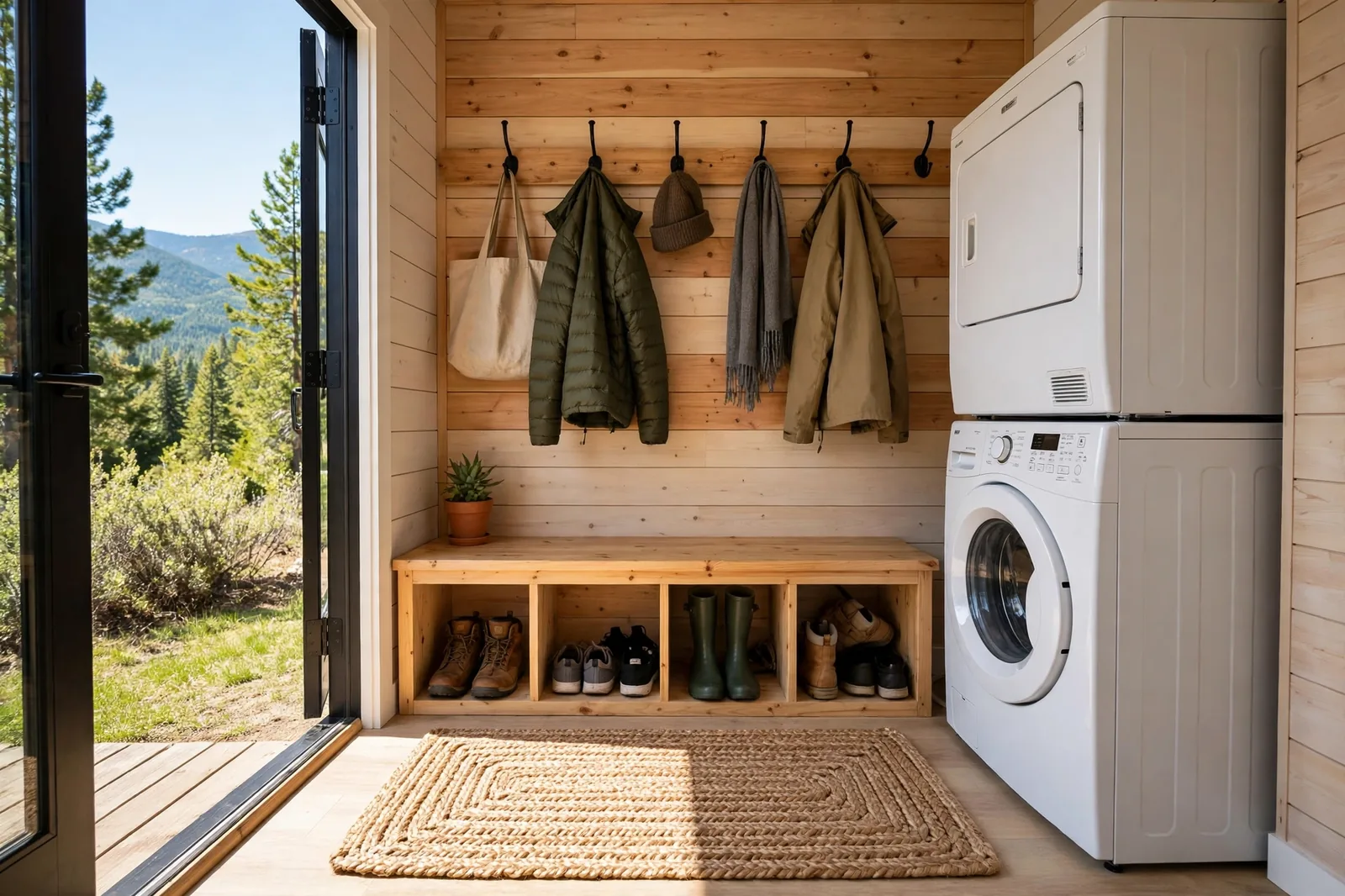
The mudroom is where dirty clothes arrive. Boots, coats, and muddy jeans all land by the door. A washer there catches them at the source.
A stacked pair beside the bench makes the entry work twice as hard. Sit to take off shoes, toss clothes straight in the machine.
Shoe storage below the bench keeps the floor clear. Coat hooks above keep jackets off the machines.
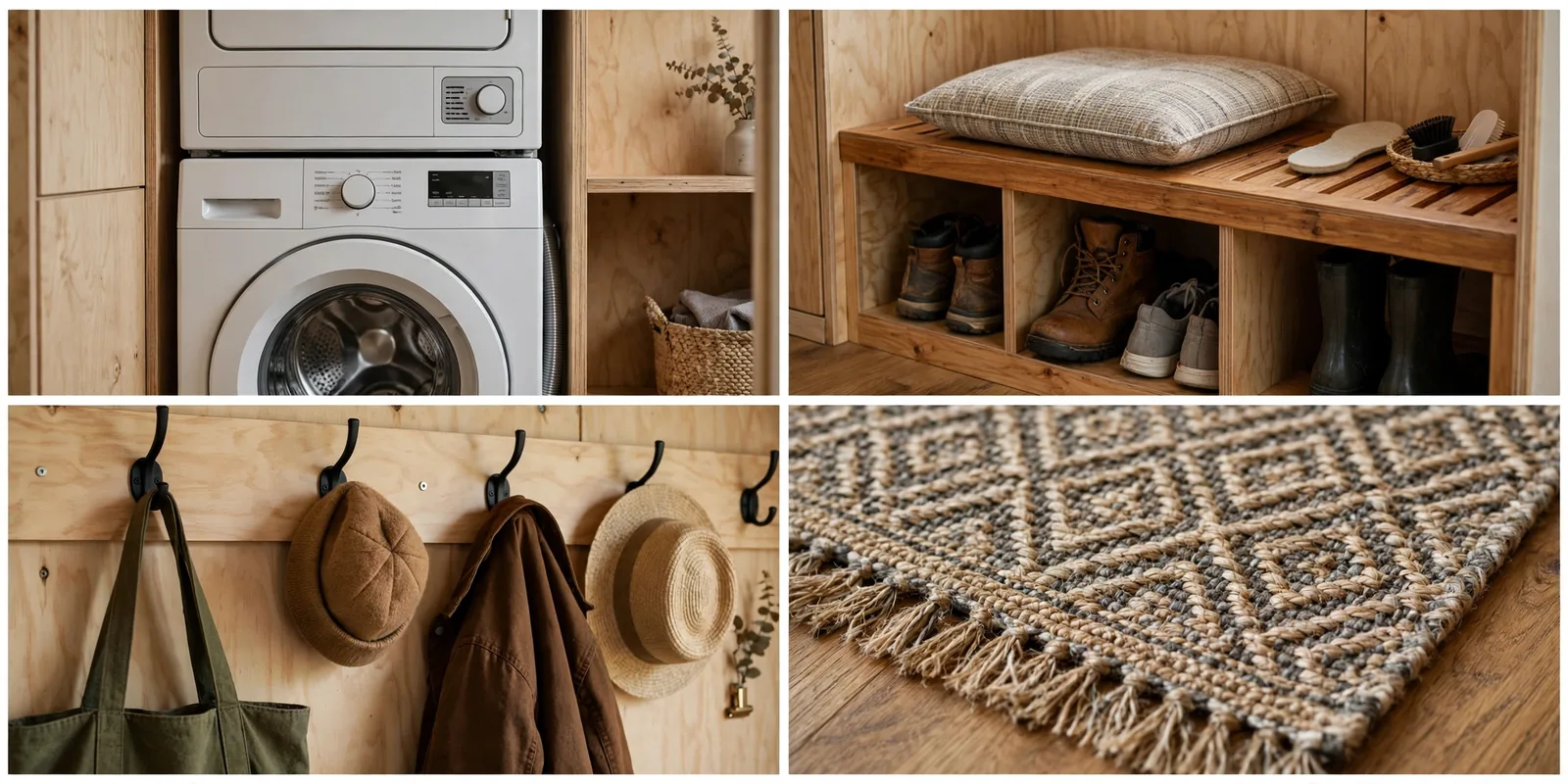
This setup needs good ventilation. Wet coats and a running washer make a damp room. A vent or a small fan keeps it fresh.
It suits families and outdoor workers best. Anyone who comes home muddy will love it.
14. Washer-Dryer in a Closet With a Venting Window
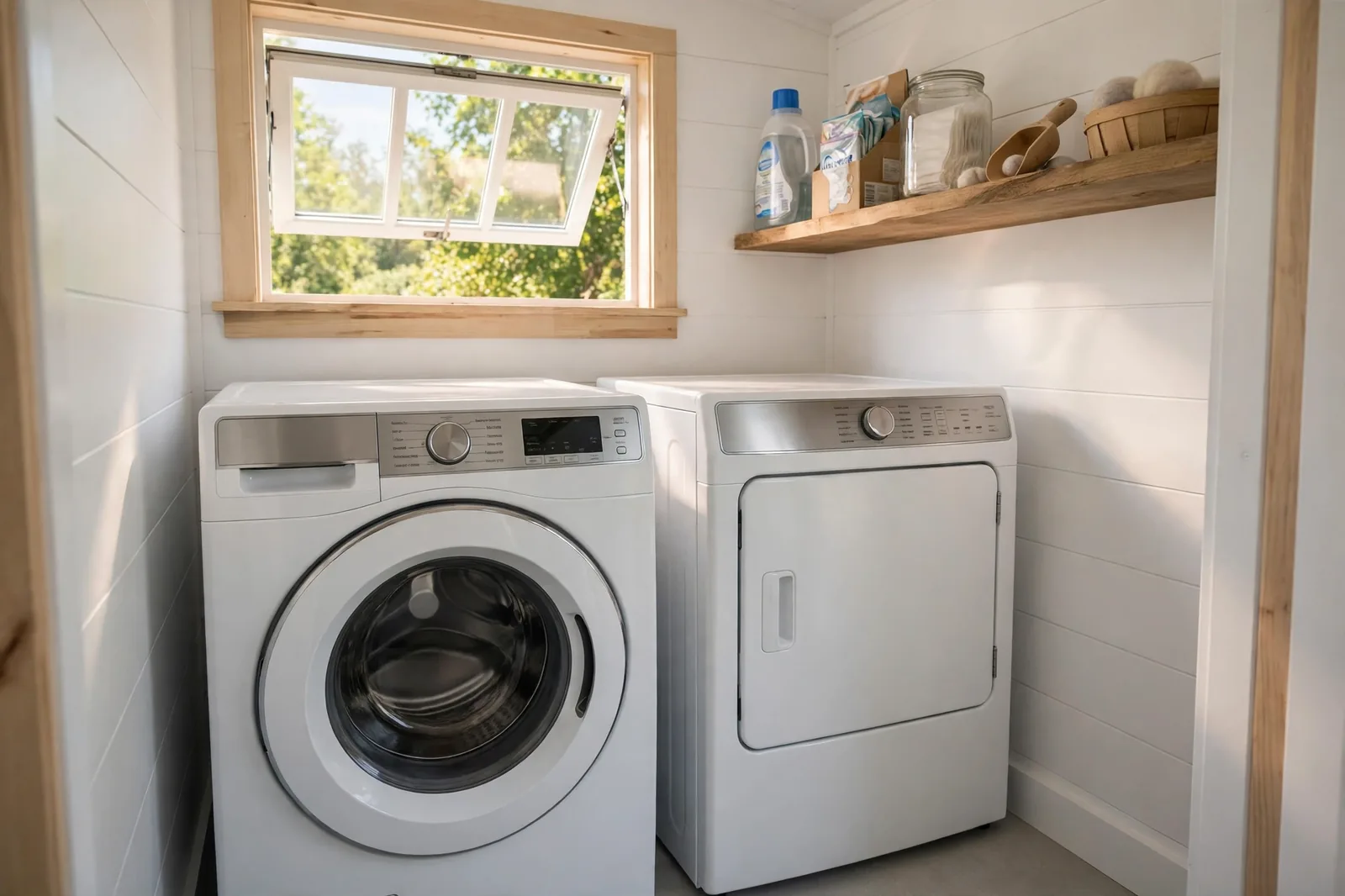
A small window changes everything in a laundry closet. Fresh air flows in, moist air flows out, and the machines dry faster.
Daylight makes the closet feel bigger too. Sorting clothes in a dark closet is miserable. A window fixes that for free.
Place the window above the machines if you can. Steam rises, and a high window lets it escape without a fan.
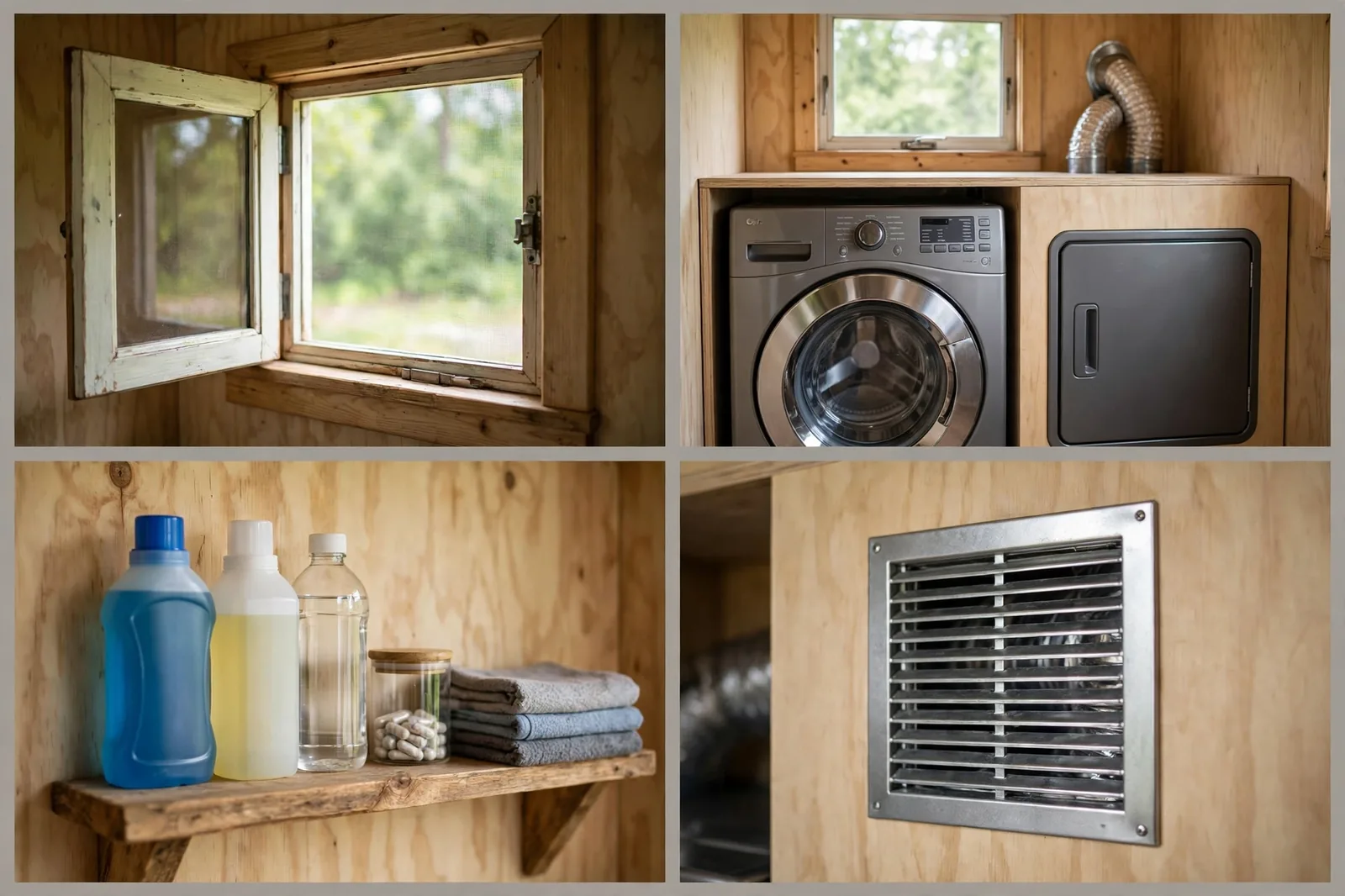
Pair the window with a vented dryer for the fastest setup. The dryer pushes moist air out, and the window brings fresh air in.
If your closet has no window, a vent grille in the door is the next best thing. Never seal a laundry closet airtight.
15. Drying Cabinet With a Heated Rail
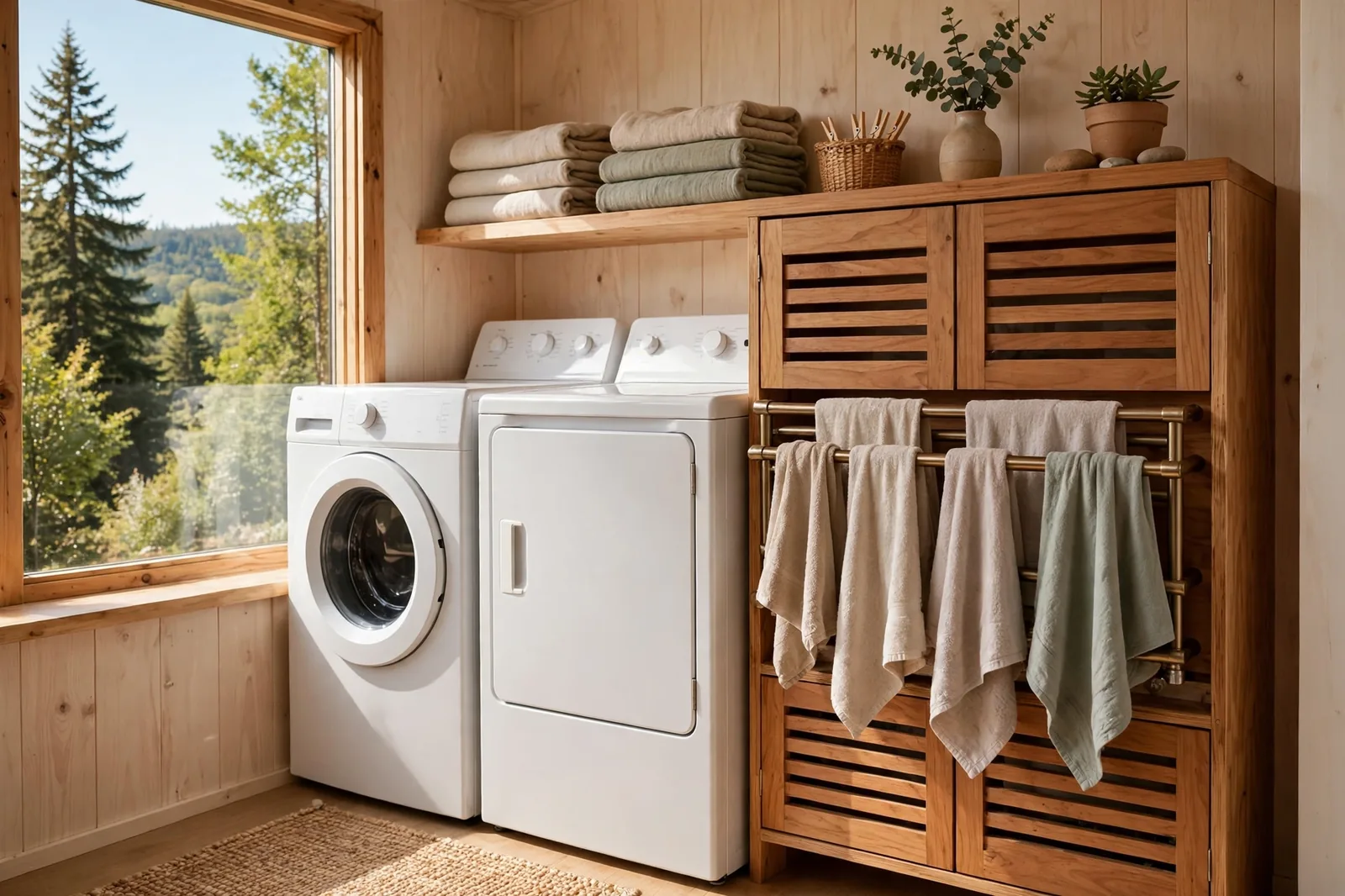
A drying cabinet is a warm closet for wet clothes. Heated rails inside dry shirts, towels, and delicates gently and evenly.
It uses far less power than a tumble dryer. It also treats clothes better. No tumbling means less wear on fabric.
The cabinet hides the drying entirely. Close the door and the laundry disappears. Open it and everything is dry and warm.
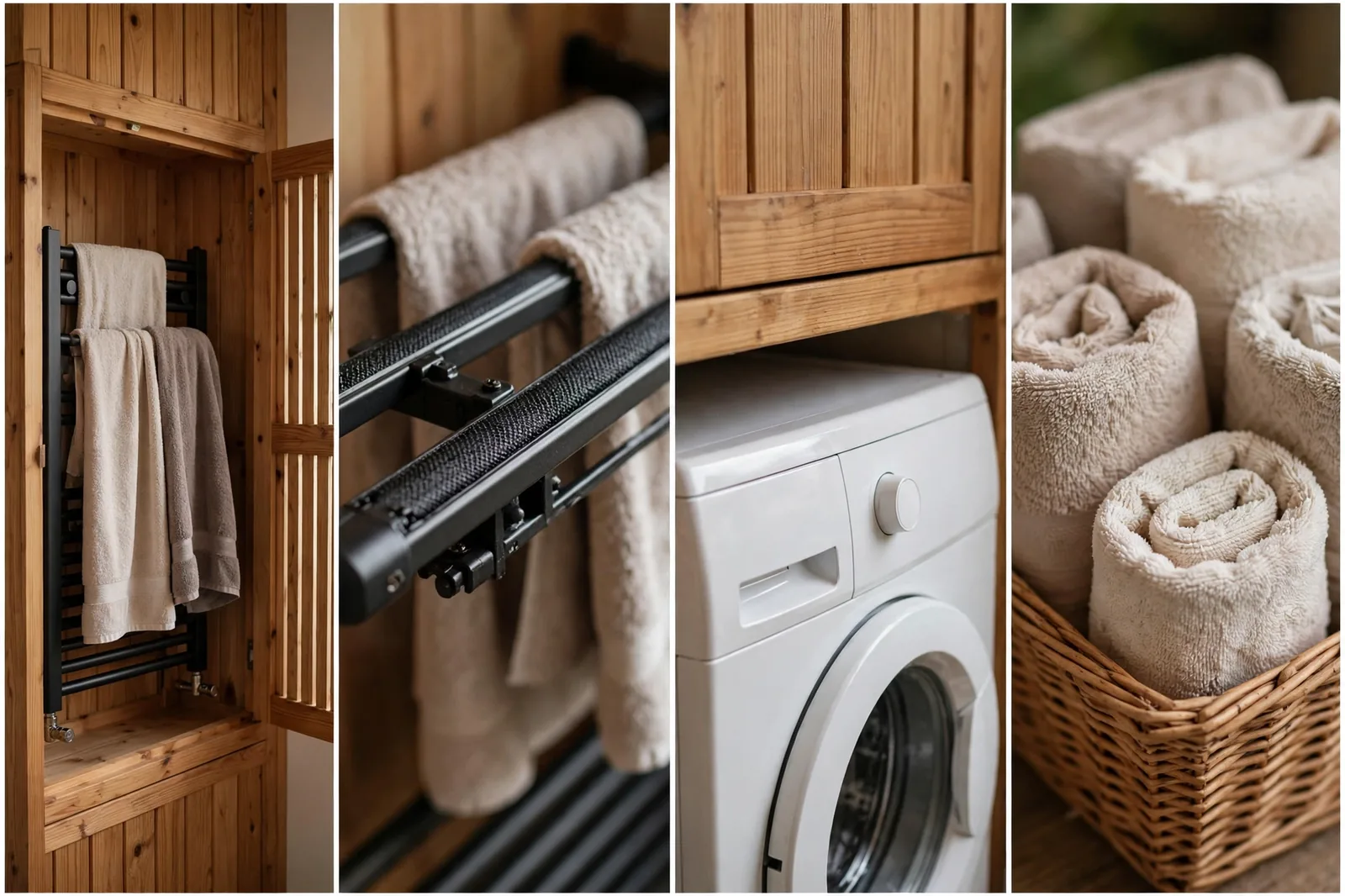
Heated rails work best for items that should not tumble dry. Wool, delicates, and outdoor gear all dry safely here.
Build the cabinet tall and narrow. It fits beside the washer and holds a full load on its rails.
Laundry in a tiny house is a design problem, not a sacrifice. The right setup fits your space, your power, and your habits. Pick the one that matches how you actually live.
Start with the plumbing you already have. The best laundry spot is usually the one closest to water and a drain. Build from there.
And plan the drying before you buy the washer. A great washer with nowhere to dry is still a problem. A simple rack or a sunny line can matter more than the machine itself.