How to Move a Tiny House Without Breaking It (or the Law)

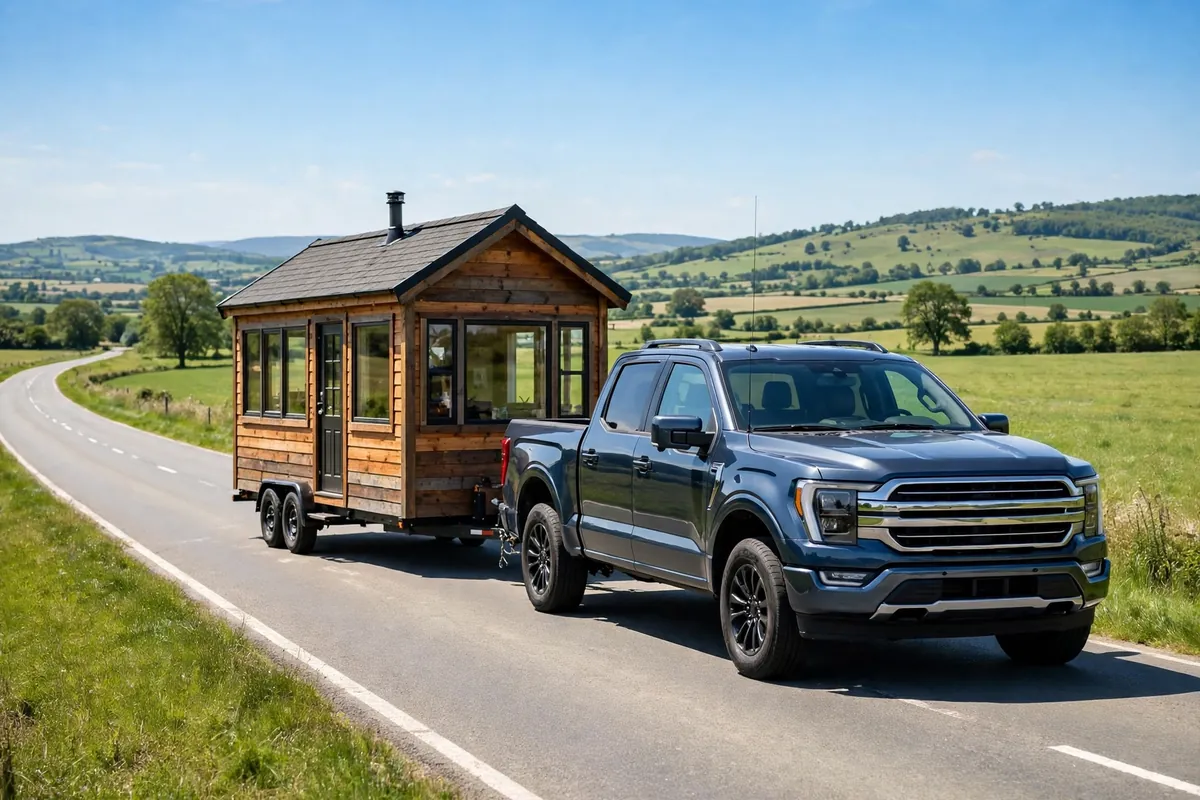
A tiny house looks ready to roll. It has wheels, a hitch, and a road under it. That is the easy part. Moving it without damage, a fine, or a very bad day on the highway takes planning.
Most moves go wrong in the same few places. The house weighs more than the owner guessed. The truck is too light. The route has a bridge the house cannot clear. The state line needs a permit nobody applied for.
This guide walks through the whole move in order. Weigh it, check the trailer, match the truck, plan the route, sort the paperwork, then prep the inside. Follow the steps and your house arrives in one piece, with your budget and your nerves intact.
At a Glance: Moving a Tiny House
- Legal size without a permit in most states: 8.5 feet wide and 13.5 feet tall
- Typical finished weight: 10,000 to 14,000 pounds for a 24 foot home, loaded
- Professional transport: usually $3 to $7 per mile
- Trailer number to know: GVWR, the most your trailer can legally carry
- One rule above all: never guess a number, measure it or weigh it
1. Start With the Real Numbers: Weigh It First
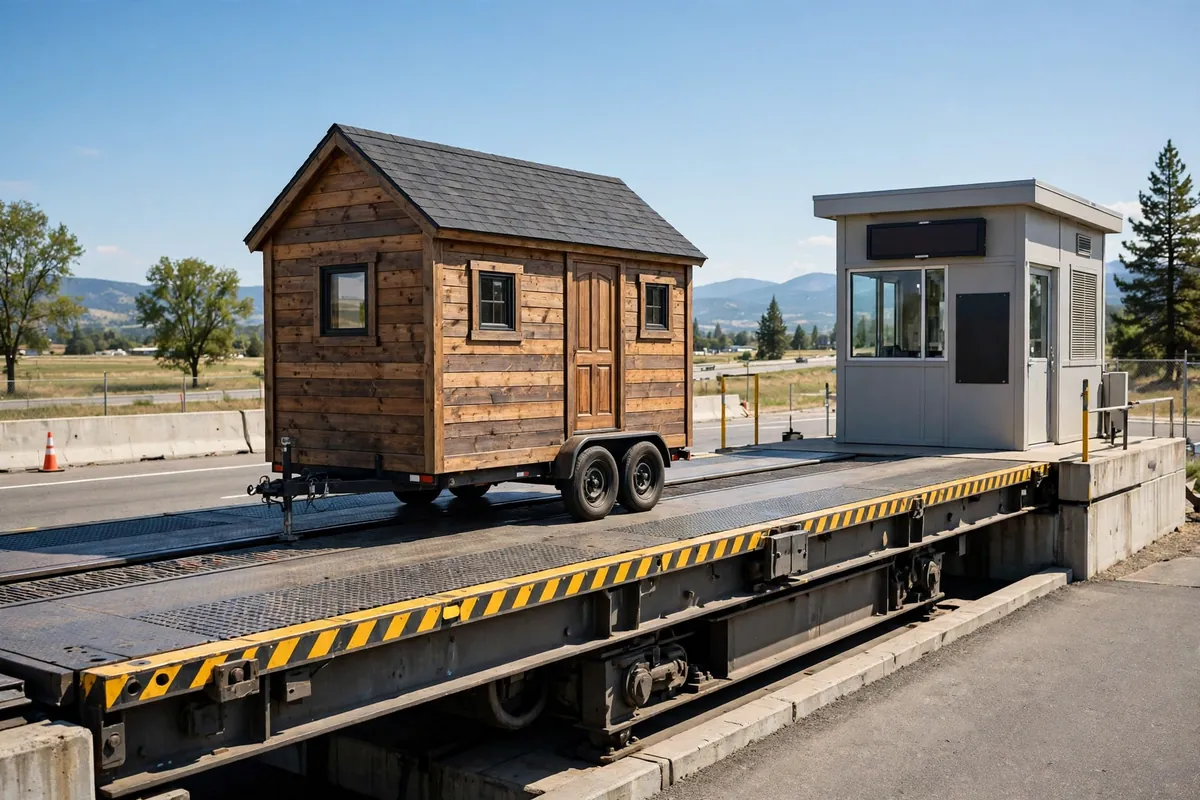
Your house is heavier than you think. Wood framing, tile, appliances, water tanks, books, and a full pantry add up fast. A finished 24 foot tiny house commonly weighs 10,000 to 12,000 pounds, and a loaded one can reach 14,000 or more.
Guessing is how axles break and brakes fail. The only honest number comes from a scale. Drive the loaded house to a certified truck scale and weigh it with everything inside, including full water tanks.
Write down three numbers. Total weight, weight on each axle, and tongue weight, the downward push on the hitch. Tongue weight should sit near 10 to 15 percent of the total.
Weigh it again if you add anything big. A solar array, a wood stove, or a tile shower can push a borderline house over its limit. The Little Houses for Sale guide to moving a tiny house puts the same point plainly: a finished 24 foot house usually lands between 10,000 and 14,000 pounds, and the trailer rating has to cover it with room to spare.
2. Know Your Trailer and Its Limits
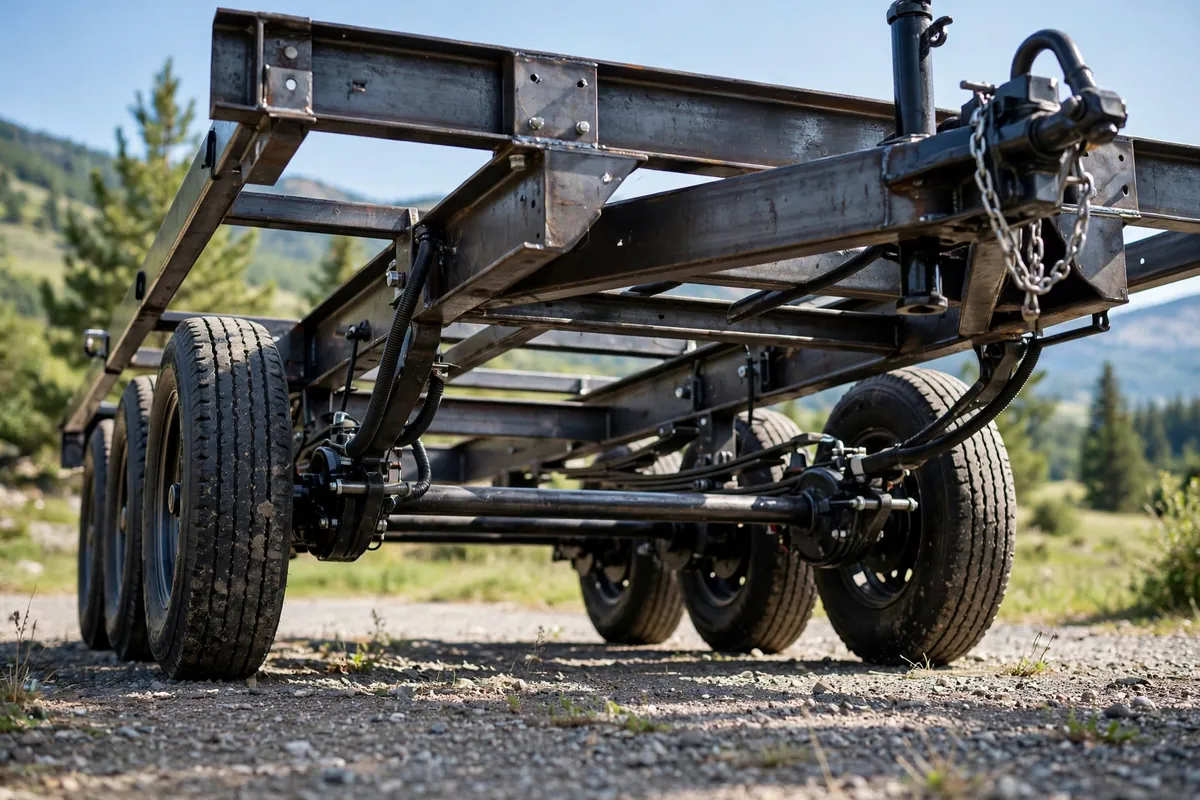
The trailer is the foundation of your house, and it has a hard limit. That limit is the GVWR, short for Gross Vehicle Weight Rating. It is the most the trailer can legally and safely carry: house plus trailer plus everything inside.
Find the plate on the trailer frame. It lists the GVWR and the rating for each axle. A dual axle trailer often rates 10,000 to 14,000 pounds. A triple axle setup can reach 15,000 to 21,000 pounds.
Leave a safety margin of 10 to 15 percent under the GVWR. Water, books, and a full pantry add up, and a trailer at its limit has no room for a rough road.
Check the tires, brakes, and lights before every move. Electric brakes on all axles are a must, not a nice extra. Old tires crack, and a blowout at highway speed with a house behind you is the nightmare scenario.
If the numbers do not work, do not argue with them. A bigger trailer or a flatbed is cheaper than a wreck.
3. Pick the Right Tow Vehicle
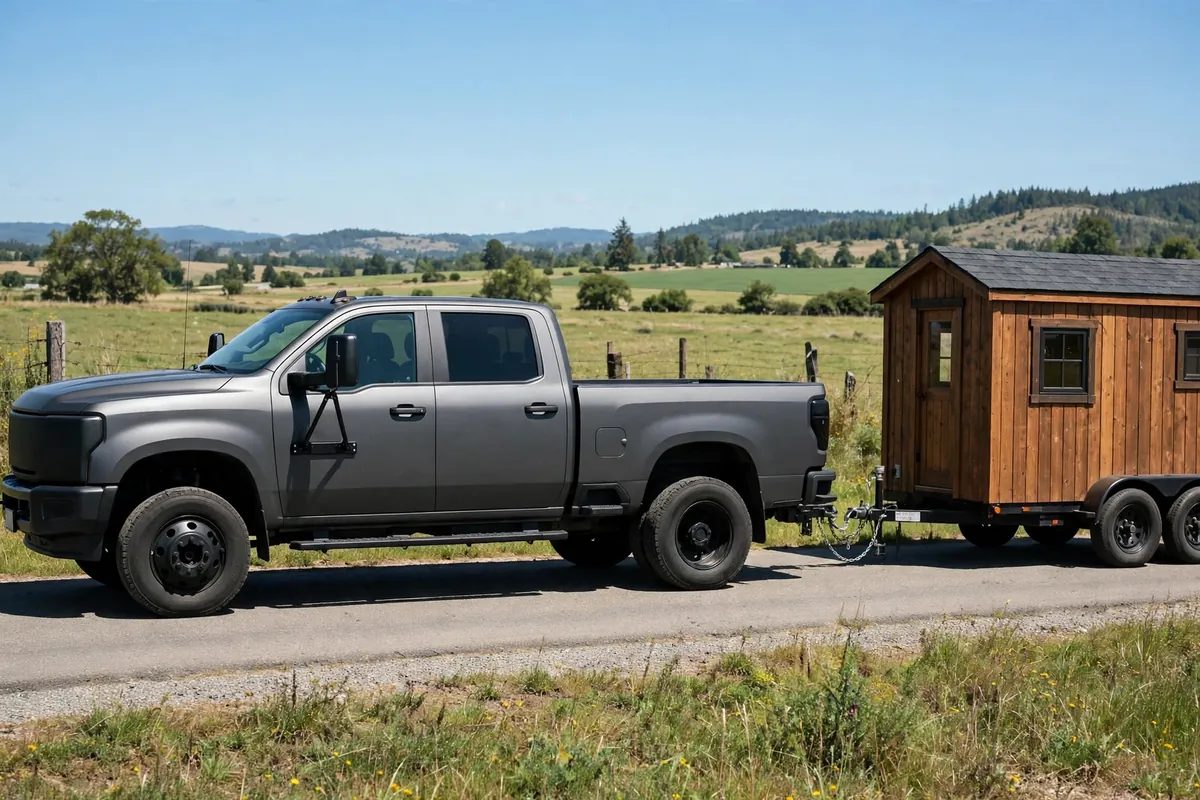
A tiny house is far heavier than a travel trailer of the same length. A half ton pickup is too light for most finished homes. For a standard 24 foot house, plan on a three quarter ton or one ton diesel pickup.
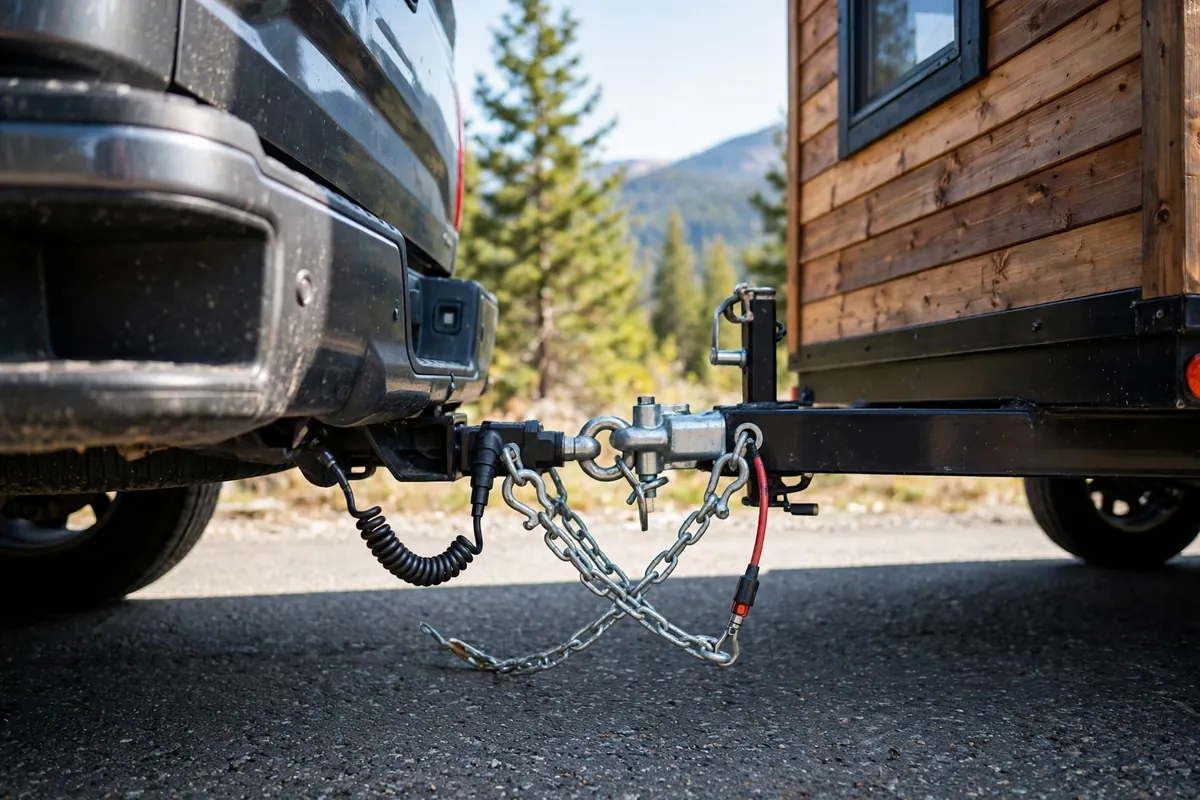
Check three ratings in the truck manual. Towing capacity, GCWR (gross combined weight rating, truck plus trailer plus cargo), and the hitch rating. The hitch is often the weakest link, so read its stamp, not just the truck brochure.
Keep a margin here too. A truck rated to tow 13,800 pounds is the bare minimum for a 12,000 pound house, and a bigger margin tows calmer and brakes better. Diesel helps on long downhill runs, where an exhaust brake saves your brakes from overheating.
If your combined weight tops 26,001 pounds, many states require a non commercial Class A license. Check with your DMV before moving day, not at a weigh station.
No truck of your own? Renting a heavy duty truck runs $150 to $350 a day, but rental trucks often cap towing at 10,000 pounds. Know the cap before you sign.
4. Plan the Route Like a Trucker
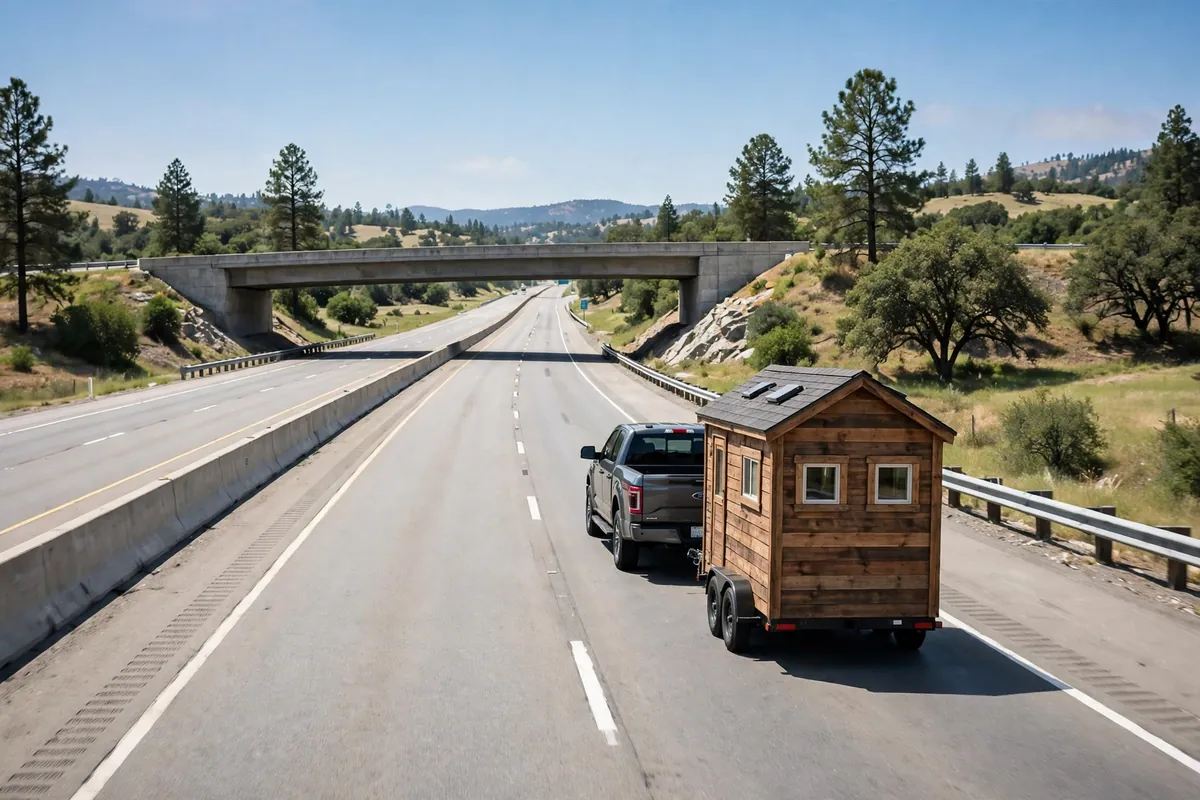
A normal GPS will send your house under a bridge it cannot clear. That is how roofs get peeled off. Plan the route with a truckers GPS or an RV app that takes your height, width, and weight and steers you around low clearances and weight restricted roads.
Measure the true height from the road to the highest point, including roof vents and solar panels. Most states cap height at 13 feet 6 inches without a permit, and older bridges can be far lower. A posted clearance is a hard stop, not a suggestion.
Drive the route in a car first if you can. Look for tight turns, steep grades, low branches, and narrow lanes. Rural roads hide all four.
Avoid holiday weekends and rush hour in cities. Oversize loads often travel daylight only on weekdays, and your permit may say so. The Priority Auto Transport guide notes that step deck and lowboy trailers drop a tall house closer to the road so it stays under the 13.5 foot bridge limit.
Plan fuel stops ahead. A long rig needs big lots and wide turns, and you never want to reverse a house into traffic.
5. Permits, Escorts, and the Law by Width
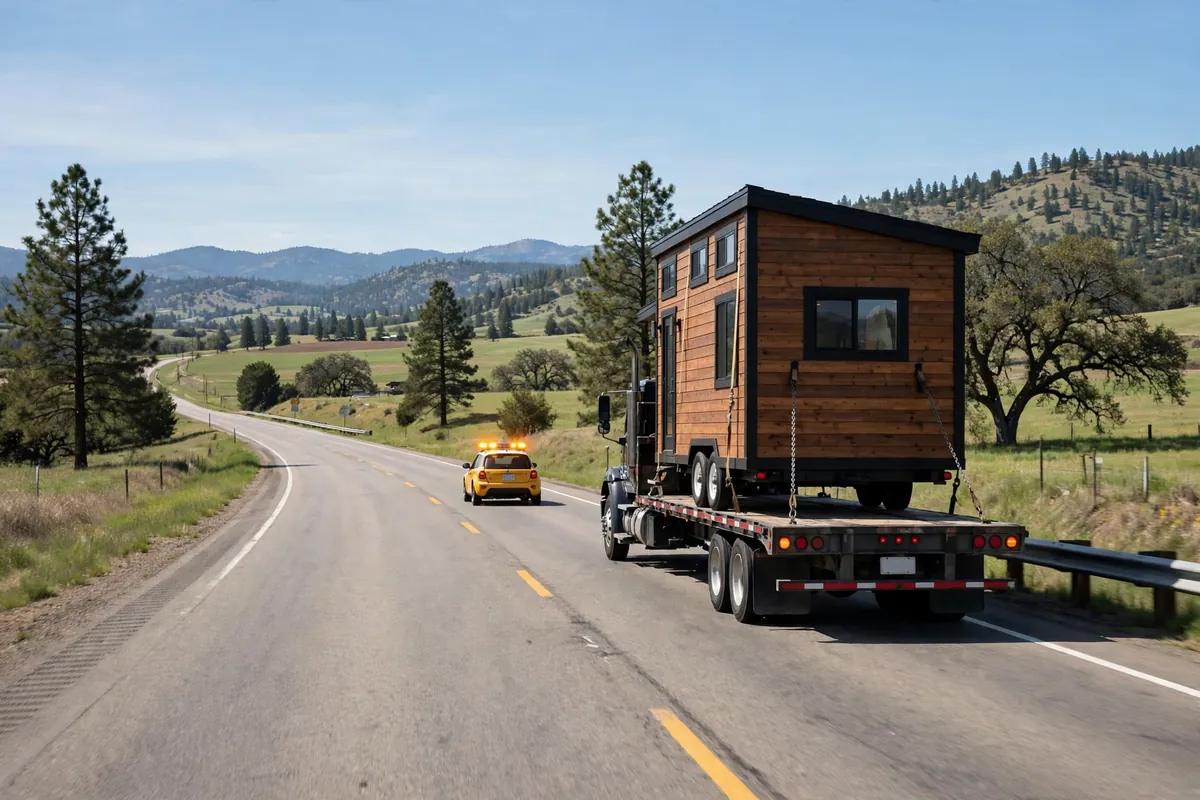
At 8 feet 6 inches wide or less, most states let you tow without an oversize permit. One inch over that line changes everything.
From just over 8.5 feet to 10 feet wide, you need a wide load permit from every state you drive through. The process is usually a form with your measurements and route, sent to each state transport department. Tiny House Basics explains the width bands in plain terms.
From 10 feet to about 12 feet, expect extra rules that vary by state: daylight only travel, holiday bans, and higher fees. At 12 feet and wider, most states require pilot cars, one in front and one behind, at roughly $1.50 per mile per car.
Permits are route specific, so change the route and the permit may no longer count. Carry paper copies in the truck.
Rules differ by state, so check each state DOT on your route. What is legal in one state may need an escort in the next. The Ship a Car guide to shipping a tiny home warns that permitted moves are generally daylight only on weekdays with holiday restrictions, which can turn a cross country move into a multi day operation.
What Your Width Means for the Move
- 8.5 feet or less: no oversize permit in most states
- 8.5 to 10 feet: a permit from each state on the route
- 10 to 12 feet: permits plus extra limits on hours and routes
- 12 feet and wider: permits plus front and rear pilot cars
- Over 13.5 feet tall or 80,000 pounds gross: oversize permit in every state, plus a route survey
6. DIY or Hire a Pro: The Honest Cost Math
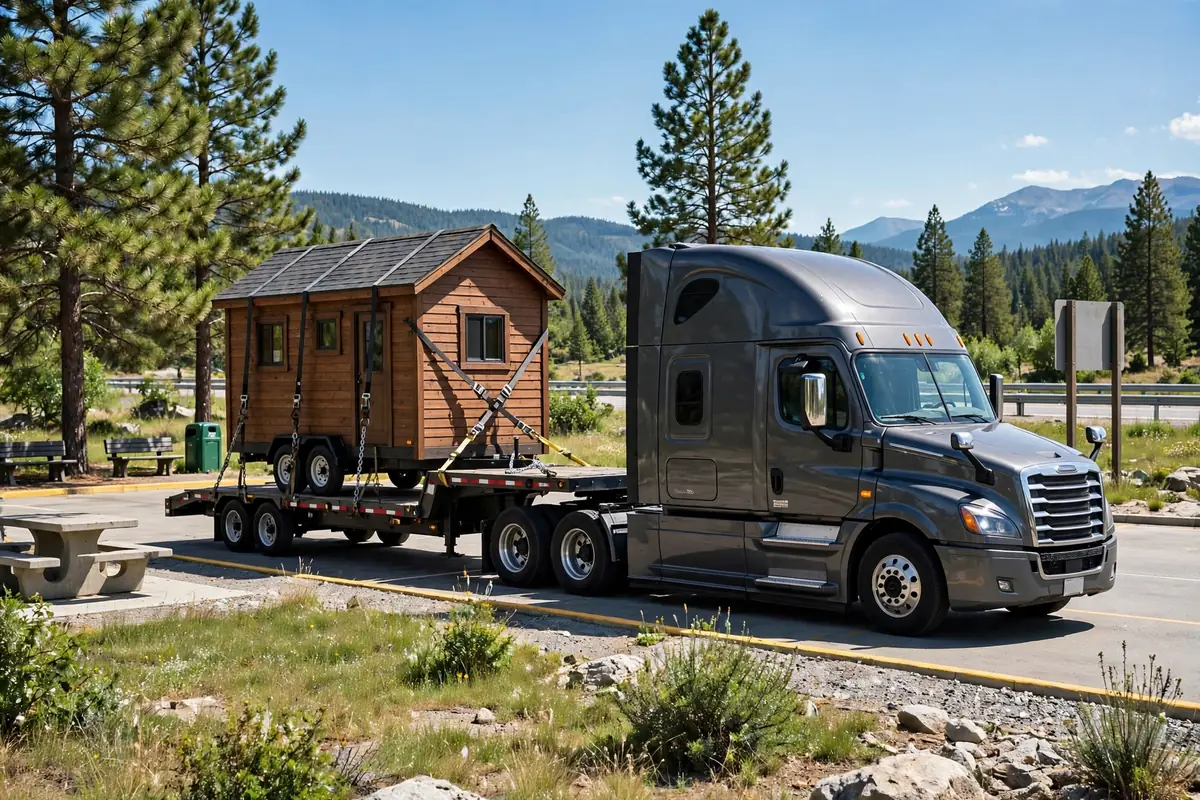
Towing it yourself is the cheapest option on paper. Renting a truck costs $150 to $350 a day, plus fuel and tolls. A 300 mile DIY move can land near $400 to $700 all in.
That math only works if you already own a suitable truck and have real experience towing heavy loads. A first timer with a borrowed truck and a 14,000 pound house is a risk, not a saving.
A professional hauler charges about $3 to $7 per mile. A 200 mile move usually runs $1,000 to $2,500. A 1,000 mile move usually falls between $4,000 and $8,000. Oversize homes with escorts can pass $15,000 on a long haul.
Pros bring more than a truck. They handle permits, route surveys, pilot cars, and insurance. For a long distance move, that is often worth the price.
Get three quotes. Ask each hauler what the quote covers, and get it in writing. The Find a Tiny House cost guide breaks down the same ranges and adds one useful rule: your truck towing capacity should exceed the house weight by at least 15 percent.
Move Day Cost Checklist
- Local DIY move, under 50 miles: $100 to $500 with your own truck
- DIY with a rental truck, 300 miles: about $400 to $700
- Pro tow, 200 miles: $1,000 to $2,500
- Pro tow, 1,000 miles: $4,000 to $8,000
- Oversize or cross country with escorts: $6,000 to $15,000 or more
- Single move cargo insurance for DIY: $200 to $600
7. Get the Insurance Sorted Before You Roll
Here is the gap that catches owners out. A standard homeowners policy usually excludes damage while the home is moving on a public road. A personal auto policy usually covers liability only, not the house itself.
If a pro moves it, ask for proof of cargo insurance and check the limit. Good haulers carry $1 million or more. Make sure the limit covers the full replacement value of your home, not just a standard load.
If you tow it yourself, buy a single move cargo policy or a transit endorsement on your tiny home policy. Expect $200 to $600 for one move, depending on value and distance.
Photograph everything before loading. All four sides, the roof if you can see it safely, and the interior. Roof damage is the hardest to prove later, so get it on record.
Read the fine print. Some policies exclude damage from bad hitching or overloading. If a claim is denied, it will be for a reason written in that policy.
Keep the policy number and the insurer phone number in the truck cab, not in a box in the house.
8. Prep the House So Nothing Breaks Inside
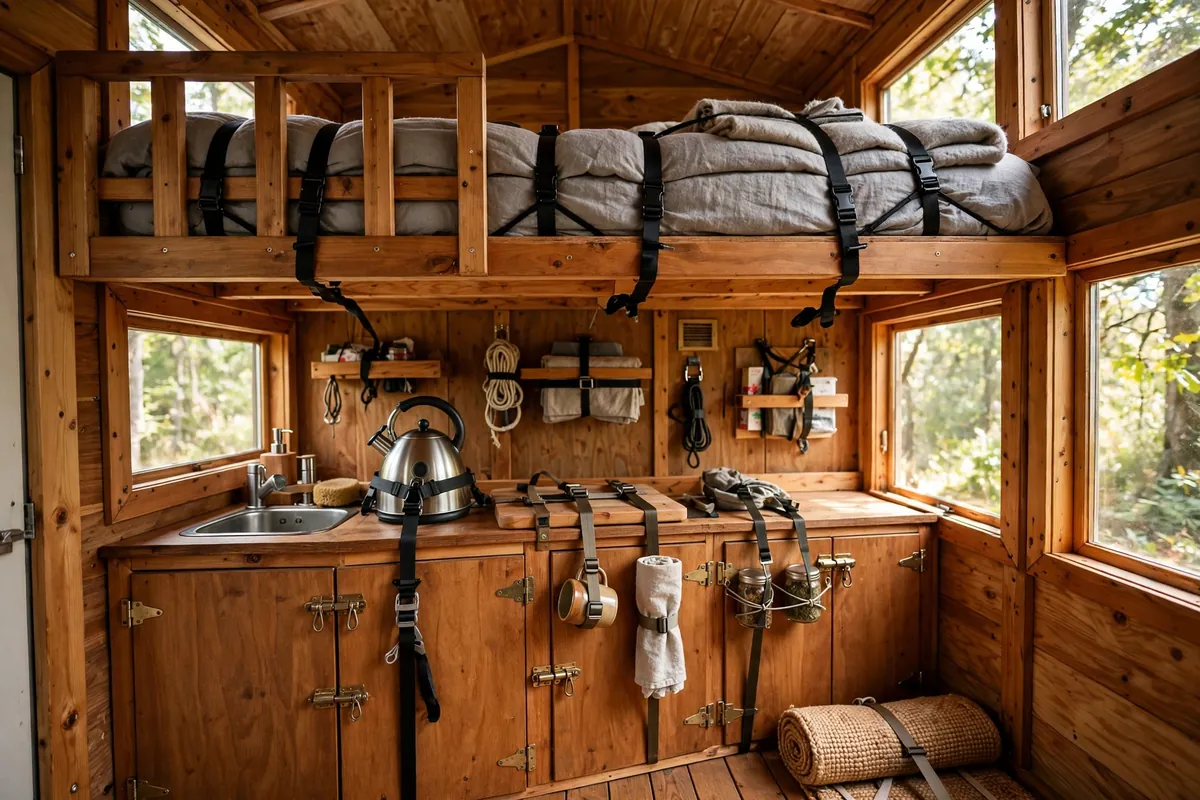
A house at highway speed shakes like a mild earthquake for hours. Everything loose will move. Walk through with fresh eyes and secure anything that can fall, slide, or swing.
Latch every cabinet and drawer. Strap the fridge, the stove, and any tall furniture. Take down wall art and anything hanging. Put the kettle, plants, and loose kitchen gear in a box on the floor.
Lofts need care. Strap the mattress down and fit a safety rail or net so bedding cannot slide off the edge. Anything stored in a loft should come down or be tied in.
Shut off the water and drain the lines if the weather is cold. Empty the water heater if the maker says so. Cap the propane and disconnect the batteries.
Lock the doors and windows from inside. Tape is not a lock. A door that pops open at 60 miles an hour is a disaster for the house and for everyone behind you.
Do a final walk around with a checklist. Tires, lights, chains, brakes, roof items. Then do it once more.
9. Arrival Day: Leveling, Hookups, and Settling In
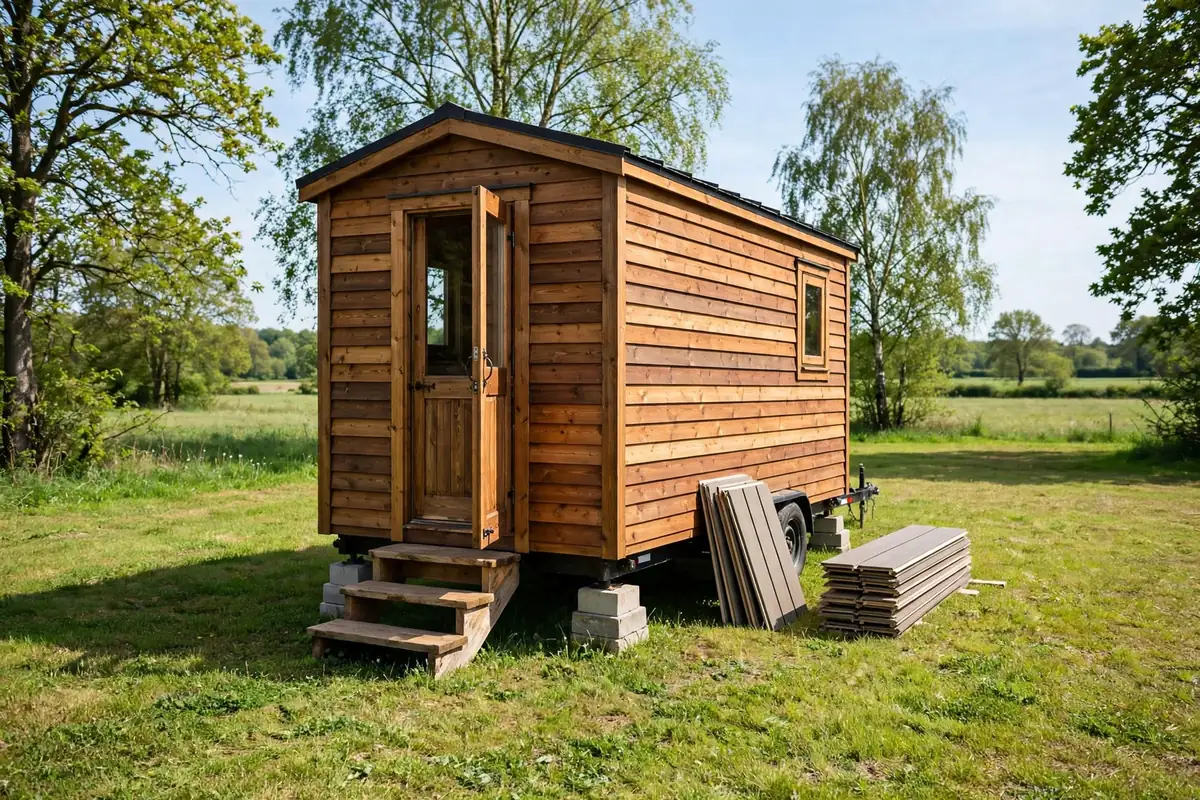
The hard part is not over when you arrive. Backing a house into place takes a spotter, patience, and room to swing. Walk the site first and check for soft ground, low branches, and overhead wires.
Unhitch on level ground if you can, and chock the wheels before you unhook anything. Never unhitch on a slope without chocks and a plan.
Level the house with jacks and blocks, then check it with a long level both ways. A house that sits tilted will show it in every door and drawer.
Add skirting around the base. It keeps out wind, animals, and cold, and makes the house look finished instead of parked.
Hook up water, power, and sewer or septic slowly, one system at a time, and test each one before you unpack. A leak found on day one is a small job. A leak found a week later is a repair.
Then unpack, breathe, and enjoy it. You moved a whole house.
Moving a tiny house is a project, not an errand. Measure before you guess, plan the route before you drive it, and spend a little on insurance and permits. Do that, and moving day will feel smooth.