
Losing Hearing and Vision Together Raised Hip Fractures 116%: 7 Checks That Protect You

Your eyes and your ears do more than help you read and listen. Together, they keep you upright. A new study of more than 3,000 older adults measured what happens when both senses start to fade at the same time, and the number is hard to ignore.
The adults with the worst combined hearing and vision loss had 36 percent more falls and 116 percent more hip fractures than the adults with the least. A hip fracture can end independent living, and a fall can start a chain of injuries that is hard to reverse.
Here is the part that makes this study useful instead of scary. Hearing and vision are the two senses you can actually test, correct, and track. Glasses get updated. Hearing aids get fitted. Hallways get lit. What follows is the study in plain English, then seven checks that protect you, starting with the two appointments that matter most.
One honest note before we start. This was an observational study, which means it found a link, not proof of cause. It cannot prove that fixing hearing or vision prevents fractures. This article is general information, not medical advice. Bring what you learn here to your own doctor, and do not try to diagnose yourself from an article.
The Study at a Glance
Published in the Journal of Nutrition, Health and Aging, 2026, using data from the China Health and Retirement Longitudinal Study. Falls and fractures were self-reported. The study shows an association, not proof that treatment prevents fractures.
The 116 Percent Number, in Plain English
Researchers followed 3,391 adults aged 60 and older in China. They measured hearing and vision across four surveys between 2011 and 2018, combined those readings into one cumulative score per person, and tracked who fell and who broke a hip between 2013 and 2020.
Next they split everyone into four groups, from the least sensory loss to the most. The quarter with the worst combined loss had 36 percent more falls and 116 percent more hip fractures than the quarter with the least, even after adjusting for other factors. In statistical terms, that is a hazard ratio of 1.36 for falls and 2.16 for hip fractures.
The risk did not jump suddenly at the end. It climbed steadily with every step up in sensory loss, each quartile doing worse than the one below it. The same graded climb showed up for vision alone and hearing alone.
The study was published in the Journal of Nutrition, Health and Aging in 2026. During follow-up, the group recorded 1,576 falls and 189 hip fractures. Those are real events in real lives.
Keep the limits in mind. Falls and fractures were self-reported, so some were missed. The participants were all in China, so the results may not translate exactly elsewhere. And because the study watched people over time rather than testing a treatment, it cannot say that fixing hearing or vision would have prevented those fractures.
Why Losing Two Senses Is Worse Than Either Alone
Balance runs on three inputs. Your eyes show you where things are. Your inner ear, the balance organ tucked beside your hearing organ, senses movement and position. Your feet and legs report what the ground is doing. Lose one and the other two can usually cover. Lose two and the system runs short.
Vision spots the rug edge, the step down, the wet patch on the floor. Hearing tells you where sounds are coming from and helps you orient yourself in a room. Together they build the mental map you walk through without thinking. When both fade, that map gets blurry in two directions at once.
There is also a hidden cost. Straining to hear or squinting to read eats up attention, leaving less for balance. Researchers who study sensory loss and mobility describe exactly this trade: the brain spends extra effort compensating for fading senses, and walking gets less of its share.
Other large studies point the same way. A European study of 50,986 adults found that people with both impairments had the highest fall risk of any group. A UK study of more than 237,000 people with hearing loss found an 8 to 10 percent higher risk of major fractures, including hip fractures, than matched adults without hearing loss.
Then comes the loop that turns one fall into many. A scare on the stairs breeds fear of falling. Fear cuts movement, weaker legs follow, and weaker legs fall more. Breaking that loop early, while your senses can still be helped, is the whole point of the seven checks below.
Check 1: Book a Hearing Test This Month
Hearing fades so slowly that most people adapt without noticing. You turn the television up a notch and ask people to repeat themselves. You stop going to noisy restaurants because following the conversation feels like hard work. By the time the loss is obvious, years may have passed.
A hearing test is simple and painless. An audiologist plays tones at different pitches and volumes, and asks you to repeat words in quiet and in background noise. It takes about half an hour and gives you a baseline for future years. Ask your doctor for a referral, or book directly with an audiologist.
There is a balance reason to test early, not just a hearing reason. Your inner ear houses the organs that sense head movement and gravity, so hearing problems and dizziness often travel together. Health guidance from New York City notes the link directly: changes in hearing are closely tied to balance.
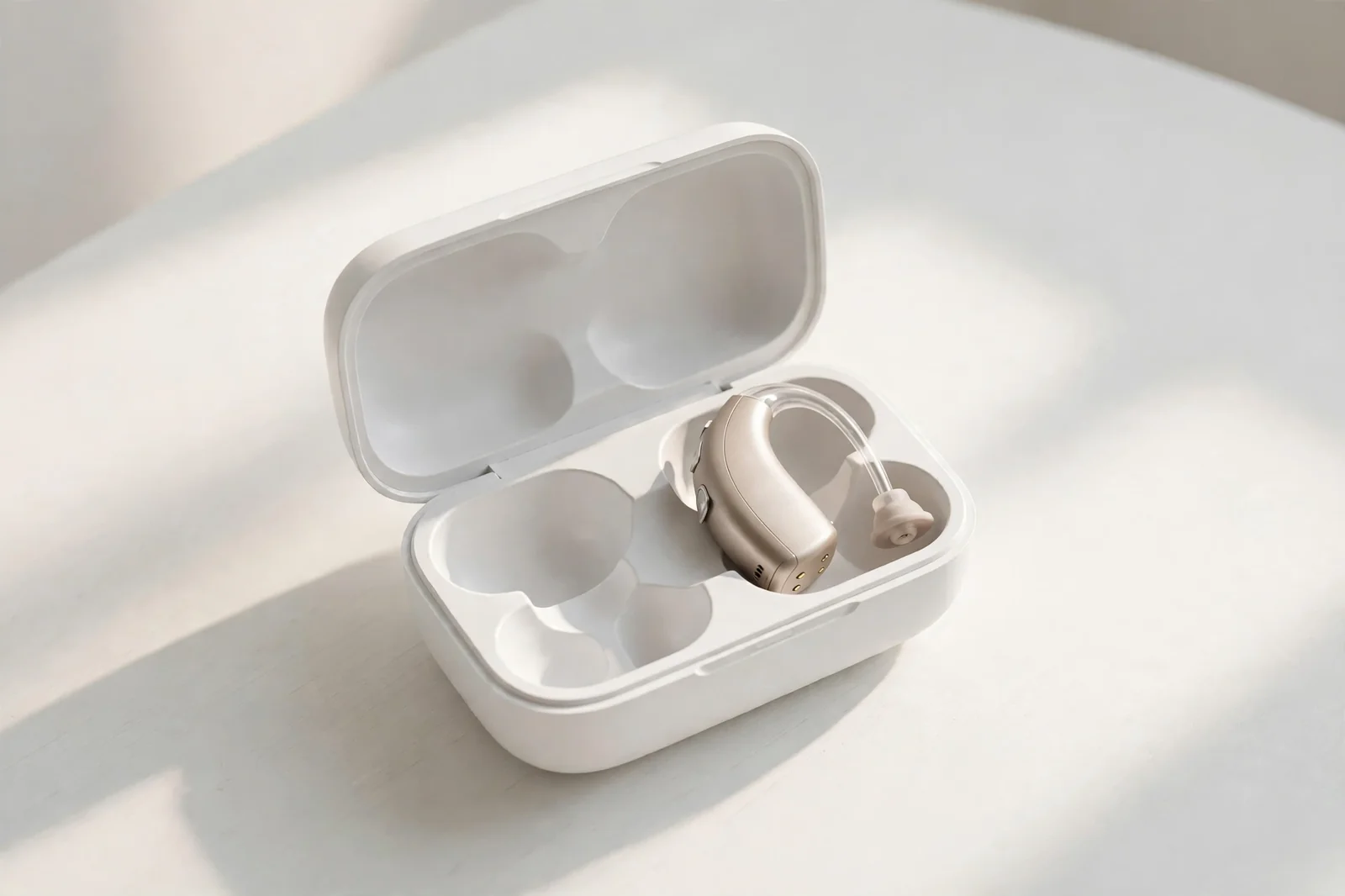
If the test finds loss, get fitted and follow the plan. Modern hearing aids are small, rechargeable, and far better than the whistling boxes many people remember. The fitting usually needs a follow-up tweak or two, so keep the appointment rather than giving up after the first week.
Do not buy a cheap amplifier online and call it done. Those devices turn up everything, including background noise, and they cannot be tuned to your pattern of loss. A proper test and a fitted device are worth the extra step.
Your Balance Runs on Three Inputs
Lose one input and the others compensate. Lose two at once and the system runs short.
Check 2: Get Your Eyes Checked and Your Glasses Updated
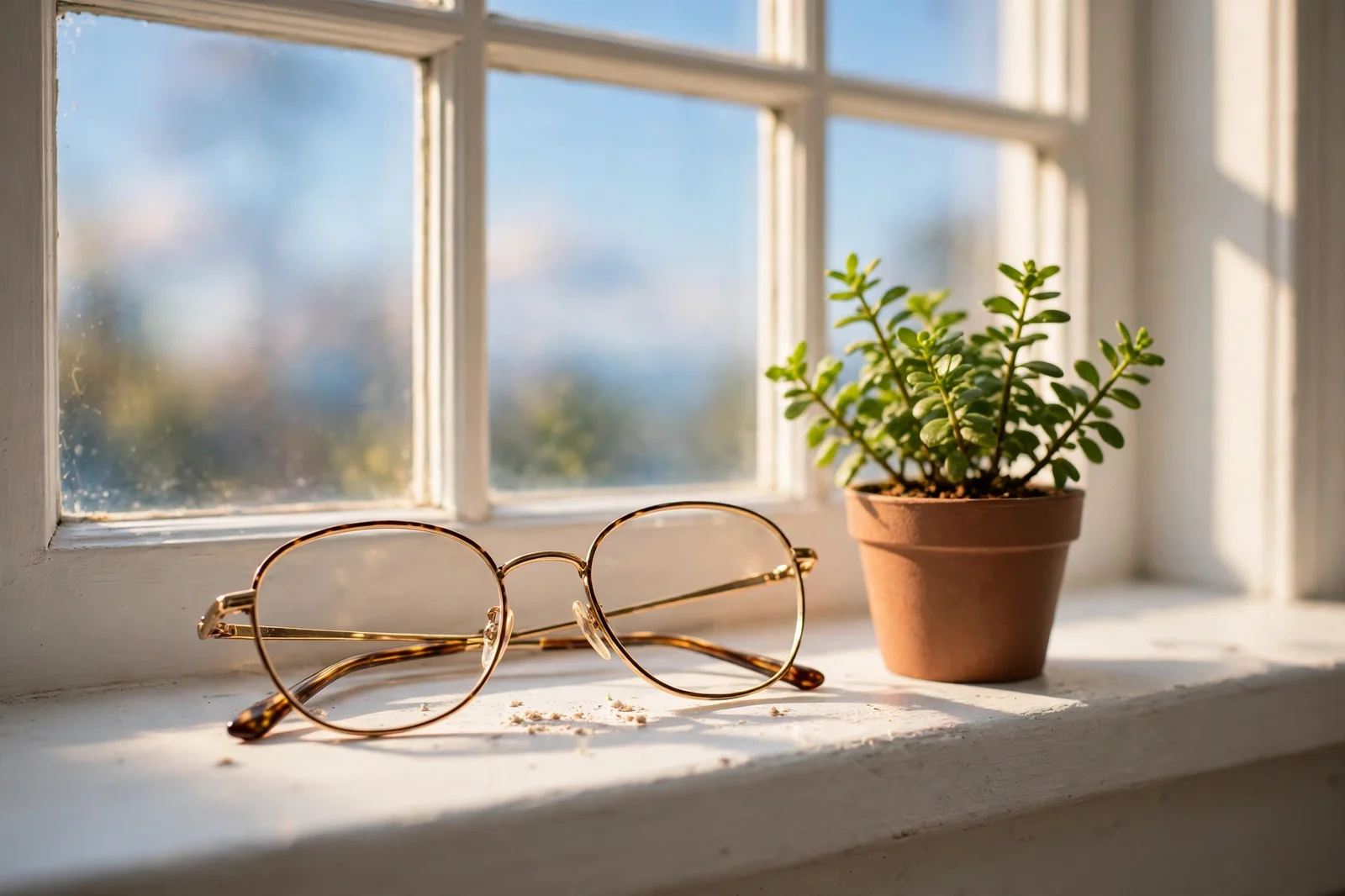
Book a comprehensive eye exam once a year. Vision changes creep in the same quiet way hearing does, and several eye conditions raise fall risk before you notice them. Cataracts blur vision and increase glare. Glaucoma narrows peripheral vision, so hazards approach unseen from the side. Macular degeneration steals central vision. Diabetic retinopathy damages the retina in people with diabetes.
An exam catches these early, and early matters. Some conditions can be treated or slowed, and some simply need the right glasses. Put the appointment on the calendar the same week you read this, and treat it like a dental checkup: routine, not optional.
Update your prescription when it changes, and actually wear the new glasses. Old glasses blur edges and flatten depth perception, which is what you need to judge a step or a curb. If your new glasses feel strange on stairs, tell your eye doctor. Progressive and bifocal lenses blur the lower field of vision, which can make every step uncertain. Many eye doctors suggest single-vision distance glasses for stair use.
Wear sunglasses outdoors. Glare from bright sun or shiny floors can wash out contrast and hide a step edge, and polarized lenses cut that glare. Indoors, give your eyes time to adjust when you move from a bright room into a darker one.
If an exam finds cataracts, ask your eye doctor about the options and the timing. That conversation belongs with a professional who has examined your eyes.
Check 3: Wear the Aids and Glasses You Already Own
A hearing aid in a drawer helps no one. Neither do glasses left on the nightstand while you walk to the bathroom at night. The study measured sensory loss, but in daily life the question is simpler: are your senses actually corrected while you move around your home?
Build the habit into your morning routine. Put your hearing aids in when you get dressed, the same way you put on your shoes. Put your glasses on before you leave the bedroom. Keep the case beside the bed, where you can see it.
Look after the devices and they will look after you. Charge hearing aids overnight or change batteries on schedule, and clean them as the maker instructs. Keep glasses clean and properly fitted. Loose glasses slide down your nose and distort what you see at the edges.
If a hearing aid whistles, feels sore, or sounds tinny, go back for an adjustment instead of quitting. Most fittings need a tweak or two before they feel right. The same goes for glasses that pinch or slip.
Wearing your aids does more than sharpen sound. It cuts the effort of listening, which frees up attention for balance and for watching where you step.
Check 4: Light Your Home and Clear Every Path
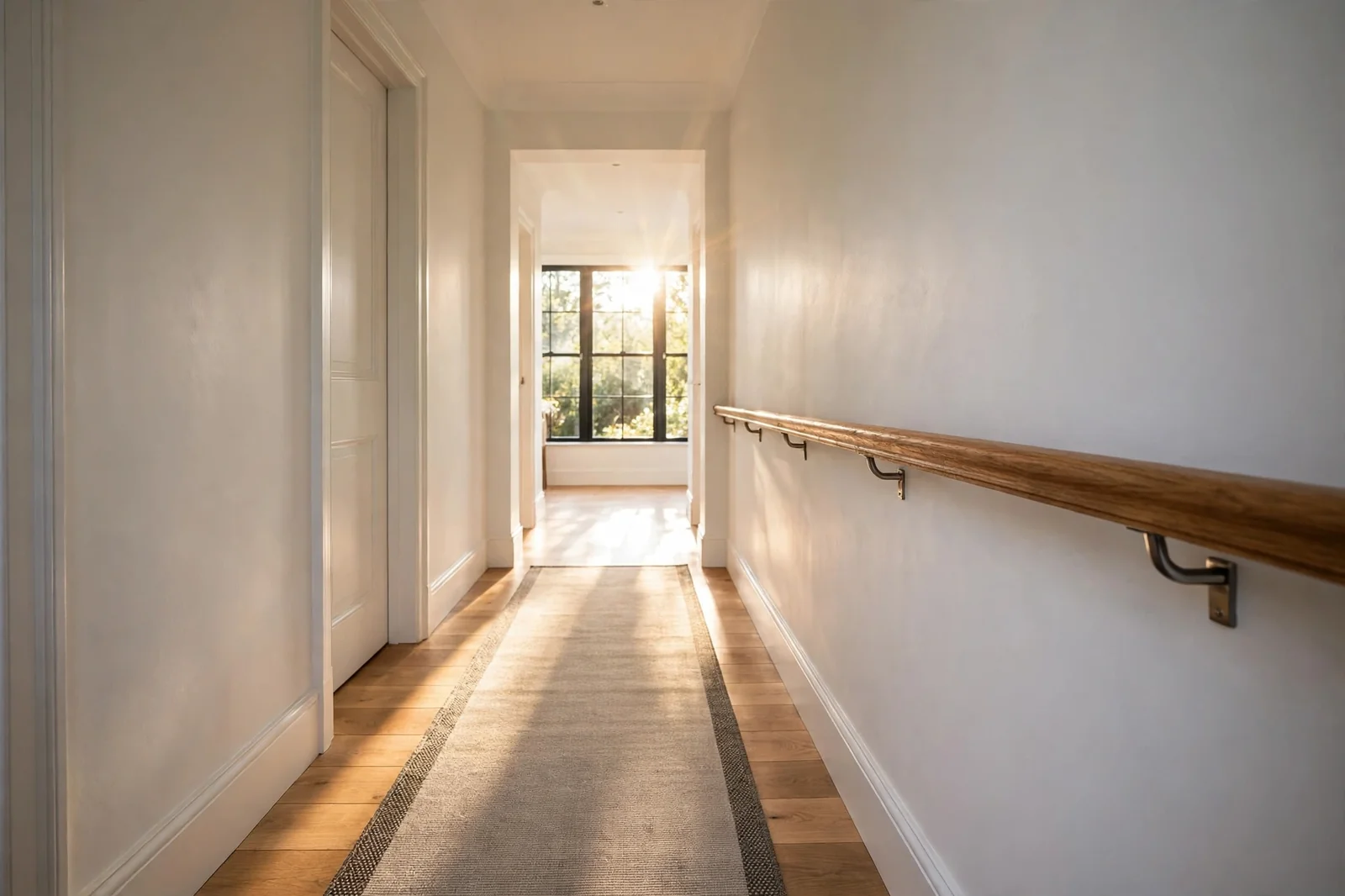
When vision fades, shadows turn dangerous. A dim hallway hides a shoe, a cord, or a rug edge. The fix is cheap and immediate: flood your walking paths with bright, even light, and clear the floor.
Start with the route you walk at night. Put motion-activated night lights along the path from your bed to the bathroom. Nighttime bathroom trips are among the most common and most dangerous falls, and a light that switches itself on beats fumbling for a switch in the dark.
Walk every room with fresh eyes. Remove loose rugs, or tape their edges flat. Fasten cords along baseboards and away from walkways. Move low furniture and plant stands out of main routes. Put high-contrast tape on the edge of every step.
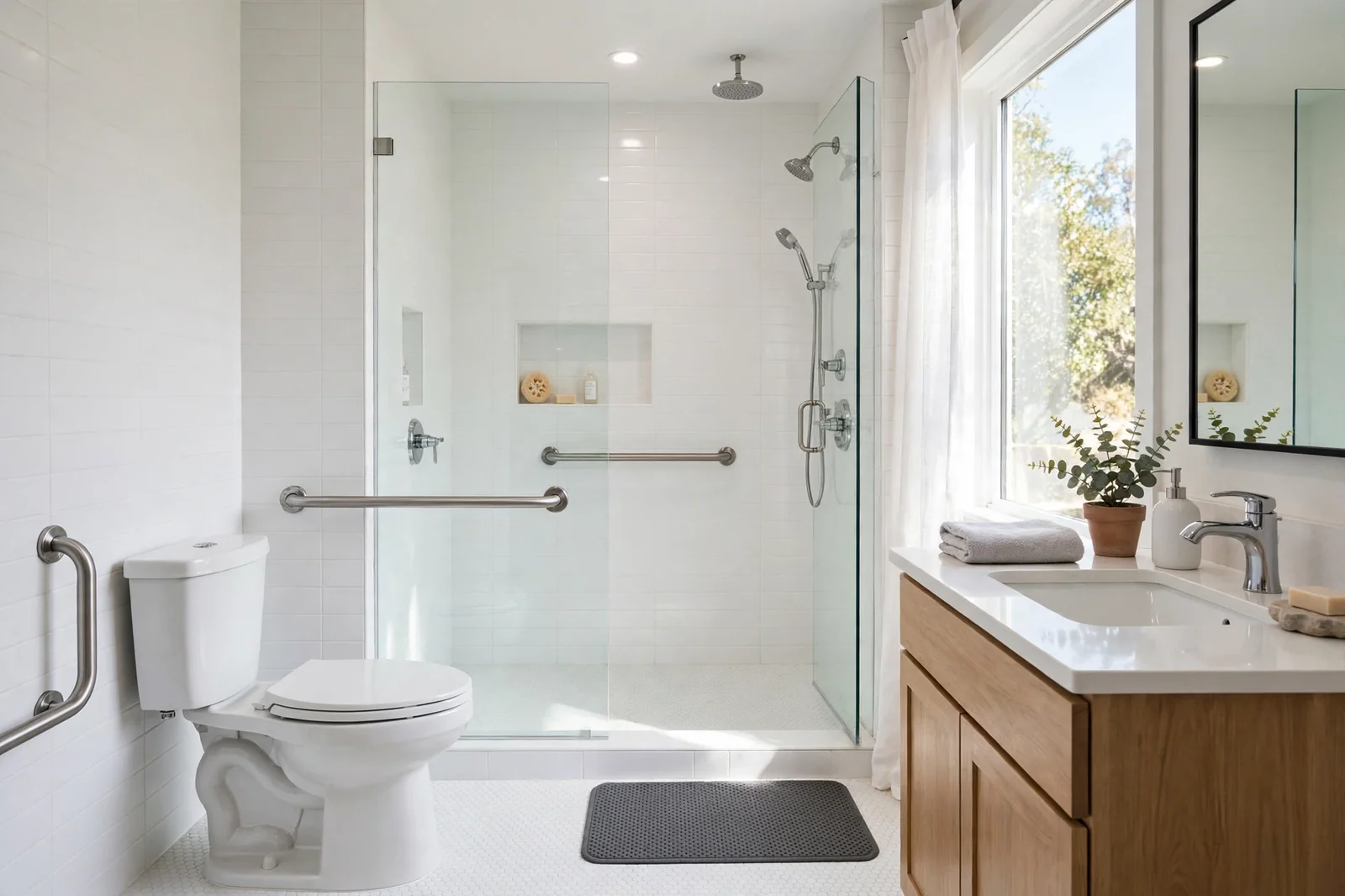
Add contrast where it guides the eye. A dark toilet seat on a white floor is easier to find at night, and light switch plates that contrast with the wall are easier to spot. Grab bars beside the toilet and inside the shower beat towel bars, which are not built to hold your weight.
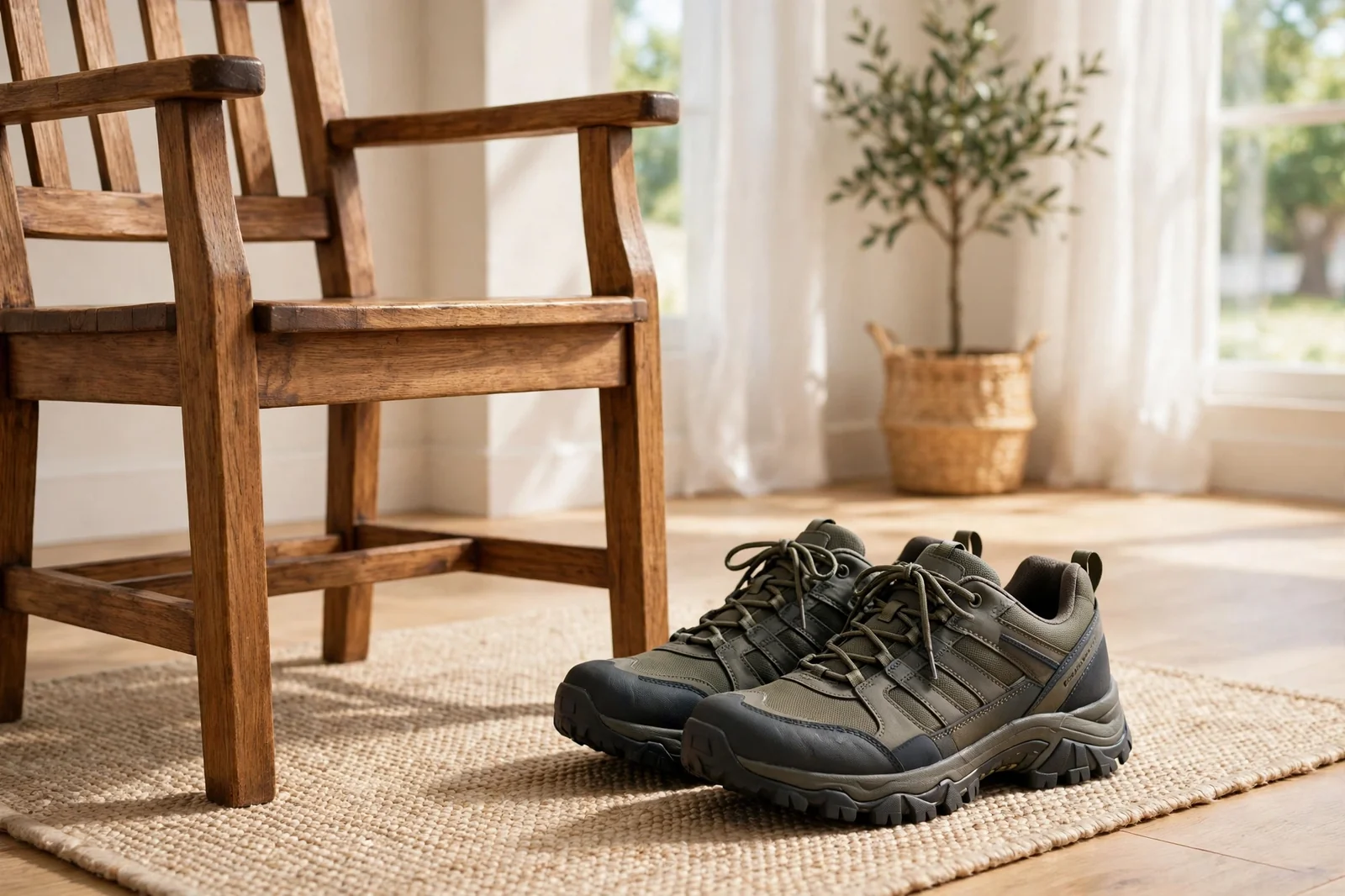
Finish with your feet. Wear shoes with low heels, firm grip soles, and closed backs, even indoors. Slippers with smooth soles and open backs are a fall waiting to happen.
Checks 5, 6, and 7: Move, Review Your Medicines, and Sleep

Check 5: build leg strength and balance every week. A large trial published in October 2026 tested a simple idea: a prompt inside the clinic computer that helped doctors prescribe a short home strength-and-balance routine. Across 22 practices and 11,945 adults aged 65 and older, the clinics using the prompt recorded 9 percent fewer falls, even though only about one in five eligible patients ever received the prescription. The routine came from the Otago Exercise Programme, a well-studied set of leg and balance moves that takes about ten minutes. Ask your doctor for a tailored plan, or for a physical therapy referral, and start with supported moves like chair rises at the kitchen counter.
Check 6: ask your doctor or pharmacist to review your medicines. Some cause dizziness, drowsiness, or a drop in blood pressure when you stand. Never stop a prescribed medicine on your own, and never adjust a dose because of something you read. Bring a full list, including over-the-counter products and supplements, to your next appointment and ask directly: could any of these affect my balance?
Check 7: protect your sleep. A Mayo Clinic study of 2,750 adults with an average age of 70 found that people with chronic insomnia were 40 percent more likely to develop mild cognitive impairment or dementia over about five and a half years. Poor sleep also slows reactions and dulls attention the next day, which is exactly what you do not want on a staircase. Keep regular sleep hours, and talk to your doctor about sleep trouble that lasts more than a few weeks. Avoid reaching for sedatives on your own, since many raise fall risk.
None of these three checks needs new equipment or a big budget. A ten-minute routine, a five-minute conversation about medicines, and a regular bedtime are small habits with outsized returns. Together with the hearing test, the eye exam, the aids you actually wear, and a well-lit home, they form a safety net with seven strands instead of one.
Your 7-Check Safety List
- 1. Book a hearing test this month, and get fitted if loss is found.
- 2. Get a comprehensive eye exam every year and wear the current prescription.
- 3. Wear your hearing aids and glasses every day, not just for special occasions.
- 4. Light your home and clear every path, with night lights on the bed-to-bathroom route.
- 5. Move every week: leg strength and balance work, with a plan from your doctor.
- 6. Review your medicines with your doctor or pharmacist for dizziness or drowsiness.
- 7. Protect your sleep and talk to your doctor about trouble that persists.
This article is general information, not medical advice. Get your hearing and vision checked by professionals, and do not diagnose yourself. Sources: Journal of Nutrition, Health and Aging, 2026; eSTEPS trial coverage; Mayo Clinic insomnia study coverage.
The number that opens this article is a warning, but it is also an invitation. Two senses fading together raised hip fractures by 116 percent, yet both can be tested in a single afternoon and helped for years afterward. A large risk with a practical answer is a rare thing in health.
Start with the two appointments. Book the hearing test and the eye exam this week, and put the dates on the calendar before you close this page. Then walk your home once, lights on, and fix the first hazard you see.
Share this article with someone you love who is over 60. They may not have noticed their hearing slipping, and they may not have had an eye exam in years. A short conversation today could be why they stay steady on their feet tomorrow.